Overview
About
The Virginia’s Warbler is a small, pale-gray warbler of arid, brushy woodlands and shrubby canyons of the western United States. It’s closely related to the more widespread Nashville Warbler, and some scientists consider the two a superspecies — related species that evolved in isolation from one another and remain separated by geographical barriers. Both are closely related to the Lucy’s Warbler, a species found further south in the Sonoran Desert.
Little is known about the Virginia’s Warbler, named for the wife of the person who first collected this species in 1858. It has a reputation for being timid, making it difficult to observe and study. It also occupies a rugged landscape — itself understudied — of steep slopes and ravines. Even accessing the habitat of this bird is a challenge.
Still, what little information is known of the Virginia’s Warbler paints a picture of a species at risk, and calls for more research into the species and its pinyon-juniper habitat.
Threats
Birds face a number of challenges to their survival, and many species, including the Virginia’s Warbler, are experiencing population declines. For some species, the reason for their dwindling numbers may be obvious. That’s not the case for the Virginia’s Warbler, which lost nearly half its population between 1968 and 2019.
Habitat Loss
The Virginia’s Warbler has a limited distribution owing to its preference for a narrow range of habitat both on its breeding and nonbreeding grounds. Its habitat is threatened by clearing for agriculture and firewood cutting.
Climate Change
Climate change also contributes to the loss of habitat for the Virginia’s Warbler. Changing climatic conditions across the southwestern U.S. have led to persistent drought and bark beetle infestations, which can destroy suitable habitat. Controlled burning, necessary to remove the thick (and highly flammable) forest understory, also appears to impact this species.
Conservation Strategies & Projects
At ABC, we’re inspired by the wonder of birds and driven by our responsibility to find solutions to meet their greatest challenges. With science as our foundation, and with inclusion and partnership at the heart of all we do, we take bold action for birds across the Americas.
Advocate for Birds
Through advocacy, ABC ensures birds have a seat at the table. We advocate for policies and funding that make a difference for birds and ecosystems. We take on challenging issues when birds are on the line. And we help our supporters become advocates for birds, too.
Bird Gallery
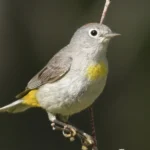
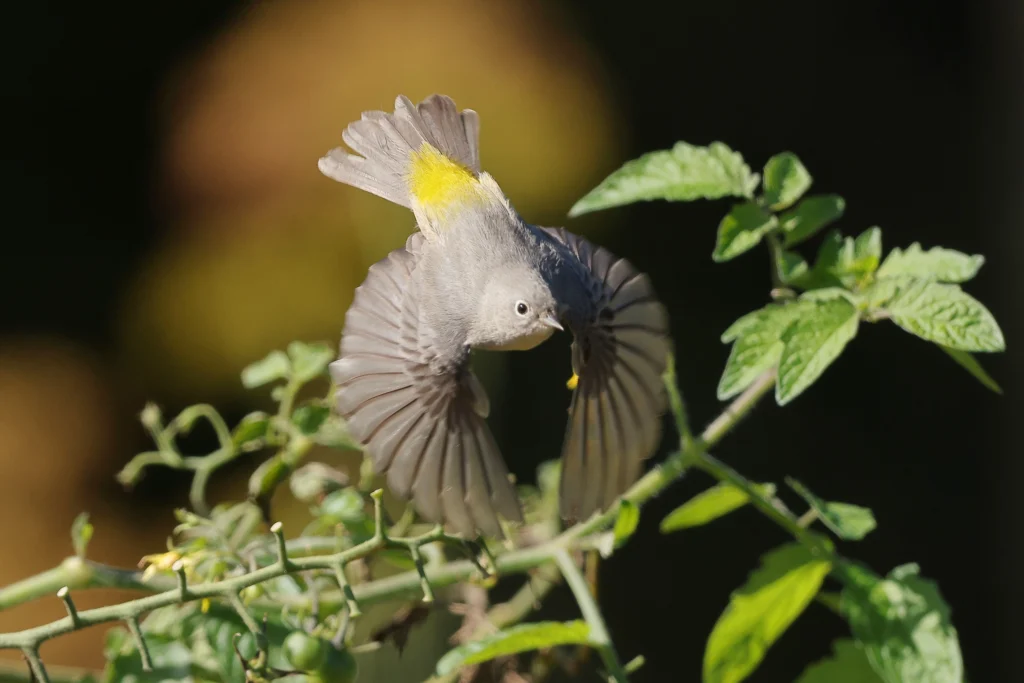
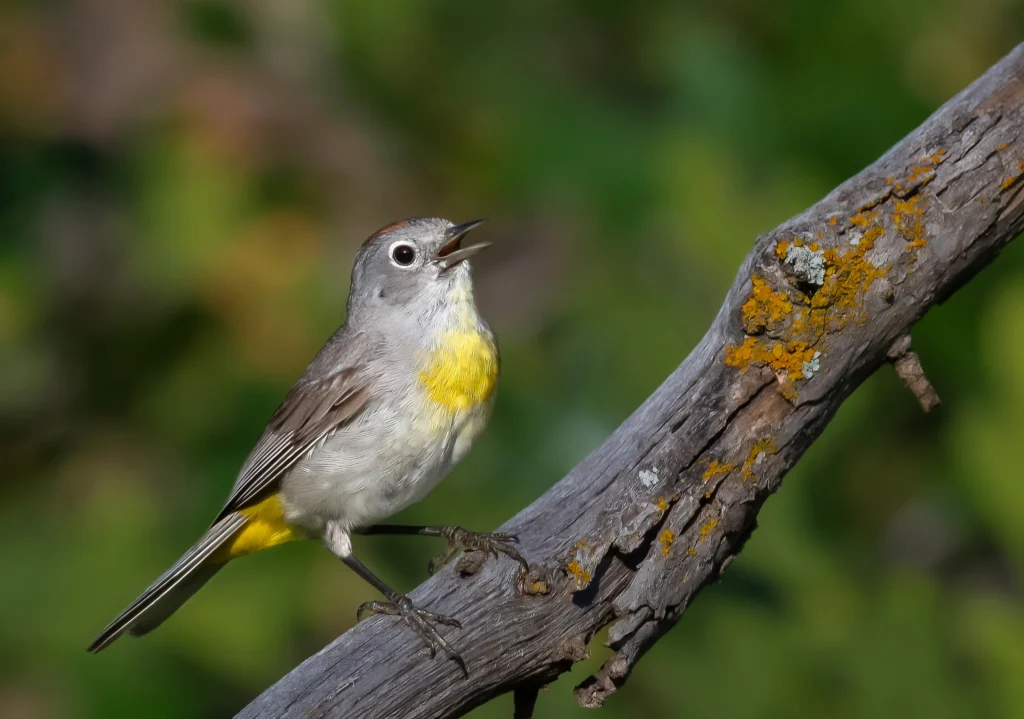
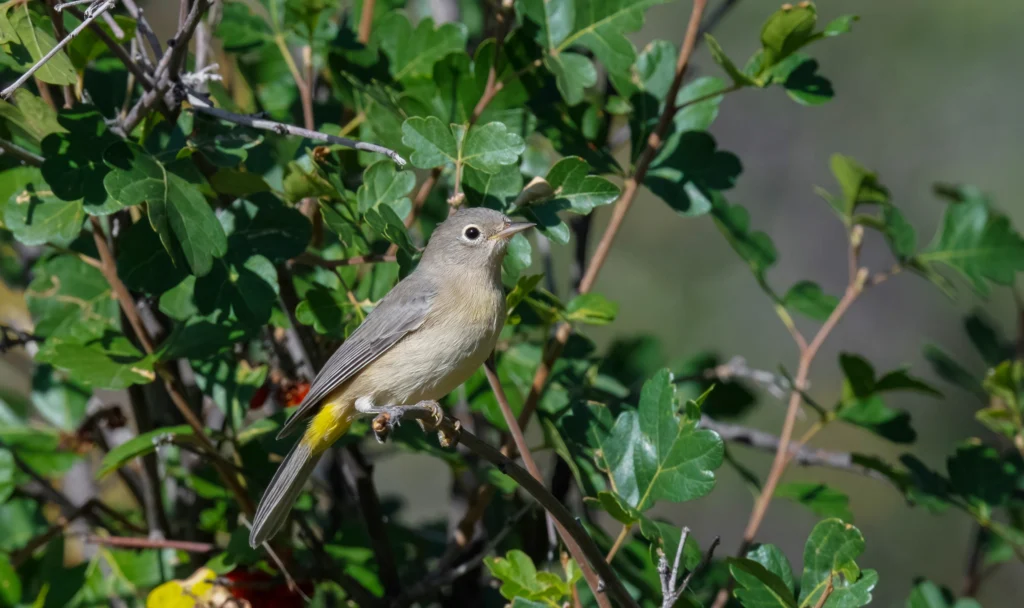
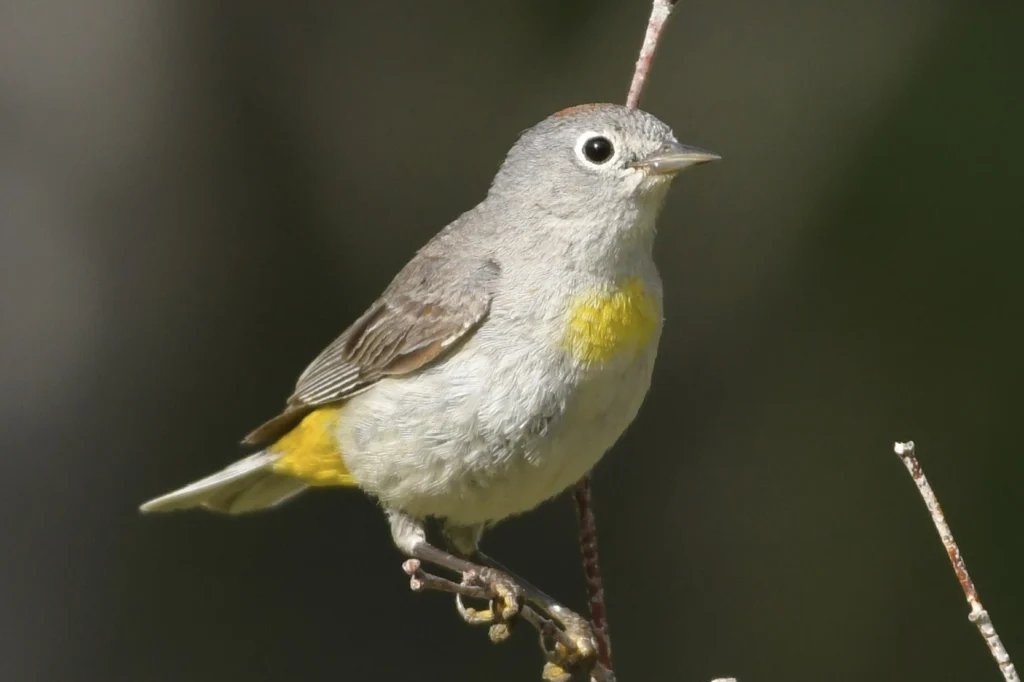
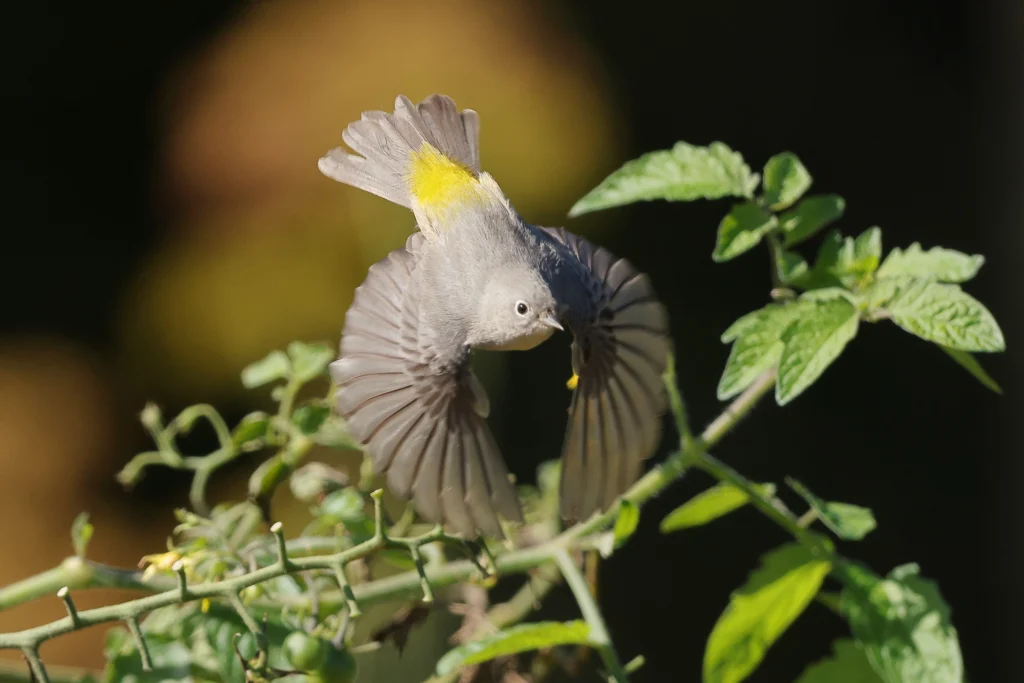
The Virginia’s Warbler is an understated pale gray warbler with a lemon-yellow breast, rump, and undertail. It has a brick-red crown patch, usually partly hidden. A thin white eyering gives it a startled expression. Females and immatures are slightly duller, with less yellow on the breast.
Sounds
The song of the Virginia’s Warbler — only sung by males — is a series of loose, high-pitched notes with an up or down-slurred ending. The call note is a high-pitched chik.
Credit: Micah Riegner, XC133180. Accessible at www.xeno-canto.org/133180.
Credit: Manuel Grosselet, XC608421. Accessible at www.xeno-canto.org/608421.
Habitat
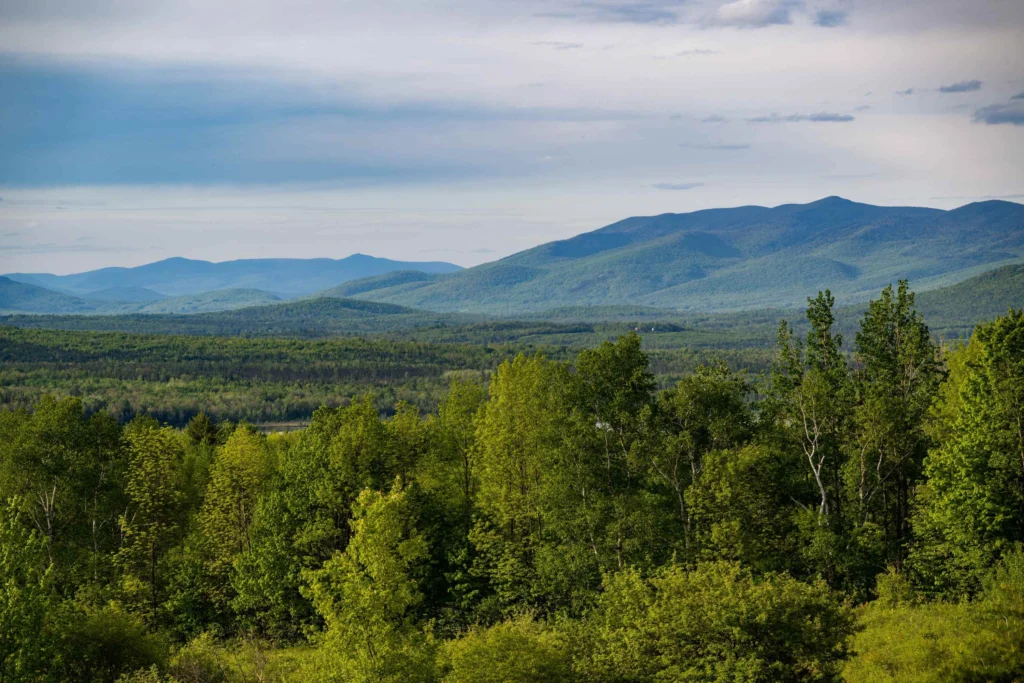
The Virginia’s Warbler hails from the rugged and rarely visited pinyon-juniper and oak woodlands of the southwestern U.S.
- Favors dry, sloping open woodlands
- Found in thick thorn, scrub oak, willow, and other shrubby habitats
- Visits pine forests and scrubby or wooded areas close to creeks while migrating
Range & Region
Specific Area
Western U.S. and Mexico
Range Detail
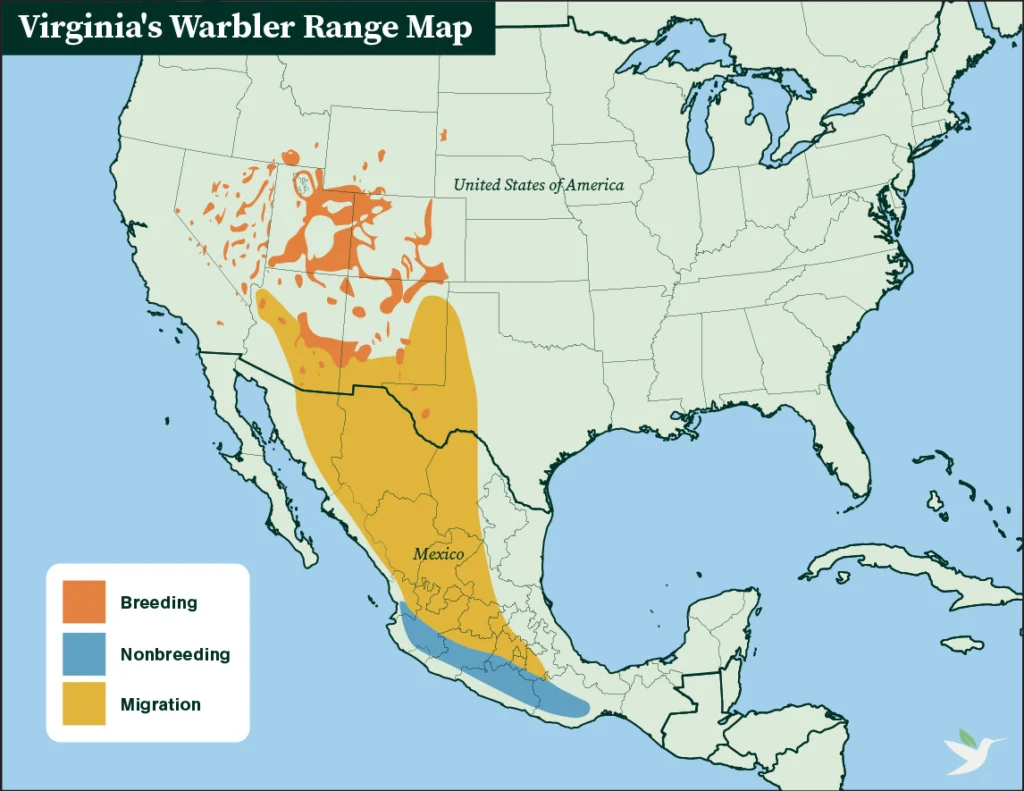
The Virginia’s Warbler has a patchy breeding distribution throughout the western United States. It may be found from Nevada and eastern California east to New Mexico and west Texas, and from southern Idaho and Wyoming south to the Mexican border in Arizona and New Mexico. In the nonbreeding season, it is found along the Pacific slope of southern Mexico.
Did you know?
The Virginia’s Warbler migrates at night, and it tends to begin migration later in the spring than other warbler species.
Life History
The Virginia’s Warbler is quite active, but its tendency to stay well within the interiors of trees and shrubs can make it difficult to spot. This warbler pumps its tail up and down as it jumps from one twig to the next. Though most often found in monogamous pairs during the breeding season, at other times in their full annual cycle, they join Orange-crowned and Black-throated Gray Warblers in mixed-species flocks.
Diet
Virginia’s Warblers feed close to the ground in low trees and shrubs, gleaning insects from foliage and branches or the ground. This species’ preferred foods include caterpillars, spiders, ants, flying insects, and stinkbugs.
Courtship
The Virginia’s Warbler is seasonally monogamous. The male will guard the female throughout the breeding cycle as she builds a nest, lays eggs, and incubates the eggs. He will sometimes feed her while she broods, and also defends the area around the nest.
Nesting
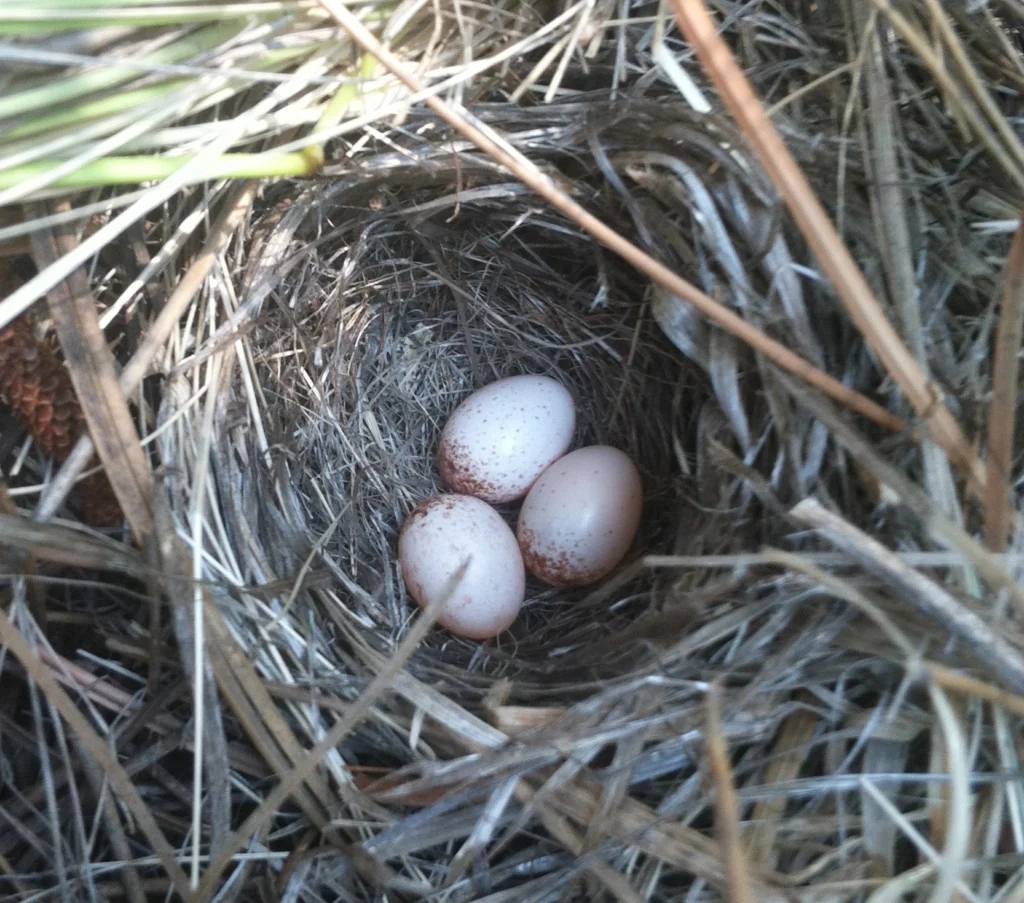
Both sexes participate in selecting a nest site, usually on a steep slope. The nest is placed at the base of a shrub or small tree and concealed on the ground amid dead leaves and tufts of grass. The female builds the cup-shaped nest of moss, lichen, grass, and strips of bark, lined with softer vegetation and hair.
Eggs & Young
The female Virginia’s Warbler lays a clutch of three to five eggs, which she incubates for approximately two weeks. Both parents feed the young, which fledge in another two weeks. The young birds remain dependent on their parents for food for several weeks. This species only raises one brood per season.