Aerial view a rainforest habitat over a mountain with clouds.

Pinzón de montaña de Cochabamba

Poospiza garleppi

Pinzón de montaña de Cochabamba

Poospiza garleppi

Descripción general

Estado de conservación
Tendencias demográficas
Decreciente
Tamaño de la población
270-2,700
Familia
Tangaras
Ubicación
Sudamerica
Patrón de migración
No migratorio
Distancia de migración
No migratorio
También conocido como
  • Slate-and-rufous Mountain-Finch
  • Monterita Cochabambina (Bolivian Spanish)

Acerca de

Named for the Bolivian city adjacent to the mountain slopes that comprise its stronghold, the rare and beautiful Cochabamba Mountain Finch is actually more closely related to a tanager than to a finch. This sparrow-sized bird is a member of the Poospiza genus (warbling finches/mountain finches) and is distinguished by its distinct plumage and highly limited range around the city of Cochabamba in Bolivia.

Many geographically restricted species throughout South America are named after “their” places in this way. Colombia’s Sierra Nevada de Santa Marta, an isolated mountain range along the Caribbean coast, holds a wide range of endemic species named for that area, including the Ala de sable de Santa Marta, Santa Marta Parakeet, y Santa Marta Bush-Tyrant.

ABC’s partner Asociación Armonía and local Indigenous communities have worked in the Cochabamba area for many years to restore habitat for the Cochabamba Mountain Finch and a community of other endemic songbirds found there, including the Bolivian Blackbird, Brown-capped Whitestart, Rufous-bellied Mountain Tanager, and Grey-bellied Flowerpiercer.

Amenazas

Birds around the world are declining, and many of them are facing urgent, acute threats. But all birds, from range-restricted species like the Cochabamba Mountain Finch to familiar backyard birds such as the American Robin, are made more vulnerable by the cumulative impacts of threats like habitat loss and pesticides.

Pérdida de hábitat

The Cochabamba Mountain Finch’s habitats are disappearing due to agricultural clearing, human development, and the cutting of native trees for firewood. Its habitats are also degraded by the establishment of non-native eucalyptus and pine tree plantations and uncontrolled wildfires.

Pérdida de hábitat

Cambio climático

A changing climate presents a suite of often unpredictable threats to birds: extreme weather events, droughts, habitat loss due to fire, and intense heat are just a few ways climate change could put the Cochabamba Mountain Finch at further risk.

Cambio climático

Pesticidas y toxinas

The Cochabamba Mountain Finch’s use of human-altered and agricultural landscapes makes it vulnerable to pesticide exposure and poisoning.

Pesticidas y toxinas

Estrategias y proyectos de conservación

Las aves necesitan nuestra ayuda para superar las amenazas que enfrentan. En ABC, nos inspira la belleza de las aves y nos impulsa nuestra responsabilidad de encontrar soluciones para sus mayores desafíos. Con la ciencia como base, y con la inclusión y la colaboración como pilares fundamentales de todo lo que hacemos, tomamos medidas decisivas en favor de las aves en todo el continente americano.

Build and Nurture Partnerships

ABC and other members of the Conserva Aves partnership are working to protect Key Biodiversity Areas throughout the Tropical Andes while also fostering climate resilience and sustainable development. Our partner Asociación Armonía is one of the national conservation groups helping to implement this plan in Bolivia.

Fogonadura

Creación y mantenimiento de reservas

ABC continues to collaborate with partner groups such as Natura Bolivia and Asociación Armonía to create new reserves that directly benefit local communities and ensure the conservation of endemic Bolivian species such as the Critically Endangered Guacamayo de frente roja.

Creación y mantenimiento de reservas

Galería de aves

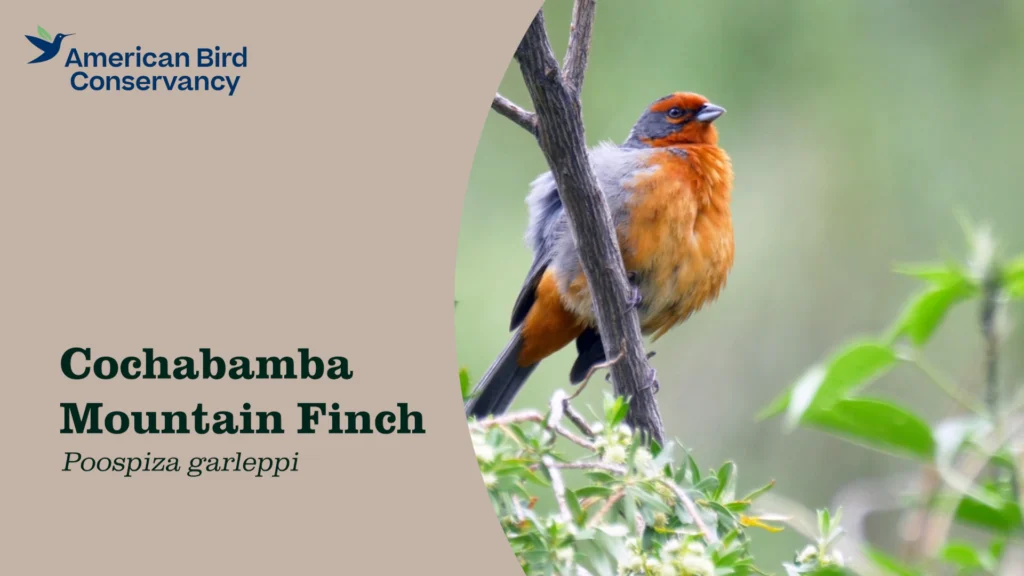
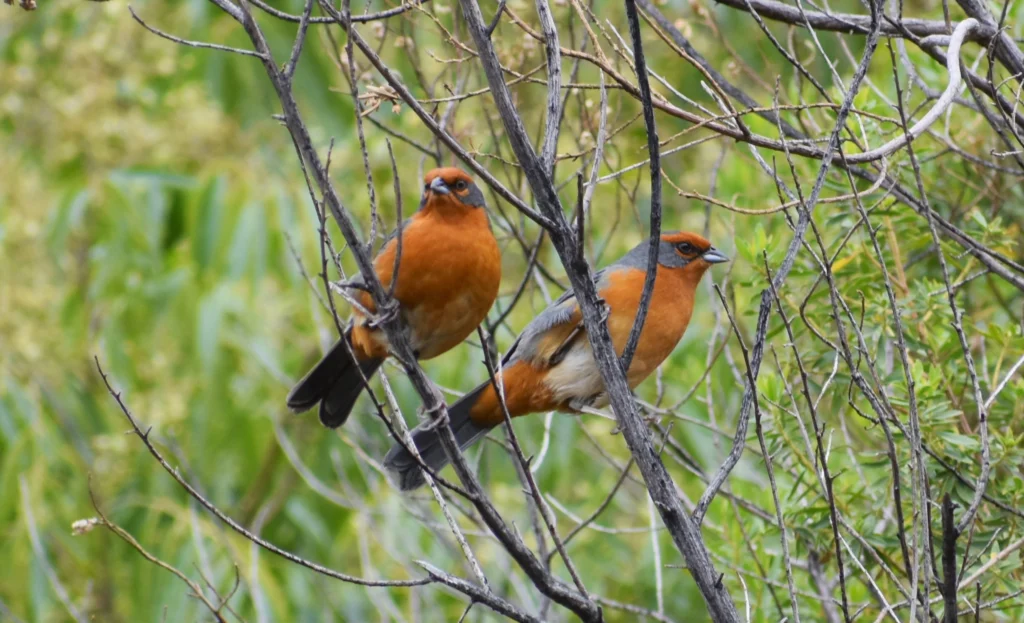
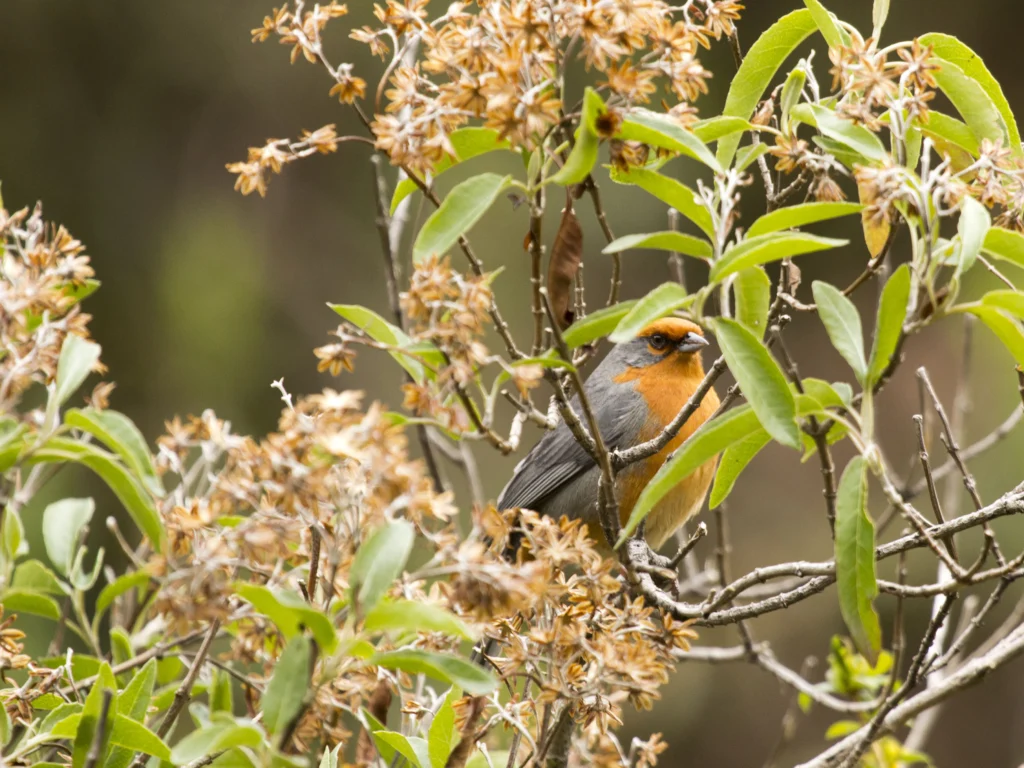
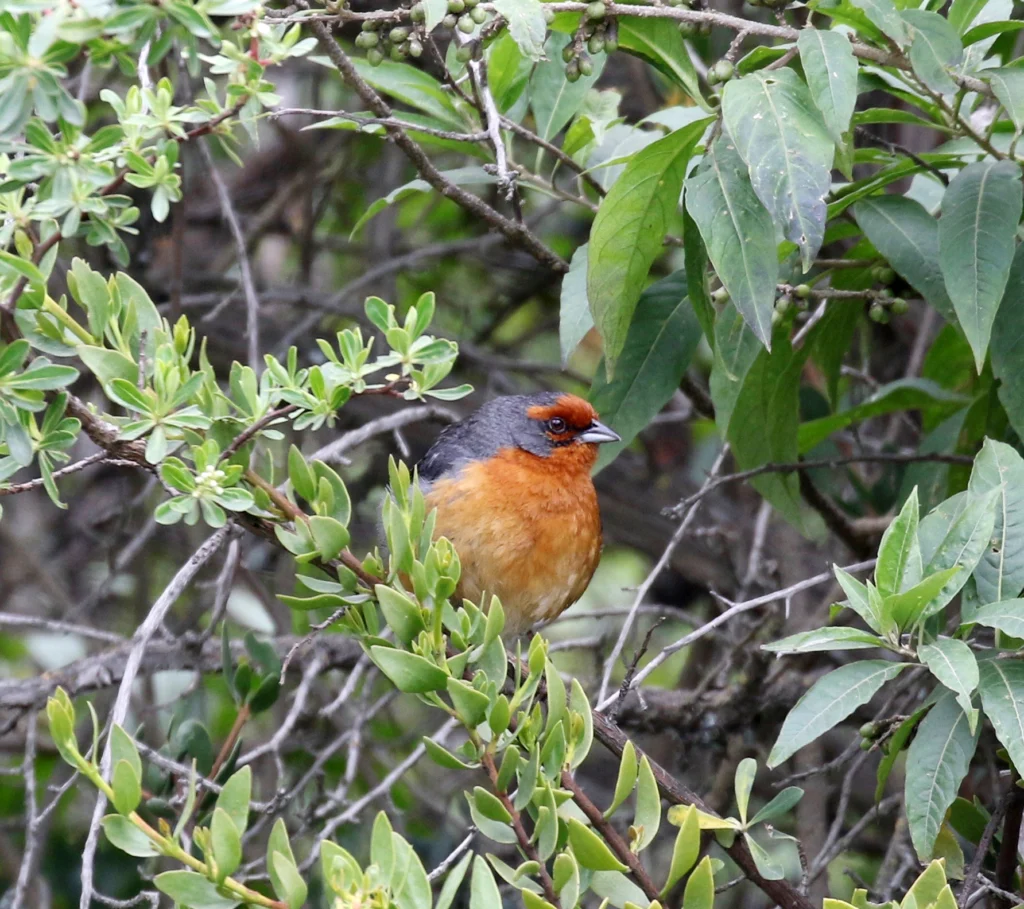
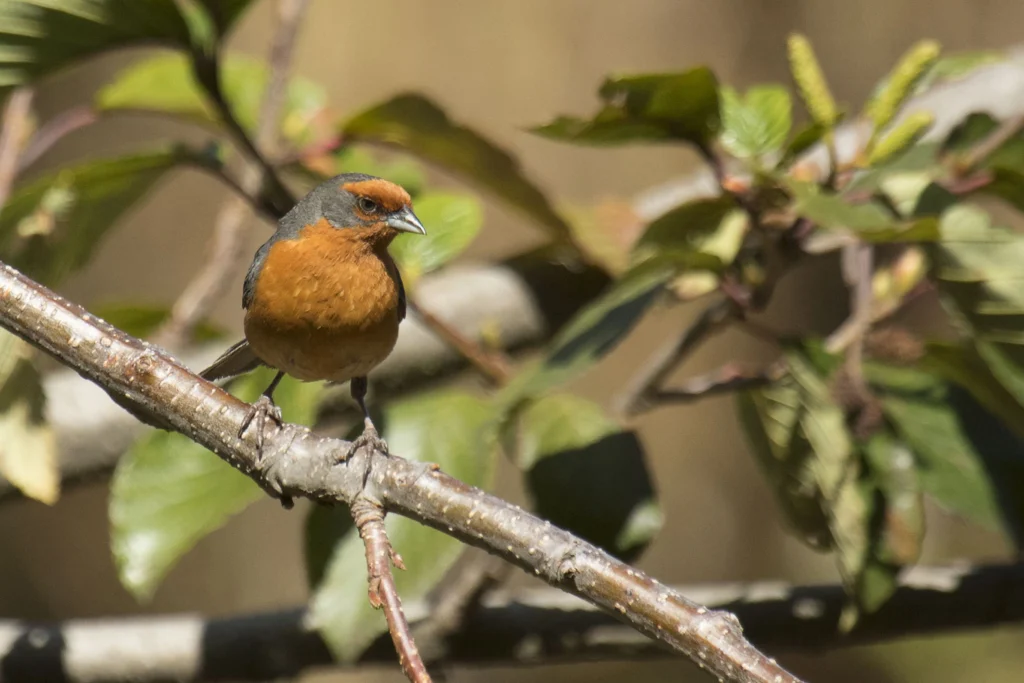
The Cochabamba Mountain Finch is a stocky, long-tailed sparrow or finch-like bird with a relatively small bill. It is an eye-catching mix of colors, with a dark gray head, upperparts, and tail setting off vivid rufous-orange undersides and facial markings. Its eyes are a deep brown, and the bill is blackish with a paler lower mandible. The sexes look alike. Juveniles are grayish-brown above, with buffy, dusky-streaked undersides.

Sonidos

The male Cochabamba Mountain Finch sings two types of song. The first, given near the nest while his mate is building, is a series of three to five warbled whistles, increasing slightly in pitch: tzeet twooo–swee…tzeet twoo–swee.

A second, less common song type is a variable series of whistles with a buzzy note; this song usually elicits an aggressive response from a nesting pair.

Both sexes give a soft, high-pitched sweep llamar.

Canción

Credit: Ross Gallardy, XC296352. Accessible at www.xeno-canto.org/296352.

Llamar

Credit: Ross Gallardy, XC296349. Accessible at www.xeno-canto.org/296349.

Hábitat

Endemic to Bolivia, the Cochabamba Mountain Finch is considered a mixed forest dweller, rather than a Polylepis specialist, as was once believed.

This species inhabits inter-Andean valleys near the treeline, usually at altitudes between 9,800 and 12,500 feet. It favors dense, brushy ravines and slopes; mixed mosaics of agricultural and forested lands that contain thorny native shrub and hedgerows; and open valleys with scattered native Polylepis and alder trees.

  • Intermountain valleys with scattered native trees and brush
  • Mixed agricultural/forest habitat with native vegetation and hedgerows

Rango y región

Área específica
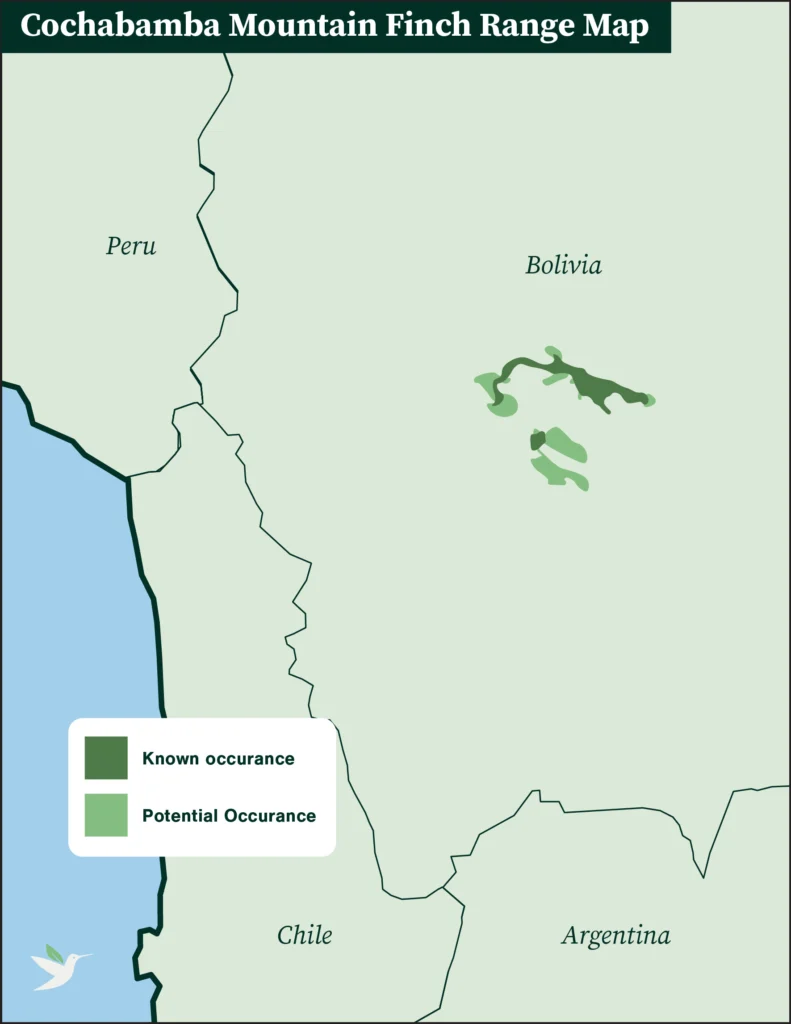
The Andean Mountains of Bolivia in Cochabamba, Potosí, and Chuquisaca departments; its stronghold is the mountain slopes around the city of Cochabamba.

Detalles de la gama
The Cochabamba Mountain Finch has an extremely limited range. It has been recorded in only three departments in the inter-Andean valleys of central Bolivia.

¿Sabías?
This species can tolerate some human-caused habitat loss and alteration, and can do well in areas with moderate levels of habitat fragmentation, as long as some native vegetation is also present.

Rango
Sudamerica
Patrón de migración
No migratorio
Distancia de migración
No migratorio

Historia de vida

The Cochabamba Mountain Finch uses a variety of native shrubs, often those associated with Polylepis woodlands, for foraging and nesting. Pairs can nest successfully in human-modified habitats as long as some native vegetation and woodland edges remain.

Dieta

The Cochabamba Mountain Finch feeds low in shrubbery or on the ground. Its diet consists mainly of seeds, but some researchers have also recorded this species eating insects.

Noviazgo

The Cochabamba Mountain Finch breeds during the rainy season, which in Bolivia occurs from January to April.

Anidación

While the male stays close by and sings, the female Cochabamba Mountain Finch gets to work, building a cup-shaped nest of grasses covered with moss and Polylepis bark and lined with softer grass stems and animal hair. The nest is usually located low in a dense shrub or on the ground, hidden within a thick clump of grass or a ground bromeliad.

Huevos y crías

The female Cochabamba Mountain Finch lays a small clutch of one to two brown-spotted white eggs, which she incubates herself for around two weeks. After hatching, both parents feed the chicks, which are ready to leave the nest after roughly 18 days. This species usually raises only one brood per season, but will re-nest if its first attempt fails.