
Velvety Black-Tyrant

Knipolegus nigerrimus

Velvety Black-Tyrant

Knipolegus nigerrimus

Overview

Conservation Status
Population Trends
Critically Endanged
Population Size
Unknown
Family
Tyrant Flycatchers
Location
South America
Migration Pattern
Nonmigratory
Migration Distance
Nonmigratory
Also Known As
  • Viudita Aterciopelada (Spanish)
  • Ada noir (French)

About

The sleek, Velvety Black-tyrant or maria-preta-de-garganta-vermelha in Portuguese, is found only in dry grasslands and forests of eastern Brazil, where its inky black plumage appears almost like a silhouette against the surrounding rocky, shrubby terrain. It shares these arid places with other rare endemics such as the Blue-eyed Ground-Dove, and the White-browed Antpitta.

This flycatcher belongs to the enormous Tyrannidae (tyrant flycatcher) family, the largest bird family in the Americas. This feisty, fearless family of birds reaches its greatest number and diversity in South America, and includes species such as the Ash-breasted Tit-Tyrant, Cock-tailed Tyrant, Ochraceous Attila, and Antioquia Bristle-Tyrant

Threats

Birds around the world are declining, and many face urgent and acute threats. All birds, from range-restricted species such as the Velvety Black-Tyrant to familiar backyard birds, are made more vulnerable by the cumulative impacts of threats like habitat loss and invasive species.

Habitat Loss

Habitat loss, along with the fragmentation and degradation of habitat, contributes to bird population declines of both range-restricted species such as the Velvety Black-Tyrant and long-distance migratory birds. Suitable habitat is the foundation of what birds need to thrive.

Habitat Loss

Climate Change

A changing climate presents a suite of often unpredictable threats to birds: extreme weather events, droughts, habitat loss due to rising sea levels, and intense heat are just a few ways climate change puts birds at risk.  

Climate Change

Pesticides & Toxins

Pesticide use can take a heavy toll on birds, particularly insectivorous birds like the Velvety Black-Tyrant. Birds can be harmed by direct poisoning from pesticides or lose insect prey to pesticides sprayed on crops.

Pesticides & Toxins

Conservation Strategies & Projects

The Velvety Black-Tyrant is not well studied, and although its population size hasn’t been assessed, scientists believe it is stable and benefits from having a very large range. Still, conservation action addressing threats to all birds can help ensure a future for endemic species like this one.

Creating & Maintaining Reserves

In Brazil, ABC works with partner Fundação Biodiversitas and local communities to protect important habitats used by the Velvety Black-Tyrant. These areas include the Canudos Biological Station, which shelters the Endangered Lear’s Macaw.

Creating and Maintaining Reserves

Avoiding Pesticides & Toxins

ABC works to call attention to the pesticides and toxins most harmful to birds. We develop innovative programs, like working directly with U.S. farmers to use neonicotinoid coating-free seeds, advancing research into pesticides’ toll on birds, and encouraging millions to pass on using harmful pesticides.

Pesticides & Toxins

Bird Gallery

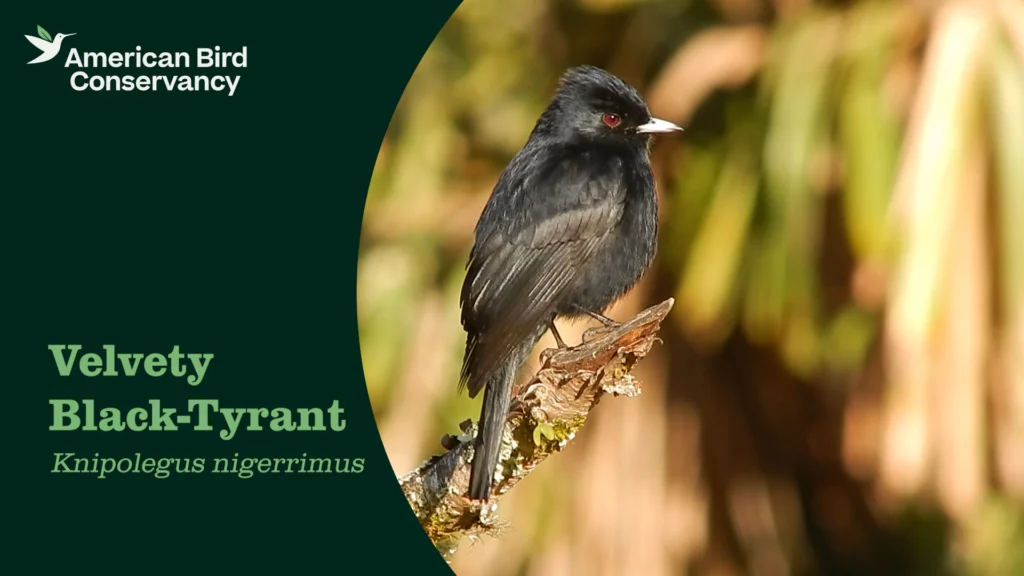
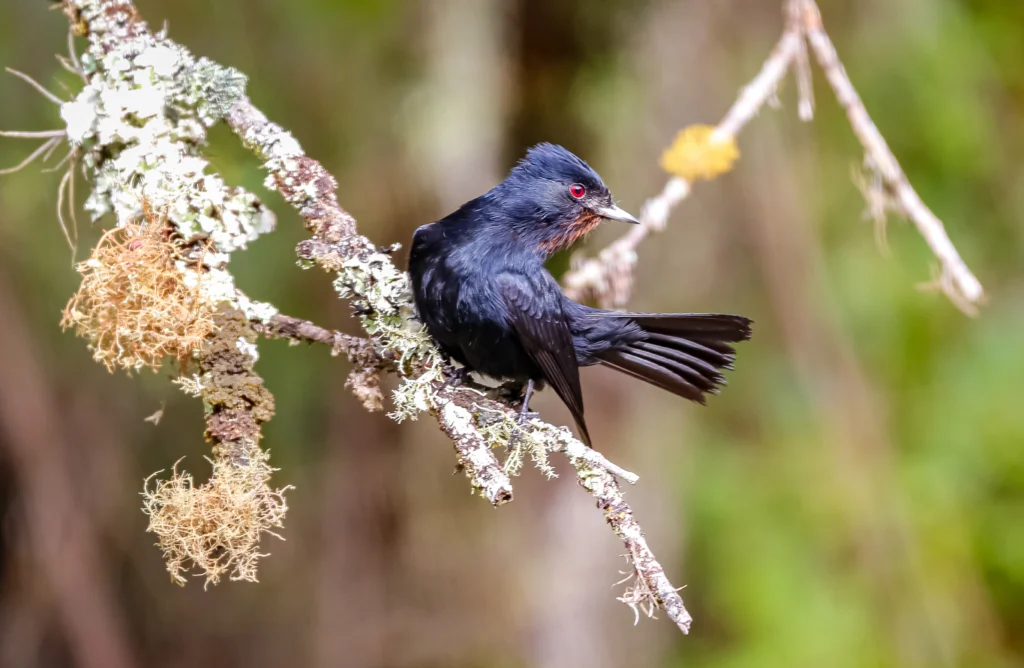
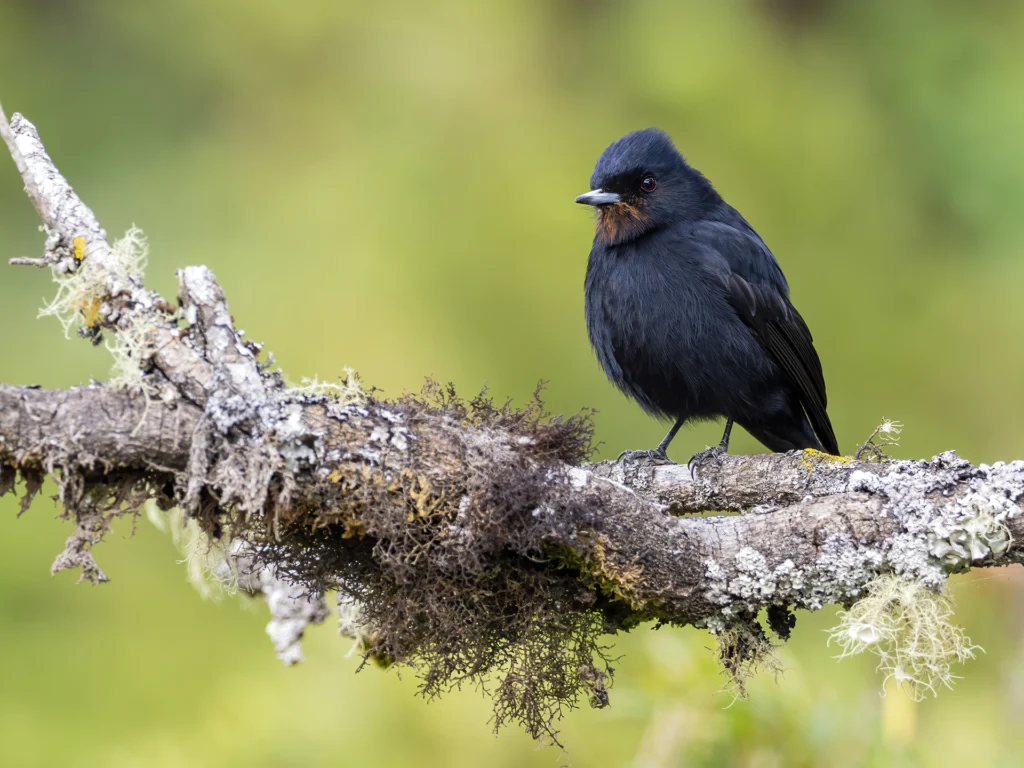
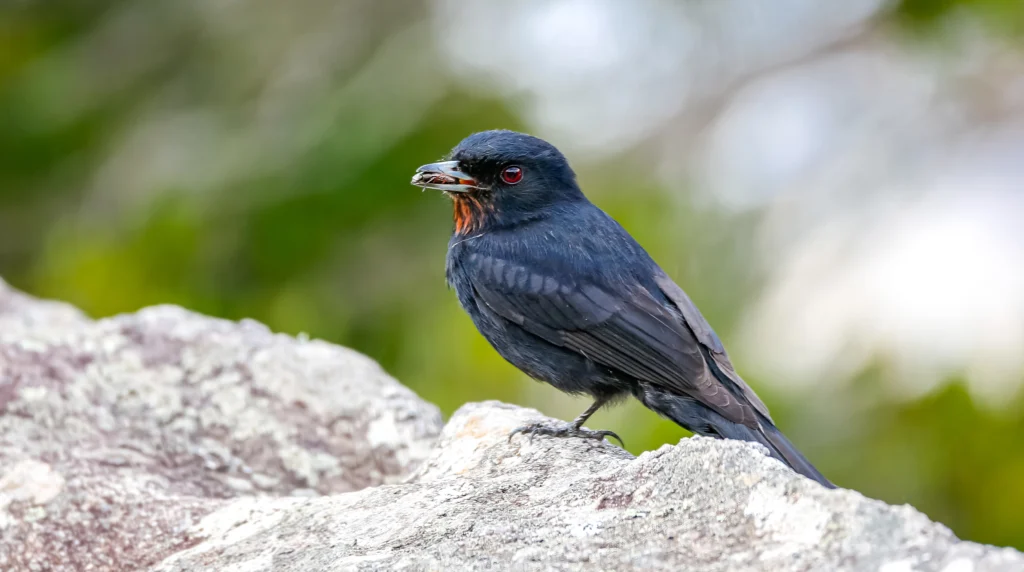
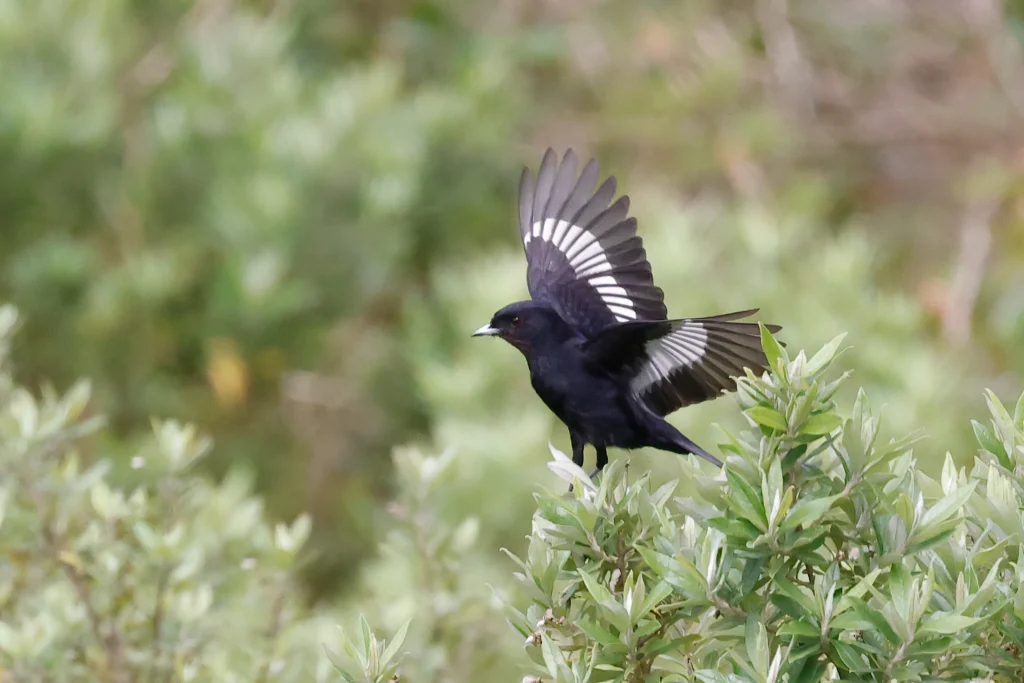
The male Velvety Black-Tyrant, true to its name, is entirely glossy blue-black with a small, bushy crest. The female is similar to the male, but lacks a crest and has reddish-brown streaking on the throat. Both sexes have white at the base of their primary wing feathers, which is hidden at rest but quite conspicuous in flight. This species is also notable for its dark red eyes.

Sounds

The male Velvety Black-Tyrant’s song, most often heard during display flights, consists of short, high-pitched see notes. Its call is a dry trilling krrr, sometimes preceded by a high-pitched note: see krrrrr.

Calls

Marco Cruz, XC356848. Accessible at www.xeno-canto.org/356848.

Song and calls

Ross Gallardy, XC415995. Accessible at www.xeno-canto.org/415995.

Habitat

The Velvety Black-Tyrant occurs in grassy and rocky habitats at altitudes ranging from 2,300 to almost 9,000 feet.

  • Grassland and shrubland
  • Rocky areas, including inland cliffs and mountain peaks
  • Dry forest

Range & Region

Range & Region


Specific Area
Brazil

Range Detail
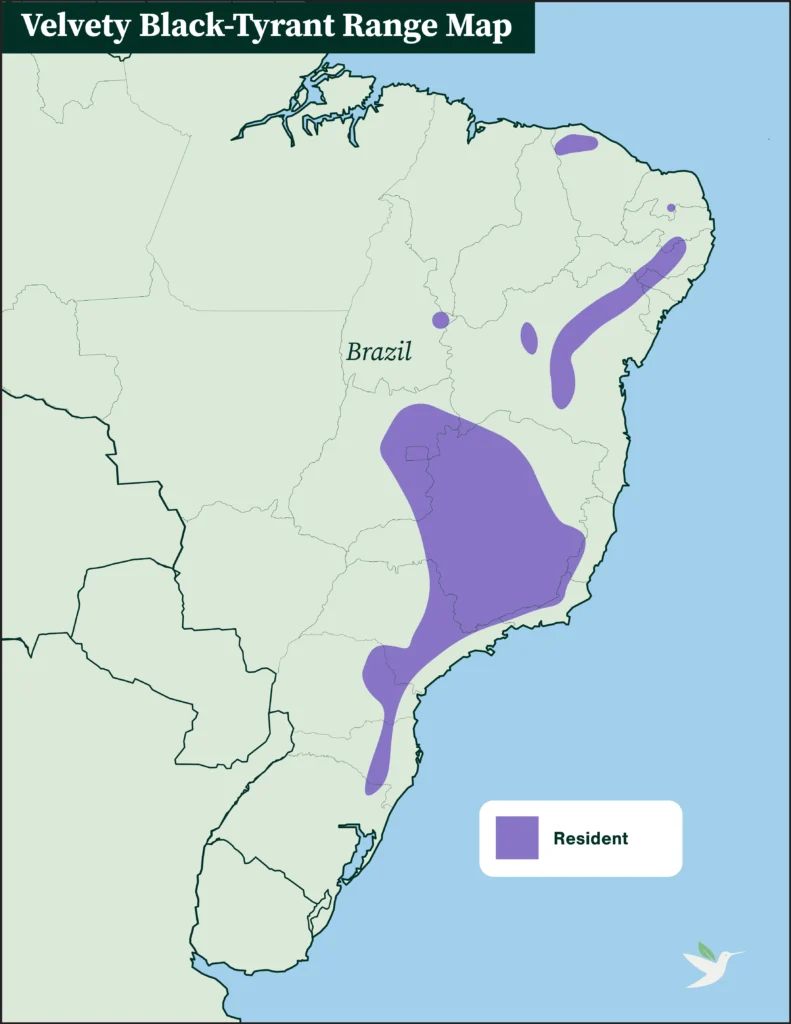
The Velvety Black-Tyrant is endemic to eastern Brazil, where it occurs in two separate populations in open grassy and rocky areas. One population can be found from the northeastern state of Pernambuco south to central Bahia, and the other is located further south, ranging from the state of Espírito Santo to Rio Grande do Sul.

Did you know?
Although most Velvety Black-Tyrants are resident, some make short altitudinal migrations during the austral winter months of June, July, and August.


Range
South America
Migration Pattern
Nonmigratory
Migration Distance
Nonmigratory

Life History

The Velvety Black-Tyrant’s genus name, Knipolegus, is a combination of the Ancient Greek words knips (insect) and legō (to pick). This evocative name, literally meaning “insect picker,” is an apt description of this bird’s insectivorous habits. 

Diet

Like other tyrant flycatchers, the Velvety Black-Tyrant primarily preys on insects, spiders, and other arthropods. It forages by sallying out from a lookout perch to grab prey mid-air, then circles back to return to the same place to devour its catch. It also gleans insect prey from the leaves of trees and shrubs.

Courtship

Although its courtship behaviors have not been described, the male Velvety Black-Tyrant likely employs display behaviors similar to those of other tyrant flycatchers, such as vocalizing with “dawn songs” and other specific calls to attract females, acrobatic aerial displays, and aggressive defense of its territory. Pairs are likely monogamous during the breeding season. 

Nesting

Scientists believe that the Velvety Black-Tyrant nests in crevices or burrows among rocks near streams. The nest itself is a cup made of roots and moss.

Eggs & Young

The female Velvety Black-Tyrant lays three brown-spotted white eggs, which she incubates alone while the male stands guard nearby. Both parents feed the chicks after hatching. Although specific data does not exist for this species, the young of closely related species usually fledge after 14 to 17 days in the nest. Parents continue to care for the young for several weeks after they fledge.