Listen to Forest Habitats

Forest Habitats

Forest Habitats

Includes coniferous and/or deciduous trees

Overview

The Western Hemisphere holds a range of forest habitats: from towering conifers in the cool, dry boreal forest to the north, to steamy forests with dense canopies in the tropics. The three major forest biomes — tropical, temperate, and boreal — are defined by their distance from the Earth’s equator. Though they vary widely in temperature, seasonality, and tree species, all three are linked by the outsized role they play in supporting thousands of bird species and by the threats they face.

Primary Habitat Differentiator
Tall Tree Canopy
Primary Foods for Birds
Flower Nectar
Insects
Nuts & Seeds
Small Fruits
Small Rodents
Primary Predators of Birds
Coyote
Fox
Raccoons
Snakes
Vegetation Examples
Coniferous Forests
Deciduous Forests

Habitat Description

All forests are habitats dominated by trees, but they can have very different characteristics like the habitat’s tree species composition, the age of the trees, and the soil type. Tree-filled landscapes in drier climates where trees may be sparse and allow more light to reach the ground below are sometimes referred to as woodlands, while forests are characterized by a greater density of trees thanks to higher precipitation. Whether they’re called woodlands or forests, both are important bird habitats.

Birds use every layer of a forest. Some, like warblers and parrots, tend to forage high up in the canopy, while others, including woodcocks and curassows, thrive in the brush on the forest floor.

Variations of Forest Habitats

White-browed Tit-Spinetail on thin branch. Photo by David Fisher, Neotropical Bird Club.

Tropical Forests

Located closest to the equator, tropical forests experience little variation in sunlight and temperature, and receive steady or cyclical rainfall, a predictability that keeps resources available year-round. Tropical rainforests are dense with vegetation and characteristically steamy, while tropical dry forests are hot and experience a long dry season punctuated by heavy rains. The stability of the climate in the tropics has led to booming biodiversity.

Cottonwoods Forest in the Fall with yellow leaves along a riverbank. Photo by Bryant Baker.

Temperate Forests

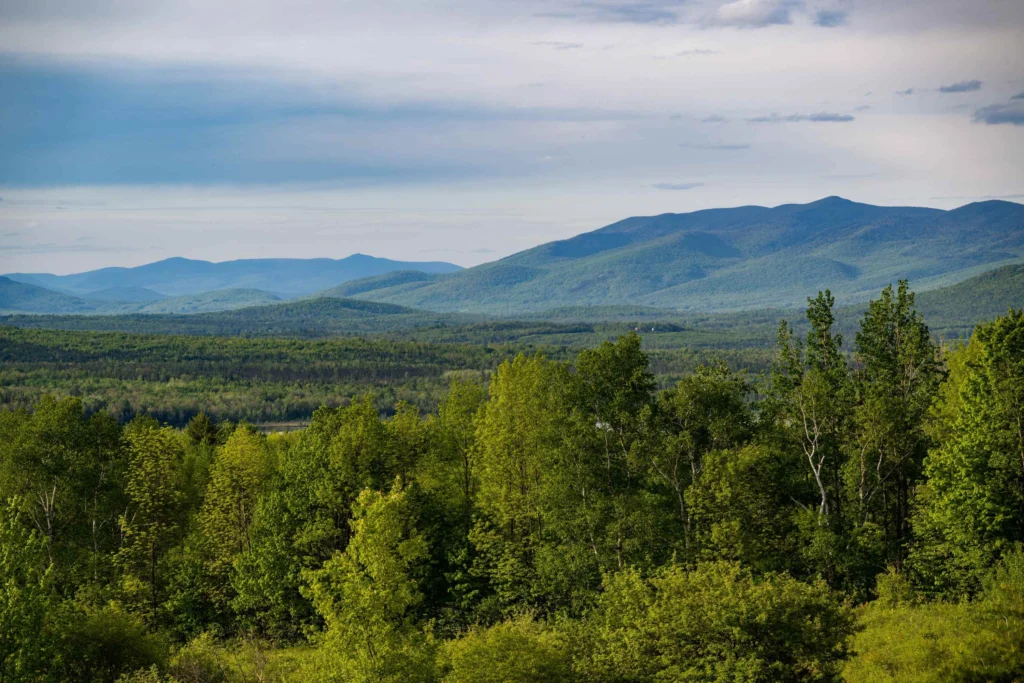
Temperate forests are located farther from the equator and experience the swing of the seasons, from snowy winters to sweltering summers. Temperate forests undergo stunning transformations as the leaves of deciduous trees change color each fall. Birds living year-round in temperate forests are well-suited to weather these changes, with adaptations that allow them to thermoregulate, stash or source food, and raise young at optimal times.

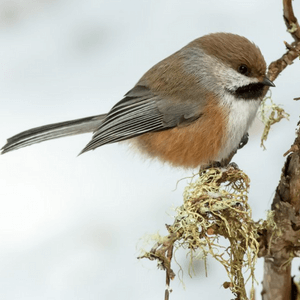
Boreal Chickadee

Boreal Forests

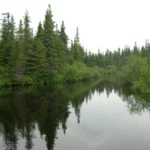
Millions of birds migrate north each year, bound for the Western Hemisphere’s bird nursery: the boreal forest. This region is dominated by spruces, pines, and larches and dotted with bogs, lakes, wetlands, and rivers. Also known as the taiga, this expanse of trees lies just south of the Arctic Circle and is the world’s largest intact forest, covering more than 1.2 billion acres in North America.

Threats to Forest Habitats

Birds need forests and people do, too. We have forests to thank for many of the products we use every day, for improved air quality, and for carbon sequestration. Our forests face a number of threats.

Deforestation

Timber harvesting can be an important part of a conservation management plan for certain forests, but too often areas undergo unchecked logging to clear land for agriculture and development.

Climate Change

Forests are vital to combating climate change because of their ability to sequester carbon, but forests themselves can be negatively impacted by changing temperatures and environmental conditions. Trees cannot always adapt quickly enough.

Learn More

Natural Disasters

As the climate changes, flooding and wind can knock down trees and destabilize soil. While fire is a natural occurrence in some habitats, warming temperatures have caused fires to grow in intensity and severity, and allow non-native species to proliferate.

Conservation Efforts

We work with partners throughout the Western Hemisphere to conserve the forests birds need, whether they are year-round residents or making a pitstop. Together, we have planted more than 8 million trees to date and collaborated with private and public partners across the Americas to restore and maintain forest health and steward forests for the benefit of birds using best conservation practices.

Birds from the Forest Habitat