Overview
About
A bird that drinks blood? The aptly named Vampire Ground-Finch fills the bill — literally! Like other sanguivorous animals, including mosquitoes and leeches, this bird gets vital nourishment from blood. Although they may seem gruesome, the Vampire Ground-Finch’s taste for blood is actually a clever adaptation to its arid environment.
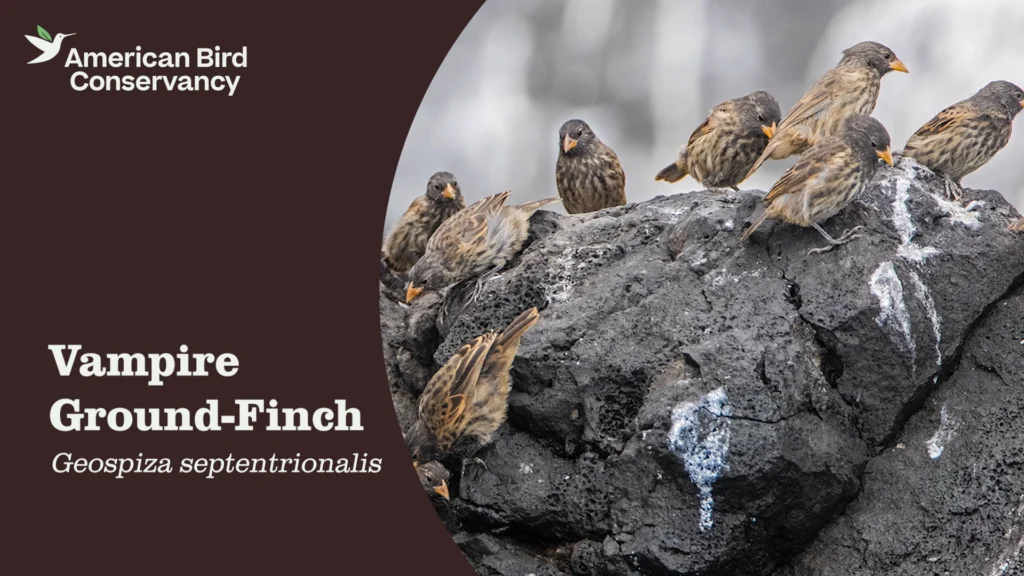
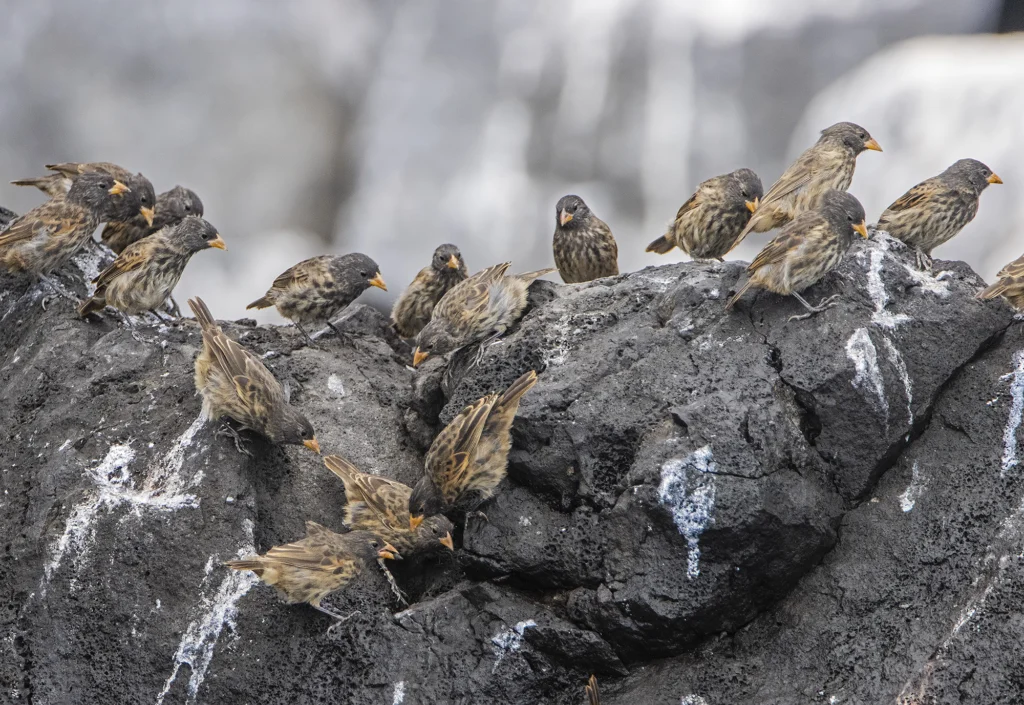
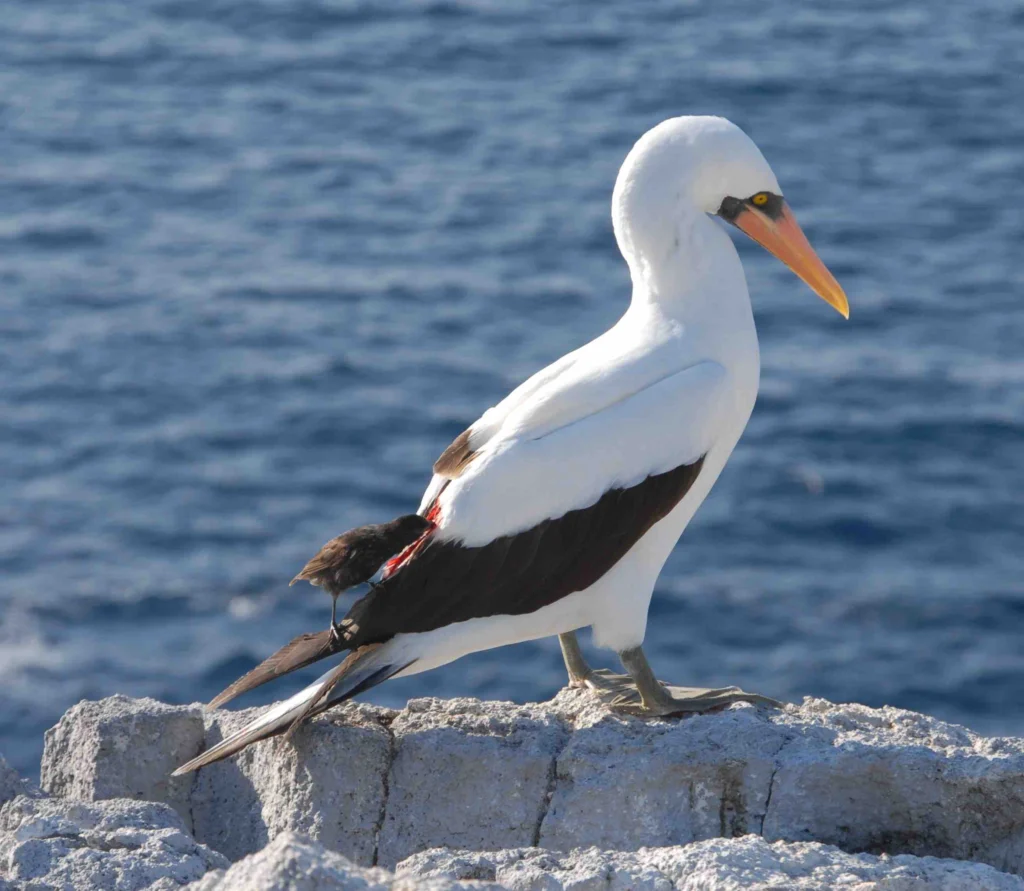
Researchers theorize that its blood-slurping behavior evolved from the Vampire Ground-Finch’s habit of cleaning parasites from the plumage of larger seabirds, such as boobies, that nest on its home islands. Pecking at parasites with its long, sharp bill eventually led to piercing the larger seabird’s skin, drawing blood that the finch could utilize as food during dry seasons when its other fare became scarce. Groups of Vampire Ground-Finches will gather to drink from these open wounds, but surprisingly, their feeding does not appear to harm the larger birds.
The Vampire Ground-Finch was once considered a subspecies of the more widespread Sharp-beaked Ground-Finch, another of “Darwin’s finches.” It was recently recognized as a separate species due to genetic, morphological, and song differences. The two separate populations of Vampire Ground-Finch, on Wolf and Darwin Islands, may actually be distinct subspecies; investigation into their differences is ongoing.

Threats
Birds around the world are declining, and many of them, like the Vampire Ground-Finch, exist only in extremely restricted ranges. All birds, from the rarest species to familiar backyard birds, are made more vulnerable by the cumulative impacts of threats like habitat loss and invasive species.
Invasive Species
The bot-fly Philornis downsi, first discovered in the Galápagos in 1997, reduces fledgling success in endemic landbirds such as the Vampire Ground-Finch. It has not yet invaded Darwin and Wolf Islands, but it has the potential to do so. The introduction of avian pox is another potential risk to this bird.
Climate Change
A changing climate presents a suite of often unpredictable threats to birds. Extreme weather events, droughts, excessive rainfall, habitat loss due to rising sea levels, and intense heat are just a few ways climate change puts birds at risk.
Habitat Loss
Habitat loss is a universal threat to birds. For the Vampire Ground-Finch, introduced insect pests or plant diseases could drastically alter or destroy the vegetation the finches rely on as their habitat. Habitat loss contributes to bird population declines of both very range-restricted, nonmigratory species such as the Vampire Ground-Finch, as well as migratory birds. Suitable habitat is the foundation of what birds need to thrive.
Conservation Strategies & Projects
Birds need our help to overcome the threats they face. At ABC, we’re inspired by the wonder of birds and driven by our responsibility to find solutions to meet their greatest challenges. With science as our foundation, and with inclusion and partnership at the heart of all we do, we take bold action for birds across the Americas.
Create & Maintain Reserves
It is extremely important to continue to limit access to the two tiny islands that comprise the Vampire Ground-Finch’s range, as this species is vulnerable to the introduction of non-native predators and disease.
Address Ocean/Island Issues
Oceans and islands host some of the world’s most rapidly declining birds. ABC works with partners throughout the Western Hemisphere to address the problems facing these fragile ecosystems and help the birds they support become more resilient.
Bird Gallery
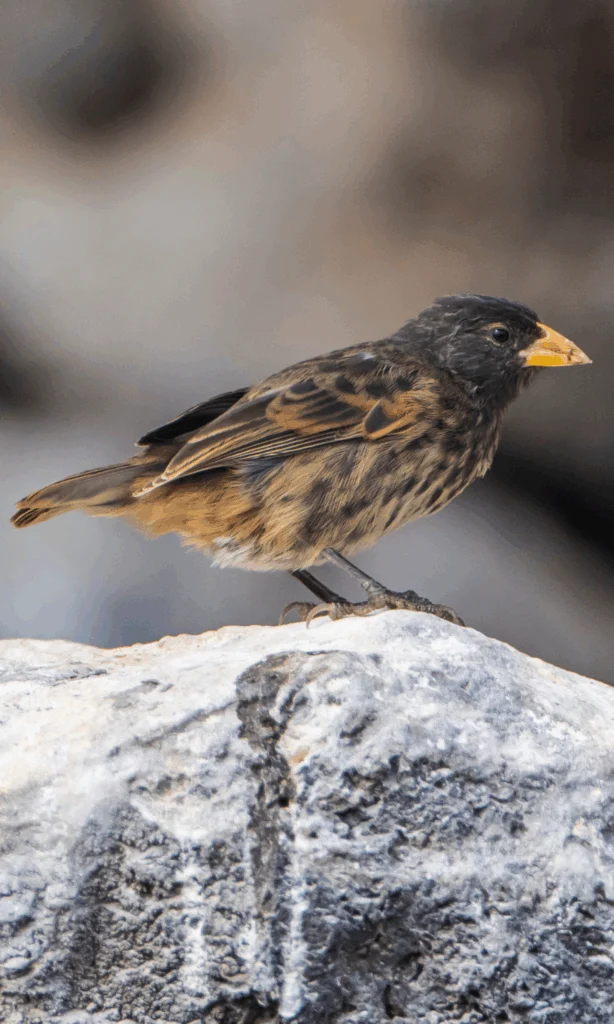
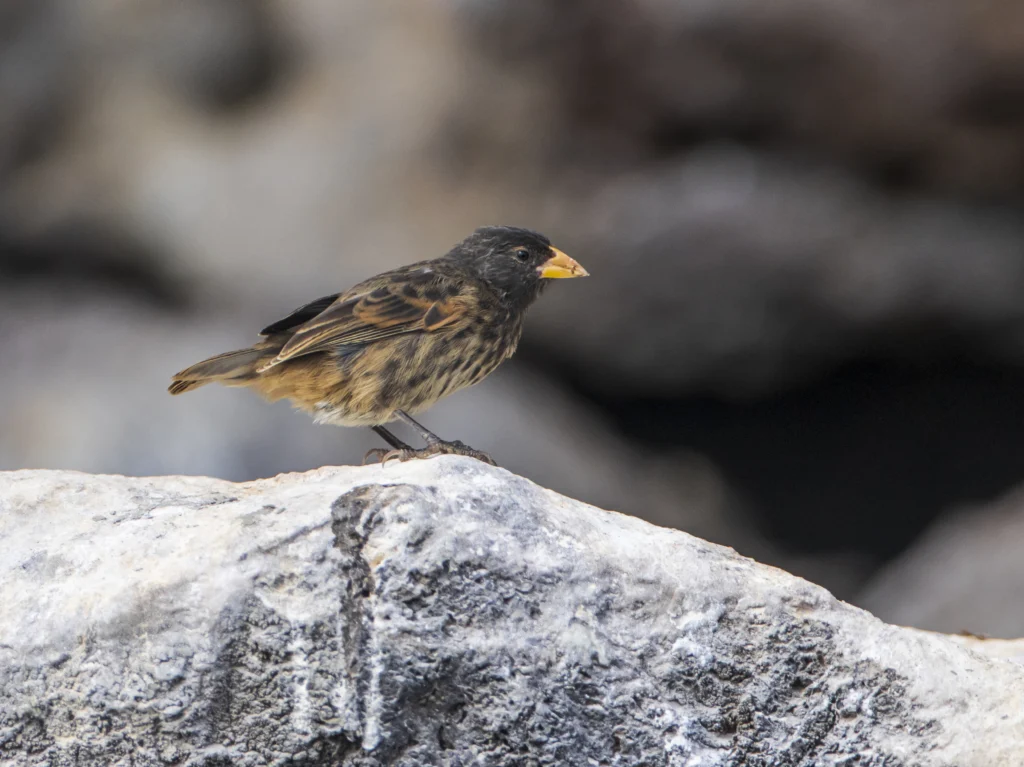
The Vampire Ground-Finch has a sharply pointed bill with a longer, downcurved upper mandible. Also notable is its extremely short tail and dark legs and eyes.
This species is sexually dimorphic (males and females look different). The male Vampire Ground-Finch is clad in a sepulchral black, relieved only by its white- fringed undertail coverts (the feathers that transition from belly to tail). The female is dark olive-brown on the head, throat, and upperparts, and has buffy underparts patterned with dark brown streaking. Her dark brown wings have cinnamon wingbars, and she has a partial buffy eyering. Juveniles show an intermediate plumage, with black heads, variable and diffuse streaking on the belly and back, and blackish wings with narrow cinnamon edges.
Sounds
The songs of the Vampire Ground-Finch appear to vary geographically, which may suggest two distinct subspecies. Vampire Ground-Finches on Darwin Island sing an irregular series of short, low-pitched buzzy notes reminiscent of the Red-winged Blackbird, interspersed with thin high-pitched notes. Their counterparts on Wolf Island sing a chirping double-noted chew-chew. The calls of this species include musical and mechanical chirps.
Credit: Dušan M. Brinkhuizen, XC813992. Accessible at www.xeno-canto.org/813992.
Credit: Vampire Ground-Finch by David Day; Cornell Lab of Ornithology | Macaulay Library
Habitat
The Vampire Ground-Finch is found in low native scrub, cacti, and grasses that are highly adapted to drought-like conditions, and flower and grow leaves only during the island’s brief rainy season.
- Dry, thorny scrub
- Prickly pear cactus
Range & Region
Specific Area:
Darwin and Wolf Islands in the Galápagos Islands
Range Detail:
Tiny Darwin and Wolf Islands in the far northwestern corner of the Galápagos Islands are comprised of the tips of extinct volcanoes. These far-flung specks of basalt are among the smallest islands in the Galápagos archipelago, each just shy of a half-mile in area. Neither island is open to land visits (except by researchers), but the surrounding waters are popular with scuba divers. In Spanish, the two islands are known as Los Hermanos (The Brothers) or los Dos Hermanos (the Two Brothers).
Although uninhabited, these islands are rich in bird and marine life. Aside from the Vampire Ground-Finch, Darwin and Wolf Islands host Magnificent and Great Frigatebirds, Sooty Terns, and Blue-footed, Red-footed, and Nazca Boobies. Their marine life includes large schools of hammerhead sharks, whale sharks, sea turtles, manta rays, dolphins, and a wide variety of fish.
Did you know?
Darwin never encountered or described the Vampire Ground-Finch, as he only visited the main Galápagos Islands. The first known landing on Darwin Island (by helicopter) did not occur until 1964.
Life History
The Vampire Ground-Finch’s gut microbiome is different from that of related finches and is actually more like a vampire bat’s! This unusual adaptation allows it to digest blood and animal protein.
Diet
During the rainy season, the Vampire Ground-Finch feeds on seeds, insects, and small invertebrates. Those on Wolf Island have also been observed taking nectar from Galápagos prickly pear flowers. During the dry season, these foods become scarce, and the Vampire Ground-Finch switches to a protein and moisture-rich diet of seabird blood and eggs (which the finches team up on to break open), as well as partially regurgitated fish and seabird guano.
Courtship
Little is known about this species’ courtship behaviors. Like its near relatives, the Vampire Ground-Finch likely breeds during the wet season. In particularly wet years, related species will lay multiple clutches during a breeding season.
Nesting
Although the nests of the Vampire Ground-Finch have not yet been described, they are likely similar to those of other “Darwin’s finches” in the genus Geospiza. In these species, males build a spherical nest of grasses and other vegetation, with a side entrance, usually placed among the thorns in a Galápagos prickly pear plant.
Eggs & Young
Like other finches in the genus Geospiza, the female Vampire Ground-Finch likely lays a clutch of three to four whitish eggs. She does most of the incubation, which lasts about 12 days. Both parents probably feed the young, which grow quickly and fledge after approximately two weeks.