It’s easy for bird lovers to develop a bit of tunnel vision when it comes to male birds — after all, they tend to have brighter colors and more dazzling songs than their female counterparts. But female birds are fascinating, too, and just as deserving of our attention and admiration.
One of the most easily recognizable female birds in the backyards of eastern, central, and southwestern North America is the female Northern Cardinal, and it’s time we gave her the recognition she’s due!
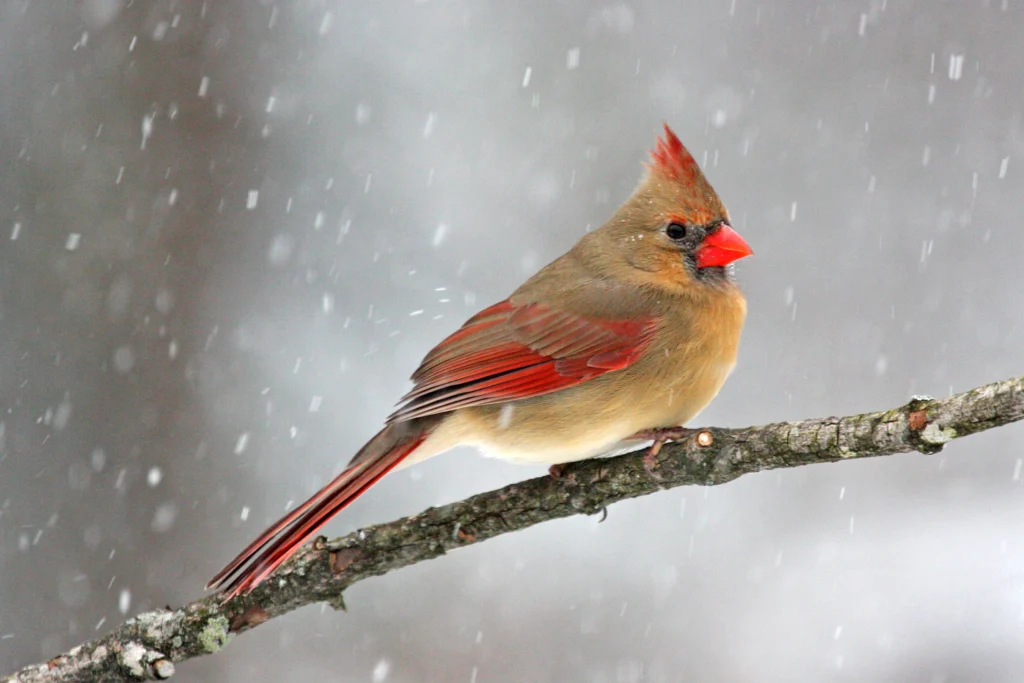
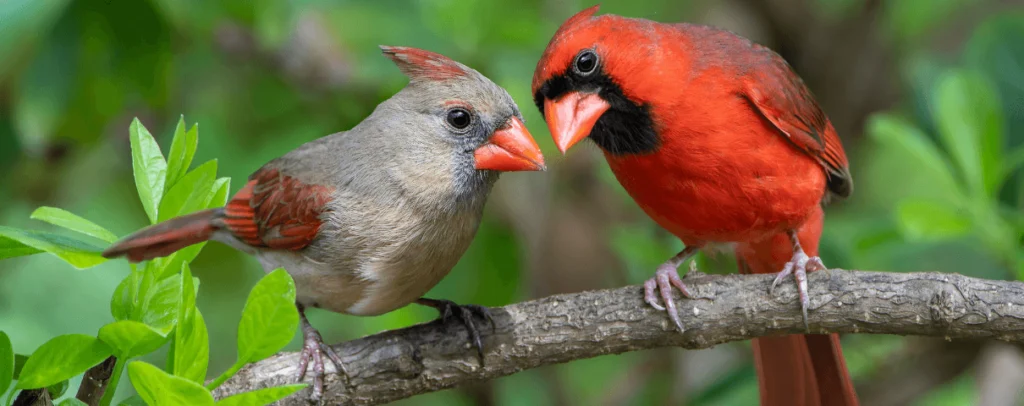
Although lacking the brilliant red plumage of the male, the female cardinal has an elegant beauty all her own, with a warm, buffy tan color over her back, breast, and sides; red-orange on the wings, tail, and crown; and a blackish “mask.” Female cardinals also have a crest and a chunky red-orange bill, traits they share with males.
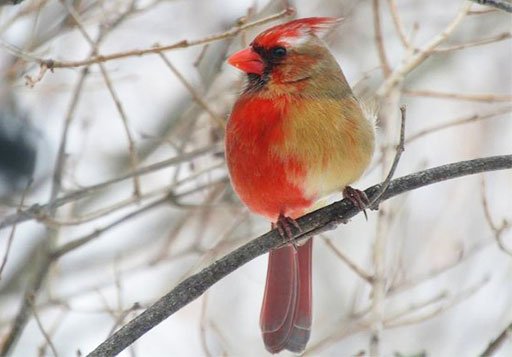
You can easily distinguish adult males and females by color: In contrast to the female’s muted plumage, males are bright red birds. (Northern Cardinals get their name from this color, which reminded early European settlers of a Catholic cardinal’s red robes.) Females are also slightly smaller than males on average, although the difference is subtle.
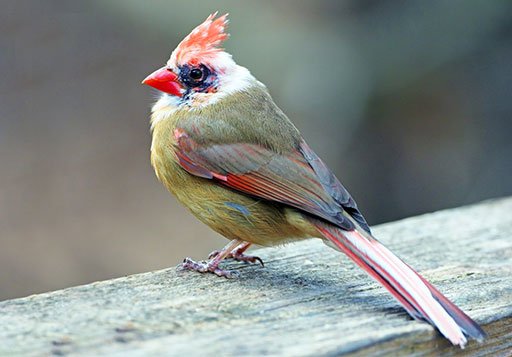
Just after fledging, juvenile male and female cardinals look alike. Both look like duller versions of adult females, with a gray or black bill, a shorter crest, and lack of the adult female’s red-orange highlights. While birds molting out of juvenile plumage and splotched with red can be identified as males, birds with dark bills and “female-like” plumage are not distinguishable as male or female.
Depending on where you live, it is not rare to see a female cardinal. The Northern Cardinal is one of North America’s most abundant bird species and is found year-round throughout the eastern and central U.S., in the desert Southwest, across much of Mexico, and even in northern Guatemala and Belize.
In recent decades, its range has crept northward, through New England and into southeastern Canada. This bird has also been introduced to Hawai`i and Bermuda.