Overview
About
In 1879, a small, rather chunky yellow-green Hawaiian honeycreeper with a thin, short bill was collected on the island of Maui, but the species was not formally described until 1893. Early naturalists referred to this bird, now known as the Maui ʻAlauahio, as a “creeper” due to its foraging style.
Like so many native Hawaiian honeycreepers such as the ʻIʻiwi and the Palila, the Maui ʻAlauahio was once abundant in many areas where it is no longer found. This range contraction was caused by the introduction of disease-bearing, non-native mosquitoes to the archipelago, as well as habitat destruction by non-native mammals and humans.
An ʻAlauahio subspecies (Paroreomyza montana montana) once existed on the island of Lānaʻi, but was last sighted in 1937 and is now considered extinct.
Threats
Birds around the world are declining, and many of them, like the ʻAlauahio and other Hawaiian honeycreepers, are facing urgent, acute threats. These birds are also at risk from climate change and other threats that pose a universal threat to birds.
Habitat Loss
Native forests on Maui have been destroyed by overgrazing by animals like feral cattle, sheep, pigs, and goats, which results in soil erosion. Feral pigs also dig wallows that serve as breeding areas for introduced, disease-carrying mosquitoes. Important forest habitat has also been lost to human settlement.
Cats & Invasive Species
Introduced ungulates such as deer, pigs, and sheep degrade essential ʻAlauahio habitat. Avian malaria and avian pox, transmitted by non-native mosquitoes introduced to the Hawaiian Islands, have proven deadly for Hawaiʻi’s honeycreepers. A single bite from a mosquito carrying avian malaria can be fatal. The presence of these mosquitoes now restricts the ʻAlauahio and other native birds to elevations above 4,500 feet on Maui.
Climate Change
Rising global temperatures may allow disease-carrying introduced mosquitoes to spread into higher elevations, further restricting the ʻAlauahio’s range.
Conservation Strategies & Projects
At ABC, we’re hard at work to find solutions to meet the myriad challenges facing Hawaiʻi’s native birds. Ongoing conservation measures for the Kiwikiu (Maui Parrotbill), another Maui endemic, likely benefit the Maui ʻAlauahio as well.
Controlling Mosquitoes
ABC belongs to a multi-agency partnership, Birds, Not Mosquitoes, that is deploying non-biting, lab-reared male mosquitoes carrying a naturally occurring bacteria that results in sterile eggs when the released males mate with wild females. With time, the population of invasive, malaria-carrying mosquitoes will be reduced in Hawaiʻi.
Habitat Conservation
Habitat is the foundation for birds’ survival. On Maui, ABC works with a variety of partners, including the Hawaiʻi Department of Land and Natural Resources–Division of Forestry and Wildlife and the Maui Forest Bird Recovery Project, to restore and protect native habitats.
Support Petitions & Advocacy
ABC urges its members and the public to provide support for native Hawaiian bird species such as the Maui ʻAlauahio through financial support or by speaking out about and spreading the word about the pressing needs of Hawaiian birds.
Bird Gallery
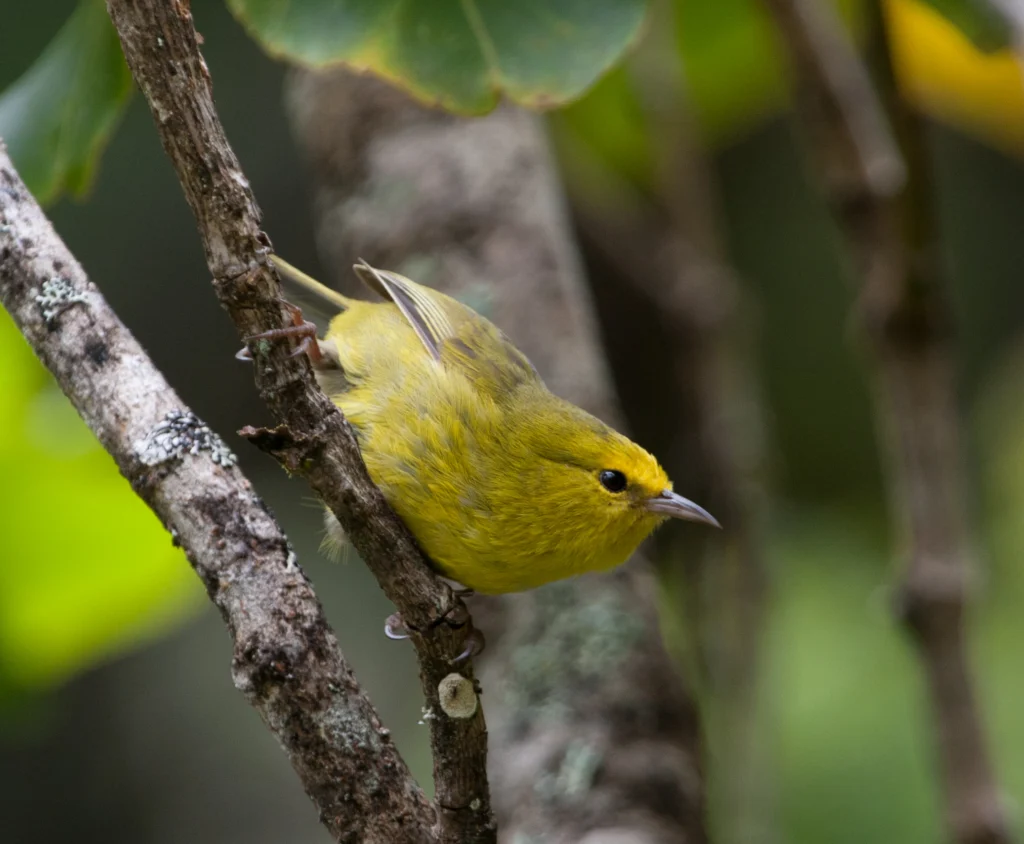
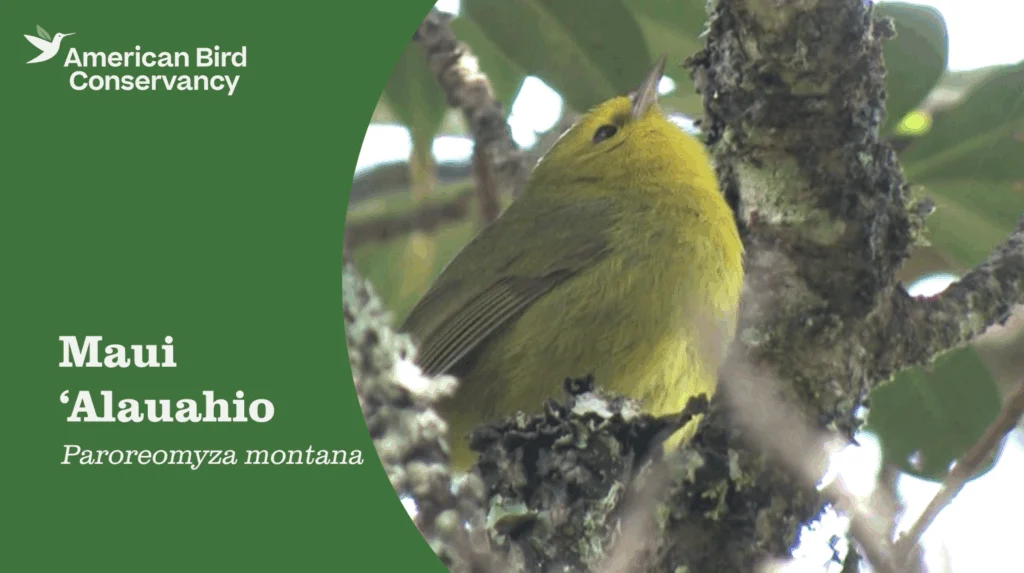
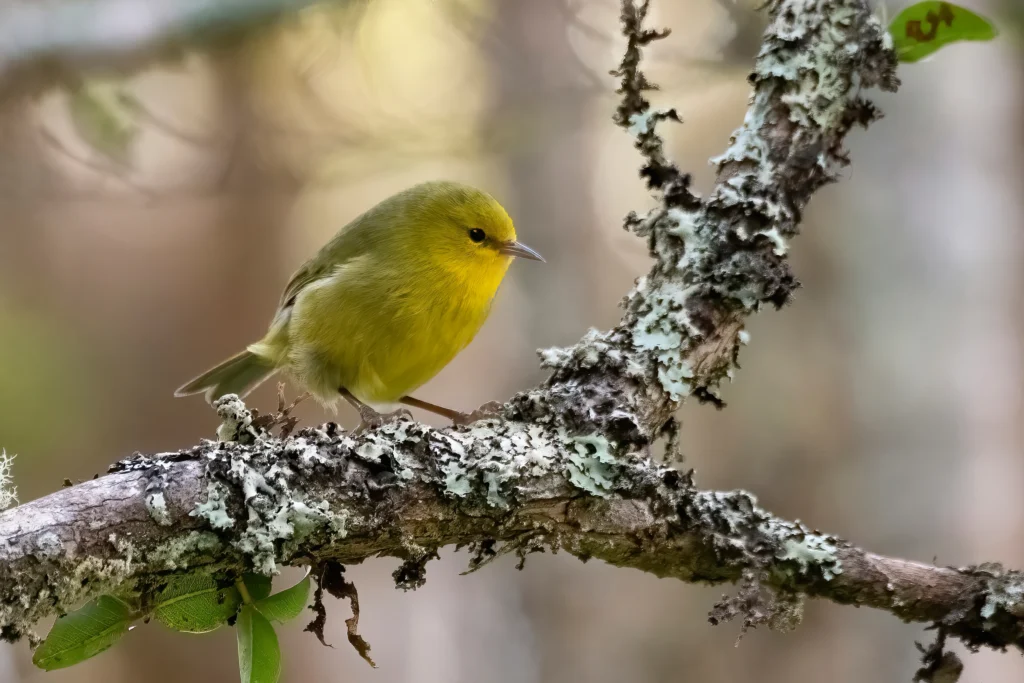
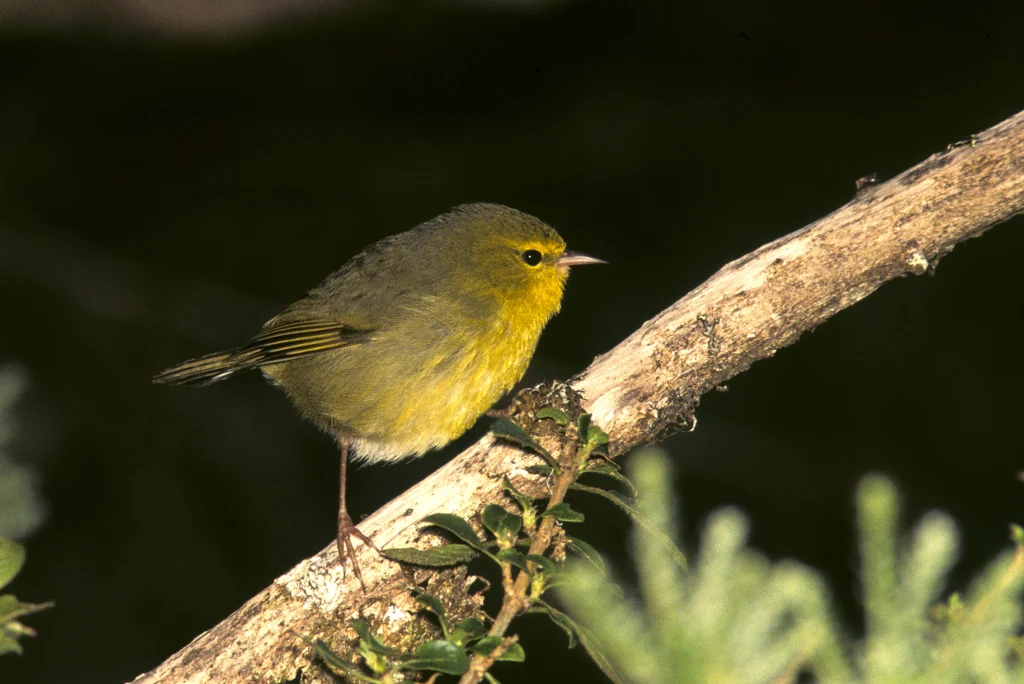
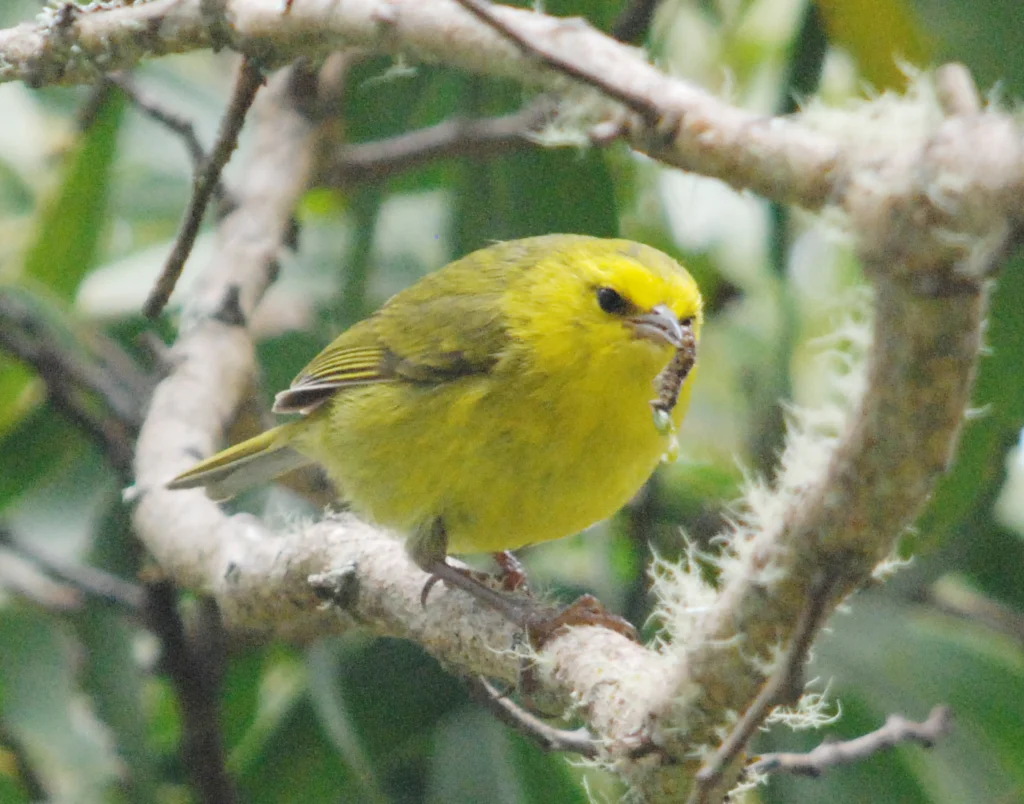
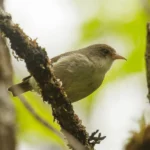
The Maui ʻAlauahio is a small, plump, yellow-green Hawaiian honeycreeper with a short, thin, slightly curved bill. The adult male has a bright yellow face, throat, and belly that contrasts with an olive-green back and wings. The female is similar, but not as bright. Juveniles are duller still. This species does not reach full adult plumage until its third year.
Sounds
Only the male Maui ʻAlauahio sings. His main song consists of ascending phrases of three to five syllables, described as ch-k-chewy-k-wee k-chewy-k-wee k-chewy-k-wee-k. Although the male sings this song year-round, he is most vocal during courtship and nesting periods. The male also sings a “whisper song,” a quiet, complex, and rambling vocalization that frequently incorporates chip calls. Juveniles and females also give a begging call to solicit feeding.
Both sexes utter a loud, often rapidly repeated chip call that may be used as a warning or to keep in contact with other individuals.
Frank Lambert, XC58973. Accessible at www.xeno-canto.org/58973.
Credit: Josep del Hoyo, Macaulay Library at the Cornell Lab of Ornithology. Accessible at https://macaulaylibrary.org/asset/203926441.
Habitat
The Maui ‘Alauahio can be found in montane forests and scrubland.
- Inhabits wet montane forests of native ʻōhiʻa, sub-alpine native māmane scrub with scattered ʻōhiʻa, and dry and mesic forests of introduced conifer and eucalyptus species
Range & Region
Range & Region
Specific Area
Island of Maui in Hawaiʻi
Range Detail
The Maui ʻAlauahio can be found in montane forests above 4,500 feet in altitude on the slopes of the Haleakalā volcano in east Maui. It has been extirpated (made locally extinct) from the western part of Maui.
Did you know?
Like other native Hawaiian forest birds, the Maui ʻAlauahio can only live above the deadly “mosquito zone,” which on Maui is over roughly 4,500 feet in altitude. Before the introduction of mosquitoes, the Maui ʻAlauahio was also found in lowland forests.
Life History
Both sexes of the Maui ʻAlauahio defend a 2.5- to 5-acre territory throughout the year. Pairs aggressively chase similar-sized birds such as ʻApapane away from their home range. Unusual among Hawaiian honeycreepers, Maui ʻAlauahio pairs have “helpers” (usually offspring from a previous year) that assist at the nest.
Diet
Almost entirely insectivorous, the Maui ʻAlauahio forages for arthropods and grubs while creeping its way along trunks, branches, and twigs. It finds prey by flipping over bark, probing lichen, and gleaning from plant stems and leaves. This species may also sip nectar from native flowers.
Maui ʻAlauahio are usually seen foraging in family groups or pairs. They will sometimes follow Kiwikiu to take prey items uncovered by that bird’s excavations.
Courtship
The Maui ʻAlauahio forms monogamous lifelong pair-bonds, although extra-pair copulation is often observed. The male sings during high-flying displays for potential mates. He will also court a potential mate by presenting her with small bits of vegetation.
Nesting
The nesting season of the Maui ʻAlauahio lasts from April through July, with most nest building occurring from late April through early May. Only the female builds the nest, although her mate will offer her bits of vegetation during the process. The nest is an open cup of moss, lichens, and grass; other materials may be added depending on local conditions. Nests are bound together with spider silk and egg sacs. The female finishes her nest by molding the interior with her body.
Eggs & Young
The female Maui ʻAlauahio lays a clutch of two light-colored, spotted eggs, which she incubates for 16 to 18 days, while her mate brings her food. After the female’s eggs hatch, she broods the naked, helpless young, and the pair takes turns feeding them, assisted by nest “helpers,” second-year birds from the previous year’s brood.
ʻAlauahio nestlings leave the nest after 17 to 19 days, but are still fed by both adults and helpers for several more months. Juvenile Maui ʻAlauahio remain with their family group for 18 to 20 months, becoming the next generation of nest helpers.
Meanwhile, the second-year birds, who also remain with the family group through the following autumn or winter, enter their third year and disperse to find mates and begin their first breeding season.