Overview
About
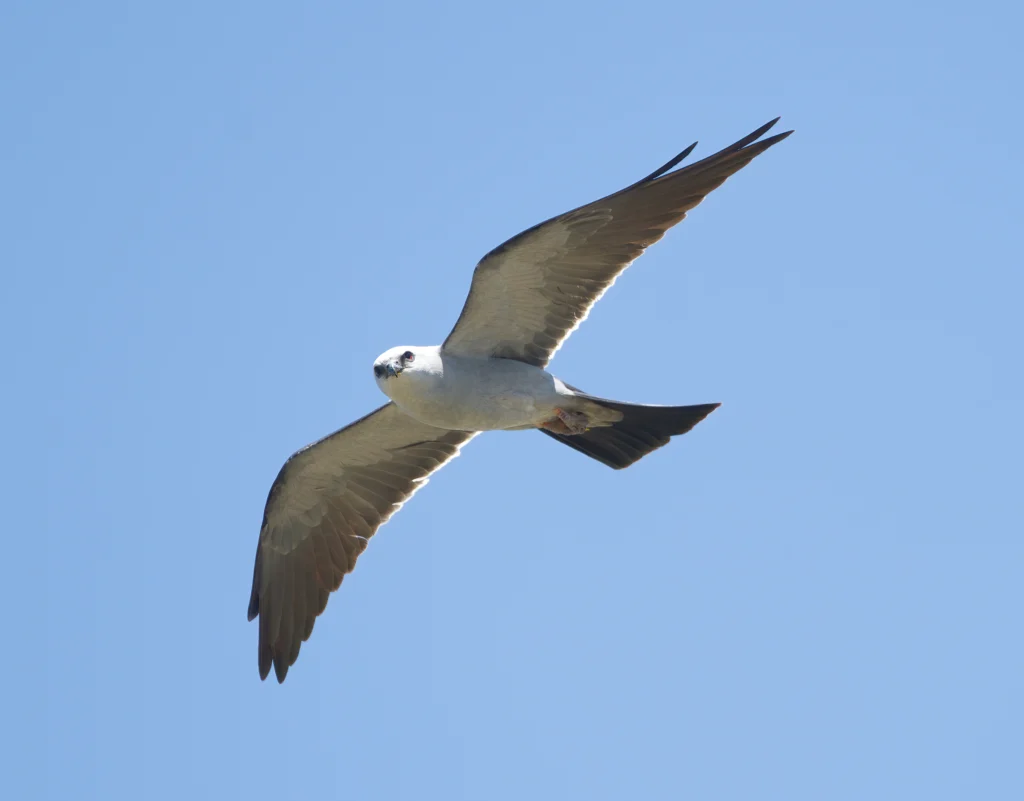
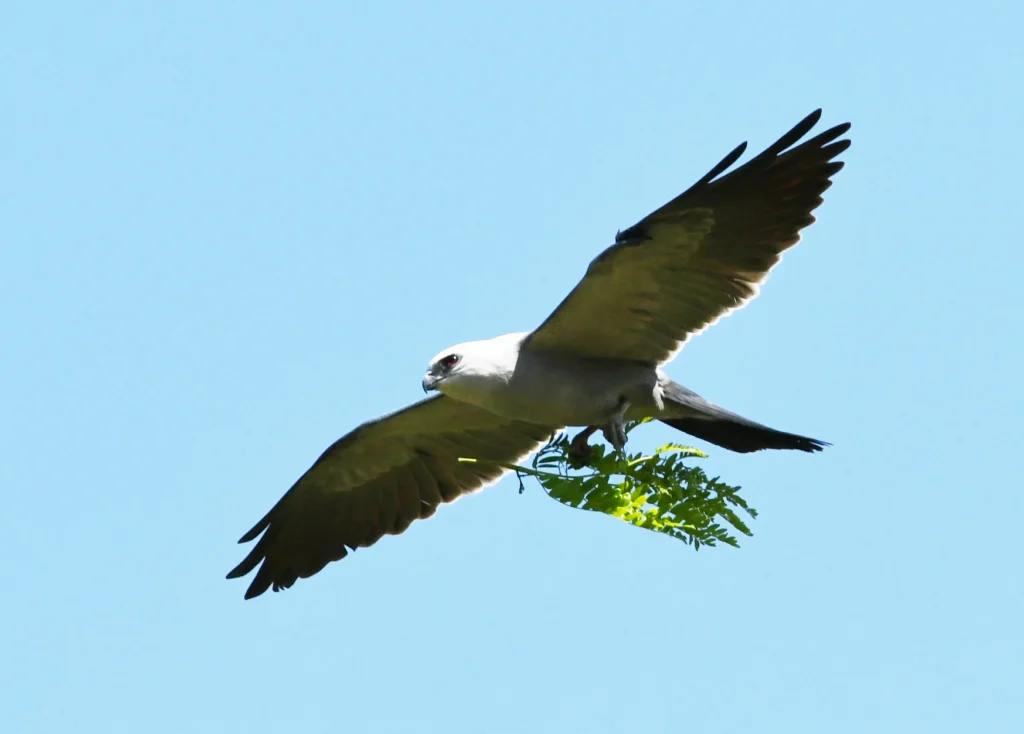
With pearlescent gray feathers and a sleek silhouette, the Mississippi Kite glides gracefully through the skies on wingbeats that manage to look effortless. While this medium-sized raptor with long, pointed wings and a squared-off tail may resemble a Peregrine Falcon in flight, the Mississippi Kite’s bouyant and easy flight can quickly distinguish it from the rapid, businesslike flight of the falcon. Its aerial acrobatics have earned the kite nicknames like “Hovering Kite.”
A long-distance migratory species, the Mississippi Kite breeds throughout the southern and central United States, making use of wooded areas in a range of settings — in large, low-lying forest tracts, windbreaks (stands of wind-resistant trees and shrubs) in prairies, and even in urban settings. Their habitat use and even their social behaviors vary throughout their range, with kites in the west being more likely to nest in colonies than their counterparts in the east.
Threats
The global Mississippi Kite population is increasing, and its range has expanded into parts of the Southwest since the mid-20th century. Even so, the cumulative impacts from threats like habitat degradation and loss, pesticide use, and collisions may make the Mississippi Kite more vulnerable across parts of its range.
Habitat Loss
In the southeastern U.S., the loss and fragmentation of mature hardwood forests can have negative effects on Mississippi Kites. Nesting in the Great Plains can be affected by the loss of shelterbelts (stands of trees planted as windbreaks in prairies and fields), and by the loss of riparian trees in the Southwest.
Pesticides & Toxins
Pesticide spraying can lead to eggshell thinning in Mississippi Kite clutches, due to this bird’s insect-heavy diet, and can deplete insect populations that kites need for food. Pesticide use can also affect populations in agricultural regions of South America during the nonbreeding season.
Glass Collisions
Mississippi Kites, especially those nesting in more urban areas, are sometimes killed by collisions with vehicles. Collisions with wind turbines are a potential concern.
Conservation Strategies & Projects
ABC is active in sustaining and managing healthy forests needed by the Mississippi Kite and other birds as a partner in the Lower Mississippi Valley Joint Venture, through our involvement in the Sustainable Forestry Initiative, and with partners such as International Paper throughout the Southeast.
Restoring Habitat
Mississippi Kites thrive in managed forest landscapes, where a mosaic of forest conditions provides for nesting, roosting, and foraging. ABC works with private landowners to incorporate bird-friendly forest conservation practices, including maintaining large tree stands that kites need for nesting, alongside harvest areas, where the birds frequently forage.
Avoiding Pesticides & Toxins
ABC works with partners at the state and federal levels in the U.S. to call for the regulation or cancellation of the pesticides and toxins most harmful to birds. We’ve developed innovative programs, including working directly with farmers to use seeds free from neonicotinoid coatings, and continue our research on the toll of pesticides on birds.
Rethinking Wind Turbines
Many migrating raptors are vulnerable to collisions with stationary structures like wind turbines. If not sited properly, wind turbines can spell disaster for migrating birds. ABC’s science-backed approach to Bird-Smart wind energy identifies the most critical areas for birds and provides guidance to the wind industry to support safer wind solutions for birds.
Bird Gallery
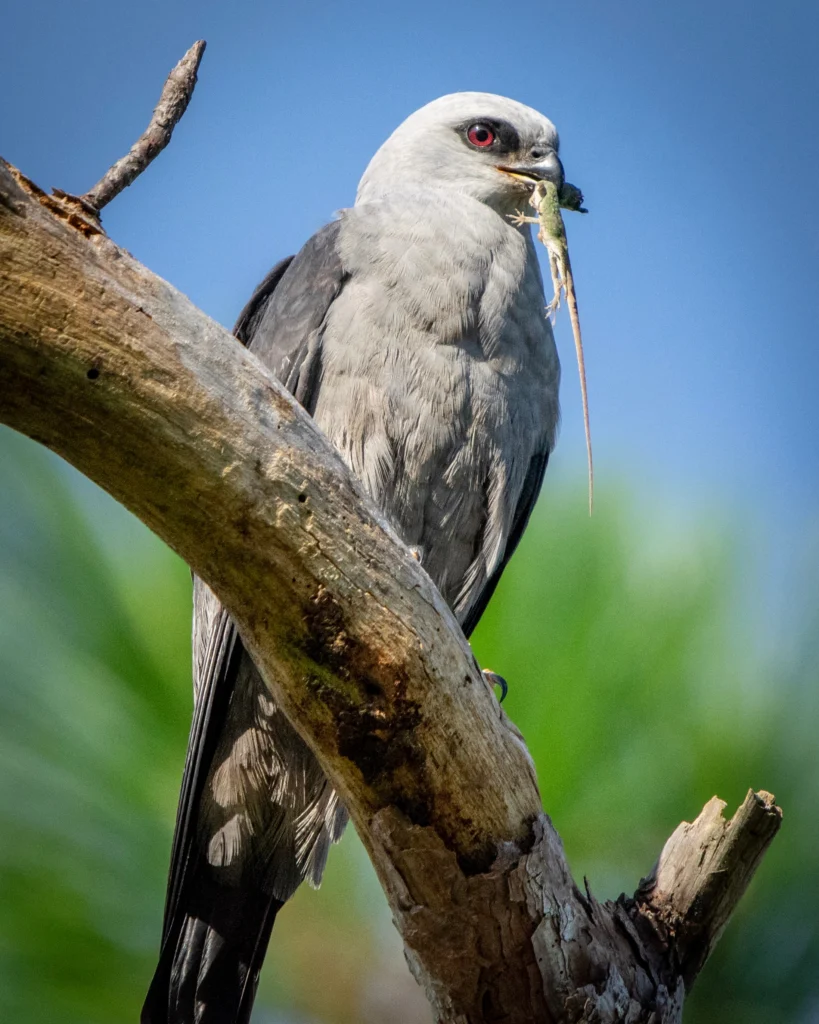
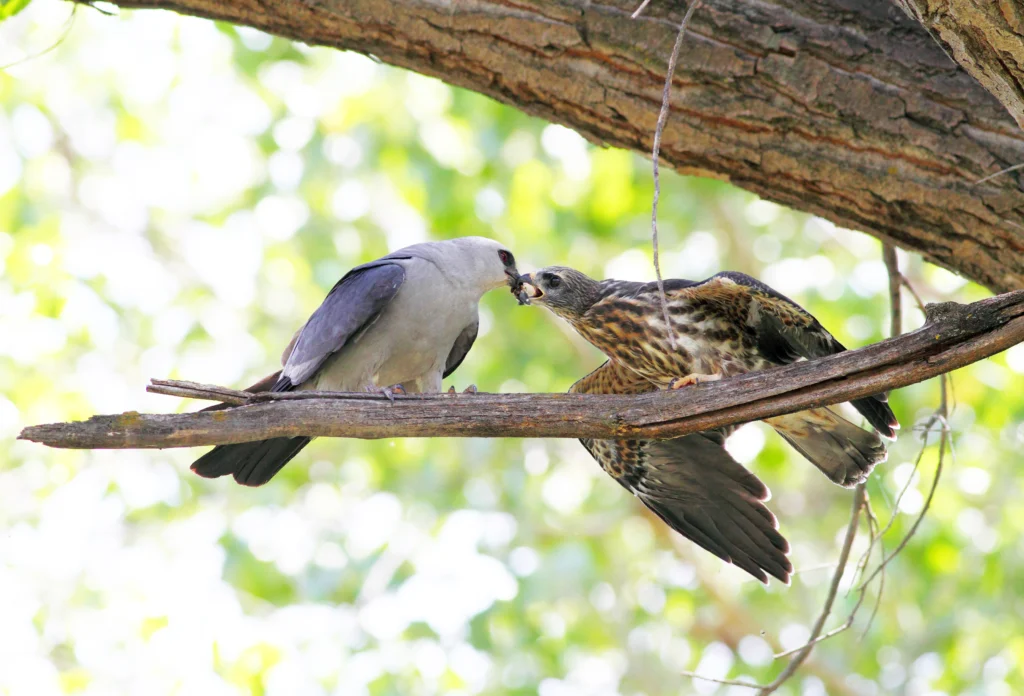
Adult Mississippi Kites are largely medium gray with black wings and tail. The paler, pearly-white head is set off by a dark eye patch and vivid red eyes. Males and females look alike, but females are slightly larger (a dynamic common in raptors). In flight, the white head and secondaries (wing feathers), long, narrow, pointed wings, squared-off tail, and graceful soaring flight are distinguishing field marks.
Juvenile Mississippi Kites look completely different from adults, with grayish upperparts and streaky brown underparts somewhat reminiscent of a Merlin.
Sounds
The Mississippi Kite calls in a thin, high-pitched, and descending whistle described as pe-teew or pee-teeer, somewhat like a Broad-winged Hawk.
John A. Middleton Jr., XC424385. Accessible at www.xeno-canto.org/424385.
Russ Wigh, XC669899. Accessible at www.xeno-canto.org/669899.
Habitat
The Mississippi Kite breeds in woodlands in a variety of settings. Its migration and nonbreeding habitats are similar.
- Uses mature, unbroken riparian forest with open habitat nearby, east of the Mississippi River
- To the west of the Mississippi River, found in shelterbelts of trees amid open areas
- Birds in the west also nest in forested residential areas
Range & Region
Range & Region
Specific Area
Southern United States, South America
Range Detail
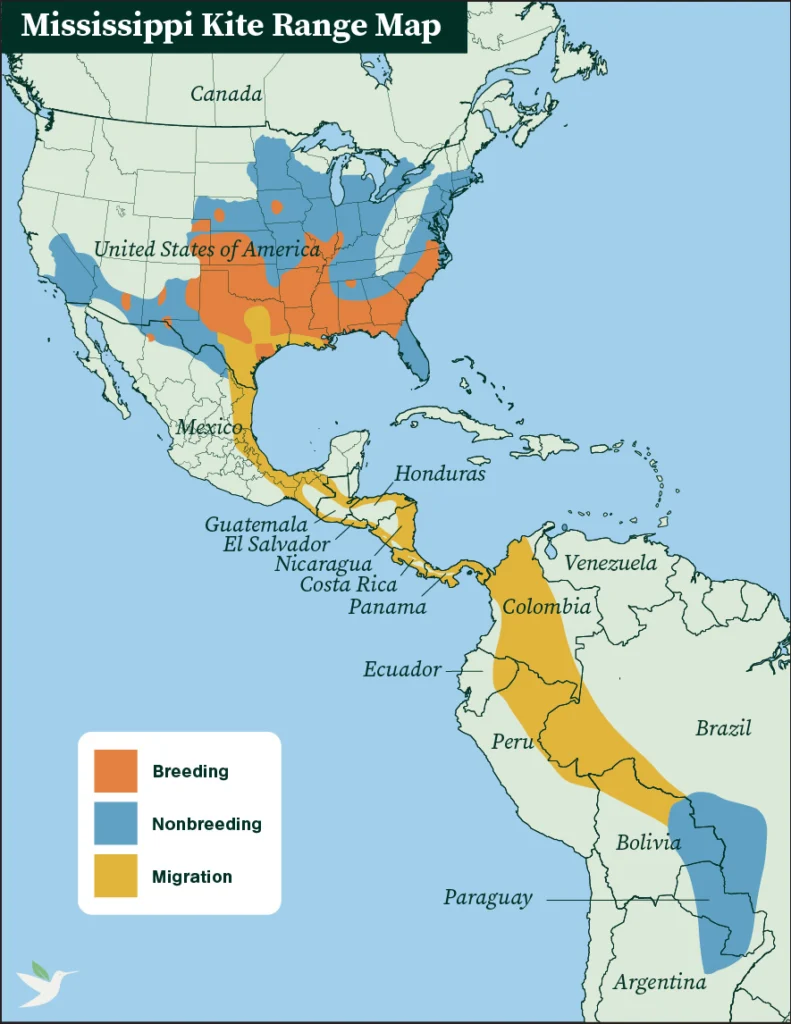
The Mississippi Kite breeds in habitats across the southern United States in North and South Carolina, Georgia, Florida, Alabama, Mississippi, Louisiana, Texas, and in the midwestern states of Oklahoma, Kansas, Arkansas, Missouri, Iowa, and Illinois. Scattered populations also breed in Virginia, Indiana, Iowa, Nebraska, Colorado, New Mexico, and Arizona, and more rarely in northern Mexico.
The Mississippi Kite migrates through Mexico and Central America to northern Argentina, southern Brazil, and Paraguay during the nonbreeding season. Human changes to the landscape, such as shelterbelts of trees planted in agricultural areas, have contributed to increased Mississippi Kite populations and range expansions.
Did you know?
A long-distance traveler, the Mississippi Kite migrates south in large numbers, sometimes in groups with other raptors such as Swainson’s and Broad-winged Hawks.
Life History
Mississippi Kites show different degrees of sociality across their range, with those in the west tending to be more gregarious, roosting, nesting, and even hunting in groups where food is abundant. Foraging glocks can sometimes number more than 100 birds. Those in the east are more solitary. Regardless of location, Mississippi Kites defend their nests aggressively against intruders, including humans, which can be a problem for kites nesting in places like parks.
Diet
Flying insects are the mainstay of a Mississippi Kite’s diet, especially medium- to large-sized insects such as cicadas, beetles, grasshoppers, and dragonflies. It also preys upon small reptiles, amphibians, birds, and mammals, including bats, and will scavenge roadkill. These kites capture and consume most insect prey while on the wing. They may also snatch prey from tree limbs and branches or pounce on it from a stationary perch, returning to the same perch to feed. It sometimes forages by walking or hopping on the ground.
Courtship
Mississippi Kite pairs are monogamous, with pairs usually forming before the birds return to their nesting areas in early May. Courtship behavior is not well-known, but may include mutual soaring and swooping flight displays. A male kite will present food to his mate before copulation.
Nesting
Mississippi Kites conceal their nest high in the tree canopy, usually close to a woodland edge or open habitat. Both sexes work to build a wide, shallow cup-shaped nest of twigs, lining the structure with softer leaves and mosses. They may build the nest close to a wasp nest, which could protect chicks from climbing predators. Smaller birds such as the Northern Mockingbird and Blue Jay may nest near Mississippi Kites to take advantage of this protection, usually coexisting peacefully with their larger neighbors.
Eggs & Young
The female Mississippi Kite lays a clutch averaging two whitish eggs, which both adults take turns incubating for about a month. Both parents also cooperate in feeding the young, which are ready to leave the nest in another 34 days.
Unusual for raptors, Mississippi Kite chicks show very little aggression toward their siblings. A yearling kite will sometimes assist at the nest of a breeding pair, defending the nest, incubating the eggs, or even brooding the chicks.