Listening in on the Birds of New York City
American Bird Conservancy is using audio recording units in New York Harbor to understand and document returning birdlife returning to the area as it recovers.
Aulacorhynchus prasinus
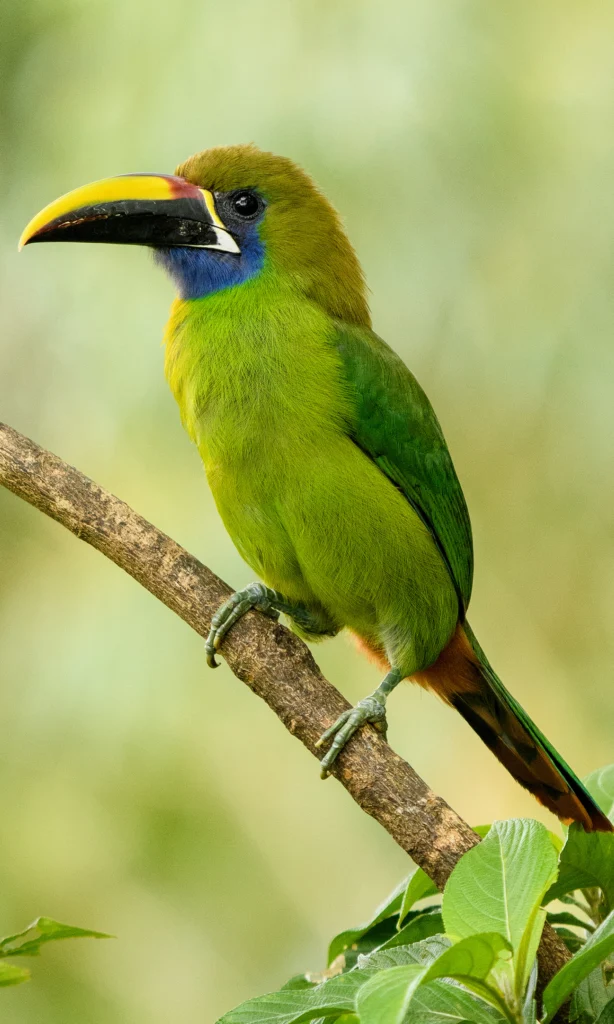

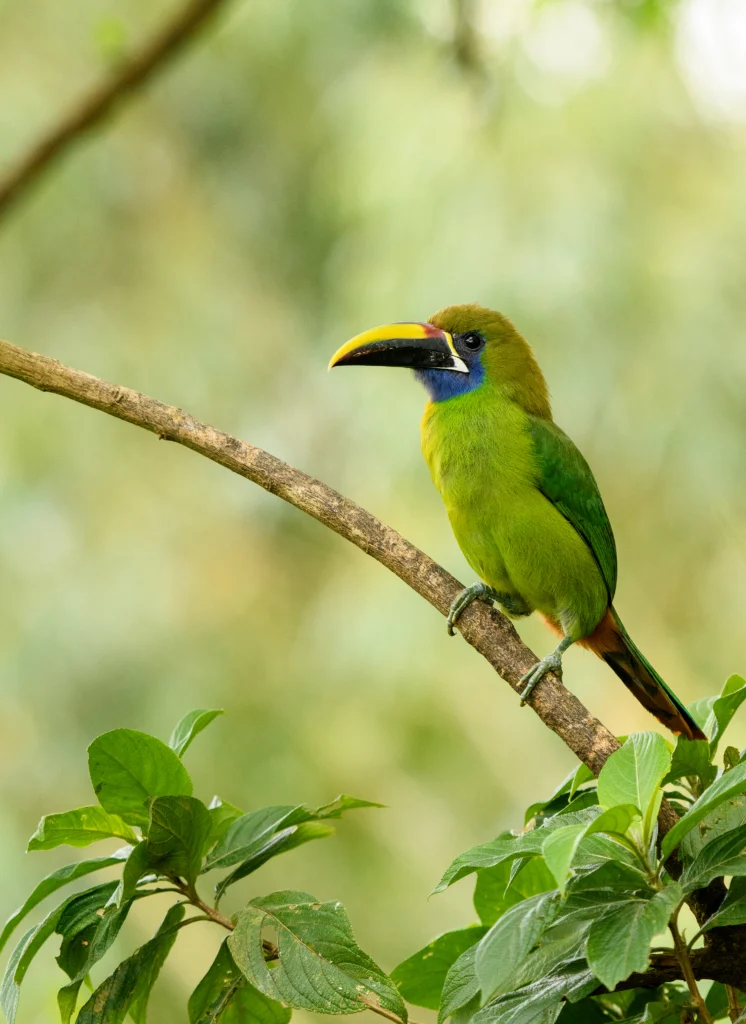
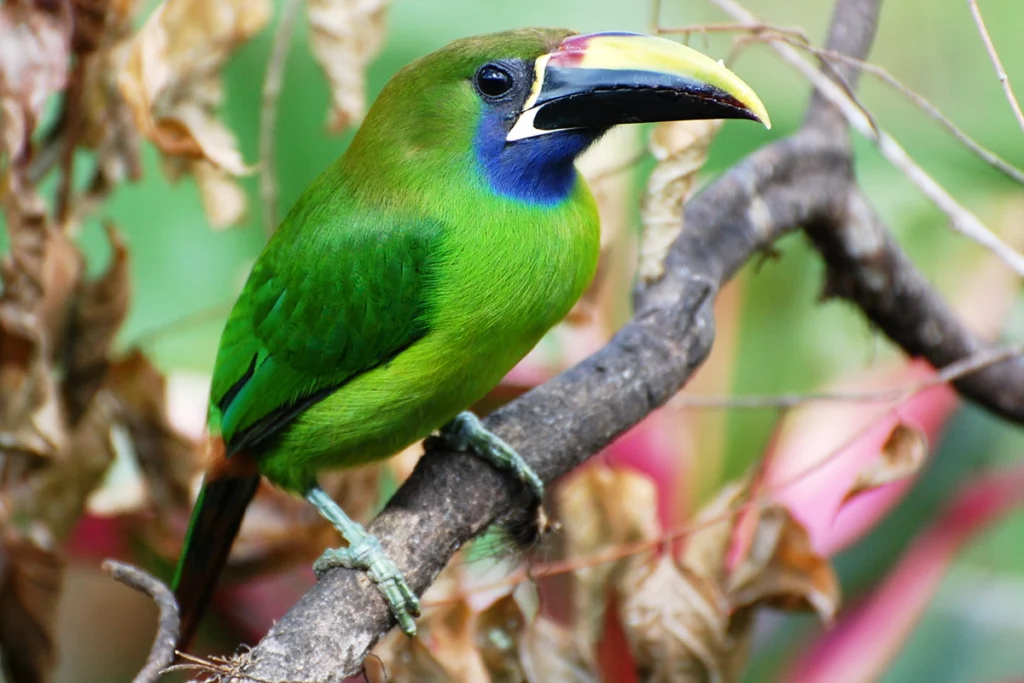
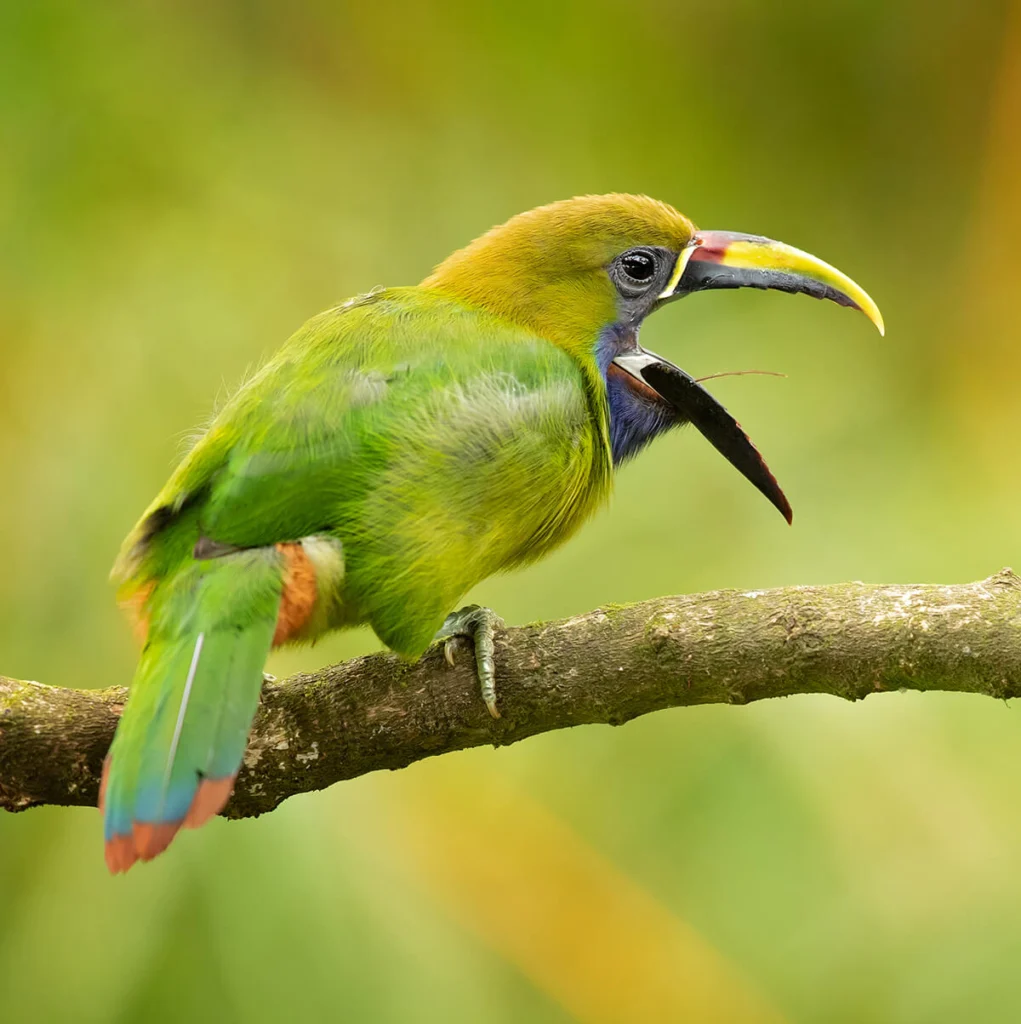
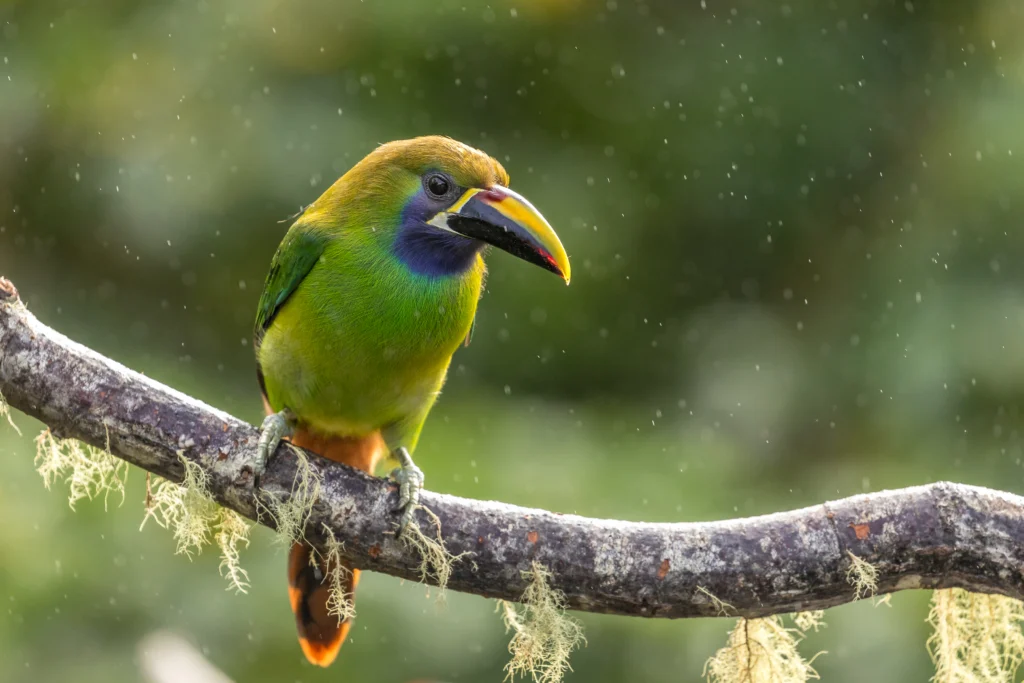
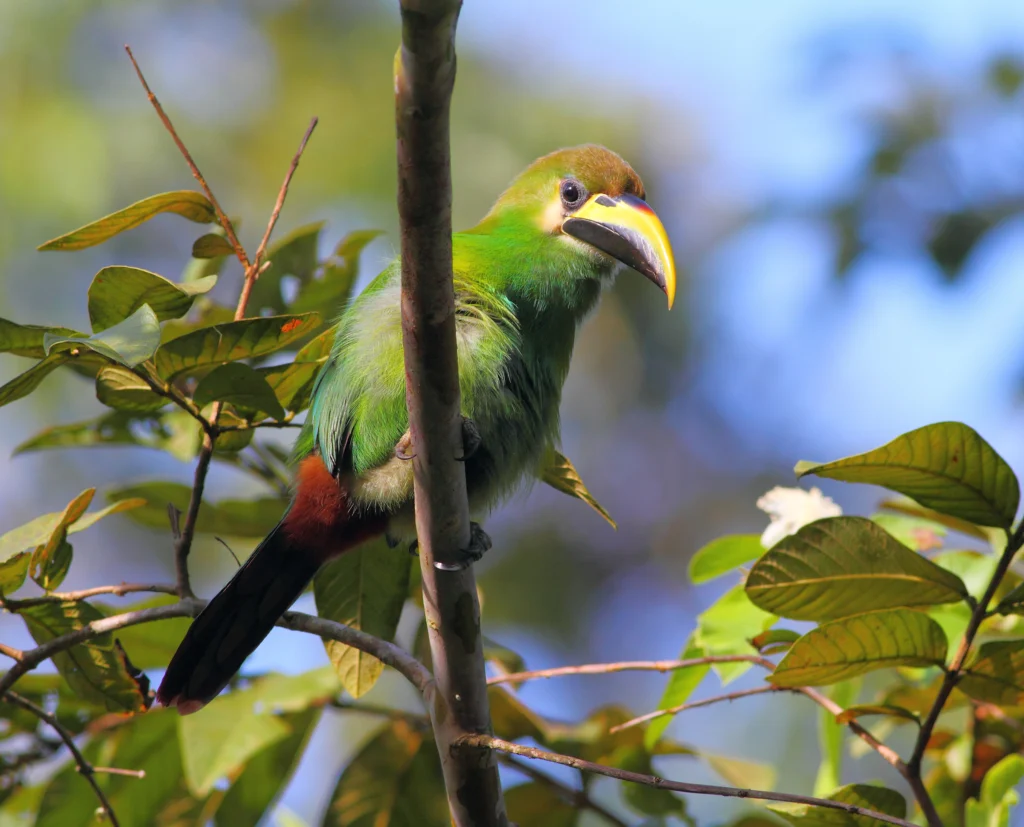
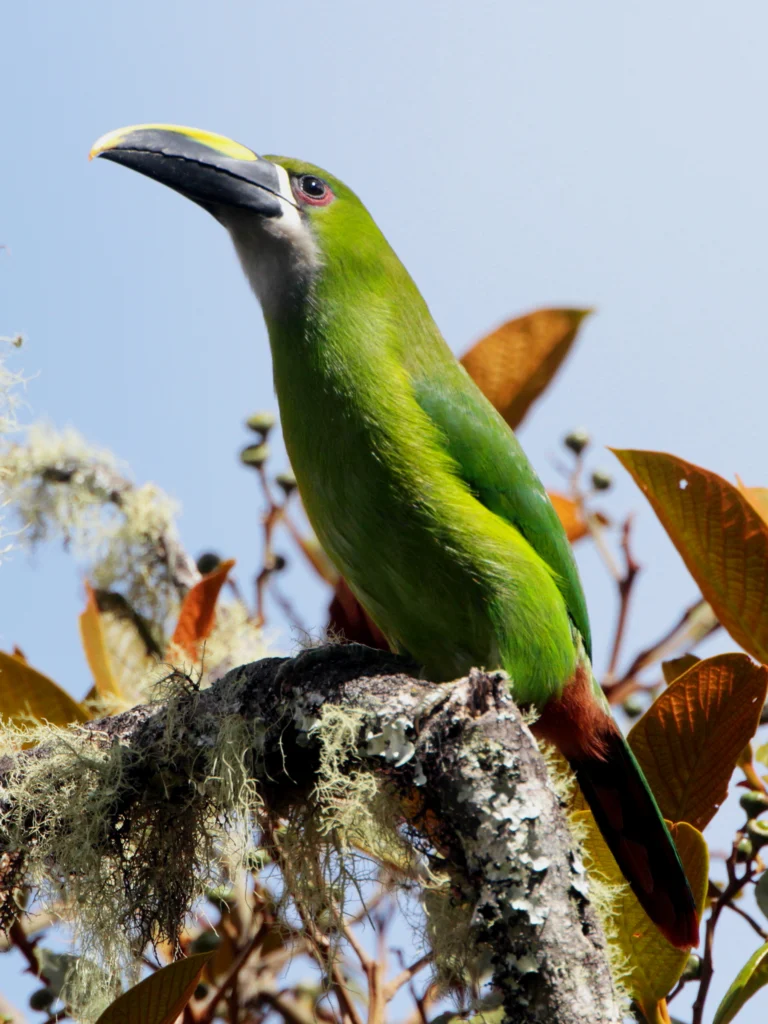
Aptly named for its striking green plumage, the Northern Emerald-Toucanet is actually quite camouflaged in the leafy forests where it makes its home. With its tropical take on countershading — darker green on the back and wings, lighter yellow-green below — this bird beautifully matches the color palette of forest leaves, whether seen from above or from below. With its accents of chestnut, blue, and white, and a large black and yellow bill, this pigeon-sized bird is a true beauty.
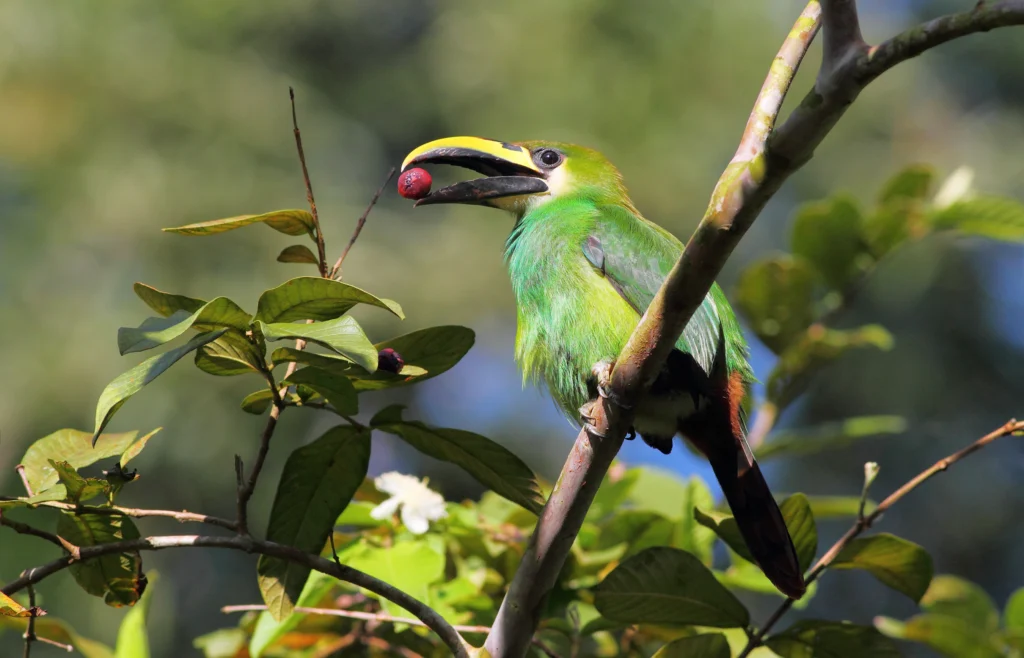
Similar to other toucans, Northern Emerald-Toucanets eat mostly fruit, capitalizing on the wide diversity of fruit-bearing trees in the humid forests of their home in Central America. These birds mostly swallow their food whole, including some larger-seeded fruits, which they repeatedly regurgitate and swallow until the flesh is consumed. Whether by regurgitation or defecation, these birds spread the seeds of their food trees throughout the forest. Many tropical trees have evolved to bear fruit specifically for this purpose, taking advantage of birds’ wings to spread their seeds far and wide. In fact, the process of moving through the digestive tract of an animal actually helps the seeds of many of these trees to germinate. In effect, these toucanets, along with a cohort of other fruit-eating birds and mammals, are gardeners of their own food forests.
Birds around the world are declining, and many of them are facing urgent, acute threats. The Northern Emerald-Toucanet lives exclusively in forested habitats, and its survival is directly tied to the persistence of Central America’s forests. Though not considered a species of conservation concern, this bird is declining. Additionally, this species is captured and sold domestically for the illegal pet trade.
The Northern Emerald-Toucanet eats mostly fruit, which it forages from tropical trees. As such, this and other frugivorous species rely on a diverse assemblage of tropical fruit-bearing trees, and are particularly vulnerable to habitat loss, as the forests they depend on are cleared in favor of agriculture.
Birds like the Northern Emerald-Toucanet need our help to overcome the threats they face. To ensure that this and other species have the habitat they need to survive, ABC and our partners create and maintain reserves throughout Central and South America. With science as our foundation, and with inclusion and partnership at the heart of all we do, we take bold action for birds across the Americas.
Agricultural land can be stewarded in a way that supports farmers and communities while also providing habitat for birds and other wildlife. ABC’s BirdsPlus program supports bird-friendly conservation practices by incentivizing and catalyzing farmers, ranchers, and companies in Latin America and the Caribbean to adopt practices that restore the land and maintain habitat so that bird populations can thrive.
Habitat is the foundation for birds’ survival. Working with dozens of partners and local communities throughout Latin America and the Caribbean, ABC supports a growing network of protected areas in more than a dozen countries. Totaling more than 1.3 million acres, nearly one-third of the world’s birdlife (more than 3,000 species) is protected by an ABC-supported reserve.
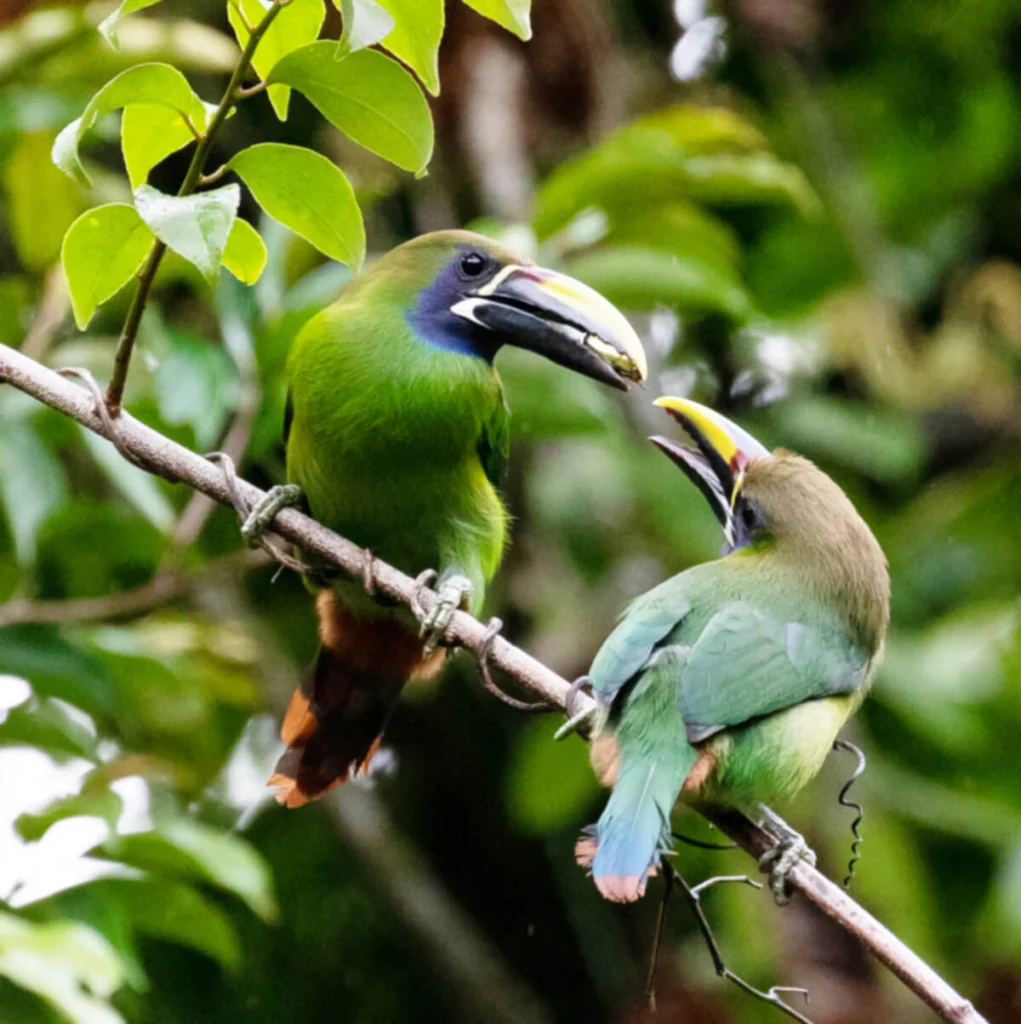
The Northern Emerald-Toucanet is indeed a beautiful, vibrant green, top and bottom, with the back a deeper, darker hue and the underparts lighter and slightly yellowish. The long tail is iridescent blue and green, with a rusty or chestnut tip matched by the vent feathers beneath the tail. The eight subspecies across its geographic range vary in the coloration of the throat, either blue or white, and the bill. In all subspecies, the lower mandible is black. The upper mandible has some black as well, but may be almost entirely yellow. Some subspecies also have a reddish to brown patch near the nostrils.
The Northern Emerald-Toucanet’s most common vocalization is a monotonous series of evenly spaced yelping or barking calls, harsh and staccato, sometimes with occasional calls accented louder and at a higher pitch. This species also gives a low-pitched, frog-like croak or groan.
Credit: Frank Lambert, XC256673. Accessible at https://xeno-canto.org/256673.
Credit: Charlie Vogt, XC618962. Accessible at https://xeno-canto.org/618962.
Credit: Peter Boesman, XC219393. Accessible at https://xeno-canto.org/219393.
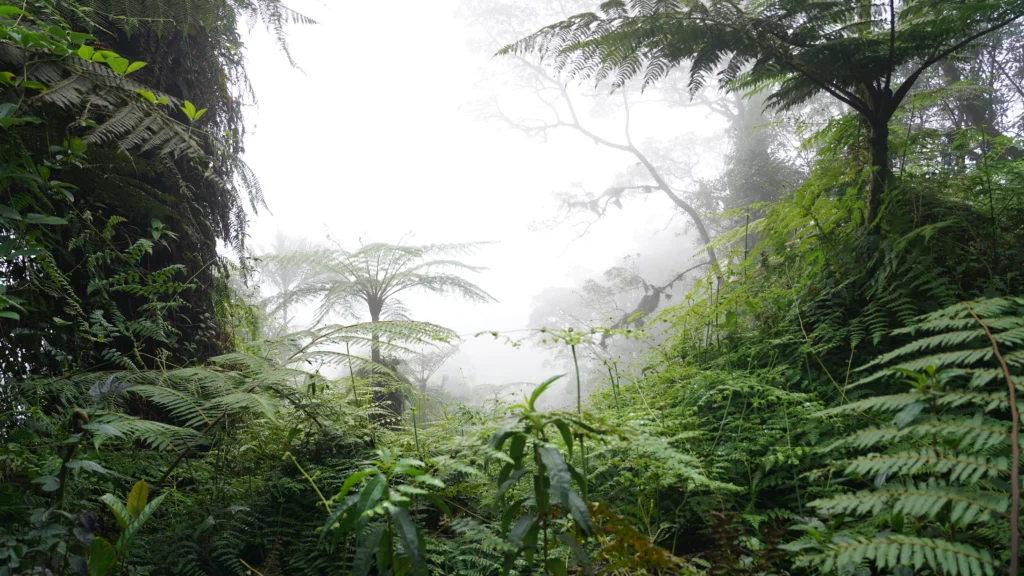
The Northern Emerald-Toucanet is a bird of humid montane forest, traveling and foraging mostly in canopy and understory trees.
Specific Area
Mexico, Central America
Range Detail
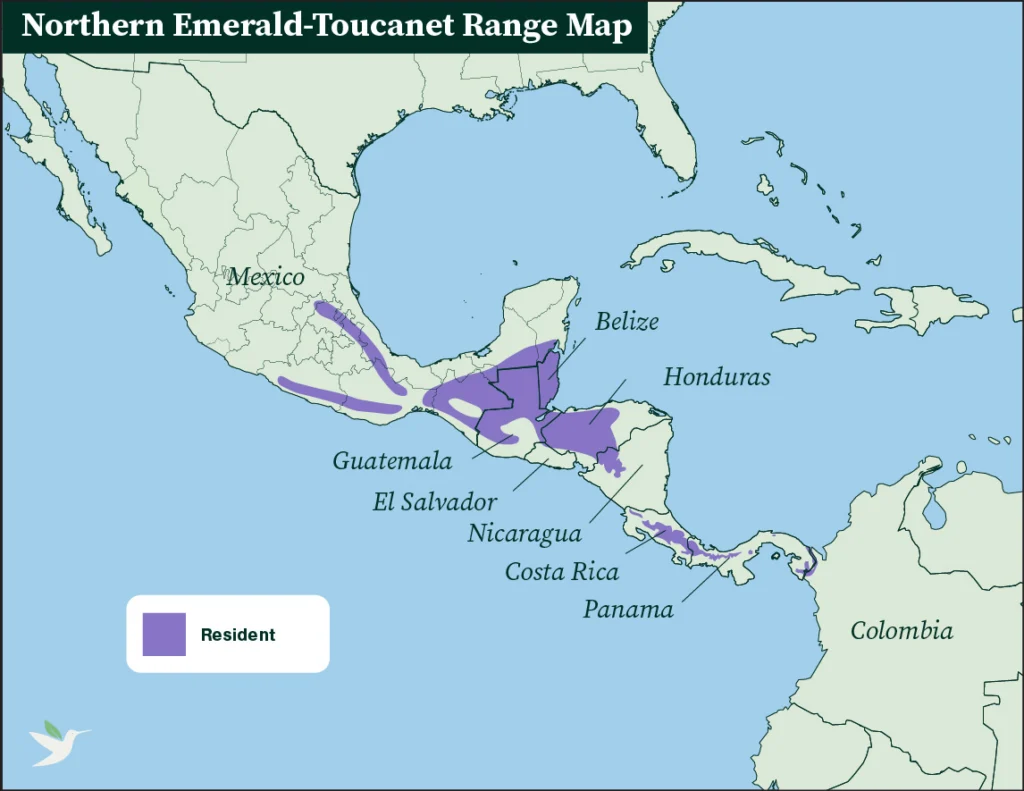
The Northern Emerald-Toucanet lives in mountains from southern Mexico south through Panama, and just barely into the Colombian portion of Cerro Tacarcuna.
Did you know?
Although not all forest species benefit from shade-grown plantation crops such as coffee and cacao, the Northern Emerald-Toucanet does. With the addition of a higher diversity of fruit-bearing trees and more trees in general, monocultural plantations can provide valuable habitat for this and other frugivorous forest species.
The biology of the Northern Emerald-Toucanet is poorly represented in the scientific literature. Though likely similar to other toucanets, these related species have received even less attention, making it difficult to make inferences about the life history of this species.
Northern Emerald-Toucanets eat a wide range of fruits, with 113 species documented in their diet. These birds also take insects, centipedes, and other invertebrates, which they mostly feed to their young. Adult birds will eat small vertebrates as well, including snakes, lizards, and the eggs and nestlings of other bird species.
Courtship in this species is poorly known, but paired birds have been observed exchanging food, which may play a role in courtship or maintenance of the pair bond. Pairs are likely monogamous.
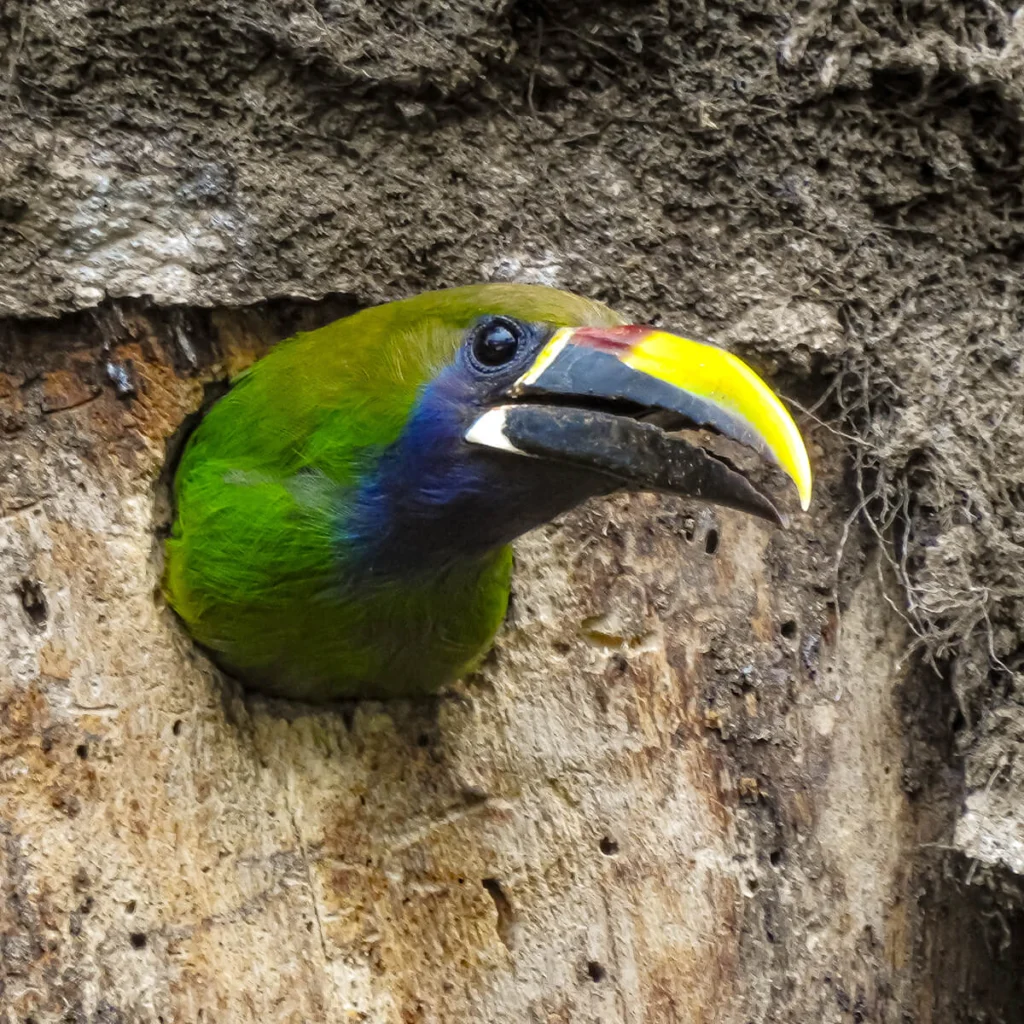
As with other toucans, this species nests in a tree cavity, either one created naturally or excavated by a woodpecker. Nest cavity entrances tend to be taller than wide and heavily concealed by vegetation.
The female lays three to four eggs. Both parents incubate eggs and brood young, although the female does more of each. Incubation lasts about two weeks, and when young hatch, both parents help to feed them. The nestling period is extensive, lasting about six weeks.
Related News & Stories


Join the flock! Your donation helps preserve the habitats that birds need to survive.