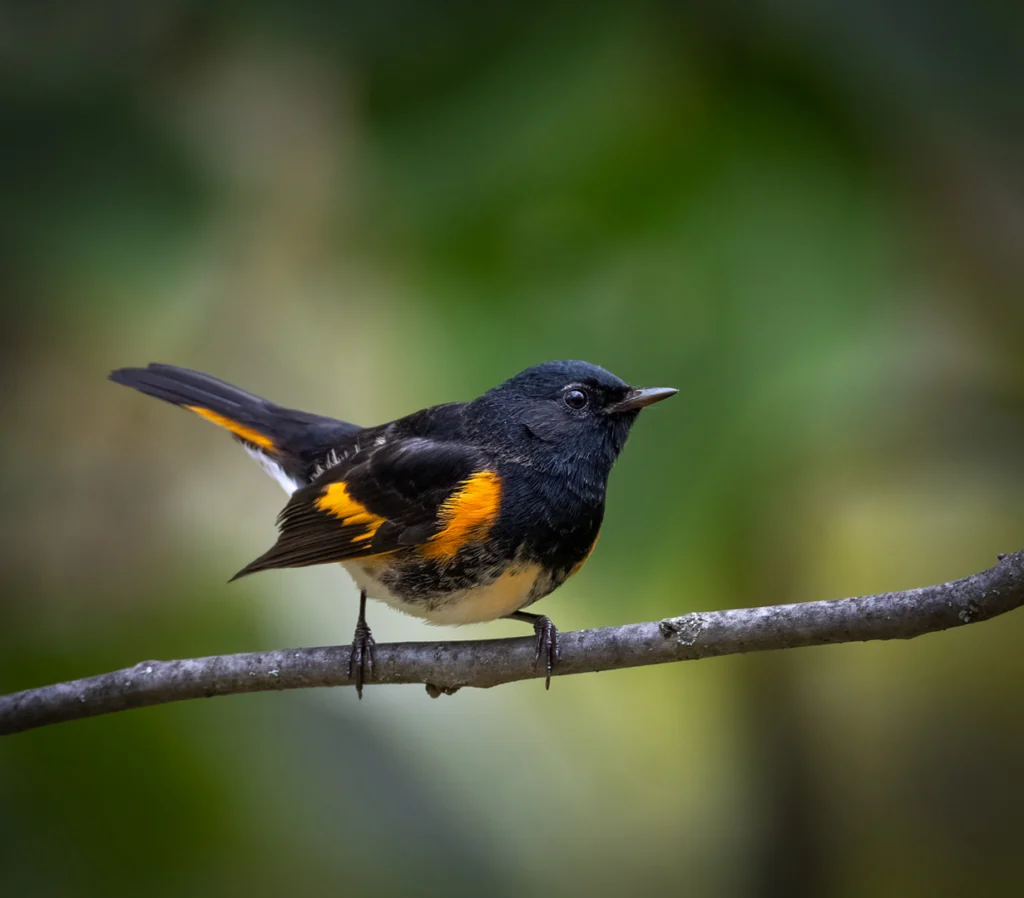
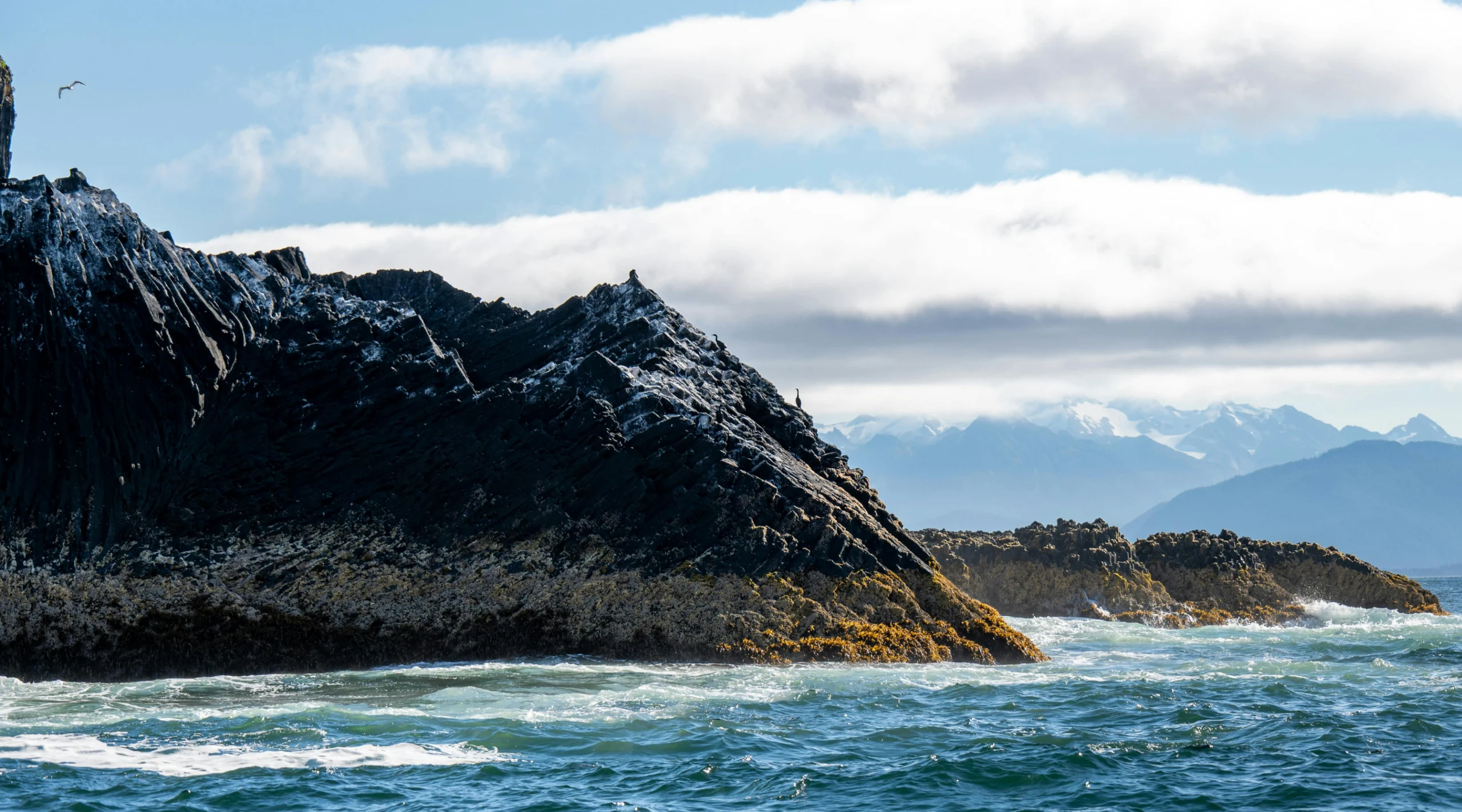
Coastline of Sitka, Alaska. Photo by Beth Fitzpatrick, Pexels

Pigeon Guillemot

Cepphus columba

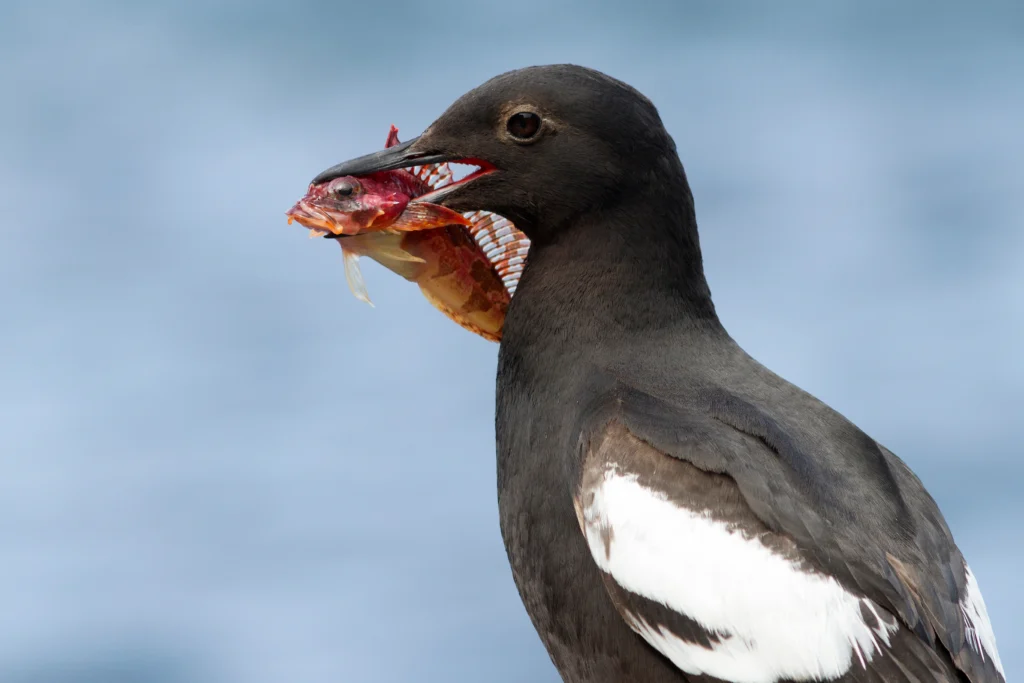
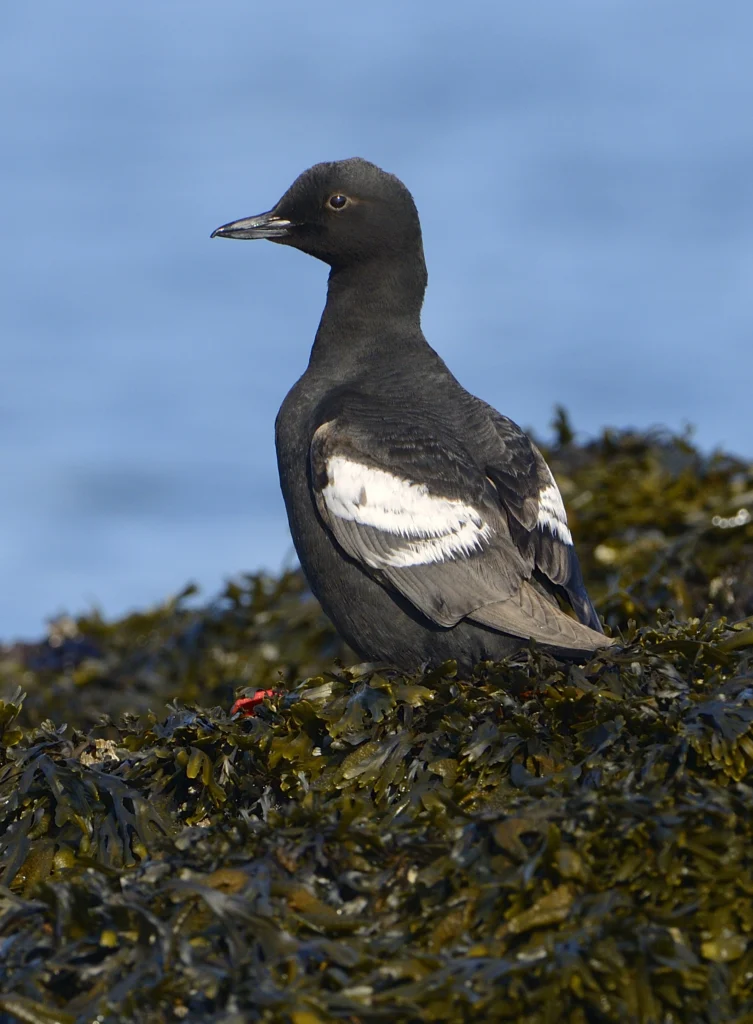
Pigeon Guillemot. Photo by Tim Zurowski, Shutterstock.

Pigeon Guillemot

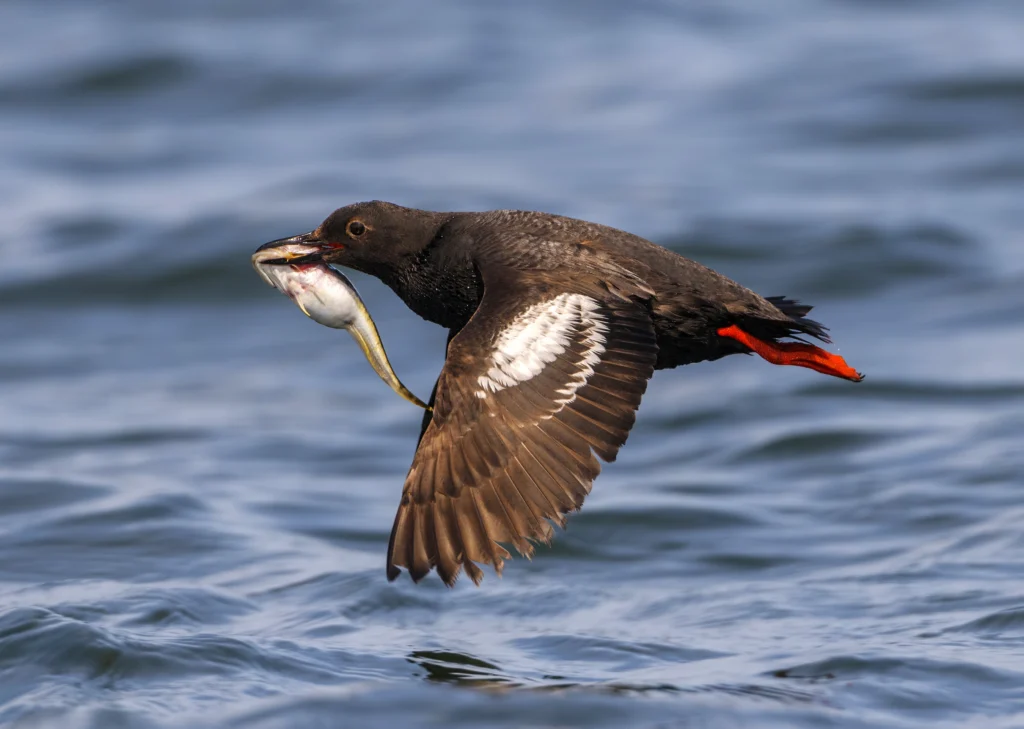
Pigeon Guillemot. Photo by Tim Zurowski, Shutterstock.

Cepphus columba

Overview

Conservation Status
Population Trends
Stable
Population Size
360,000
Family
Auks & Auklets
Murres & Murrelets
Puffins
Location
U.S. and Canada
Migration Pattern
Varied
Migration Distance
Short Distance
Also Known As
  • Surf Pigeon
  • Курильский чистик / Kuril'skiy chistik (Russian)

About

The Pigeon Guillemot is an attractive member of the auk family, a group of marine birds that also includes the puffins, murres, and auklets. The auks are largely known to forage on the open ocean, with some species diving to extraordinary depths for their food. The Pigeon Guillemot, however, forages in shallow waters near the shore and doesn’t usually dive deeper than about 100 feet. Nonetheless, they are graceful divers, “flying” underwater, their partially opened wings helping them maneuver and propelling them along. Like other auks, they use their feet as rudders.

Pigeon Guillemots are particularly fond of small fish and crustaceans, which they chase out from under rocks on the sea floor. But foraging among the nooks and crannies is not without its risks — the Pigeon Guillemot is one of the birds most frequently eaten by the giant Pacific octopus!

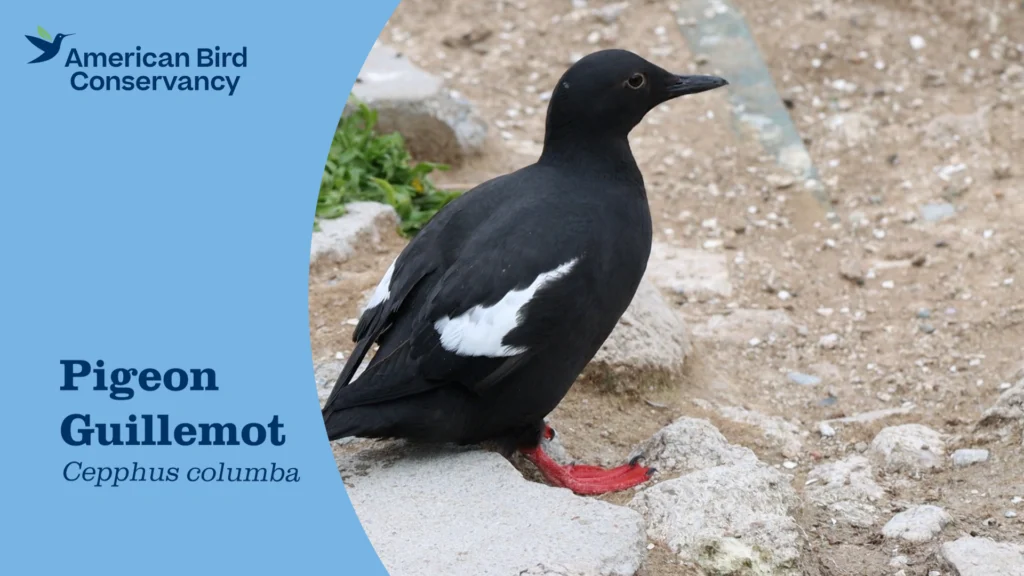
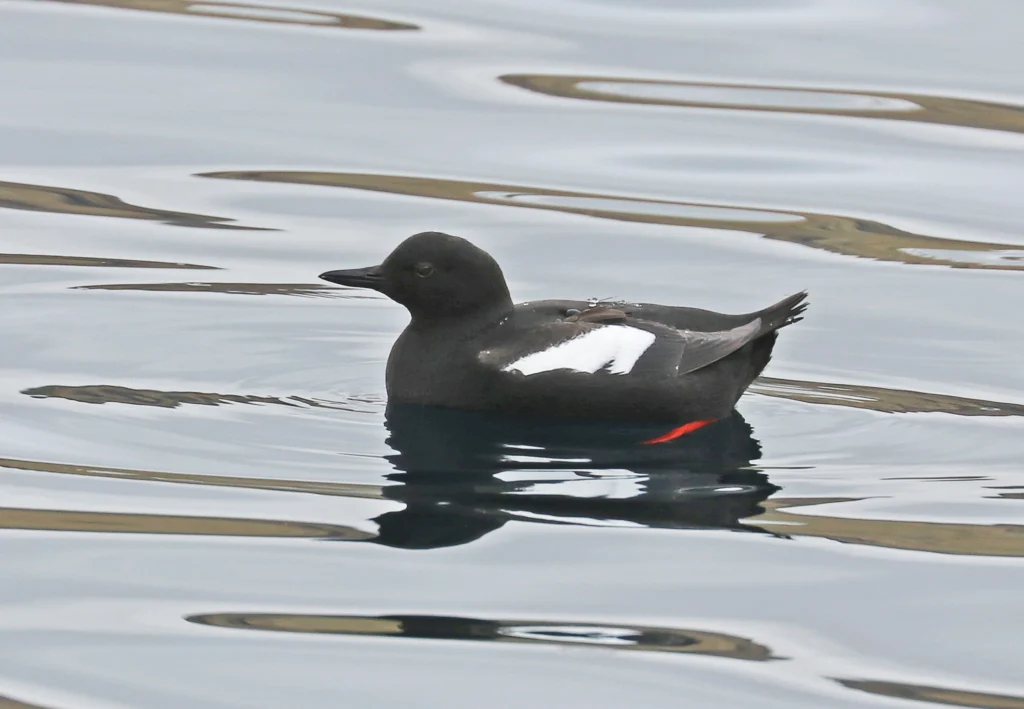
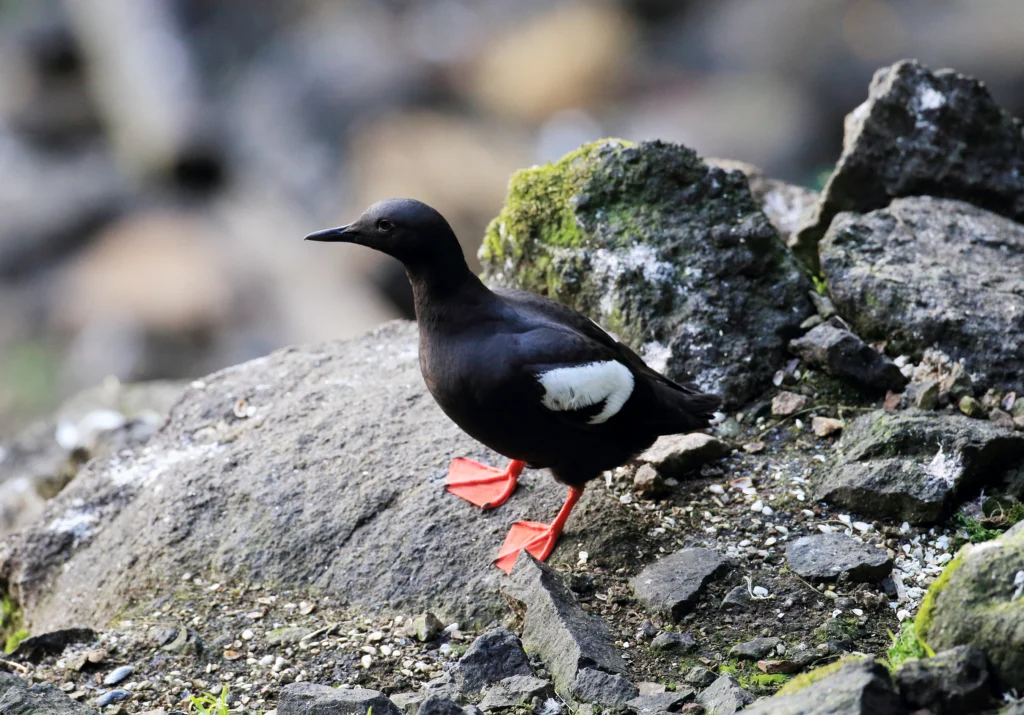
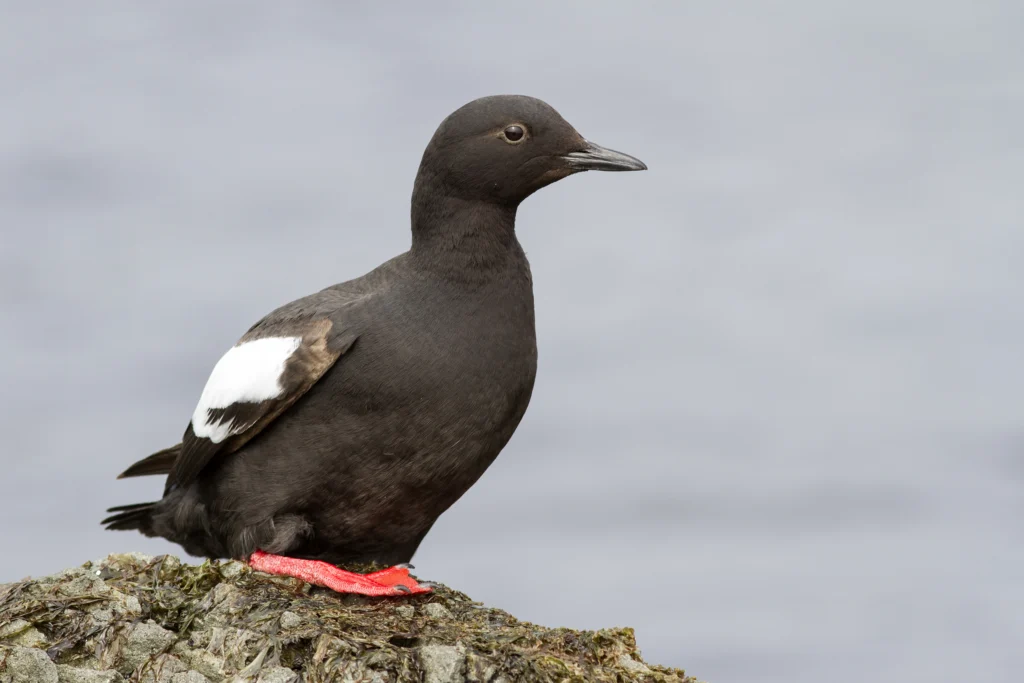
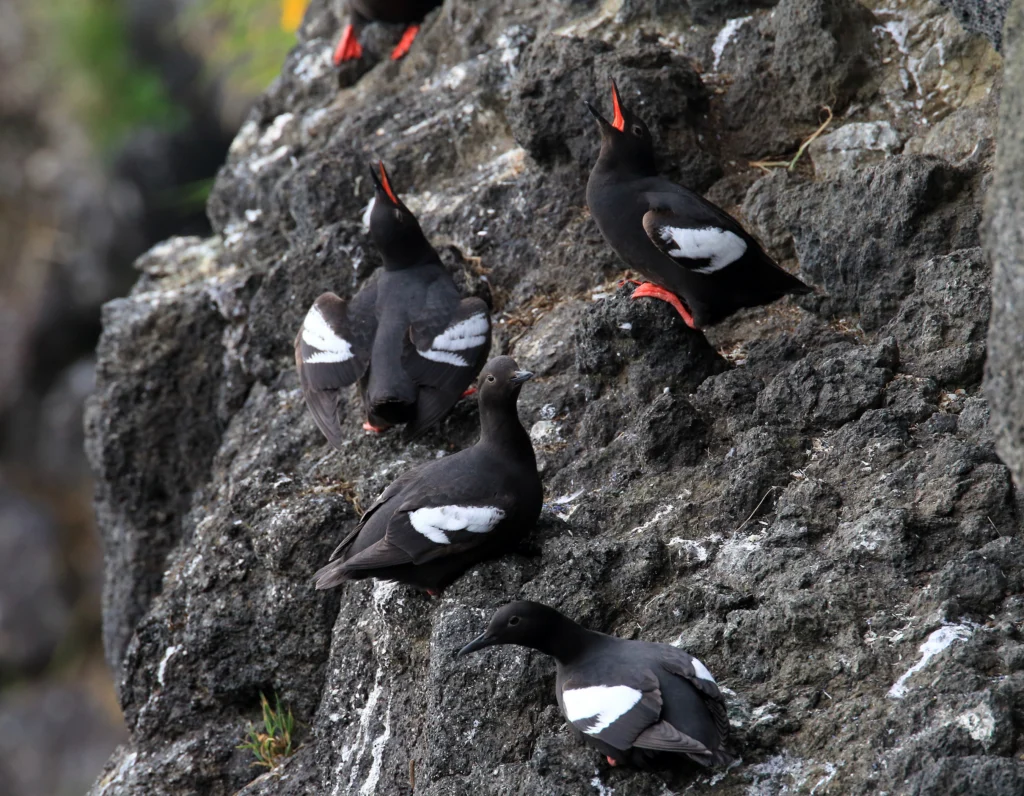
Nesting colonies can be quite large, especially on small offshore islands with few predators. And Pigeon Guillemots dress quite elegantly for the occasion: During the breeding season, males and females sport velvety black plumage with a broad, white, vaguely V-shaped wing patch, all set off by their flashy, bright red feet. After the breeding season concludes, however, these birds molt to a mostly white and ashy black-and-gray plumage.
Threats

While the global population of Pigeon Guillemots is considered stable, local events can have huge impacts on specific populations. As with many seabirds, the Pigeon Guillemot is highly susceptible to threats caused by oil drilling and commercial fishing operations. Additionally, warmer water temperatures can dramatically affect the availability of fish species upon which these birds depend. This can cause massive nesting failures during the breeding season, as occurred in 1983 due to El Niño, and may become a persistent issue as ocean temperatures rise due to climate change.

Oil Spills

Oil spills and pollution due to oil drilling in general can negatively impact Pigeon Guillemots in several ways. Large-scale spills prevent birds from catching prey, cause birds to die of hypothermia by reducing the insulation and waterproofing of their feathers, and poison birds when they ingest crude oil through preening or eating. Additionally, even in less extreme cases, oil on the feathers of adult birds can end up on their eggs, sealing the pores that allow oxygen to reach developing young and causing them to suffocate.

Overfishing & Bycatch

Pigeon Guillemots are not only threatened by competition from humans for fish, but are also at risk of being caught incidentally in large-scale fishing operations. For example, Pigeon Guillemots and many other diving birds can get entangled in gillnets, vertical fish netting hanging from floaters used to catch species such as cod and haddock, causing them to drown.

Fisheries

Coastline Construction

The ongoing development of coastal habitat threatens a number of bird species, including migratory shorebirds like the Whimbrel and Hudsonian Godwit, as well as the Pigeon Guillemot. Building residences, hotels, and recreational infrastructure can destroy vital nesting habitat and increase disturbance at colonies. In addition, “coastal hardening,” the use of cement structures such as seawalls to prevent erosion in developed coastal areas, often covers the soft cliff-faces where guillemots burrow and nest.

Habitat Loss

Conservation Strategies & Projects

Sea-going birds like the Pigeon Guillemot need our help to overcome the threats they face. At ABC, we’re inspired by the wonder of birds and driven by our responsibility to find solutions to meet their greatest challenges. With science as our foundation, and with inclusion and partnership at the heart of all we do, we take bold action for birds across the Americas.

Address Ocean & Island Issues

Oceans and islands host some of the world’s most rapidly declining birds. ABC works with partners throughout the Western Hemisphere to address the problems of fisheries bycatch, overfishing, the overwhelming presence of plastics in our waterways, and help fragile ecosystems and the birds they support become more resilient.

Addressing Fisheries

Bird Gallery

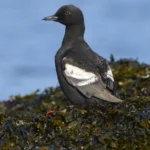
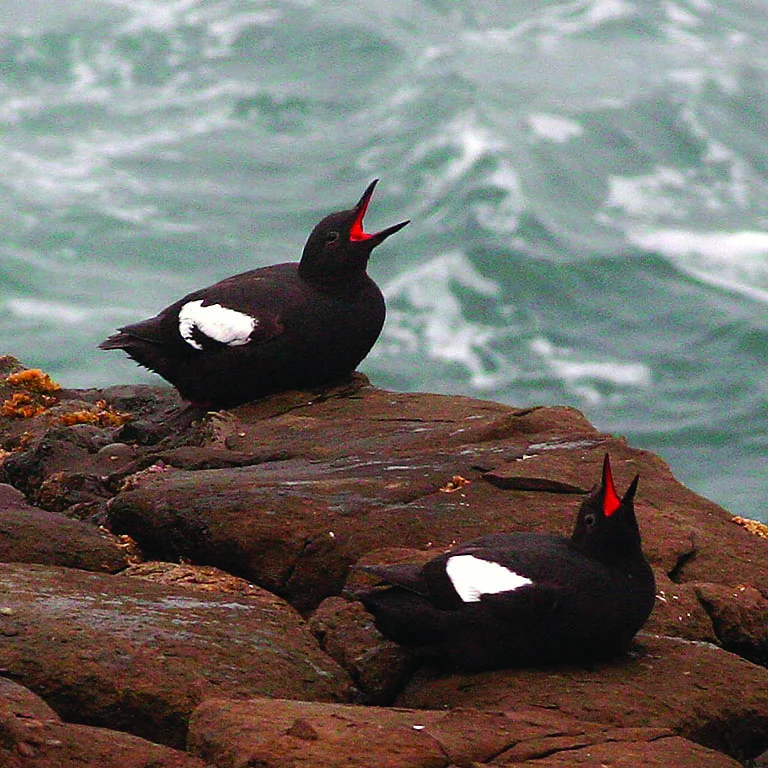
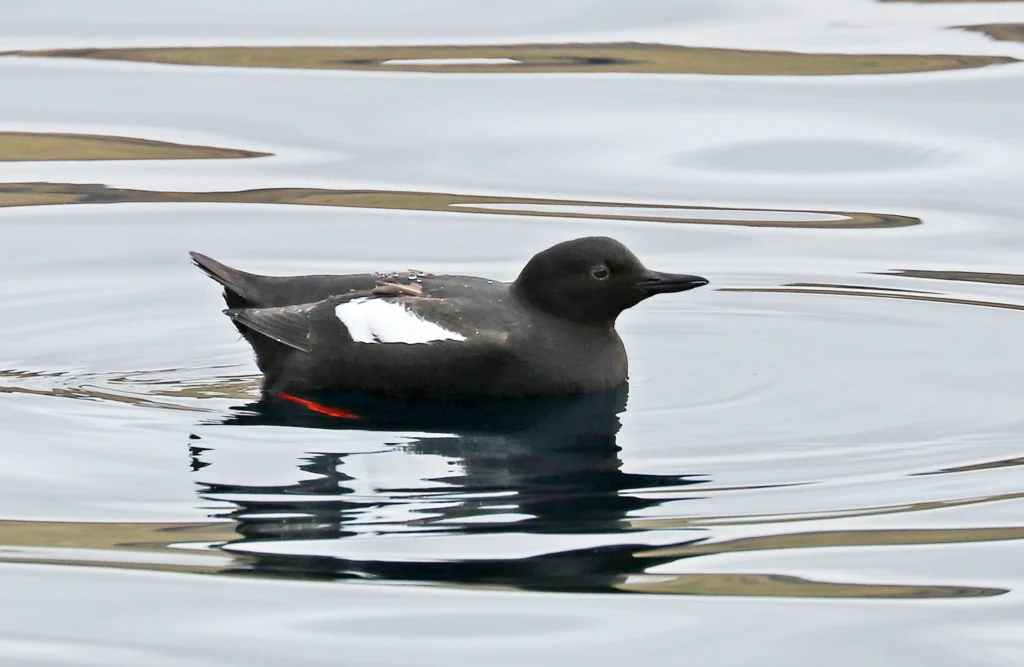
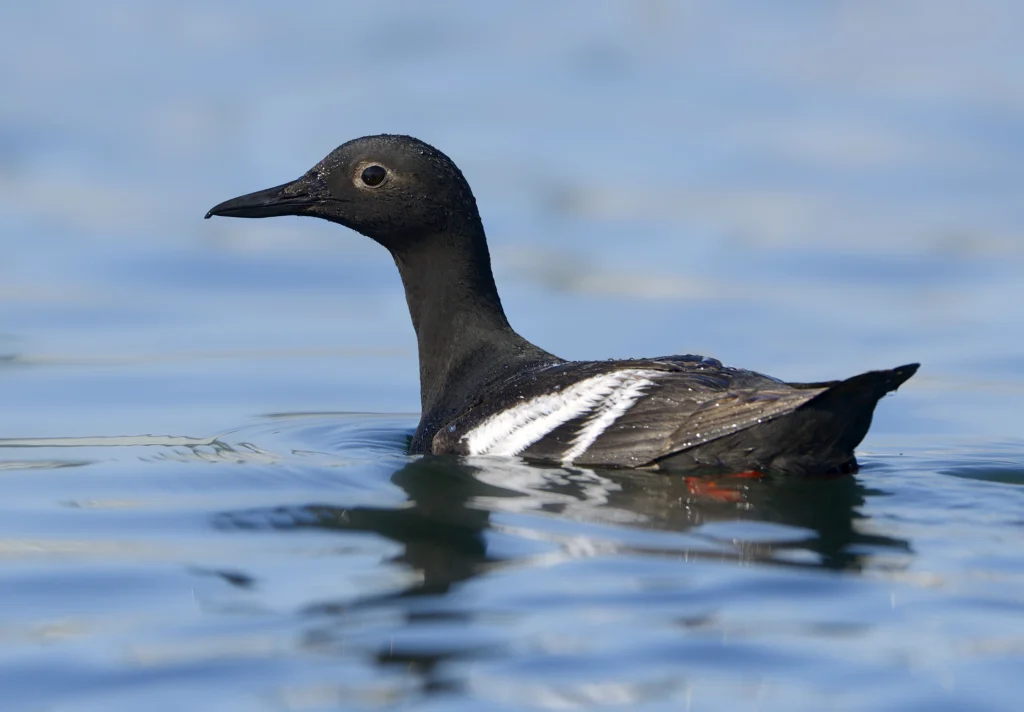
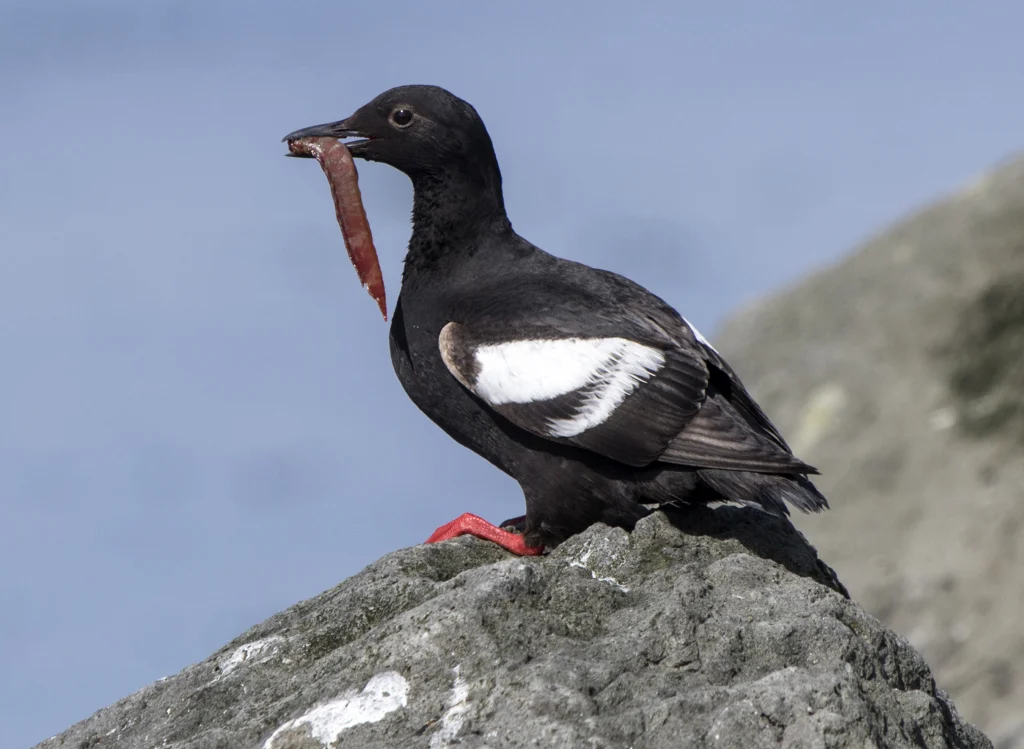
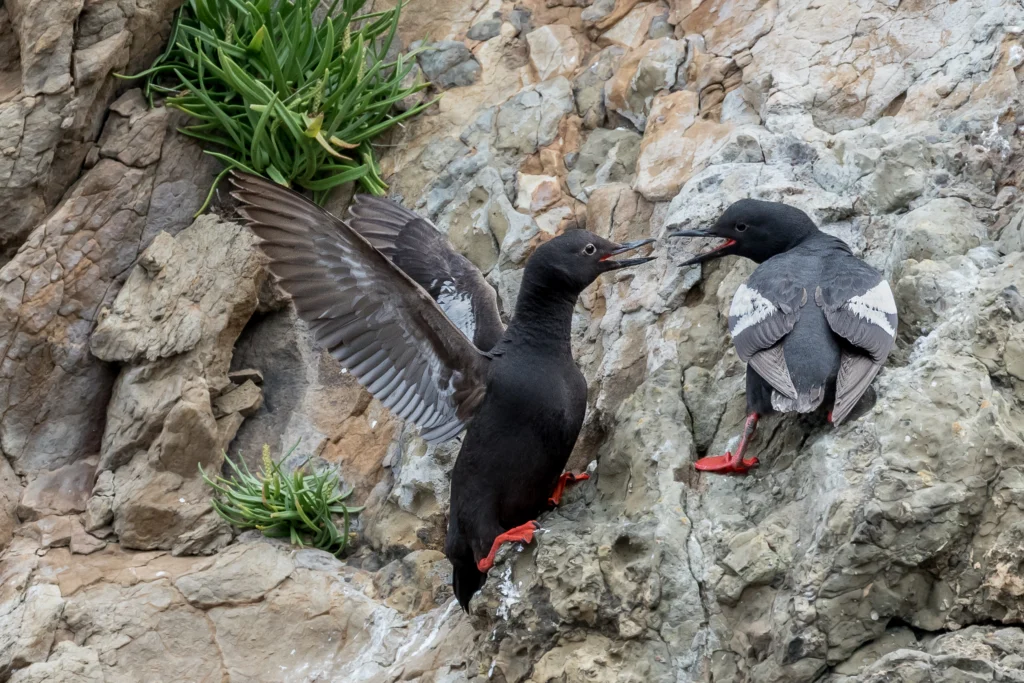
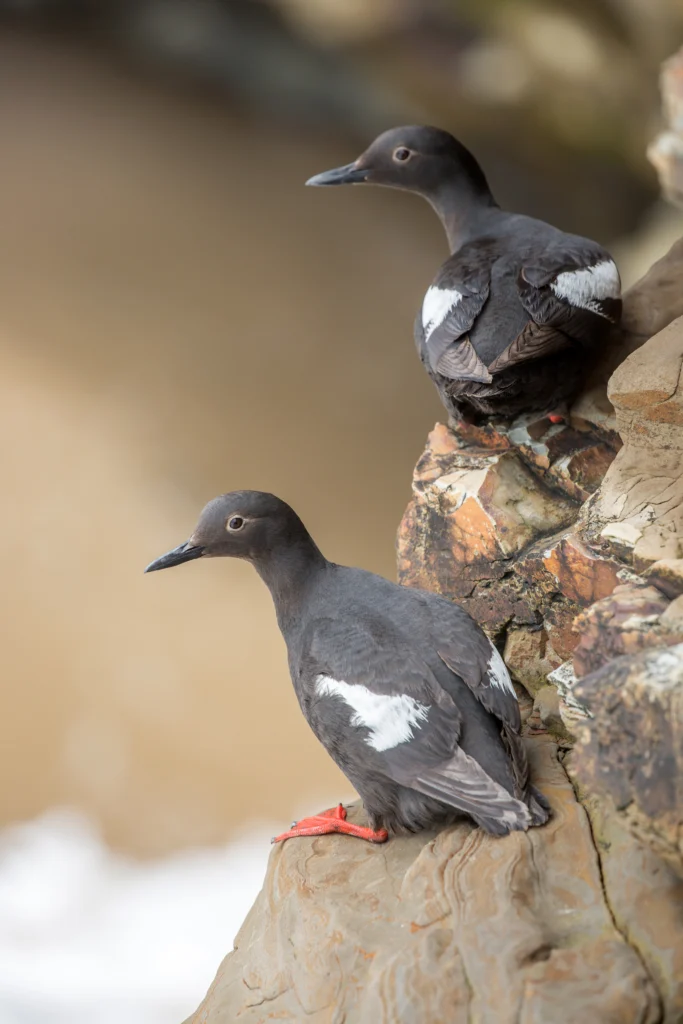
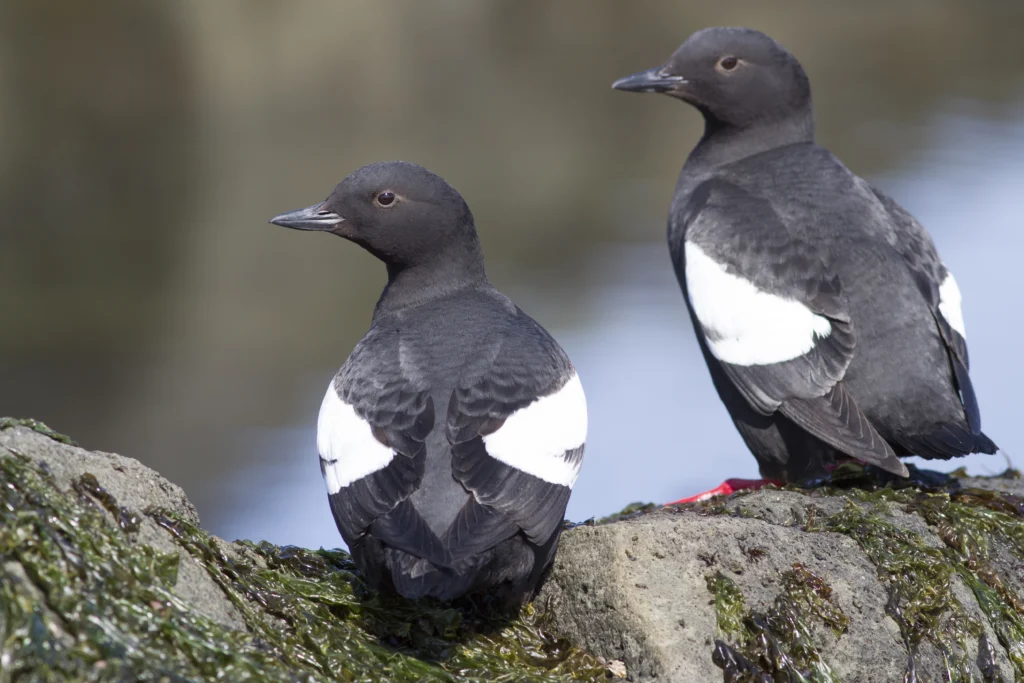
Both male and female Pigeon Guillemots are deep, dark brown to black in the breeding season, with a prominent white patch on the wing and striking bright red feet, legs, and inside of the mouth. Though their range barely overlaps, Pigeon Guillemots can be distinguished from Black Guillemots by the details of their white wing patch. Pigeons have a narrow, black, triangular group of feathers intersecting the white patch, whereas Black Guillemots have a simple, uninterrupted block of white. In the nonbreeding season, birds molt to a mostly white plumage, with a smudgy, sooty gray or black back and wings.

Sounds

The breeding colony is a noisy affair for the Pigeon Guillemot. Both sexes give a range of high, thin trills and whistles, each dedicated to a specific function or context, and often paired with a specific visual display. Pairs will perform a simple duet during the “billing” courtship display, in which one bird gives an extended trill while the other gives a series of high whistled notes. When predators approach or pass by the colony, Pigeon Guillemots give a “scream” alarm call, a long, hoarse or burry tone falling gradually in pitch.

“Billing” Duet Vocalizations

Credit: Rachel Hudson, XC818942. Accessible at www.xeno-canto.org/818942.

Scream Calls

Credit: Rachel Hudson, XC818941. Accessible at www.xeno-canto.org/818941.

Habitat

The Pigeon Guillemot breeds on rocky coastlines and forages year-round in shallow waters near shore.

  • In the nonbreeding season, prefers sheltered coastlines and inshore habitats
  • Forms large breeding colonies on small offshore islands
  • Typically forages in rocky substrate and avoids bare sandy seabeds

Range & Region

Range & Region


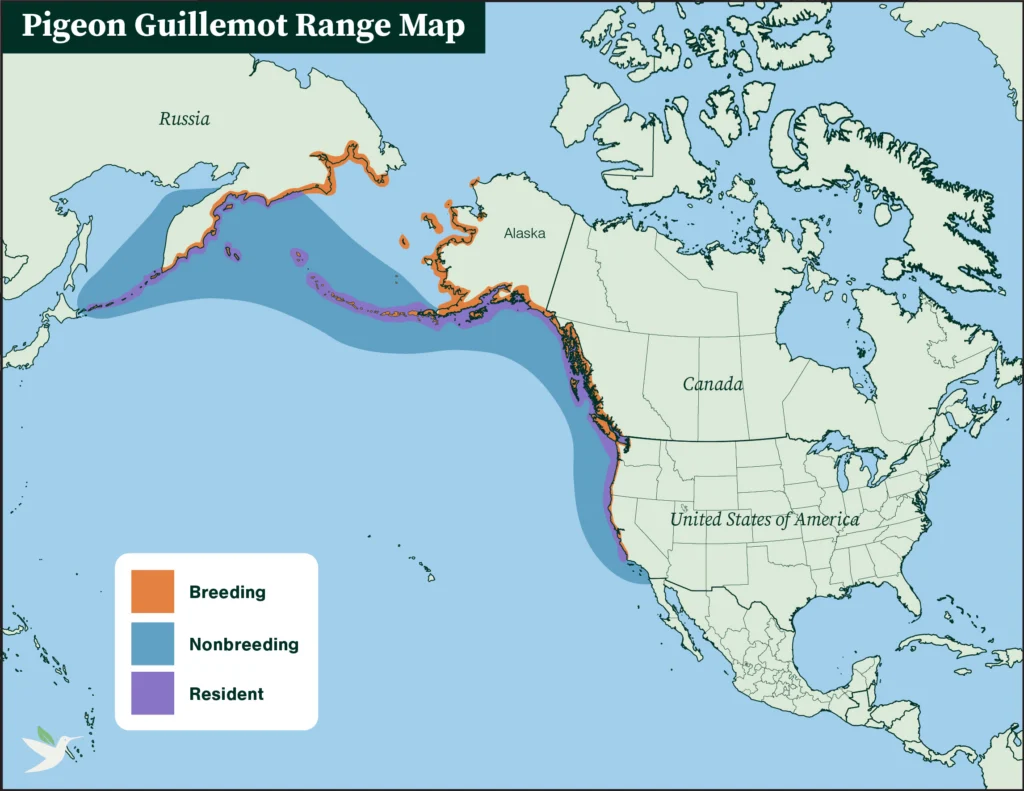
Pigeon Guillemot range map

Specific Area
Pacific coasts from California to Kuril Islands

Range Detail
The Pigeon Guillemot breeds on rocky coastlines along the Pacific Rim, from Point Conception in California through Alaska and the Aleutian Islands, and across the Bering Strait to Siberia, including the Kamchatka Peninsula and Kuril Islands.

Did you know?
Migration in this species is complex and poorly understood, but seems to be highly variable across populations. While many birds don’t seem to move far from their breeding colonies, some Arctic populations are forced south when the ocean freezes. On the other hand, some populations at the southern end of their distribution migrate north after the breeding season, with most birds remaining in California and Oregon.

Range
U.S. and Canada
Migration Pattern
Varied
Migration Distance
Short Distance

Life History

Pigeon Guillemots are most easily observed in their coastal breeding colonies, calling shrilly and flying back and forth between their nesting burrows and the sea. Guillemots typically forage alone and are usually solitary in the nonbreeding season. However, birds will congregate at productive feeding areas at any time of year.

Diet

Pigeon Guillemots mostly eat small fish and crustaceans, occasionally taking molluscs and other invertebrates. They use their broad wings to swim and maneuver on foraging dives, probing into crevices and among vegetation on rocky sea floors. Typically, these birds hunt at depths of about 30 to 60 feet, but will dive as deep as 150 feet.

Courtship

Mated pairs regularly perform a joint “billing” display in which male and female point their bills toward each other and rapidly wave them side to side, close but not actually touching. One bird will often give a trill call and the other may give a seep call while performing this display. Males will also perform a display in which they walk in circles around their mate, usually just before copulating.

Nesting

The female lays one or two eggs, cream-colored to light blue with dark blotches. Both parents incubate and develop brood patches — bare areas on the belly with increased blood flow that serve to warm the eggs. After about a month, the young hatch out of their eggs, covered in dark downy fluff. Both parents brood and feed the young as well, which don’t fledge for another 30 to 50 days. Pigeon Guillemots do not typically breed until they are at least three years old.

Eggs & Young

The female lays one or two eggs, cream-colored to light blue with dark blotches. Both parents incubate and develop brood patches — bare areas on the belly with increased blood flow that serve to warm the eggs. After about a month, the young hatch out of their eggs, covered in dark downy fluff. Both parents brood and feed the young as well, which don’t fledge for another 30 to 50 days. Pigeon Guillemots do not typically breed until they are at least three years old.