Overview
About
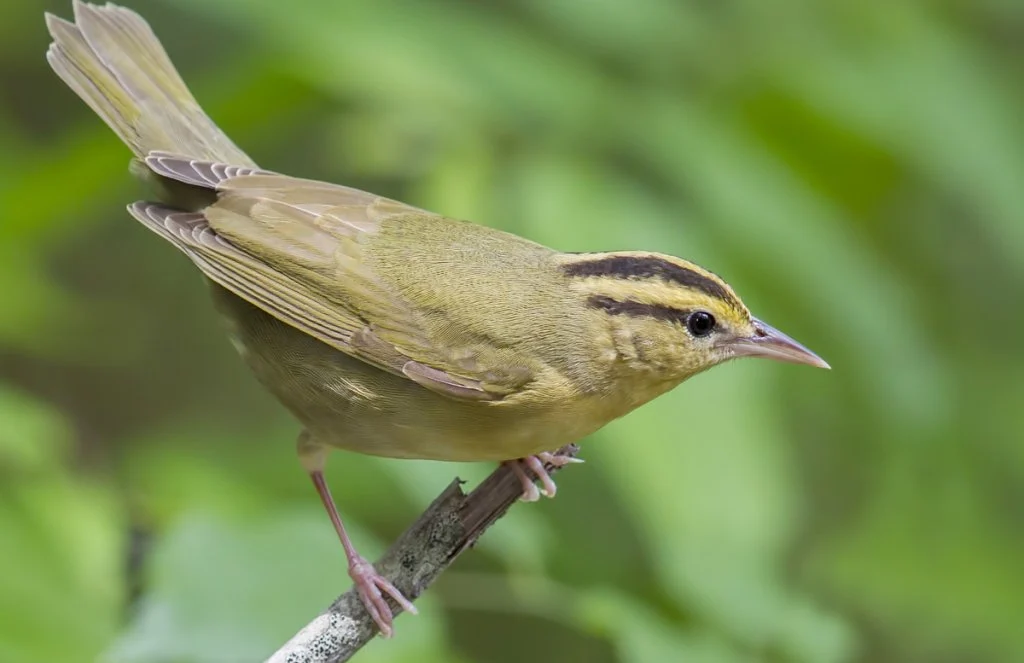
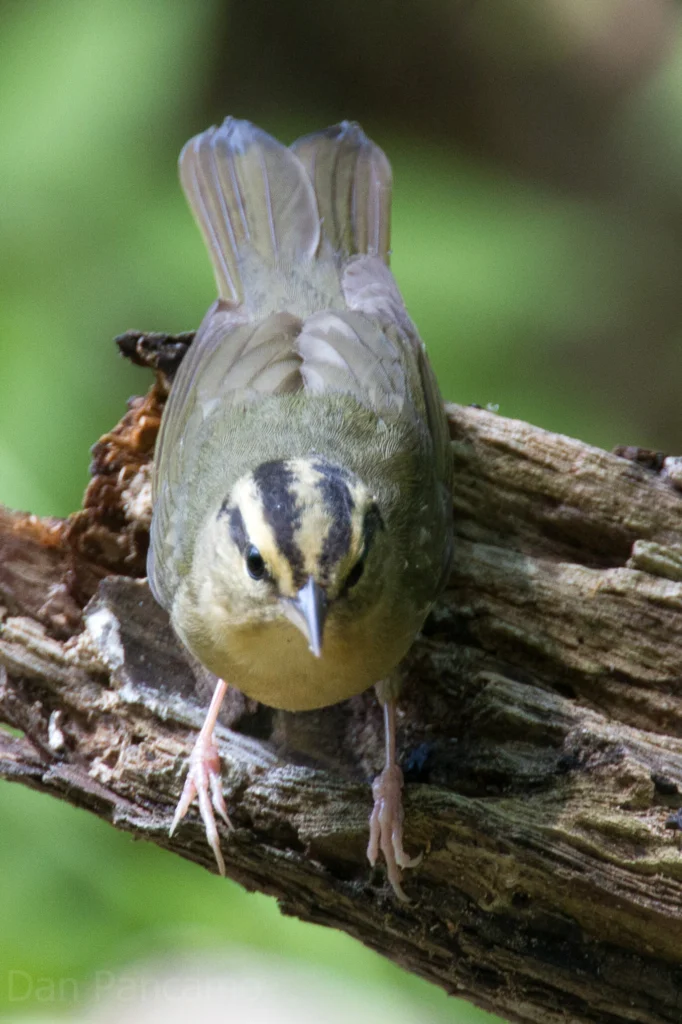
The Worm-eating Warbler haunts the forest interior, where its mechanical-sounding trills can be heard along steep, leaf-carpeted hillsides. A quick glimpse of the singer reveals a rather plain-looking olive, brown, and buff warbler with a boldly striped head. This head pattern distinguishes it from other brown forest warblers, such as the Swainson’s Warbler, which has a brown crown, occasionally tinged with rufous instead.
The Worm-eating Warbler is the only member of its genus, Helmitheros, and is not closely related to any other warbler species. Both its genus and species name refer to eating worms, and give this bird its common name. But there’s a catch — the Worm-eating Warbler doesn’t actually eat earthworms, a food item more associated with an American Robin or American Woodcock.
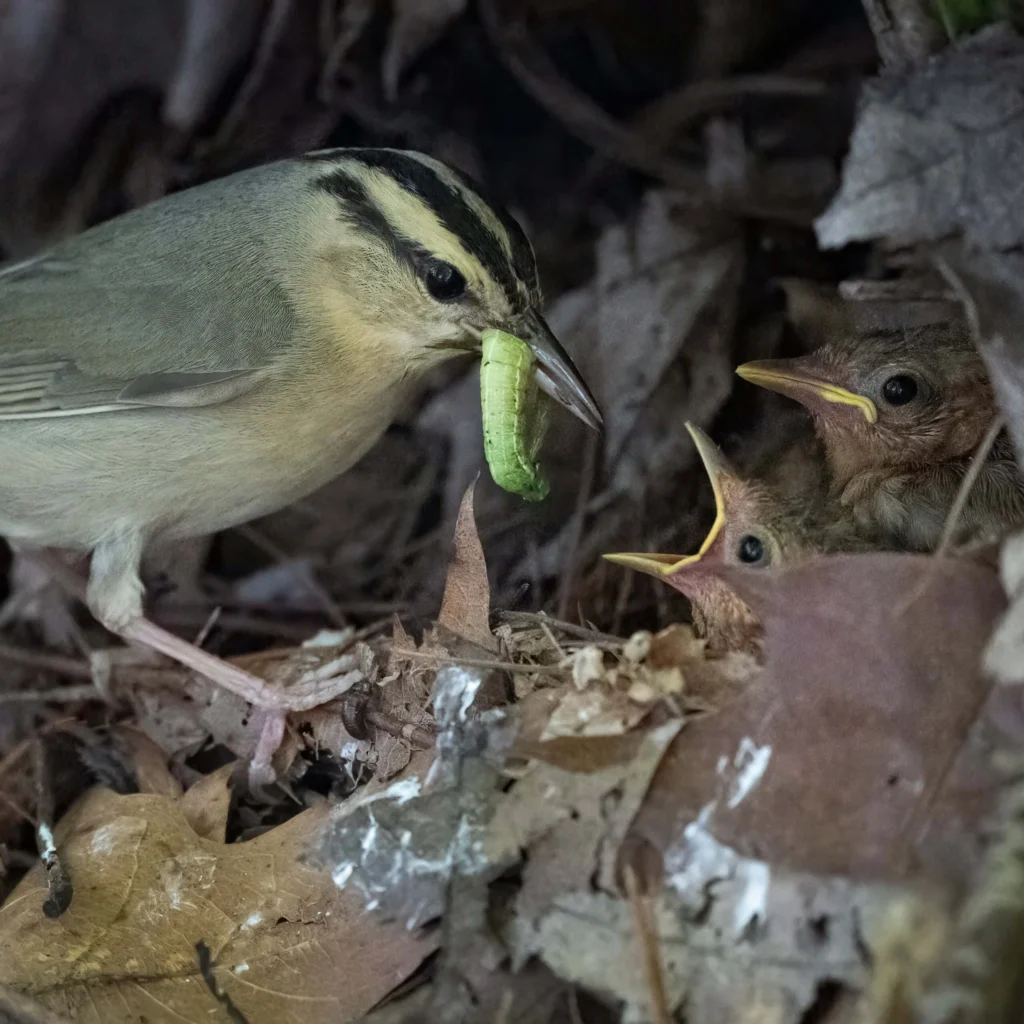
This misleading name came about via a colloquial term once used throughout the United States. Caterpillars, especially the Isabella tiger moth caterpillar (also known as a woolly bear), were once commonly called “worms.” Since this warbler feeds heavily on the caterpillar larvae of many types of moths and butterflies, it became associated with the inaccurate descriptor “worm-eating.”
Threats
Birds across the globe are declining, and even species with stable populations — like the Worm-eating Warbler — face threats that can lead to decreases and put species at risk.
Habitat Loss
Habitat loss is the greatest threat to the Worm-eating Warbler on both its breeding and nonbreeding grounds. The species is especially sensitive to fragmentation, requiring large tracts of forest with dense understories for breeding.
Glass Collisions
Collisions with glass and other structures like communications towers can cause significant mortality for Worm-eating Warblers, which migrate long distances at night.
Pesticides & Toxins
Use of insecticides has been shown to impact Worm-eating Warblers. In particular, spraying for gypsy moths (Lymantria dispar) reduced nesting success and resulted in smaller hatchlings. It also reduced the availability of caterpillars, a key food source.
Conservation Strategies & Projects
At ABC, birds inspire us to take action to help them overcome the threats they face. We tackle some of the greatest challenges birds are up against, from habitat loss to harmful pesticides. Using science as our foundation and developing strong partnerships, we find solutions to benefit birds like the Worm-eating Warbler and their ecosystems throughout the Western Hemisphere.
Restoring Habitat
ABC and our partners in the Appalachian Mountains Joint Venture work with landowners to steward their properties and restore habitat for birds like the Worm-eating Warbler. Forest management efforts ensure the species has large, contiguous tracts it needs to breed and raise young.
Avoiding Pesticides & Toxins
Working at the state and federal levels, ABC and our partners advocate for the regulation of the most harmful pesticides that put birds and other species at risk. We develop innovative programs, work directly with farmers and landowners, and encourage millions of people to avoid pesticides that pose a danger to birds.
Preventing Glass Collisions
ABC has long been a leader in the effort to reduce the threat of collisions with glass, which claims the lives of upwards of a billion birds in the U.S. every year. Through research, advocacy, and outreach, we’re helping people find solutions for their homes, offices, and schools, and encouraging wider adoption of bird-friendly collision deterrents.
Protecting Migration
Migratory birds need conservation on both ends of their migratory routes and at key spots along the way. ABC’s BirdsPlus program supports landowners with working lands in Latin America and the Caribbean in applying bird-friendly best practices. These efforts create bird habitat on lands where coffee, cacao, cardamom, and other crops are grown.
Bird Gallery
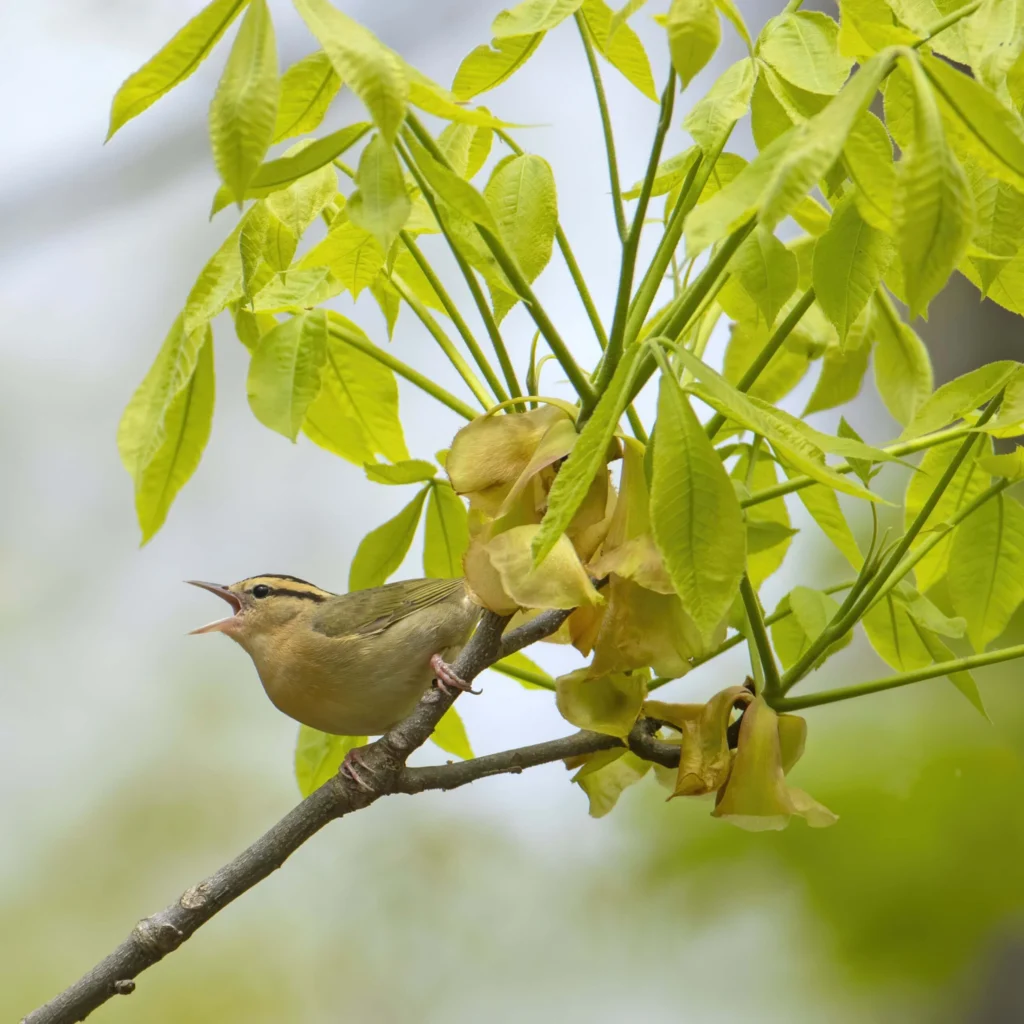
This warbler is a subtle beauty, perfectly designed to blend into the forest interior. Its plumage is a mix of rich caramel brown on the head, throat, and underside, with a darker olive-colored back. Its head shows a distinctive pattern of darker stripes on the crown and behind the eye. The sexes look alike.
Bird Sounds
The Worm-eating Warbler’s song is a quiet, rather insect-like trill. This song can be confused with that of a Chipping Sparrow or Pine Warbler, but it has a drier, more mechanical tone. Its call is a clear, loud chip.
Credit: Jorge de Leon Cardozo & Susan Hochgraf, XC730179. Accessible at www.xeno-canto.org/730179.
Credit: Eric Hough, XC383681. Accessible at www.xeno-canto.org/383681.
Habitat
Worm-eating Warblers tend to tuck themselves away in forest interiors, preferring thick understories — this makes them tricky to spot!
- Found in unbroken areas of mature forest composed of deciduous, mixed deciduous-coniferous, or coniferous trees, including pine plantations, and also requires thick, shrubby understory and abundant groundcover
- Can use commercial loblolly pine plantations in dense, closed-canopy stands prior to thinning and removal of hardwood components such as sweetgums and maples
- May be found in scrub habitats and second-growth forest during migration and in the nonbreeding season
Range & Region
Specific Area: Eastern United States, southern Mexico, Central America, Greater Antilles
Range Detail:
The breeding range of this warbler extends from southern New England along the Atlantic Coast through South Carolina, throughout most of the Appalachian region, and as far west as eastern Texas and Oklahoma. In the nonbreeding season, Worm-eating Warblers may be found from northeast Mexico south to Panama and on Bermuda, The Bahamas, and the Greater Antilles.
Did you know?
Like many birds, Worm-eating Warblers are territorial on their breeding grounds, but this species also maintains nonbreeding grounds. They have been known to take up residence in the same places at both ends of their migratory journeys.
Life History
Secretive and skulking, the Worm-eating Warbler tends to stay lower to the ground, picking insects from vegetation under the cover of the dense forest understory. While many warblers move at a frenzied pace, the Worm-eating Warbler’s movements are deliberate, sometimes walking or hopping on the ground as it searches for insects. Though territorial throughout its full annual cycle, it sometimes joins mixed-species flocks on the nonbreeding grounds.
Diet
Worm-eating Warblers can be seen flying between dead leaf clumps suspended on branches or in vine tangles, picking through each one for insects or spiders while dangling acrobatically from a twig or small branch. This species often “gapes” while foraging, meaning that it inserts its closed bill into a bark crevice or curled leaf, then opens up its bill to grab its quarry. It also forages by gleaning from foliage surfaces and hawking after flying insects. Common prey include insects, caterpillars (once called “worms” and the source of the species’ name), spiders, slugs, grasshoppers, and beetles.
Courtship
The courtship of Worm-eating Warblers needs further study, and little is known — a result of the difficulty of observing this species. Males are quick to establish territories on the breeding grounds and will use threat displays to force intruders (including larger songbirds like Wood Thrushes) off their grounds. Although Worm-eating Warblers are mostly monogamous, there are instances of males taking two female mates simultaneously.
Nesting
The female Worm-eating Warbler builds her nest in two phases: First, she selects a nest site, usually on a sloping hillside or bank amid a thick layer of dead leaves. The nest is built directly on the ground at the base of a shrub or sapling, and often near a stream or wetland. She uses wet leaves to form the foundation of her nest, molding it into a cup shape with her body weight. To finish the nest, she adds a layer of mosses, then softer materials such as deer hair.
Eggs & Young
While the female incubates a clutch of four to six eggs, her mate brings her food and defends their territory, singing from perches to ward off potential intruders. The female sits tight while brooding, a process that takes 11 to 17 days, but if flushed, she performs a distraction display to lead potential predators away from the nest. Her mate will also join in this display. Both parents feed the young after hatching, and they fledge in approximately eight to 10 days.
After the young Worm-eating Warblers leave the nest, they disperse to areas with thicker undergrowth, where their parents continue to care for them for up to a month. The parents usually split the caretaking responsibilities, with each taking responsibility for several young.