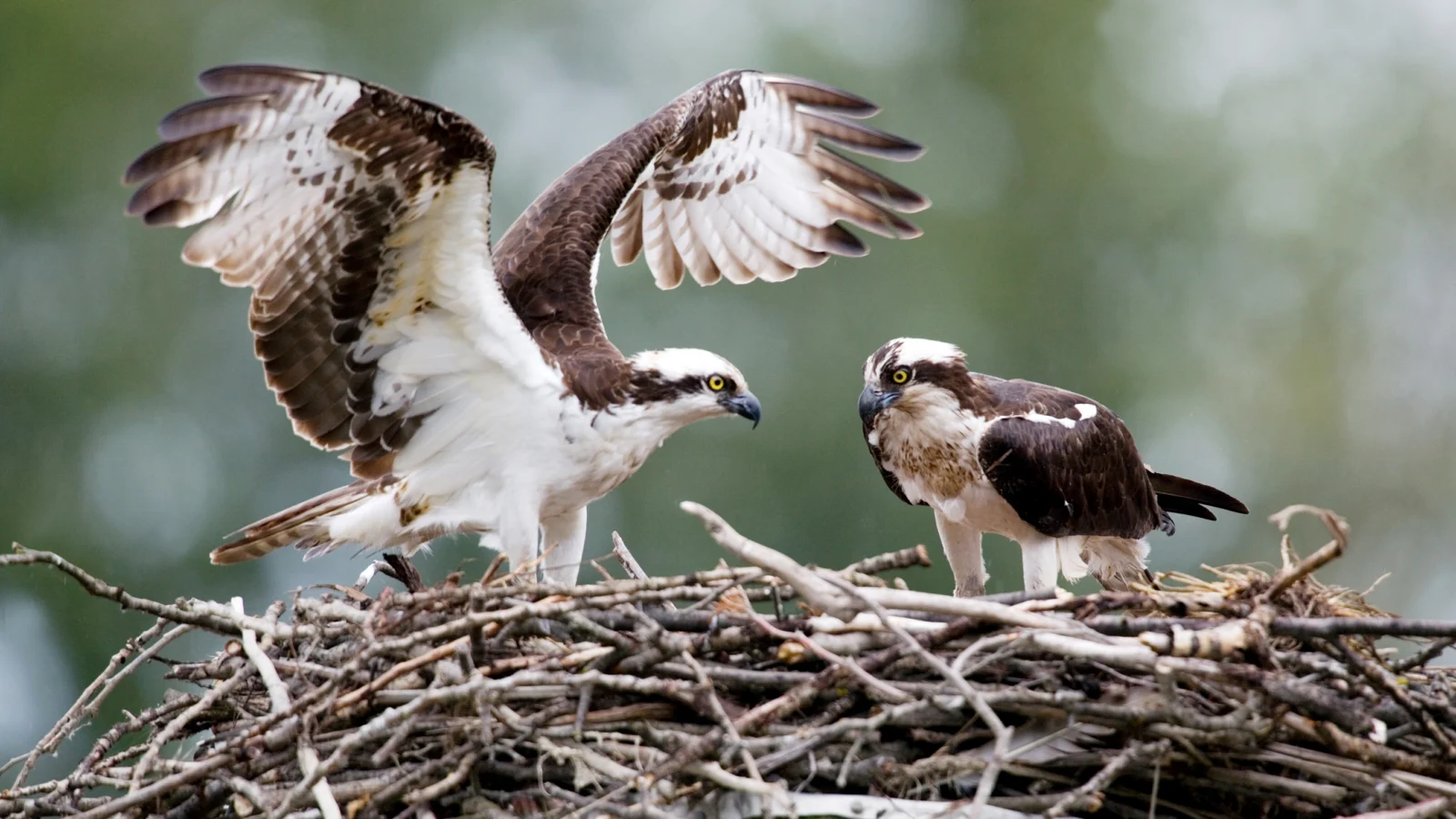
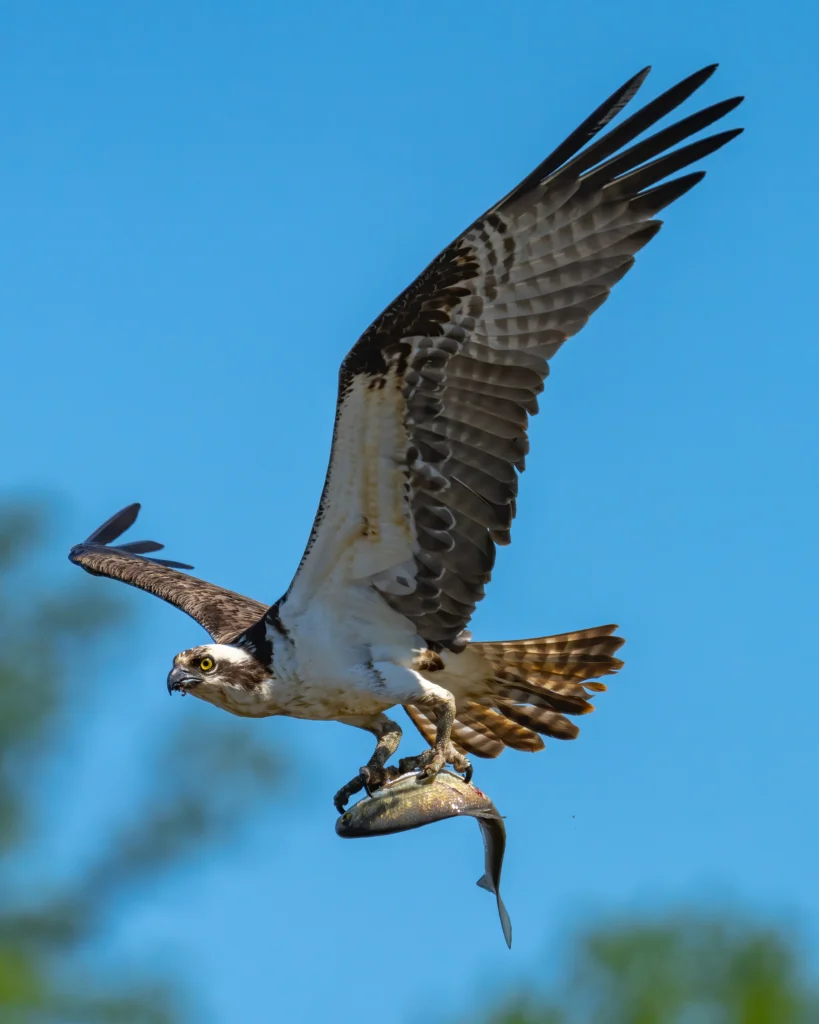
The recovery of the Osprey, a wide-ranging raptor of waterways and bays on every continent but Antarctica, is one of the great conservation success stories of the 20th century. Laid low by the pesticide DDT in the mid-century, decades of conservation action led to a ban on the dangerous chemical and a rebound of Osprey populations. Today, DDT is gone, but a new threat — the disappearance of the main food source for chicks — has led to a dramatic decline in the Chesapeake Bay’s Osprey population.
At the center of the Osprey decline in the region is a small silver fish: the Atlantic menhaden. The absence of this nutrient-packed fish is leading to the deaths of more than 5,000 Osprey chicks in the Chesapeake Bay annually. During the 2026 breeding season, out of the more than 10,000 Osprey nests in the Chesapeake Bay, few chicks survived to fledgling. The survival rate of Osprey chicks today is lower than in the 1970s, when DDT thinned the birds’ eggshells and led to widespread nest failure.
The extremely high rate of nest failure over successive years is a red alarm bell for conservationists, and the primary cause — the starvation of thousands of chicks due to a lack of food — is clear.
Leaving more menhaden in the Bay is the only way to stop the alarming decline of Ospreys. It will take years for menhaden populations and, by extension, Ospreys, to recover. There is no time to waste.
That’s why American Bird Conservancy is calling for swift action to reduce the menhaden harvest in the Chesapeake Bay. The Atlantic States Marine Fisheries Commission (ASMFC), the body overseeing fish in the region, meets from November 9 to November 12. Commissioners will be considering final action on a proposal to cut the Bay’s menhaden fishery by up to 50 percent. ABC is urging the ASMFC to adopt this proposal and calling on leaders in states along the Atlantic Coast to take further steps to conserve Ospreys in their own waters.
Sometimes called “bunkers” in the Bay, menhaden are a keystone species integral to the delicate food webs that sustain ecosystems up and down the Eastern Seaboard. Like the keystone of an archway, pull the menhaden out of the food web, and it collapses. Menhaden are filter feeders, made fatty and rich in nutrients thanks to the phytoplankton and zooplankton they ingest. They are a delicacy — and a necessity — for growing young Ospreys in the Chesapeake Bay and beyond, and one of the only fish species with enough nutrients to nourish chicks.
Menhaden are equally coveted by the reduction industry. Though menhaden are oily and bony and not typically eaten directly, they are harvested in massive numbers and ground down into fish oil and fishmeal. Refined menhaden oil is used in omega-3 supplements, cosmetics, soaps, and other products; the protein-rich fishmeal is used in pet foods and feed for livestock, poultry, and aquaculture; and the fish themselves, whether whole or parts, are used in bait for fishing.