Overview
About
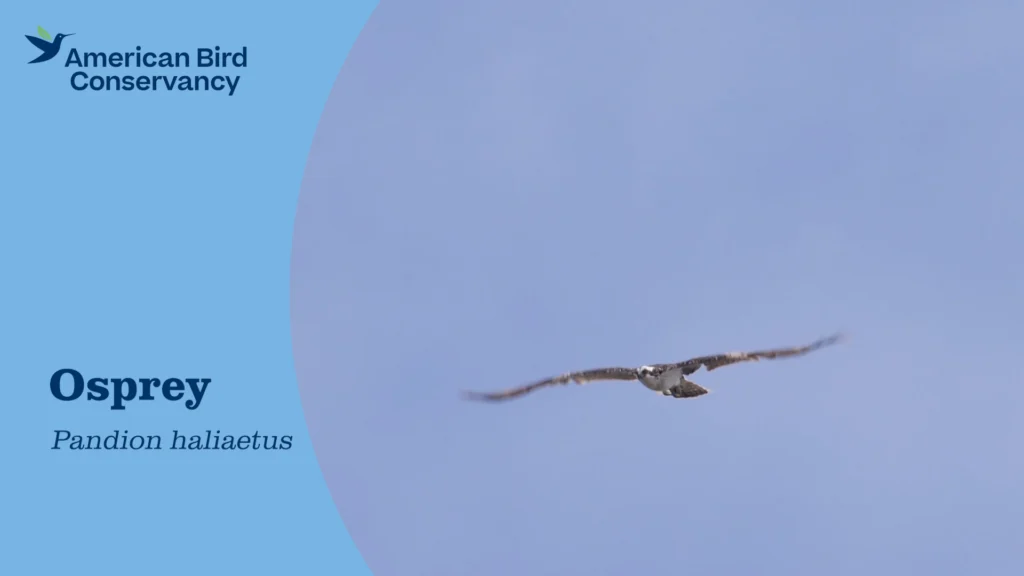
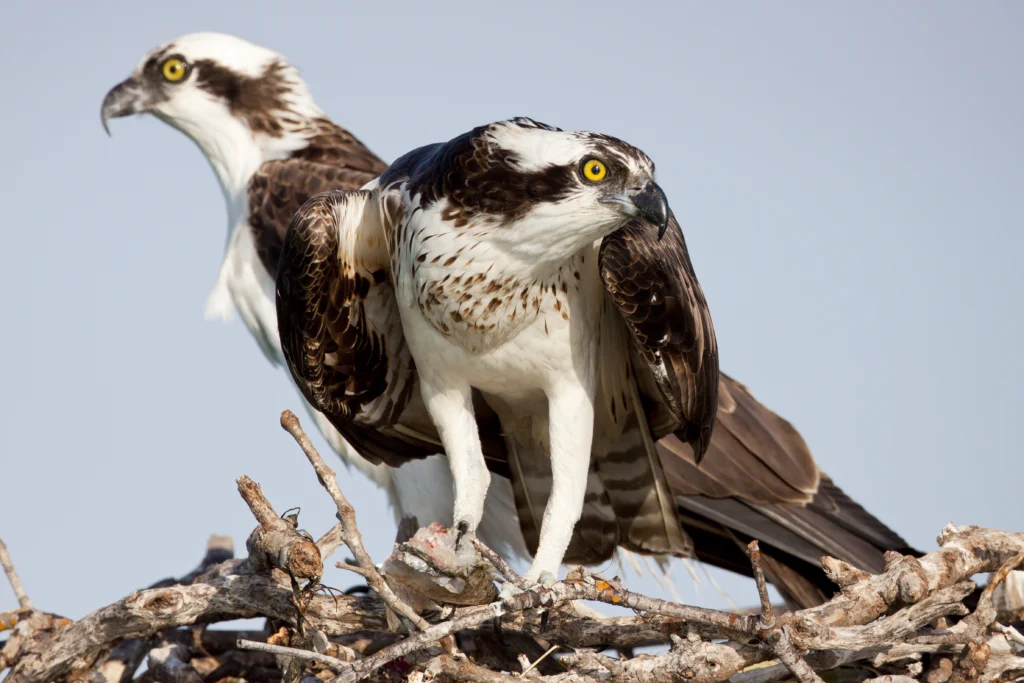
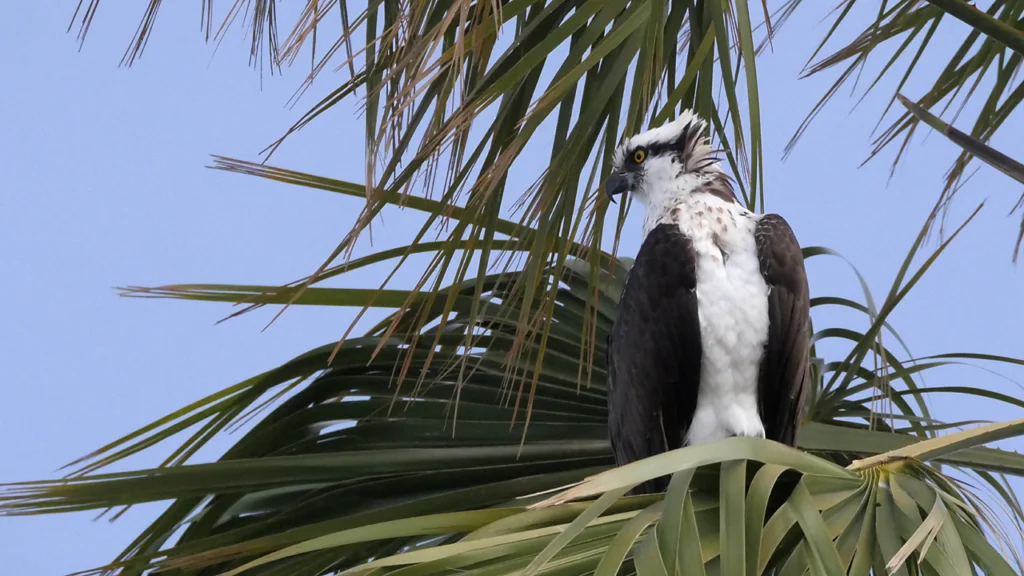
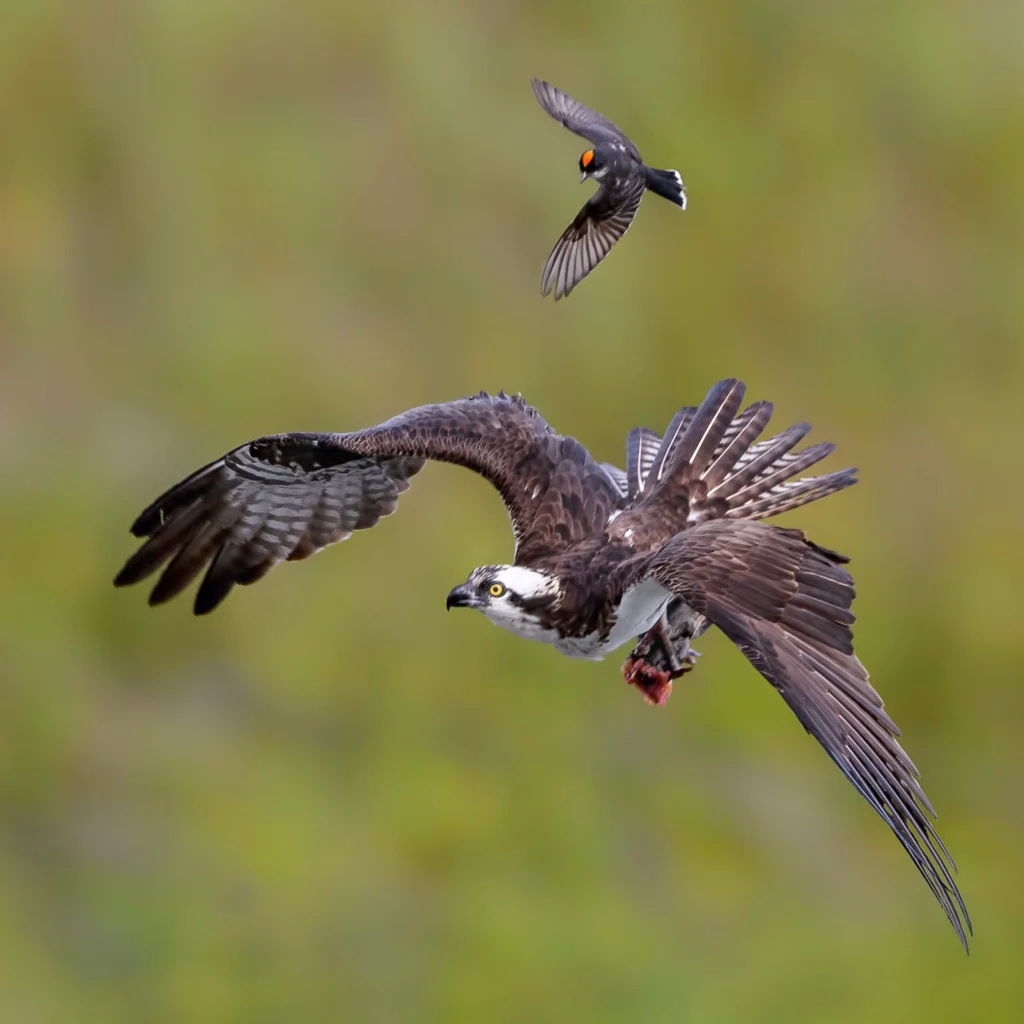
The Osprey is a large black-and-white hawk with long, narrow wings, long legs, and a distinctive M-shaped flight profile. It is found on every continent except Antarctica; its diet and affinity for coastlines have earned it the nicknames “sea hawk” and “fish hawk.”
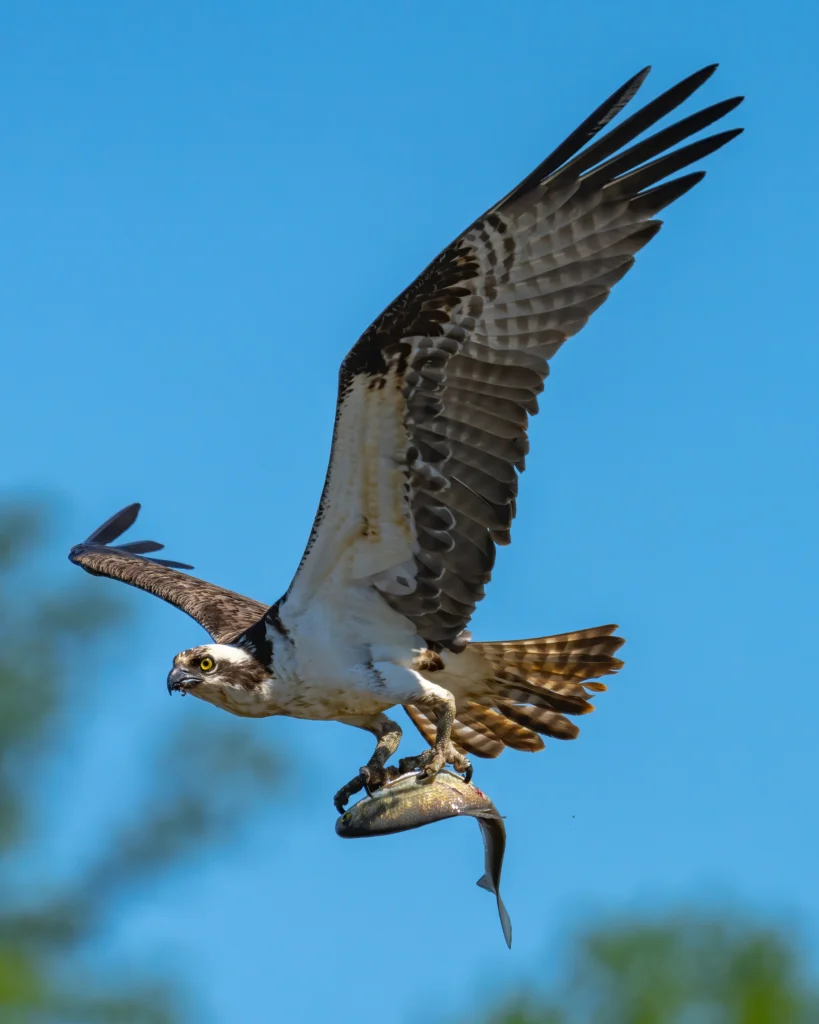
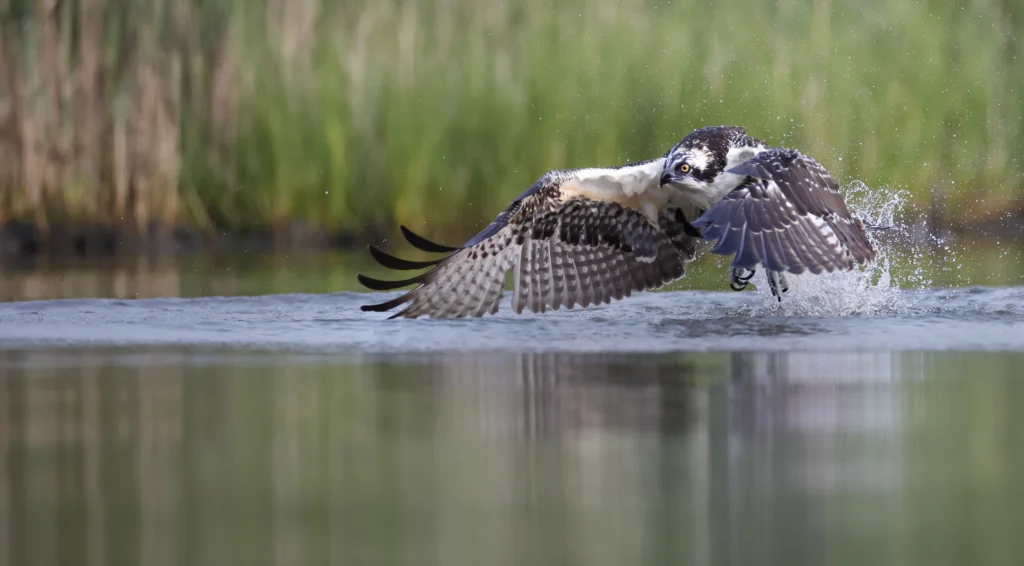
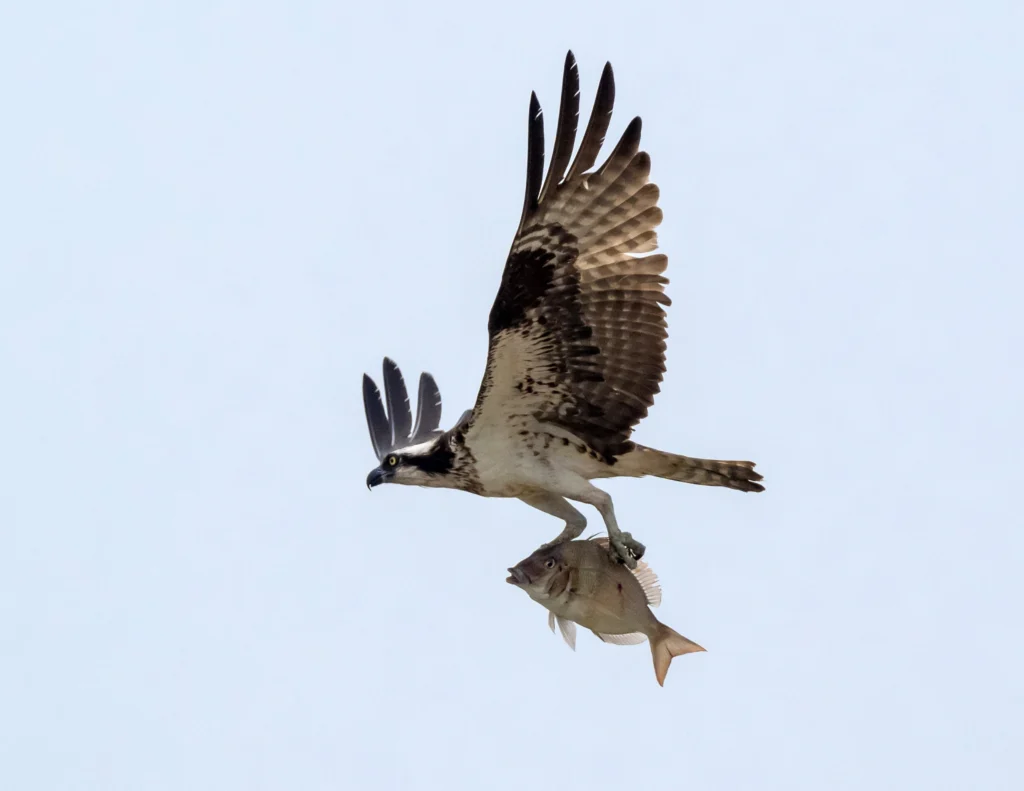
Fish make up the majority of an Osprey’s diet, and they will take almost any size and type. Their eyes are adapted to detecting fish underwater while they’re on the wing, watching from 30 to 130 feet in the air. When prey is first sighted, the bird hovers momentarily, then plunges feet-first into the water, sometimes submerging entirely. Because they are unable to dive to more than about three feet below the water’s surface, Ospreys tend to hunt in shallow waters.
The Osprey has other adaptations that suit its fish-eating diet: Reversible outer toes, long talons, and barbed pads under their toes help the bird hold on to slippery fish. Closable nostrils keep out water during dives. And dense, oily plumage keeps feathers from getting waterlogged. When flying with prey, an Osprey lines up its catch head-first for less wind resistance, a behavior often referred to by birders as “packing a lunch.”
One of many bird conservation successes made possible by the Endangered Species Act, the Osprey has made a heartening comeback since the 1970s. Organochlorine pesticides, particularly DDT, had depleted Osprey populations by thinning the birds’ eggshells, wreaking havoc on nesting success in the mid-20th century.
Threats
The persistence of healthy Osprey populations in the Americas is an uplifting reminder of what a conservation success can look like. However, though DDT no longer wreaks havoc on Ospreys the way it once did, Ospreys still face important threats. Ospreys are still vulnerable to other environmental pollutants, and threats such as overfishing, persecution at fish farms, and hazards due to nesting in developed areas continue to harm this charismatic species.
Fisheries
Conservation Strategies & Projects
Even charismatic species like the Osprey need our help to overcome the threats they face. At ABC, we’re inspired by the wonder of birds and driven by our responsibility to find solutions to meet their greatest challenges. With science as our foundation, and with inclusion and partnership at the heart of all we do, we take bold action for birds across the Americas.
Addressing Fisheries
Bird Gallery
Sounds
Habitat
Ospreys are found around shallow waters, making use of a variety of bodies of water, including swamps, lakes, reservoirs, rivers, and marshes.
Region & Range
Specific Area
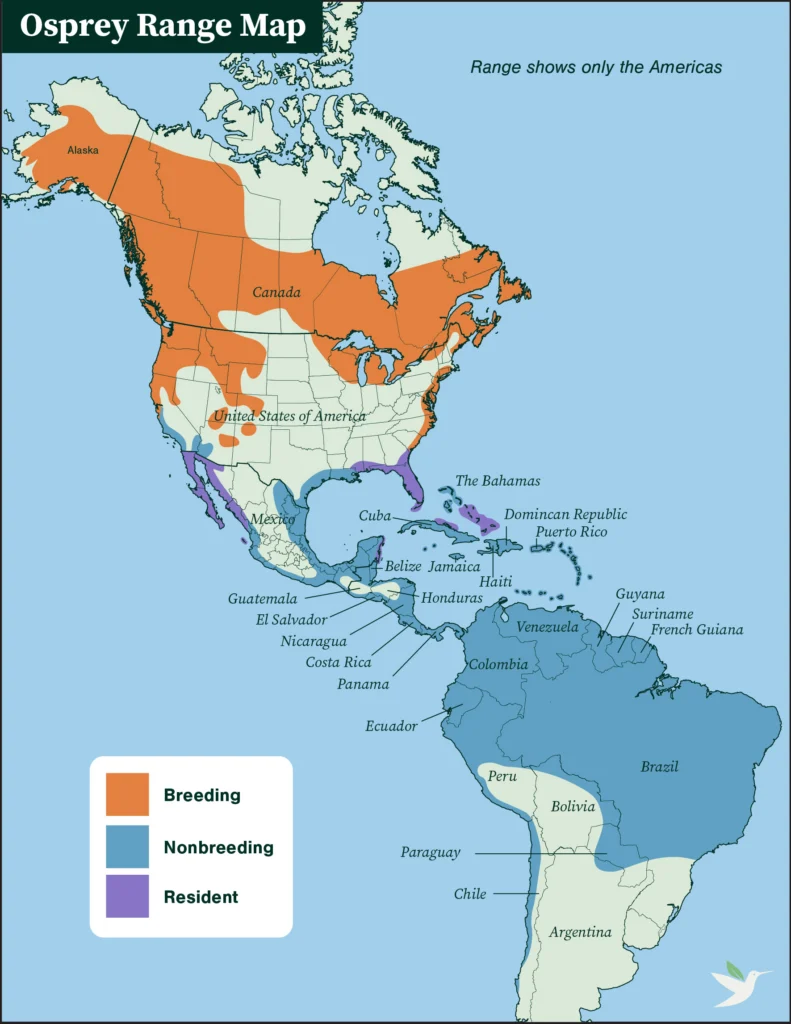
Worldwide, on all continents except Antarctica
Range Detail
North American Osprey populations are migratory, with some individuals traveling long distances from the Gulf Coast states to as far south as South America for the nonbreeding season. There are year-round resident Ospreys in Florida, along the Gulf Coast, and in the Caribbean; these birds do not need to migrate because they have a year-round food supply.
Did you know?
When young Ospreys make their first migration south, they usually remain in the vicinity of their winter home until they are almost two years old. If they survive to the spring of their second year, they head north, but do not necessarily return to the place of their birth nest.
Life History
Diet
Ospreys are highly adapted to catching fish and eat little else. However, skilled hunters that they are, Ospreys catch a diversity of fish species across the incredible range of geography and habitats that they use. Because they cannot dive like other fish hunters, such as the Double-crested Cormorant, Ospreys are mostly confined to shallow inland and coastal waters. However, some populations will travel several miles offshore to hunt pelagic species such as mackerel, sardines, and flying fish.
Courtship
Males perform a unique flight display, known variously as the aerial sky dance or fish flight. He flies high above the nest and calls while flying in a broad, undulating pattern, rising steeply and hovering before dropping and rising again. All the while his legs hang low with a fish or nesting material such as a tree branch. Courtship feeding, where males bring fish to their mates, is also an important feature of breeding. Males who share their catch more equitably also provision their nestlings more, important for a female to know, given that the family will be largely dependent on him before the chicks can leave the nest.
Nesting
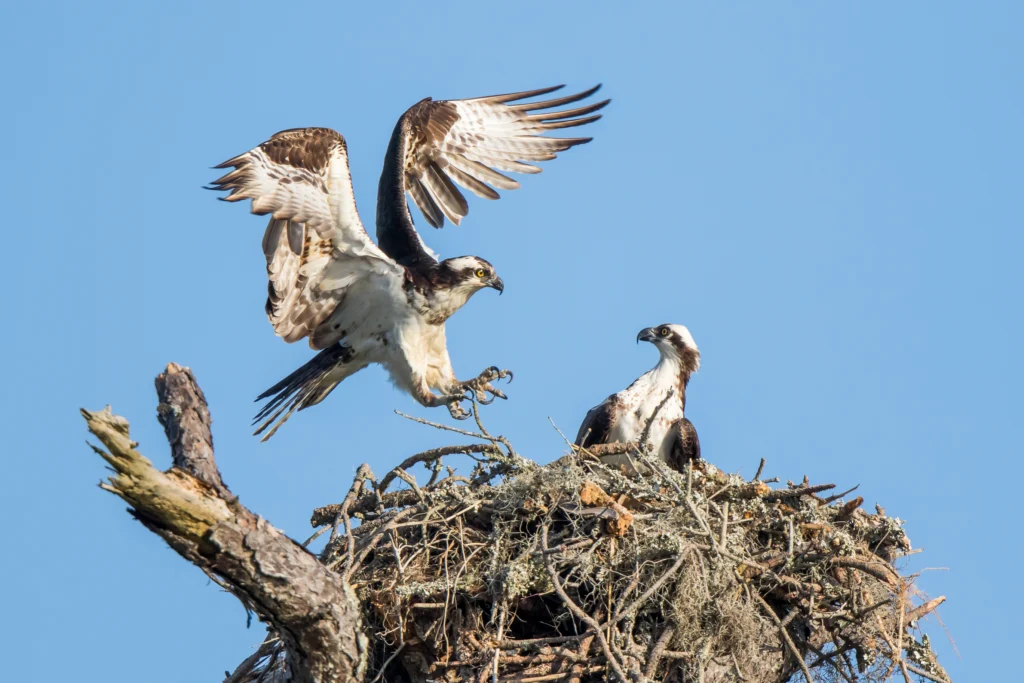
Like the Bald Eagle, this hawk builds a big, bulky stick nest that may be reused and added to year after year. The male selects a site, then both the male and female collect sticks and other materials to build the nest. Often built on poles, channel markers, and dead trees, nests may also be built on nest platforms designed and built for them. The Osprey habituates easily to human activity and often nests close to busy highways, ports, and marinas.
Eggs & Young
The female lays up to three eggs, which both parents help to incubate. The male does all of the hunting until the chicks are six weeks old, delivering fish to the female on the nest, who tears off pieces to feed to the young. At three to four weeks of age, Osprey chicks start to exercise their wings by holding on to the edge of the nest and flapping their wings.