Águila pescadora

Pandion haliaetus

Eshkimegwe (ojibwa)

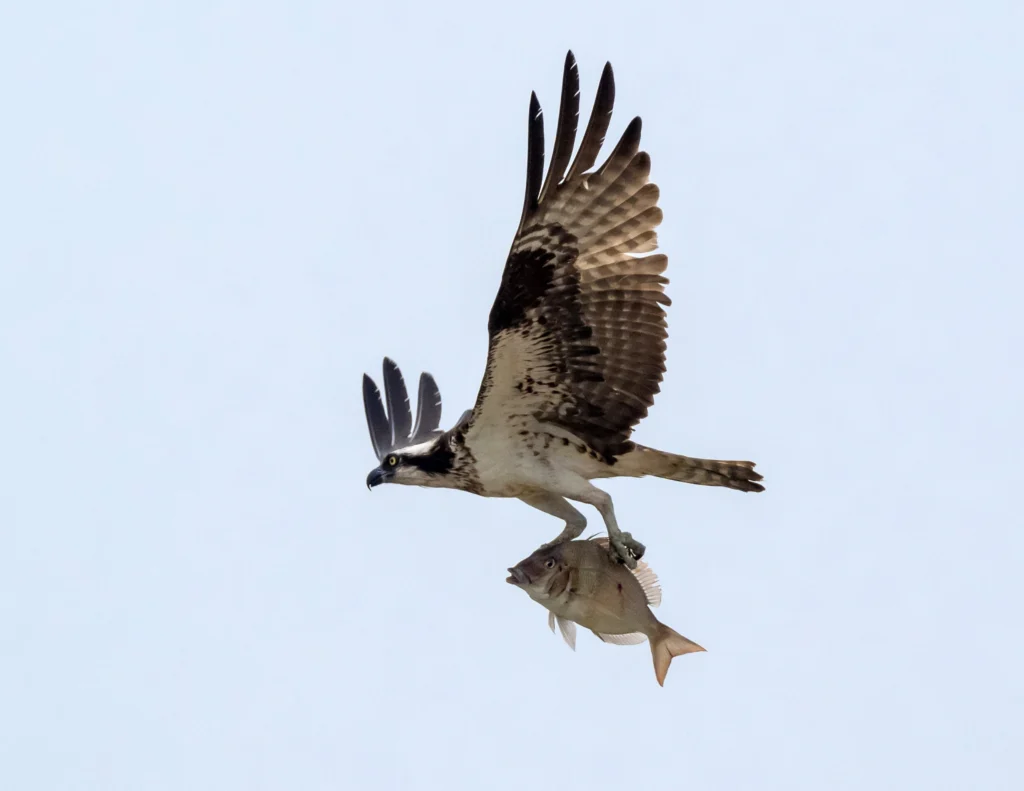
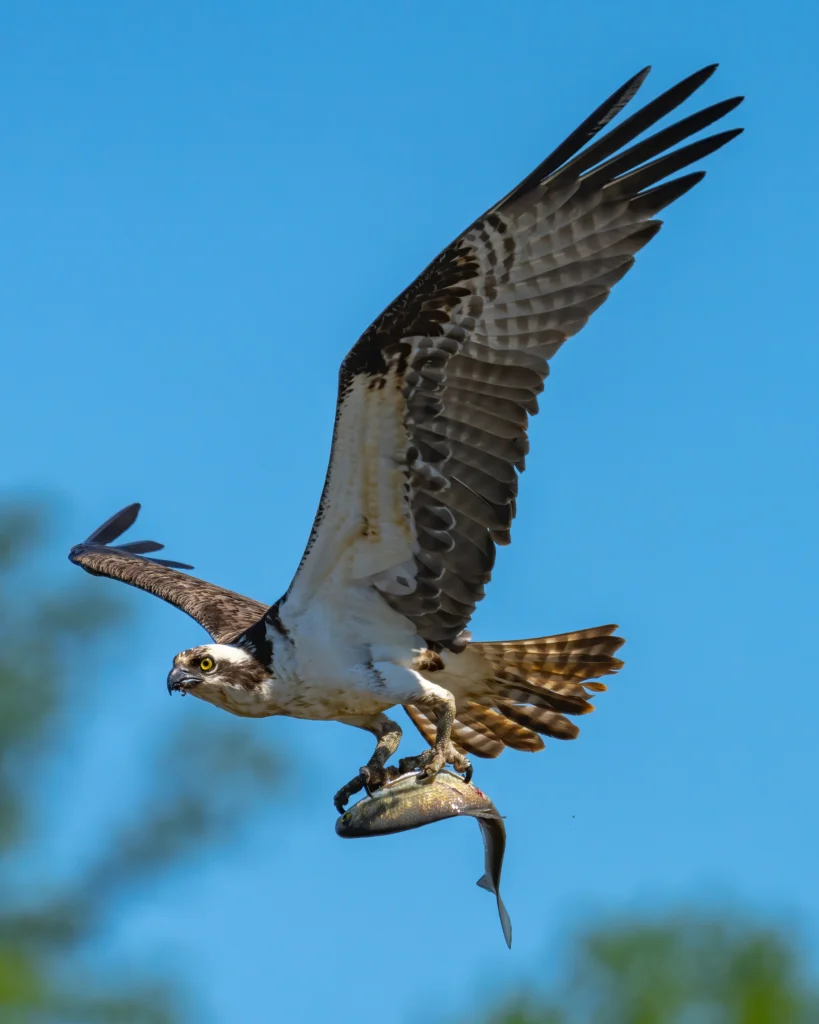
Osprey with fish. Photo by Krumpelman, Shutterstock.

Águila pescadora

Osprey with fish. Photo by Krumpelman, Shutterstock.

Pandion haliaetus

Descripción general

Estado de conservación
Tendencias demográficas
Creciente
Tamaño de la población
1,200,000
Familia
Águila pescadora
Ubicación
Mundial
Patrón de migración
Latitudinal
Distancia de migración
Larga distancia
También conocido como
  • Sea Hawk
  • Fish Hawk

Acerca de

El águila pescadora es un gran halcón blanco y negro con alas largas y estrechas, patas largas y un característico perfil de vuelo en forma de M. Se encuentra en todos los continentes excepto en la Antártida; su dieta y su afinidad por las costas le han valido los apodos de "halcón marino" y "halcón pescador".“

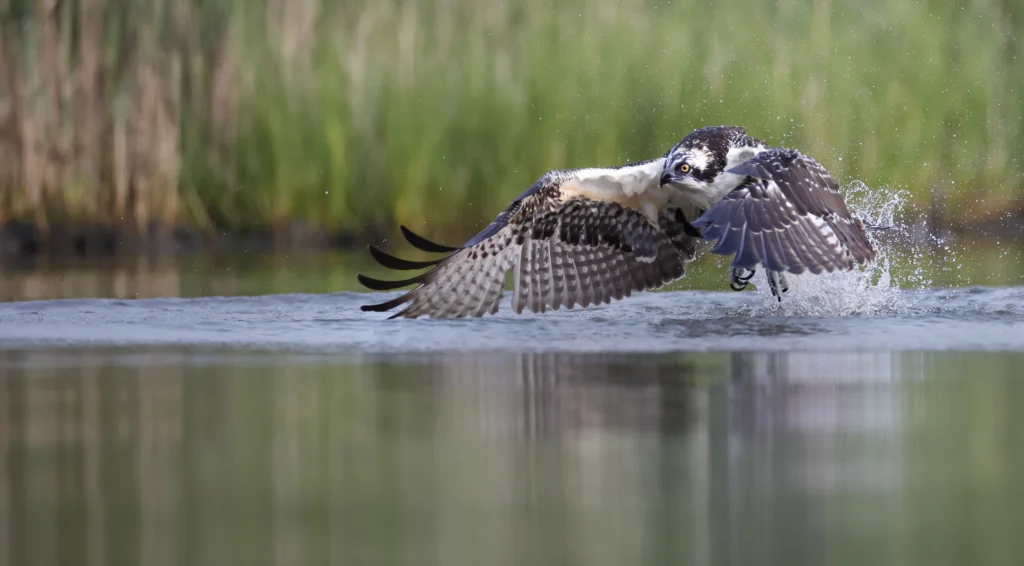
Los peces constituyen la mayor parte de la dieta del águila pescadora, y pueden capturar casi cualquier tamaño y especie. Sus ojos están adaptados para detectar peces bajo el agua mientras vuelan, observando desde una altura de 9 a 40 metros. Cuando avistan una presa por primera vez, el ave se queda suspendida momentáneamente y luego se sumerge con las patas por delante, a veces sumergiéndose por completo. Dado que no pueden sumergirse a más de un metro de profundidad, las águilas pescadoras tienden a cazar en aguas poco profundas.

El águila pescadora tiene otras adaptaciones que se adaptan a su dieta piscícola: dedos externos reversibles, garras largas y almohadillas con púas bajo los dedos le ayudan a sujetar peces resbaladizos. Las fosas nasales que se cierran impiden la entrada de agua durante las inmersiones. Y su plumaje denso y aceitoso evita que las plumas se empapen. Al volar con presas, el águila pescadora las alinea de cabeza para reducir la resistencia al viento, un comportamiento que los observadores de aves suelen denominar "empacar un almuerzo".“

El águila pescadora, uno de los muchos éxitos en conservación de aves que fueron posibles gracias a la Ley de Especies en Peligro de Extinción, ha tenido un regreso alentador desde la década de 1970. Los pesticidas organoclorados, en particular el DDT, habían agotado las poblaciones de águilas pescadoras al adelgazar las cáscaras de los huevos de las aves, causando estragos en el éxito de anidación a mediados del siglo XX.

Amenazas

La persistencia de poblaciones saludables de águilas pescadoras en las Américas es un alentador recordatorio de lo que puede significar un éxito en la conservación. Sin embargo, aunque el DDT ya no causa estragos en las águilas pescadoras como antes, estas aún enfrentan importantes amenazas. Siguen siendo vulnerables a otros contaminantes ambientales, y amenazas como la sobrepesca, la persecución en las piscifactorías y los riesgos derivados de la anidación en zonas desarrolladas continúan perjudicando a esta carismática especie.

Overfishing

At all stages of their lives, Ospreys are completely reliant on fish for their food. While Ospreys around the world take a wide variety of fish species, the birds in a given population will usually concentrate on only two or three species, which make up the majority of their diet. Where Ospreys and humans both use the same fish species, this dependence can lead to competition. Overfishing of coastal waters for species such as menhaden (Brevoortia y Ethmidium) reduces the Ospreys’ food supply, leading to lower rates of nest success from underfed nestlings.

Pesca

Environmental Pollution & Toxins

Despite regulations on DDT, environmental pollution still poses a real threat to Ospreys. Mercury enters the environment from the burning of coal and, to a lesser extent, natural gas to generate power. In some areas, mercury from old mine tailings is a huge contributor to mercury in aquatic ecosystems. Additionally, lead is released from fishing weights and sinkers. These toxins accumulate in the fish that Ospreys eat and concentrate in the Ospreys’ tissues, where they can cause a variety of issues affecting these birds’ survival and reproduction.

Estrategias y proyectos de conservación

Incluso especies carismáticas como el águila pescadora necesitan nuestra ayuda para superar las amenazas que enfrentan. En ABC, nos inspira la maravilla de las aves y nos impulsa la responsabilidad de encontrar soluciones para afrontar sus mayores desafíos. Con la ciencia como base, y con la inclusión y la colaboración como base de todo lo que hacemos, tomamos medidas audaces para proteger a las aves de todo el continente americano.

Abordar la pesca

Many populations of Osprey hunt primarily or exclusively in the ocean. In areas with commercial fishing operations, overfishing can greatly reduce the populations of prey fish that Ospreys rely on. ABC works with partners throughout the Western Hemisphere to address the problems of fisheries bycatch, overfishing, and the overwhelming presence of plastics in our waterways, and to help fragile ecosystems and the birds they support become more resilient.

Abordar la pesca

Defensa

Through advocacy, ABC ensures birds have a seat at the table. We have championed efforts to reduce unsustainable menhaden harvests and restore fish populations along the Atlantic Coast. ABC advocates for non-lead exchanges, giveaways, and education on the harmful effects of lead shot and fishing tackle on birds, including Ospreys. We also launched SPLASh (Stopping Plastics and Litter Along Shorelines) along with several partner organizations to clean up trash on the Texas Gulf Coast, which hosts important nonbreeding habitat for Ospreys.

Peticiones y defensa de derechos

Galería de aves

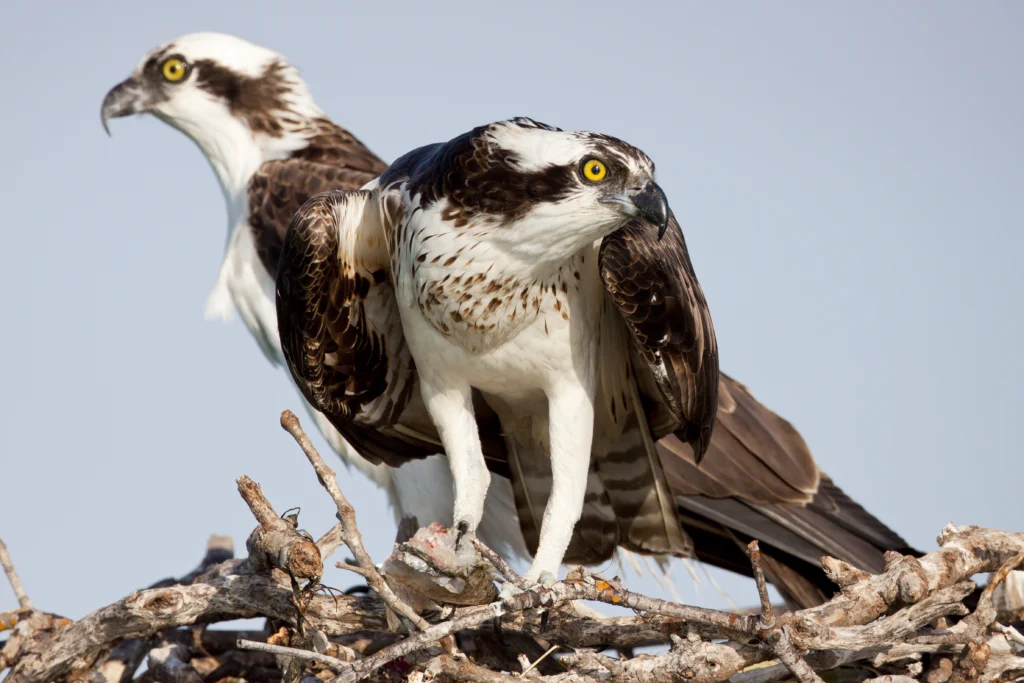
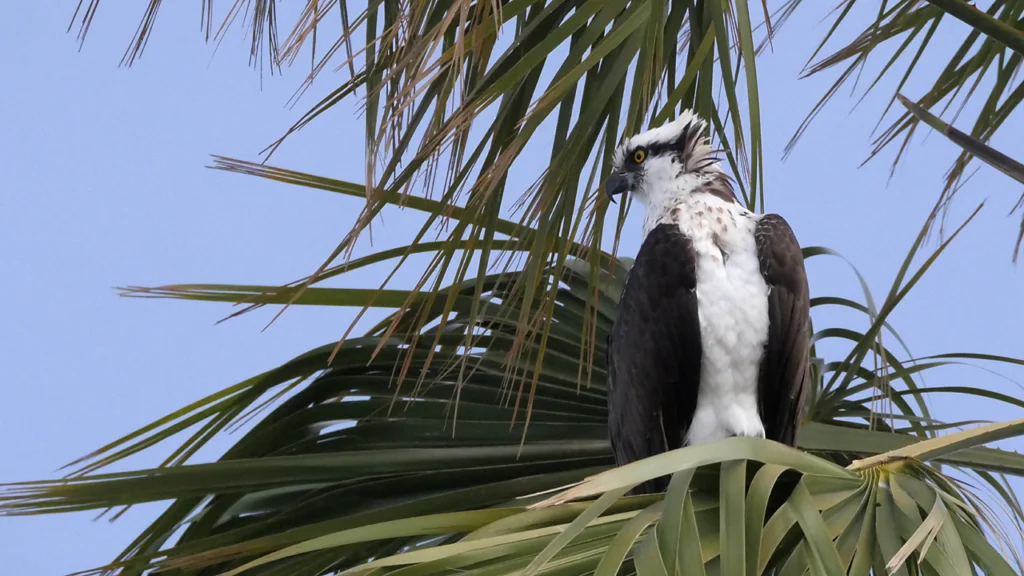
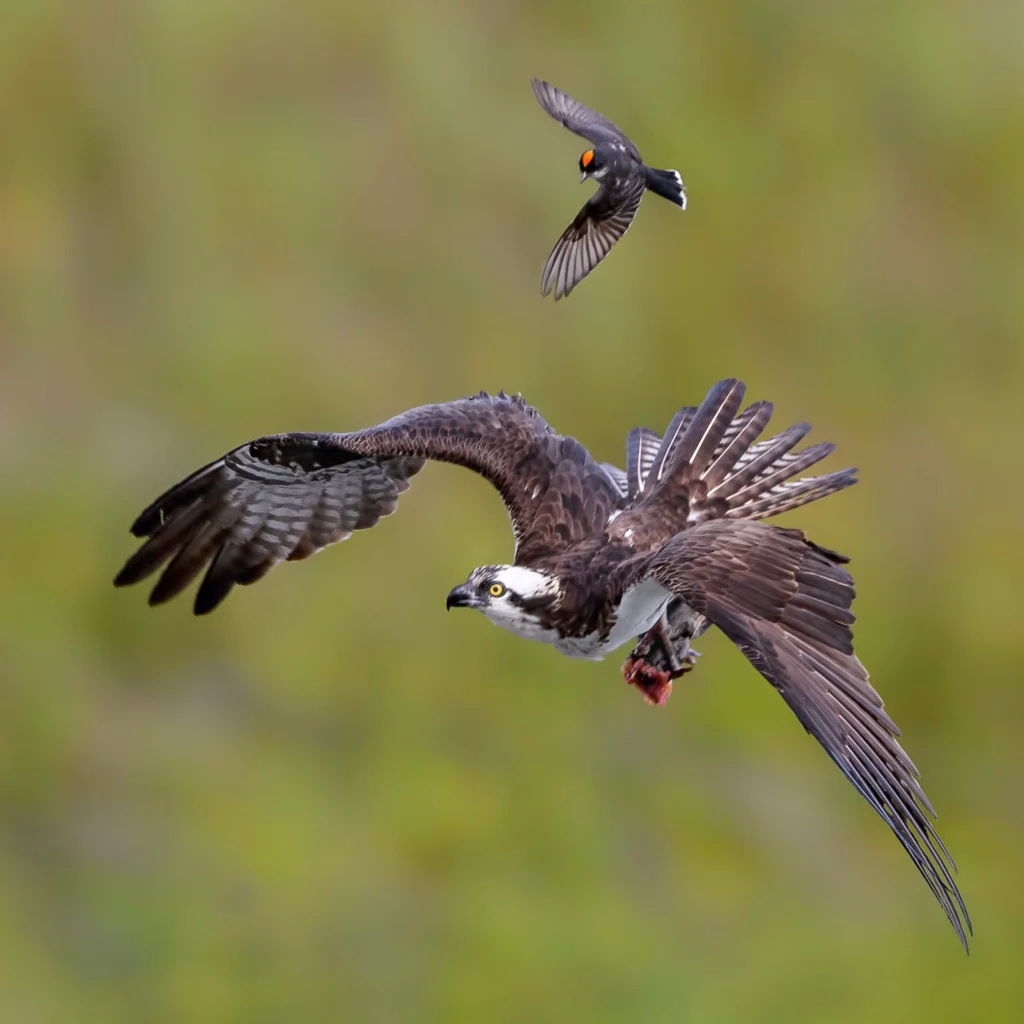
The Osprey is an extremely distinctive raptor, gliding and hovering on long, narrow wings with prominent notched primaries giving the impression of fingers. From above, the wings and back of an Osprey are dark brown, while the tail is barred pale brown and white, and the head is a contrasting white. A thick, dark brown stripe runs from the beak through each large yellow eye and merges with the back. Below, Ospreys are mostly white, with a dark brown “wrist” and barring on the undersides of the tail and flight feathers. While the male’s breast is usually pure white, females have some scattered brown speckling. However, there can be overlap between the sexes in some populations.

Sonidos

Ospreys are typically considered to give five distinct vocalizations, all high-pitched and with a sharp, clear, strident quality. The most common of these is the Guard Call, a sequence of evenly-paced whistled notes, each rapidly dropping in pitch. The Screaming Call is given by males as part of the aerial flight display (see Courtship, below).

Guard Call

Credit: Oscar Campbell, XC794741. Accessible at https://xeno-canto.org/794741.

Screaming Call

Credit: Peter Stronach, XC721671. Accessible at https://xeno-canto.org/721671.

Hábitat

Ospreys are restricted to waters shallow enough for them to hunt. However, they make use of a variety of bodies of water, including swamps, lakes, reservoirs, rivers, marshes, and coastal waters.

Región y rango

Área específica
En todo el mundo, en todos los continentes excepto la Antártida.

Detalles de la gama
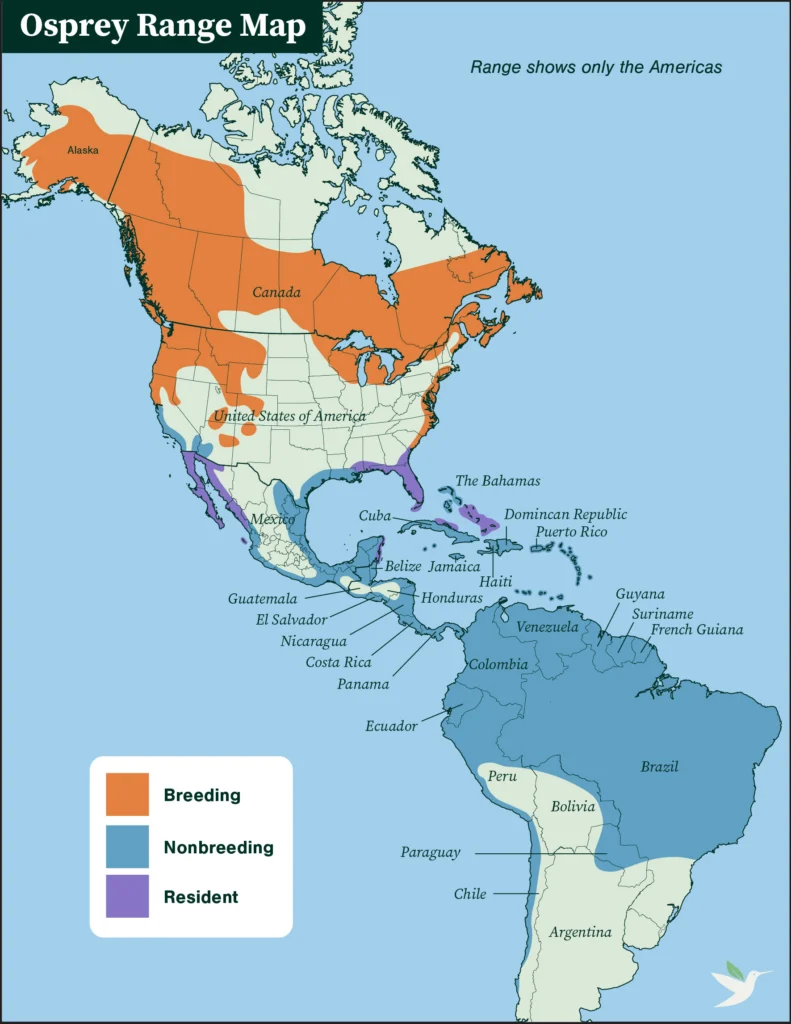
Las poblaciones de águila pescadora norteamericana son migratorias, y algunos ejemplares recorren largas distancias desde los estados de la Costa del Golfo hasta Sudamérica durante la temporada no reproductiva. Hay águilas pescadoras residentes durante todo el año en Florida, a lo largo de la Costa del Golfo y en el Caribe; estas aves no necesitan migrar porque cuentan con un suministro de alimento durante todo el año.

¿Sabías?
Cuando las crías de águila pescadora realizan su primera migración hacia el sur, suelen permanecer cerca de su nido de invierno hasta casi los dos años. Si sobreviven hasta la primavera de su segundo año, se dirigen al norte, pero no necesariamente regresan al lugar donde nacieron.

Rango
Mundial
Patrón de migración
Latitudinal
Distancia de migración
Larga distancia

Historia de vida

The Osprey is both an eye- and an ear-catching species, its high, clear calls carrying over the low rumble of the rivers and waves that they soar above. Nesting conspicuously atop trees, telephone poles, and nest platforms, these unique raptors are easy to observe as they hunt, court, and raise their young.

Dieta

Las águilas pescadoras están muy adaptadas a la pesca y se alimentan de poco más. Sin embargo, como hábiles cazadoras que son, capturan una gran diversidad de especies de peces en la increíble variedad geográfica y de hábitats que utilizan. Debido a que no pueden bucear como otros cazadores de peces, como el... Cormorán orejudo, Las águilas pescadoras se limitan principalmente a aguas continentales y costeras poco profundas. Sin embargo, algunas poblaciones se desplazan varios kilómetros mar adentro para cazar especies pelágicas como la caballa, la sardina y el pez volador.

Noviazgo

Male Ospreys perform a unique flight display, known variously as the aerial sky dance or fish flight. He flies high above the nest and calls while flying in a broad, undulating pattern, rising steeply and hovering before dropping and rising again. All the while, his legs hang low with a fish or nesting material such as a tree branch. Courtship feeding, where males bring fish to their mates, is also an important feature of breeding. Males who share their catch more equitably also provision their nestlings more, important for a female to know, given that the family will be largely dependent on him before the chicks can leave the nest.

Anidación

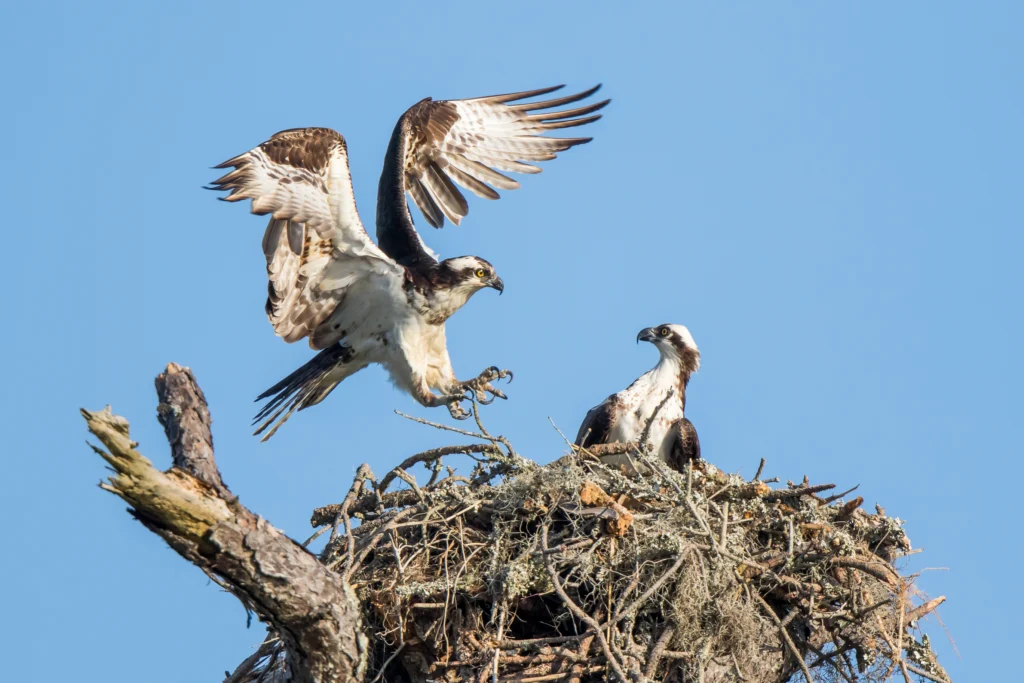
Como el Águila calva, this hawk builds a big, bulky stick nest that may be reused and added to year after year. The male Osprey selects a site, then both the male and female collect sticks and other materials to build the nest. Often built on poles, channel markers, and dead trees, nests may also be built on nest platforms designed and built for them. The Osprey habituates easily to human activity and often nests close to busy highways, ports, and marinas.

Huevos y crías

The female Osprey lays up to three eggs, which both parents help to incubate. The male does all of the hunting until the chicks are six weeks old, delivering fish to the female on the nest, who tears off pieces to feed the young. At three to four weeks of age, Osprey chicks start to exercise their wings by holding on to the edge of the nest and flapping their wings.