Overview
About
Though relatively common over much of its range, the Mourning Warbler is secretive and notoriously hard to observe. These birds mostly stay close to the ground in dense thickets and brush where they forage and nest. Outside of the breeding season, Mourning Warblers are also fairly quiet and can easily go unnoticed. As a result, very little is known of this bird’s life history outside of the breeding season. In fact, there are sizable gaps in our understanding of its breeding biology as well — for instance, no researchers have documented the courtship behavior of this species.
However, one thing we do know is that these birds are fairly particular about their habitat requirements. Mourning Warblers are reliant on thick, brushy second-growth forest, the result of big ecological disturbances, such as fire or major storms, that kill numerous trees and open up gaps in the canopy. Following such a disturbance, habitat becomes acceptable after about two or three years. After another seven or eight years, the forest will have grown back enough that Mourning Warblers will no longer use it. This means that breeding areas for this species are constantly shifting, as one forest regrows and a new opening is (hopefully) created elsewhere. Sometimes referred to as a “fugitive species,” Mourning Warbler populations are frequently “on the run,” fleeing the regenerating forest and searching for another suitable opening.
Fortunately, these birds are not terribly picky about exactly what kind of disturbance creates this ideal habitat. Drought, disease, insect outbreaks, and especially fire are natural disturbances that this species probably relied on historically. In the current day, large forest fires are far less common, but for the Mourning Warblers, human activities seem to work just as well. These birds are commonly found in old clearcuts, abandoned agricultural areas, along logging roads, and even mining and oil well sites. While these heavily disturbed areas do not benefit most species, the Mourning Warbler makes it work.

Threats
Birds around the world are declining, and even relatively stable species like the Mourning Warbler face a suite of threats. Mourning Warblers are especially vulnerable to collisions with human-made objects and other hazards during migration.
Collisions with Communications Towers
Communications towers with steady-burning lights pose a real threat to migratory birds, killing 7 million birds annually. Although tower collisions threaten all birds — especially when skies are overcast or foggy — they pose a special danger to songbirds migrating at night. Mourning Warblers are one of the most frequent casualties.
Collisions with Glass Windows
Window collisions take an enormous toll on birds, especially migratory songbirds like the Mourning Warbler. While collisions with reflective windows in city centers during migration take center stage, they are a year-round threat to birds, both migratory and resident. More than a billion birds die in the U.S. each year alone, but the threat of collisions persists anywhere windows go untreated.
Outdoor Cats
Domestic cats are one of the leading human-caused drivers of bird population declines. Free-roaming cats kill an estimated 2.4 billion birds each year. Birds are especially vulnerable during migration, when large numbers descend on patchy resources in urban and suburban areas, often hungry and exhausted after flying through the night. All these factors make small migratory birds like the Mourning Warbler particularly vulnerable to predation by cats.
Conservation Strategies & Projects
Mourning Warblers need our help to overcome the threats they face. At ABC, we’re inspired by the wonder of birds and driven by our responsibility to find solutions to meet their greatest challenges. With science as our foundation, and with inclusion and partnership at the heart of all we do, we take bold action for birds across the Americas.
Making Communications Towers Safer
The simple solution to reducing bird fatalities from communications towers is to use flashing lights. Unlike steady-burning lights, flashing lights pose little danger to birds. In fact, their use can reduce nighttime bird fatalities by as much as 70 percent.
Preventing Glass Collisions
ABC has been a leader in the effort to reduce the devastating toll of glass collisions on birds. We’ve developed innovative methods for evaluating the effectiveness of collision deterrents, created resources to elevate our collective understanding of collisions and make solutions readily accessible, and advocated for bird-friendly policies in the U.S.
Keep Cats Indoors
Cats make wonderful companions, but they’re safest (and birds are, too) when they’re kept indoors or under the control of their owners. ABC advocates for responsible cat ownership, encouraging millions of pet owners to take steps to keep their cats contained and advocating for policies that benefit birds, cats, and human health.
Bird Gallery
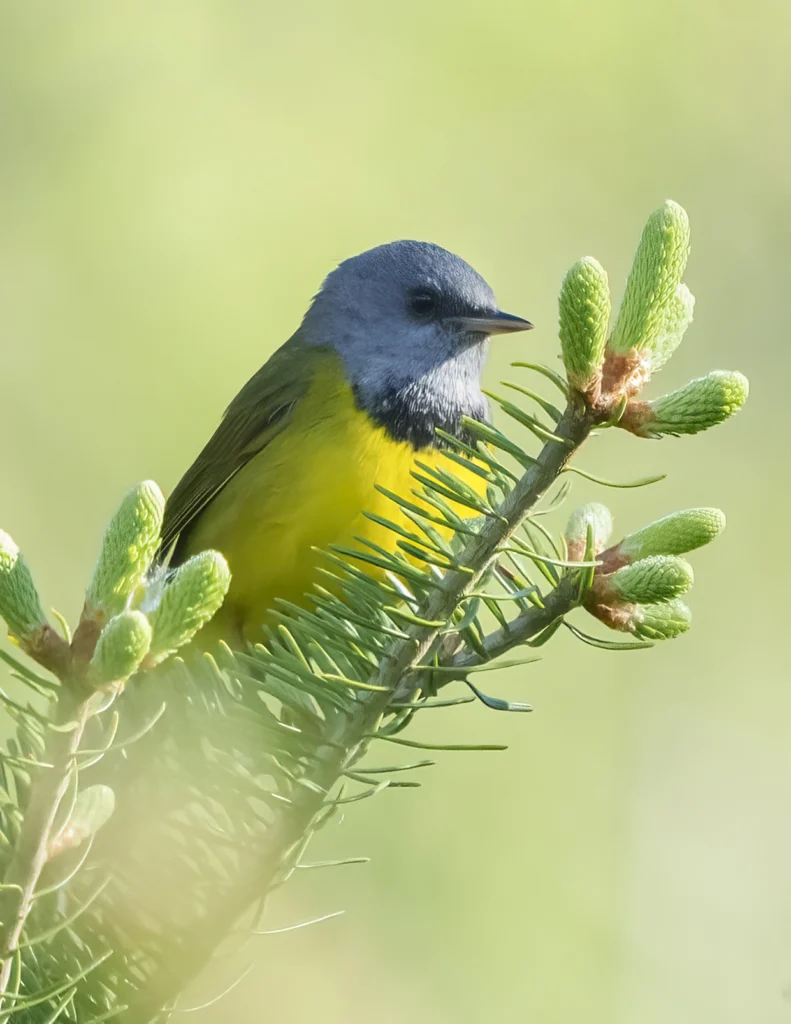
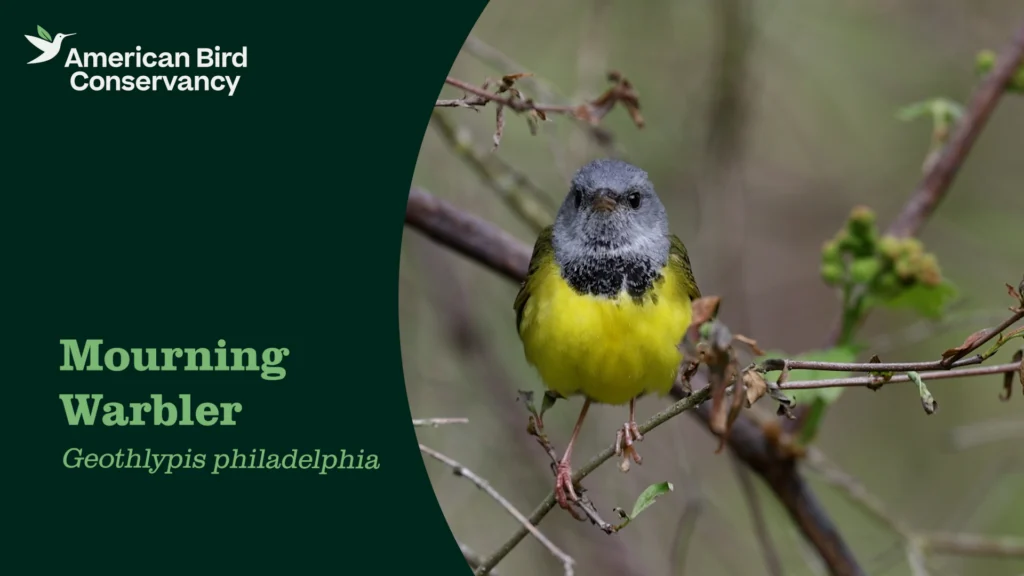
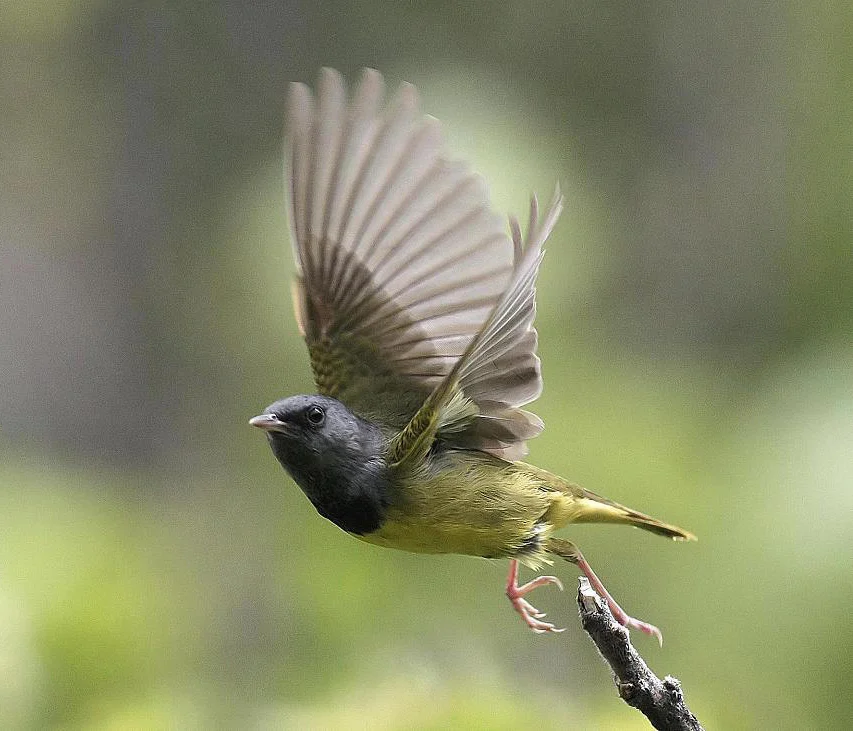
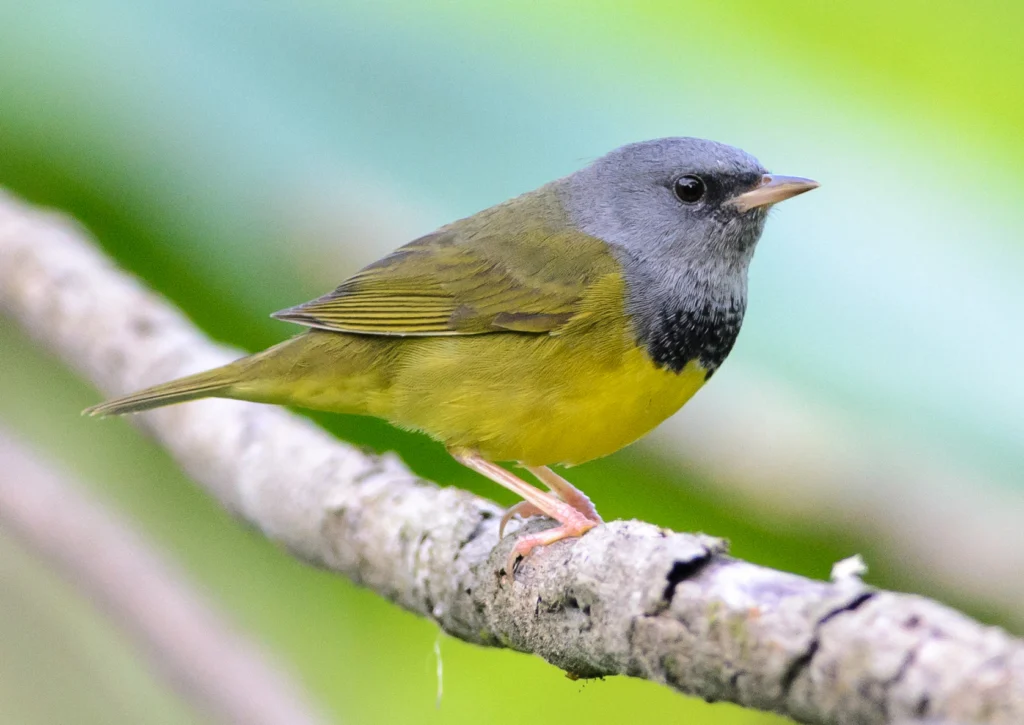
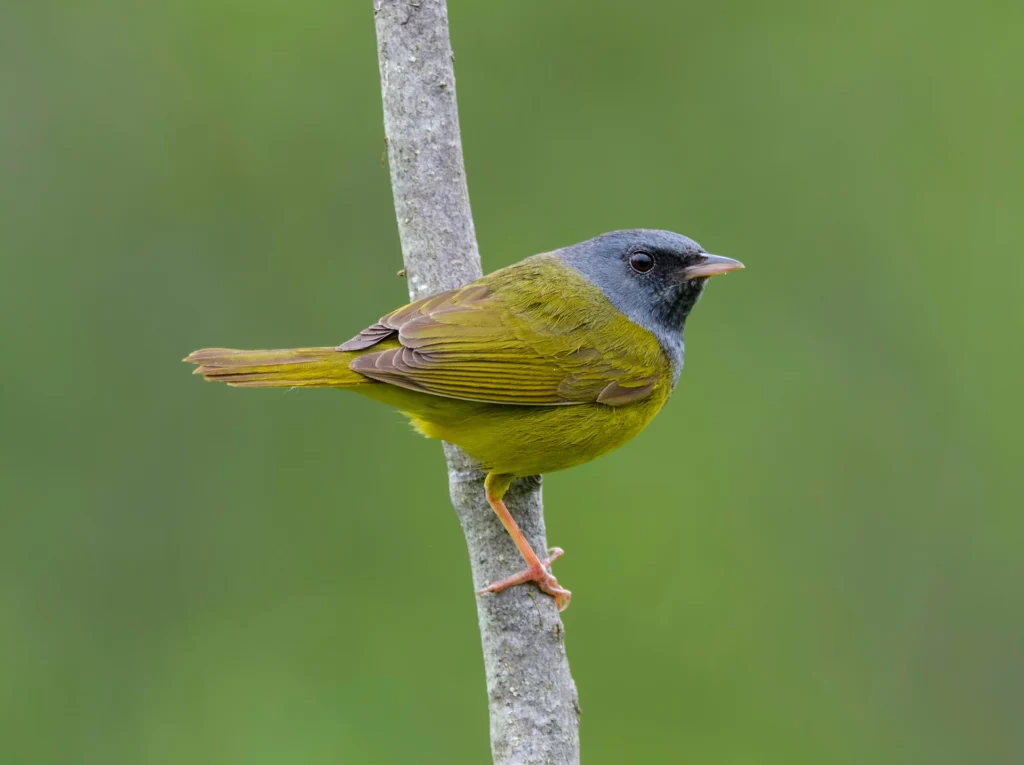
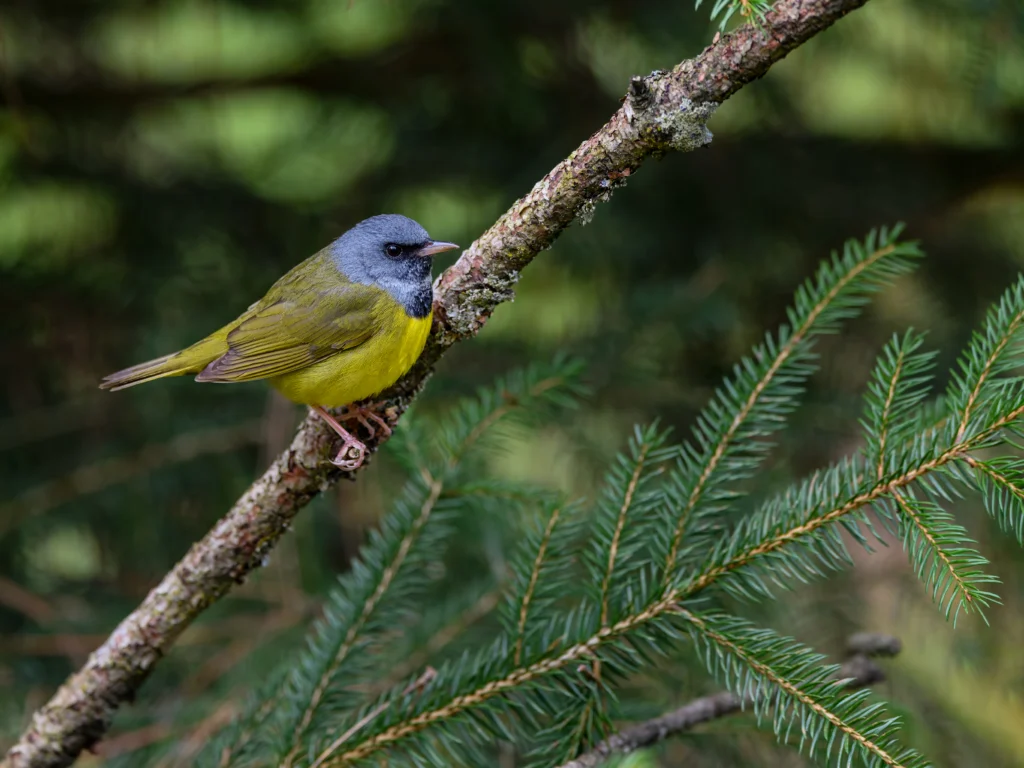
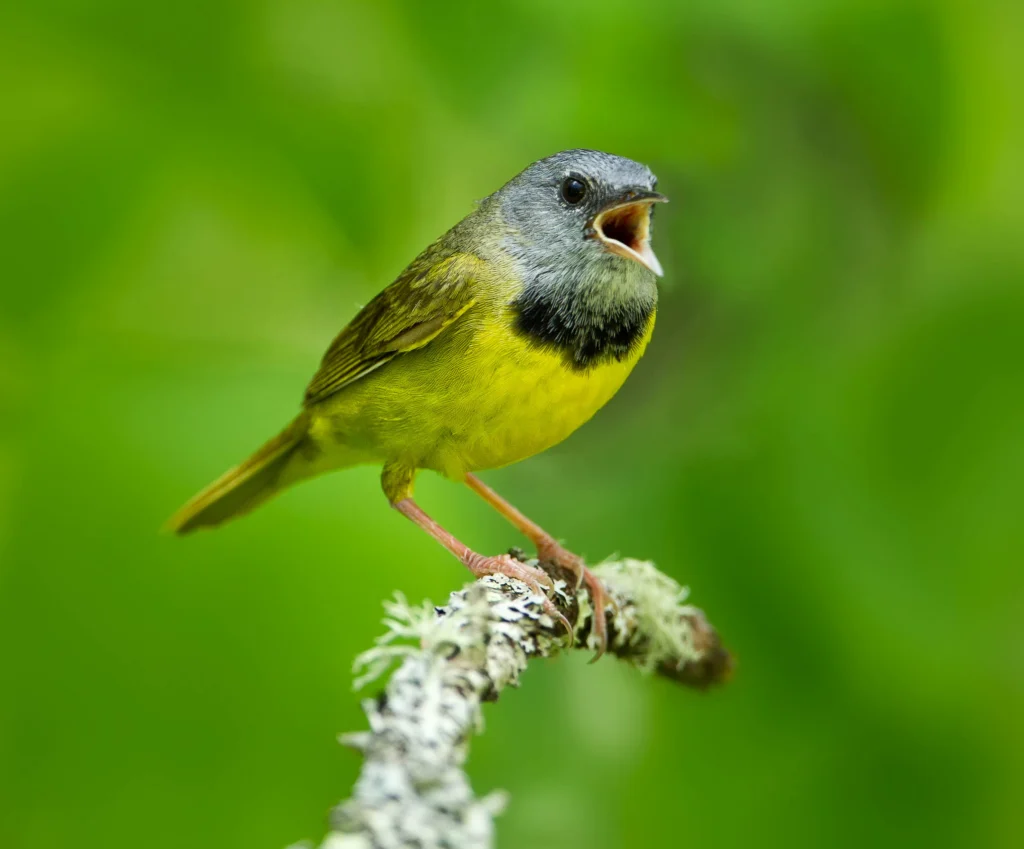
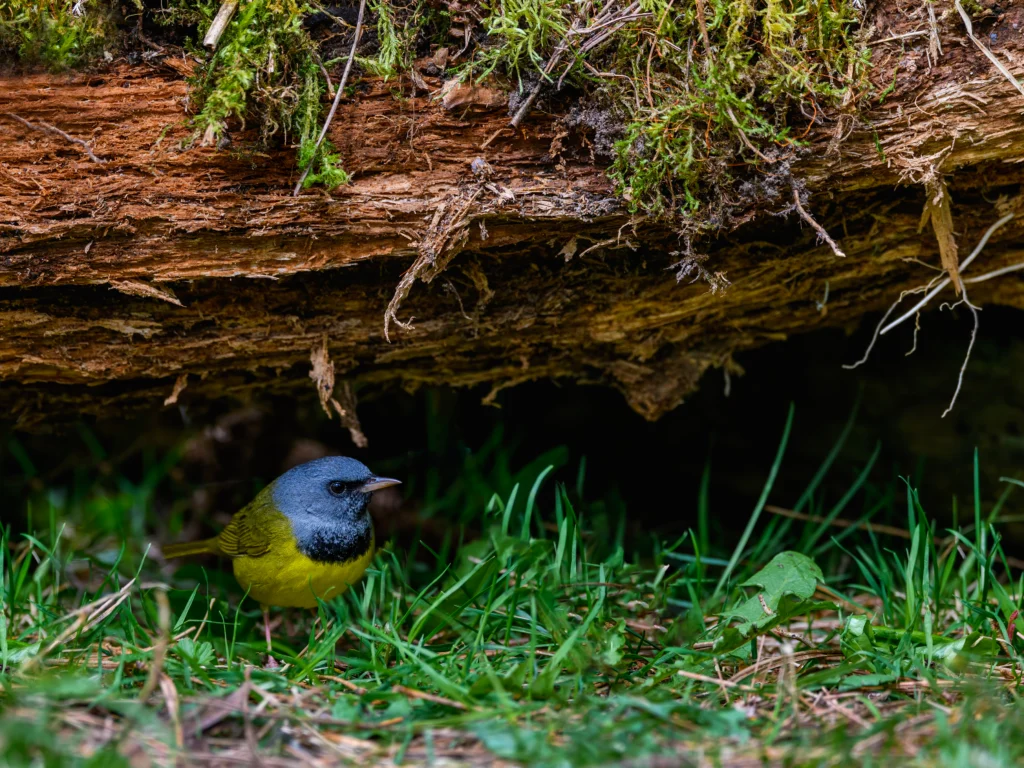
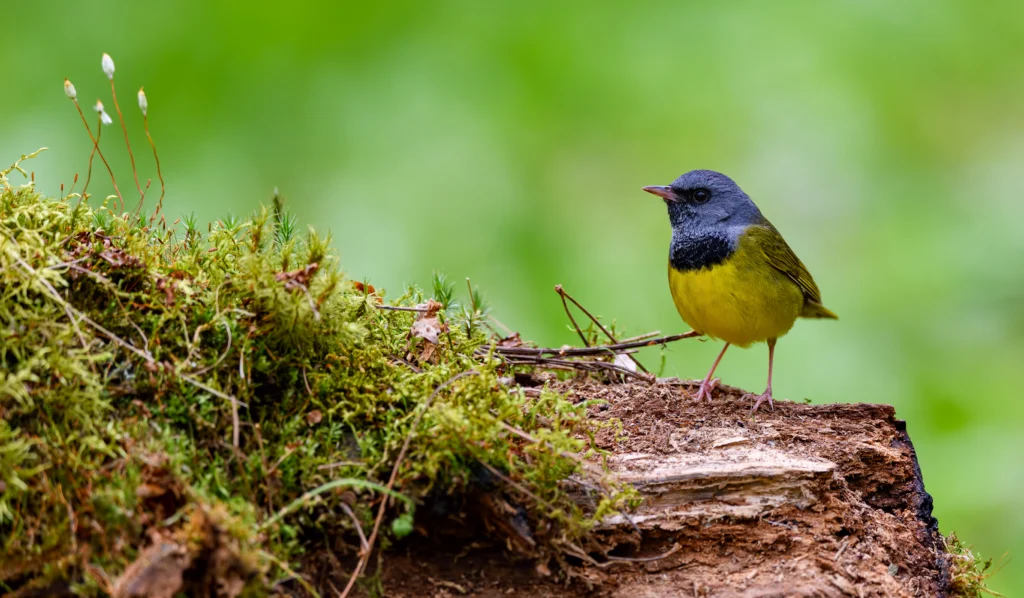
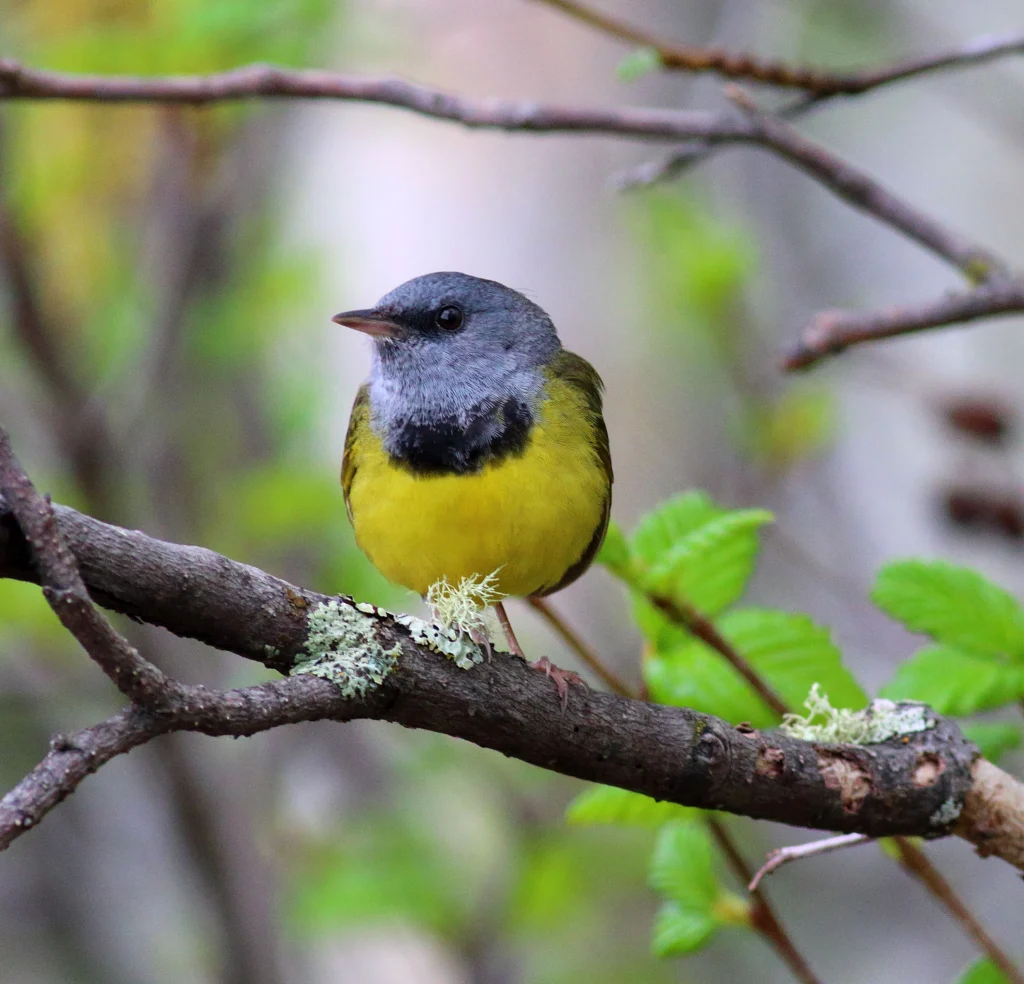
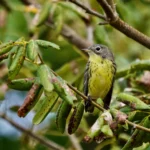
The Mourning Warbler is distinctive with a gray hood covering the head, nape, and throat. The upperparts are olive green, and the underparts bright yellow. Males and females are similar, except that males typically have a darker hood and a black patch just below it on the breast.
Sounds
The Mourning Warbler’s song typically consists of two phrases, each made up of several repetitions of the same syllable. The syllables of the first phrase are often burry, and the second phrase is usually sung at a lower pitch. Songs usually consist of five or six syllables overall, often rendered as some variation of “cheery cheery cheery cheery, chorry chorry.” Sometimes, males will sing only one phrase of their song. Males also give an extended flight song, preceded and sometimes followed by rapid call notes, and may contain syllables not included in the typical song. Both sexes also give a short, sharp, unmusical chip or tshrip.
Credit: Martin St-Michel, XC253571. Accessible at https://xeno-canto.org/253571.
Credit: Andrew Spencer, XC14077. Accessible at https://xeno-canto.org/14077.
Credit: Stanislas Wroza, XC1015057. Accessible at https://xeno-canto.org/1015057.
Habitat
Throughout the year, the Mourning Warbler prefers dense shrubby habitat, but breeds specifically in forest openings with regrowing vegetation.
- Uses a wide range of habitats in migration, including open forest, urban gardens, overgrown agricultural fields, and riparian corridors in dry areas
- Prefers wet, shrubby environments in nonbreeding range
Range & Region
Range & Region
Specific Area
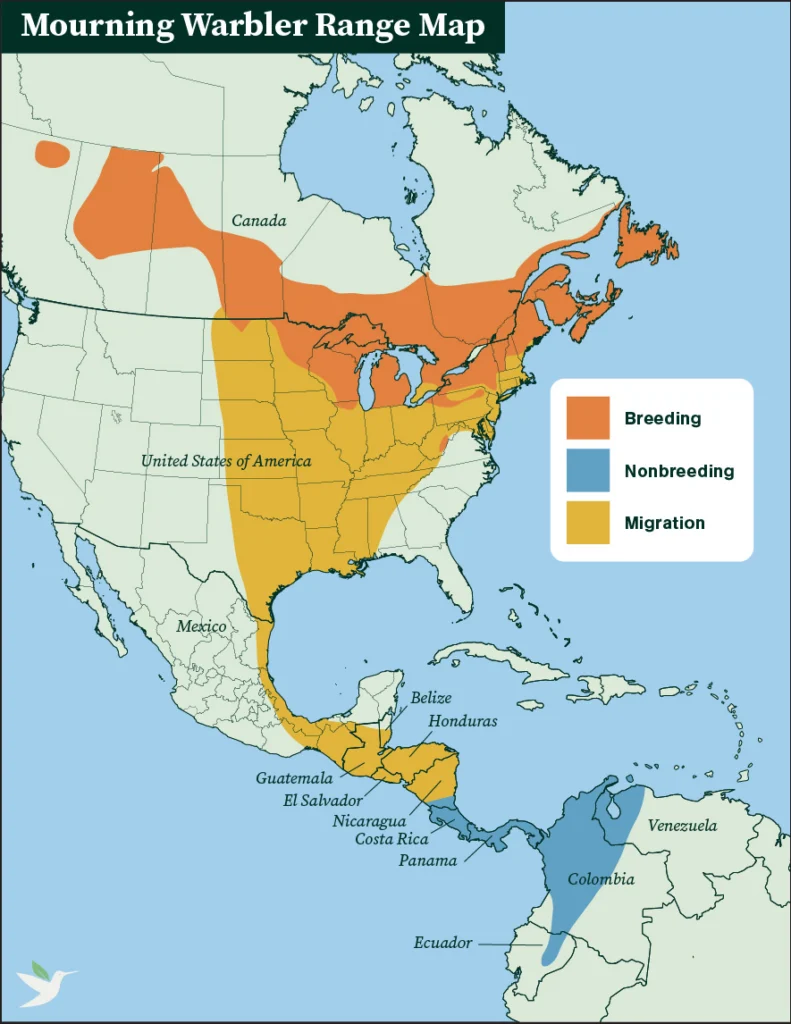
Central and Eastern Canada; Great Lakes region; New England; southern half of Central America; northwestern South America
Range Detail
The Mourning Warbler breeds in the boreal forests of Canada and the northern Midwest and eastern United States. In migration, these warblers move throughout the Mid-Atlantic states, much of the South (but avoiding the coastal states), the Midwest into Texas and the Dakotas, the Atlantic Coast of Mexico, and through Central America. Mourning Warblers spend the nonbreeding season in Central America, from Costa Rica south, and parts of Venezuela, Colombia, and Ecuador.
Did you know?
Mourning Warblers illustrate a common pattern in birds that migrate between temperate and tropical latitudes. Sometimes referred to as the “coast effect,” juveniles and adults of some species tend to follow different migratory routes: young birds on their first migrations tend to follow the coast, while older birds more often migrate further inland. Researchers have proposed several hypotheses to explain this, suggesting that migrating along the coast may help juvenile birds navigate, or allow them to avoid competing with adults during migration.
Life History
The Mourning Warbler is notoriously sneaky, spending much of its time moving through the thick brushy habitat it prefers throughout all seasons of the year. Though males may be fairly conspicuous in early spring while singing and establishing territories, these birds are especially difficult to see once they have begun nesting. As such, some aspects of this bird’s breeding biology are poorly known.
Diet
Mourning Warblers eat mostly insects on their breeding grounds, but in the nonbreeding season and during migration, they will eat a fair amount of fruit. Mourning Warblers mostly forage in the understory, hopping along branches and gleaning caterpillars, beetles, and spiders from the leaves and pecking bites from fruits still on the plant.
Courtship
Courtship in this species is largely unknown. Males are known to perform a “flight song” display, which may play a role in pair interactions. In this display, a male flies upwards while singing an extended version of his typical song, then plummets rapidly into the brush. This display is typically performed when the pair is almost done raising their brood, and whether or not this display is directed at the social mate is unknown.
Nesting
Mourning Warblers typically build their nests near a clearing or opening, such as a bog or trail. The nest site is well-concealed, on or near the ground within dense vegetation. The female builds the nest, a thick cup of grasses, plant stems, and bark, often incorporating adjacent upright stems into the outer wall. She lines the nest with finer grasses and sedges, rootlets, and mammal hair.
Eggs & Young
The female lays three or four cream-colored eggs, speckled all over but especially concentrated around the wide end in a halo of dark red. The female alone incubates the eggs for about 12 days and broods the nestlings for roughly nine days. When a female visits the nest, she approaches by hopping on the ground through the dense surrounding vegetation, making nests extraordinarily hard to find. The male brings food to the female throughout incubation and brooding.