After a Century With Only One Sighting, Indonesia's Blue-fronted Lorikeet Found in Unexplored Forest

New Records Provide Proof That Rare Parrot Species Persists in Buru’s Highlands

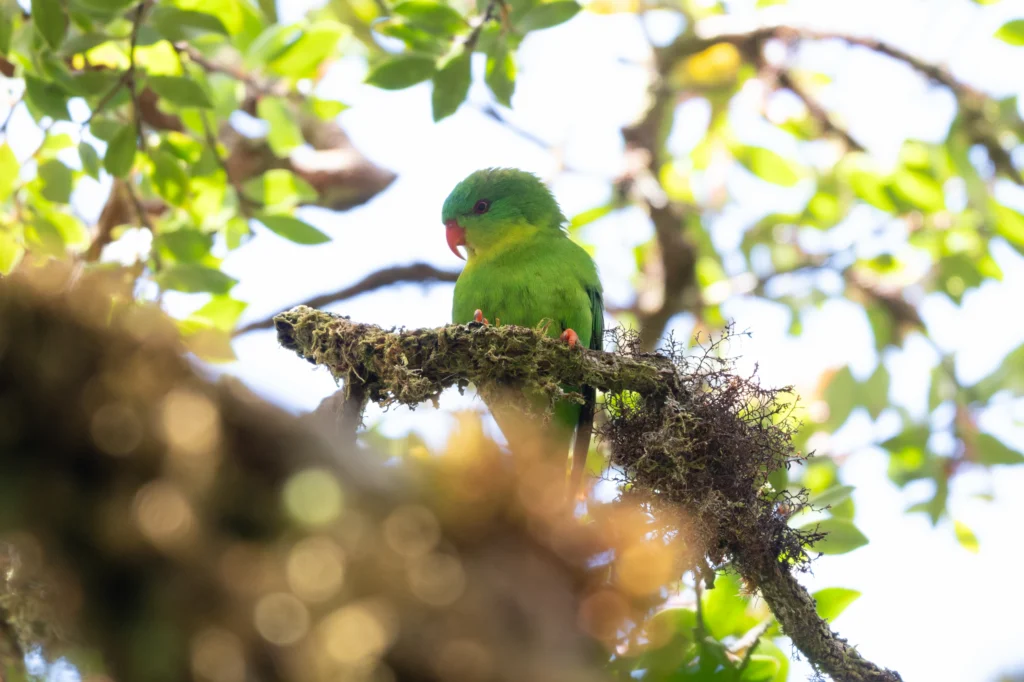
Blue-fronted Lorikeet. Photo by John C. Mittermeier.

After a Century With Only One Sighting, Indonesia's Blue-fronted Lorikeet Found in Unexplored Forest

Leer En Español
Press Releases
Listen to this article

Hidden in the remote highlands of Mount Kapalatmada in Buru, Indonesia, the Blue-fronted Lorikeet has reemerged after going missing for more than a decade. Only documented once in the past hundred years, the elusive parrot species was spotted in April during a 14-day trek, carefully tucked away in the island’s most unexplored and challenging landscape.

Led by Indonesian mountaineering group Kanal Buru and expedition leader Handoko, a team that included members of American Bird Conservancy (ABC), Birdtour Asia, and Yayasan Planet Indonesia witnessed and snapped the first photographs of the species since 2014, marking only the second record since the species was described more than 100 years ago.

“When we saw the Blue-fronted Lorikeet, I couldn’t hold back my tears,” says Sumaraja, Birdtour Asia guide and tour leader. “Every day, I almost cried with joy at seeing that these birds still exist.”

The Blue-fronted Lorikeet is a small endemic parrot found only on the island of Buru. It was first described from a series of seven specimens collected in the 1920s, having lime-green plumage, an orange bill, a blue hindcrown, and a pointed tail. Despite extensive surveys in the lowland and mid-elevation forests tied to the original specimens, the bird went undetected for nearly a century, disappearing from the scientific record. It remained lost until photographed by Craig Robson and a Birdquest birding tour in 2014.

Reflecting how little is known about the species, the Blue-fronted Lorikeet was listed as Data Deficient by the IUCN Red List and recognized as a lost species in 2024 by the Search for Lost Birds, a global initiative by ABC, Re:wild, and BirdLife International. Prior to this, it was considered Critically Endangered based on the assumption that it has a small, possibly declining population due to how rarely it was documented. It had long been speculated, however, that the lorikeet may simply exist at higher elevations in Buru’s inaccessible montane forests.

This idea remained untested until recently, when access to the highlands finally made exploration possible. Last fall, local climbers mapped a new route to the island’s highest peak, opening up the 8,900-foot summit to discovery and possibility. In April, birders followed in their footsteps.

After six days of climbing, the landscape transitioned from jagged limestone covered in piercing plants and insects into a charming mossy cloud forest and park-like clearing full of birdsong. Within hours, a lorikeet unexpectedly appeared. “We noticed two small birds fly into a nearby tree so I picked up my binoculars to see what one of them was,” said John C. Mittermeier, Director of the Search for Lost Birds at ABC. “I short-circuited with excitement when I realized it was a Blue-fronted Lorikeet.”

The birds left before anyone could capture a photograph, but two days later, another lorikeet emerged while the group gathered for breakfast. Even without binoculars, they noticed its bright green feathers glistening in the morning sun and rushed to photograph it, marking the first documentation of the lorikeet in over a decade.
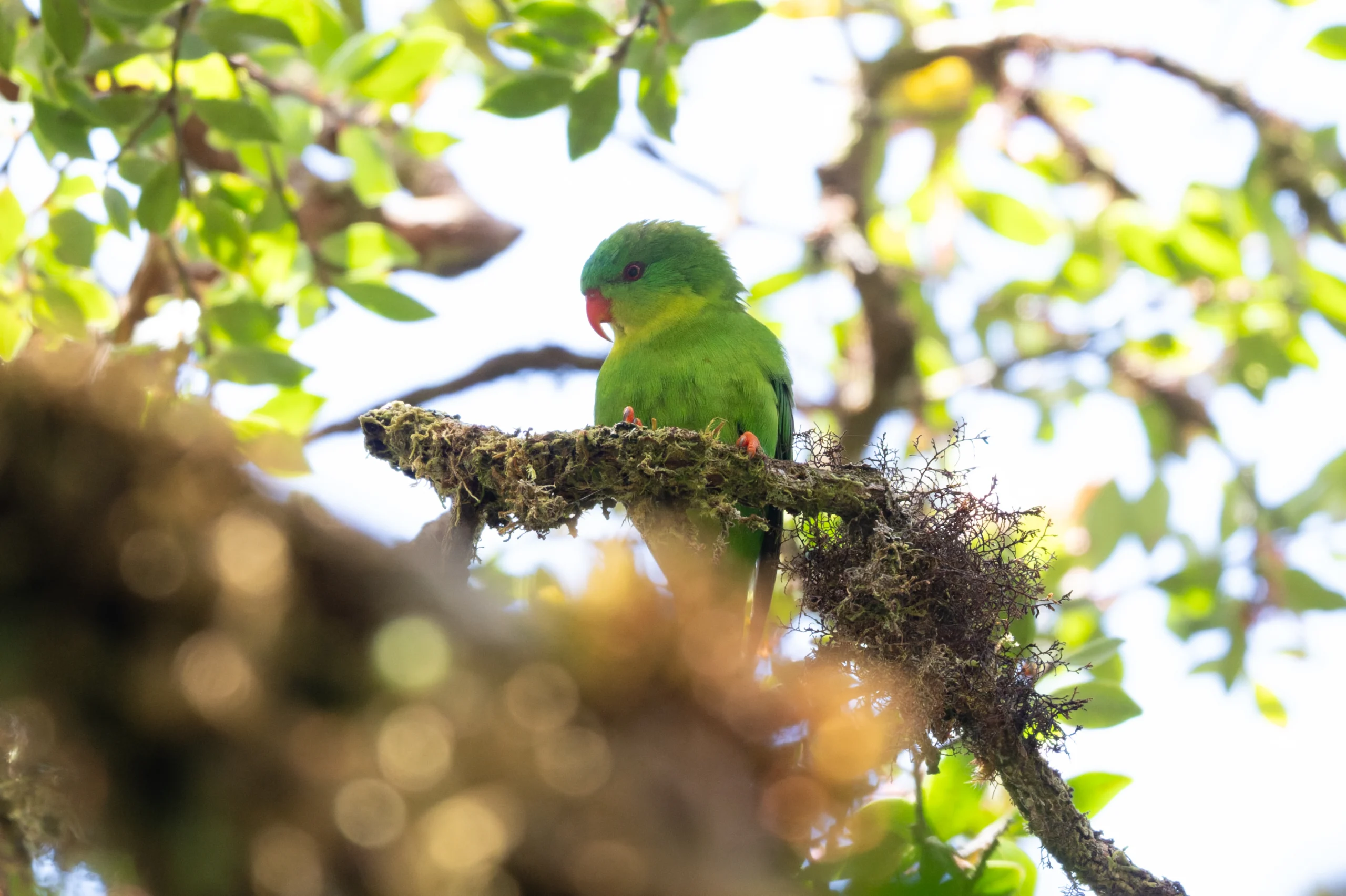
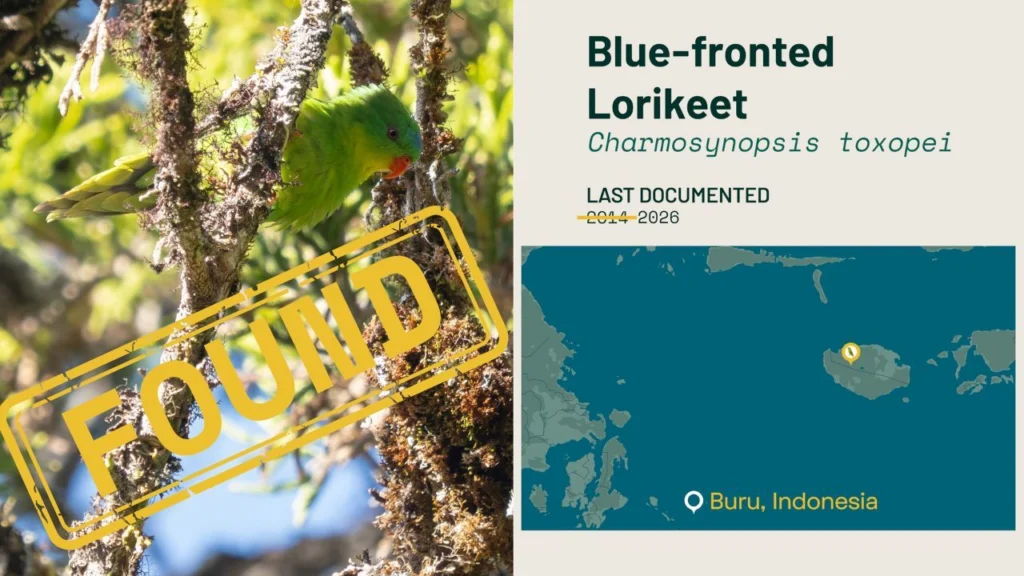
Blue-fronted Lorikeet. Photo by John C. Mittermeier.

On their final morning in the highlands, the group spotted two more lorikeets darting between flowering trees and managed to capture the first sound recordings of the lorikeet’s high-pitched calls. During the trek, the team also encountered and recorded one of the region’s most unusual songbirds, a Madanga, and a potential new taxon of Island Thrush.

Though it’s not immediately clear how many individuals the recent detections represent, the theory that lorikeets are restricted to Buru’s high-elevation habitats appears accurate.

“Rare sighting records suggest a highly restricted habitat use,” said Benny A. Siregar, Maluku Coordinator at Burung Indonesia. “The primary challenge facing the Blue-fronted Lorikeet is that they are facing threats that remain largely unknown. This bird inhabits areas under continuous pressure from deforestation, with a population estimated to be exceedingly small and vulnerable.”

“There is a need for a collective approach and action from all stakeholders to protect the remaining habitat of this incredible bird,” added Dwi Agustina, Conservation Program Coordinator for Konservasi Kakatua Indonesia (KKI), which conducted surveys from 2023 to early 2025 that documented potential threats from habitat destruction and hunting for consumption and trade. “Buru is home to many endemic birds, and the logging and mining companies that have acquired much of the island’s forest represent a major threat to their survival and wildlife.”

Nevertheless, the inaccessibility of Mount Kapalatmada’s highlands has served as the lorikeet’s greatest protection. Finding this species still offers hope for others, including the lost New Caledonian Lorikeet and Red-throated Lorikeet, which are feared to be on the brink of extinction. The rediscovery shows that some species considered lost may persist in landscapes that don’t receive enough scientific attention. With a new route to Buru’s summit, the future of its habitat depends on thoughtful stewardship and collaboration with the people who know the mountain best.

“In the future, I certainly hope more people will be able to see and learn more about these birds,” added Sumaraja. “At the same time, I sincerely hope more people will care about and participate in preserving the remaining forests on Buru Island.”

“This expedition helped me and the members of Kanal Buru gain new perspectives and knowledge about Mount Kapalatmada, especially about the birds and the ecosystems there,” said Handoko. “I hope to share these experiences to empower people in Buru to protect this unique area.”

ABC gratefully acknowledges Kathy Burger and Glen Gerada and the Constable Foundation for their support of the Search for Lost Birds.

American Bird Conservancy

American Bird Conservancy (ABC) takes bold action to conserve wild birds and their habitats throughout the Americas. Inspired by the wonder of birds, we achieve lasting results for the bird species most in need while also benefiting human communities, biodiversity, and the planet’s fragile climate. Our every action is underpinned by science, strengthened by partnerships, and rooted in the belief that diverse perspectives yield stronger results. Founded as a nonprofit organization in 1994, ABC remains committed to safeguarding birds for generations to come. Join us! Together, we can do more to ensure birds thrive.

American Bird Conservancy - Media Contact

Journalists, get breaking bird conservation news delivered right to your inbox by joining ABC’s media list. Get in touch by emailing media@abcbirds.org

BirdLife International

BirdLife International is the world’s largest nature conservation Partnership: a global family of over 122 national NGOs in 118 countries, covering all continents, landscapes and seascapes. BirdLife is driven by its belief that local people, working for nature in their own places but connected nationally and internationally through the global Partnership, are the key to sustaining all life on this planet. This unique local-to-global approach delivers high impact and long-term conservation for the benefit of nature and people.

Re:wild

Re:wild protects and restores the wild. We have a singular and powerful focus: the wild as the most effective solution to the interconnected climate, biodiversity and human wellbeing crises. Founded by a group of renowned conservation scientists together with Leonardo DiCaprio, Re:wild is a force multiplier that brings together Indigenous peoples, local communities, influential leaders, nongovernmental organizations, governments, companies and the public to protect and rewild at the scale and speed we need. Learn more at rewild.org.