It’s nearly impossible to avoid plastic: It’s in everything from food packaging to furniture and clothing to cookware.
Plastic is so ubiquitous that it can be difficult to remember that we haven’t always had plastics. The first plastics were invented in the 19th century. But the thing that makes plastics so convenient — their ability to be both durable and pliable — is part of the problem. We may not have always had plastics, but the plastics we have today will endure hundreds of years into the future.
Where Did Plastic Come From?
The first human-made plastic was patented in 1855 and was derived from plant cellulose. Today, most plastics are made from chemicals derived from oil and gas. The molecular composition of these chemical plastics make them malleable under heat and pressure.
Plastic innovation and use accelerated during World War II, and in the post-war period, manufacturers shifted from making military items to consumer goods. Plastic is cheap to produce, lightweight, durable, and easily shaped, and these characteristics have led to materials like wood, glass, and wool being replaced by plastic.
How Our Trash Travels
About 50 percent of discarded plastic ends up in landfills, and the rest is either incinerated or sent to recycling centers. But every year, 17.6 billion pounds of that plastic ultimately ends up in the ocean. That is the equivalent of a garbage-truck-sized load dumped every minute.
To understand why there’s so much plastic in the ocean, we need to know how it travels. Plastic is typically light and buoyant, meaning it can easily float in water or be carried by wind. It’s easy for plastic to travel by gutter, stream, or river to the coast. In fact, scientists have determined that 80 percent of trash in the ocean comes from land, as opposed to the other 20 percent that is dumped or spilled into the marine environment. Even plastics intended for a recycling facility can instead enter the ocean.
Once trash makes its way from land to sea, it can travel all the way around the world before washing up on land again.
The Plastic Pellet Problem
Microplastics are less than 5 millimeters in length, and while they can be the byproduct of larger plastic products breaking down, some microplastics are produced intentionally. Tiny microbeads are manufactured for use as exfoliants in facial cleansers, toothpastes, and other products. Plastic pellets, also called “nurdles,” are the building blocks of everyday plastic products such as grocery bags and takeout containers.
The nature of nurdles as raw material for other products means there are many points in the manufacturing process when nurdles can enter the environment: as they’re produced in factories, or shuttled long distances on trains, trucks, and ships. Nurdle spills and leaks are frequent, and an estimated 10 trillion plastic pellets land in the ocean each year.
The Peril of Plastic for Birds and Wildlife
Trash, and especially plastic, can harm wildlife in two main ways: ingestion and entanglement.
The same characteristics that make it easy for plastics to travel to the ocean also make it easy for coastal and marine species to ingest them — plastics are buoyant and light. Microplastic debris in the sand or floating in the water can look a lot like plankton, a favorite meal of many species. Making things worse, recent research suggests that plastic may even develop food-like smells that attract birds and other wildlife. Scientists estimate that 90 percent of seabirds have ingested plastic.
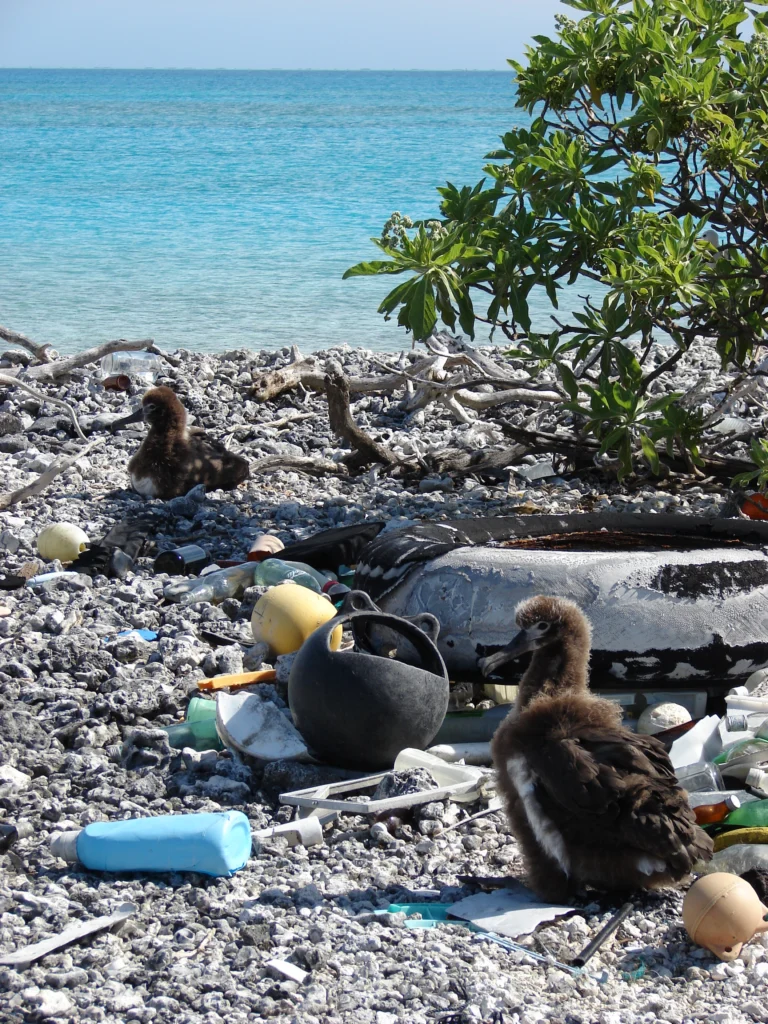
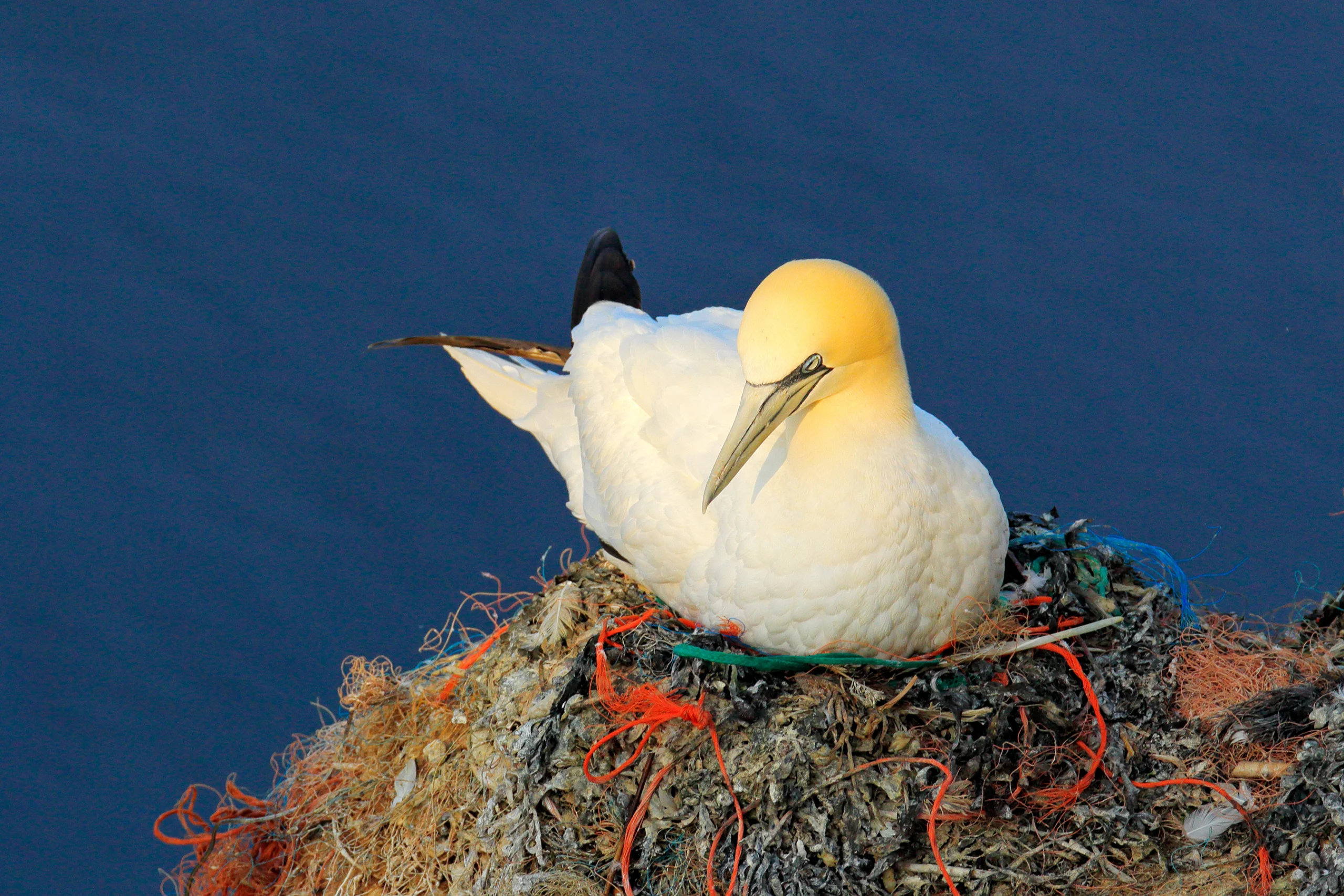
Scientists have found plastic garbage, particularly synthetic rope, lining birds’ nests on remote islands and choking the stomachs of seabirds fishing in the middle of the Pacific, thousands of miles from land. The worst offenders are everyday items: plastic stir-sticks, straws, plastic bottles and caps, Styrofoam coffee cups, and cigarette lighters and butts. Discarded fishery gear (lines, rope, broken traps), six-pack ring holders, and party balloons also have devastating effects on marine birds. These items can cause entanglement, be ingested, and leach chemicals into the water as they break down.
When ingested, plastic can cut soft tissues and damage internal organs. Swallowed plastics are often too big or present in amounts too large to pass through animal digestive systems and cannot be broken down by stomach acids. As a result, plastics can accumulate in animals’ stomachs, causing them to stop eating and starve. “Plasticosis,” a sometimes lethal disease caused by the ingestion of plastics, causes digestive and growth problems in the Flesh-footed Shearwater.
It’s not just the tangible remnants of plastic items that cause problems. As plastic breaks down in the ocean, it releases damaging chemicals such as polychlorinated biphenyls (PCBs) and dioxins that may attract seabirds. As plastics like shopping bags and water bottles degrade into smaller bits, they often become virtually invisible, but are still toxic to the birds, fish, and sea turtles that unknowingly ingest them.
Entanglement is another widespread threat. Animals living both in the water and on the beach get caught in discarded fishing line, nets, and other plastic items. This can hamper the animal’s ability to hunt, escape predators, and provide for young, among other things. Entangled pieces of plastic can also dig into their skin, causing cuts, infection, and even loss of a limb.
Making a SPLASh to Stop Plastic Trash
In late 2020, American Bird Conservancy and partners started the SPLASh (Stopping Plastics and Litter Along Shorelines) program to address trash pollution problems along Texas’s coast. Texas has the highest average weight of litter per mile of any state in the nation, and human-made marine debris accumulates on the Texas coast 10 times faster than it does on the coasts of other Gulf states, likely due to ocean currents.
SPLASh’s work focuses on the greater Houston-Galveston area, which struggles with large amounts of litter from currents that move trash through the Gulf and from the more than 14.5 million people that live in the Greater Galveston Bay Watershed. Any trash not properly managed in this heavily populated region has a direct pathway to the Galveston Bay and the Gulf. All this trash can pose a threat to the more than 600 bird species spending at least some portion of their lives in the state.
SPLASh works to reduce the threat to birds and all other wildlife by conducting community cleanups and by raising awareness through education and outreach programs. In its first five years, SPLASh cleared more than 70,000 pounds of trash from waterways.
How You Can Help
You don’t have to be in Texas to make a splash for birds and have an impact on plastic waste. The best way to prevent plastics from impacting birds is to simply use less plastic and reduce the amount of waste we produce each day. Here’s how:
Refuse: When you go out to eat, ask for your drink without a straw. If ordering takeout, ask the restaurant to skip the plastic utensils and packaged condiments — you probably have plastic-free versions of those at home! Grabbing a couple things from the store? Say “no, thanks” to the plastic bag and bring your own from home.
Rethink: Consider the things you use on a daily basis that could be replaced with a reusable item or avoided altogether. Can you use a refillable water bottle instead of buying a case of plastic water bottles? Do you need to buy paper towels packaged in plastic, or can you use cloth towels to clean up?
Reduce: Reducing the amount of “stuff” you buy will lower the number of things thrown out!
Reuse: Find ways to reuse your disposable items. Plastic yogurt containers make great containers for future leftovers. Remove the labels, and pasta sauce and salsa jars can be turned into flower vases or candles.
Recycle: Among recyclable materials, plastic is the most challenging to recycle, and many simply can’t be recycled at all. Before chucking plastic in the recycling bin, learn how to interpret the numbers accompanying the recycling icon on plastic products. You should also get familiar with your local recycling program. Your municipality’s website will likely list what they can accept at their recycling center.
If you want to go the extra step, consider cleaning up the trash already in our environment. Doing a trash cleanup by yourself, with your family and friends, or with a whole team can make an enormous difference for birds and wildlife. You can also participate in the International Plastic Pellet Count, an annual event held by Environment America and cosponsored by ABC. Don’t have a shoreline nearby to clean? That’s okay, picking up litter around your neighborhood will still have an impact on your local birds.