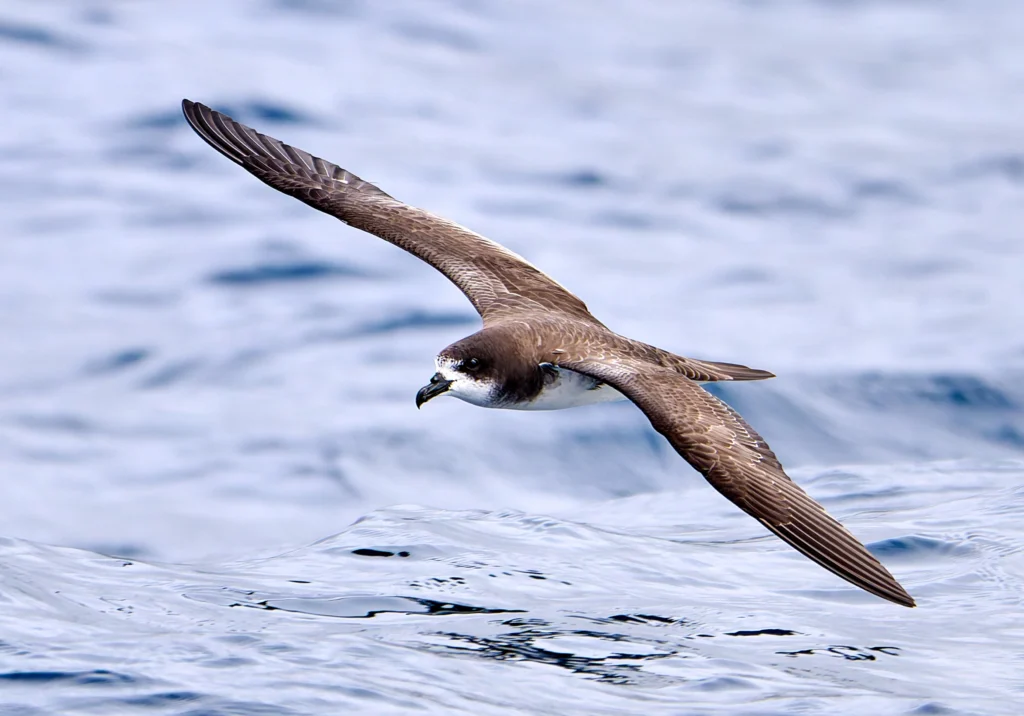
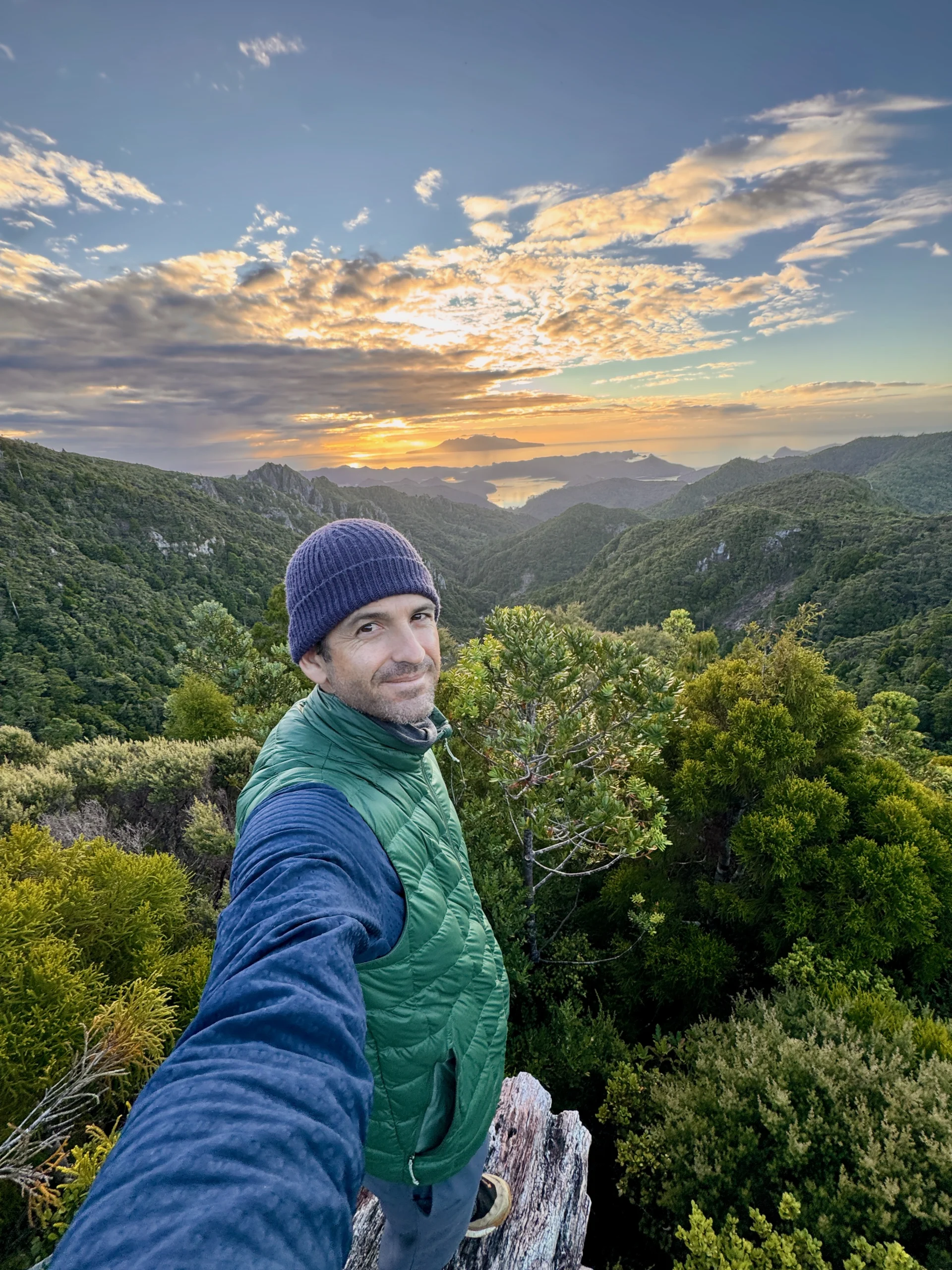
More than two-thirds of our planet is covered by water — and almost every inch is visited by birds. Arctic Terns migrate from the Arctic to the Antarctic Ocean over the course of a year. The great albatrosses may circle the globe in a matter of days, gathering food for their chicks. Seabirds have a capacity for global travel that is only matched by humans. Sharing exquisite adaptations to life on the ocean, most seabirds spend a large part of their lives over, on, and under the open water, far from human populations — and all too often far from human thought.
As a group, seabirds are the world’s most endangered birds, with 70 percent declines in the last 60 years. Even birds we think of as common, like the gulls and terns we see on beaches and piers, are declining, while the island specialists, petrels, shearwaters, albatrosses, and others, are going fast.
These remarkable birds deserve our every effort to conserve them. Seabirds are champions of the bird world, with the largest wingspan, longest migration, and deepest dives among them. The oldest known wild bird is a Laysan Albatross banded in 1956.
ABC’s Marine Program and our partners seek to change the trajectory — to turn the tide for seabirds.
Solutions in Sight
ABC’s Marine Program protects and restores seabird populations across the Western Hemisphere through innovation, partnerships, conservation planning, and direct action. We work with three central pillars for marine conservation:
Safe Havens for Marine Birds: Finding the last strongholds and securing nesting places.
Sustainable Seascapes: Ensuring marine birds and people have access to marine and terrestrial resources.
Kinship: Increasing marine bird visibility through connections to human culture and activity.
Safe Havens for Marine Birds
The establishment of fenced or protected breeding colonies free of introduced predators is among the most effective of seabird restoration techniques and facilitates and enhances additional conservation measures such as social attraction and translocation. ABC is committed to finding and protecting areas appropriate for the long-term maintenance of communities of seabirds and other compatible species, and to collaborative work in invasive species removal, social attraction, and translocation.
For example, ABC and partners have built a predator-proof fence around seven acres within Kilauea Point National Wildlife Refuge in Hawaiʻi. More than 100 ʻUaʻu (Hawaiian Petrels) and ʻAʻo (Newell’s Shearwaters) have been moved there to establish a new colony.
For Critically Endangered species such as the Black-capped Petrel in the Caribbean, strategic conservation partnerships and resulting actions are essential. ABC has been a key partner in monitoring the few known nesting sites for the species in Haiti and the Dominican Republic. We now seek to restore islands in the Caribbean to a state that can once again support breeding Black-capped Petrels.
Protecting nesting sites works if you know where the nests are located. For some seabirds, we don’t have this basic information. Working with partners like Red de Observadores de Aves y Vida Silvestre de Chile (ROC), we seek nesting areas of mysterious seabirds like Pincoya Storm-Petrel, Magellanic Diving-Petrel, and Subantarctic Shearwater. We partner with the Search for Lost Birds to dig into enduring mysteries like the Jamaican Petrel and Guadeloupe Storm-Petrel, seabirds that are so rarely seen they may be extinct.
Sustainable Seascapes
The commitment of fishers to the protection of marine bird populations is dependent on the economic viability of the tools we offer to reduce bycatch, the accidental capture of nontarget species. ABC is committed to the innovation and expansion of bycatch reduction tools and programs that are effective in working seascapes.
ABC has helped to develop techniques that reduce fisheries’ impacts on the Waved Albatross and other birds, for example, by limiting the amount of time fishing lines are exposed in the water, where they attract and hook seabirds. This simple technique is now being used in the small boat long-line fisheries in Ecuador.
Lights on land are beacons for humans at sea, indicating a safe passage or landmark. For marine birds, lights, power lines, and infrastructure are hazards. Large lights disorient the night-flying birds traveling from inland breeding grounds to ocean foraging areas, and power lines are collision hazards to fast-flying birds. We are working to reduce the impacts of night lighting and to establish national policies to protect all wildlife from unnecessary lights.
Other key linkages between seabirds and human use of the sea are the nutrient benefits brought to seabird nesting grounds from the open ocean. For thousands of years, people have used marine bird “guano” to enrich agricultural farmlands. Now we are coming to realize the benefits of the same nutrients in the restoration of islands, atolls, and coral reefs.
Enjoy an ABC webinar featuring Veronica Padula, an ABC Conservation and Justice Fellow focused on Multispecies Kinship with Marine Birds. Using a range of media, these storytellers bring awareness to the deep connections between seabirds and humans.
Kinship
As sailors have made their way around the globe, seabirds have always been nearby. They have been a part of human exploration of the ocean from the start, icons of the comedy, grace, and challenge of life at sea. They have been our teachers of geography and guides home. They help us find fish and read the weather. And while seabirds are long revered by sailors, they are nearly invisible to the majority of people. Seabirds need ambassadors and storytellers who know them and the problems they face.
ABC Marine Program fosters this kinship through art, sport, and human culture. Our work uses humor, adventure, and storytelling to bring the kinship between maritime peoples and seabirds forward as a fundamental part of marine conservation.
Emi Koch, a Marine Kinship Fellow, worked with students in her girls’ surfing camp, Mujeres & Agua in Peru, to create a stop-motion animation about the impact of oil spills on pelicans and other marine birds.
Meet the Team
ABC’s Marine Team works across the world’s largest habitat to conserve seabirds, the most imperiled bird group. We create safe havens and sustainable seascapes for marine birds and encourage a rekindling of our long-held kinship with these exquisite birds.
Drones are Helping Prevent Bird Extinction in Hawai‘i
In a race to protect rare Hawaiian honeycreepers from extinction, American Bird Conservancy (ABC) and members of the multi-agency Birds, Not Mosquitoes (BNM) partnership have started using drones to combat deadly avian malaria, spread by non-native mosquitoes. The drones are expected to expedite an ...
Celebrating a Win for Seabirds As Proposal for Rocket Test Site Is Suspended
Johnston Atoll is a tiny speck in the Pacific Ocean — approximately 1,400 kilometers southwest of Hawaiʻi. For most people, it’s just a name lost in the blue expanse of the map. But for over a million seabirds, among the most endangered groups of birds in the world, Johnston Atoll is something ...
Conservation Groups File Lawsuit to Protect Maui's Endangered and Threatened Seabirds from Hazards Posed by County Streetlights
American Bird Conservancy (ABC) and Conservation Council for Hawaiʻi, represented by Earthjustice, sued the County of Maui and Hawaiian Electric today, advancing the groups' years-long efforts to improve protections for endangered and threatened native Hawaiian seabirds. The Endangered Species Act ...
Two Bipartisan Bird Conservation Bills Introduced to Strengthen Bird Protections
Today, Representatives Jared Huffman (D-CA) and Brian Fitzpatrick (R-PA) introduced the Migratory Bird Protection Act (MBPA) and Albatross and Petrel Conservation Act. American Bird Conservancy (ABC) celebrates the introduction of these bills, which reinforce protections for migratory birds and impe...
Fisheries can be a major threat to seabirds, whether by overfishing or bycatch. Explore American Bird Conservancy’s solutions to make fisheries safer for birds like albatrosses, shearwaters, and petrels.
American Bird Conservancy supports a Bird-Smart transition to clean renewable energy. Learn about our work to guide planners to energy solutions to climate change that benefit biodiversity.
Plastics pose an enormous threat to birds, and waterbirds are especially at risk. Learn how American Bird Conservancy’s programs and advocacy are reducing plastics and helping birds.
Climate change is altering weather patterns, raising temperatures, and putting biodiversity, including birds, at risk. Learn about American Bird Conservancy’s work to reduce climate impacts, make habitats and birds resilient, and encourage adaptation to a changing world.