Dr. Donald Messersmith remembers June 1970 for laborious but enjoyable hours spent in the rolling fields around Pleasant Valley, Maryland. A life-long birder and University of Maryland emeritus professor, Messersmith recalls volunteering with some of his students, running a route for the North American Breeding Bird Survey (BBS), then a fledgling bird monitoring effort. Their goal: to tally as many singing and nesting birds as possible.
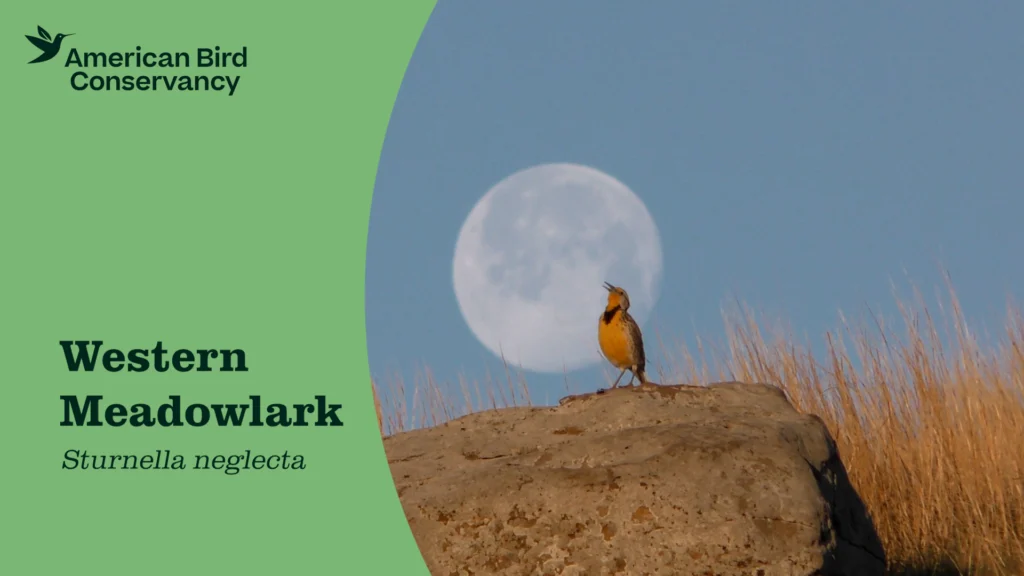
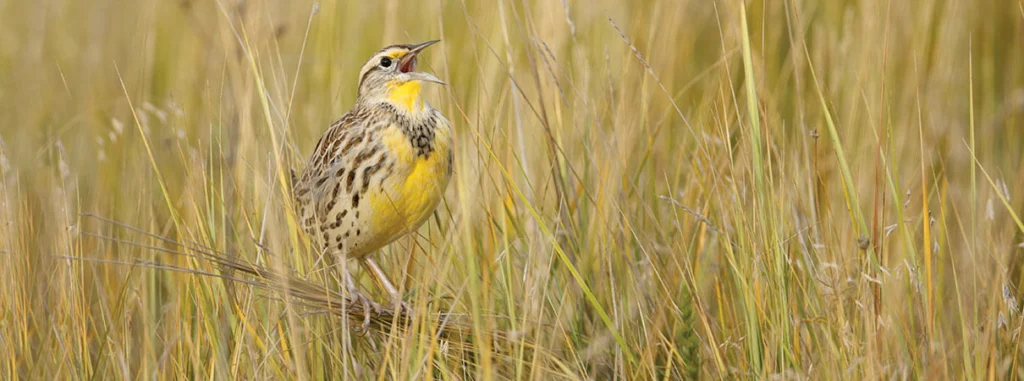
“We would get started about 5:30 in the morning listening for birds, would do our route very carefully, and at every half-mile stop we had a lot of birds,” remembers Messersmith. “Bobwhites were common; we would hear them all the time. Meadowlarks were regular. There were Grasshopper Sparrows and Vesper Sparrows. In other words, the grassland birds, which are now in trouble, were not in trouble in those days.”
Fast-forward 50 years. “There aren’t as many birds now,” reflects Messersmith, who still leads bird walks in his community. He hasn’t seen a bobwhite in five years: They’re disappearing from the region, along with other species, declines chronicled by the volunteer-fueled BBS, which continues to this day under the auspices of the U.S. Geological Survey and Canadian Wildlife Service.
Through the decades since 1970, much has changed relating to social issues, politics, style, and technology. Striking physical change has come as well: In 1970, the United States population was 205 million people. It’s since grown by more than half, to 330 million. Canada’s population also jumped by more than half, from 21 to 35 million. This growth has affected the landscape, as demands for various resources have grown. In many places, forest, meadow, desert scrub, and small family farms have been replaced by expansive industrialized farms and warehouses, and spidery suburban clusters strung across the countryside on wide webs of pavement.
Recent studies sounded alarms on declines in large mammals, amphibians, and insects, and on the impacts of climate change on wildlife. Now a new study sheds light on five decades of loss in the most easily observed animal class. “Decline of the North American Avifauna,” published in Science in September, reveals that since 1970, the combined avian population of the United States and Canada shriveled by a net of more than a quarter, or almost 3 billion birds.