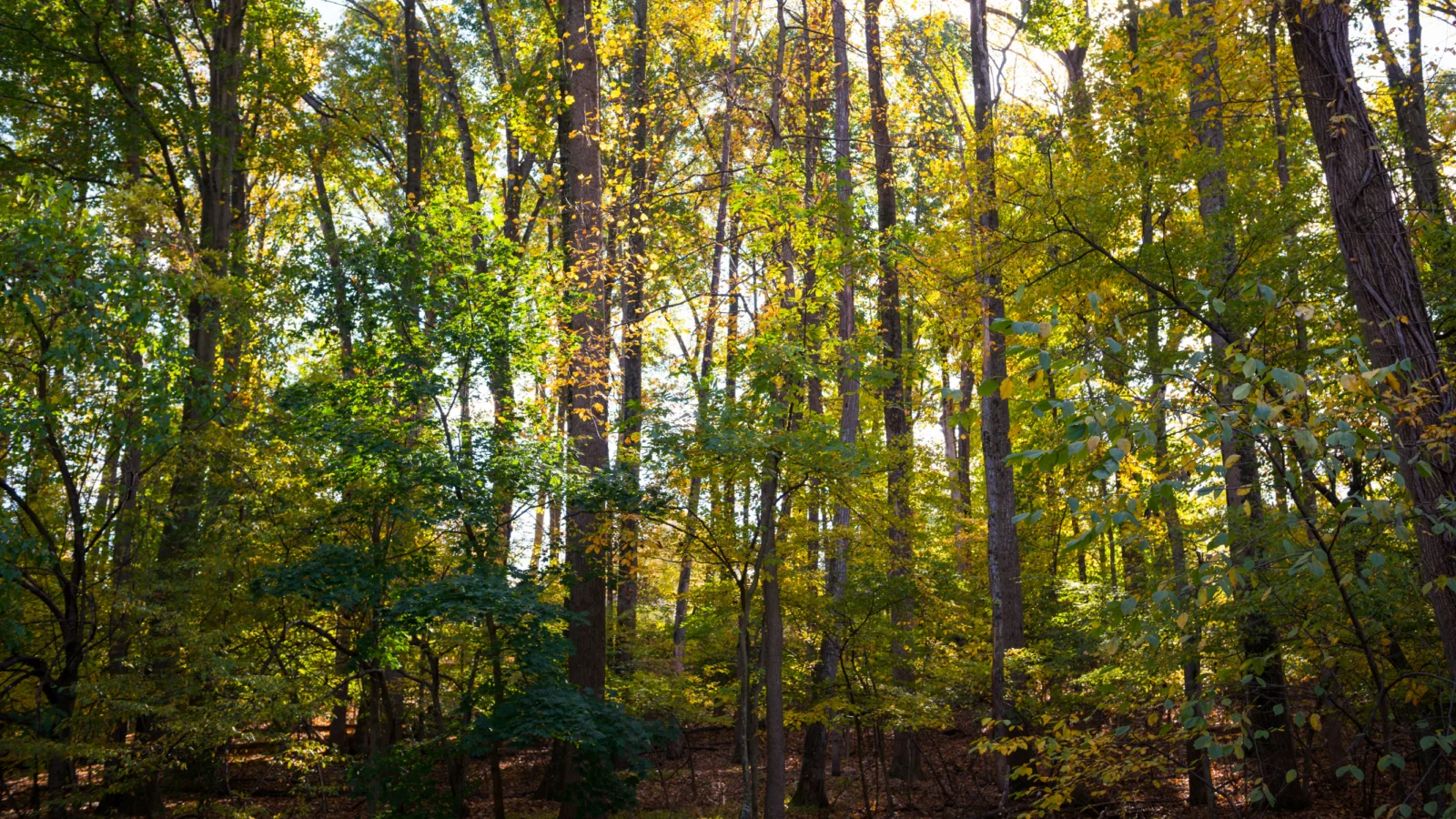
Mature Forest in Maryland. Photo by para827, Getty Images.

Barred Owl

Strix varia

Kashakatasht (Innu-aimun)

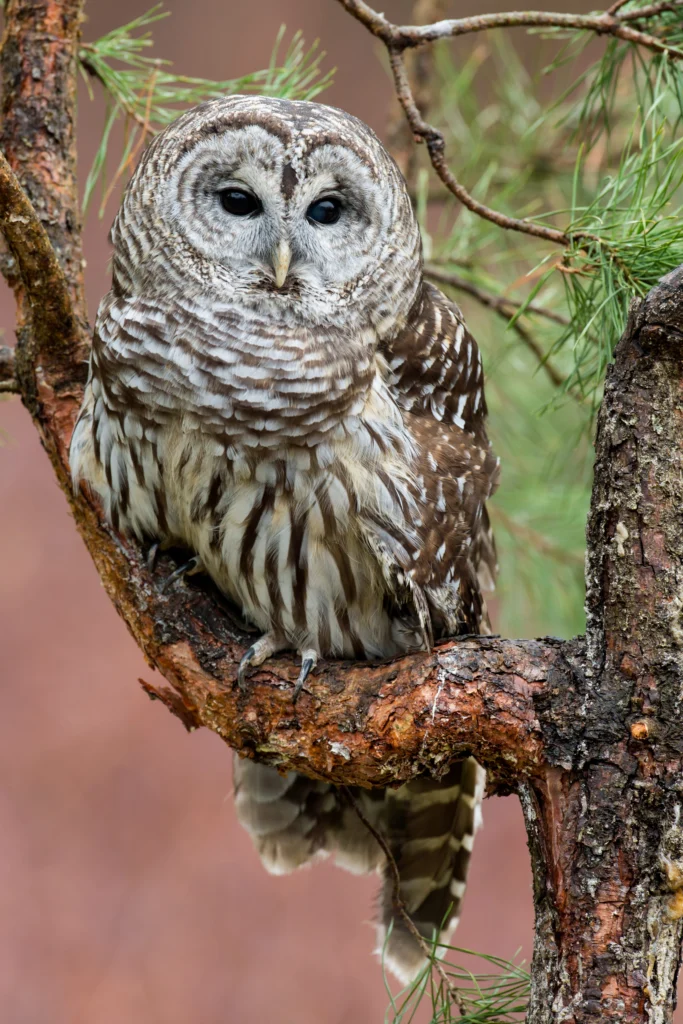
Barred Owl. Photo by Nagel Photography, Shutterstock.

Barred Owl

Barred Owl. Photo by Nagel Photography, Shutterstock.

Strix varia

Overview

Conservation Status
Population Trends
Increasing
Population Size
3.5 million
Family
Owls
Location
U.S. and Canada
Migration Pattern
Nonmigratory
Migration Distance
Nonmigratory
Also Known As
  • Hoot Owl
  • Tecolote Listado (Spanish)

About

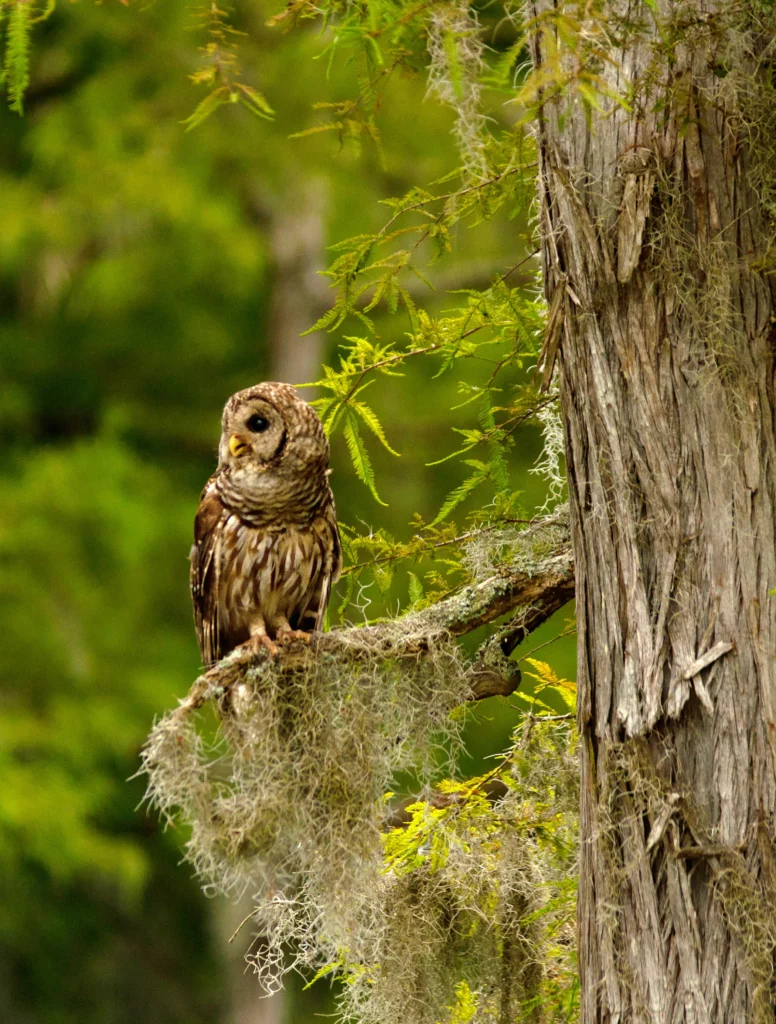
The Barred Owl, a nocturnal dweller of mature forests in the United States and Canada, has deep, dark eyes and rich, chocolate-brown and cream-colored plumage. This large bird can easily evade detection in the daytime, as it blends in with the tree bark, flies on silent wings, and is quite sedentary. But there’s no mistaking its haunting, hooting song.

Infamous and instantly recognizable, the song of the Barred Owl is a wild and unignorable declaration of ownership to any creature of the swamps, woodlands, and suburbs they call home. If there’s a Barred Owl in your neighborhood, you know about it. Perhaps even more ear-catching is the caterwauling duet performed by mated pairs. Complex, highly variable, and spine-tingling, these coordinated vocal displays may give the inexperienced naturalist cause to wonder if a troupe of monkeys might have moved in nearby.

Very much an adaptable generalist, the Barred Owl occurs in a variety of woodland habitats across a wide and expanding range. Formerly confined to eastern North America, the Barred Owl’s ability to colonize the woodlands that sprang up across the Great Plains in the wake of fire suppression allowed this species to spread westward through the 1800s. By the mid-1900s, they had reached the Pacific Northwest. where they encountered the closely related but less aggressive Spotted Owl. Since then Barred Owls have outcompeted Spotted Owls for territories, and Spotted Owl populations have declined across their range.
Threats

Although Barred Owls are fairly common in many areas and the species’ range continues to expand in the West, many of these birds are injured and killed by collisions with cars and fencing, or are poisoned after eating prey that have ingested rodenticides. Additionally, Barred Owls often rely on mature forests, which provide large dead and dying trees for nesting and roosting. As such, this species is also vulnerable to habitat loss.

Loss of Forest Habitat

Even for adaptable species like the Barred Owl, habit loss is a primary threat. The clearing of forests in favor of agriculture and urban development has removed much of the historical habitat for this species. Additionally, while Barred Owls may continue to live and breed in remaining patches of forest, this fragmented habitat is also more welcoming to their primary predator, the Great Horned Owl. Living closer to developed areas also exposes Barred Owls to environmental toxins such as rodenticides.

Habitat Loss

Rodenticides

Poisons used to control rodent populations pose another threat to Barred Owls, which may become sick and die when they consume poisoned rodents. In multiple locations across Canada and the United States, researchers have recovered dead Barred Owls with several types of rodenticides in their livers. While these studies could not confirm that rodenticide poisoning was the cause of death for these owls, research has demonstrated that rodenticides can indeed be fatal to owls that consume rodents that have been poisoned.

Pesticides & Toxins

Conservation Strategies & Projects

Even common birds like the Barred Owl need our help to overcome the threats they face. At ABC, we’re inspired by the wonder of birds and driven by our responsibility to find solutions to meet their greatest challenges. With science as our foundation, and with inclusion and partnership at the heart of all we do, we take bold action for birds across the Americas.

Improve Habitat

Habitat is the foundation for birds’ survival. Working closely with the Migratory Bird Joint Ventures (JVs) and other partners, we have improved more than 10 million acres of bird habitats in the places where birds need us most. ABC’s BirdScapes approach to bird conservation helps to protect habitats throughout the Americas, including the forests Barred Owls share with tropical migrants such as the Wood Thrush and Yellow-billed Cuckoo.

Restoring Habitat

Avoid Pesticides & Toxins

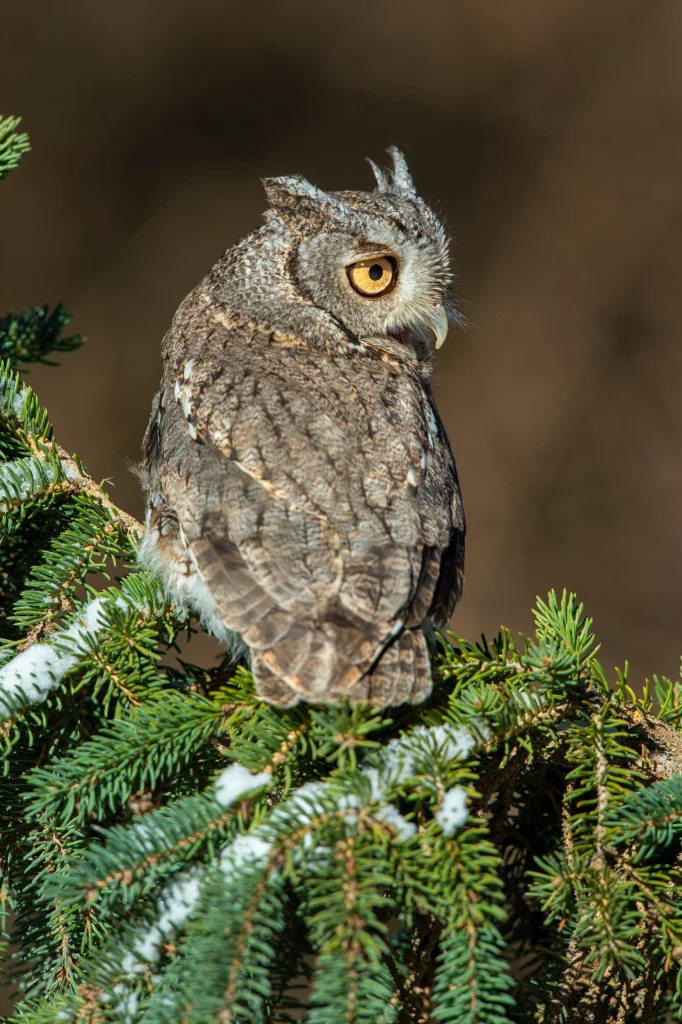
ABC and partners’ efforts to ban rodenticides that secondarily poison predators resulted in an agreement in 2014 to remove harmful compounds from sale to consumers, helping to protect the Barred Owl as well as other owls and raptors, such as the Eastern Screech-Owl and Golden Eagle.

Pesticides & Toxins

Bird Gallery

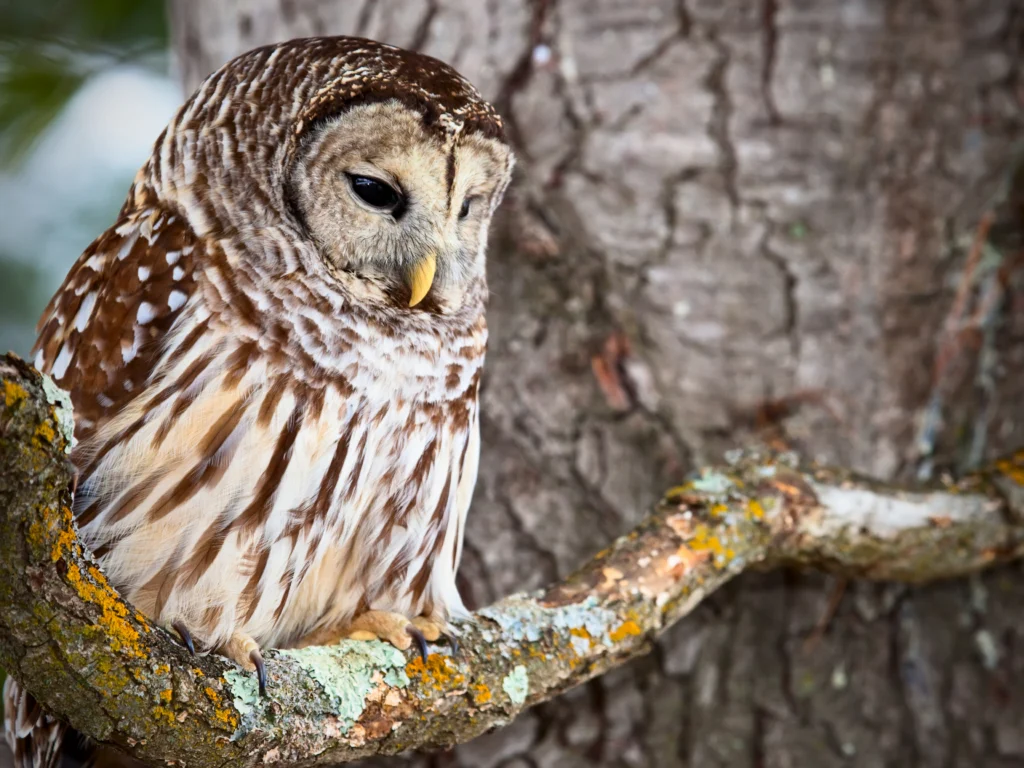
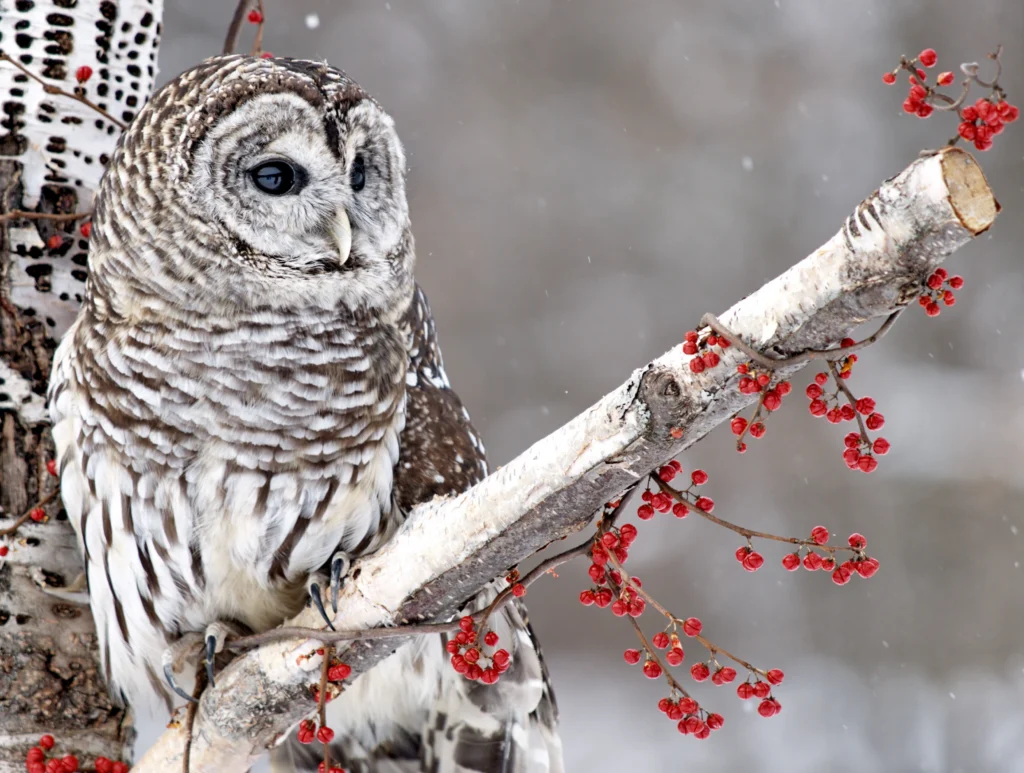
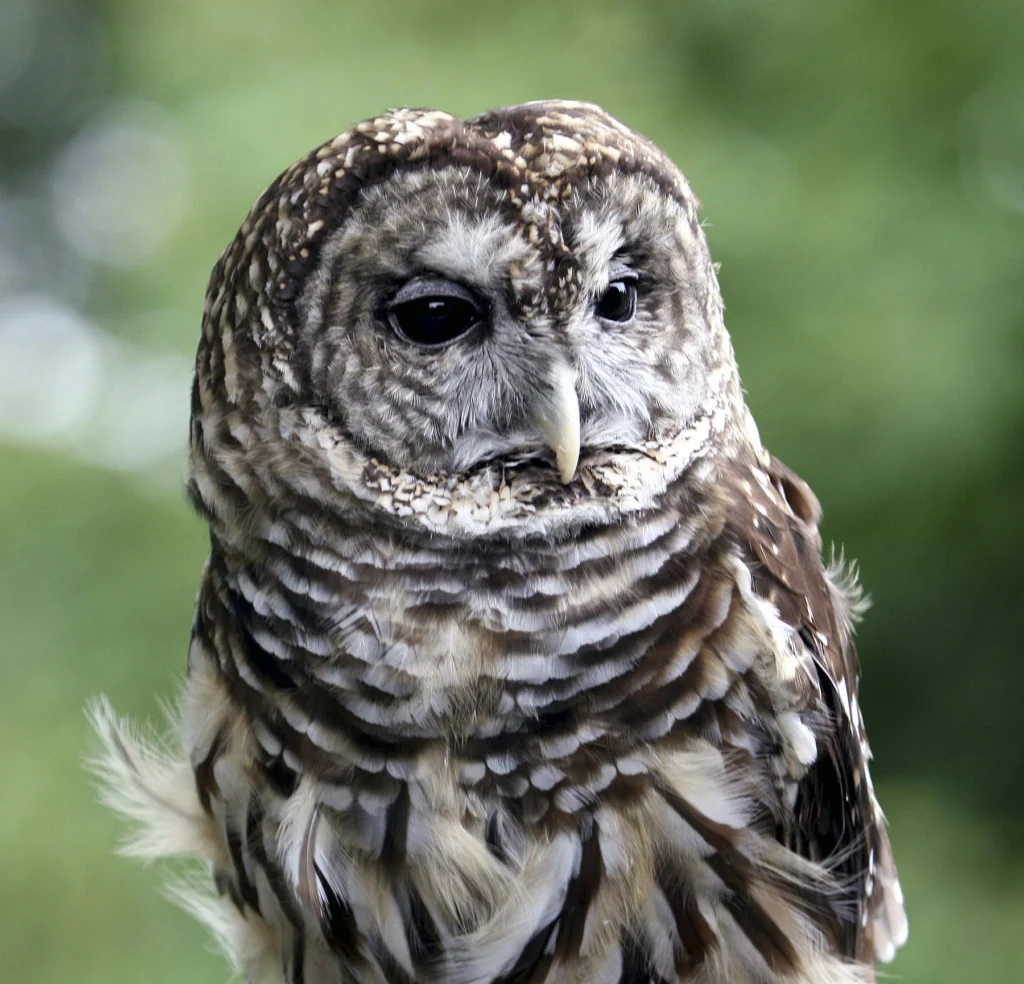
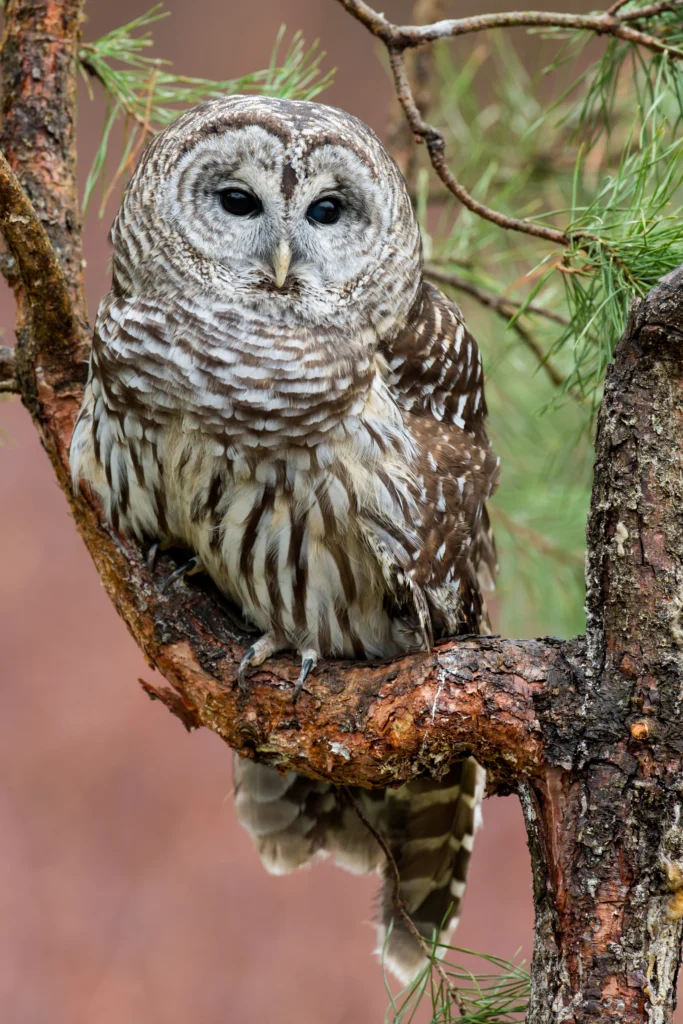
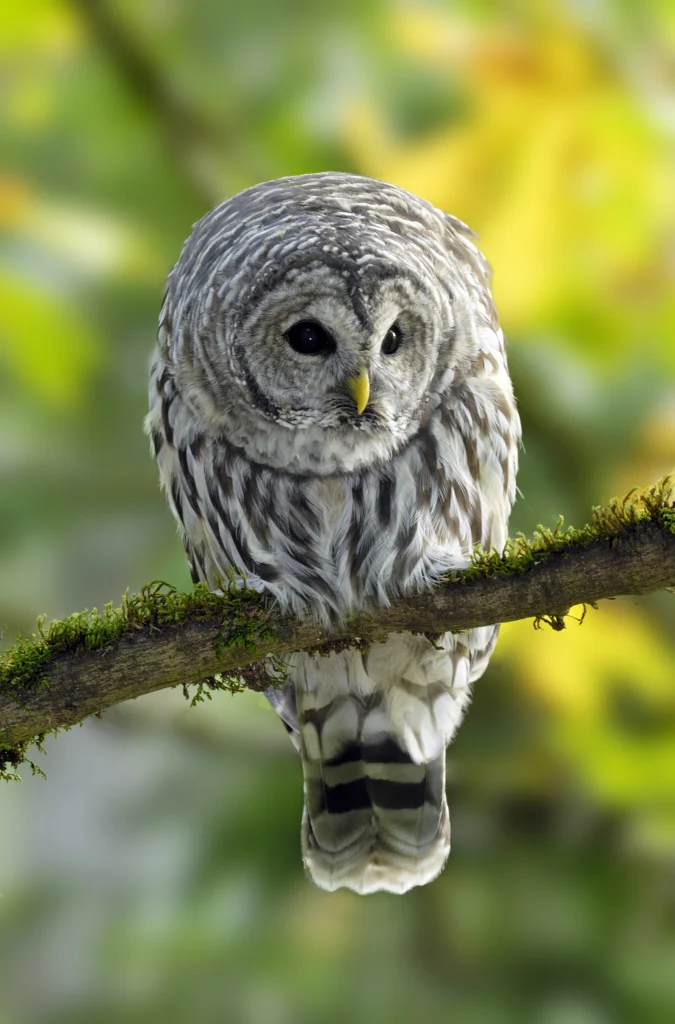
The Barred Owl is large and cryptically patterned, with a round head, dark eyes, and no ear tufts. The back, wings, tail, head, and breast are scaled with alternating brown and white, while the underparts are buffy or white with brown stripes running down the belly. The round facial disk is mostly gray, with subtle rings of brown radiating outward from the eyes. The nearly-black eyes of the Barred Owl are a result of the color of the irises, which nearly match the pupils. Only a few other North American owl species have dark eyes: the closely related Spotted Owl, the tiny Flammulated Owl of western pine forests, and the widespread Barn Owl.

Sounds

The Barred Owl is well-known for its loud, resounding song: hoo hoo too-HOO, hoo hoo too-HOOO ooo, often phrased as Who cooks for you? Who cooks for you all? Barred Owls have a repertoire of other sounds as well, including harsh hissing calls given between adults and their young to coordinate feeding, contact calls given between mated birds, and wild screams given in alarm. Mated Barred Owl pairs also perform caterwauling duets, an unnerving cacophony of maniacal laughter, raucous squalls, and whooping yelps and howls.

Song

Credit: Christopher McPherson, XC690957. Accessible at www.xeno-canto.org/690957.

Male and Female Duet

Credit: Jacob Saucier, XC498644. Accessible at www.xeno-canto.org/498644.

Scream

Credit: Jeff Stewart, XC810513. Accessible at www.xeno-canto.org/810513.

Habitat

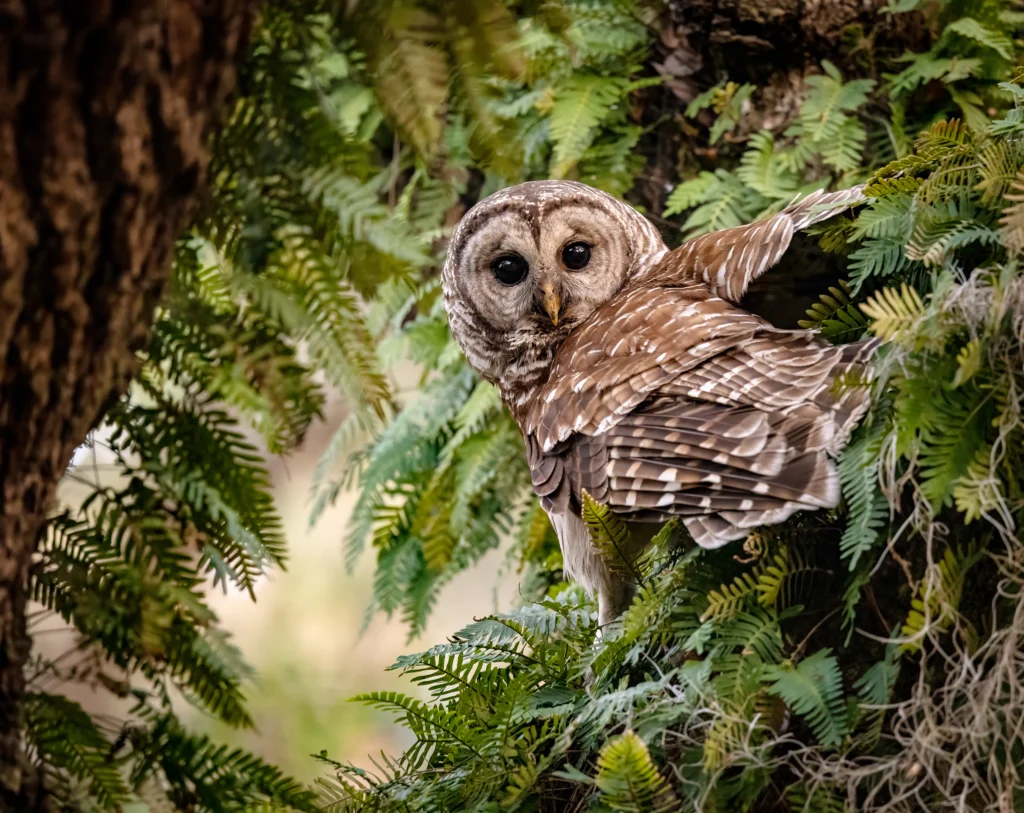
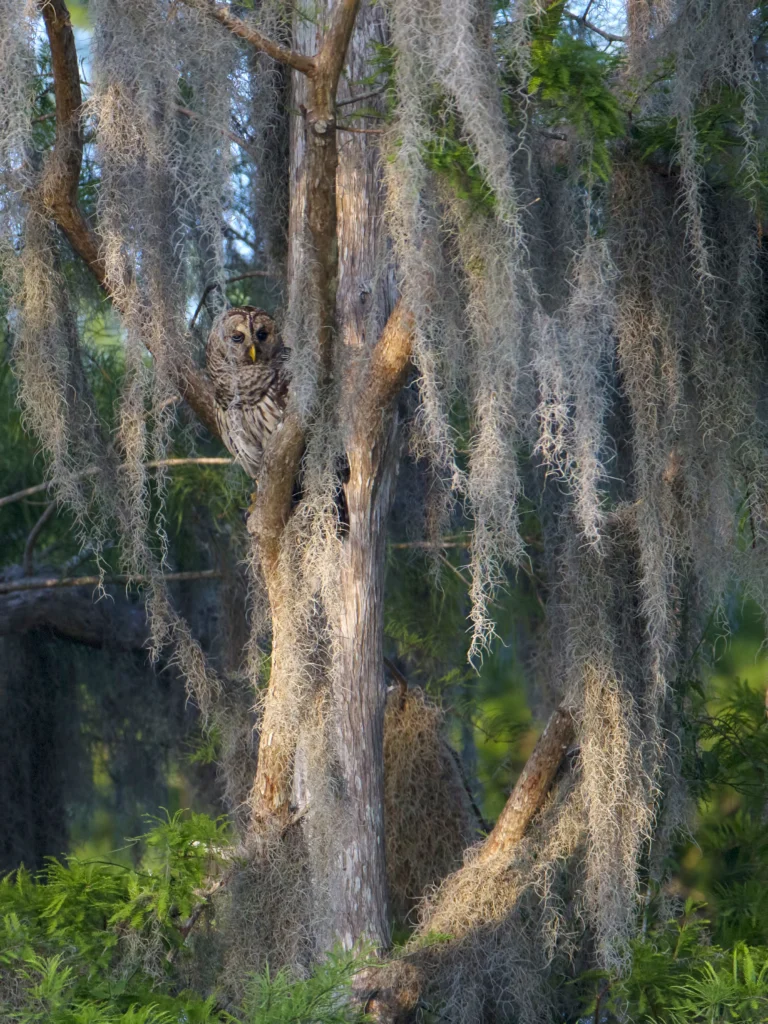
The Barred Owl uses a variety of habitat types across its range, but generally prefers old, dark forests with well-developed understory.

  • Some studies have found a preference for habitats near water, such as swamps and riparian areas
  • Found in remote sites as well as in suburbia
  • Roosts in concealed locations, especially in conifers or clumps of ivy in deciduous trees

Range & Region

Range & Region


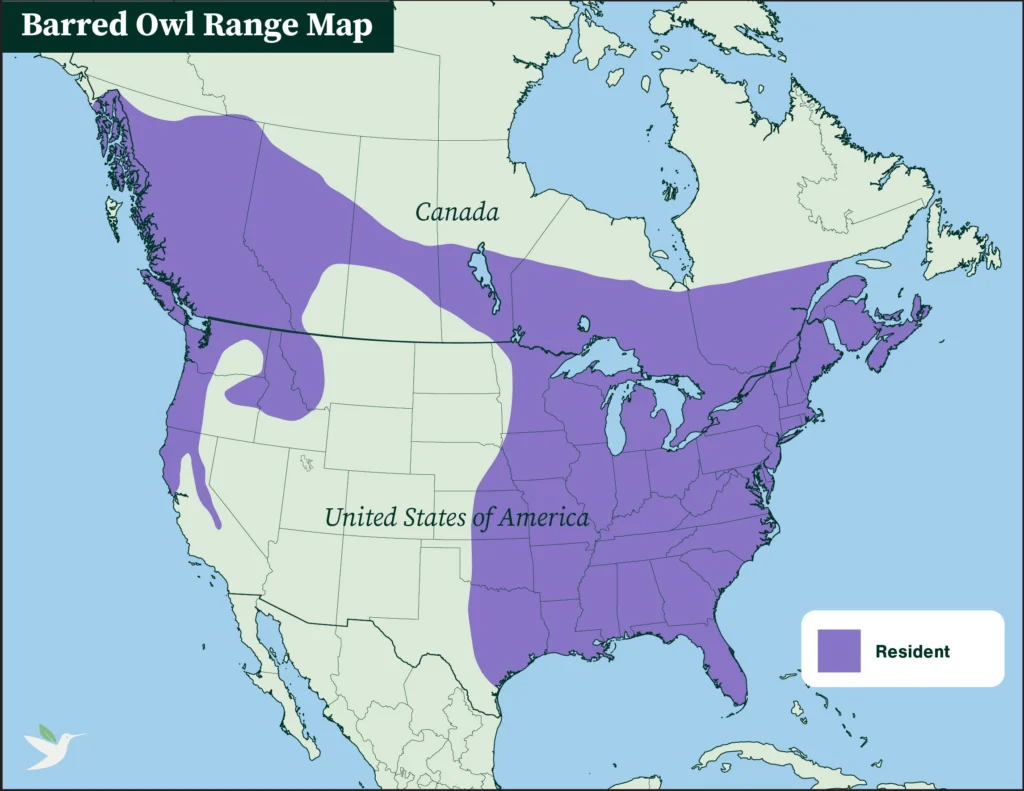
Barred Owl range map.

Specific Area
Eastern United States; mountain ranges of the West; across the Canadian provinces

Range Detail
The Barred Owl is widespread in North America, inhabiting most of the eastern half of the continent from Florida north to southern Canada, as well as the mountain ranges of the western United States and throughout British Columbia and Alberta. This owl has also spread westward in the northern part of its range — a cause for concern, as they compete and hybridize with the threatened Northern Spotted Owl.

Did you know?
Along with the Red-shouldered Hawk, the Barred Owl is a characteristic raptor of lowland swamps and forests in the Southeast. The two species often nest near each other, and several nests have been discovered that contained eggs of both species! Unfortunately, the eggs from most of these nests were collected, so the outcome of this surprising phenomenon remains unknown.

Range
U.S. and Canada
Migration Pattern
Nonmigratory
Migration Distance
Nonmigratory

Life History

The Barred Owl is a well-known and charismatic resident of mature forests, including those interfacing with urban areas. While their wild calls are impossible to ignore, they can also be remarkably silent, gliding noiselessly through the understory in search of prey. During daylight hours, they make themselves scarce, well-camouflaged and tucked into thick cover so as not to be harassed by crows, squirrels, or any of the other species they will hunt once the sun goes down.

Diet

Analysis of owl pellets — the regurgitated, indigestible remains of prey composed primarily of bones, fur, and feathers — reveals that overall, small mammals constitute much of the Barred Owl diet. Not much surprise there, but in some areas, amphibians account for a quarter of the diet! These owls are adventurous eaters, and will swallow almost any animal that they can fit down their throats. Mammals, birds, reptiles, amphibians, fish, crustaceans, insects, and even earthworms and slugs are all on the menu.

Courtship

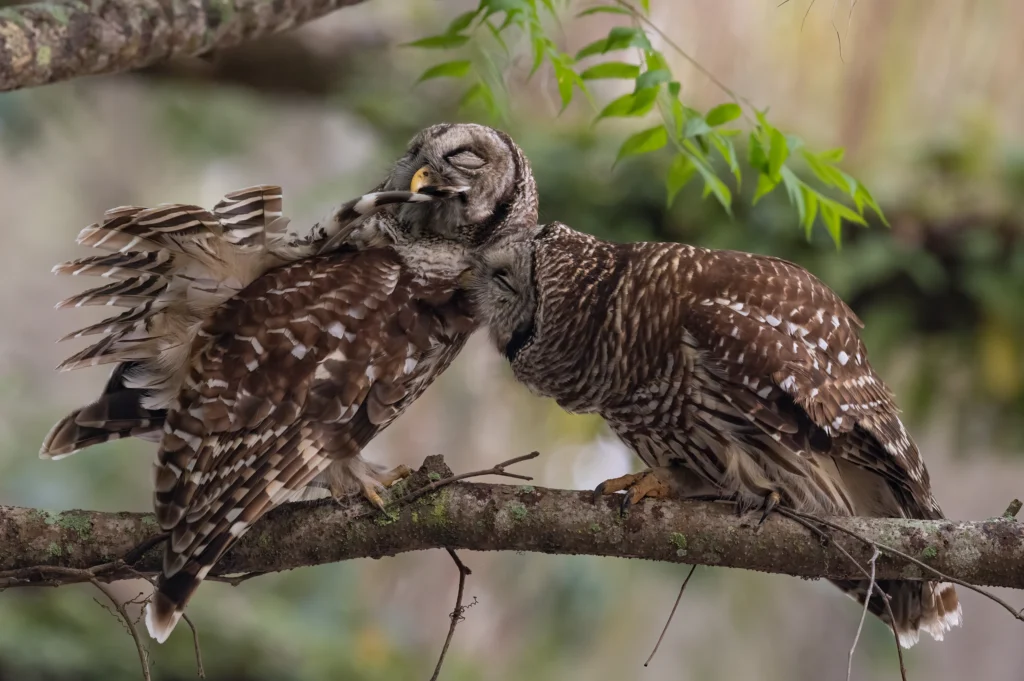
Although Barred Owls call year-round, they begin courting in February and breeding between March and August. Males display to females by swaying back and forth with raised wings while sidling along a branch. Paired birds perform joint displays involving ritualized movements and vocalizations, and also feed and preen each other as part of courtship and to maintain their bond. Barred Owls mate for life and maintain the same territories and nest sites for many years.

Nesting

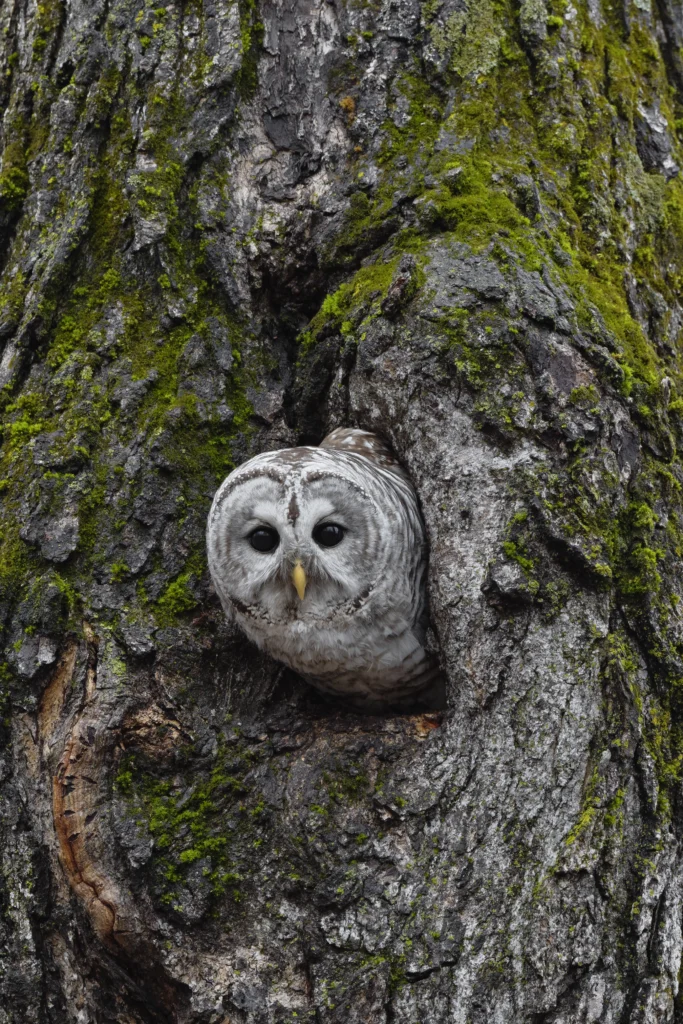
Barred Owls often nest in cavities, but will also use abandoned hawk, crow, or squirrel nests. Like most owls, these birds do little in the way of nest construction, though they may remove the top of a squirrel nest to create more of a cup or platform shape. Occasionally, Barred Owls may add materials such as feathers, lichens, or green conifer sprigs to the nest.

Eggs & Young

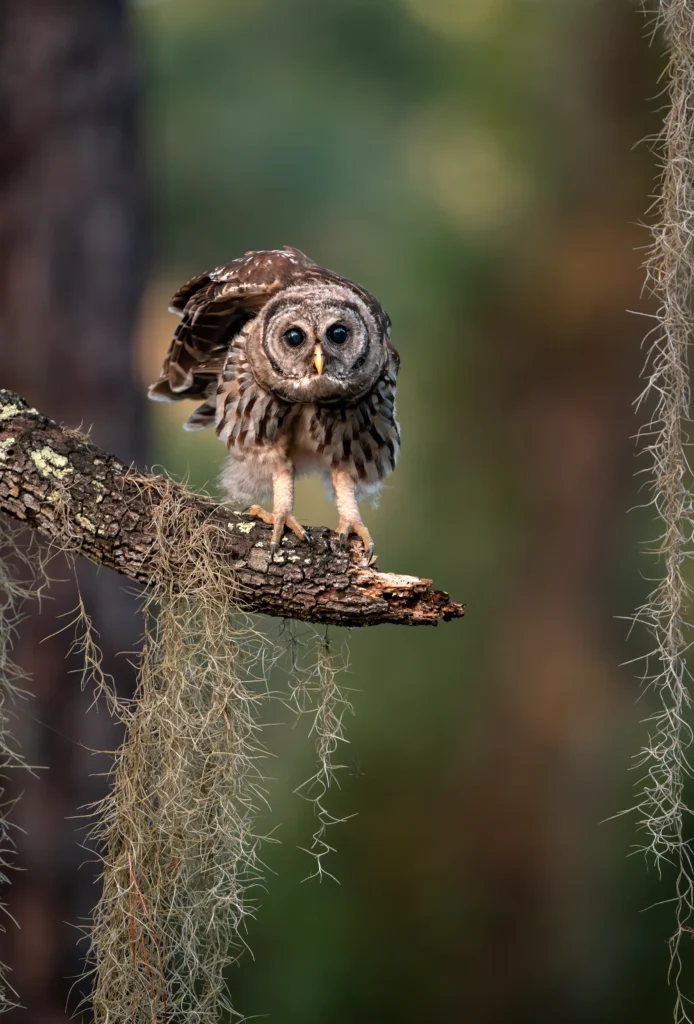
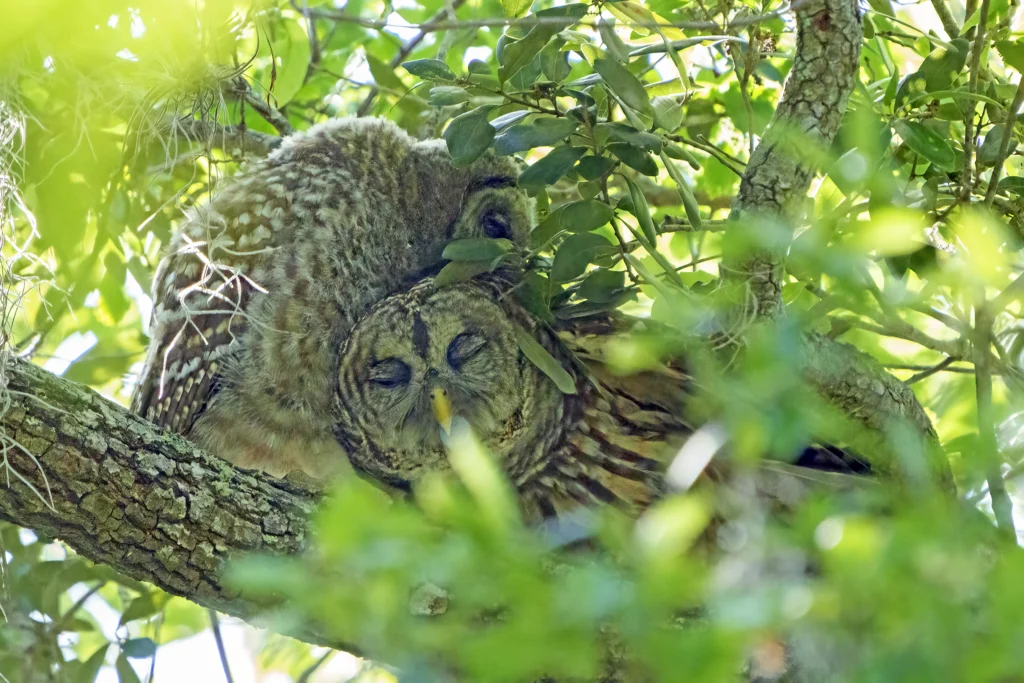
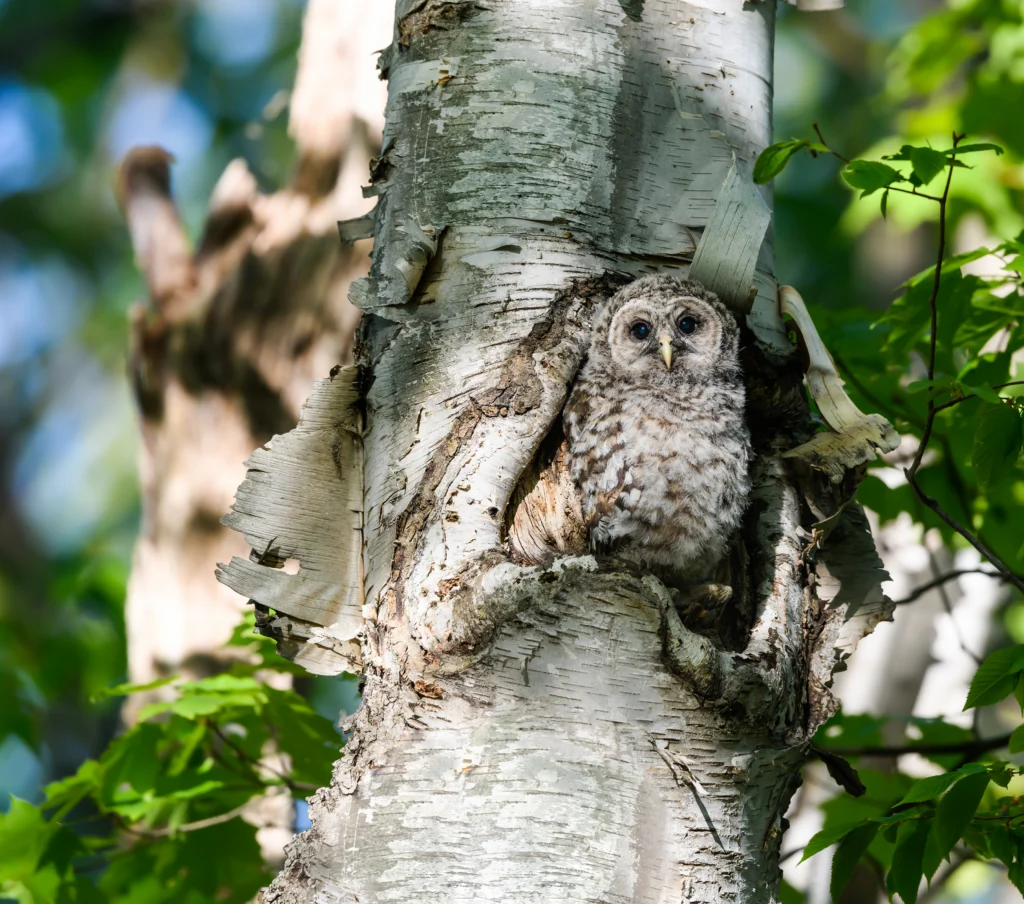
The female Barred Owl lays two or three white oval-shaped eggs. She incubates her clutch for about a month while her mate brings her food. Females brood young for about two weeks, during which time the male continues to deliver food for her and their young. Four to five weeks after hatching, the still-flightless, downy owlets clamber from the nest and begin to explore the branches of their nest tree. These “branching” owlets can often be seen exercising their wings and making short, clumsy hops through the tree foliage. Young depend upon their parents for food until they can fly at about 10 weeks of age. All told, parents care for the young for at least four months, longer than most other owls.