Overview
About
For many years, the beautiful Blue-throated Macaw was known to those outside the Beni savanna only through captive specimens, and was thought by some to be extinct in the wild, a victim of the illegal wild bird trade and habitat loss. Local people in the area knew the bird persisted, however, and in 1992, a population of approximately 50 macaws was documented in northeastern Bolivia. The macaws had held out in the “islands” of palm trees that rise above the Beni savanna’s vast, seasonally flooded plains.
The species’ Bolivian name, paraba barba azul, means “blue-bearded macaw,” a nod to its namesake blue throat. This feature distinguishes it from the more common Blue-and-yellow Macaw, a species often found roosting alongside the Blue-throated Macaw.
Additional wild populations have been documented in recent decades. Intensive conservation efforts — including the establishment of private reserves by ABC and our partner, Asociación Armonía, and ongoing monitoring of the illegal wild bird trade — have helped the Blue-throated Macaw’s population increase. Even so, the Blue-throated Macaw remains one of the world’s rarest parrot species.
Threats
The Blue-throated Macaw was once so rare, it was assumed to be extinct in the wild by those outside the region. The bird’s gorgeous, vibrant coloring and its rarity made it a coveted species that fetched a high price in the illegal bird trade, and the wild population suffered extremely heavy losses from poaching throughout the 20th century.
The pressures of the illegal trade of macaws have lessened since the 1980s, thanks to public education and the tightening of wildlife trade laws, including CITES (the Convention on International Trade in Endangered Species of Wild Fauna and Flora). While poaching occurs rarely today, it continues to impact the Blue-throated Macaw. Because the population was so dramatically reduced by poaching, the population today remains small, and the birds occupy a limited range, making them more vulnerable to threats from habitat loss and degradation.
Habitat Loss
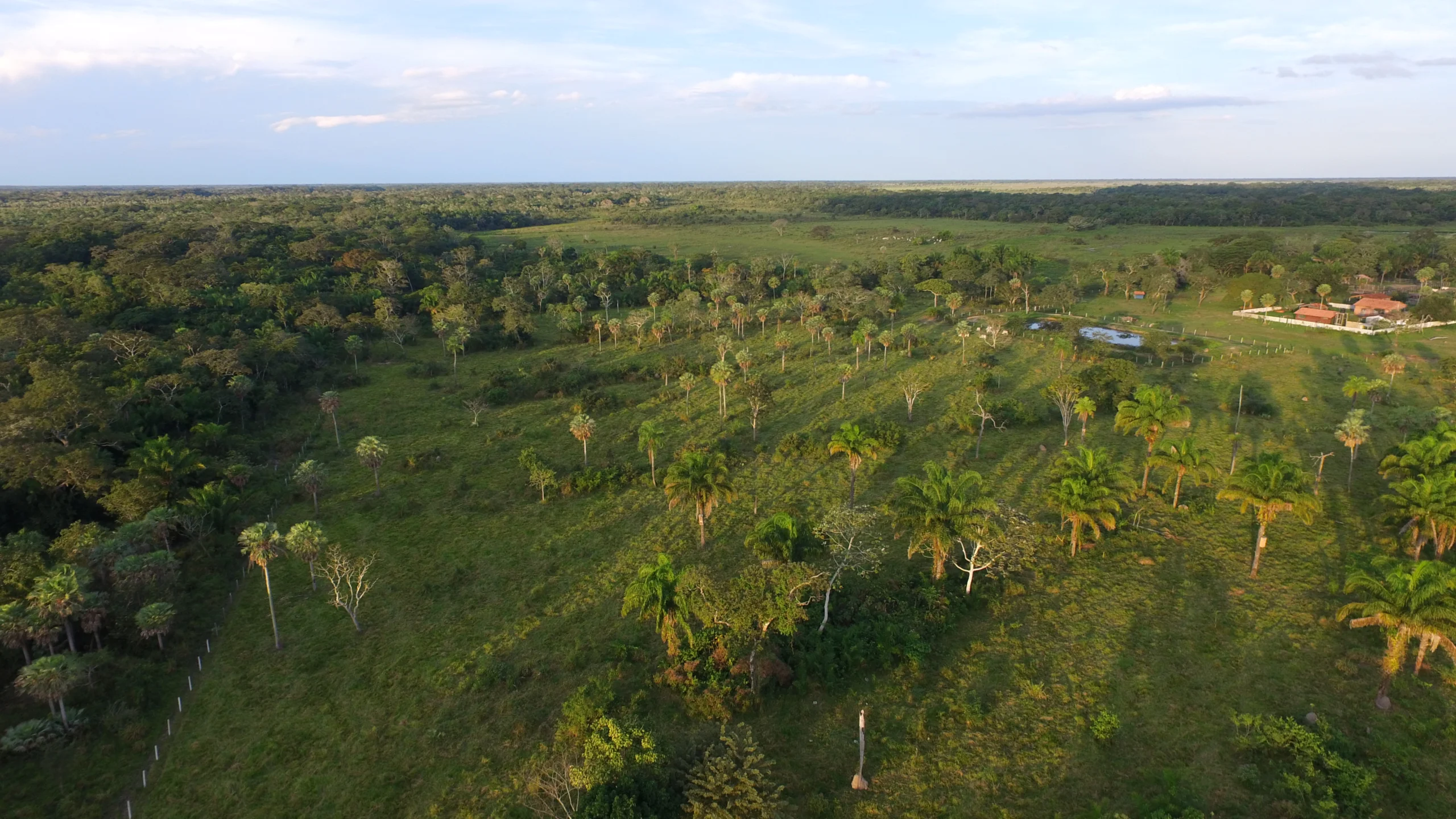
Cattle ranching is the dominant industry throughout much of the Blue-throated Macaw’s range in Bolivia. The forest islands inhabited by the macaw are cut down to be used for firewood and building materials, and the burning of the savanna to produce grazing grass can threaten macaw nests and stunt the growth of new trees, preventing the regeneration of palm trees. This leads to less fruit to eat and fewer nesting sites.
Conservation Strategies & Projects
Birds like the Blue-throated Macaw need our help to overcome the threats they face. With science as our foundation, and partnership at the heart of all we do, ABC takes action to find and implement conservation solutions. Together, we are helping to halt the decline of Critically Endangered species such as the Blue-throated Macaw and create habitats where birds can thrive.
ABC’s partner in Bolivia, Asociación Armonía, undertook a years-long campaign to engage Bolivians in learning about the Blue-throated Macaw and discovering their role in conserving this unique endemic. Their work made the macaw a symbol of national pride and created a groundswell of support for its conservation and anti-poaching initiatives.
Creating & Maintaining Reserves
Ensuring birds have quality habitat is essential to conserving range-restricted species like the Blue-throated Macaw. Asociación Armonía, with the support of ABC, established the 27,170-acre Barba Azul Nature Reserve in 2008 to protect essential habitat for the Blue-throated Macaw. More than 12,000 acres of the Barba Azul Nature Reserve are now designated by the Bolivian government as a Private Natural Heritage Reserve, affording it additional protections.
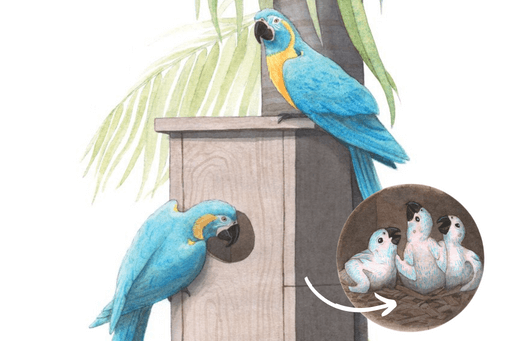
The Laney Rickman Blue-throated Macaw Reserve was established in 2018, protecting 1,680 acres of the macaw’s nesting territory. Artificial nest boxes installed by Armonía on the former cattle ranch-turned-reserve have helped boost nesting success for the macaw.
Bird Gallery
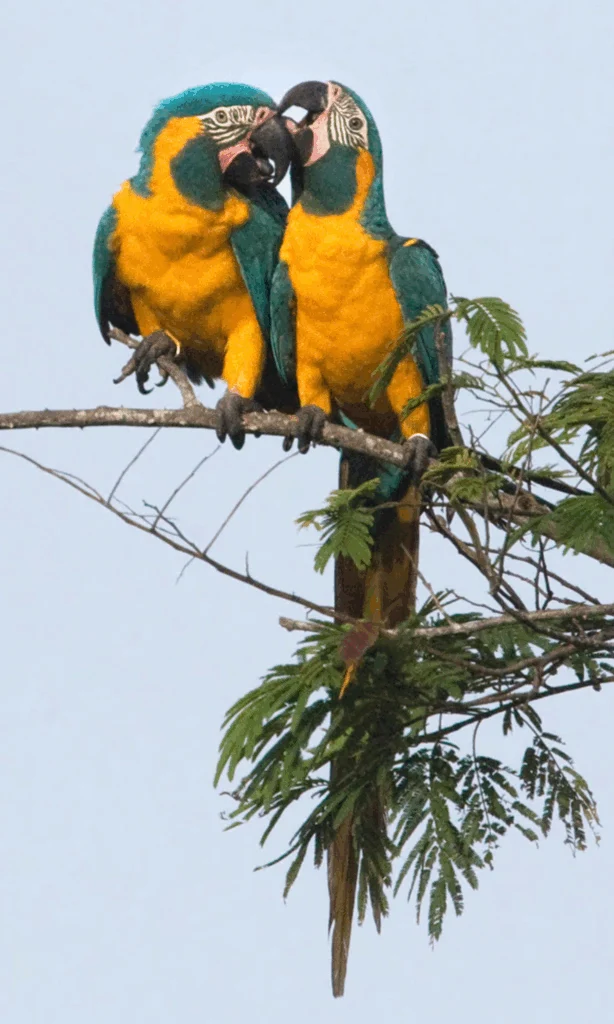
The Blue-throated Macaw is a striking mix of vivid turquoise-blue above and bold golden-yellow below. At the base of its large, dark bill are pale facial patches crossed by five or six thin horizontal lines of blue feathers, which form a pattern unique to each individual and can be used to identify individual adults. These lines merge into a blue lower cheek and throat (the blue “beard”) that is separated from its crown by a narrow yellow stripe. Hatchlings have dark eyes that gradually lighten to gray and then to white. As the bird ages, their eyes will take on a richer golden hue. The Blue-throated Macaw is a large parrot, measuring approximately 33.5 inches from head to the tip of the tail, with males being slightly larger than females.
Sounds
The Blue-throated Macaw communicates with a series of patterned loud calls. Its vocal repertoire consists of alarm calls, chick feeding calls, and distinctive fighting calls.
Blue-throated Macaw call courtesy of Armonía. Viewable at https://www.youtube.com/watch?v=gslKhfjpdzI.
Habitat
The Blue-throated Macaw inhabits raised forest “islands” within the Beni savanna, a large, flat area that experiences seasonal flooding from rainwater and river overflow. Forested habitat is on raised ground, such as gallery forest on river edges, and on circular forest islands that are unique to the Beni and thought to be remnants of ancient human settlements. Many of these raised areas are dominated by Motacú palm stands, a key food source for macaws in the area.
- Roosts, nests, and feeds on islands of Motacú and other palm trees within grasslands
- Also inhabits long, narrow corridors of gallery forest along waterways adjacent to the Beni savanna
- Occasionally found near human habitation in open ranches
Range & Region
Specific Area
Northern Bolivia
Range Detail
The Blue-throated Macaw’s range is restricted to Llano de Moxos, Beni Department of northern Bolivia.
Did you know?
A significant portion of the Blue-throated Macaw population is found on privately owned lands used for ranching. ABC partner Asociación Armonía has worked with landowners to plant beneficial trees and install and monitor nest boxes on these working lands.
Life History
Blue-throated Macaws are social, likely forming lifelong pairs and living in groups that roost and forage together. These stunning birds live in palm forests, open cerrado woodlands, and isolated trees. They fly from tree to tree and use their strong bills and feet to move along branches as they forage.
Diet
Large palm fruits, particularly those of the Motacú Palm, are the mainstay of the Blue-throated Macaw’s diet. The Blue-throated Macaw actively forages through cerrado woodland vegetation, eating a variety of seeds, flowers, and fruits. Like other fruit-eating birds such as the Keel-billed Toucan and Resplendent Quetzal, the Blue-throated Macaw acts as a forest “gardener,” spreading the fruit seeds across the savanna through its droppings.
Courtship
Like most macaw species, the Blue-throated Macaw forms monogamous pairs that last the birds’ lifetimes. Mated pairs engage in allopreening (when one bird grooms another bird’s feathers) and perch close together.
Nesting
Blue-throated Macaws are cavity nesters and make their nests in holes in dead palms and other trees, usually from 7 to 10 meters above the ground. The species will also use artificial nest boxes, which can boost their reproductive success in the absence of suitable trees. They typically nest once per year, but have been known to attempt a second nest if the first fails.
Eggs & Young
Female Blue-throated Macaws incubate a clutch of up to three eggs. Incubation among wild populations in nest boxes lasts approximately 25 to 30 days. Young macaws fledge after 75 to 85 days. They remain dependent on their parents for food until they can forage for themselves, and may stay with their parents for up to a year.