Six States Joining Bird City Network
In 2025, more than 275 communities participated in BCN within its 16 programs. They completed more than 3,500 actions to improve habitat, reduce threats, engage people, and promote sustainability.
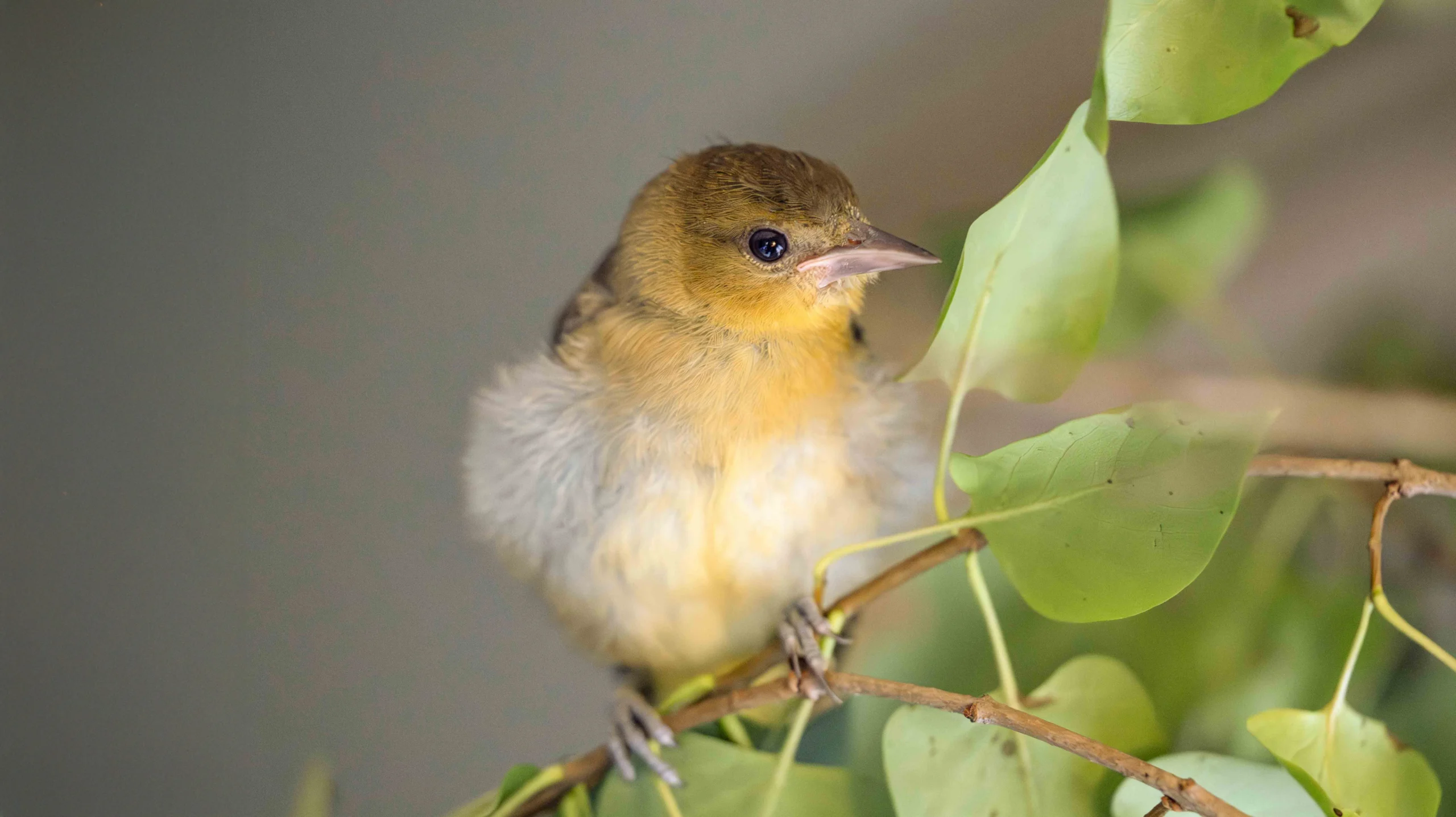
One early May, I watched a pair of Baltimore Orioles courting in my backyard. Before long, the female was weaving an intricate nest in the sugar maple outside my bedroom window. Three weeks later, the begging calls of chicks emanated from within.
As a self-professed “wildlife biographer,” I sought to photograph every stage of their story. I learned each oriole’s unique traits: the father’s dulcet chirrups as he patrolled his territory and the specific flight paths he took to the nest, the mother’s burnt-orange plumage as she moved surreptitiously through the trees, and her cryptic, leaf-like flutter down to the jelly feeder. I marveled at their tireless vigilance against marauding Blue Jays and squirrels and the dozens of daily forays they made to find insects for their nestlings.
One day, hearing a great ruckus, I rushed outside to find the parents flitting about a chick on the ground. She was injured and squawking piteously, likely captured by a predator and then released in the ensuing fray.
I scooped her up, pleading uselessly with the parents for forgiveness, and raced her to Cornell University’s wildlife hospital, not far from my home. She’d suffered puncture wounds and a ruptured air sac. After a stint in the hospital and then with a rehabilitator, she was transferred to me (a subpermittee under a wildlife rehabilitator’s license) in hopes of a release. But first, we needed to prove she could fly.
I named this tiny, spunky bird Sparky. My bedroom, so close to where she’d been conceived and hatched, became her home for five weeks. I oriented my life around her. Every day I brought in leafy maple branches for her to explore, securing them to the window so she could look out. I offered a diverse array of foods: fresh fruit, scrambled eggs, jelly, and softened kitten kibble. Her preference was mealworms fed by hand.
Sparky did not suffer me gladly. When I approached, she’d hide in the leaves. When I offered my finger for her to perch, she’d peck furiously before latching on. But if I sat quietly on the bed, she would come to me to explore the vast terrain of the blanket and my prone figure.
She was intensely curious, probing her beak between the keys on my laptop, playing with my hair, and endlessly rearranging bits of string and wire. Was she practicing for nestbuilding?
I often think back and wonder: How did such a scrappy little bird break my heart wide open?
Eventually, we took her to the barn to test her flight. We’d launch her with a gentle toss, but though she flapped madly, she couldn’t gain altitude. The vets cited a possible coracoid injury or congenital malformation. She’d never be able to migrate or build a nest. She was unreleasable.
Heartbroken, I turned my focus to finding the best possible aviary to place her in. With bird artist and author (and ABC member) Julie Zickefoose’s help, we found one in Ohio, and I drove Sparky to her new life.
I often think back and wonder: How did such a scrappy little bird break my heart wide open? I believe it was this deeply intimate confirmation that each individual bird is utterly unique, with its own personality and spirit.
Can we go beyond identifying birds to identifying with them? Can we shift from a language of separation and otherness to one of kinship and shared experience? As the animal behaviorist Jonathan Balcombe wrote, “Next time you are outside … notice the first bird you see … you are beholding a unique individual with personality traits, an emotional profile, and a library of knowledge built on experience … what you are witnessing is not just biology, but a biography.”
Melissa Groo is a Sony Artisan of Imagery, an assignment photographer for Audubon and Smithsonian magazines, and a Fellow with the International League of Conservation Photographers. Follow her on Instagram.
This article originally appeared in the Spring 2026 issue of Bird Conservation, the member magazine of American Bird Conservancy. Learn more about the benefits of becoming an ABC member and join today.
Featured News & Stories