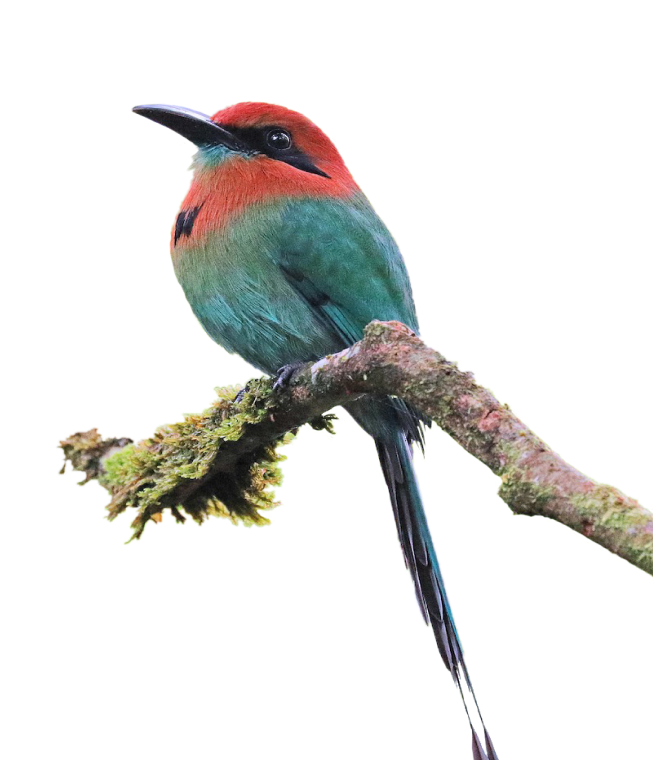
Havana Forest, Cuba. Photo by Kaszojad, Getty Images.

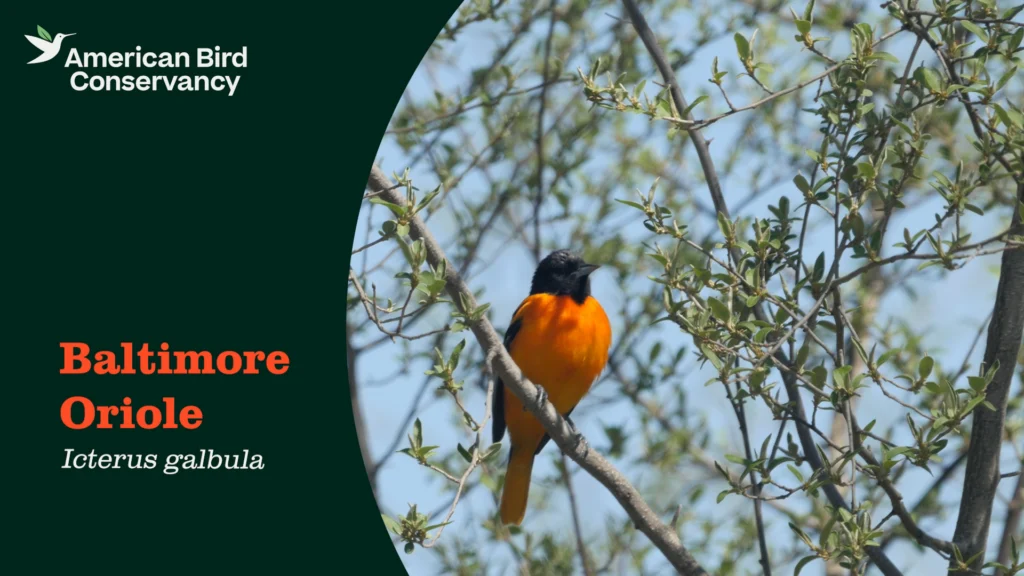
Baltimore Oriole

Icterus galbula

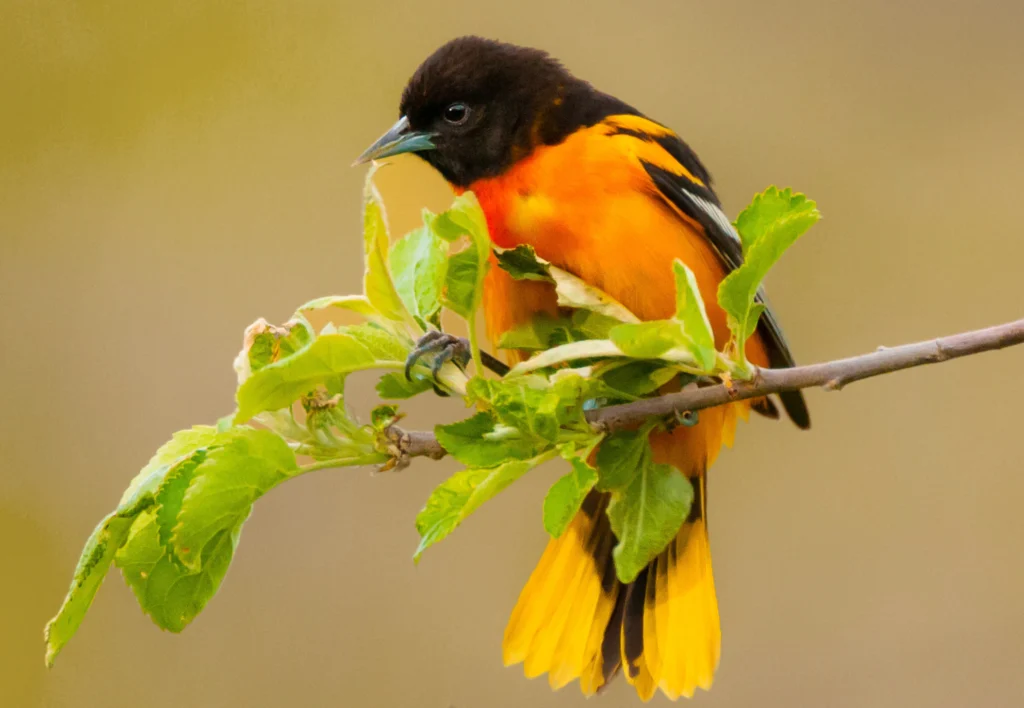
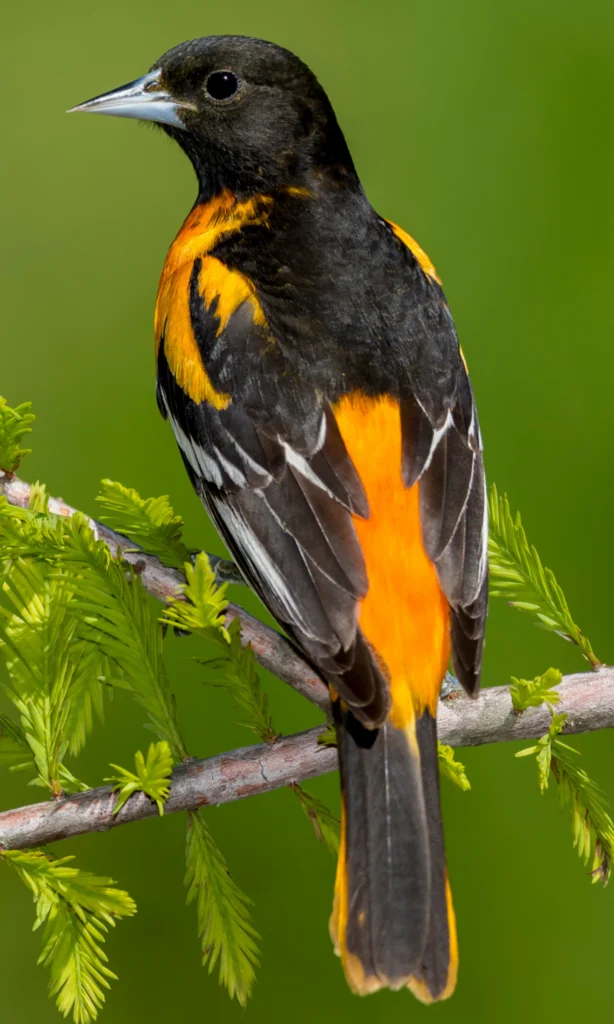
Baltimore Oriole male. Photo by Agami Photo Agency, Shutterstock.

Baltimore Oriole

Baltimore Oriole male. Photo by Agami Photo Agency, Shutterstock.

Icterus galbula

Overview

Conservation Status
Population Trends
Decreasing
Population Size
12 million
Family
Blackbirds
Orioles
Troupials
Location
Caribbean
North America
South America
Migration Pattern
Latitudinal
Migration Distance
Long Distance
Also Known As
  • Northern Oriole
  • Turpial Migratorio (Spanish)
  • Turpial norteño (Spanish)
  • Ti Mèl ameriken (Haitian Creole)

About

The eye-catching orange and black plumage of the Baltimore Oriole echoes the colors on the coat of arms of England’s Baltimore family, for whom Maryland’s largest city is named. This species is a familiar sight in parks and yards across its breeding range, having adapted well to living in proximity to people. A unique and much-beloved bird throughout its breeding range, the Baltimore Oriole is not only Maryland’s state bird, but also the namesake of both its pro baseball team and a 1950s Charm City doo wop band!

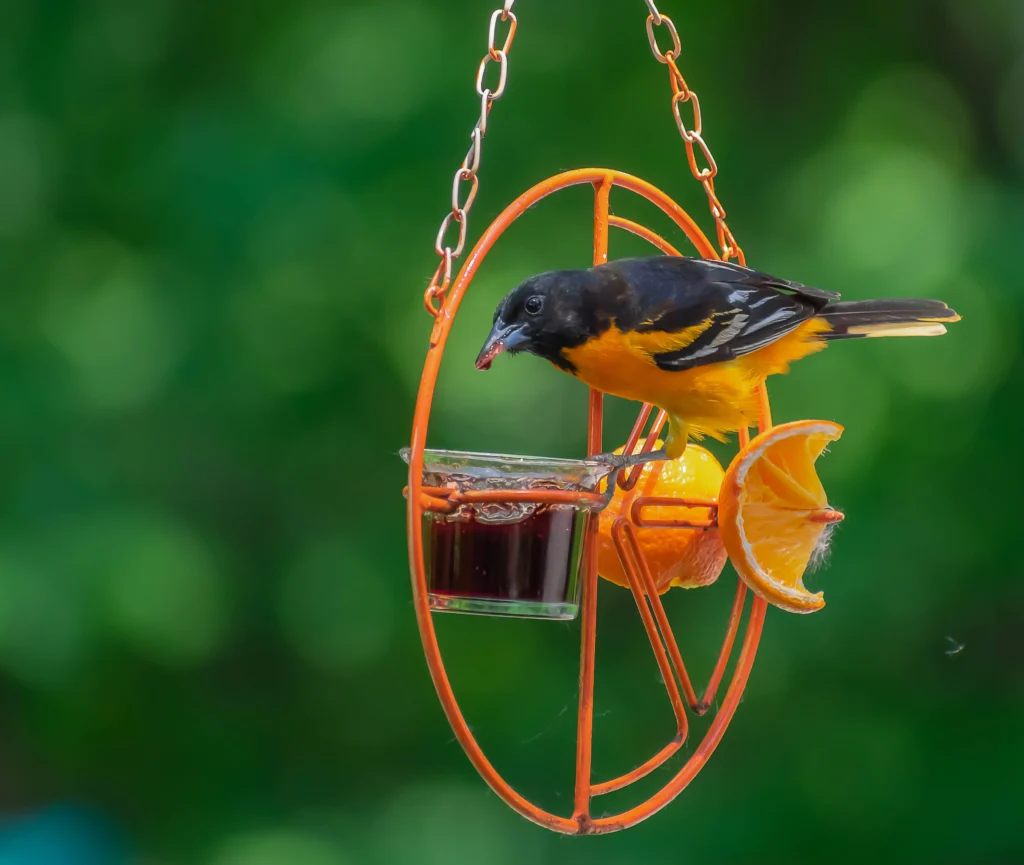
Baltimore Orioles will gorge on insects, but are also fond of fruit; interestingly, they seem to prefer dark-colored fruit such as mulberries and black cherries. They readily visit backyard feeders for oranges, jam, and nectar. On their nonbreeding grounds in the tropics, Baltimore Orioles are known to gather in flocks of up to a dozen birds to drink nectar from flowering trees.

Threats

Although Baltimore Orioles are widespread and common in developed areas, their numbers are declining. This is due to a number of factors, including habitat loss on their breeding and nonbreeding grounds, pesticide use, and collisions with glass windows and communications towers, especially during migration.

Cutting of Tropical Forests

Traditional shade coffee farms in Central and South America are magnets for Baltimore Orioles in their nonbreeding season, providing food and refuge during the tropical dry season. However, the clearing of forests and even the felling of trees on shade coffee plantations in favor of sun-grown coffee threaten this species across the tropics.

Habitat Loss

Pesticides in Trees

The Baltimore Oriole is fairly adaptable and will forage in a range of native and non-native trees, including ornamental plantings and fruit-bearing orchard trees. However, they run into trouble when trees are sprayed with pesticides, especially if these trees are used as nest sites. Pesticides eliminate prey species and may also poison birds directly.

Pesticides & Toxins

Collisions with Communications Towers

Communications towers with steady-burning lights pose a real threat to migratory birds, killing 7 million annually. Although tower collisions threaten all birds — especially when skies are overcast or foggy — they pose a special danger to songbirds migrating at night. Baltimore Orioles are a frequent casualty; dozens of birds may die at a single tower in a single night. Making matters worse, the number of communication towers in the U.S. is expected to continue growing in the coming years.

Conservation Strategies & Projects

The Baltimore Oriole needs our help to overcome the threats it faces. At ABC, we’re inspired by the wonder of birds and driven by our responsibility to find solutions to meet their greatest challenges. With science as our foundation, and with inclusion and partnership at the heart of all we do, we take bold action for birds across the Americas.

Improve Habitat

Baltimore Orioles often winter in the open forest habitat provided by shade-grown coffee and cacao plantations, along with species such as the Wood Thrush and Ruby-throated Hummingbird. As part of its full annual life cycle strategy, ABC works with local landowners and nonprofits in Central and South America to improve important nonbreeding habitat. Our BirdsPlus program helps coffee and cacao growers adopt conservation practices that enhance habitat for birds while supporting local communities.

Forests at Work for People and Birds

Avoid Pesticides & Toxins

ABC works with partners at the state and federal levels in the U.S. to call for the regulation or cancellation of the pesticides and toxins most harmful to birds. We develop innovative programs, like working directly with farmers to use neonicotinoid coating-free seeds, advancing research into pesticides’ toll on birds, and encouraging millions to pass on using harmful pesticides.

Pesticides & Toxins

Making Communications Towers Safer

The simple solution to reducing bird fatalities from communications towers is to use flashing lights. Unlike steady-burning lights, which can attract and disorient birds, flashing lights pose little danger. In fact, their use can reduce nighttime bird fatalities by as much as 70 percent.

Making Communication Towers Safer

Bird Gallery

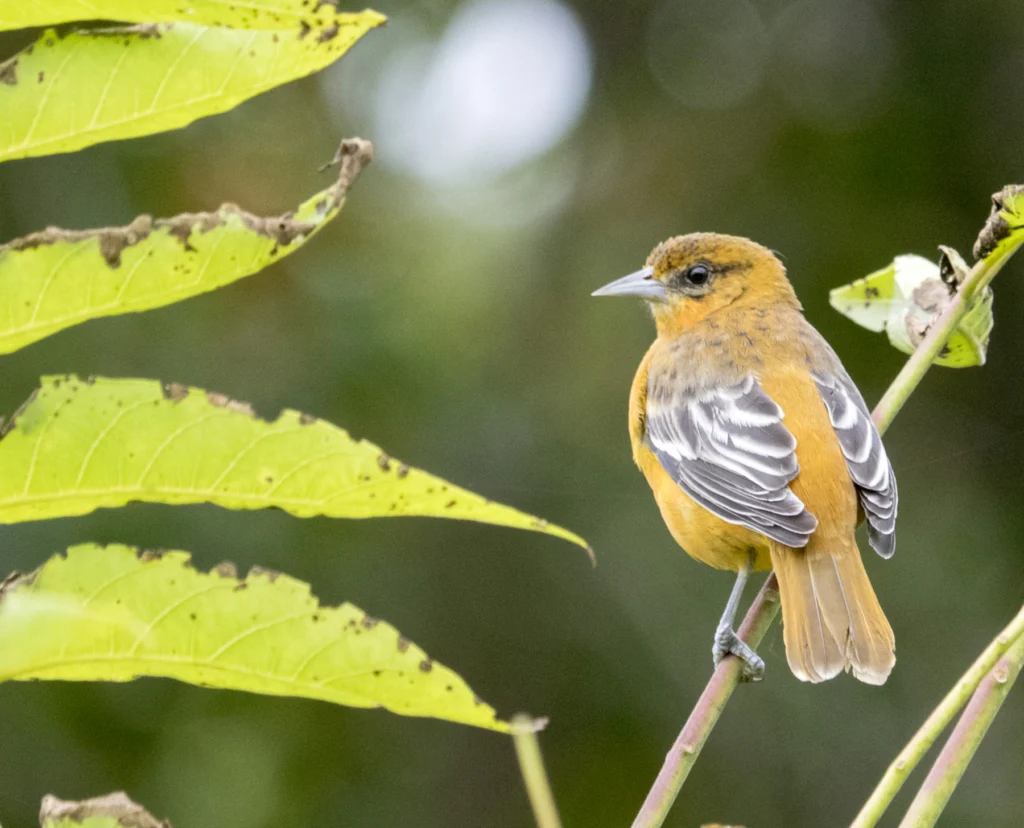
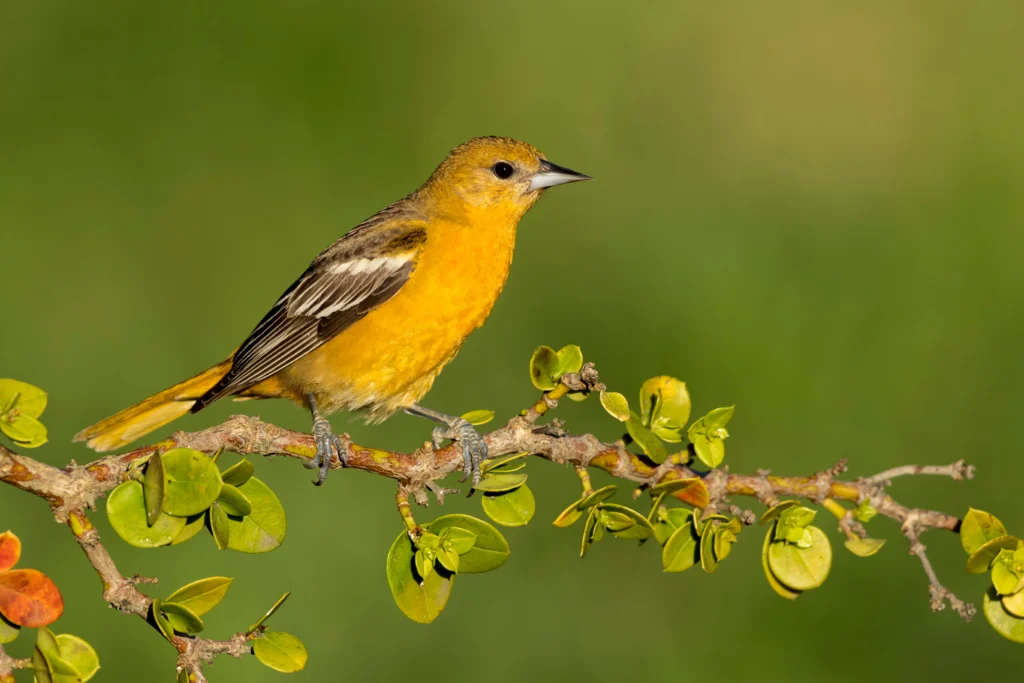
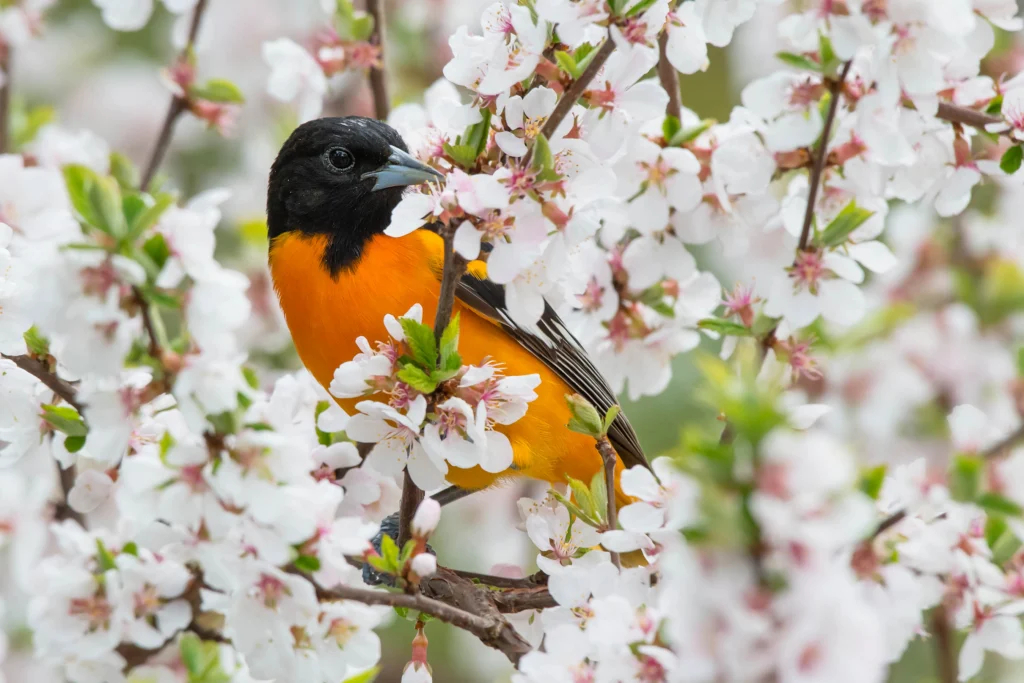
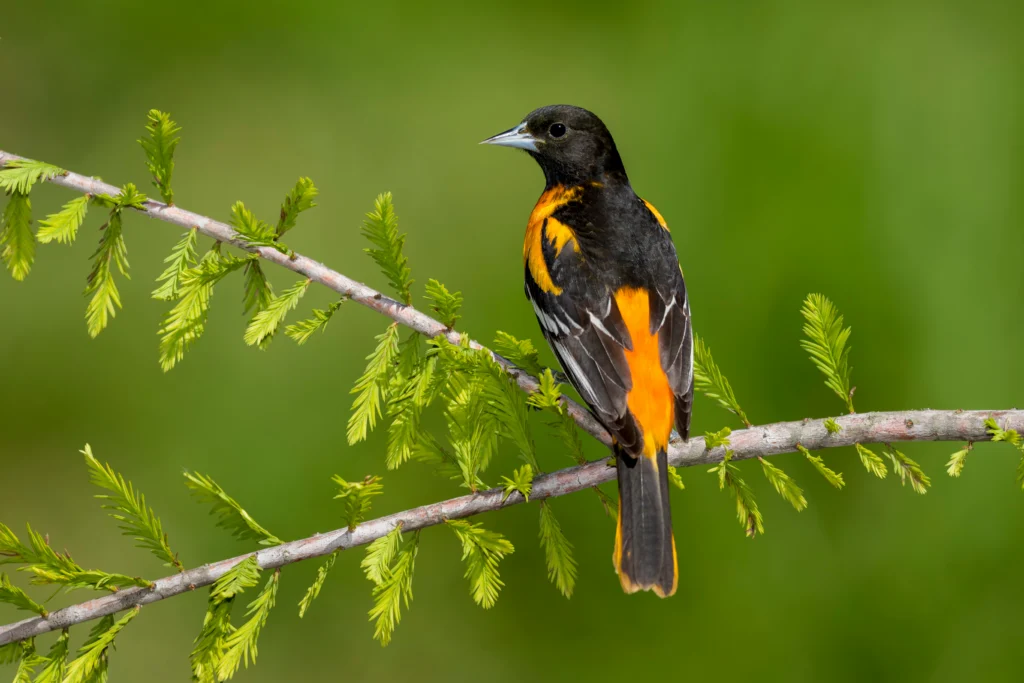
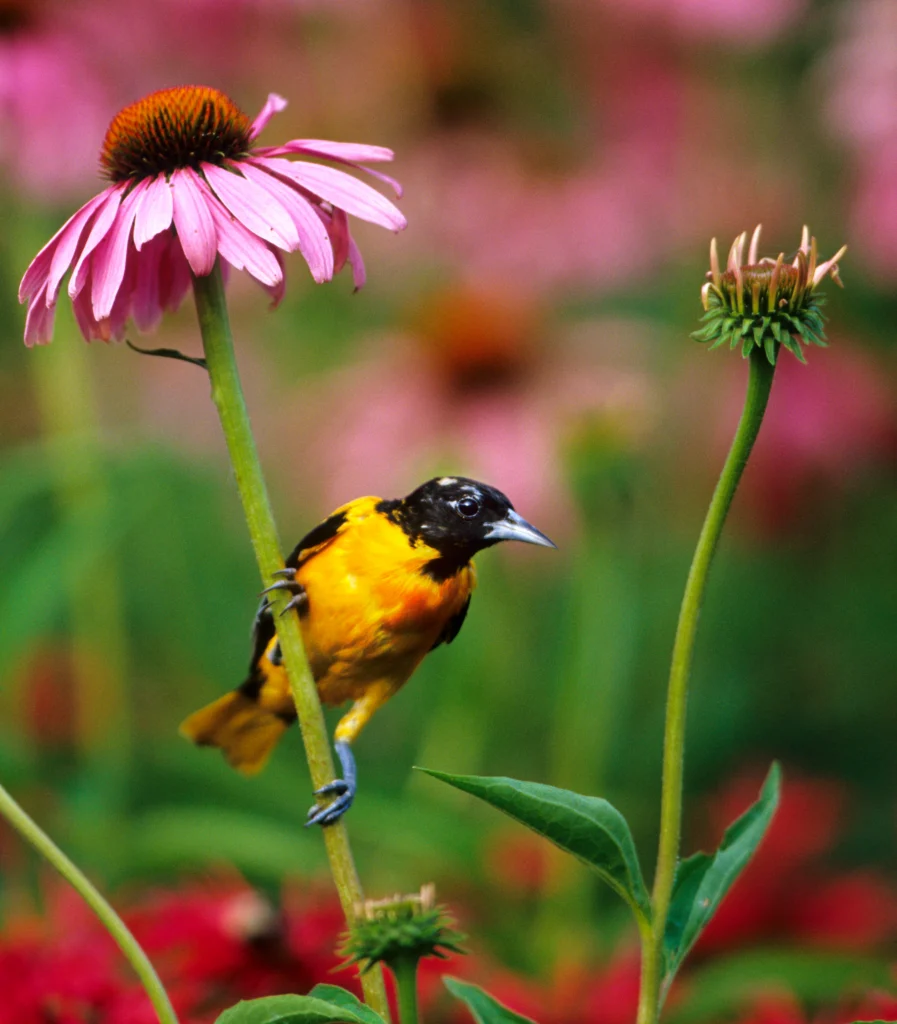
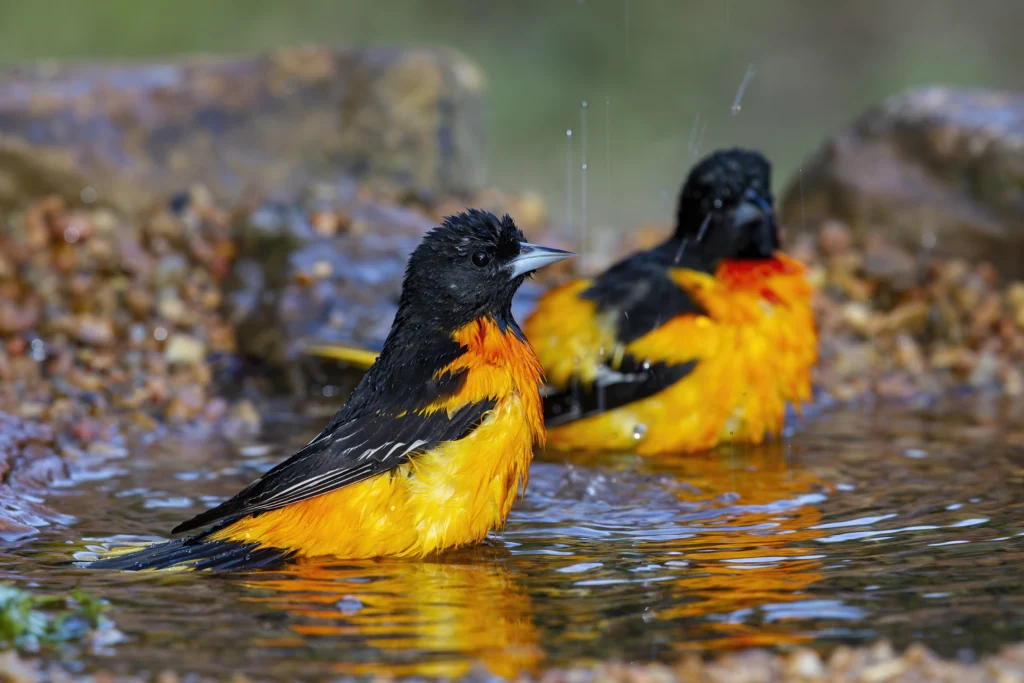
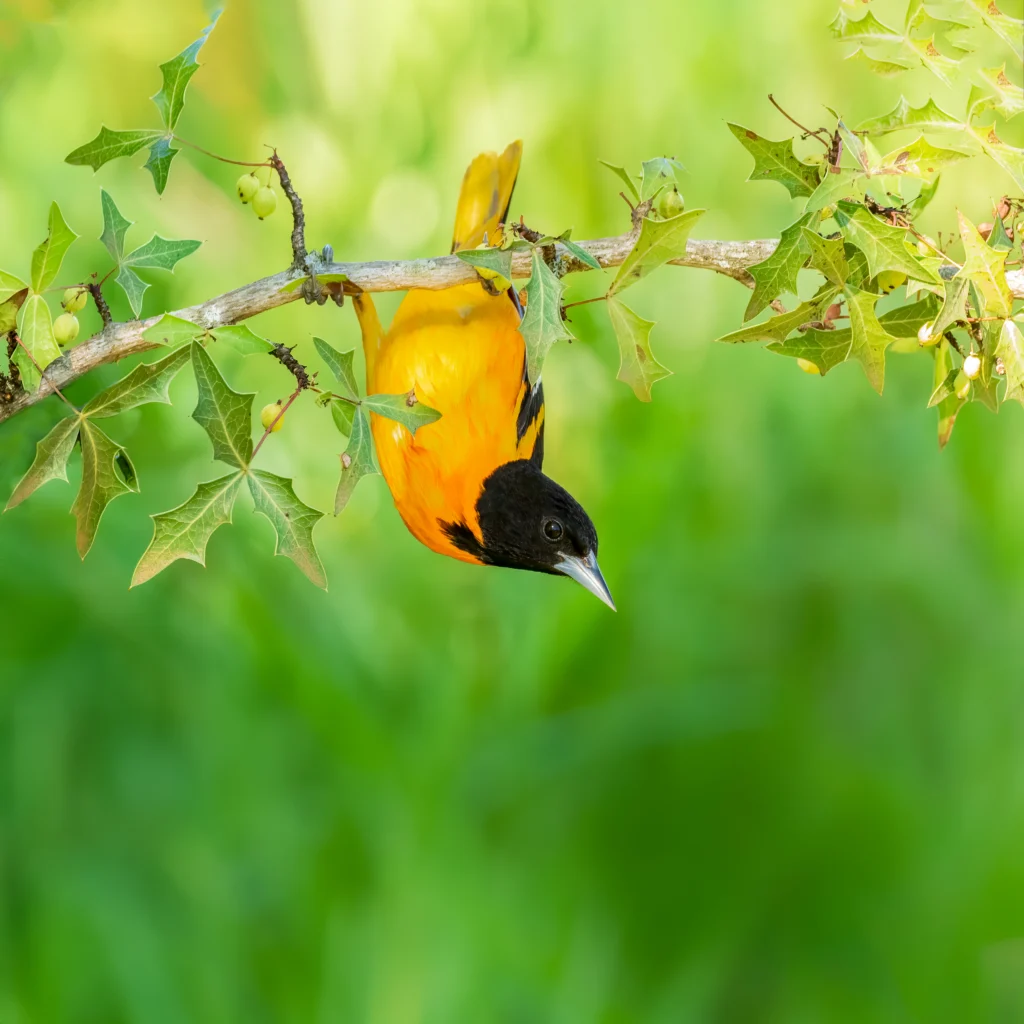
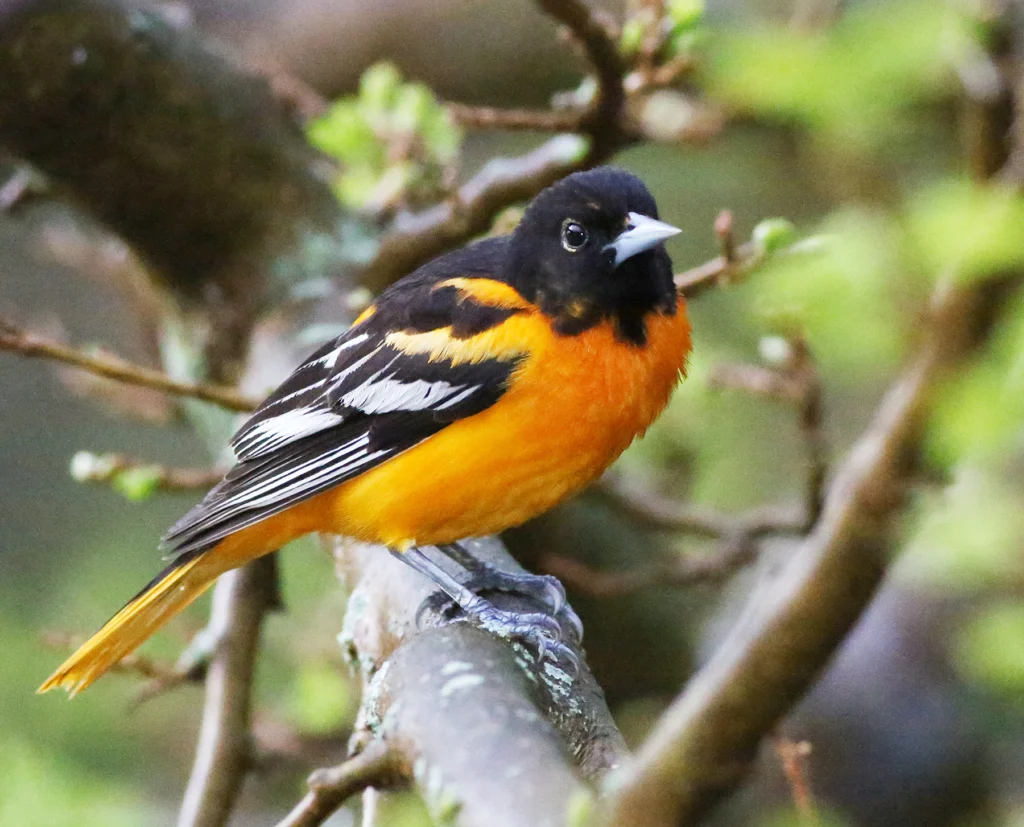
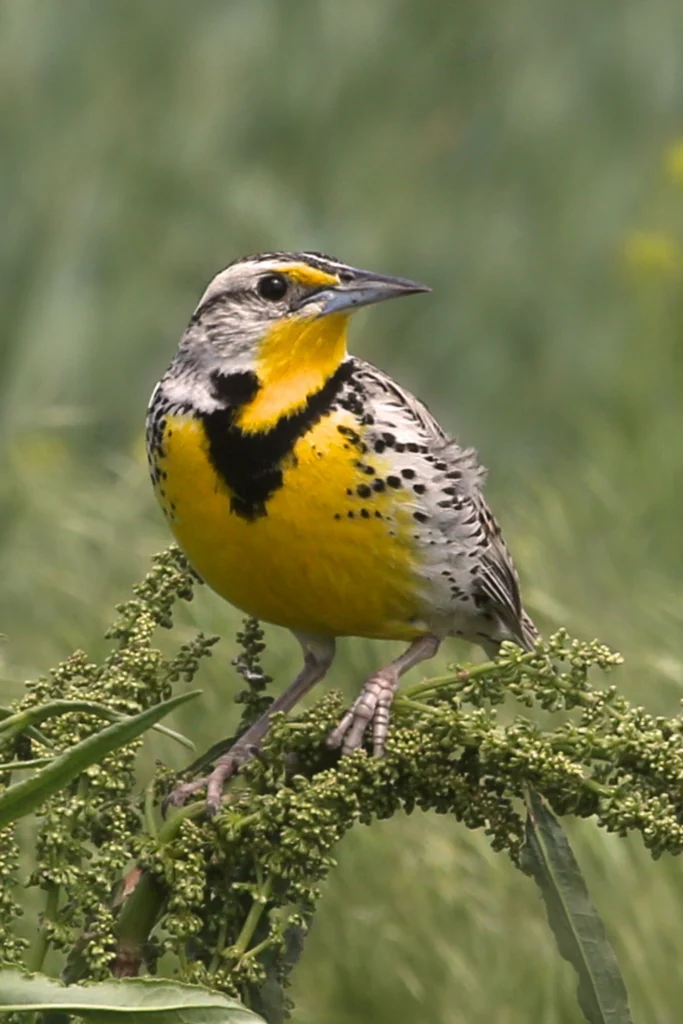
Male and female Baltimore Orioles have strikingly different plumages. Males are mostly a brilliant orange, with a contrasting black head and back. The wings are black with bold white barring, and the tail is black in the center and bright orange on the sides. Females are more variable, with the head, tail, and underparts ranging from orange to pale yellow, and the back from gray to dark brown. The wings of the female are similar to the male’s, but are typically a shade of brown rather than black. Both sexes also have the large, sharp beak characteristic of other species in their family, which includes blackbirds, troupials, and meadowlarks.

Sounds

Each spring, newly arriving male orioles sing constantly from treetop perches to advertise their territory and attract a mate. Their distinctive song, a rich, variable series of musical whistles, is often the first clue to their presence. Female Baltimore Orioles also sing, typically a shorter song with fewer notes. Like other orioles, meadowlarks, and relatives, both male and female Baltimore Orioles also give a chatter call, an extended sequence of rapidly repeated sharp percussive notes. Chatter calls are often used in antagonistic interactions with neighbors or predators, but also sometimes in interactions with mates and young.

Song

Credit: Manuel Oudard, XC839510. Accessible at https://xeno-canto.org/839510.

Chatter Call

Credit: Richard E. Webster, XC820114. Accessible at https://xeno-canto.org/820114.

Habitat

The Baltimore Oriole breeds in open woods and riparian areas. In the fall, these birds migrate south to spend the nonbreeding season in open forests and forest edges, gardens, and plantations.

  • In the breeding season, strong preference for deciduous trees
  • Uses shade-grown coffee and cacao operations in the nonbreeding season

Range & Region

Range & Region


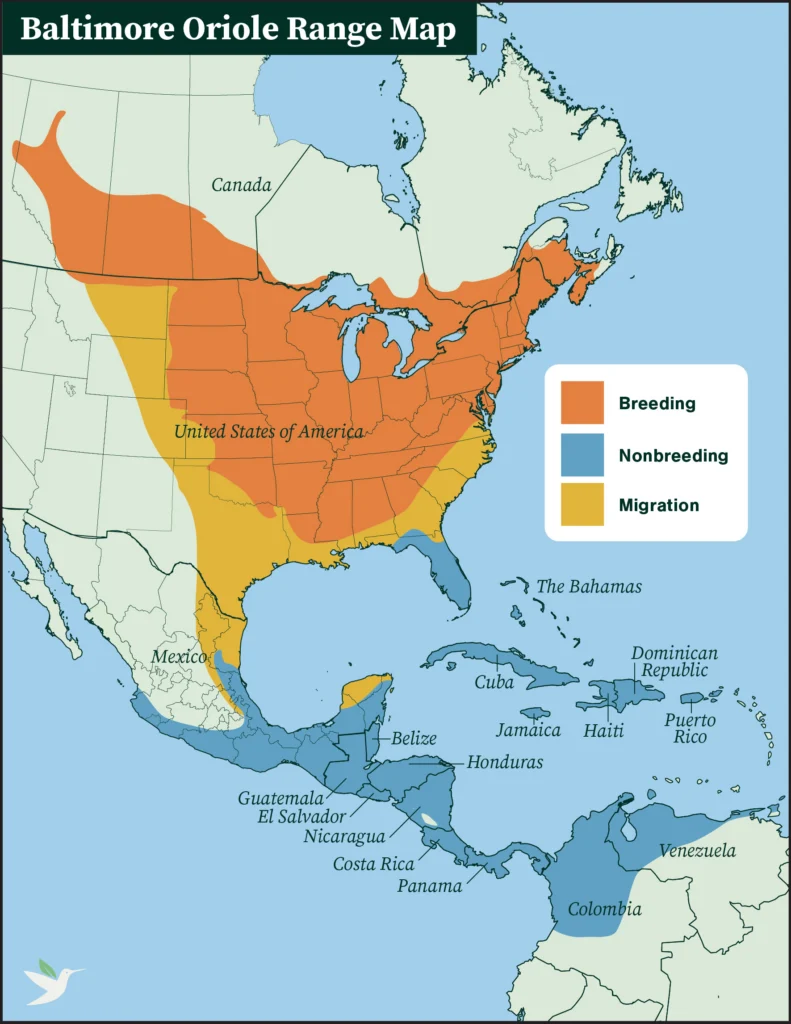
Baltimore oriole range map.

Specific Area
Eastern United States and Canada; Mexico and Central America; the Caribbean; northwestern South America

Range Detail
The Baltimore Oriole breeds throughout much of the eastern and central U.S. and central and southeastern Canada. At the end of the breeding season, birds migrate to Florida, the Caribbean, southern Mexico, Central America, and northern Colombia and Venezuela.

Did you know?
The Baltimore Oriole and the more western-ranging Bullock’s Oriole were once considered the same species, known as the Northern Oriole, because the two hybridize where their ranges meet in the Midwest. However, subsequent DNA studies showed that they are two separate species (not even each other’s closest relatives), so the American Ornithologists’ Union split them in 1995.

Range
Caribbean
North America
South America
Migration Pattern
Latitudinal
Migration Distance
Long Distance

Life History

The Baltimore Oriole, like other orioles and flycatchers such as the Western Kingbird, is feisty and pugnacious. Not only are they highly territorial against neighboring orioles, but these birds will boldly defend against much larger predators as well, including large hawks. Agile and powerful with a relatively large and extremely sharp bill, these aggressive beauties are not to be trifled with. However, they do show a softer side on their nonbreeding grounds, roosting communally with other Baltimore Orioles, as well as unrelated species such as finches and kingbirds.

Diet

During the breeding season, Baltimore Orioles feed voraciously on caterpillars — even hairy ones that other birds avoid — along with other insects and spiders. They forage while moving through the treetops, gleaning prey from leaves and branches, and even stealing insects out of spider webs. These crafty birds are also known to steal fruits such as peas and tomatoes from gardens and crops. In the nonbreeding season, especially, Baltimore Orioles will also go after the fruit and nectar of large tropical trees.

Courtship

When a female enters a male’s territory, he will court her by singing or giving chatter calls and hopping around in front of her. Males also give a bow display where they stretch upright, with the wings lowered and partly opened and the spread tail held upwards at an angle, and then bow deeply several times in succession. In response, females sometimes sing, give the chatter call, or perform a wing quiver display. This involves leaning forward, cocking her tail upward, drawing her head back, fluttering her wings, and giving calls similar to those of nestlings. This display indicates that she is ready to mate.

Nesting

Once mated, the female selects a nest site in the male’s territory and begins to build her pendulous, purse-like nest at the end of a branch. First, she builds an outer support structure of plant material, animal hair (especially horsehair), or human-made fibers such as string. She then weaves flexible fibers, such as grapevine or Spanish moss, into an inner bowl. Finally, she lines the nest with downy materials such as milkweed seed plumes and feathers.

Eggs & Young

Once she lays her clutch of three to seven eggs, the female oriole does all the incubation and brooding. However, a male will feed his mate while she is on the nest. When the young hatch, each parent spends about the same amount of time feeding them. Baltimore Orioles only raise one clutch per season. Young develop quickly and birds begin to migrate quite early, often leaving their territories as early as July.