Working the Land to Work for Birds
In the most recent iteration of the Farm Bill, about $20 billion was dedicated to conservation efforts. That makes the Farm Bill the single biggest piece of conservation legislation in the world.
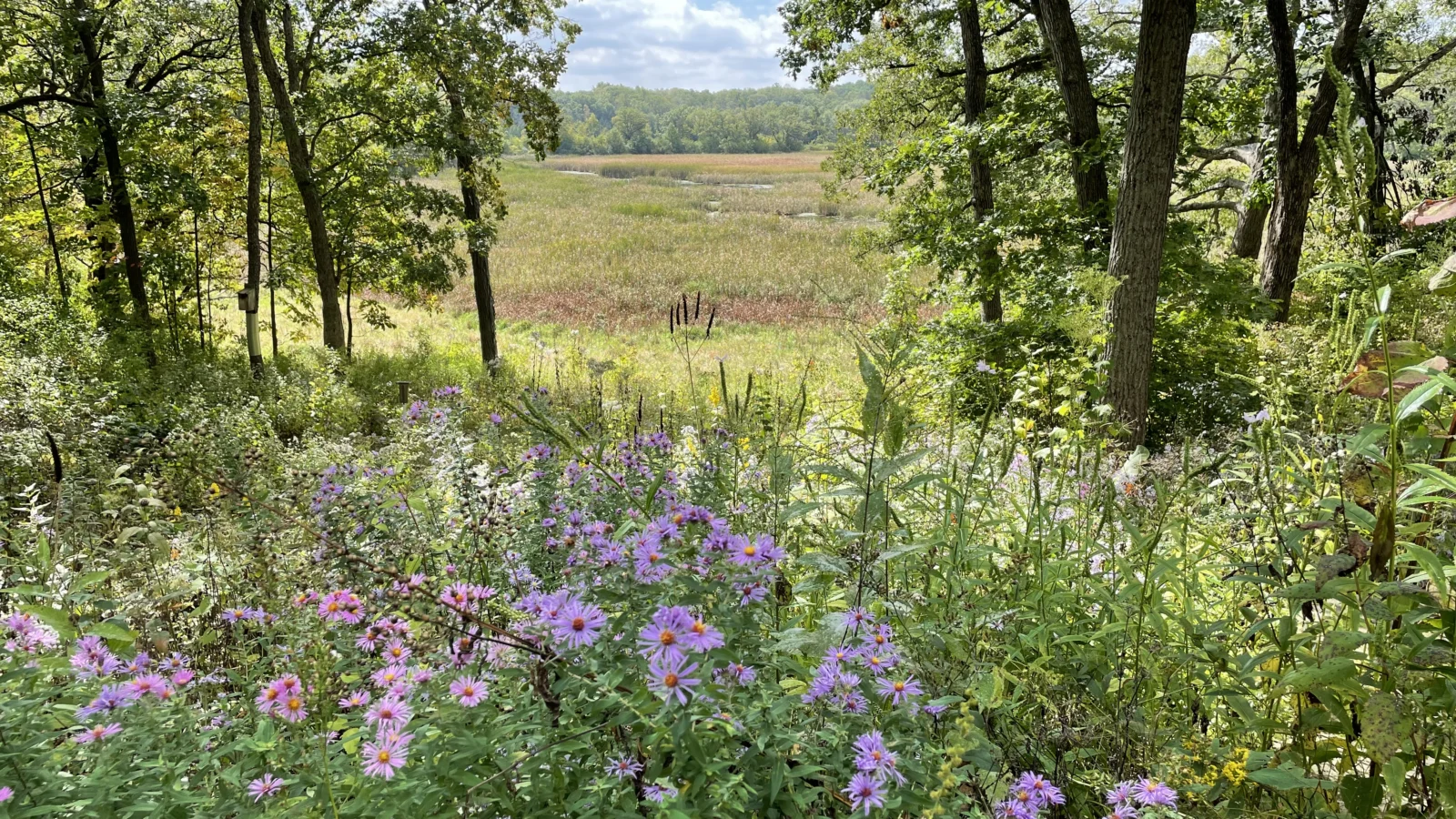
Landowners Who Enhance Their Properties for Birds and Other Wildlife Explain What Drives Them
Public lands cover nearly 40 percent of the United States, and these roughly 830 million acres are essential for birds. On their own, however, they’re not enough to maintain healthy avian populations — especially east of the Rockies, where national parks, forests, and the like are in much shorter supply than out west.
That’s where private lands come in. Working in concert with a diverse array of partners that includes American Bird Conservancy, many landowners nationwide are turning their properties into de facto wildlife sanctuaries. One such property here or there might not make much difference on an ecosystem-wide scale. But taken together, the hope is that they’ll help stem the huge bird declines seen in recent decades, including an estimated loss of more than 1 billion breeding birds from North American forests (and nearly 3 billion in total) since 1970.
“Private landowners have really risen to the call,” said Austin Klais, an ABC Partnership Coordinator with the Lower Mississippi Valley Joint Venture who manages habitat restoration projects in Louisiana, Arkansas, Texas, and Oklahoma. Though the landowners he works with all have different goals and motivations, he said, most care about their legacy and “leaving the land better than how they found it.”
Often, private lands habitat projects involve putting in trees and shrubs. (ABC alone has supported the planting of more than 8 million trees across the Western Hemisphere, from Michigan to Peru.) Just as often, however, and perhaps surprisingly to those new to forest management, these successful habitat projects involve removing trees — selectively. They also sometimes involve other practices that might seem counterintuitive but which can be necessary in certain situations, such as applying herbicides where invasive plants are especially abundant, using prescribed fire to restore ecosystem health, and even hunting. Without hunting, for instance, deer would overwhelm forests and other habitats and cause significant problems for wildlife and native plants in areas where their natural predators have been extirpated.
Fire, meanwhile, was used by Indigenous peoples for millennia to manage land for crops and game. It was then suppressed during the Smokey Bear era, only for researchers to eventually realize how much ecosystems depend on it. Among other things, prescribed burns control invasive plants, reduce tick populations, aid pollinators, and prevent excessive leaf litter and downed branches from piling up. Plus, some plant species are adapted specifically to fire and can’t germinate without it.
Some landowners are intimidated by the idea of fire on their properties. Or they falsely believe all fires to be damaging, perhaps envisioning the scene from Bambi or the climate change-fueled megafires that have increasingly swept through California and other western states. Prescribed burns are nothing like that. “My six-year-old grandson can step over the fire line,” said David Ray, an Indiana landowner, who adds that his neighbors, coworkers, customers, friends, and relatives help out with prescribed burns, turning them into a kind of community event.
U.S. forest birds face many threats, from cats to windows to habitat fragmentation. Fortunately, especially in the East, a lack of trees on their breeding grounds is not usually one of them. Unfortunately, they can’t always find the right trees. “We have a lot of middle-aged forest that’s between 30 and 100 years old,” said Michael Paling, a Michigan-based ABC Forester. “We have very little young forest and very little old-growth forest.” Because so many natural processes have been interrupted by human activity, including fire suppression in fire-adapted ecosystems and introduction of non-native species, many modern-day forests require management to provide suitable habitat for birds ranging from Golden-winged Warblers to Red-headed Woodpeckers.
Farm Bill-funded federal programs, which generally receive bipartisan support, and other income streams are available to encourage landowners to enhance their properties for wildlife. In Arkansas and Louisiana, conservation nonprofits, timber companies, utilities, universities, and state and federal agencies have teamed up to restore thousands of acres of open pine woodlands for such species as Northern Bobwhite, Wild Turkey, Brown-headed Nuthatch, and Bachman’s Sparrow. Similar coalitions have formed elsewhere. “It takes everybody working together to make it happen,” Klais said.
But although outside support certainly helps, restoration-minded landowners still tend to invest significant personal funds and put in countless hours of manual labor. “The work never ends,” said Barb Carstens, a Wisconsin landowner. “Once you get into it, it’s hard to let it go. It’s like an addiction.” She observed that she can hardly walk past an invasive plant without pulling it. But she’s buoyed by the amazing wildlife she sees, as well as by the support and interest of her neighbors. “It’s heartwarming to at least not feel like you’re in this battle alone,” Carstens said.
Here are seven private properties, all east of the Rockies, with owners who have worked directly or indirectly with ABC to make their woodlands bird friendly. (Though this article focuses on forests, similar projects are in place for grasslands and wetlands in places across the U.S.)
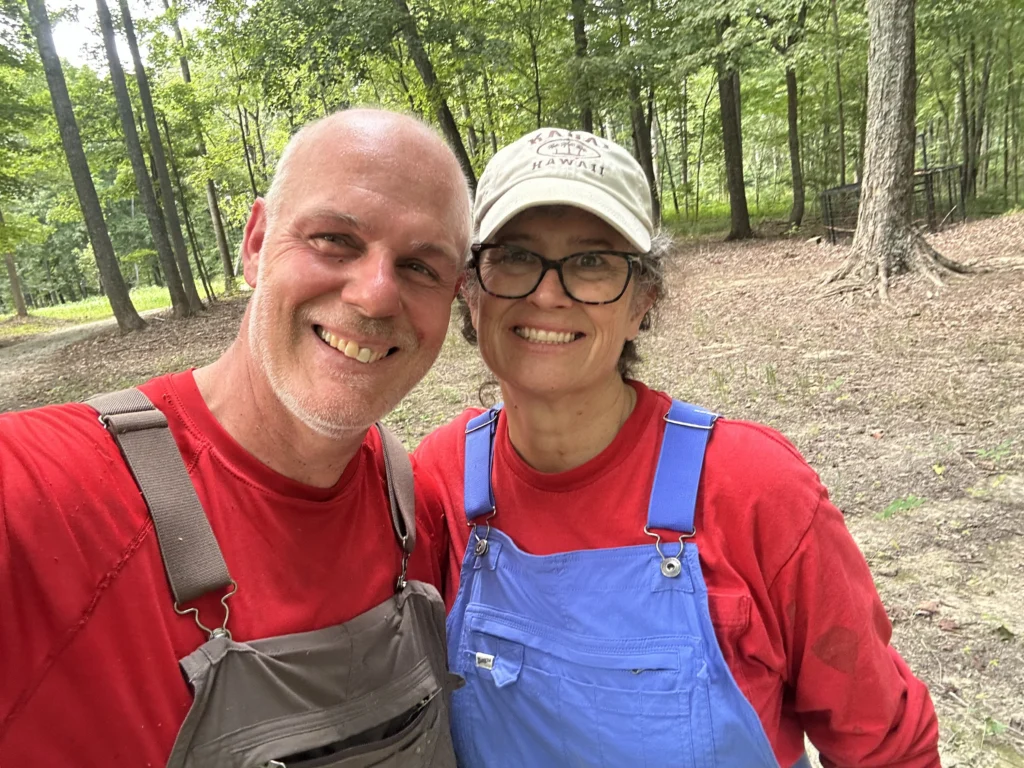
U.S. forests have plenty of mature oak trees. But decades of fire exclusion and overabundant deer populations have led to forests that lack young oaks. “Oaks need sunlight to grow,” said Kyle Brazil, Director of the Central Hardwoods Joint Venture (CHJV) at ABC. “Lacking fire to keep shade-loving trees such as beech and maples in check, sufficient sunlight can’t reach the forest floor to grow young oaks. Additionally, herbaceous plant and insect biodiversity suffer when sunlight is restricted.” Brazil added that when we lose oaks and biodiverse herbaceous plant communities, we also lose once-common songbirds.
David Ray has dedicated much of his life to nurturing oaks. The keystone trees, he said, host hundreds of species of caterpillars, perfect nourishment for nestling birds. Ray and his wife, Mary, purchased their 310-acre plot in southern Indiana in 1995 after seeing a newspaper ad for it the day after their daughter’s birth. It was a “little crazy,” Ray acknowledged. “But we are so thankful we did.”
Ray and his family spent much time there hunting the abundant deer and turkey, picking berries and mushrooms, and producing maple syrup. As the years passed, he also became more interested in how forests and birds were declining and how to be a good steward of the land. So, with the help of Farm Bill-funded grants, he got to work removing invasives, like tree of heaven (Ailanthus altissima) and Japanese stiltgrass, and promoting oaks, hickories, and other plant species with value to wildlife.
In addition to selective logging, always done outside of nesting season, Ray initiates prescribed burns, and he plants wildflowers and an assortment of berry- and seed-producing greenery. “Dave is kind of the Superman of forest management for wildlife,” said Jeff Powelson, CHJV Conservation Delivery Coordinator at ABC.
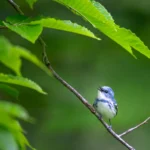
The work has paid off in droves. On Ray’s once partly degraded property, he has now recorded 28 warbler species, seven woodpeckers, four vireos, and three owls, along with what he calls a “crazy number of whip-poor-wills.” A visiting friend once remarked to him, “I haven’t heard those since I was a kid.” Yet Ray still hopes to attract even more birds. “The Cerulean Warbler,” he said, “is kind of my white whale.”
Twenty years ago, long-time ABC supporters Barb Carstens and Jim Marrari bought a 5-acre tract near the headwaters of the Mukwonago River southwest of Milwaukee, Wisconsin. Bordering a pair of preserves owned by The Nature Conservancy, they quickly found that the birding was excellent, a particular boon for Marrari, who served as his county’s coordinator for Wisconsin’s most recent Breeding Bird Atlas.
Nonetheless, upon obtaining aerial photos from the 1940s, the couple realized just how much the landscape had shifted over the decades from open oak savanna to dense understory. In what turned out to be a much bigger job than anticipated, they went to war against the buckthorn, non-native honeysuckle, Asian bittersweet, garlic mustard, and other tenacious invasive plants that had made inroads, fighting them with everything from prescribed burns to carefully applied herbicides (and receiving a small amount of state and federal funding to do so).
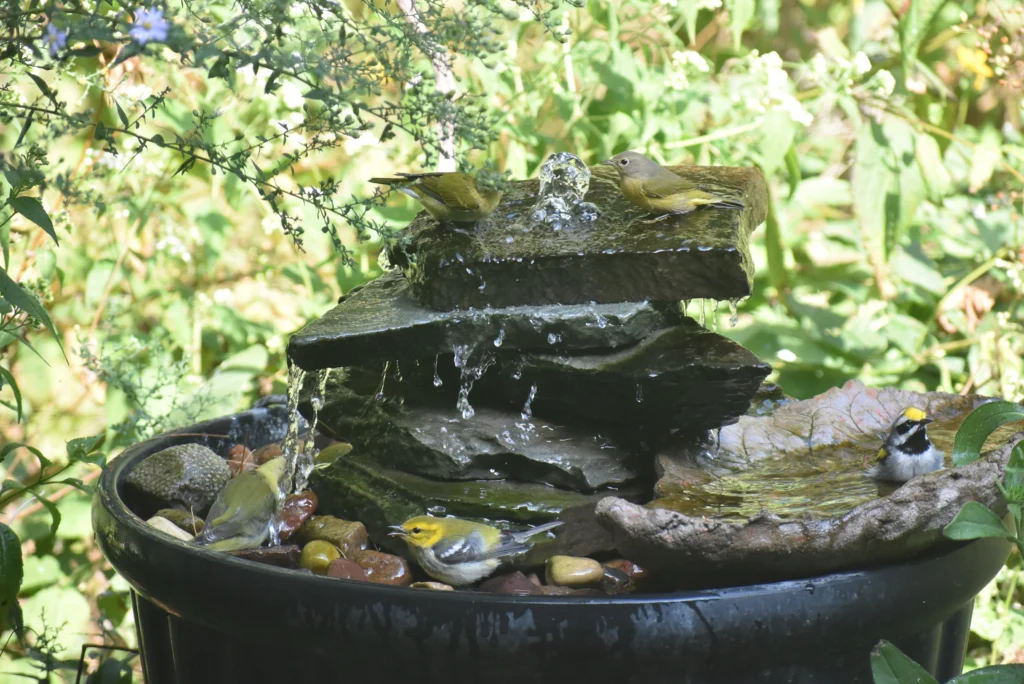
They also collected native seeds and scattered them, installed a wildlife trail camera, and hosted bird-related educational tours. “Jim and Barb are shining examples of awesome landowners that are totally bought in,” said Tommy Gunn, an ABC Forester who provides technical assistance to landowners in southeastern Wisconsin and northeastern Illinois. He pointed out that his region has lost upwards of 80 percent of its historically oak-covered lands.
So far, Carstens and Marrari have recorded 170 bird species on their property, including Sandhill Cranes with colts, nesting Great Horned Owls, Hooded Mergansers, and Wood Ducks, and an array of nesting and migrating songbirds. Tennessee Warblers, in particular, flock to their water feature when passing through in fall; the bubbling water also lures Golden-winged, Nashville, and Black-throated Green Warblers. Ideally, Marrari said, they’ll eventually attract a nesting pair of Red-headed Woodpeckers, a poster child (and ABC priority species) for oak ecosystems.
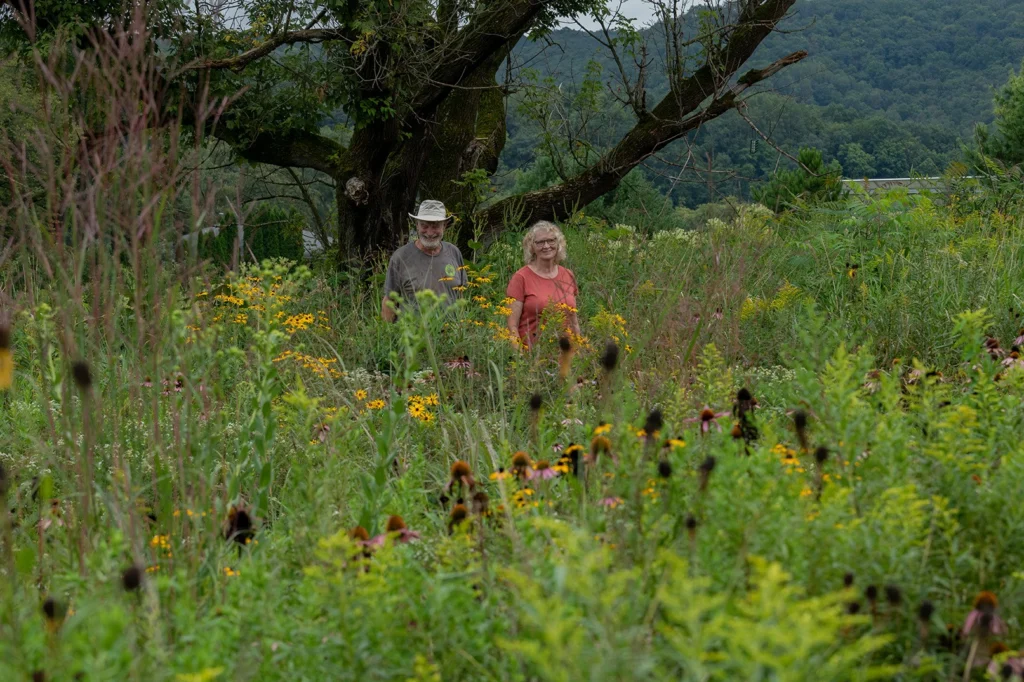
Ever since Tom Lukens purchased 87 acres in 2003 on the West Fork of the Kickapoo River in western Wisconsin, he has labored on behalf of both wildlife and wildlife watchers. Initially, he converted what was once organically farmed corn and soybean fields into native prairie. He’s also improved streamside habitat, created wetlands, planted hundreds of oaks and native shrubs, and installed turtle basking logs and a snake hibernaculum (essentially a big pit filled with rocks and wrapped in weed cloth).
When an Indigo Bunting smacked into one of his windows, he affixed collision-deterrent tape and hanging cords to prevent future collisions. He’s had bat surveys done. And he selects many of his plantings based on their usefulness to Neotropical migratory birds and butterflies. “I need to have a goal, something to keep me on the straight and narrow,” said Lukens, who co-manages the property with his partner, Pam Saunders. “Anything that feeds the diversity and supports the most, that’s what I’ve tried to do.”
Lukens estimated that he’s spent $100,000 on habitat work, about half of which was covered by federal grants. He and Saunders also rent out cabins to the public. Guests of their Nature Nooks Retreat can birdwatch, hike, fish (catch-and-release only), play yard games such as croquet, and cruise the river on tubes and kayaks. To protect the wildlife, no pets are allowed. Lukens especially enjoys exposing visiting children to nature. “It’s fun to share what you love,” he said, “and what you love is enhanced by sharing it.”
The property, which is 100 percent solar powered, has been placed into a conservation easement with a local land trust. “That just makes sure my efforts here can’t get destroyed when I kick the bucket,” Lukens said.
Nonprofit landowners also work to restore woodlands, including at Michigan Audubon’s Phyllis Haehnle Memorial Sanctuary west of Ann Arbor. Totaling more than 1,000 acres, the mostly marsh-covered sanctuary is a well-known spot for viewing Sandhill Cranes. But the site also contains 14 acres of oak savanna that, with the help of ABC and a state grant program, Michigan Audubon is trying to nurse back to health.
So far, the restoration has involved eliminating such invasives as non-native honeysuckle, black locust, and Asian bittersweet, the latter of which Chad Machinski, Conservation Manager at Michigan Audubon, called a “real nightmare to deal with.” Some excess native trees, like black cherries, are also being felled or left as snags to create a more open forest intended to benefit Red-headed Woodpecker, Blue-winged and Golden-winged Warblers, Eastern Whip-poor-will, and American Woodcock. “It always feels a little like sacrilege to take out some of those native things that maybe on another site you’d be trying to promote,” Machinski said. But it can be an important part of the plan when you’re managing for specific habitats.
This spring, Michigan Audubon plans to administer prescribed burns on 8 of the 14 acres and then sow native seeds. Bird-wise, Machinski isn’t sure what to expect from the restored forest, noting that it’s a relatively small area adjacent to a road. Last June, in an auspicious sign, he came across a singing Cerulean Warbler, the first ever recorded at the sanctuary. “It’s going to be a while before I feel truly satisfied about the site, [but] we’re certainly on the right track,” he said.
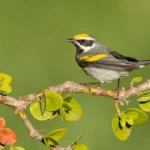
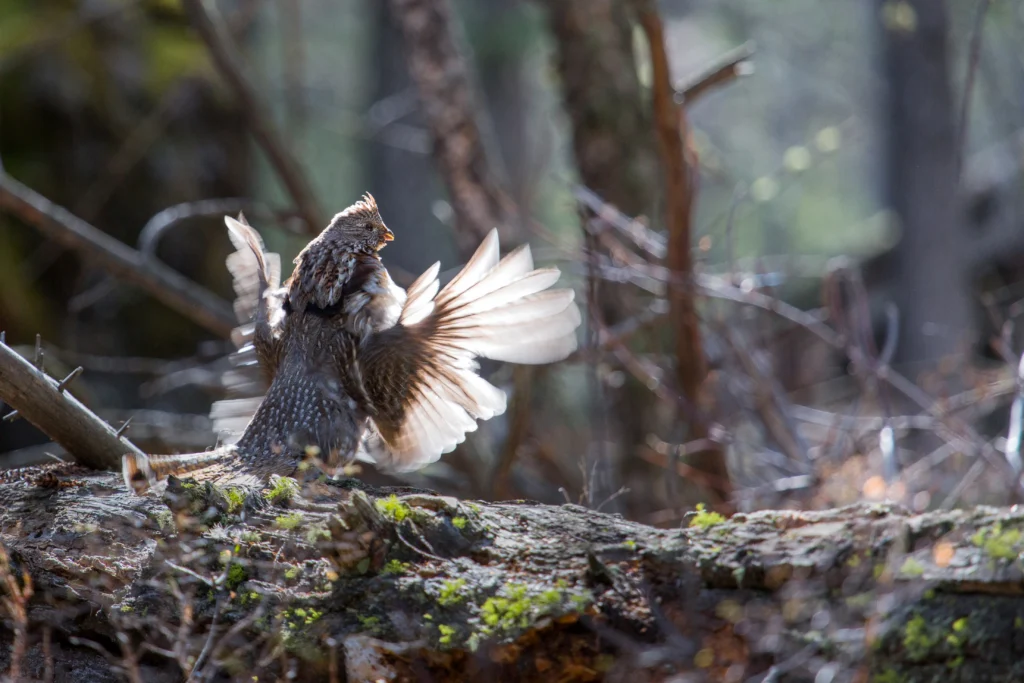
In other areas farther north in Michigan, landowners have less pressure from invasive species and are able to focus on improving habitat in other ways. Around 2022, the year after purchasing 560 acres near where Lakes Superior, Huron, and Michigan converge, Sue Garrett and her husband, Dale, began working with ABC to make their property more wildlife friendly. This has required letting more sunshine reach the forest floor in evenly aged, mature forest that’s lacking in diversity. They contracted loggers to cut down some stands of mature aspens, with the idea that new aspen shoots would pop up and attract Ruffed Grouse (and Golden-winged Warblers, which, as ABC’s Michael Paling notes, need clumps of grass, brush, and a “dynamic forest system of various age classes”). The Garretts also mowed down thick stands of tag alder and planted hazelnuts, apple trees, serviceberries, raspberries, and other wildlife-attracting delicacies.
These days, Sue Garrett said she regularly sees and hears goshawks, turkeys, grouse, grosbeaks, and owls, not to mention bears and wolves. Once, a Scissor-tailed Flycatcher showed up, which brought in birders from far and wide. “It’s just a great place to be,” Sue said, adding that she’s learned a lot from the habitat enhancements. “It’s kept us busy, and our property is better for it.”
After a bout with cancer in the mid-2000s, Jerry Havel decided, “the hell with it, let’s start a hunting lodge” on a family-owned parcel in northern Minnesota. From 2007 to 2017, he and his wife, Brenda, then conducted three timber harvests of aspen and other hardwoods. Havel’s main goal with what they eventually named Pineridge Grouse Camp was to attract American Woodcocks and Ruffed Grouse; to do so, he needed the young forest that’s necessary for those birds. But what’s good for woodcocks and grouse is also good for Golden-winged Warblers, which along with the woodcock and other birds of young forests, have experienced steep population declines. When scientists surveyed Havel’s property after the second timber harvest, they detected Golden-wings everywhere they checked — 10 individual birds in total.
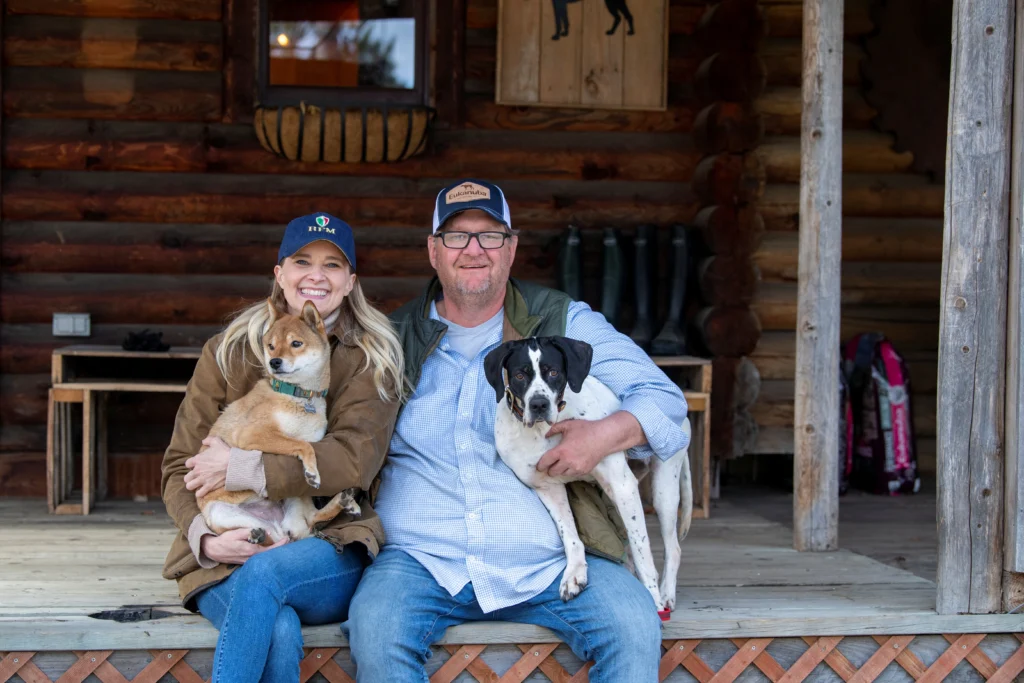
In addition to his restoration work, Havel hosts habitat workshops and woodcock banding clinics. Researchers regularly trek out to, say, survey for Pileated Woodpeckers or put transmitters on Wood Ducks. Havel called his 160-acre property a hub for “bird nerds, for lack of a better word, to hang out and do bird research.” He also trains pointing dogs and educates visiting hunters — no shooting of woodcocks or grouse allowed onsite — on how to be better environmental stewards. “It’s a place where we can really teach people the right way to do things,” Havel said, adding that “birders sometimes forget that the hunters are the number-one conservationists [in terms of who] supplies the most money.” In fact, hunting licenses, federal Duck Stamp sales, and taxes on hunting equipment have raised billions of dollars for federal and state conservation agencies since the 1930s. Havel said that though birders and hunters come from “two different worlds,” they essentially have the “same goal.” His lodge, he added, provides a rare “avenue for the two groups to talk.”
As a kid, Miles Goggans was thrilled when his grandfather took him hunting on a patch of southern Arkansas land that had been in his family since before the Civil War. At the time, Northern Bobwhite were common there. But around 1980, the bobwhites completely disappeared, likely the result, Goggans believes, of misapplied herbicides and a prolonged drought. It didn’t help that bobwhite populations were crashing everywhere across their southeastern range.
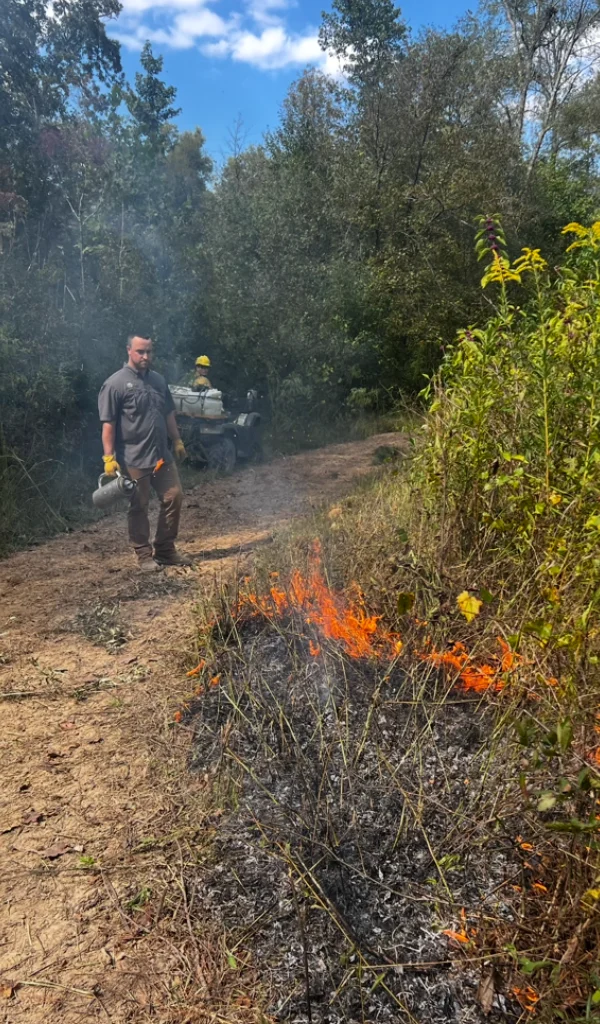
Goggans, now a trustee of the property along with his sister and nephew, wondered if he could lure bobwhites back despite their decades-long absence. Since 2017, he has linked up with nonprofits and secured state and federal funding to create the kind of habitat bobwhite require. That has meant they do prescribed burns, thin out trees, take out row crops, and plant pollinator patches, shrubs, saplings, and wildlife “food plots” — providing the mix of open woodlands and food sources that attract the birds. He’s also hosted tours for university students and policymakers alike. Klais at ABC credited Goggans for doing “something different from what other people were doing at the time. There were some really great examples [of open pine management] on public lands, but not many on private lands.”
The magic moment finally occurred in 2020, over Memorial Day weekend, when Goggans was with his brother-in-law. “Sure enough, out of the blue, we heard quail whistling out in those pine trees,” Goggans recalled. “I was beside myself. It was like a dream. It was just so exciting.” Since then, he has continued seeing and hearing bobwhites on his 510 acres, as have wildlife biologists who have come out to survey for them.
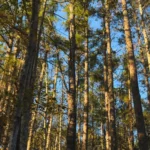
Goggans has no plans to quit now. In the near term, he wants to build a pond, do a little more logging to create more open space, sow wildflowers, and plant shortleaf pines on elevated sections of the property (which has mostly loblolly pines). He said landowners who don’t practice active forest management are missing out. “For me,” Goggans said, “it’s really cool how it connects the past, present, and future.”
Jesse Greenspan is a freelance journalist based in the San Francisco Bay area who writes about history, science, and the environment.
This article first appeared in the Spring 2026 issue of Bird Conservation, the member magazine of American Bird Conservancy. ABC is grateful for state and local governments and other nongovernmental organizations that enable us to utilize Farm Bill funding that supports private landowners.
Featured News & Stories