Greater Sage-Grouse need large tracts of sagebrush steppe of the western U.S. and Canada, but that habitat is being fragmented and disappearing.

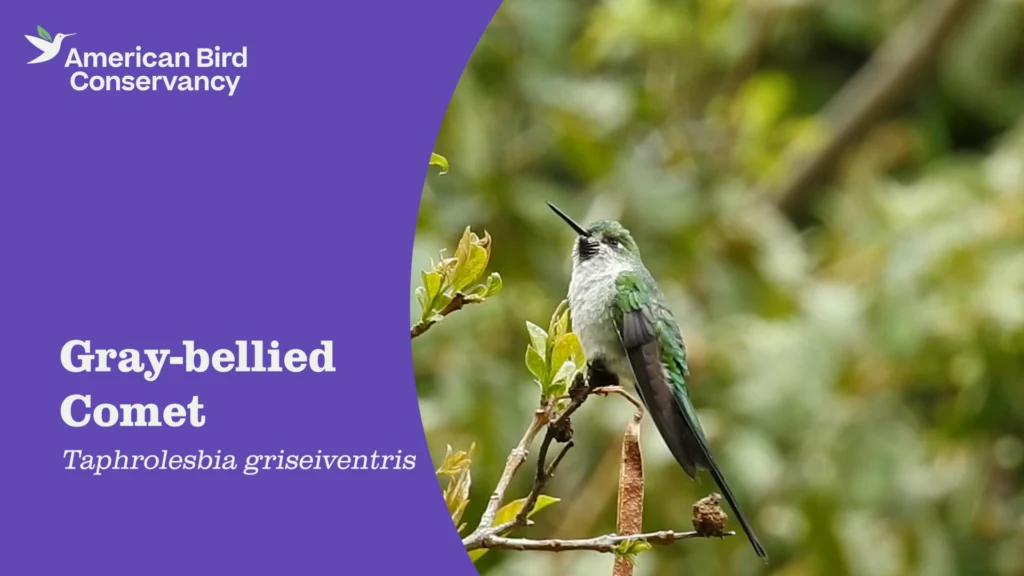
Gray-bellied Comet

Taphrolesbia griseiventris

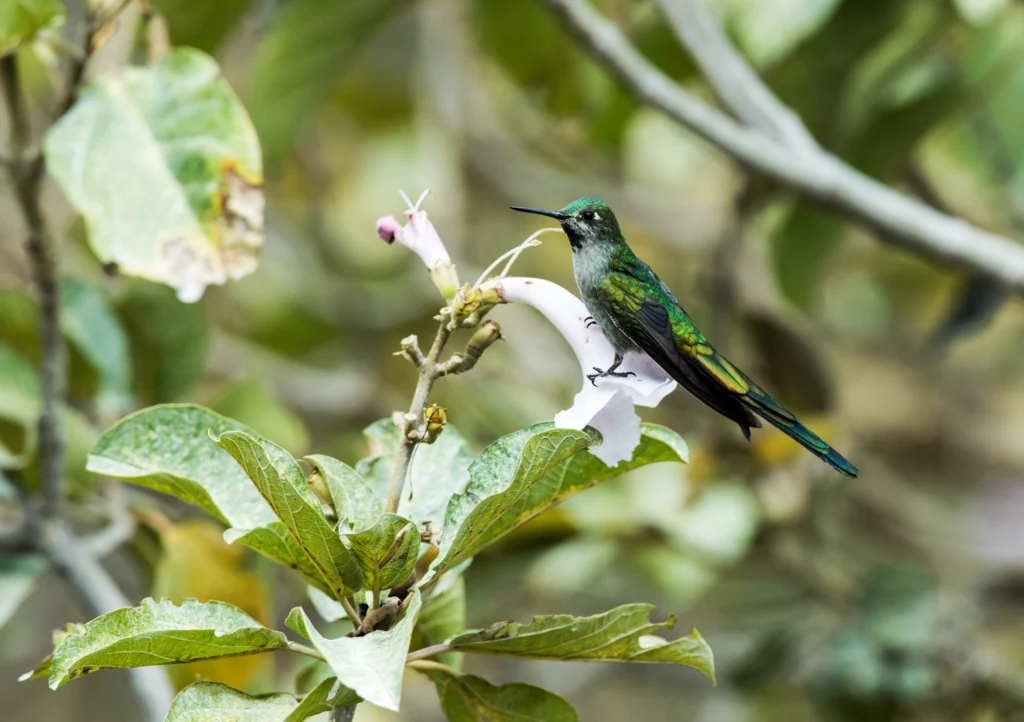
Gray-bellied Comet. Photo by Johansen Guevara Cohayla.

Gray-bellied Comet

Gray-bellied Comet. Photo by Johansen Guevara Cohayla.

Taphrolesbia griseiventris

Overview

Conservation Status
Population Trends
Decreasing
Population Size
250–1,000
Family
Hummingbirds
Location
South America
Migration Pattern
Nonmigratory
Migration Distance
Nonmigratory
Also Known As
  • Gray-bellied Hillstar
  • Cometa de Vientre Gris (Peruvian Spanish)

About

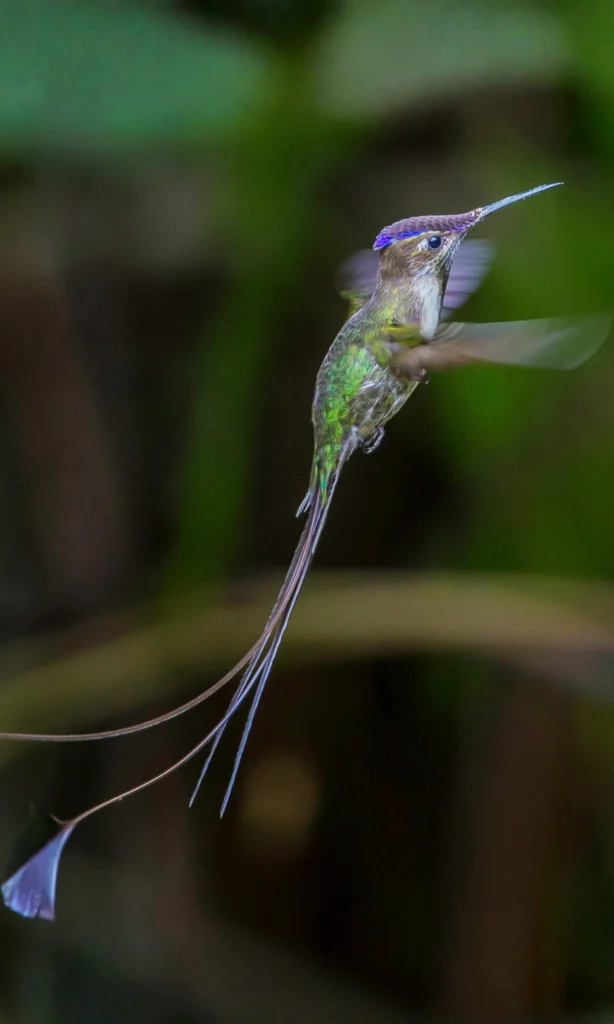
Don’t let “gray” fool you: The Gray-bellied Comet is dazzling. In the right light, the upper sides of this large hummingbird shimmer with greens, blues, and bronzy oranges. Males have a violet-blue throat (gorget), and both sexes have long tails similar to those of the Swallow-tailed Hummingbird and Violet-tailed Sylph.

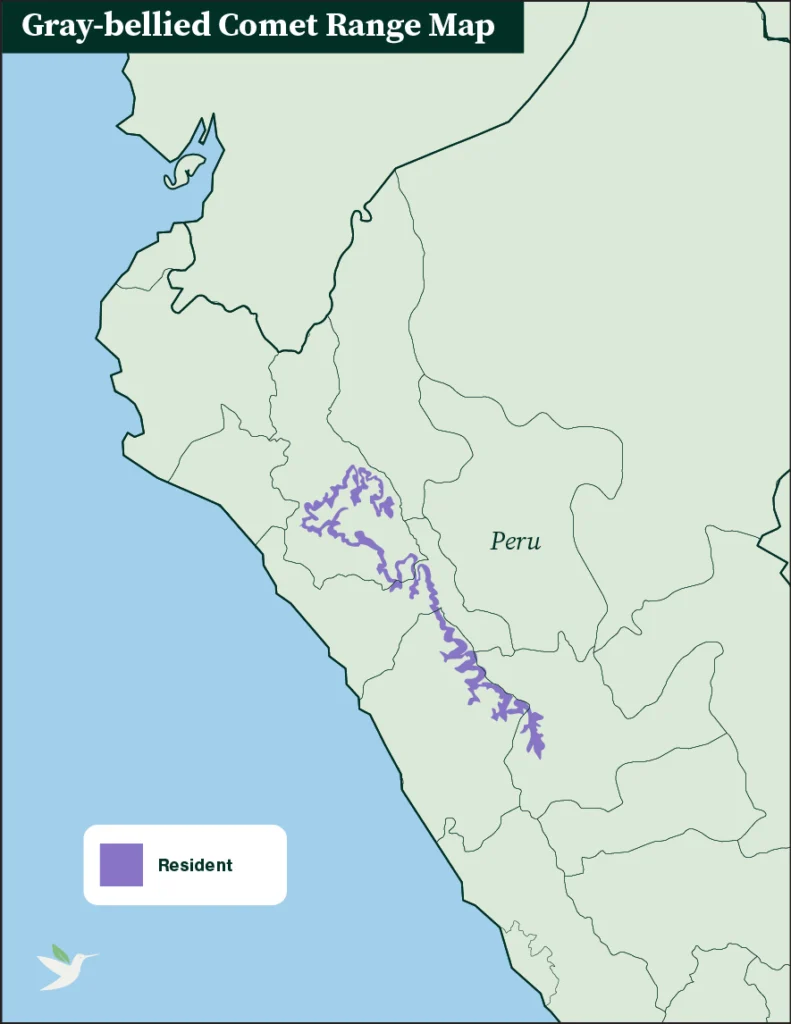
This hummingbird is so local and uncommon that sightings of it were infrequent for many years. It was not until the early 1990s that it has been spotted regularly within its limited range, which consists of five fragmented populations on the Pacific slope of the Andes in north-central Peru.

The Gray-bellied Comet’s stronghold is in Peru’s Chonta Valley, an area of arid mountain slopes and canyons only a few miles from the rapidly growing city of Cajamarca. The Chonta Valley also provides habitat for several other imperiled bird species, including the Near Threatened Great Spinetail and the Vulnerable White-tailed Shrike-Tyrant.

Threats

Birds around the world are declining, and many of them, like the Gray-bellied Comet, are found only in very restricted ranges. The Gray-bellied Comet has lost most of its former habitat to fires and the conversion of natural landscapes to cattle grazing and agricultural fields, as the nearby city of Cajamarca’s continued growth puts pressure on the surrounding areas.

Habitat Loss

The Gray-bellied Comet is threatened by clearing and burning of its habitats for agriculture and livestock grazing, as well as the cutting of native trees and shrubs for firewood.

Habitat Loss

Climate Change

Like many arid habitats around the world, the Gray-bellied Comet’s surroundings are getting hotter and experiencing more drought, which impacts its habitat and food availability.

Climate Change

Conservation Strategies & Projects

The Gray-bellied Comet needs our help to overcome the threats they face. At ABC, we’re inspired by the wonder of birds and driven by our responsibility to find solutions to meet their greatest challenges. With science as our foundation, and with inclusion and partnership at the heart of all we do, we take bold action to prevent the extinction of species like the Gray-bellied Comet.

Improve Habitat

ABC, our Peruvian partner Asociación Ecosistemas Andinos (ECOAN), and local communities and institutions have collaboratively built a tree nursery for growing native trees and shrubs that will be used to restore Gray-bellied Comet habitat destroyed by fires. ABC was also instrumental in the planting of more than 100,000 trees for the Gray-bellied Comet in the Río Chonta Valley.

Sowing Seeds for Bird Recovery

Create & Maintain Reserves

With support from ABC, Rainforest Trust, and the Bobolink Foundation, ECOAN has purchased three properties, totaling 42.8 acres, to create the first-ever protected area for the Gray-bellied Comet. ECOAN also hopes to boost ecotourism in this area by adding an interpretive center with hummingbird feeders, as well as undertaking additional community outreach.

Creating & Maintaining Reserves

Building Partnerships

ECOAN has worked in environmental education with local communities to try to reduce fire risks from traditional burning practices that threaten Gray-bellied Comet habitat. A 2023 grant from the Bobolink Foundation will continue this community engagement effort.

Partners

Bird Gallery

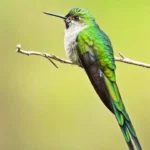
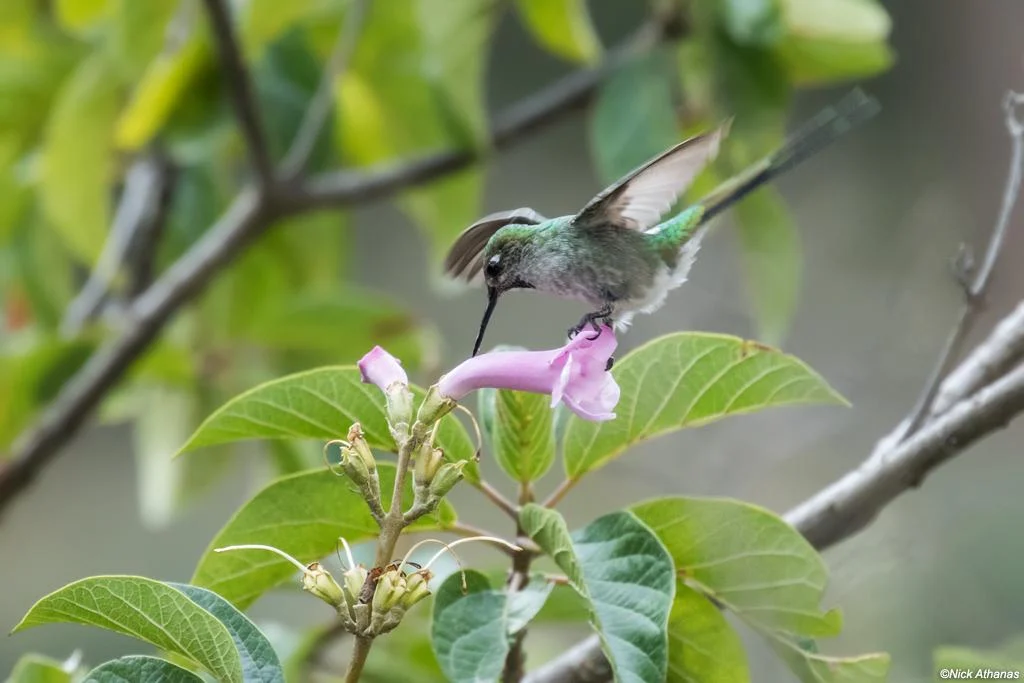
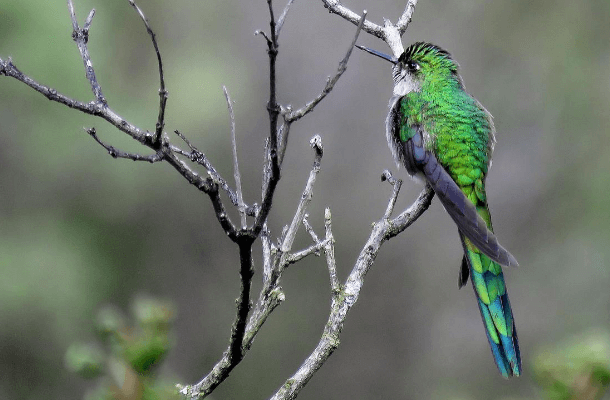
The Gray-bellied Comet is a large hummingbird with a long, deeply forked tail. Both sexes have bronzy-green upperparts, gray underparts, and green tail feathers that shade to golden-orange at the upper tips. The male also has an iridescent blue gorget, the patch of brilliant shining feathers on the throats of most male hummingbirds.

Sounds

The Gray-bellied Comet’s song can be described as a short, rapid series of tsu-wit notes. Calls include a short, descending series of notes and a high-pitched tsit.

Call

Credit: Gray-bellied Comet by Andrew Spencer; Cornell Lab of Ornithology | Macaulay Library. Accessible at: https://macaulaylibrary.org/asset/84878941.

Song

Credit: Gray-bellied Comet by Manuel Roncal; Cornell Lab of Ornithology | Macaulay Library. Accessible at: https://macaulaylibrary.org/audio/204012141.

Habitat

The Gray-bellied Comet is adapted to arid montane scrublands.

  • Prefers semi-arid, shrubby slopes and canyons with cacti, agaves, bromeliads, shrubs, and other plants adapted to dry conditions
  • Also spotted near human habitations and fencelines with flowering plants and cacti

Range & Region

Specific Area:
Chonta Valley, Peru

Range Detail:
The Gray-bellied Comet can be found on arid mountain slopes and canyons with sparse vegetation, usually at altitudes between 8,500 to 11,500 feet within the Marañón Valley and high Andes of north-central Peru. Its stronghold is Peru’s Chonta Valley, just a few miles away from the rapidly growing city of Cajamarca. Endemism is high among birds of this arid Andean region of Peru, with many species — including the Gray-bellied Comet, Striated Earthcreeper, and Rufous-backed Inca-Finch — found nowhere else.

Migration/Habitat Fact:
The Gray-bellied Comet is an important pollinator of desert cacti, shrubs, and trees; it particularly favors flowering agave and bromeliads found on steep slopes and in deep ravines.

Range
South America
Migration Pattern
Nonmigratory
Migration Distance
Nonmigratory

Life History

The large and distinctive Gray-bellied Comet may be spotted only rarely, but it’s a dominant presence among hummingbirds in the few highly localized areas where it is found. This species is most often encountered singly. The male is very territorial and often chases away other hummingbird species that invade his space, including the Giant Hummingbird, Sparkling Violetear, and Green-tailed Trainbearer. Many aspects of this species remain understudied.

Diet

The Gray-bellied Comet feeds on nectar, small insects, and other invertebrates, favoring the nectar from flowering agave and bromeliads. It drinks nectar from flowers while hovering, and hawks for insects while in flight.

Courtship

Although courtship rituals remain undescribed for this species, the male Gray-bellied Comet probably defends a territory containing abundant nectar-bearing flowers. Like other hummingbirds, the male is polygynous, mating with multiple females as they visit his territory during the breeding season.

Nesting

The first Gray-bellied Comet nests were documented in 1999; in both cases, the female hummingbird had built a well-camouflaged, pouch-like nest below an overhang of earth and dangling roots at a road-cut.

Eggs & Young

Like other hummingbirds, the female assumes all parental duties herself, from incubating the clutch of two tiny white eggs to feeding her voracious chicks until they’re old enough to leave the nest, which usually occurs within three to six weeks.