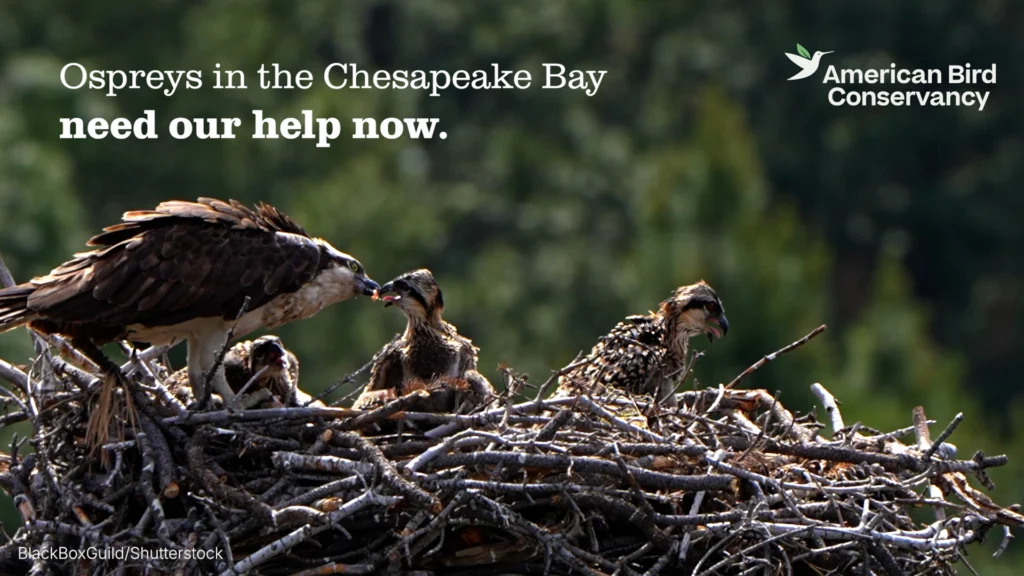
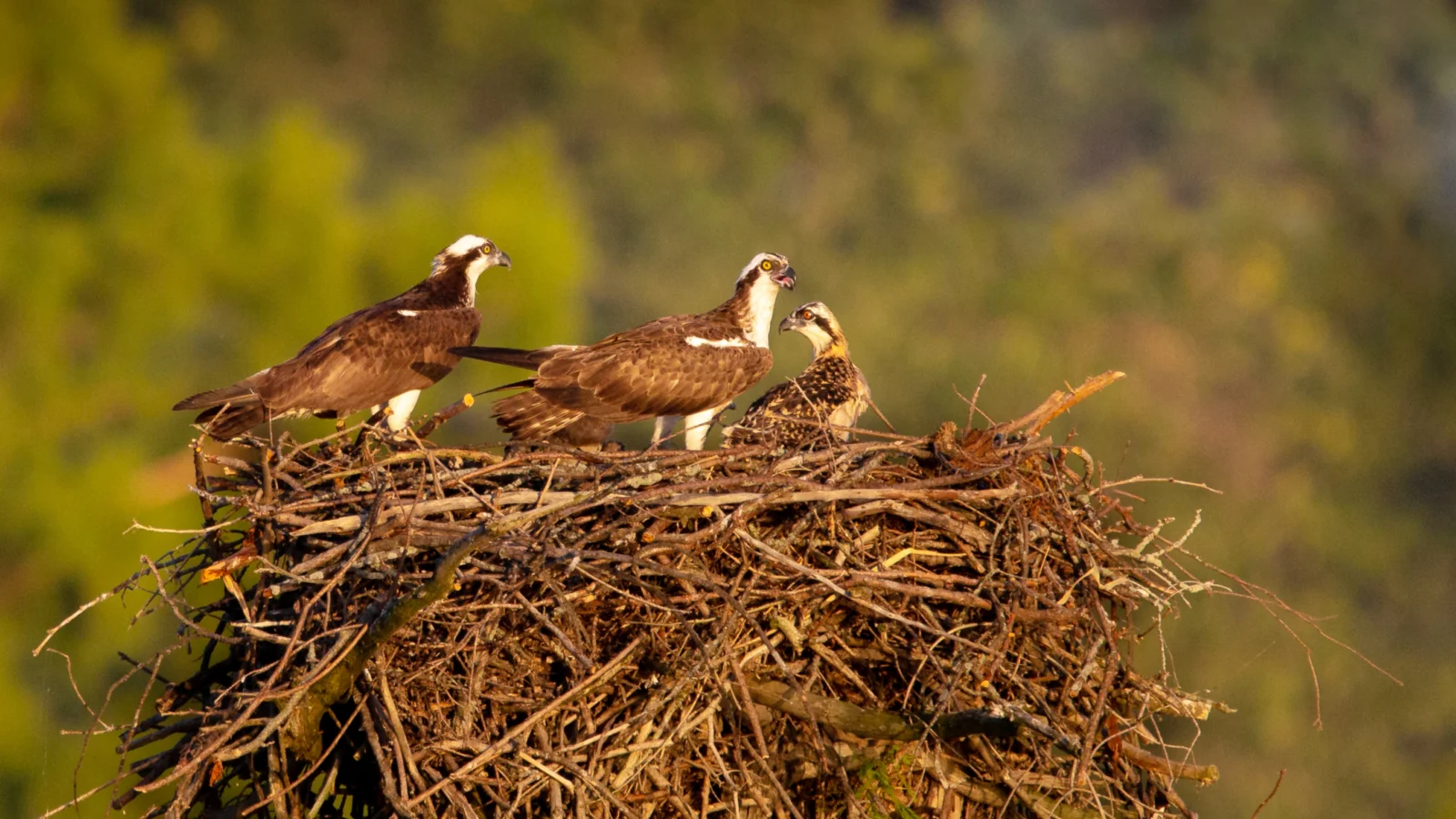
Two adult Ospreys with a juvenile in a nest. Ospreys in the Chesapeake Bay are declining due to a lack of menhaden, a fish vital for growing chicks, says American Bird Conservancy. Photo by Kannan Sundaram/Shutterstock.

Osprey Breeding Crisis Demands Stronger Protections for Atlantic Menhaden, Says American Bird Conservancy

Fisheries Managers Urged to Prioritize Ecosystem Health as They Consider Atlantic Menhaden Catch Limits

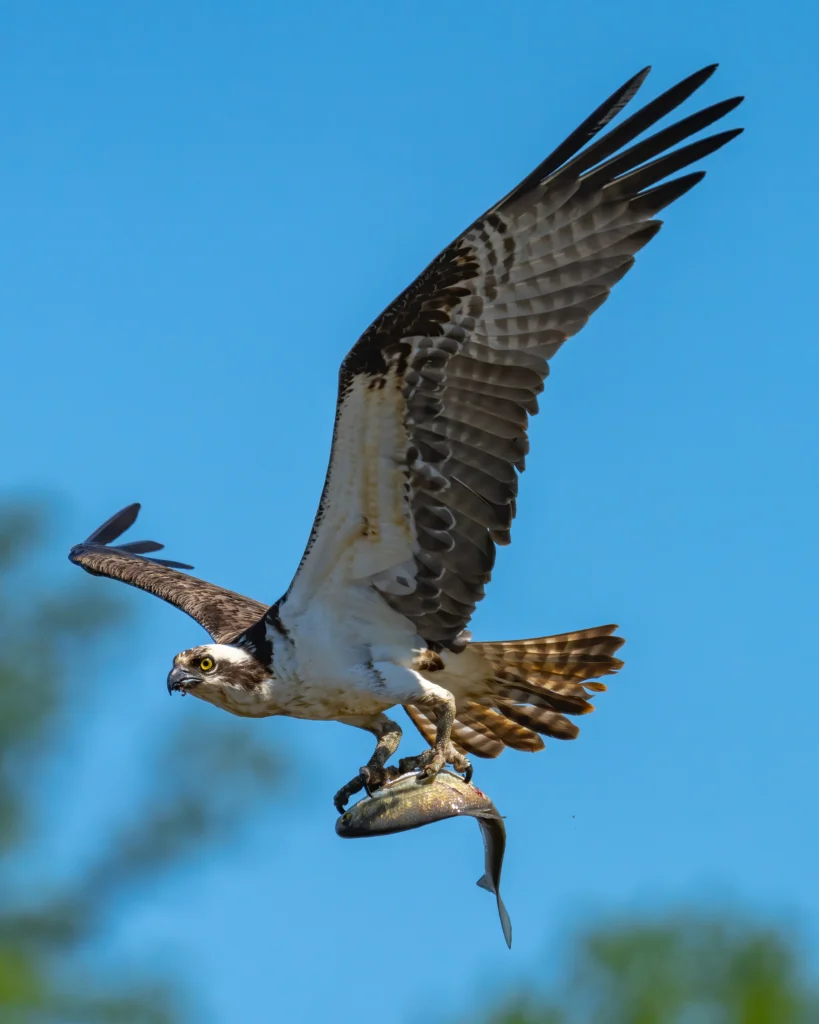
The Osprey, a widespread and rangy raptor, declined precipitously due to the pesticide DDT, and today is threatened by overfishing and habitat loss. Photo by Kannan Sundaram/Shutterstock.

Osprey Breeding Crisis Demands Stronger Protections for Atlantic Menhaden, Says American Bird Conservancy

Leer En Español
Listen to this article

As fisheries officials from Atlantic Coast states prepare to gather in Rhode Island for their annual meeting, American Bird Conservancy (ABC) is calling on them to heed warning signs in the Chesapeake Bay and saltwater habitats along the Atlantic Coast, where scientific evidence links declining availability of menhaden, a small forage fish, to an Osprey breeding crisis.

“The latest research paints a deeply troubling picture for Ospreys,” said ABC President Michael J. Parr. “Scientists have documented widespread breeding failures, starving chicks, and declining reproductive success from Massachusetts to South Carolina, and especially across the Chesapeake Bay — once one of the Osprey’s global strongholds. Their findings point to reduced menhaden availability as the primary factor for declines. That conclusion is supported by the fact that Osprey populations using freshwater habitats, with available freshwater forage fish unimpacted by industrial fishing, are stable.”

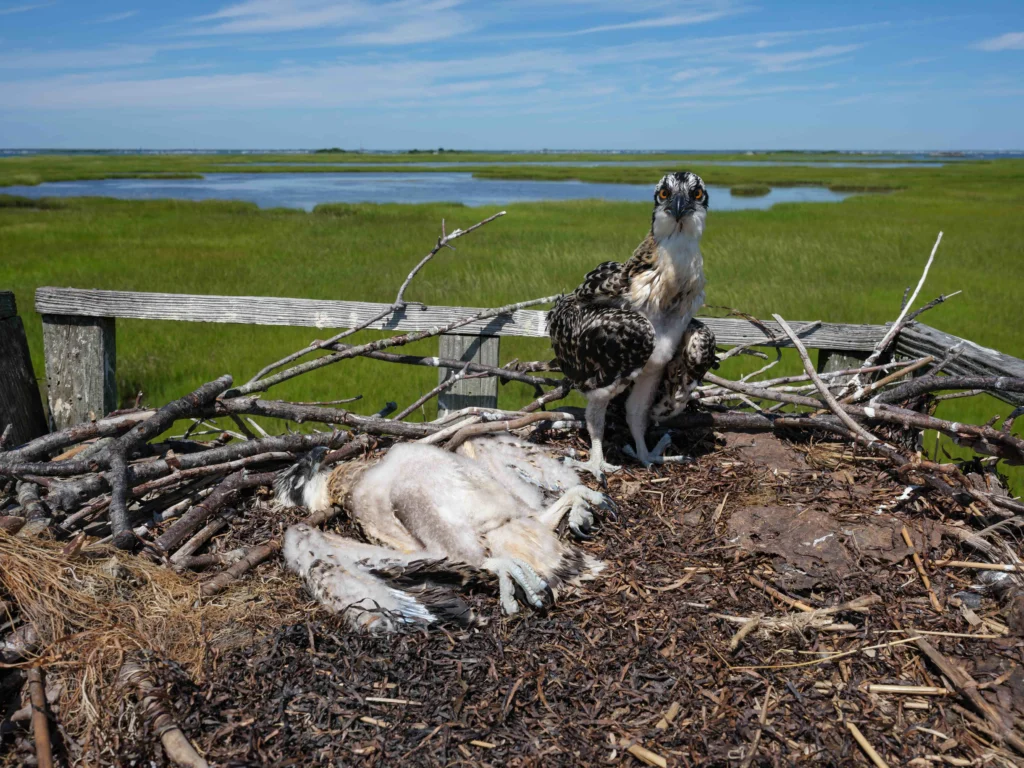
A young Osprey at a nest with another juvenile, which starved to death due to the scarcity of menhaden. Photo by Ben Wurst.

ABC Calls for Urgent Action by Fisheries Commission

During its November 9–12 meeting in Newport, Rhode Island, the Atlantic States Marine Fisheries Commission (ASMFC), the body overseeing fishery management in the region, will consider reducing commercial catch limits for Atlantic menhaden in the Chesapeake Bay and beyond. ABC is encouraging the Commission to take urgent action to reduce the industrial menhaden harvest as the most immediate solution to the Osprey breeding crisis.

Also called bunker and pogies, menhaden are nutrient-dense fish that help form the base of the Atlantic marine food web, providing food for Ospreys, striped bass (also known as rockfish), dolphins, whales, and other wildlife. Menhaden are a necessity for young Atlantic Coast Ospreys because they are one of the only fish containing enough nutrients to nourish chicks.

Menhaden are also the target of Omega Protein and its partner, Ocean Harvesters, who are authorized under current limits to annually harvest more than 400 million pounds of menhaden from Atlantic waters, including over 100 million pounds from the Bay. However, recent data suggest that the scarcity of menhaden is keeping the industry’s total catch well under this limit.

“If the industrial fishery can’t land enough menhaden to meet the harvest cap, then lowering the cap is a no-brainer,” said Parr.

Two Decades of Declines in the Chesapeake Bay

For two decades, Ospreys relying on menhaden in the saltwater regions of the Bay have struggled to raise chicks successfully. In recent years, the stakes have become increasingly concerning: Biologists who study the Bay’s Ospreys have observed the birds hunting for hours far from their nests in search of menhaden to feed their chicks, and returning with too little to ensure each chick is fed — or with no fish to feed any of their young at all. Chicks are starving to death in their nests.

According to the Center for Conservation Biology at William & Mary, 2026 was the worst year on record for Osprey breeding productivity in the Chesapeake Bay. In areas with high-salinity waters, more than 80 percent of monitored breeding pairs failed to raise a single chick. Researchers identified widespread food stress and declining availability of menhaden as major concerns.

The scarcity of this nutrient-packed fish is leading to the deaths of more than 5,000 Osprey chicks in the Chesapeake Bay annually.

Action Needed: Adopt Draft Addendum II

At stake at the upcoming ASMFC meeting is a decision by the Commission’s Menhaden Management Board on Draft Addendum II, which would dictate changes to when, where, and how much menhaden may be harvested in the Bay and coastal waters. Given the dire situation facing Ospreys now, and the reality that current population declines will take years to reverse, ABC is urging decisive action, including reducing the Bay’s menhaden fishery cap by 50 percent. ABC also supports linking the Bay cap to a coastwide Total Allowable Catch reduction, as well as the establishment of quota periods that spread the harvest of menhaden across the fishing season — helping to reduce the rapid harvest of menhaden at times when Osprey and other predators have the highest need for the fish. This outcome will provide the most conservation-minded solution to the Osprey crisis immediately.

“Fisheries managers should not wait for further impacts before acting,” Parr said. “I urge the Commission to substantially reduce industrial menhaden harvests in the Chesapeake Bay and coastal waters until the impacts to the wider ecosystem are better understood. We should not gamble with the health of the ecosystem or the long-term future of the fishing industry, which itself will be at risk if menhaden continue to disappear.”

Several Atlantic Coast states have reduced or paused menhaden harvests, yet Virginia — home to the reduction fishery industry’s last stronghold — is holding out for more science before making decisions.

“The science is already in, and the need for Virginia to take action is immediate,” said Brian Brooks, ABC’s Vice President of Advocacy and Threats. “Because menhaden along the Atlantic Coast belong to a single population, what happens in the waters off of Virginia’s coast doesn’t just impact Virginia — it ripples out.

“This is not an anti-fishery campaign; many of us have been fishing since we were young, and we recognize the importance of commercial fishing to coastal communities. But Ospreys are warning us that something is seriously wrong. We need to listen to the science, take the ecosystem-wide consequences of industrial menhaden harvest seriously, and act before the damage becomes even harder to reverse,” Brooks said.

“Calls for more science look more like delaying tactics,” Brooks added. “This isn’t a hard question. We already know what is happening.”

“Menhaden are far more than a commercial commodity,” said Parr. “They are a critical food source for an entire marine ecosystem. We need fisheries management that protects that ecological role as well as the livelihoods that depend on healthy oceans.”

ABC is urging the ASMFC to adopt Draft Addendum II and is calling on leaders in states along the Atlantic Coast to take further steps to conserve menhaden and Ospreys in their own waters.
American Bird Conservancy

American Bird Conservancy (ABC) takes bold action to conserve wild birds and their habitats throughout the Americas. Inspired by the wonder of birds, we achieve lasting results for the bird species most in need while also benefiting human communities, biodiversity, and the planet’s fragile climate. Our every action is underpinned by science, strengthened by partnerships, and rooted in the belief that diverse perspectives yield stronger results. Founded as a nonprofit organization in 1994, ABC remains committed to safeguarding birds for generations to come. Join us! Together, we can do more to ensure birds thrive.

American Bird Conservancy - Media Contact

Journalists, get breaking bird conservation news delivered right to your inbox by joining ABC’s media list. Get in touch by emailing media@abcbirds.org