Descripción general
Acerca de
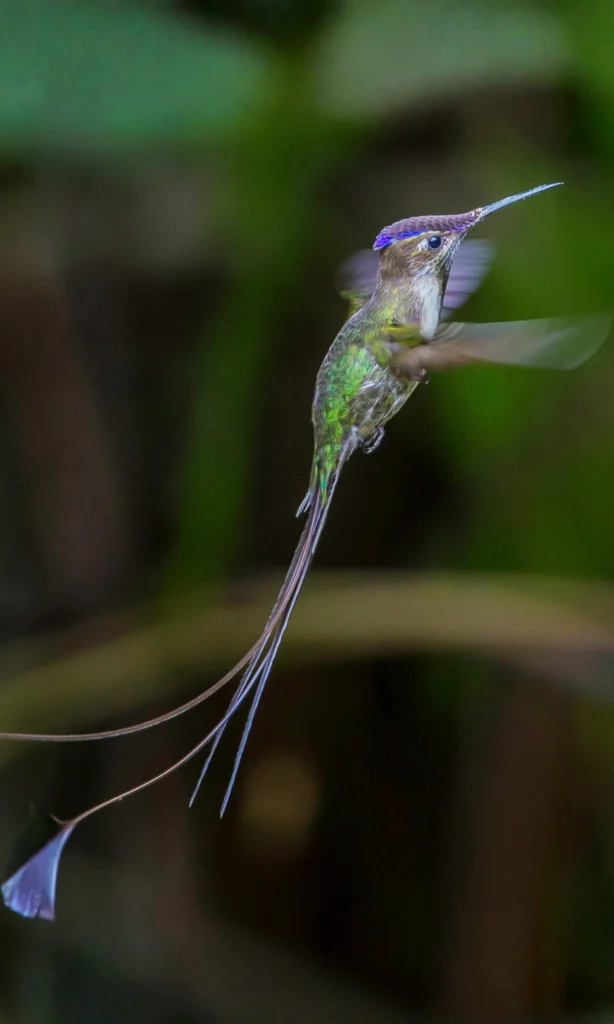
Don’t let “gray” fool you: The Gray-bellied Comet is dazzling. In the right light, the upper sides of this large hummingbird shimmer with greens, blues, and bronzy oranges. Males have a violet-blue throat (gorget), and both sexes have long tails similar to those of the Swallow-tailed Hummingbird and Violet-tailed Sylph.
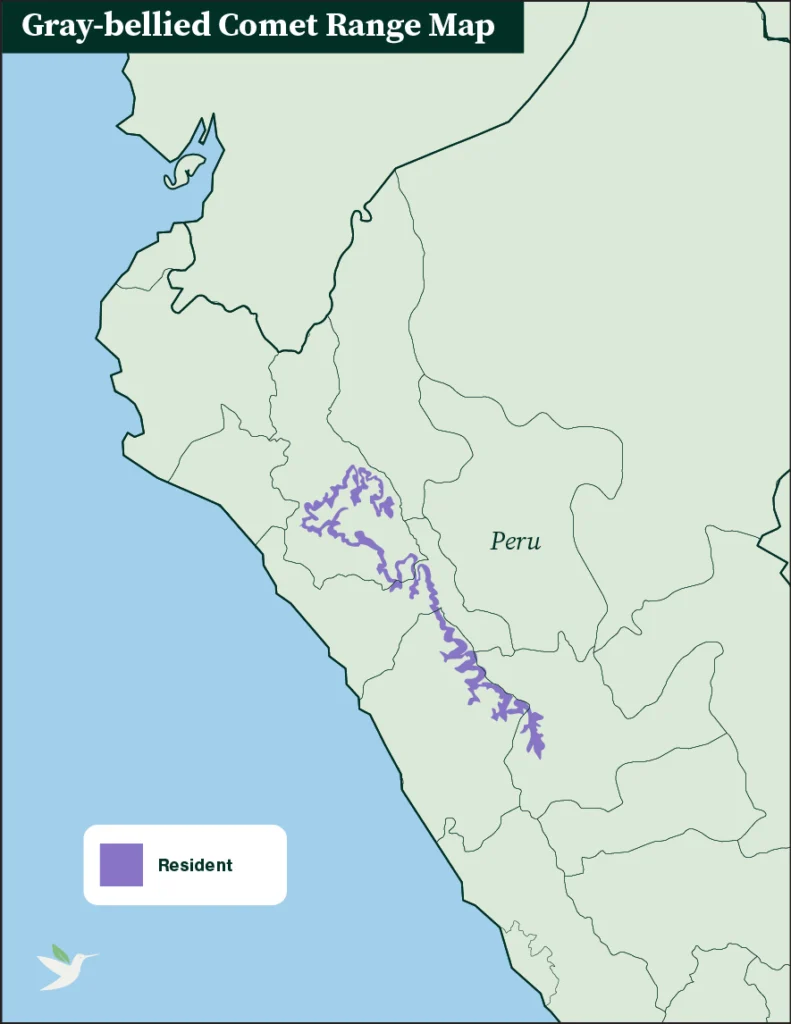
This hummingbird is so local and uncommon that sightings of it were infrequent for many years. It was not until the early 1990s that it has been spotted regularly within its limited range, which consists of five fragmented populations on the Pacific slope of the Andes in north-central Peru.
El bastión del Cometa Ventrigris se encuentra en el Valle de Chonta, Perú, una zona de áridas laderas montañosas y cañones a pocos kilómetros de la ciudad de Cajamarca, en rápido crecimiento. El Valle de Chonta también alberga varias otras especies de aves en peligro de extinción, como el Colaespina Grande, casi amenazado, y el Alcaudón Tirano de Cola Blanca, vulnerable.

Amenazas
Las aves en todo el mundo están disminuyendo, y muchas de ellas, como el Cometa Ventrigris, se encuentran solo en áreas de distribución muy restringidas. El Cometa Ventrigris ha perdido la mayor parte de su hábitat original debido a los incendios y la conversión de paisajes naturales en pastos para ganado y campos agrícolas, ya que el continuo crecimiento de la cercana ciudad de Cajamarca ejerce presión sobre las zonas circundantes.
Pérdida de hábitat
El cometa ventrigris está amenazado por la tala y quema de sus hábitats para la agricultura y el pastoreo de ganado, así como por la tala de árboles y arbustos nativos para leña.
Cambio climático
Al igual que muchos hábitats áridos alrededor del mundo, los alrededores del cometa vientre gris son cada vez más cálidos y sufren más sequías, lo que afecta su hábitat y la disponibilidad de alimentos.
Estrategias y proyectos de conservación
The Gray-bellied Comet needs our help to overcome the threats they face. At ABC, we’re inspired by the wonder of birds and driven by our responsibility to find solutions to meet their greatest challenges. With science as our foundation, and with inclusion and partnership at the heart of all we do, we take bold action to prevent the extinction of species like the Gray-bellied Comet.
Mejorar el hábitat
ABC, our Peruvian partner Asociación Ecosistemas Andinos (ECOAN), and local communities and institutions have collaboratively built a tree nursery for growing native trees and shrubs that will be used to restore Gray-bellied Comet habitat destroyed by fires. ABC was also instrumental in the planting of more than 100,000 trees for the Gray-bellied Comet in the Río Chonta Valley.
Crear y mantener reservas
Con el apoyo de ABC, Rainforest Trust y la Fundación Bobolink, ECOAN ha adquirido tres propiedades, con un total de 17 hectáreas, para crear la primera área protegida para el Cometa Ventrigris. ECOAN también espera impulsar el ecoturismo en esta zona mediante la construcción de un centro de interpretación con comederos para colibríes, además de realizar actividades de divulgación comunitaria.
Construyendo alianzas
ECOAN ha trabajado en educación ambiental con las comunidades locales para intentar reducir el riesgo de incendios causados por las quemas tradicionales que amenazan el hábitat del cometa de vientre gris. Una subvención de 2023 de la Fundación Bobolink continuará con esta iniciativa de participación comunitaria.
Galería de aves
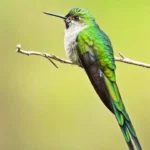
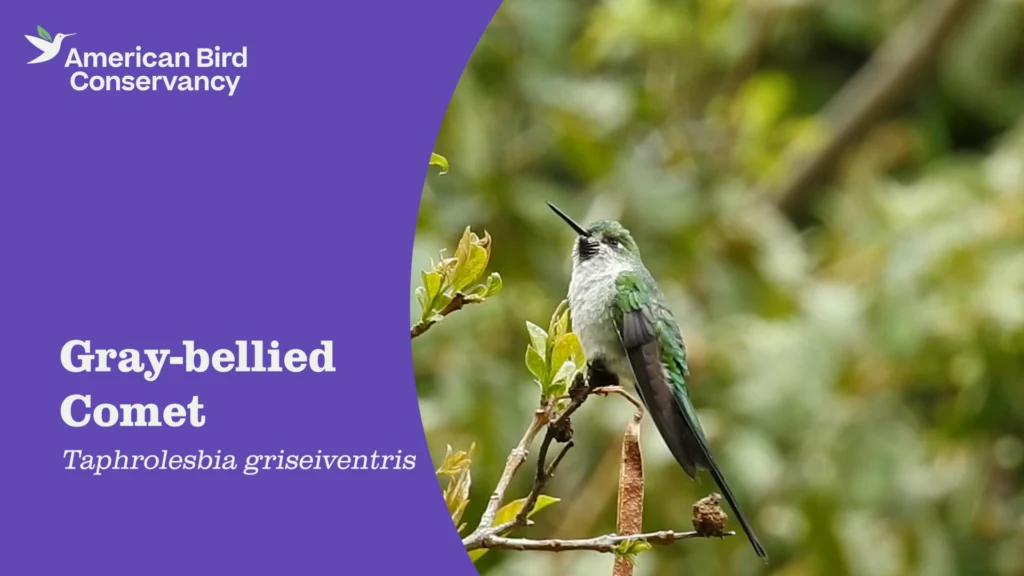
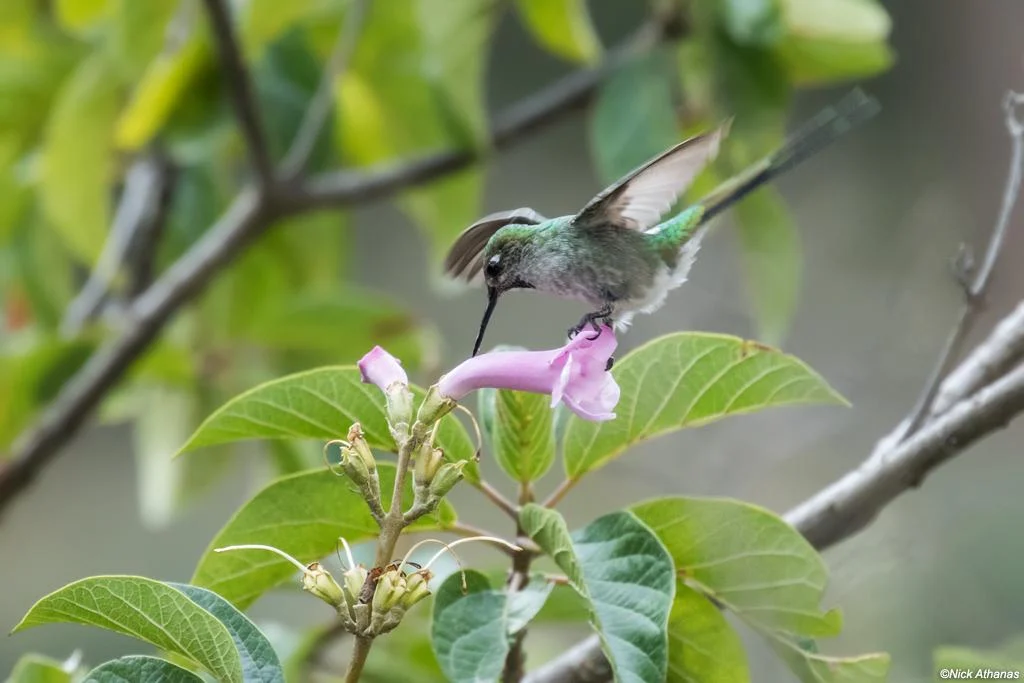
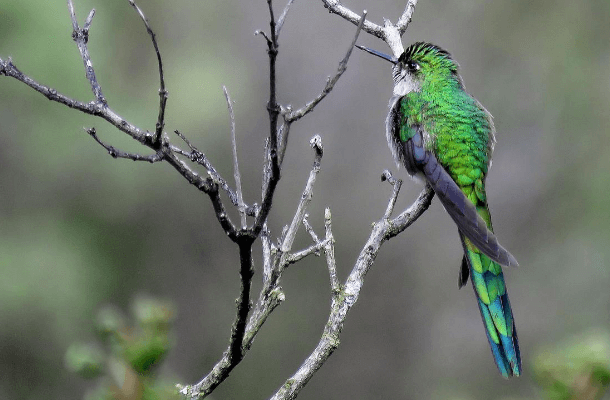
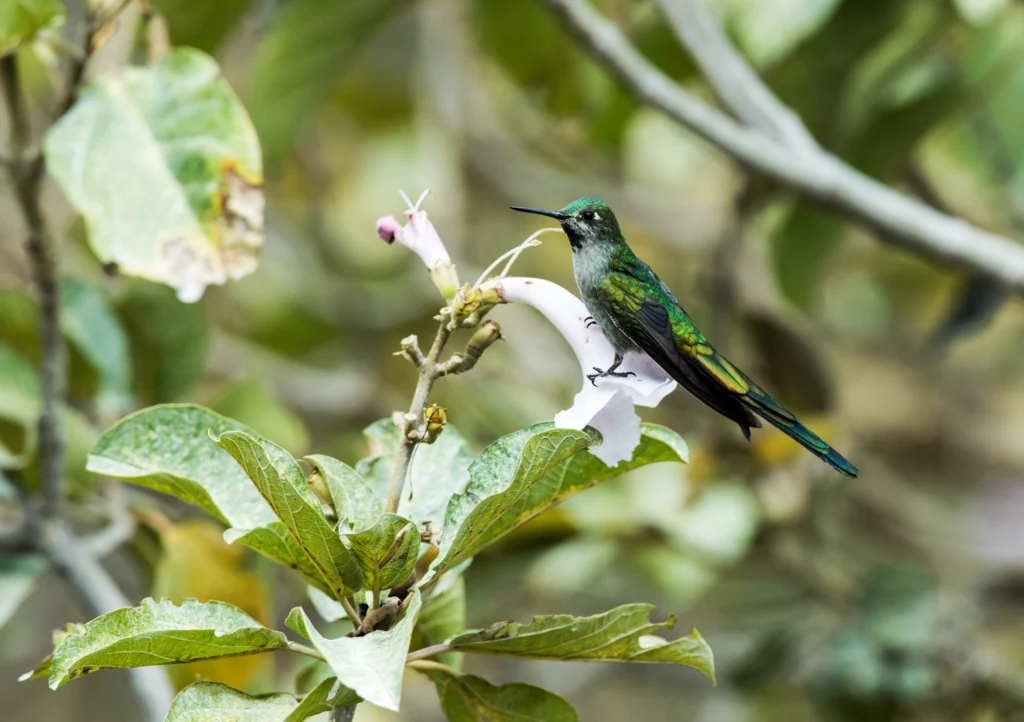
The Gray-bellied Comet is a large hummingbird with a long, deeply forked tail. Both sexes have bronzy-green upperparts, gray underparts, and green tail feathers that shade to golden-orange at the upper tips. The male also has an iridescent blue gorget, the patch of brilliant shining feathers on the throats of most male hummingbirds.
Sonidos
El canto del Cometa Vientre Gris se puede describir como una serie corta y rápida de tsu-wit Notas. Las llamadas incluyen una serie corta y descendente de notas y un tono alto. tsit.
Credit: Gray-bellied Comet by Andrew Spencer; Cornell Lab of Ornithology | Macaulay Library. Accessible at: https://macaulaylibrary.org/asset/84878941.
Credit: Gray-bellied Comet by Manuel Roncal; Cornell Lab of Ornithology | Macaulay Library. Accessible at: https://macaulaylibrary.org/audio/204012141.
Hábitat
The Gray-bellied Comet is adapted to arid montane scrublands.
- Prefers semi-arid, shrubby slopes and canyons with cacti, agaves, bromeliads, shrubs, and other plants adapted to dry conditions
- También se ha visto cerca de viviendas humanas y cercas con plantas con flores y cactus.
Rango y región
Área específica:
Valle de Chonta, Perú
Detalles del rango:
The Gray-bellied Comet can be found on arid mountain slopes and canyons with sparse vegetation, usually at altitudes between 8,500 to 11,500 feet within the Marañón Valley and high Andes of north-central Peru. Its stronghold is Peru’s Chonta Valley, just a few miles away from the rapidly growing city of Cajamarca. Endemism is high among birds of this arid Andean region of Peru, with many species — including the Gray-bellied Comet, Striated Earthcreeper, and Rufous-backed Inca-Finch — found nowhere else.
Migration/Habitat Fact:
El cometa ventrigris es un polinizador importante de cactus, arbustos y árboles del desierto; favorece especialmente el agave en flor y las bromelias que se encuentran en laderas empinadas y barrancos profundos.
Historia de vida
The large and distinctive Gray-bellied Comet may be spotted only rarely, but it’s a dominant presence among hummingbirds in the few highly localized areas where it is found. This species is most often encountered singly. The male is very territorial and often chases away other hummingbird species that invade his space, including the Giant Hummingbird, Sparkling Violetear, and Green-tailed Trainbearer. Many aspects of this species remain understudied.
Dieta
El Cometa Ventrigris se alimenta de néctar, pequeños insectos y otros invertebrados, prefiriendo el néctar del agave en flor y las bromelias. Bebe el néctar de las flores mientras planea y caza insectos durante el vuelo.
Noviazgo
Aunque los rituales de cortejo de esta especie aún no se han descrito, el macho del colibrí ventrigris probablemente defiende un territorio con abundantes flores néctar. Al igual que otros colibríes, el macho es polígamo y se aparea con varias hembras que visitan su territorio durante la época reproductiva.
Anidación
Los primeros nidos del colibrí ventrigris fueron documentados en 1999; en ambos casos, el colibrí hembra había construido un nido bien camuflado, con forma de bolsa, debajo de un saliente de tierra y raíces colgantes en un corte de carretera.
Huevos y crías
Like other hummingbirds, the female assumes all parental duties herself, from incubating the clutch of two tiny white eggs to feeding her voracious chicks until they’re old enough to leave the nest, which usually occurs within three to six weeks.