Descripción general
Acerca de
One of North America’s 12 native grouse species — a group that includes the Urogallo de las artemisas y Gallina de las praderas menor — the bantam-sized Ruffed Grouse is one of the most familiar, particularly to game hunters. Early settlers who hunted them extensively called this species the “Wood Hen” in reference to its favored forest habitats.
Although usually a solitary and retiring forest species, this small grouse makes itself noticeable through the male’s awe-inspiring percussive displays. Ornithologist Arthur Cleveland Bent called the drumming of the male Ruffed Grouse “the throbbing heart of awakening spring.” The male grouse produces this unique sound year-round, but particularly in spring, when advertising his presence to nearby females.
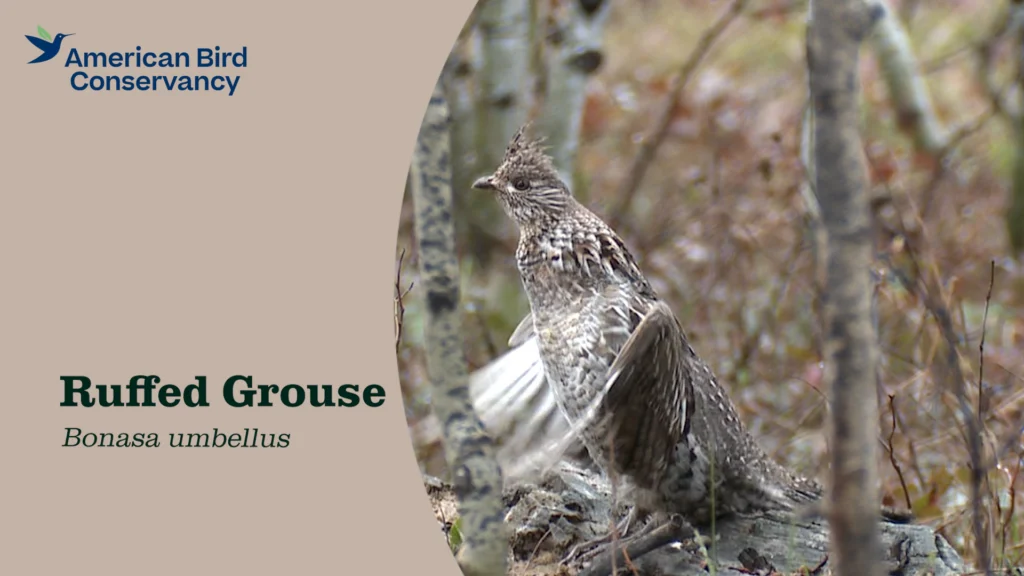
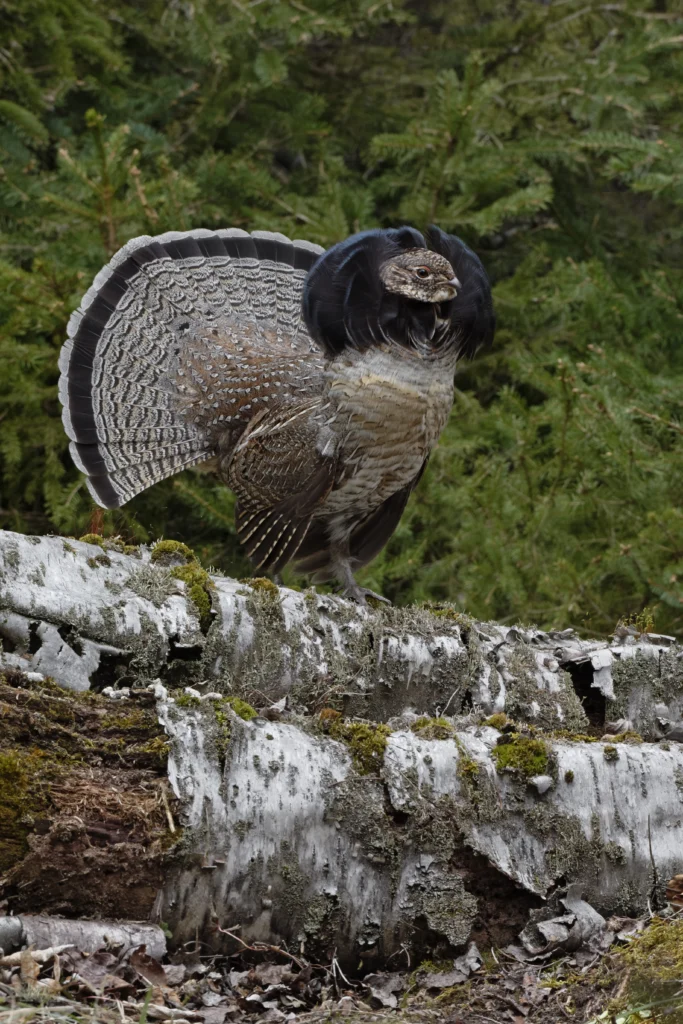
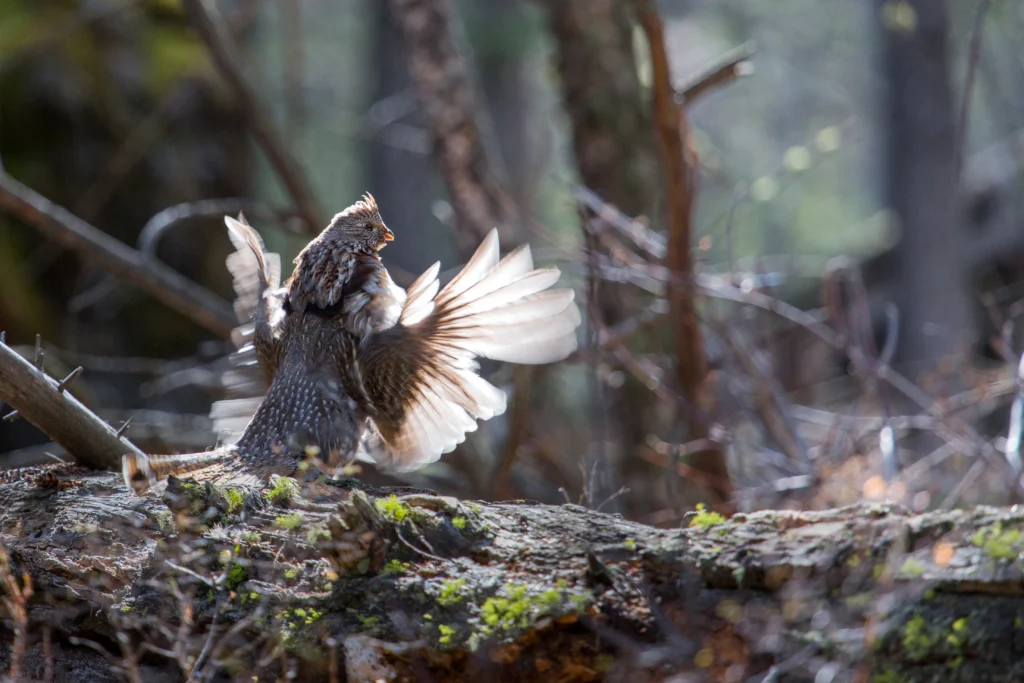
This amazing display begins atop a favored platform — usually a log, boulder, or stump — where the male Ruffed Grouse stands tall, braces backwards on his tail, and begins to fan the air by rotating his wings back and forth. This fanning motion creates a vacuum and subsequent suction of air that produces a “thump” sound, actually a small-scale sonic boom! He starts slowly, but quickly accelerates the motion until his wings become a blur, producing a sound like a drumroll or distant motor that can be heard as far away as a quarter-mile or more.
Besides advertising to female grouse, this drumming also serves to warn off other males. Each male Ruffed Grouse defends a territory of up to 10 acres, usually shared with one or two females. A male will stay in that territory year-round, often for his entire lifetime.

Amenazas
The Ruffed Grouse is a popular game species and was once overharvested by market hunters, causing population declines at the beginning of the 20th century. However, informed habitat and wildlife management have restored Ruffed Grouse populations to healthy levels that can sustain regular, managed hunting. More modern-day threats to the Ruffed Grouse stem from the disappearance of younger forests, particularly in the eastern United States.
Aging Forests
As eastern forests age, the open canopies begin to close and darken, and the dense early successional vegetation begins to disappear as it is shaded out by larger, older trees. This habitat, historically maintained by fire and other periodic disturbances, is crucial for Ruffed Grouse, as well as a suite of other birds such as the Golondrina americana y Reinita alidorada.
Estrategias y proyectos de conservación
Birds like the Ruffed Grouse need our help to overcome the threats they face, especially the depletion of their preferred habitat. At ABC, we’re inspired by the wonder of birds and driven by our responsibility to find solutions to meet their greatest challenges. ABC participates in several programs to restore and maintain the young forests used by the Ruffed Grouse.
Mejorar el hábitat
ABC is undertaking conservation efforts across the country to support and improve the early successional forest habitat required by the Ruffed Grouse. To this end, we have worked with partners, including the Migratory Bird Joint Ventures, in Minnesota, West Virginia, Pennsylvania, and Indiana (among other states) to support the resilience, restoration, and protection of habitat that benefits Ruffed Grouse as well as other birds, including the Golondrina americana, Reinita alidorada, Reinita cerúlea, y Zorzal de bosque.
Galería de aves
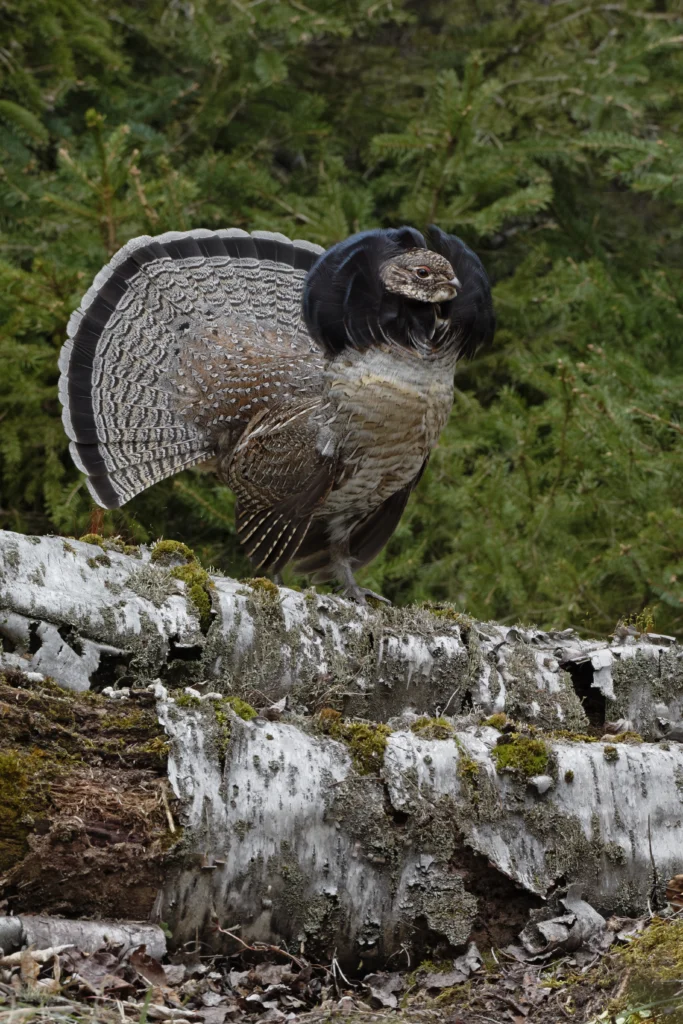
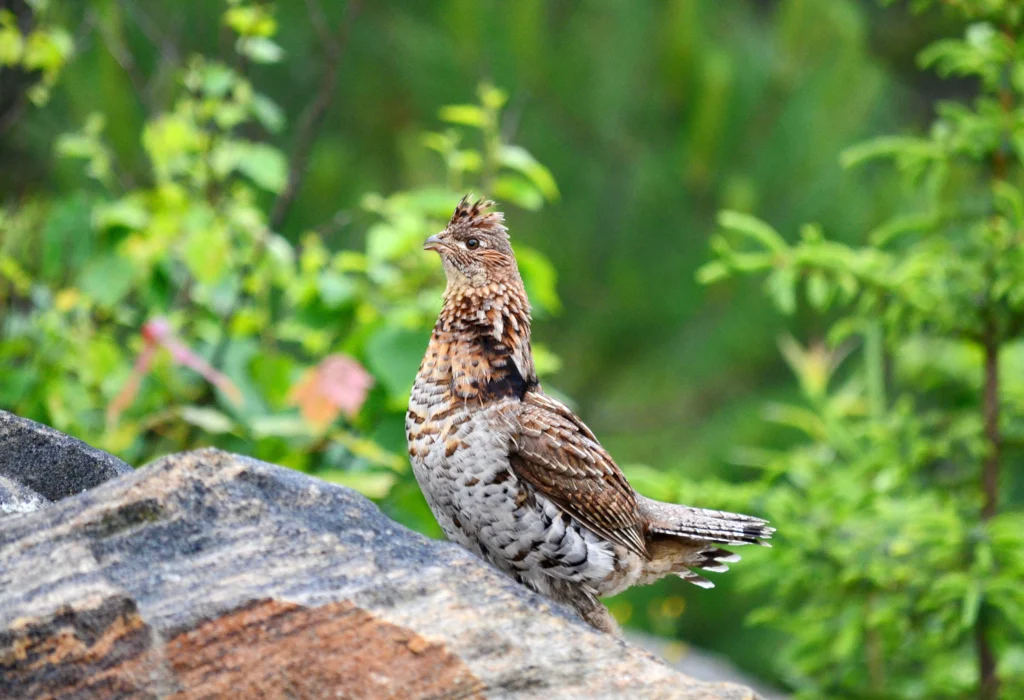
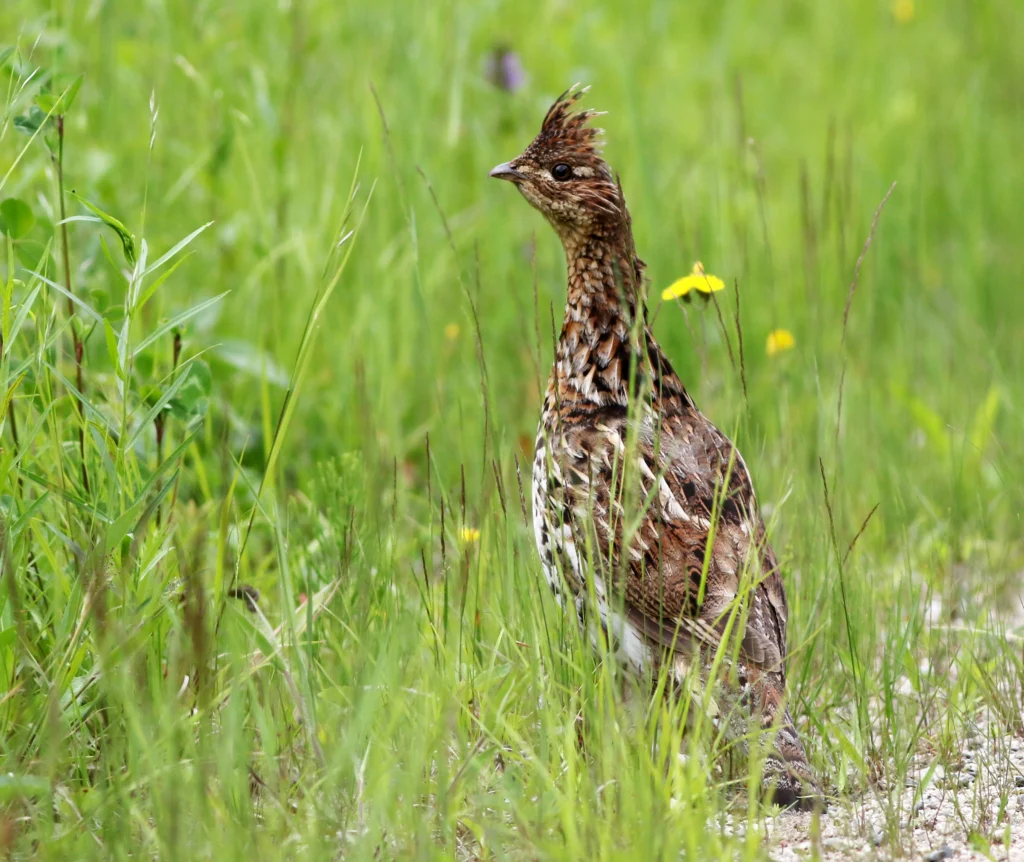
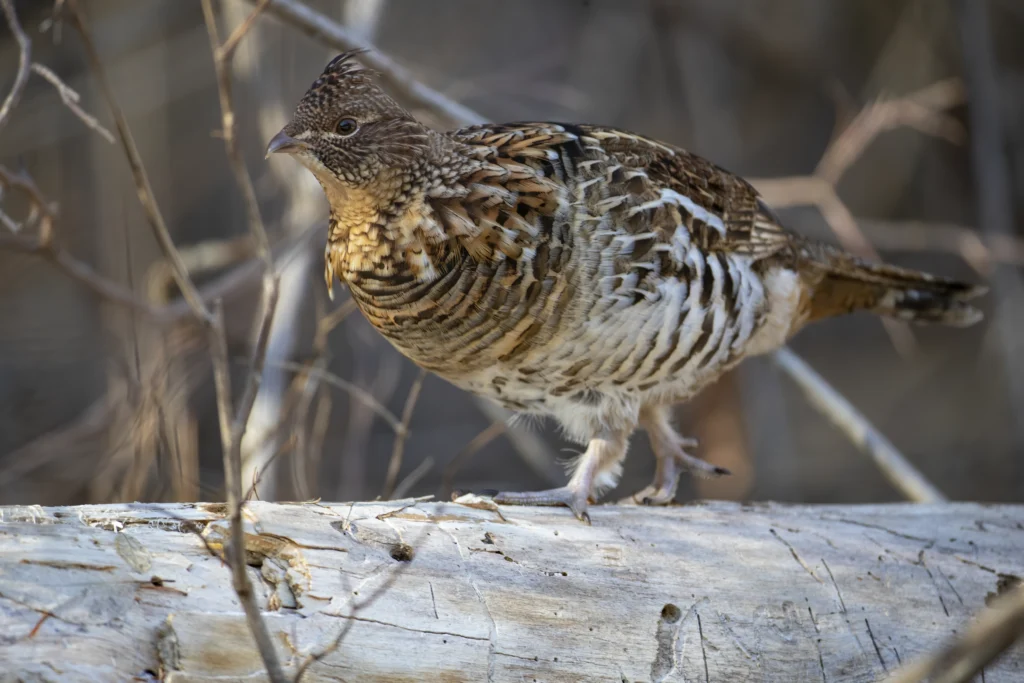
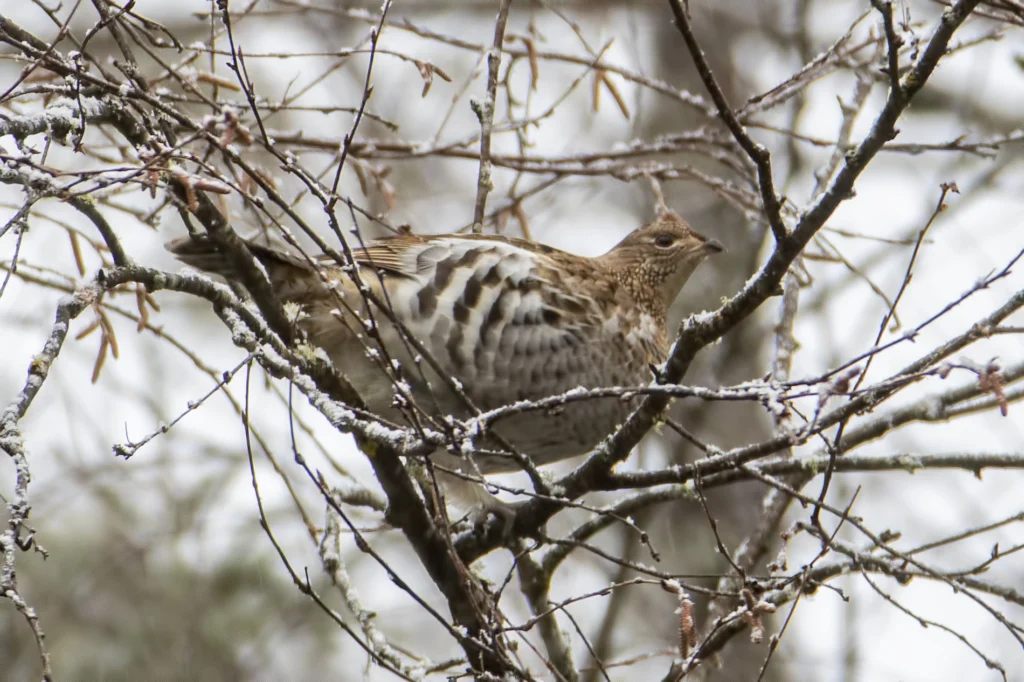
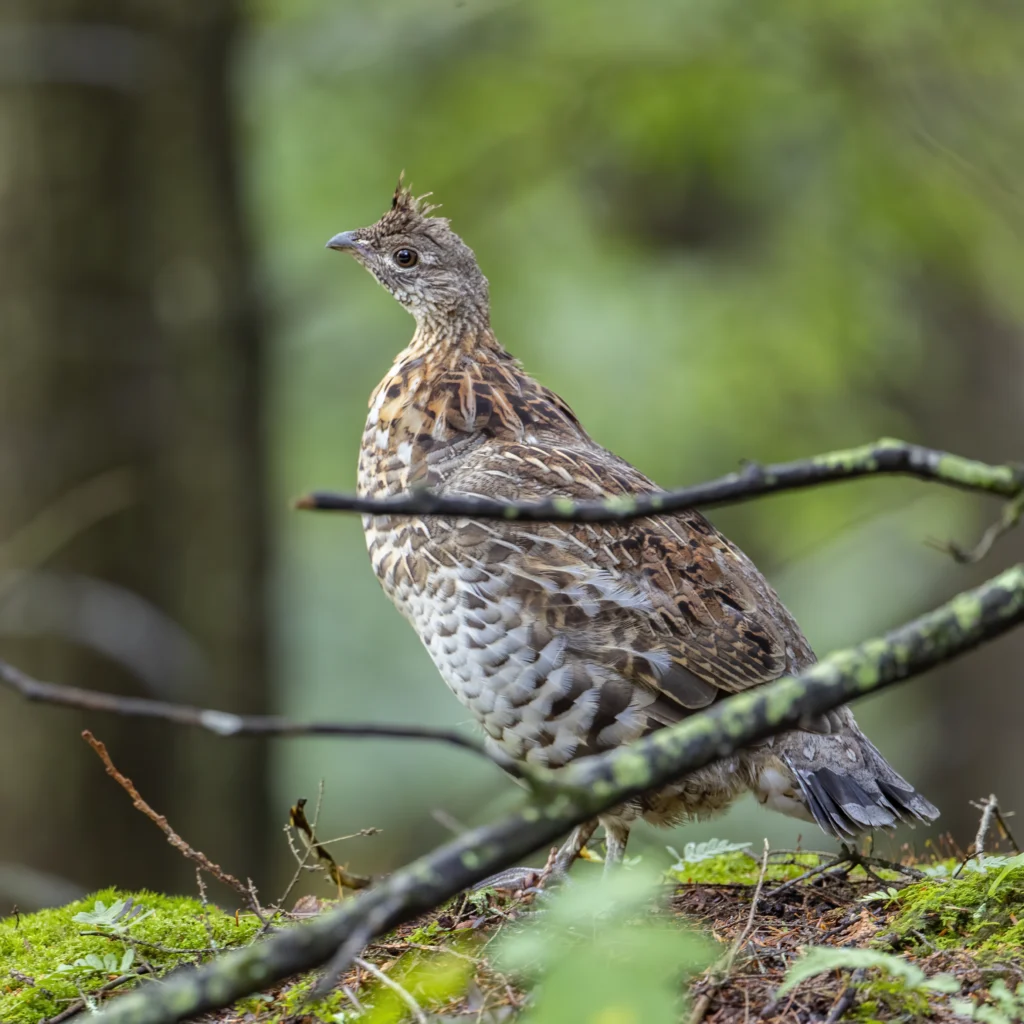
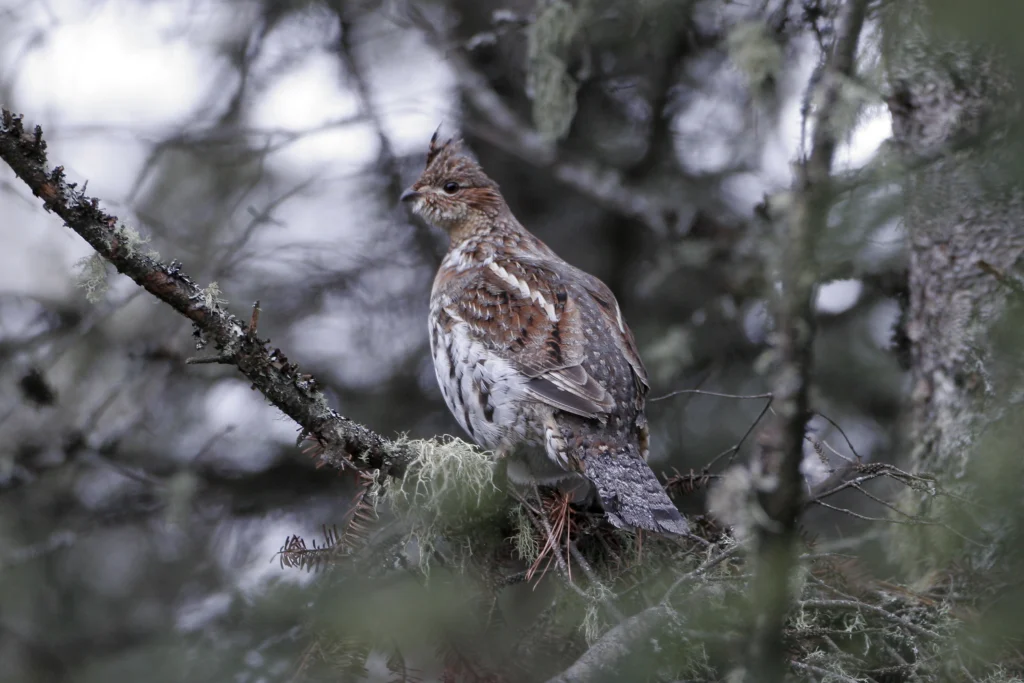
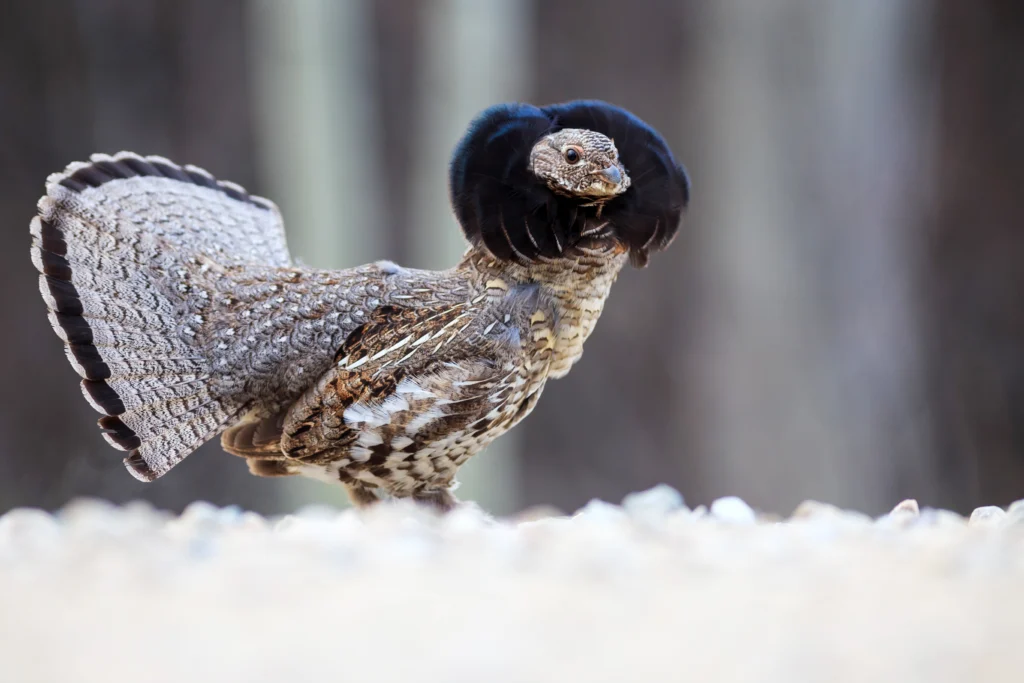
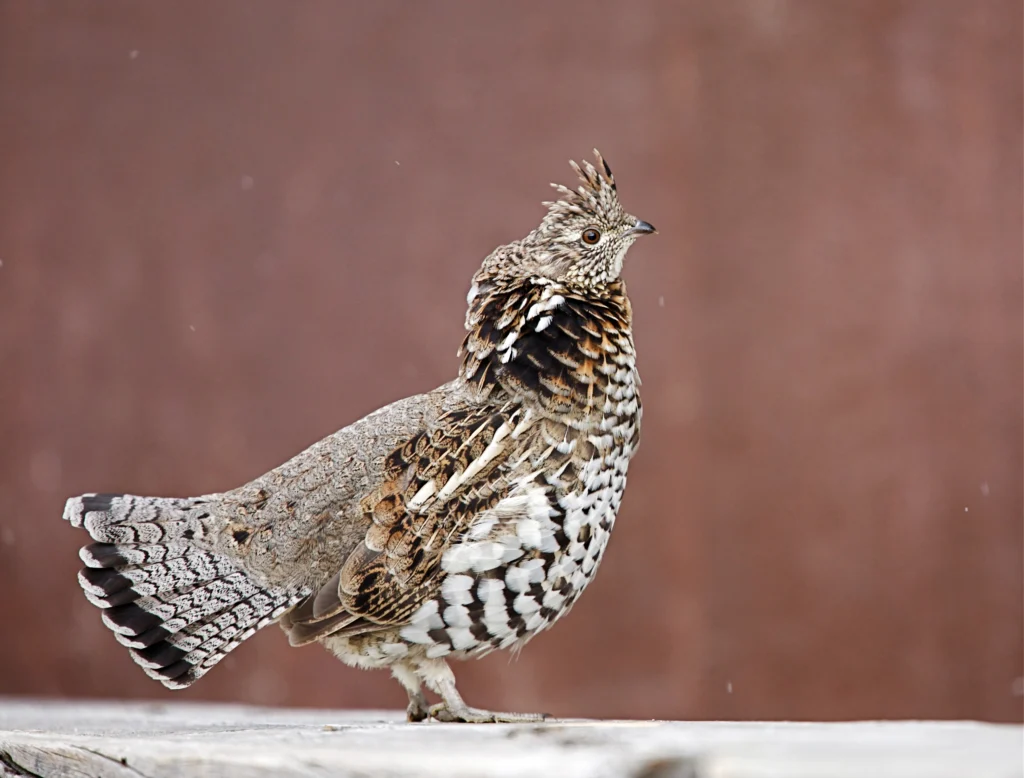
The Ruffed Grouse is typically considered to have two color morphs, one gray overall and one reddish-brown, but individual birds may fall on a spectrum between these two extremes. Males and females are very similar, and all plumages are cryptic and complex, affording these birds excellent camouflage. The underparts show alternating pale and dark bands which grade into spotting on the throat and head. The upperparts are darker, with pale spots and subtle bars. The tail is finely and subtly barred as well, but ends with a prominent pale band with a wide black band just below it. Both sexes also have a head crest, similar in shape to that of a Northern Cardinal, which they can raise and lower. Both the crest and tail tend to be longer in the male than in the female. The “ruff” in its name comes from its black or brown neck feathers, which either sex can flare out into a wide, fluffy collar.
Sonidos
The iconic drumming display of the Ruffed Grouse is by far their most recognizable sound; a series of deep, resonant, thumping pulses that gradually accelerate to a heart-stopping pace before cutting out abruptly. Though heard far less frequently, Ruffed Grouse also produce vocal sounds, a variety of coos, clucks, growls, and hisses given in close-range interactions.
Credit: Andy Martin, XC528040. Accessible at www.xeno-canto.org/528040.
Credit: Bobby Wilcox, XC486226. Accessible at https://xeno-canto.org/486226.
Hábitat
The Ruffed Grouse is most common in aspen groves and mixed forests with both coniferous and deciduous trees.
- Prefers young forest in early stages of succession, with dense undergrowth and open canopy
- In winter, does best in areas with deep snow, where these birds burrow to keep warm
Rango y región
Rango y región
Área específica
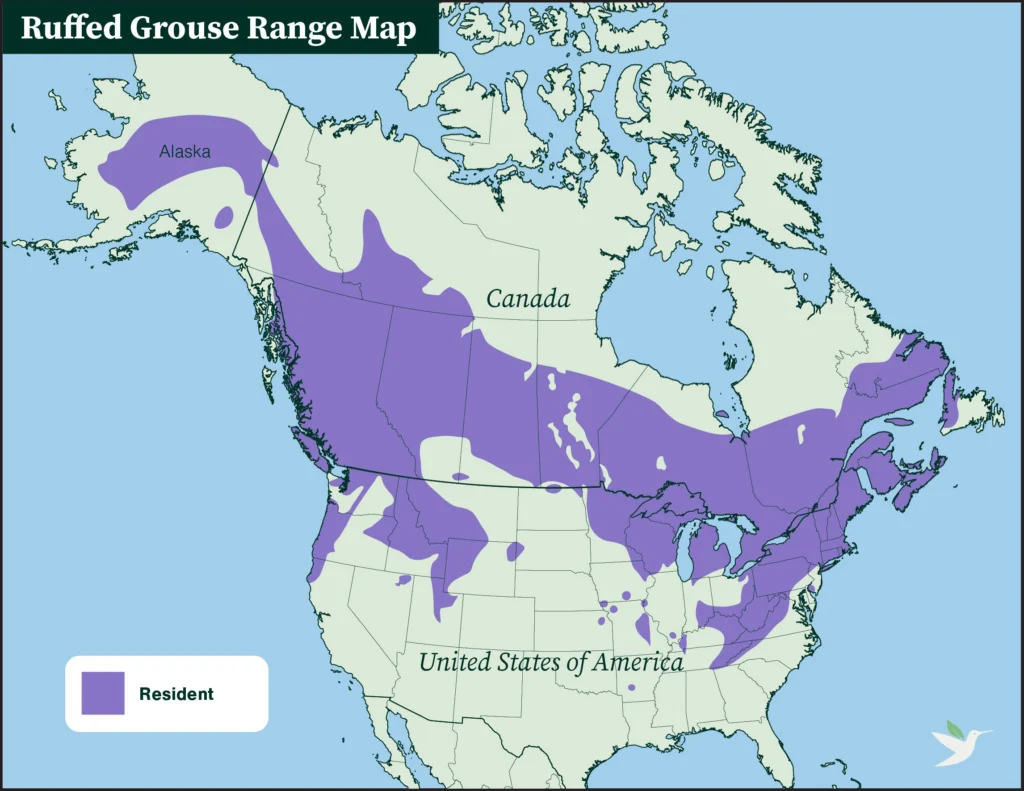
Alaska, Canada, portions of the northern United States
Detalles de la gama
Ruffed Grouse are found in forests from the Appalachian Mountains and Canadian Maritime provinces across Canada to the Northern Rockies and Pacific Northwest, and as far north as central Alaska. These hardy birds can even be found up to treeline in the arctic regions of North America.
¿Sabías?
Although Ruffed Grouse do not migrate, they may make short seasonal movements to areas with more winter cover. Cold winters without snow are particularly hard on the Ruffed Grouse, since they stay warm by burrowing under the snow. A grouse may stay beneath the snow for a few days if the weather is especially severe.
Historia de vida
The Ruffed Grouse is a secretive bird and can be remarkably challenging to see, even when their drumming is nearly deafening. However, they are also notoriously defensive of their young, and may flare their ruffs and bravely challenge any passing hiker. Ruffed Grouse can often be spotted alongside roads and driveways as they seek grit, necessary for digestion. They are also avid dust-bathers, visiting favored sites regularly to powder their feathers, which discourages skin and feather parasites.
Dieta
Ruffed Grouse may forage on the ground under cover, or low in small trees and brush. During the winter, the Ruffed Grouse subsists mainly on the buds and twigs of thin-barked deciduous trees, as well as fruits and acorns when available. In summer and fall, they will eat fruits, berries, seeds, acorns, and leaves. The adults are mostly herbivorous, but primarily feed their chicks a protein-rich diet of insects and other invertebrates, which they need to grow.
Noviazgo
The Ruffed Grouse is a solitary species, unlike other game birds such as the Codorniz norteña y Pavo salvaje. Even during its spring mating season, contact between the sexes is fleeting. When a hen is ready to lay eggs, she will enter a drumming male’s territory and assume a non-threatening posture with her feathers sleeked down and her tail lowered. There is little courtship per se, and the whole encounter, including copulation, lasts only a few minutes. Males will mate with multiple females, and females will visit multiple males.
Anidación
After copulation, the hen leaves the male’s territory to seek a nest site, wandering up to half a mile away. She creates a shallow depression at the base of a tree trunk, stump, or other large cover, which she then lines with nearby vegetation. Otherwise, the nest site is usually fairly open to allow the female a clear view of her surroundings and to facilitate a quick escape.
Huevos y crías
The hen lays a large clutch of 10 to 14 eggs, which she incubates for roughly three weeks. Ruffed Grouse chicks are precocial, emerging from the egg covered in down and able to quickly leave the nest area. Chicks stay with their mother until late September, and are fully grown at four months old. If a fox, weasel, or other predator threatens her young, the hen will try to distract it by charging ferociously or feigning a broken wing.