Descripción general
Acerca de
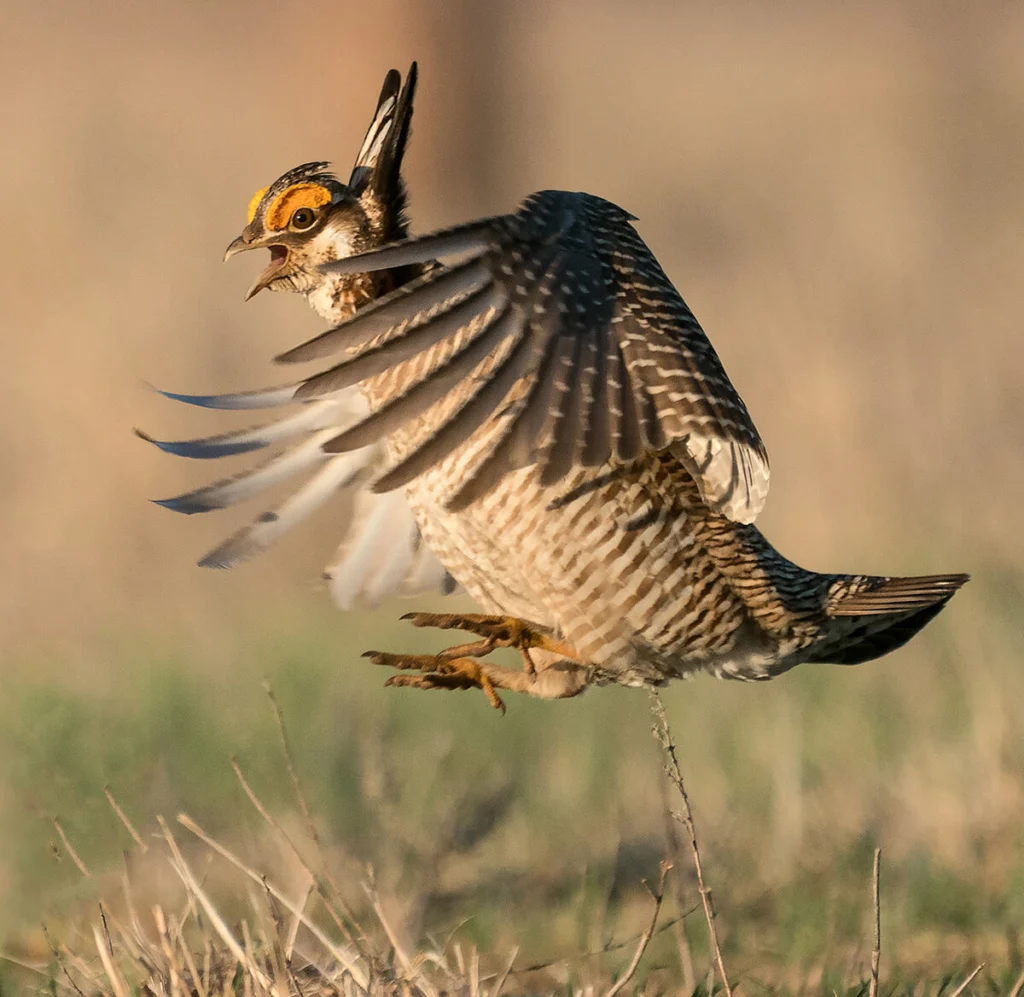
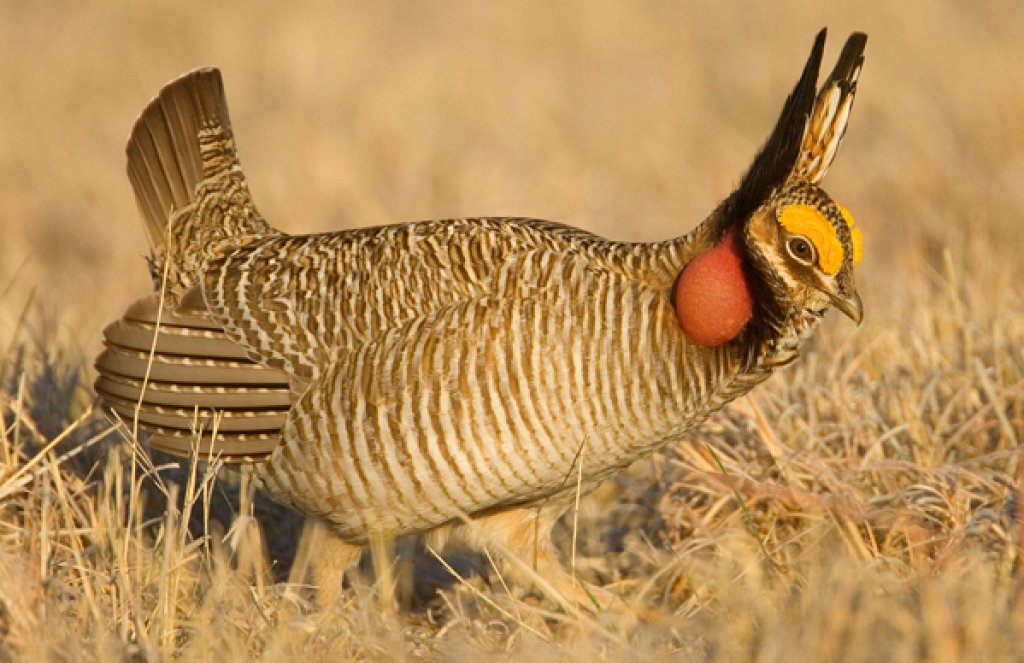
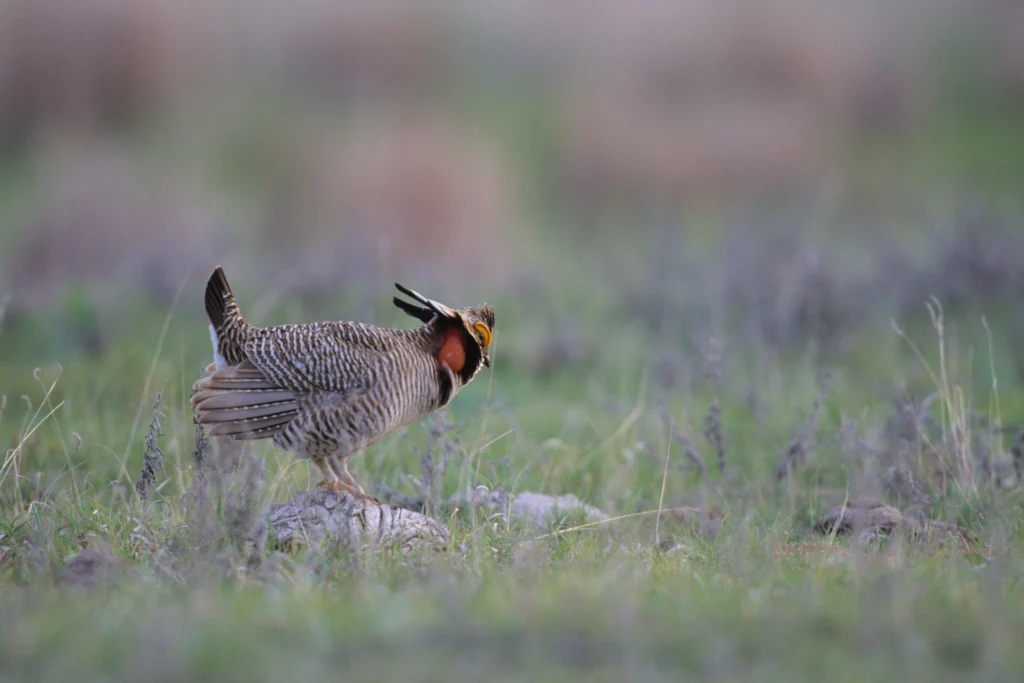
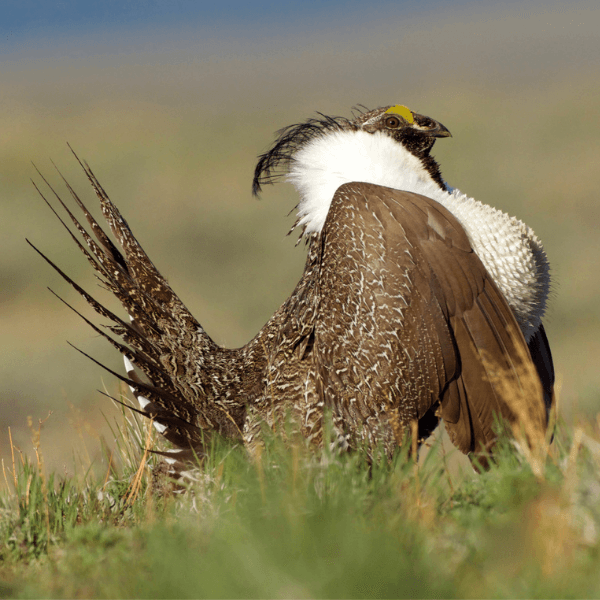
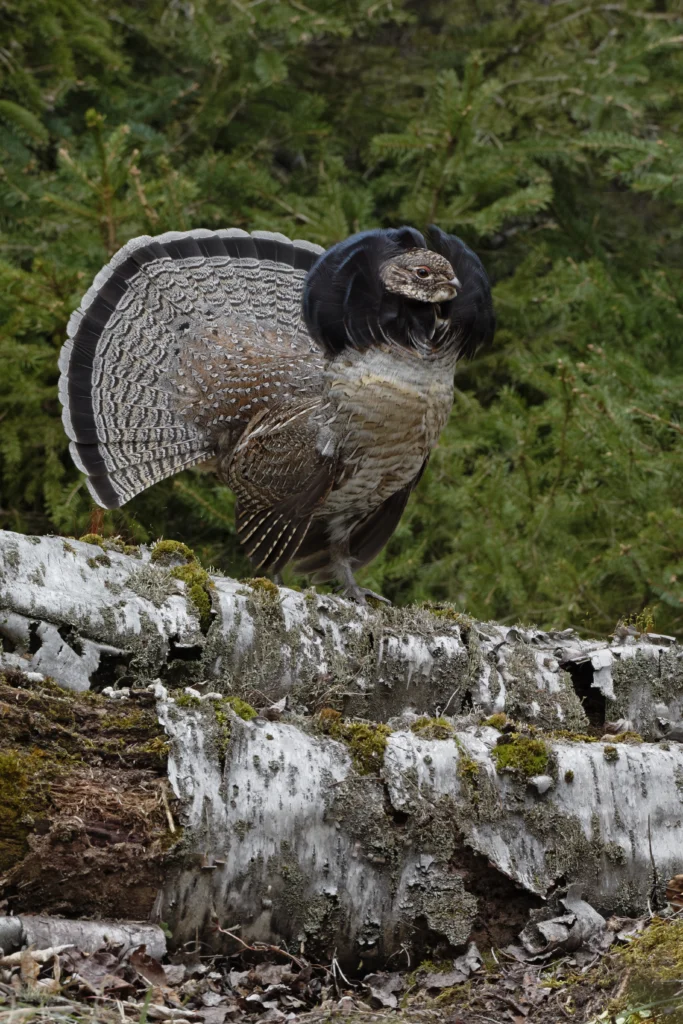
The Lesser Prairie-Chicken is a charismatic species best known for its energetic and bizarre courtship dance. Though cryptically colored overall, males have several outlandish decorations that they display during their performances: large fleshy mustard-yellow “eyebrows” (also referred to as “eye-combs”), which they enlarge; red-orange air sacs on the sides of the throat which they inflate like balloons; and tufts of long dark feathers on either side of the neck, which they erect over their heads like long ears or horns. In dance posture, a male will lean over so that his body is parallel with the ground, extending his wing feathers and raising his tail vertically to display the pure white feathers beneath. He rapidly stamps his feet, and produces characteristic “gobbling” or “booming” calls that he amplifies and modulates with his inflated throat sacs. It is this aspect of their display that gives both the Lesser and Greater Prairie-Chickens their genus name, Tympanuchus. The word comes from the Greek word tympanon (drum) and the Latin word nucha (neck). “Drum neck” refers to these unique resonance organs, which they use to blast their booming calls out across the prairie.
Another fascinating feature of this bird’s natural history is its use of “leks” — traditional performance grounds — for their breeding displays. Lesser Prairie-Chicken leks are sparsely vegetated arenas where dozens of birds display simultaneously, starting before sunrise and continuing for several hours. The leks themselves may be used for decades by multiple generations of birds. Females come to watch the dancing displays and the aggressive interactions between males to assess their options and choose which male will sire their young. As with most polygynous lekking species, only a few dominant males will mate with the majority of females.
Both Lesser Prairie-Chickens and the very similar Greater Prairie-Chickens have earned themselves a unique place in the culture and mythology of the North American Plains. For Indigenous peoples of the Great Plains, prairie-chickens are important spiritual figures, serving as messengers between humans and the gods and figuring prominently in folklore, mythology, and religion. Many Plains tribes perform sacred dances invoking the male prairie-chickens’ displays. However, prairie-chickens were acknowledged for other behaviors as well, including their habit of abruptly taking off from the ground with a startlingly loud burst of flight. In fact, the Osage word for the prairie-chicken was Ushiṭsithe, meaning “the startler.”
The Lesser Prairie-Chicken has lost more than 90 percent of its historic population and now numbers only 28,000 individuals. The decline has primarily been driven by habitat loss and fragmentation — the Lesser Prairie-Chicken’s range has shrunk by 92 percent since the 1800s with the steady expansion of agriculture and urban development.
Amenazas
Birds around the world are declining, and many species are facing urgent, acute threats. Species with strict habitat requirements and limited geographic ranges, like the Lesser Prairie-Chicken, are especially vulnerable to the continued destruction of grassland habitat due to development. Though heavy pressure from hunting by colonial settlers had a huge impact, even causing the extinction of the closely related Heath Hen (Tympanuchus cupido cupido) of the eastern states, regulations have largely put a stop to overharvest of the remaining prairie-chickens. However, habitat loss continues to be an imminent threat.
Praderas y pastizales en desaparición
La pérdida, fragmentación y degradación del hábitat han reducido la distribución del gallo de las praderas chico en un 92 % desde el siglo XIX, debido principalmente a la expansión de la agricultura y el desarrollo urbano. La sequía severa y persistente, la invasión de plantas leñosas y la creciente demanda de combustibles fósiles y el desarrollo de energías renovables (incluida la energía eólica y los biocombustibles) amenazan el hábitat restante de la especie.
Fragmentación del hábitat
The Lesser Prairie-Chicken’s habitat has become fragmented over time due to the conversion of the land it needs to feed, lek, and raise chicks. Fences surrounding cattle pastures and energy infrastructure have isolated populations from one another, leading to lower genetic diversity, thereby increasing susceptibility to weather events, disease, and other hazards.
Uso de pesticidas
La pérdida de hábitat también puede deberse al uso de pesticidas para eliminar arbustos que las gallinas de las praderas utilizan como refugio, pero que aportan poco beneficio al pastoreo del ganado. Los pesticidas también pueden reducir las poblaciones de insectos y plantas que estas aves consumen.
Estrategias y prácticas de conservación
Aves como el gallo de las praderas menor necesitan nuestra ayuda para superar las amenazas que enfrentan. En ABC, nos inspira la maravilla de las aves y nos impulsa la responsabilidad de encontrar soluciones para afrontar sus mayores desafíos. Con la ciencia como base, y con la inclusión y la colaboración como base de todo lo que hacemos, tomamos medidas audaces para proteger a las aves de todo el continente americano.
Peticiones y defensa de derechos
A través de la defensa, ABC garantiza que aves vulnerables como el gallo de las praderas menor tengan un lugar en la mesa. Abogamos por políticas y financiación que marcan la diferencia para las aves y los ecosistemas, como las praderas en desaparición de las Grandes Llanuras. Abordamos problemas complejos cuando las aves están en peligro. Y ayudamos a quienes nos apoyan a convertirse también en defensores de las aves.
Mejorando el hábitat
Debido a diversas amenazas, desde el desarrollo hasta la extinción de incendios, los pastizales son el bioma más amenazado de Norteamérica. Su pérdida pone en riesgo a muchas especies carismáticas, como el gallo de las praderas chico. Restauramos los hábitats de pastizales para las aves reduciendo el crecimiento de arbustos leñosos, reconectando las parcelas fragmentadas de pastizales y restableciendo los niveles naturales de pastoreo.
Cómo evitar los pesticidas
ABC trabaja con socios a nivel estatal y federal en EE. UU. para exigir la regulación o la eliminación de los pesticidas y toxinas más dañinos para las aves, especialmente las especies granívoras y de pastizales como el gallo de las praderas chico. Desarrollamos programas innovadores, como la colaboración directa con agricultores para utilizar semillas sin recubrimiento de neonicotinoides, impulsar la investigación sobre el impacto de los pesticidas en las aves y animar a millones de personas a evitar el uso de pesticidas dañinos.
Galería de aves
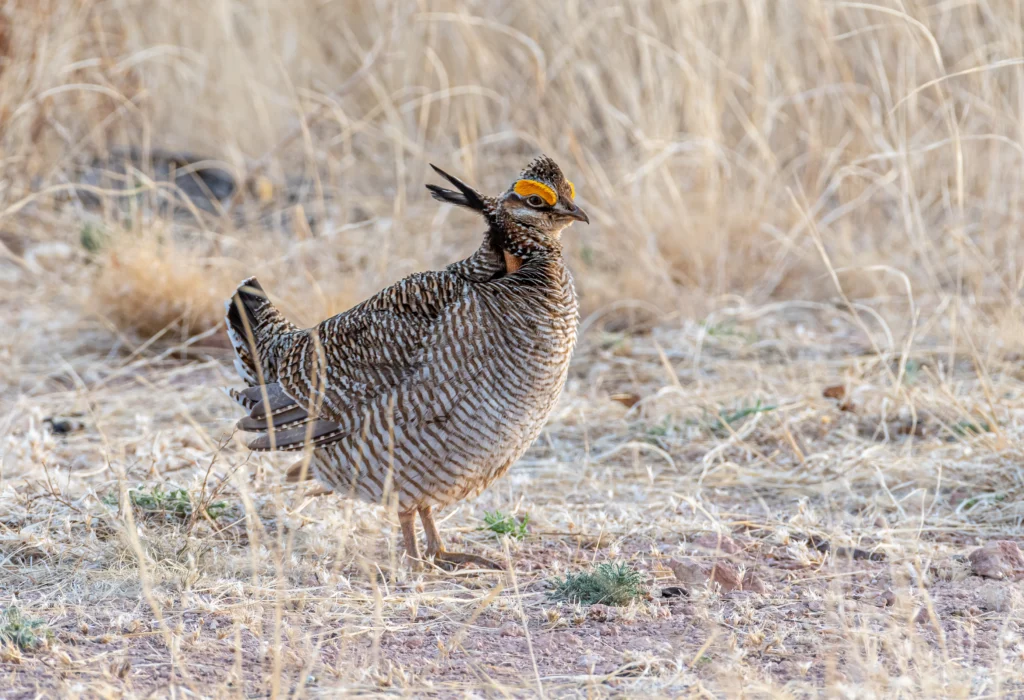
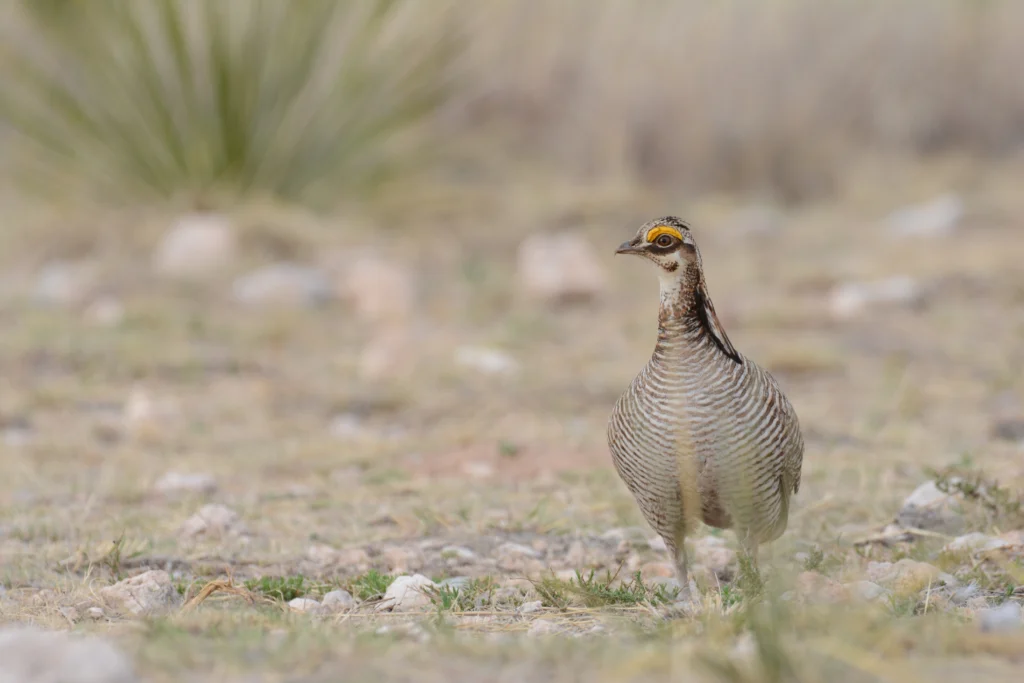
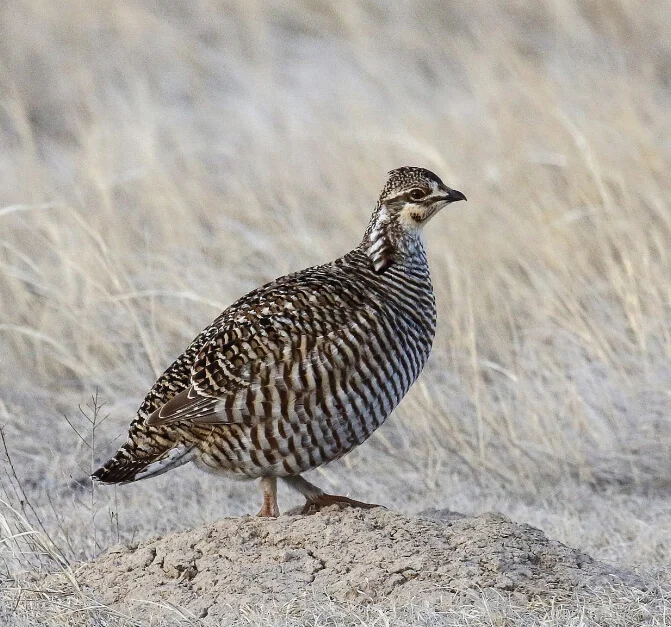
The Lesser Prairie-Chicken is about the size and shape of a football. Both sexes are mostly barred with alternating cinnamon brown and buffy white, paler below and darker above. The male can be distinguished by his colorful adornments, including the reddish-orange air sacs on his neck, the elongated feather tufts on either side of the neck, and the bright yellow inflatable skin patches above his eyes. The tail, primaries, and feather tufts on males are mostly a dark chocolate brown.
Sonidos
Male Lesser Prairie-Chickens produce their characteristic display sounds with the combined action of their vocal organ (the syrinx) and their inflated neck sacs. These calls have a peculiar bubbling, gobbling quality. Both sexes also give a nasal, chicken-like Cackle Call, as well as a variety of other vocalizations.
Crédito: Andrew Spencer, XC33960. Accesible en www.xeno-canto.org/33960.
Crédito: Andrew Spencer, XC33962. Accesible en www.xeno-canto.org/33962.
Hábitat
Lesser Prairie-Chickens favor native shortgrass prairie on sandy soils, interspersed with clumps of sagebrush and low-growing thickets of shinnery oak (Quercus havardii).
- Leks are sparsely vegetated and usually located on hills
- En la temporada no reproductiva, busca semillas en campos agrícolas y se refugia en la vegetación ribereña.
Rango y región
Rango y región
Área específica
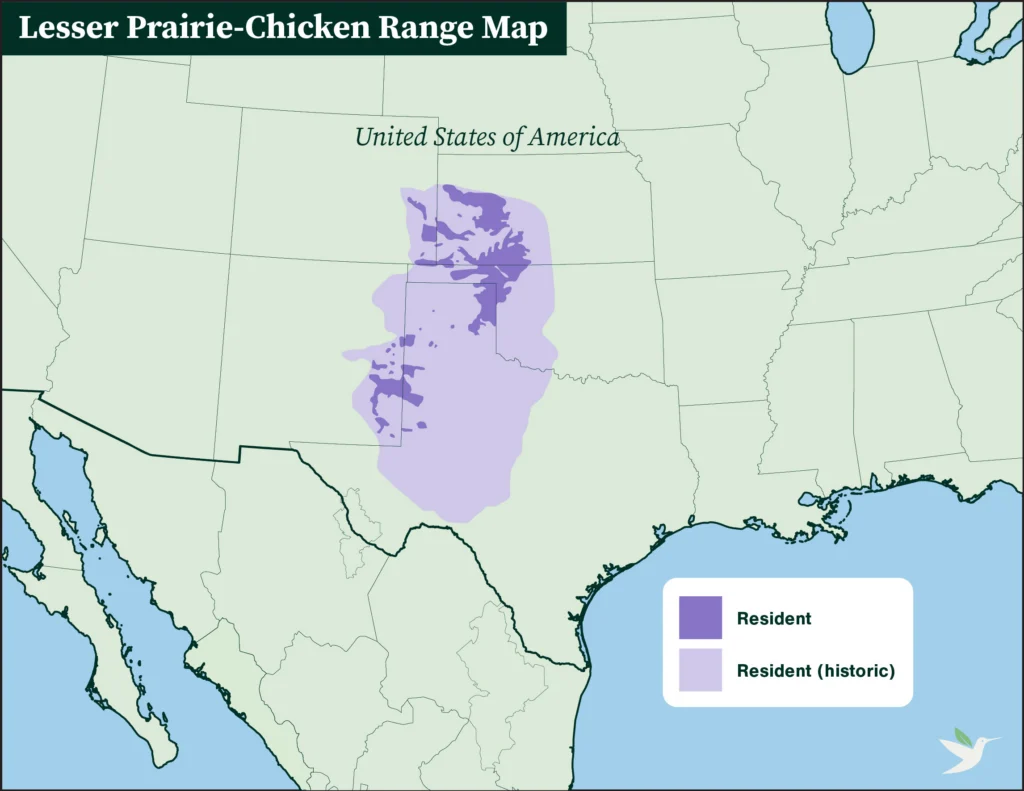
El rango restringido incluye partes de Colorado, Kansas, Oklahoma, Texas y Nuevo México.
Detalles de la gama
El gallo de las praderas menor reside en toda su limitada área de distribución en las Altas Llanuras del sur. Algunos registros históricos sugieren que esta especie podría haberse desplazado estacionalmente, pero no existe evidencia contemporánea de movimientos estacionales regulares.
¿Sabías?
Los gallos de las praderas son sensibles a las perturbaciones en sus leks, y estos pueden abandonarse tras incendios o prácticas agrícolas. Sin embargo, se pueden establecer nuevos leks en sitios previamente perturbados, como yacimientos petrolíferos y carreteras.
Historia de vida
Lesser Prairie-Chickens are most easily spotted on their leks, where males gather to display, and females come to watch and decide who will sire their offspring of the season. Though leks are not large and can be quite crowded with 10–20 males displaying, each male stakes out his own tiny territory a few meters across and defends it aggressively. And location matters — prime positions are in the center of the lek, and these are occupied by the dominant males.
Dieta
The Lesser Prairie-Chicken’s diet varies with the seasons. In the summer, this grassland species feeds heavily on insects, including grasshoppers, crickets, and beetles. During the fall and winter, the birds gather in flocks to dine on seeds, leaves, and waste grain from agricultural fields. They forage mostly on the ground and may fly several miles each day from roosting areas to good feeding sites.
Noviazgo
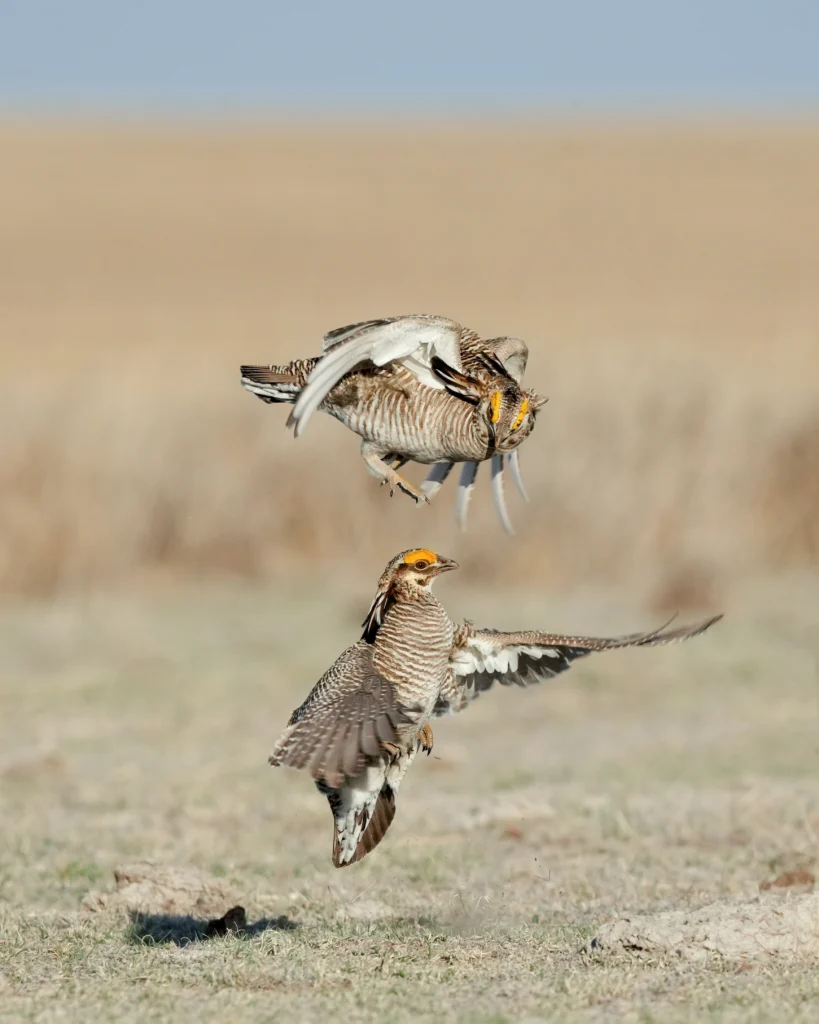
El cortejo en esta especie es elaborado e incluye una serie de exhibiciones ritualizadas que involucran movimiento, color y sonido. Además de las posturas y pisotones habituales, los machos de exhibición saltan hasta 3 metros de altura con "saltos de aleteo" para impresionar a las hembras visitantes. En cuanto a la selección de pareja, las hembras de los gallos de pradera son las que mandan, apareándose solo con los machos más fuertes y dominantes del lek.
Anidación
Al igual que todas las especies de aves polígamas, incluidas las Pavo salvaje y Urogallo de las artemisas, Lesser Prairie-Chickens don’t form pair bonds, and the female is on her own after mating. She leaves the lek to nest in a shallow depression dug in the sandy soil and lined with grass, leaves, and feathers.
Huevos y crías
The female lays 11 to 13 eggs, which she incubates for almost a month. The downy chicks hatch with eyes open and leave the nest shortly afterwards. The female broods her young nightly for the first few weeks after they hatch to keep them warm, although the chicks can feed themselves as soon as they hatch.