Descripción general
Acerca de
In the hot, dry coastal plain of northwestern South America, the Peruvian Thick-knee makes its living as an unusual, desert-dwelling “shorebird.” Like other members of the thick-knee family, a group also known as stone-plovers, the Peruvian Thick-knee is found in arid inland habitats, usually far from water. Mostly nocturnal — aided by their unusually large, night-adapted eyes — these leggy birds rest through the daylight hours, in shade if available, but otherwise in the open sun. As with the other thick-knees, the Peruvian Thick-knee is remarkably inconspicuous against the arid backdrop, with its dusty, gray-brown plumage. Although these birds often roost through the day in groups of up to 40, their silence, stillness, and camouflage make them notoriously difficult to spot.
However, all that changes as twilight approaches. Once the sun is down, Peruvian Thick-knees are active and notably vocal, their loud calls carrying far and wide over the open expanses of their home. Their typical call — a strident, nasal ka-ka-ka-ka! — is well-known to locals, and the source of their local name, huerequere. However, despite it being a familiar bird of the region, this species has largely escaped the attention of ornithologists, and much of its basic biology remains unknown.

Amenazas
The Peruvian Thick-knee is an understudied species, and many aspects of its basic biology are unknown. This is true of the overall health of the species as well. While evidence suggests these birds are declining, little is known about the specific causes for this or the threats they face. One important factor that has been identified, however, is habitat loss.
Open Spaces Disappearing
Habitat loss is a universal threat to birds. Peruvian Thick-knees have adapted well to agriculture as it has spread across the grasslands and scrub of their home. However, thick-knees require open habitat, so while alfalfa fields may suit them well, they won’t use olive orchards or tomato plantations. Additionally, oil drilling and urban expansion continue to eliminate habitat from this species’ range, particularly in Ecuador.
Estrategias y proyectos de conservación
Birds like the Peruvian Thick-knee need our help to overcome the threats they face. At ABC, we’re inspired by the wonder of birds and driven by our responsibility to find solutions to meet their greatest challenges. With science as our foundation, and with inclusion and partnership at the heart of all we do, we take bold action for birds across the Americas.
Crear y mantener reservas
El hábitat es fundamental para la supervivencia de las aves. Trabajando con decenas de socios y comunidades locales en toda Latinoamérica y el Caribe, ABC apoya una creciente red de áreas protegidas en más de una docena de países. Con un total de más de 1,3 millones de acres, casi un tercio de la avifauna mundial (más de 3.000 especies) está protegida por una reserva apoyada por ABC.
Galería de aves
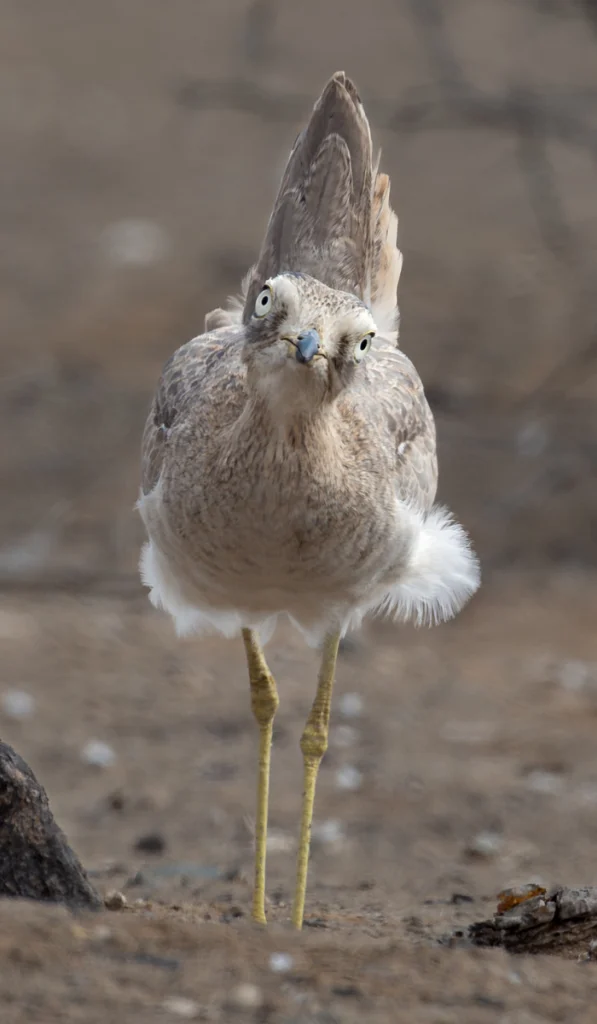
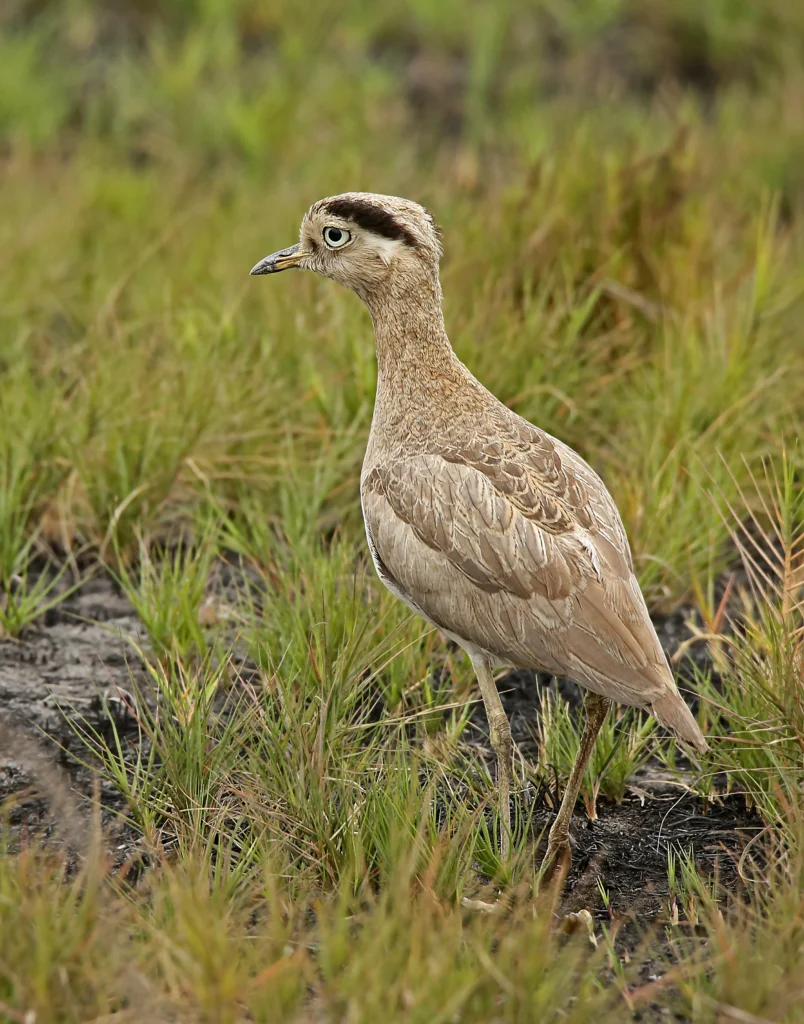
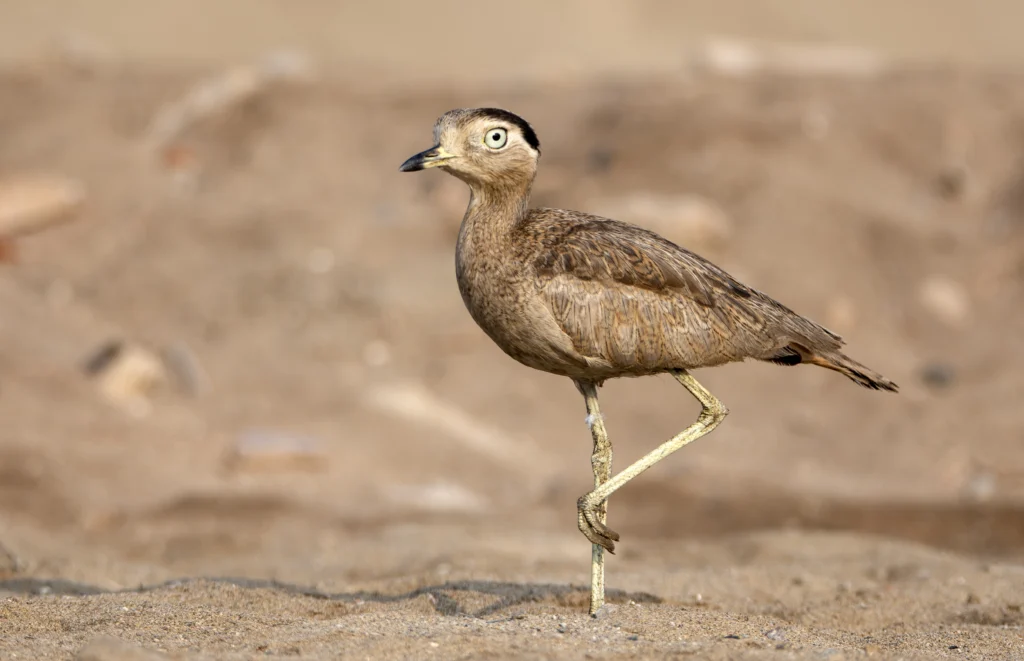
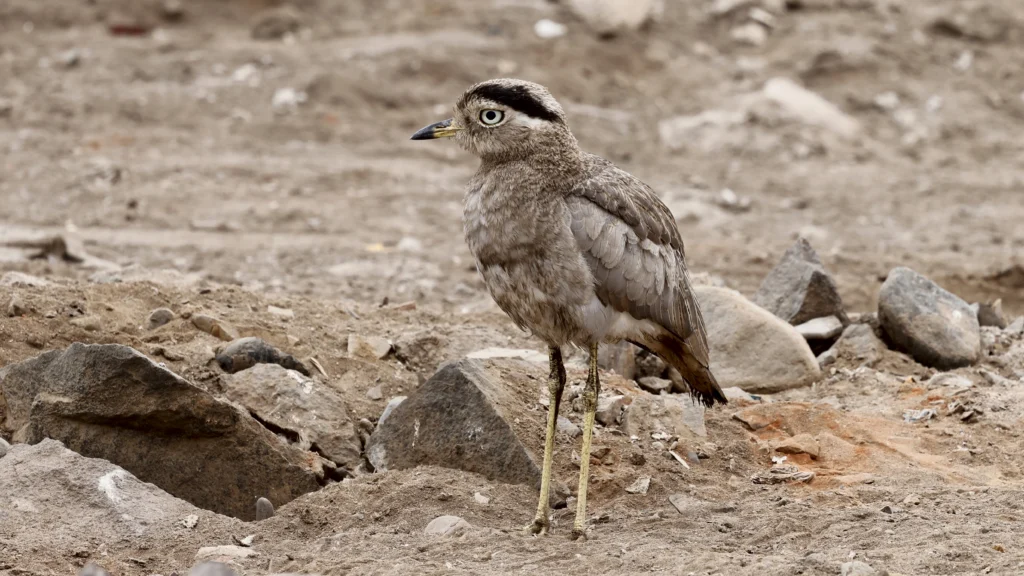
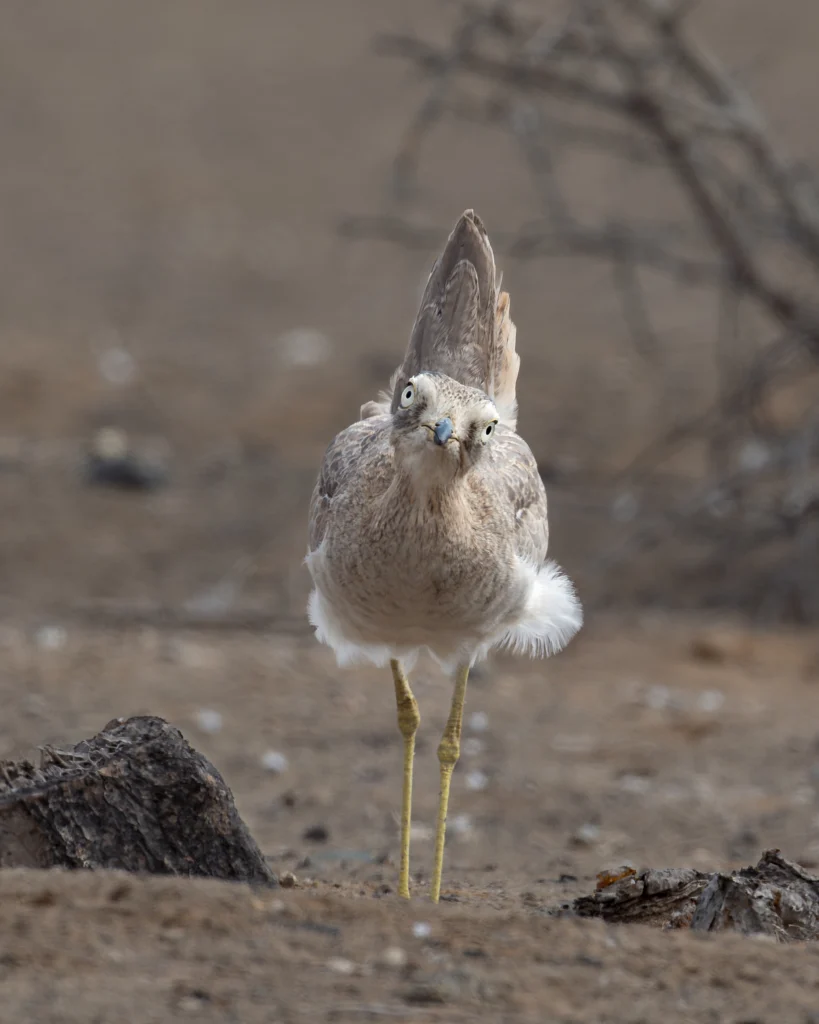
The Peruvian Thick-knee is a tall shorebird with long yellow legs, large yellow eyes, and a relatively short yellow and black bill. These birds are white below and gray to beige above, making them well camouflaged in the open, arid deserts and grasslands that they call home. A broad white stripe runs over the eye to the back of the head, with a black stripe just above it. In flight, the wings are primarily dark brown to black, with a large, prominent white patch in the outermost flight feathers.
Sonidos
The Peruvian Thick-knee is most frequently heard at night, particularly as part of a nocturnal flight display. In alarm, these birds give a low, rising trill.
Credit: Andrew Spencer, XC73137. Accessible at www.xeno-canto.org/73137.
Credit: Paul Coopmans, XC264402. Accessible at www.xeno-canto.org/264402.
Hábitat
The Peruvian Thick-knee is a bird of open, dry areas with sparse vegetation.
- Frequently found in agricultural areas, grassland, and semi-desert
- Also uses shrubland in Andean foothills
Rango y región
Rango y región
Área específica
Northwest coast of South America
Detalles de la gama
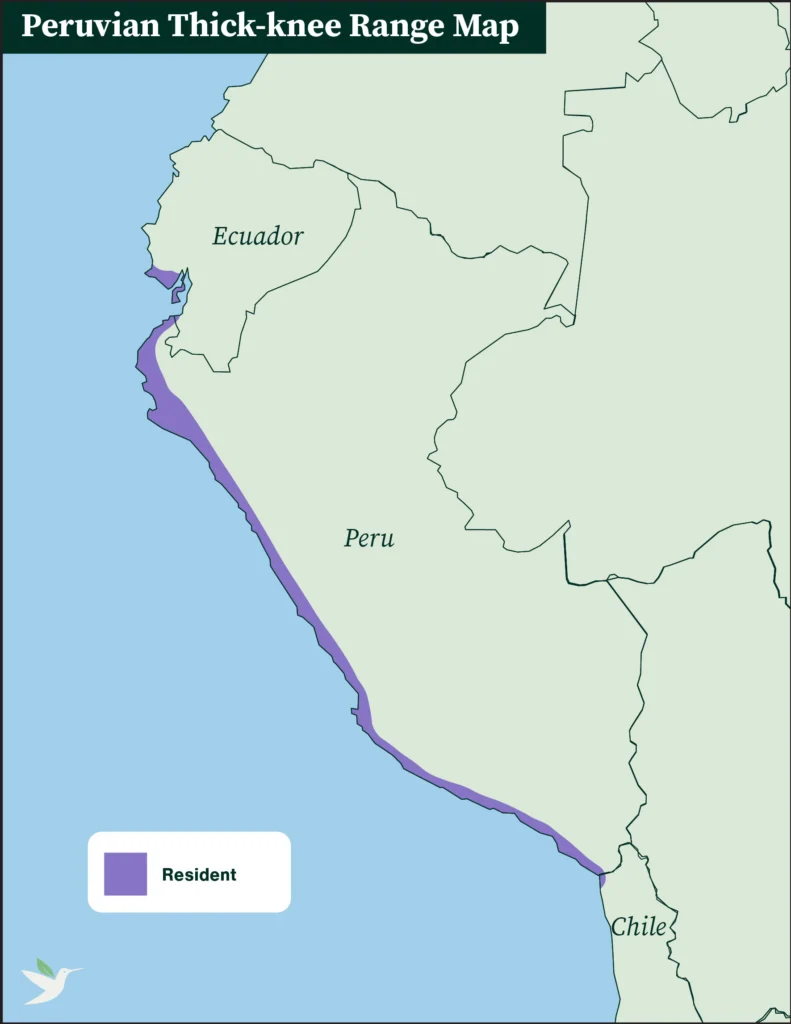
The Peruvian Thick-knee is endemic to the northern Pacific Coast of South America, ranging from the extreme southern tip of Ecuador, across the entire Peruvian coastline, to the northernmost coast of Chile.
¿Sabías?
While Peruvian Thick-knees have excellent camouflage for their environment, the white patches on their wings stand out noticeably when exposed — even at night, when thick-knees use them in display. Because pure white reflects all wavelengths of light, these patches stand out even in the dark, making the most of the minimal nighttime illumination. In fact, white color patches are used in nocturnal displays across a broad range of bird species, each taking advantage of limited ambient light.
Historia de vida
The Peruvian Thick-knee is incredibly difficult to spot in the daytime and is most easily identified by its trilling calls at night. Even the most basic features of the bird’s life history remain mysterious, and like many species of the region, the Peruvian Thick-knee has not been extensively studied. However, some details can be inferred from what is known of the other thick-knees.
Dieta
The Peruvian Thick-knee’s diet and foraging behavior have not been documented in peer-reviewed literature. However, the other thick-knees eat invertebrates and sometimes small vertebrates. In the Peruvian Thick-knee’s habitat, the available food items probably include insects and other desert arthropods, as well as small lizards.
Noviazgo
Some authors note that Peruvian Thick-knees display at night, although no description has been published. Several thick-knee species are noted for having elaborate courtship displays involving ritualized dance-like movements, often displaying the contrasting black and white patches on the flight feathers of the wings. These displays take place at night.
Anidación
Only a handful of Peruvian Thick-knee nests have been described in the scientific literature. Typical of other thick-knees, these have been shallow scrapes on bare ground. Nests may be surrounded by or adjacent to low scrubby plants or tufts of grass. Observers have noted some instances where several pairs will nest together in close proximity.
Huevos y crías
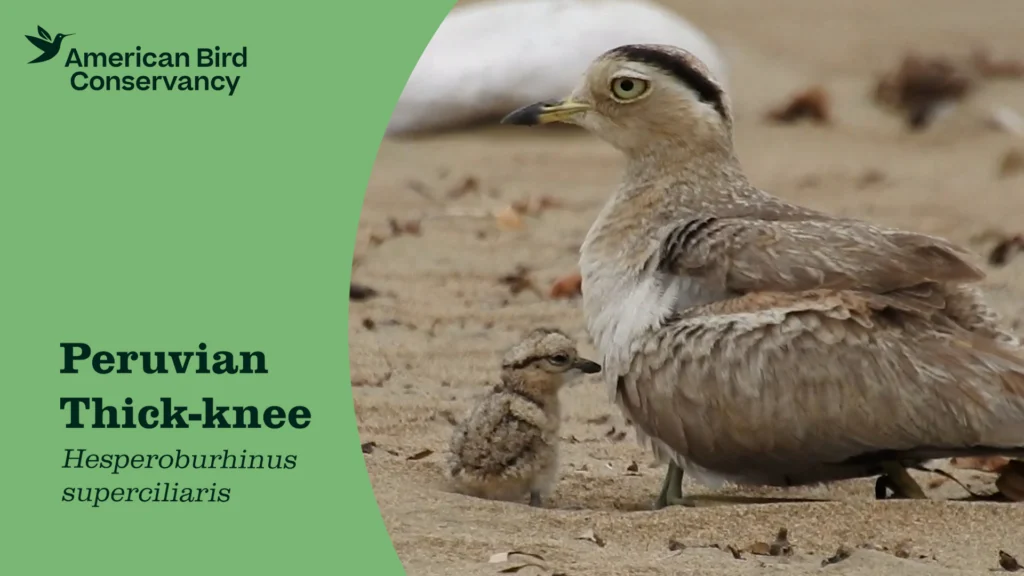
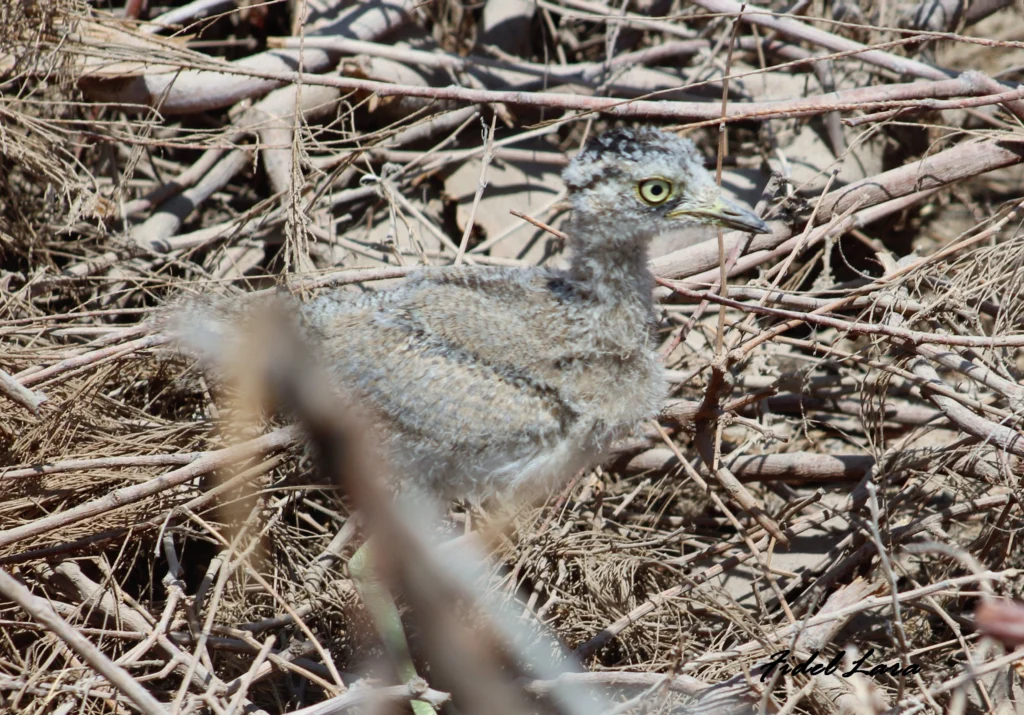
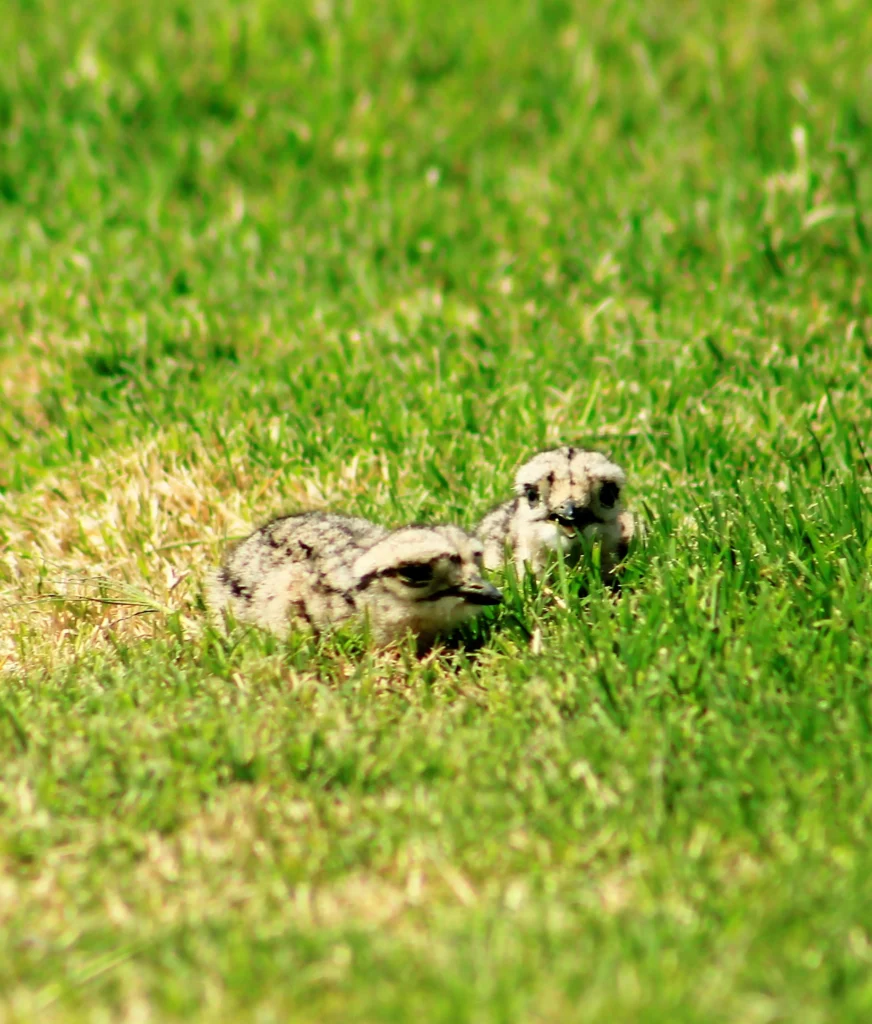
The nests that have been found each had two eggs, which is typical of other thick-knees as well. The eggs are a pale beige-cream-gray with dark brown spots. In general, thick-knee parents are both heavily involved in rearing the young. Both parents build the nest, incubate the eggs, and care for the young. Eggs hatch after three or four weeks, and the young are able to walk and leave the nest within a day. However, it takes six or seven weeks for the young to fly.