Landscape View of River. Photo by Jean-Francois Frenel, Pexels.

Killdeer

Charadrius vociferus

Tsaspagaganesees (Cree)

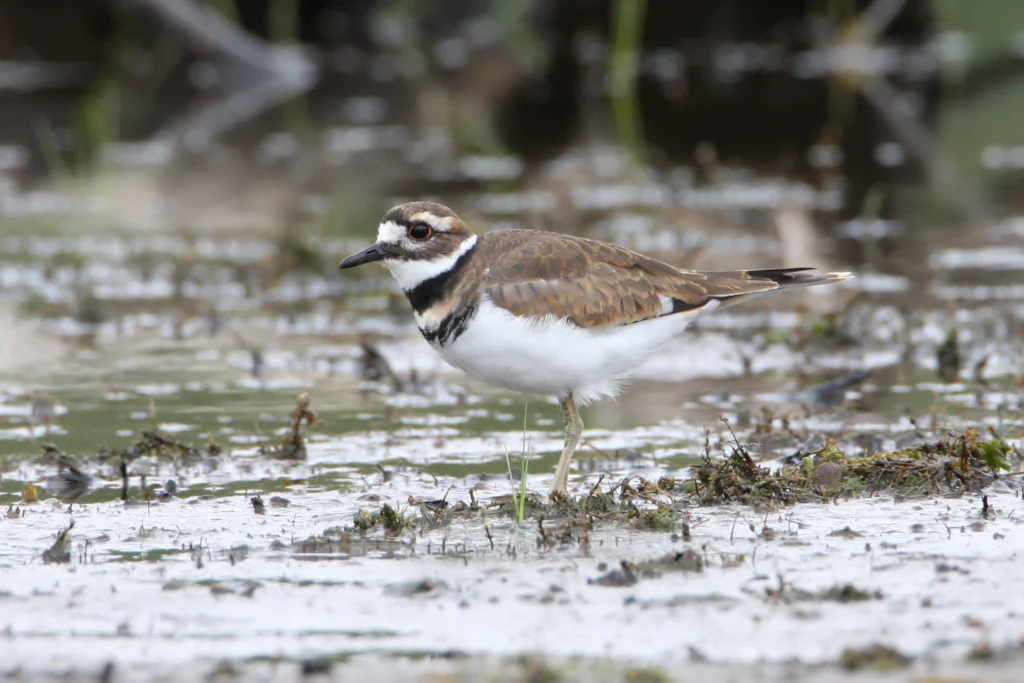
Killdeer. Photo by Larry Master, masterimages.org

Killdeer

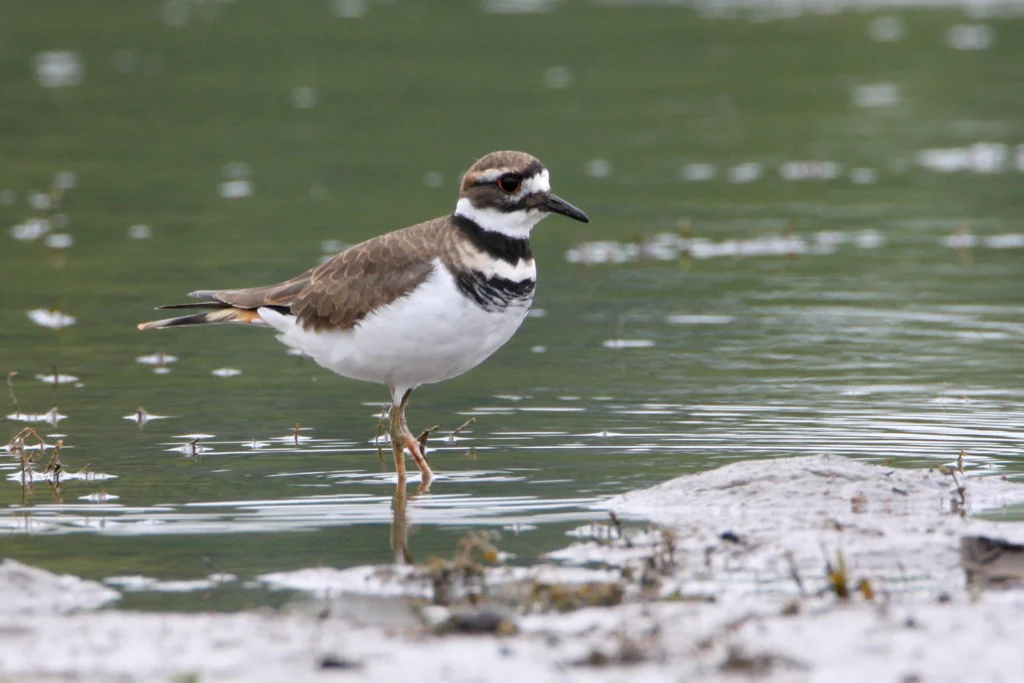
Killdeer. Photo by Larry Master, masterimages.org

Charadrius vociferus

Overview

Conservation Status
Population Trends
Decreasing
Population Size
2.3 million
Family
Plovers
Location
Caribbean
North America
South America
Migration Pattern
Latitudinal
Migration Distance
Long Distance
Also Known As
  • Noisy Plover
  • Chorlo Gritón (Spanish)
  • Títere Sabanero (Spanish)
  • Fraile (Spanish)

About

The Killdeer is the largest and most familiar of the “ringed” plovers, a group that includes the Piping and Wilson’s Plovers. Although classified as a shorebird, this conspicuous, double-banded species is often found in areas far from water, similar to other shorebirds such as the Mountain Plover or Long-billed Curlew.

Across most of North America, the Killdeer is a familiar species, thanks to its presence in open habitats and its loud calls, which give it both its common and scientific species names: “Killdeer,” for one of its common calls, and “vociferus,” from the Latin for “shouting” or “yelling”.

In earlier times, the Killdeer was also known as the Chattering Plover or the Noisy Plover — both nods to its vocal nature. Killdeer often call in flight and at night. When disturbed, they give a prolonged chattering call and are frequently the first birds to sound an alarm if a predator or other threat approaches.

Killdeer have adapted well to the vast changes humans have made to the landscapes of the Americas in the past several hundred years. With their preference for flat, open, unvegetated habitat, these birds can thrive on farmland, construction sites, and essentially anywhere with extensive gravel, including along train tracks, in parking lots, and even the tops of tall buildings. Killdeer are thought to have had a fairly limited distribution until relatively recently. However, this proximity to people has come with a suite of threats, including increased exposure to pesticides and risk of collisions with large structures and vehicles.
Threats

Since the Killdeer adapts well to human habitats, it remains a common and widespread species in many areas. This proximity carries some risks, though. Taking advantage of the various human-made habitats also puts Killdeer at higher risk of coming into contact with hazards such as pesticides, communication towers, and glass windows.

Pesticides

Pesticide poisoning poses a major threat because Killdeer forage on lawns and other open spaces that are often sprayed with toxins. Although DDT has been banned in the United States, other toxic chemicals are still in use, such as neonicotinoids, chlorpyrifos, and glyphosate (used in a familiar and widely available weed killer). Pesticides can also affect insect populations, the chief food source for this bird.

Pesticides & Toxins

Collisions

Killdeer are vulnerable to collisions with towers, buildings, and cars, as nesting birds are attracted to the gravel surrounding building pads and along road shoulders. In addition, mowing equipment can damage nests and kill or injure young, and also disturb breeding birds. In mowed areas, locating nests first and marking the area as a temporary “no-mow” zone is essential for individual nest success.

Glass Collisions

Conservation Strategies & Projects

Many of ABC’s policy programs help to reduce the impacts of pesticides and collisions with buildings and wind turbines on Killdeer, as well as other birds. We’re fighting to block or restrict dangerous pesticides in homes, gardens, and in agriculture. We study and test approaches to making buildings bird-friendly, and recommend changes to skyscrapers, towers, powerlines, and other structures to minimize impacts on migrating birds. We also advocate for stronger local, state, and federal regulations to protect birds and other wildlife from these threats.

Avoid Pesticides & Toxins

ABC works with partners at the state and federal levels in the U.S. to call for the regulation or cancellation of the pesticides and toxins most harmful to birds. We develop innovative programs, like working directly with farmers to use neonicotinoid coating-free seeds, advancing research into pesticides’ toll on birds, and encouraging millions to pass on using harmful pesticides.

Pesticides & Toxins

Preventing Glass Collisions

ABC has been a leader in the effort to reduce the devastating toll of glass collisions on birds. We’ve developed innovative methods for evaluating the effectiveness of collision deterrents, created resources to elevate our collective understanding of collisions and make solutions readily accessible, and advocated for bird-friendly policies in the U.S.

Preventing Glass Collisions

Rethink Wind Turbines

If not sited properly, wind turbines can spell disaster for migrating birds. ABC’s science-backed approach to Bird-Smart wind energy identifies the most critical areas for birds and provides guidance to the wind industry to support safer wind solutions for birds.

Rethinking Wind Turbines

Bird Gallery

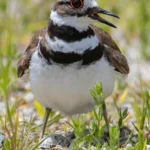
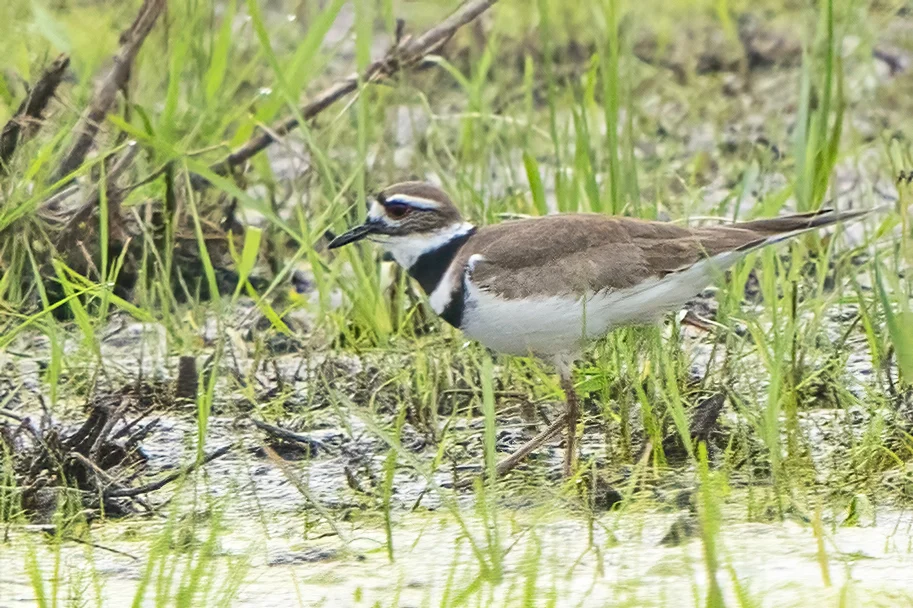
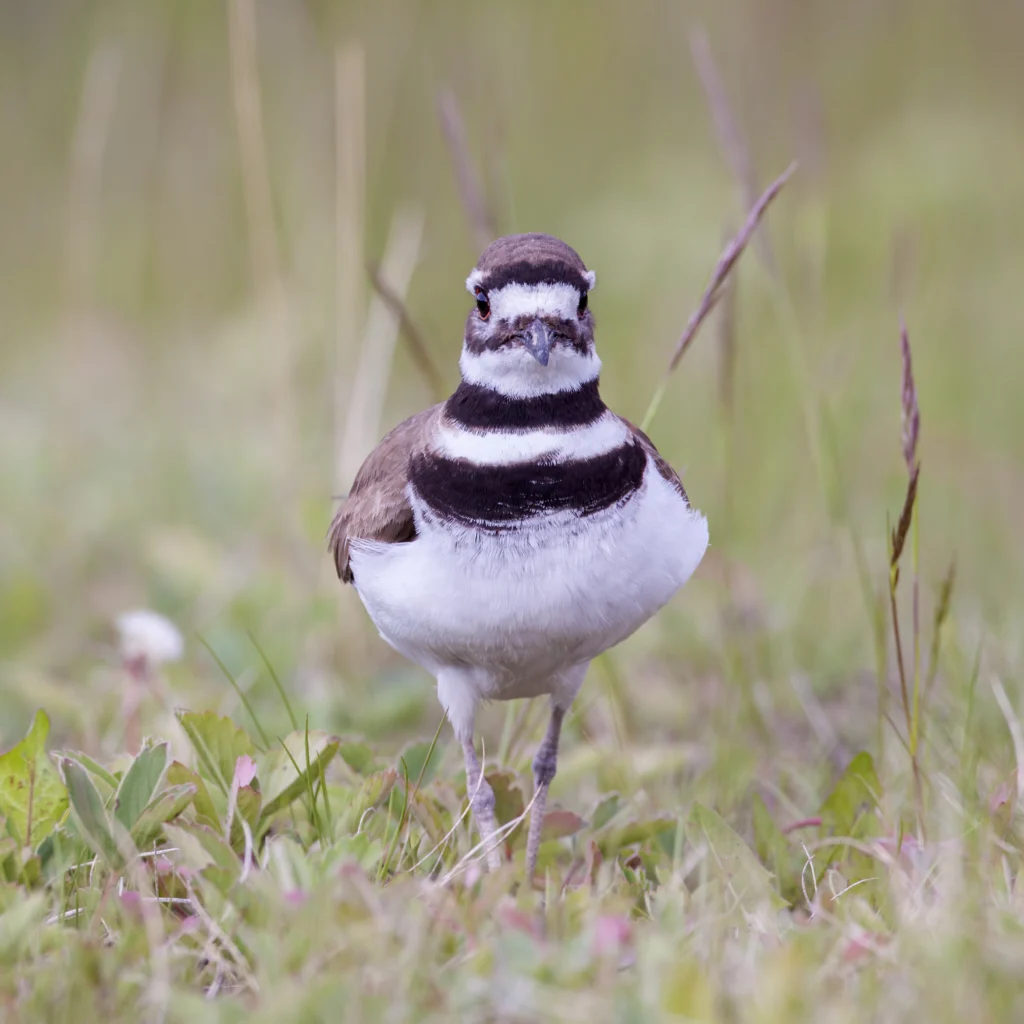
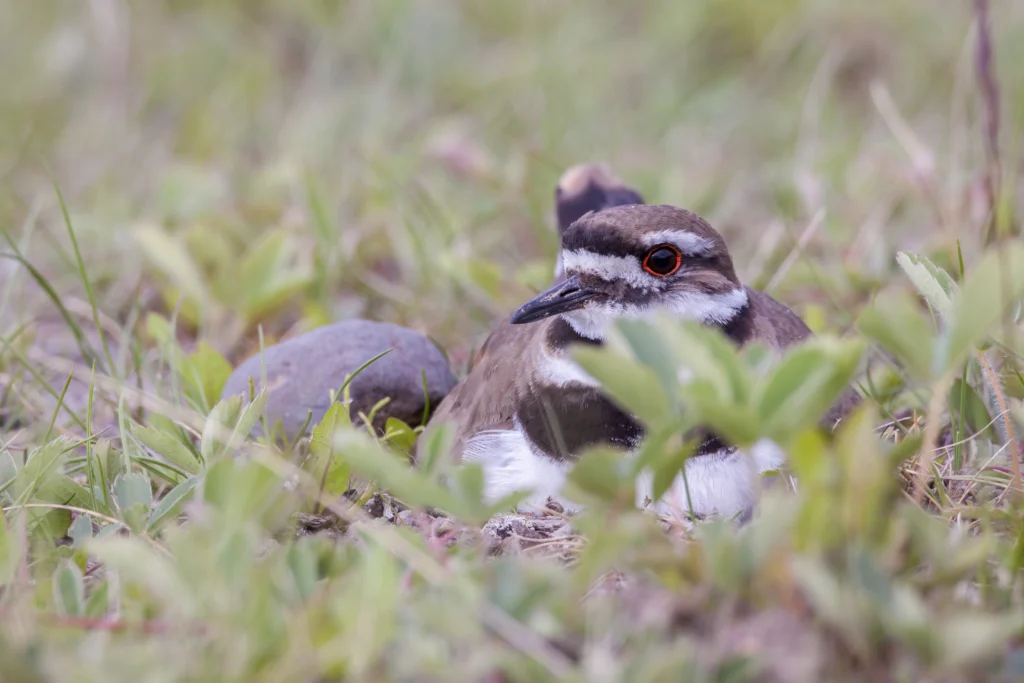
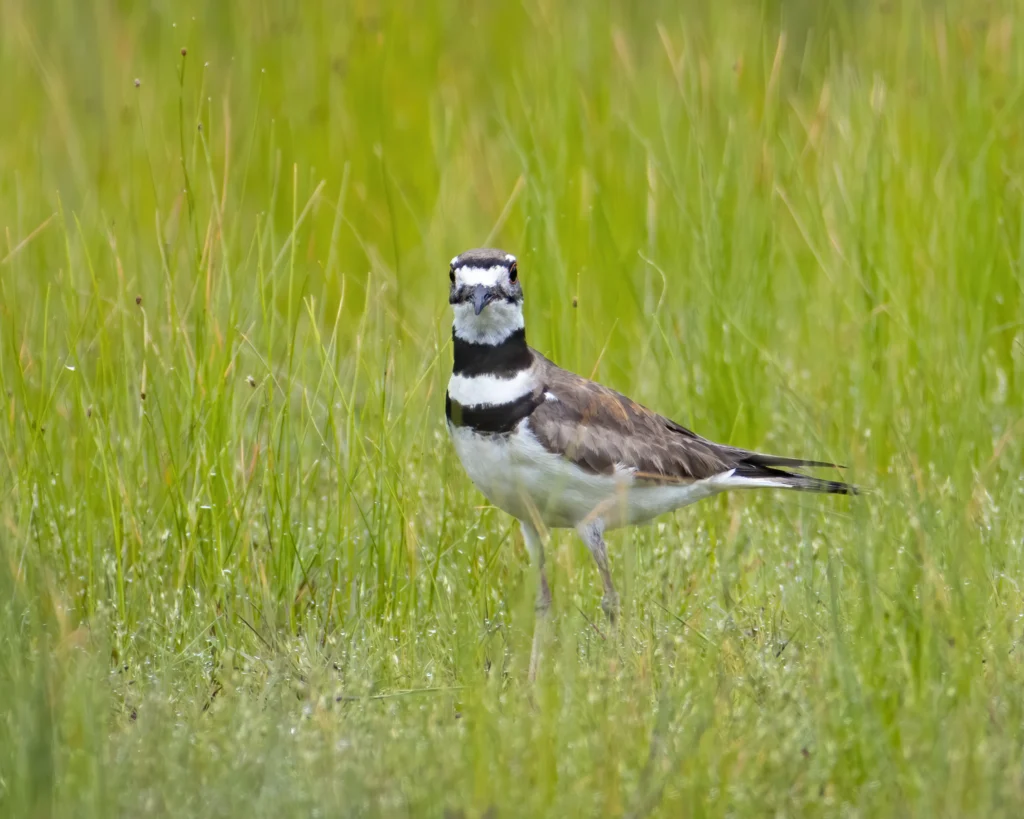
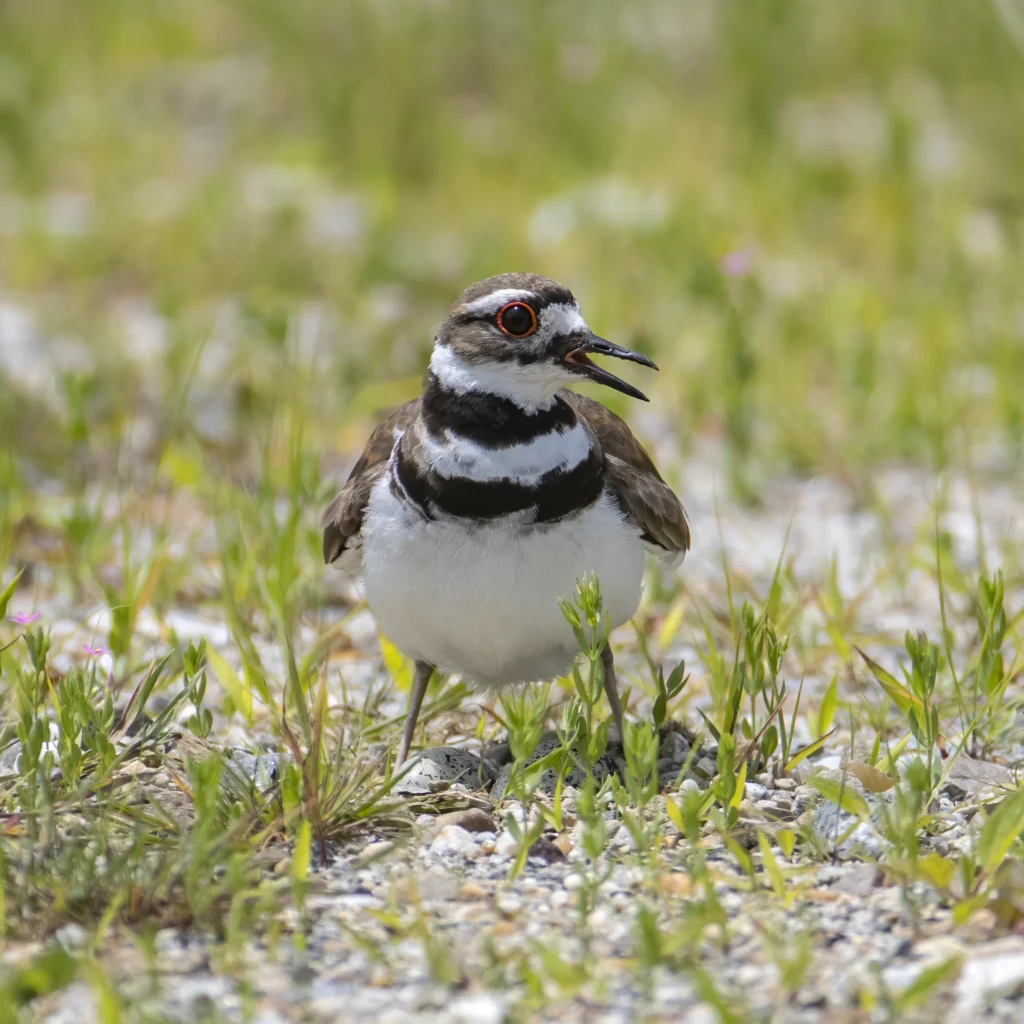
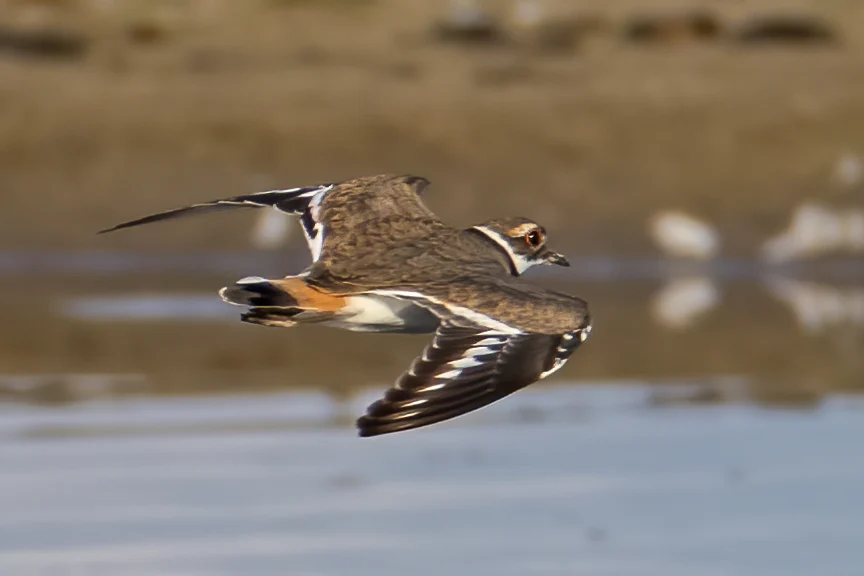
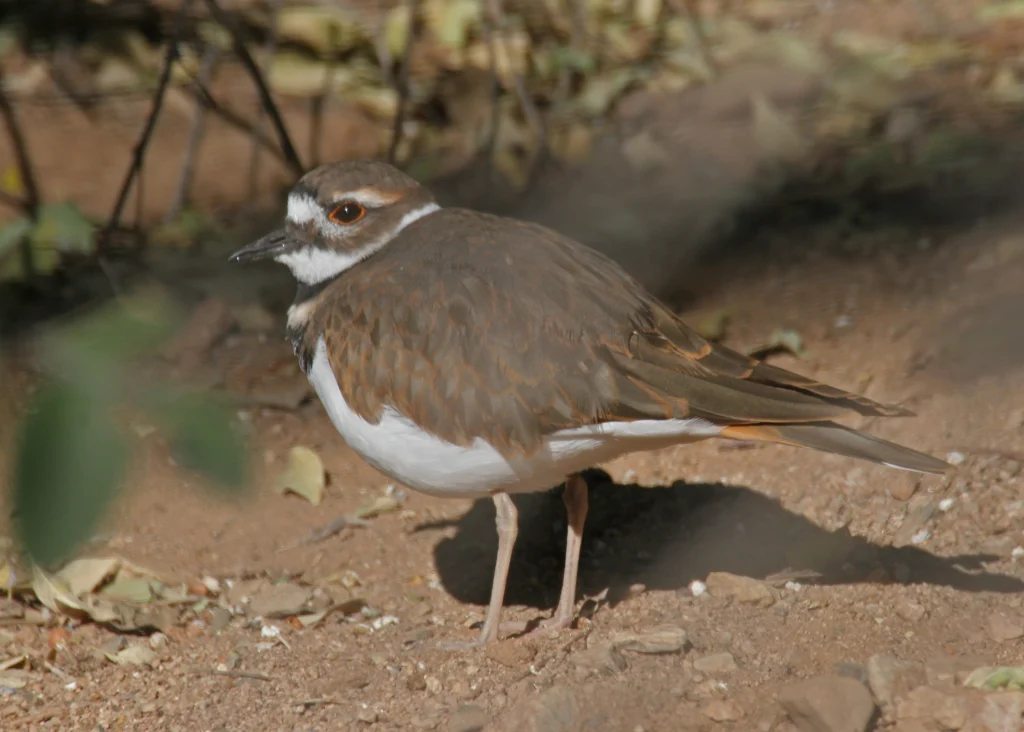
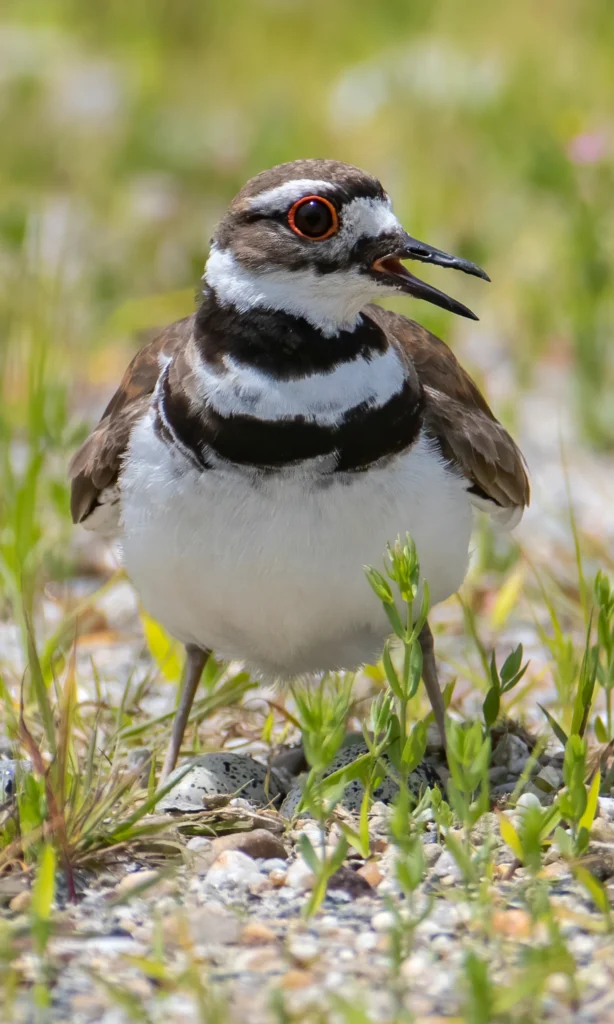
Killdeer have the typical plover body shape: Tall, stilt-like legs, long wings, and a round, upright head with large eyes. Killdeer usually hold their bodies horizontal to the ground. The underparts are clean white, with a thick black band across the lower breast and another just below the neck. The upperparts are a flat gray-brown, sometimes with rufous edging to the feathers on the back and upper wings. The head is mostly gray-brown as well, except for a white patch between the eyes, a black bar above this, and white patches extending behind the tops of the eyes. The rump and most of the tail are rufous, and the tail ends in a black band with a white outer fringe. A thin red or orange ring of bare skin surrounds the eye.

Sounds

The Killdeer is an infamously vocal bird, well-known for calling at any sign of danger, including the presence of a human. This bird gives a number of different calls, many of which are considered to convey alarm and which can vary widely in pitch, volume, and rate of repetition.

Kill-deer Call

Credit: Paul Marvin, XC169203. Accessible at www.xeno-canto.org/169203.

Dee-dit Call

Credit: Manuel Grosselet, XC253361. Accessible at www.xeno-canto.org/253361.

Habitat

Year-round, Killdeer will use a wide range of flat, open areas with little or no vegetation. Killdeer will readily nest and forage in environments created by humans as well as in natural areas.

  • Natural habitats include estuaries, mudflats, and sandbars
  • Uses human-modified habitats as well, such as agricultural fields, airports, golf courses, and parking lots, and will even nest on gravel rooftops

Range & Region

Range & Region


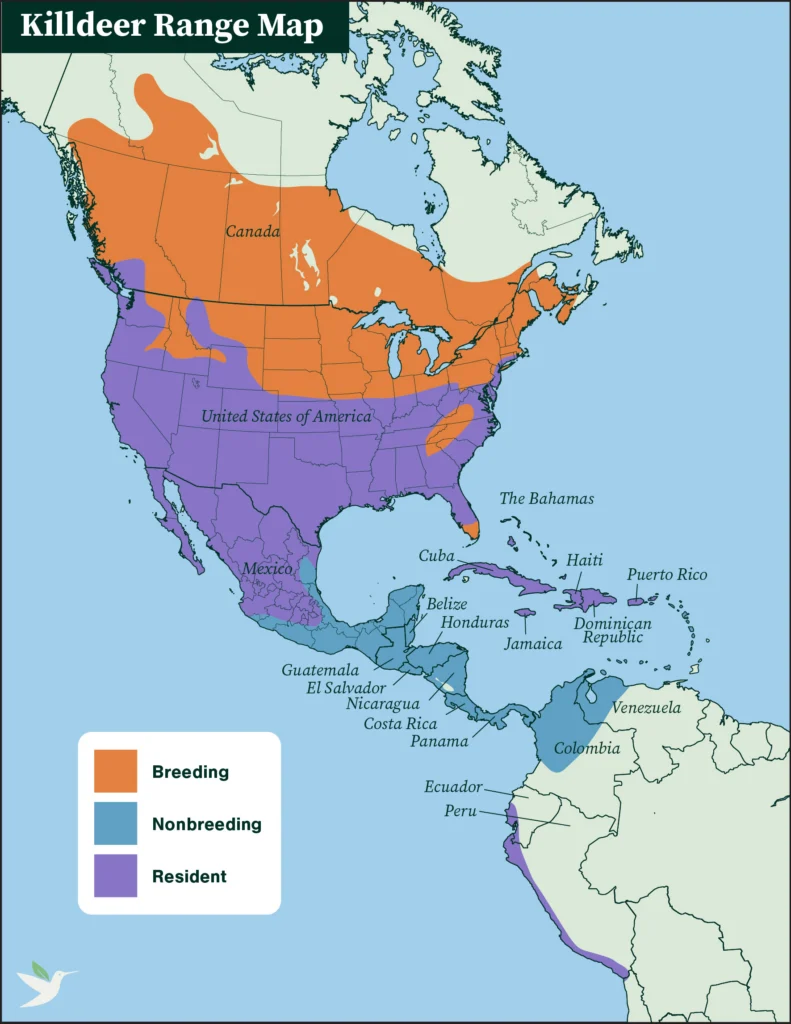
Killdeer range map

Specific Area
Subarctic Canada to northern South America; the Caribbean; coastal Peru and Ecuador

Range Detail
The Killdeer is the most widespread North American plover species. Its migratory breeding range extends from the southern Yukon and central Northern Territories east to Newfoundland and south to southern British Columbia, Idaho, Nebraska, and Pennsylvania. At the end of the breeding season, these populations migrate to central Mexico and south to Venezuela and Colombia. Killdeer occur year-round along much of the Pacific Coast, lower elevations of the Rocky and Appalachian Mountains, across the southern United States, and well into Mexico. Killdeer are found year-round in the Caribbean, and there is a separate resident population along the Pacific coast of Ecuador and Peru.

Did you know?
Unlike most shorebird species, which are long-distance migration champions (the Red Knot is a well-known example), the Killdeer is a partial, or leapfrog, migrant. Killdeer populations in the northern United States and Canada migrate south each year to escape harsh winter weather, passing right over the southern U.S., where other Killdeer populations are year-round residents.

Range
Caribbean
North America
South America
Migration Pattern
Latitudinal
Migration Distance
Long Distance

Life History

Killdeer are well-known for their nest-protecting antics. Like many other shorebirds, the Killdeer performs a “broken wing” distraction display to lead predators away from its nest. To guard against large hooved animals that may mistakenly trample eggs or young, the Killdeer uses a different display, fluffing itself up, fanning its tail over its head, and charging at the intruder to change its path. True to their nature, Killdeer call constantly while performing these displays. Killdeer also perform an uncharacteristically silent “false brooding” display, in which a parent will actually sit and pretend to be brooding chicks — sometimes on an unused nest scrape — in an effort to draw a would-be nest predator away from the actual nest or young.

Diet

Killdeer mostly eat invertebrates such as earthworms, beetles, grasshoppers, and snails, and occasionally seeds and small vertebrates. These birds hunt in a characteristic manner, dashing a short distance, stopping to seize prey, then running onward in search of the next tidbit. Killdeer will sometimes pat the ground with one foot to stir up prey or probe into the mud with their beaks. They will even follow tractors to take advantage of prey turned up by the plow.

Courtship

Killdeer couples perform both aerial and ground displays as a duo. During flight displays, both birds hover high in the air or make short, butterfly-like flights on stiff wings with slow wingbeats, calling all the while. On the ground, the two display to each other by bowing with fanned tails, a posture that emphasizes their bright orange-brown rumps and uppertail feathers. Killdeer also perform a ritualized nest-digging display, where the two take turns creating a scrape on the ground, sitting in it, and then getting up and throwing pebbles over their shoulders while their partner scrapes and sits. Killdeer couples perform this ritual many times, resulting in a number of extra scrapes on their territory that they may later use in the “false brooding” distraction display.

Nesting

Killdeer usually nest in open areas with sparse vegetation, often on bare gravel. In developed areas, parking lots and rooftops are favored nest sites. Both the male and female participate in making the nest, a simple scrape or shallow depression in the ground. The pair line their scrape with small rocks, shells, or other white or pale-colored objects. Some nests have been found to be lined with odd objects, including construction debris, cigarette butts, and even exhumed human bones!

Eggs & Young

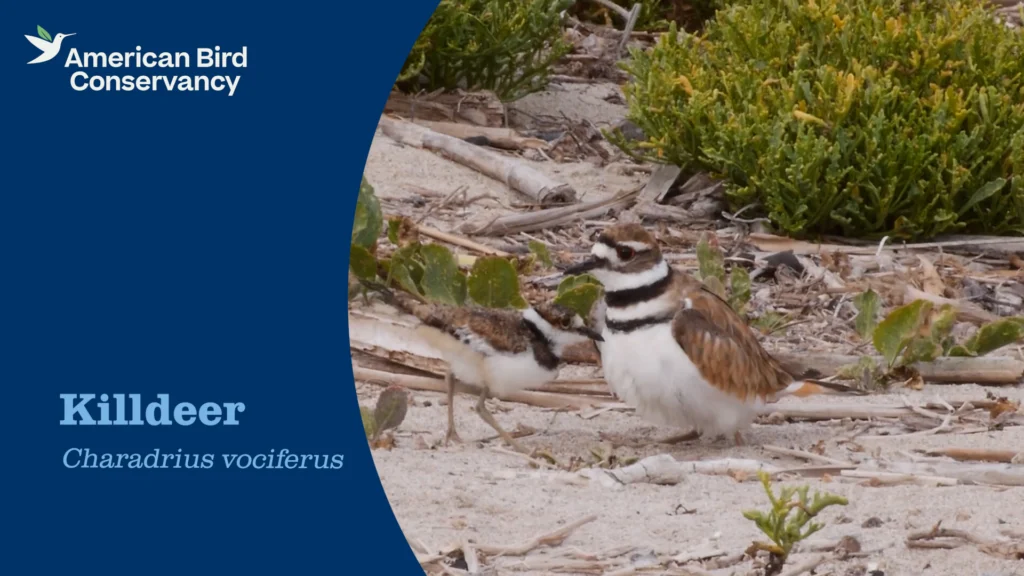
Killdeer nests are always well-camouflaged, and the four heavily speckled eggs blend perfectly with their surroundings. Both the male and female take turns incubating the clutch for three to four weeks. Killdeer chicks are precocial: Hatching with eyes open and covered in downy fluff, they are ready to leave the nest almost immediately, alongside their parents. Young Killdeer only have one breast band and can easily be mistaken for smaller plover species.