Overview
About
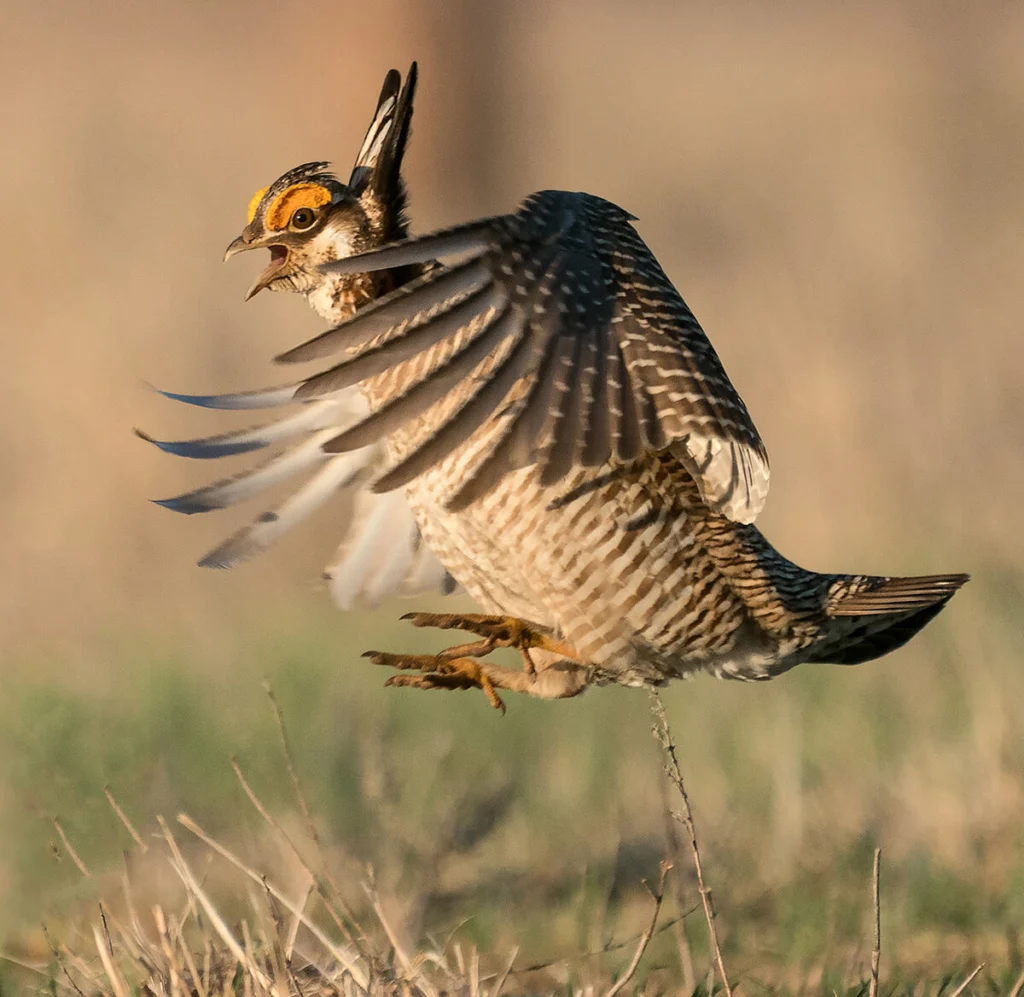
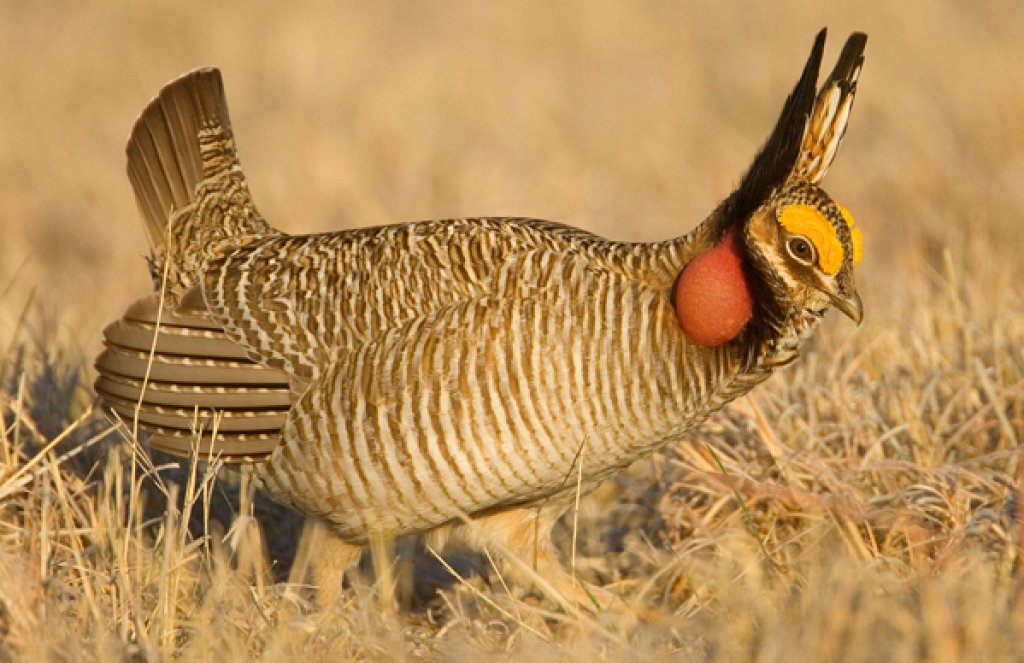
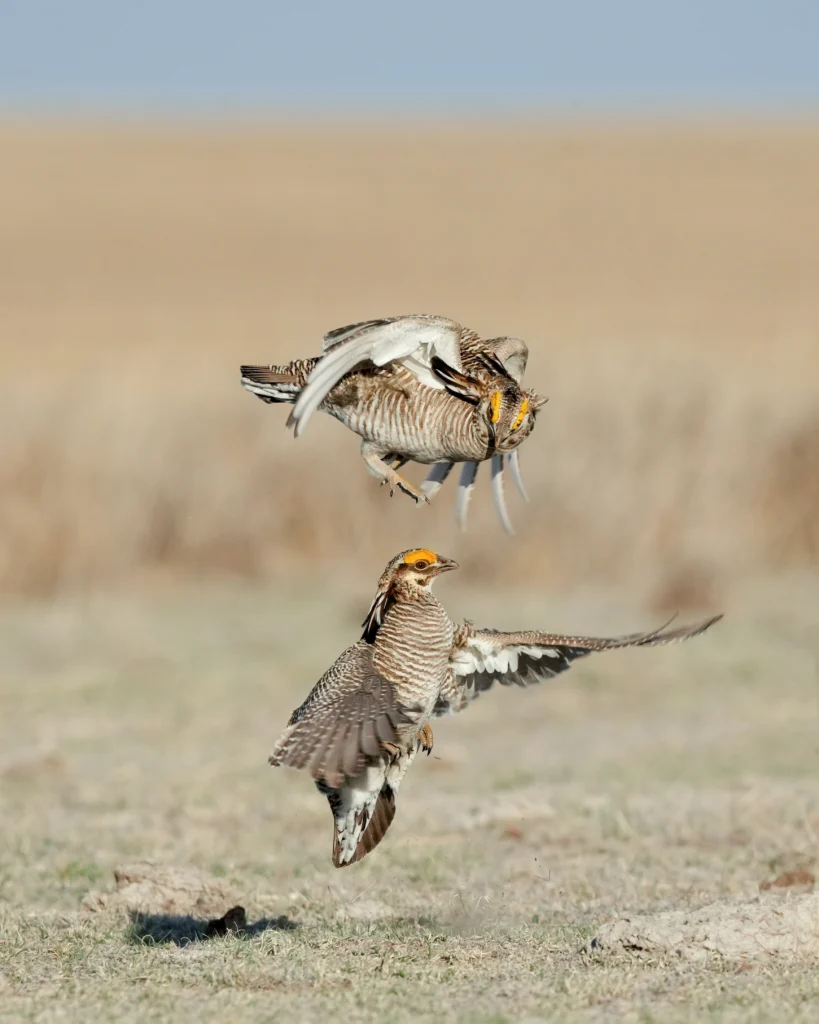
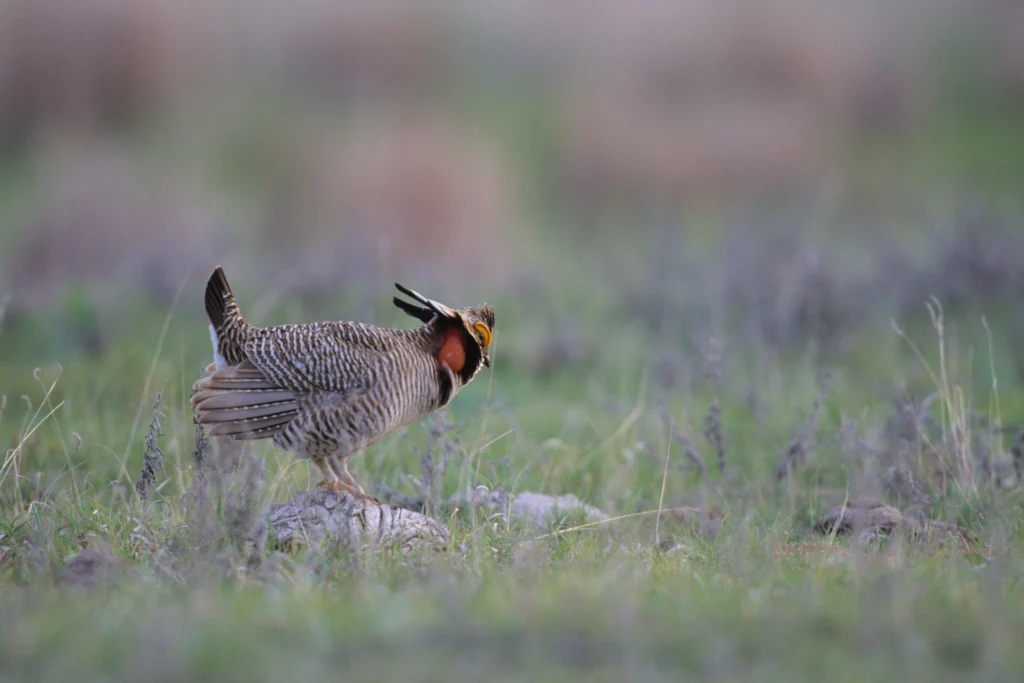
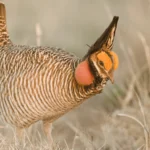
The Lesser Prairie-Chicken is a charismatic species best known for its energetic and bizarre courtship dance. Though cryptically colored overall, males have several decorations that they make known during their displays: large fleshy mustard-yellow “eyebrows” (also referred to as “eye-combs”) which they enlarge; red-orange air sacs on the sides of the throat which they inflate like balloons; and tufts of long dark feathers on either side of the neck, which they erect over their heads like long ears or horns. In dance posture, a male will lean over so that his body is parallel with the ground, extending his wing feathers and raising his tail vertically to display the pure white feathers beneath. He rapidly stamps his feet, and produces characteristic “gobbling” or “booming” calls that he amplifies and modulates with his inflated throat sacs. It is this aspect of their display that gives both the Lesser and Greater Prairie-Chickens their genus name, Tympanuchus. The word comes from the Greek word tympanon (drum) and the Latin word nucha (neck). “Drum neck” refers to these unique resonance organs, which they use to blast their booming calls out across the prairie.
Another fascinating feature of this bird’s natural history is the use of “leks” — traditional performance grounds — for their breeding displays. Lesser Prairie-Chicken leks are sparsely-vegetated arenas where dozens of birds display simultaneously, starting before sunrise and continuing for several hours. The leks themselves may be used for decades by several generations of birds. Females come to watch the dancing displays, and the aggressive interactions between males, to assess their options and choose which male will sire their young. As with most polygynous lekking species, only a few dominant males will mate with the majority of females.
Both Lesser Prairie-Chickens and the very similar Greater Prairie-Chickens have earned themselves a unique place in the culture and mythology of the North American Plains. For Indigenous peoples of the Great Plains, prairie-chickens are important spiritual figures, serving as messengers to the gods and figuring prominently in folklore, mythology, and religion. Many Plains tribes perform sacred dances invoking the male prairie-chickens’ displays. However, prairie-chickens were acknowledged for other behaviors as well, including their habit of abruptly taking off from the ground with a startlingly loud burst of flight. In fact, the Osage word for the prairie-chicken was Ushiṭsithe, meaning “the startler.”
Threats
Birds around the world are declining, and many species are facing urgent, acute threats. Species with strict habitat requirements and limited geographic ranges, like the Lesser Prairie-Chicken, are especially vulnerable to the continued destruction of grassland habitat from development. Though heavy pressure from hunting by colonial settlers had a huge impact, even causing the extinction of the closely-related Heath Hen (Tympanuchus cupido cupido) of the eastern states, regulations have largely put a stop to overharvest of the remaining prairie-chickens. However, habitat loss continues to be an imminent threat.
Vanishing Prairies & Grasslands
Habitat loss, fragmentation, and degradation have reduced the Lesser Prairie-Chicken’s range by 92 percent since the 1800s, largely due to expanding agriculture and urban development. Severe, ongoing drought, encroachment of woody plants, and increasing demand for fossil fuels and renewable energy development (including wind energy and biofuels) threaten the species’ remaining habitat.
Habitat Fragmentation
Lesser Prairie-Chickens habitat has become fragmented over time due to conversion of the land they need to feed, lek, and raise chicks. Segmentation of their landscape from fences to support cattle grazing and infrastructure for fossil fuel and renewable energy development have isolated populations from one another, leading to lower genetic diversity and increasing susceptibility to weather events, disease, and other factors.
Pesticide Use
Habitat loss can also be the result of pesticides used to kill shrubs that Prairie-Chickens use for cover, but provide little benefit for livestock grazing. Pesticides can also reduce populations of insect and plant species that these birds eat.
Conservation Strategies & Practices
Birds like the Lesser Prairie-Chicken need our help to overcome the threats they face. At ABC, we’re inspired by the wonder of birds and driven by our responsibility to find solutions to meet their greatest challenges. With science as our foundation, and with inclusion and partnership at the heart of all we do, we take bold action for birds across the Americas.
Petitions & Advocacy
Through advocacy, ABC ensures vulnerable birds like the Lesser Prairie-Chicken have a seat at the table. We advocate for policies and funding that make a difference for birds and ecosystems like the vanishing grasslands of the Great Plains. We take on challenging issues when birds are on the line. And we help our supporters become advocates for birds, too.
Improving Habitat
Due to a range of threats, from development to fire suppression, grasslands are North America’s most endangered biome. Loss of grasslands puts many charismatic species like the Lesser Prairie-Chicken at risk. We restore grassland habitats for the birds by reducing woody shrub growth, reconnecting fragmented grassland patches, and returning to natural levels of grazing.
Avoiding Pesticides
ABC works with partners at the state and federal levels in the U.S. to call for the regulation or cancellation of the pesticides and toxins most harmful to birds, especially granivorous and grassland species like the Lesser Prairie-Chicken. We develop innovative programs, like working directly with farmers to use neonicotinoid coating-free seeds, advancing research into pesticides’ toll on birds, and encouraging millions to pass on using harmful pesticides.
Bird Gallery
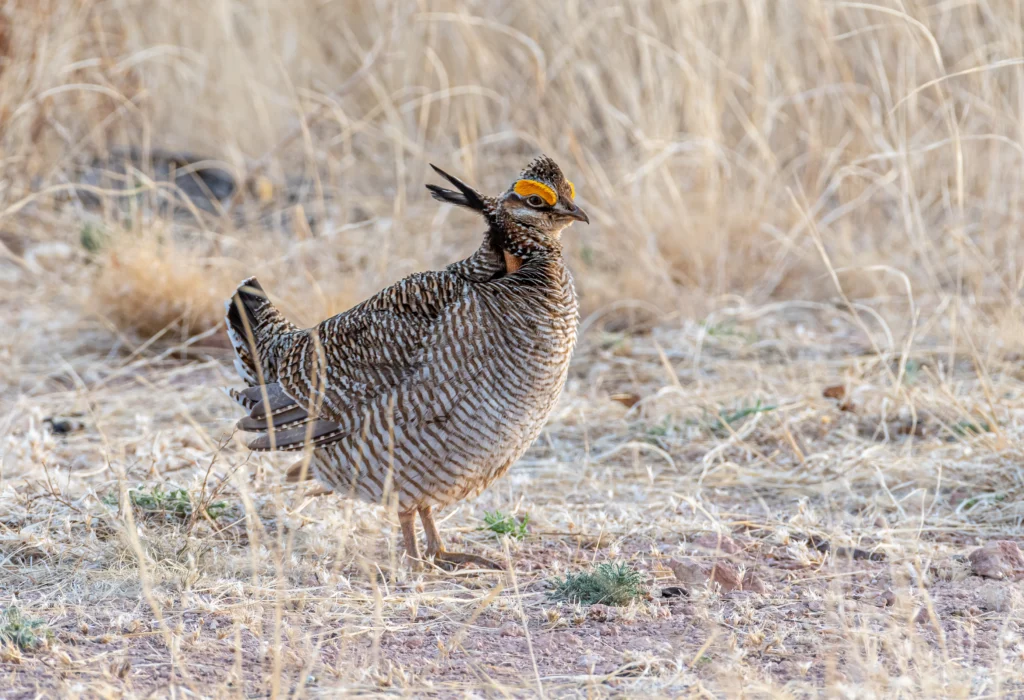
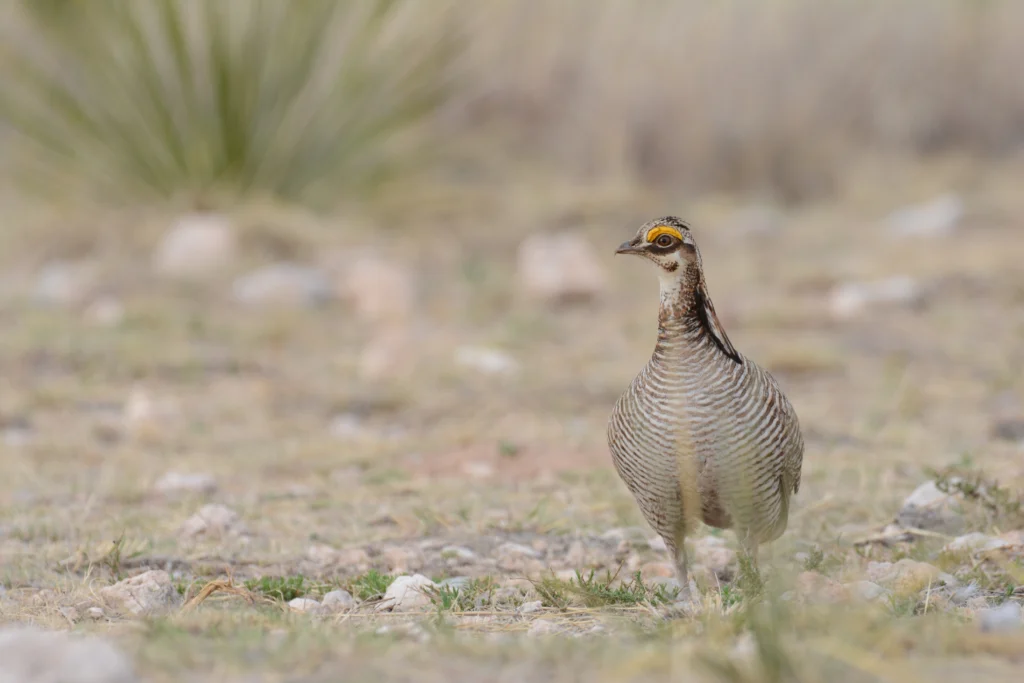
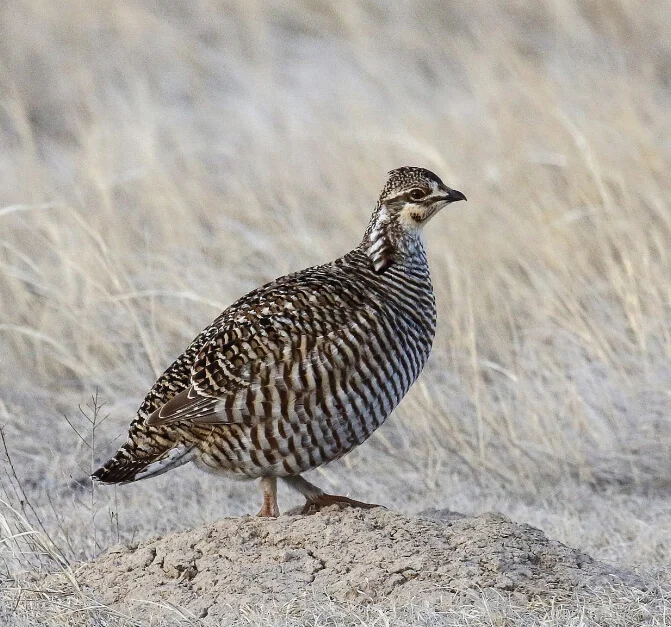
Lesser Prairie-Chickens are about the size and shape of a football. Both sexes are mostly barred with alternating cinnamon brown and buffy white, paler below and darker above. Males can be distinguished by their colorful adornments, including reddish-orange air sacs on his neck, elongated feather tufts on either side of the neck, and bright yellow inflatable skin patches above the eyes. The tail, primaries, and feather tufts on males are mostly a dark chocolate brown.
Sounds
The “gobbling” or “booming” sounds of the male Lesser Prairie-Chicken are actually produced by the bird’s vocal organ (syrinx) and amplified by its inflated neck sacs. These calls have a peculiar bubbling, gobbling quality. Both sexes also give a squawk-like Cackle Call, as well as a variety of other vocalizations.
Credit: Andrew Spencer, XC33960. Accessible at www.xeno-canto.org/33960.
Credit: Andrew Spencer, XC33962. Accessible at www.xeno-canto.org/33962.
Habitat
Lesser Prairie-Chickens favor native shortgrass prairie on sandy soils, interspersed with clumps of sagebrush and low-growing thickets of shinnery oak (Quercus havardii).
- Leks are sparsely-vegetated and usually located on hills
- In nonbreeding season, will forage for seed in agricultural fields and shelter in riparian vegetation
Range & Region
Range & Region
Specific Area
Restricted range includes parts of Colorado, Kansas, Oklahoma, Texas, and New Mexico
Range Detail
The Lesser Prairie-Chicken is resident throughout its limited range in the southern High Plains. Some historical records suggest this species may have moved seasonally, but there is no contemporary evidence for regular seasonal movements.
Did you know?
Prairie-Chickens are sensitive to disturbance on their lek sites, and leks may be abandoned following fire or agricultural practices. However, new leks may be established at previously disturbed sites, including oil pads and roads.
Life History
Lesser Prairie-Chickens are most easily spotted on their leks, where males gather to display and females come to watch and decide who will sire their offspring of the season. Though leks are not large, and can be quite crowded with 10-20 males displaying, each male stakes out his own tiny territory a few meters across which he will defend aggressively. And location matters — prime positions are in the center of the lek, and these are occupied by the dominant males.
Diet
The Lesser Prairie-Chicken’s diet varies with the seasons. In the summer this grassland species feeds heavily on insects, including grasshoppers, crickets, and beetles. During the fall and winter the birds gather in flocks to dine on seeds, leaves, and waste grain from agricultural fields. They forage mostly on the ground and may fly several miles each day from roosting areas to good feeding sites.
Courtship
Courtship in this species is elaborate, encompassing a range of ritualized displays involving movement, color, and sound. In addition to the standard posturing and stomping, displaying males bounce as high as 10 feet into the air in “flutter-jumps” to impress visiting hens. When it comes to mate selection, the female prairie-chickens call the shots, only mating with the strongest, most dominant males on the lek.
Nesting
In the way of all polygynous bird species, including the Wild Turkey and Greater Sage-Grouse, birds don’t form pair bonds, and the female Lesser Prairie-Chicken is on her own after mating. She leaves the lek to nest in a shallow depression dug in the sandy soil and lined with grass, leaves, and feathers.
Eggs & Young
The female lays 11 to 13 eggs, which she incubates for almost a month. The downy chicks hatch with eyes open and leave the nest shortly afterwards. The female broods her young nightly for the first few weeks after they hatch, keeping them warm, although the chicks can feed themselves as soon as they hatch.