The lush montane cloud forests of the Andes host incredible biodiversity, from range-restricted species like the Cundinamarca Antpitta to nonbreeding migratory birds like the Blackburnian Warbler.

Red-crested Cardinal

Paroaria coronata

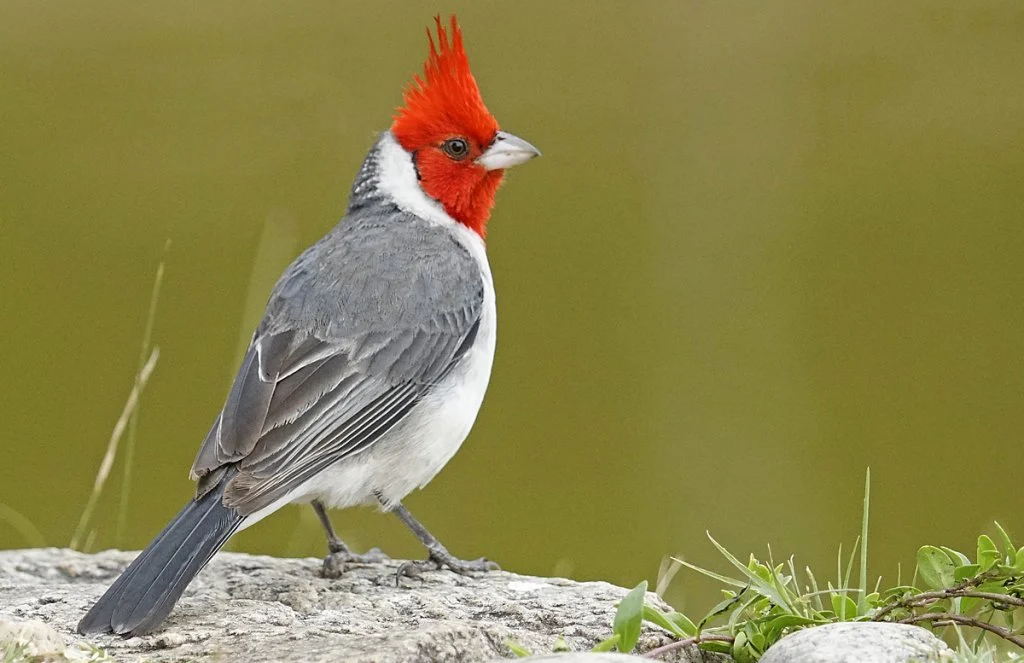
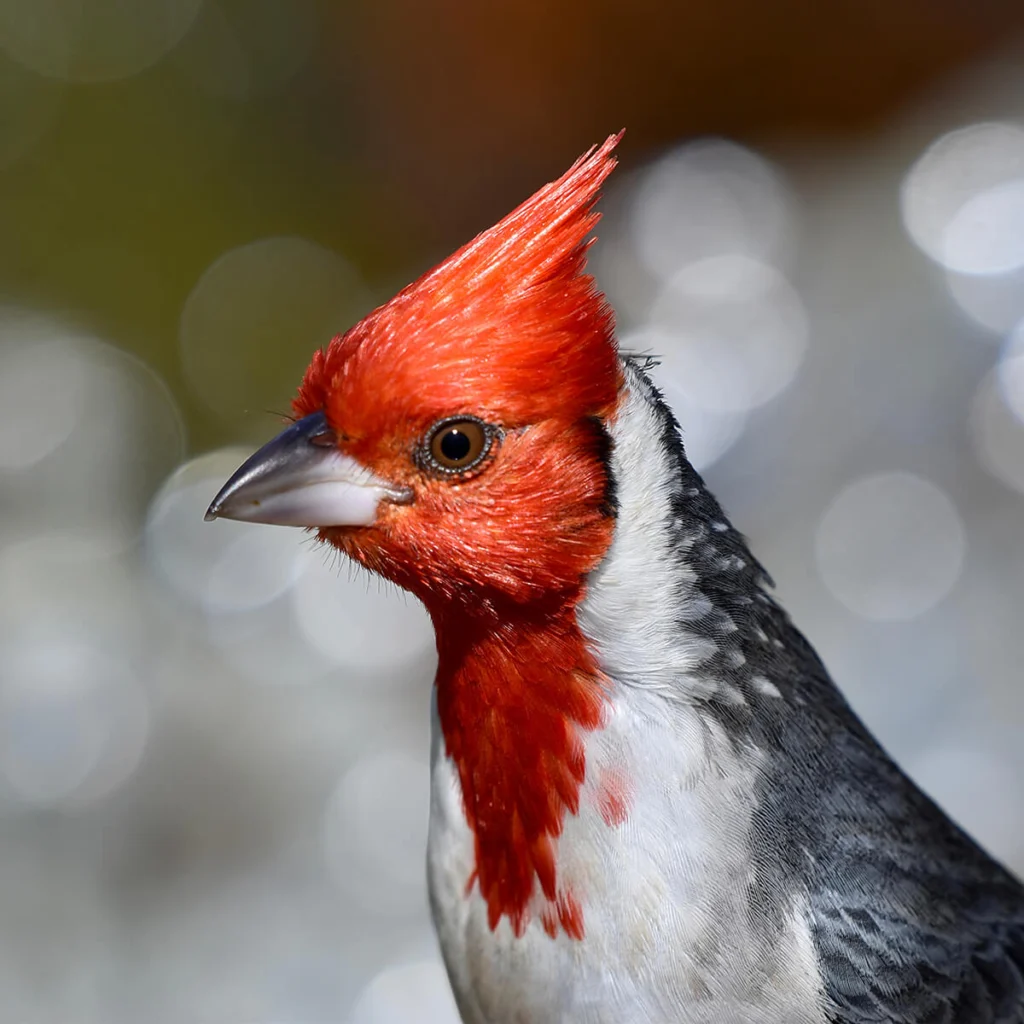
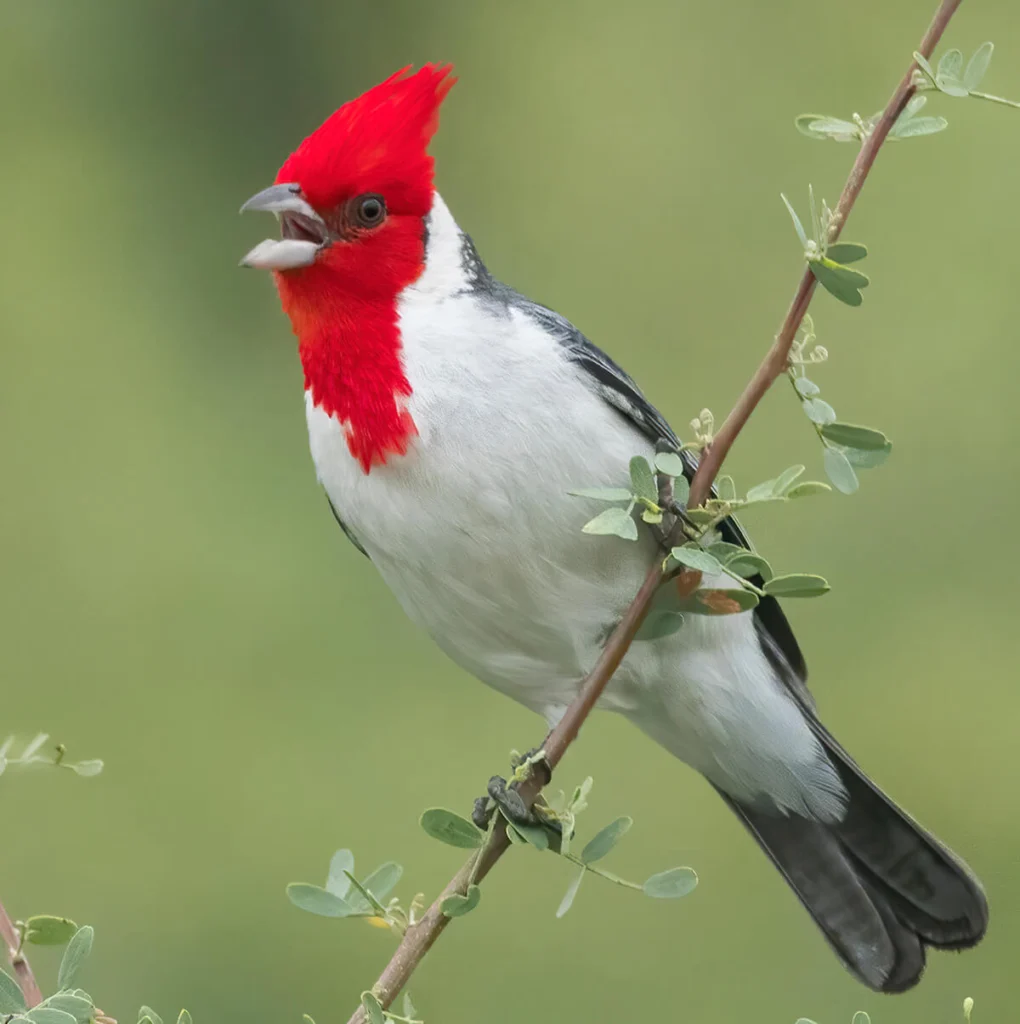
Red-crested Cardinal. Photo by Dubi Shapiro Macaulay Library at the Cornell Lab of Ornithology.

Red-crested Cardinal

Red-crested Cardinal. Photo by Dubi Shapiro Macaulay Library at the Cornell Lab of Ornithology.

Paroaria coronata

Overview

Conservation Status
Population Trends
Stable
Population Size
Unknown
Family
Tanagers
Location
South America
Migration Pattern
Nonmigratory
Migration Distance
Nonmigratory

About

The Red-crested Cardinal is sometimes called the Brazilian Cardinal, a nod to its South American distribution. Its genus name, Paroaria, derives from Tiéguacú paroára, a name for a small yellow, red, and grey bird in the extinct, Indigenous Tupi language of Brazil.

Although the Red-crested Cardinal resembles an especially dapper Northern Cardinal, it’s not closely related to that species. Rather, it belongs to the huge Thraupidae (Tanagers and Allies) family of the Neotropics, the second-largest bird family in the world. This widely varied family contains over 385 bird species in more than 100 genera, including tanagers such as the Glistening-green and Gilt-edged Tanagers as well as dacnises, flowerpiercers, and ground-finches.

The largest bird family in the world, the tyrant-flycatchers (Tyrannidae), is also endemic to the Neotropics, and encompasses over 400 species including the Johnson’s Tody-Flycatcher, Many-colored Rush-Tyrant, Great Crested Flycatcher, and Eastern Kingbird.

Threats

Though the Red-Crested Cardinal is classified as a species of Least Concern by the IUCN, it is not immune to the cumulative impacts of threats like habitat loss and trapping for the illegal cage bird trade.

Illegal Trapping

The features that make the Red-crested Cardinal so stunning also attract attention from the illegal cage bird trade. The cardinal is a popular cage bird brought to many other countries through illegal trapping. Introduced populations are now found on most of the Hawaiian Islands, and in Chile, Puerto Rico, California, and Florida.

Habitat Loss

Red-crested Cardinal populations remain stable, but further fragmentation and degradation of their forest habitat could one day put a strain on the species.

Habitat Loss

Conservation Strategies & Projects

Birds need our help to overcome the threats they face. At ABC, we’re inspired by the wonder of birds and driven by our responsibility to find solutions to meet their greatest challenges. With science as our foundation, and with inclusion and partnership at the heart of all we do, we take bold action for birds across the Americas.

Create & Maintain Reserves

Several ABC-supported reserves provide safe sanctuary for the Red-crested Cardinal, including the Barba Azul (Blue-throated Macaw) and Red-fronted Macaw Reserves in Bolivia, which protect the parrots for which they are named as well as a variety of other species, and Brazil’s Canudos Reserve, which shelters the beautiful and endangered Lear’s Macaw.

Creating and Maintaing Reserves

Bird Gallery

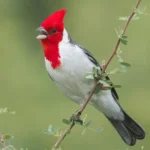
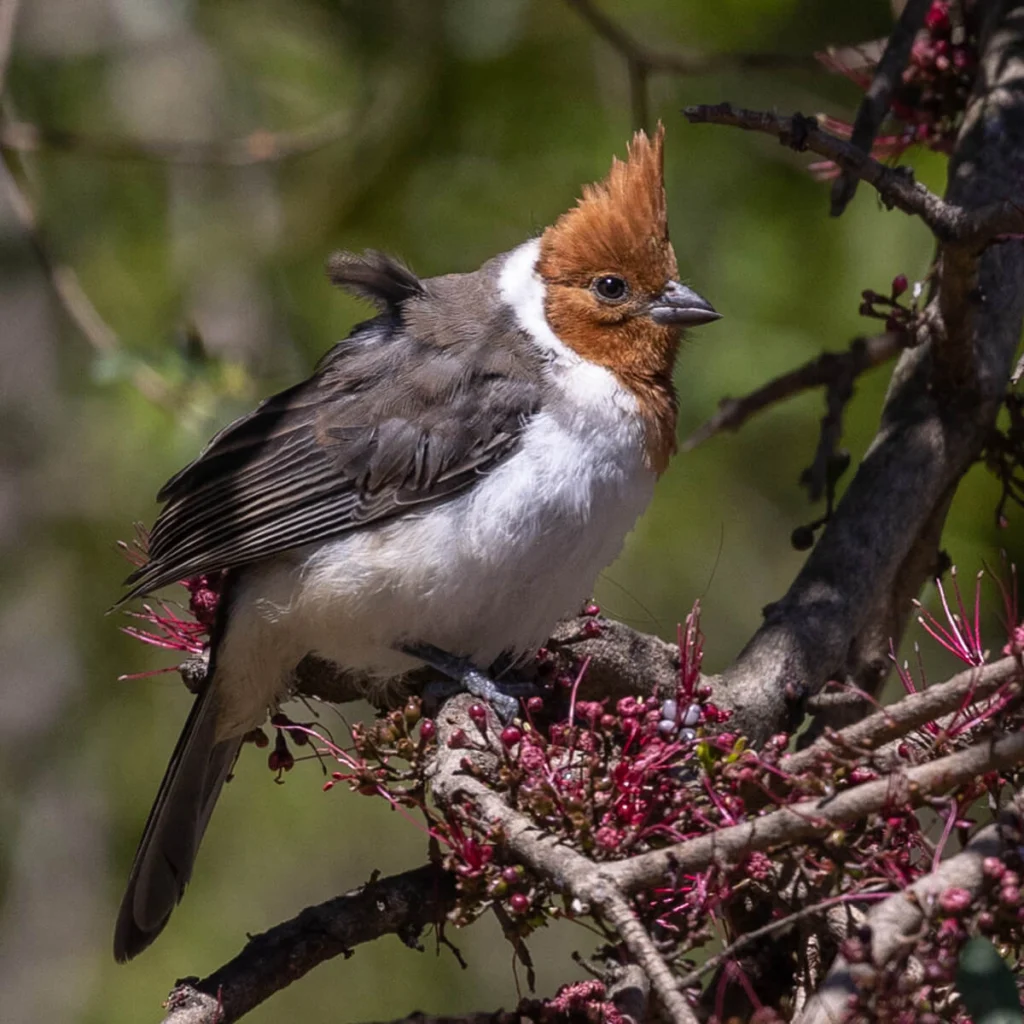
The handsome Red-crested Cardinal is well-named, with a bright red crest that the bird can raise and lower and a red head and chest. It’s white underneath, with a gray back, wings, and tail, and a conical, light-colored bill. Juvenile Red-crested Cardinals are similar to the adults, but are brownish-orange where the adults are red.

Sounds

The song of the Red-crested Cardinal is a slow, rather halting, melodious series of whistles and warbles. Its call is a nasal, ascending phwit!

Song

Credit: JAYRSON ARAUJO DE OLIVEIRA, XC686325. Accessible at www.xeno-canto.org/686325.

Call

Credit: Andrew Spencer, XC115735. Accessible at www.xeno-canto.org/115735.

Habitat

The Red-crested Cardinal favors semiopen areas with scattered trees and shrubs, moving into more densely forested habitats in the breeding season.

  • Found in dry tropical shrubland, savannas with mixed vegetation, thorny woodlands, and even in agricultural areas, including cities
  • Often selects sites near rivers, marshes, and lakes
  • Prefers dense forest in the breeding season but remains active in open areas close by

Range & Region

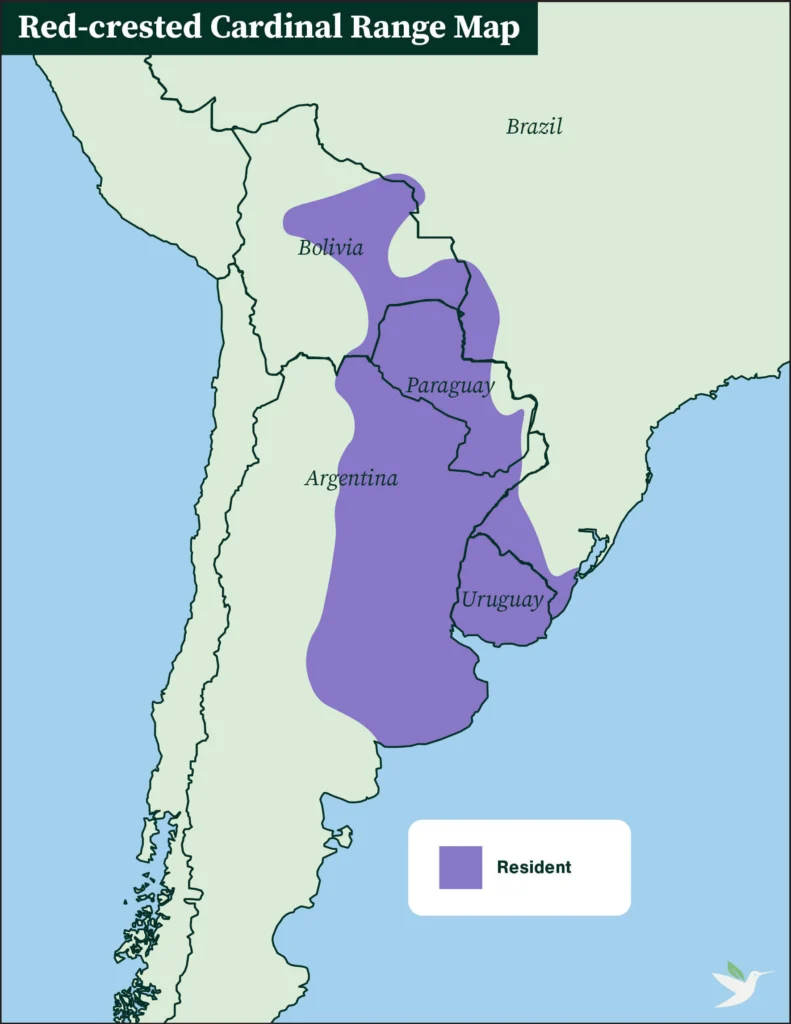
Red-crested Cardinal range map by ABC

Specific Area
Southeastern Brazil, eastern Bolivia, Paraguay, Uruguay, and northern Argentina

Range Detail
The Red-crested Cardinal occurs throughout central South America, typically at elevations from sea level to 1,600 feet. The species’ popularity as a cage bird has scattered Red-crested Cardinals across the globe. Introduced populations are found on most of the Hawaiian Islands, as well as in Chile, Puerto Rico, California, and Florida.

Did you know?
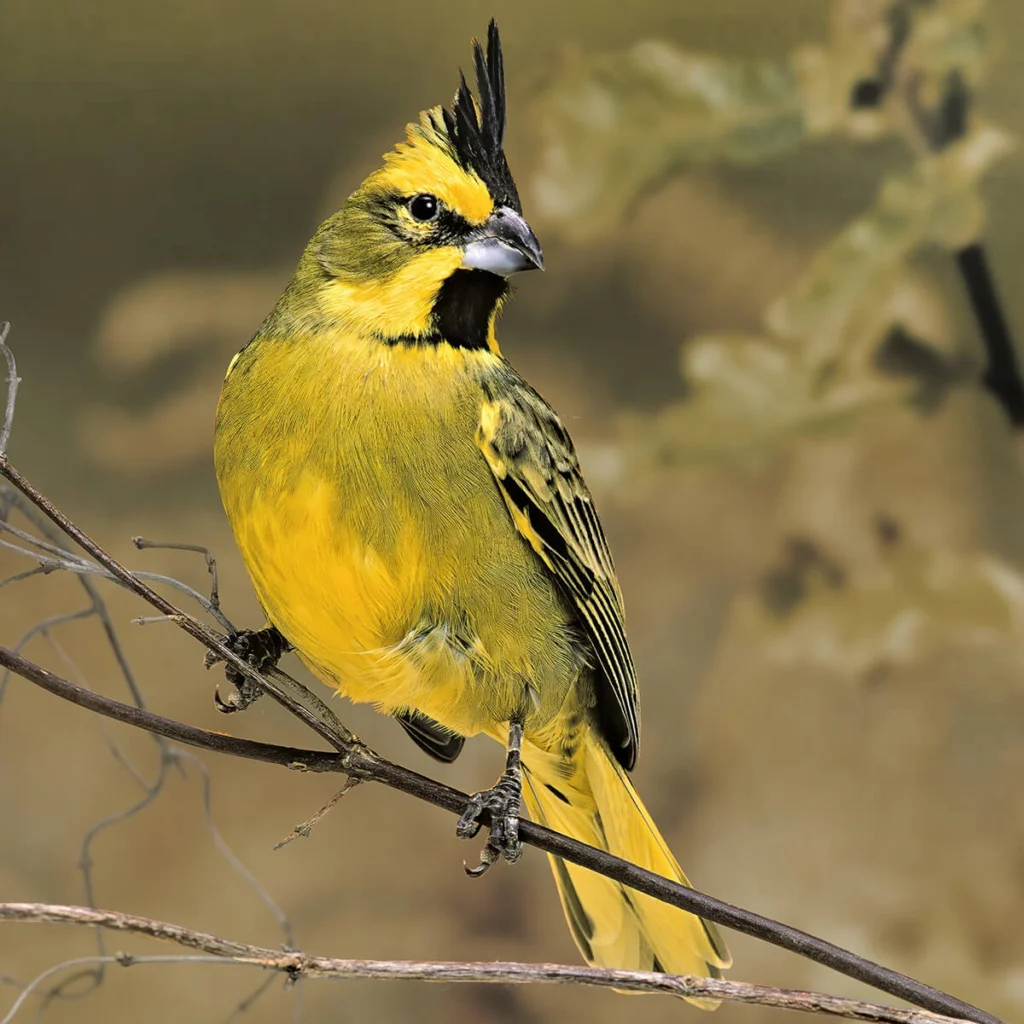
The range of the Red-crested Cardinal overlaps with that of the Yellow-billed Cardinal. The two species will compete with each other, but they’ve also hybridized and produced fertile offspring, according to one report.

Range
South America
Migration Pattern
Nonmigratory
Migration Distance
Nonmigratory

Life History

Though it isn’t closely related to the Northern Cardinal, the Red-crested Cardinal shares more than the distinctive crimson coloring — both are seed eaters. The signature red crest can be raised or lowered at will — another trait it shares with its distant northern relative.

Diet

The Red-crested Cardinal feeds on a mixture of small seeds, fruits, insects, and other arthropods such as spiders. It forages on or near the ground in low trees and shrubs, and is typically spotted in pairs, small groups, or even mixed-species flocks.

Courtship

The Red-crested Cardinal forms monogamous pairs during its breeding season, courting through displays such as tail-fanning, bill-clacking, and song. Throughout the breeding season, males and females use singing to keep in contact with one another.

Nesting

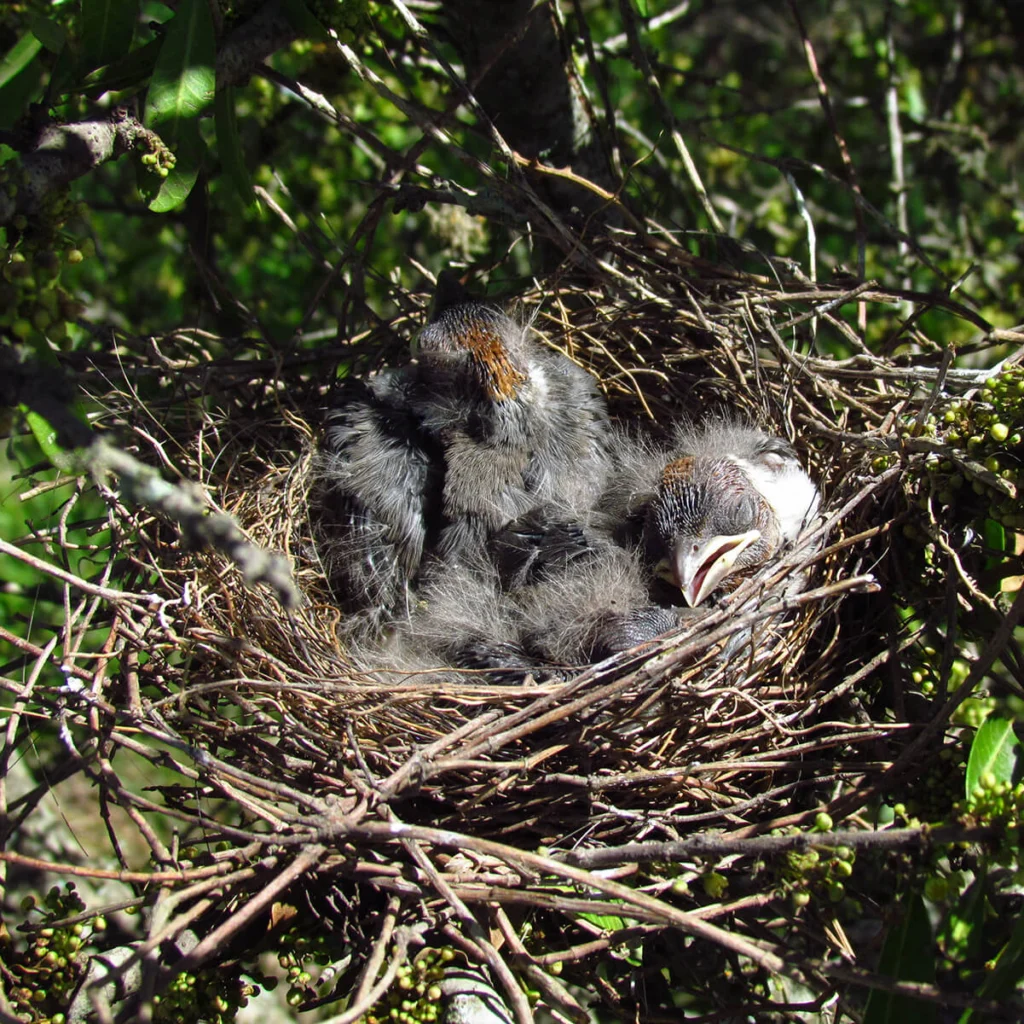
Once a pair forms, the male builds the nest, an open cup of plant fibers and hair, concealed in low shrubbery. Most nests are placed in small forks of trees, with adequate leaf cover to deter aerial predators, up to approximately 19 feet off the ground.

Eggs & Young

The female then lays and incubates a clutch of two to four eggs, which hatch in around two weeks. Both parents feed the hatchlings, which fledge after another two weeks. The male continues to guard and feed the juvenile birds, which become independent in roughly another month.

Many Red-crested Cardinal nests are lost to predators, but pairs readily re-nest. This species is often parasitized by Shiny Cowbirds, which will puncture the cardinal’s eggs before laying their own. However, the Red-crested Cardinal recognizes the unfamiliar cowbird eggs and quickly tosses them out of its nest.