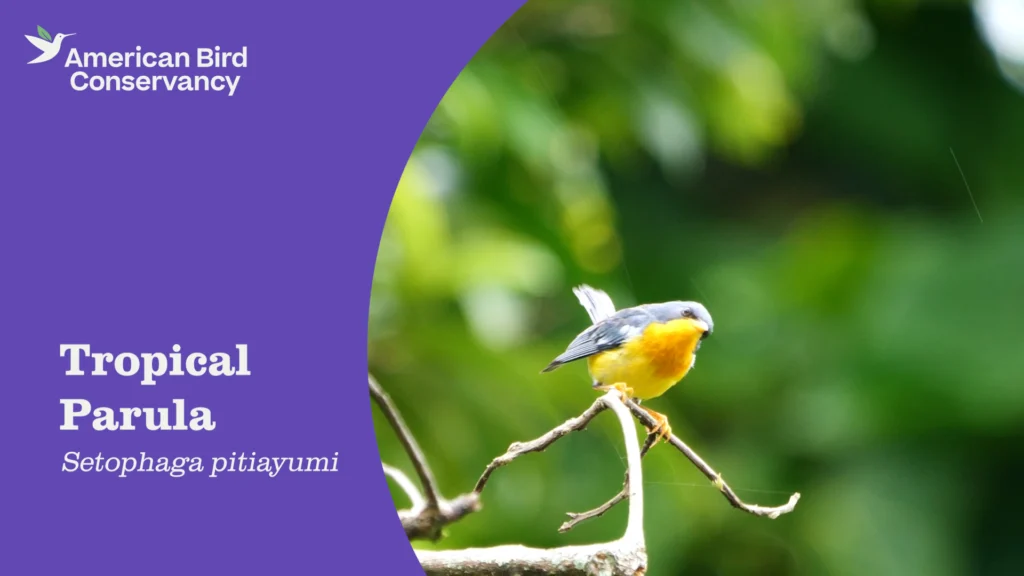
Tropical Parula

Setophaga pitiayumi

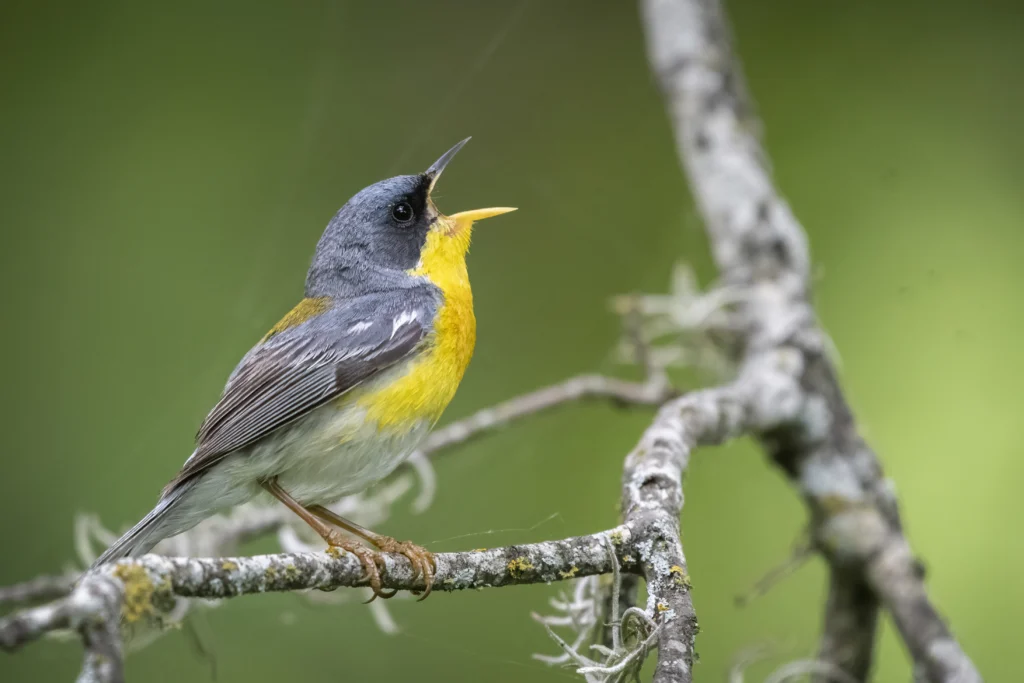
Tropical Parula. Photo by Neil Bowman, Getty Images.

Tropical Parula

Tropical Parula. Photo by Neil Bowman, Getty Images.

Setophaga pitiayumi

Overview

Conservation Status
Population Trends
Decreasing
Population Size
20 million; fewer than 5,000 in the U.S.
Family
Warblers
Location
North America
South America
Migration Pattern
Nonmigratory
Migration Distance
Nonmigratory

About

The spritely, colorful Tropical Parula is closely related to the Northern Parula, and was considered a form of that warbler until updated genetic data provided enough evidence to split the two into separate species.

The Tropical Parula was initially called the “Olive-backed Parula” before receiving its current name, which gives a nod to its distribution in the New World. It has an especially evocative species name, pitiayumi, which is derived from a Guarani (Paraguayan) name meaning “little yellow chest.”

Nine subspecies of Tropical Parula are currently recognized, although ongoing study indicates that some of these groups may actually represent distinct species. Some scientists have already recognized one subspecies of Tropical Parula as a separate species.

Threats

Birds around the world are declining, and many of them are facing urgent, acute threats. But all birds, from the rarest species to familiar backyard birds, are made more vulnerable by the cumulative impacts of threats like habitat loss and overuse of pesticides.

Habitat Loss

The Tropical Parula is threatened by agricultural expansion, urbanization, and deforestation throughout its range.

Habitat Loss

Pesticides & Toxins

Use of pesticides in agricultural areas may harm this species. Additionally, epiphytes (plants such as ferns and bromeliads, which grow on other plants and trees), an essential material for Tropical Parula nests. These plants are especially sensitive to air pollution.

Pesticides & Toxins

Conservation Strategies & Projects

Birds need our help to overcome the threats they face. At ABC, we’re inspired by the wonder of birds and driven by our responsibility to find solutions to meet their greatest challenges. Studies on the Tropical Parula’s conservation needs are lacking, but even in their absence, conserving habitat is a primary step in ensuring a future for these birds.

Creating & Maintaining Reserves

In the more than 30 years since ABC’s founding, we have worked with partners throughout the Western Hemisphere to create a network of reserves covering more than 1.1 million acres in over a dozen countries. These reserves protect habitat for 3,000 bird species — nearly one-third of the world’s total — including the Tropical Parula.

Creating and Maintaining Reserves

Avoiding Pesticides & Toxins

ABC works with partners at the state and federal levels in the U.S. to call for the regulation or cancellation of the pesticides and toxins most harmful to birds. We develop innovative programs, like working directly with farmers to use neonicotinoid coating-free seeds, advance research into pesticides’ toll on birds, and encourage millions to pass on using harmful pesticides.

Pesticides & Toxins

Bird Gallery

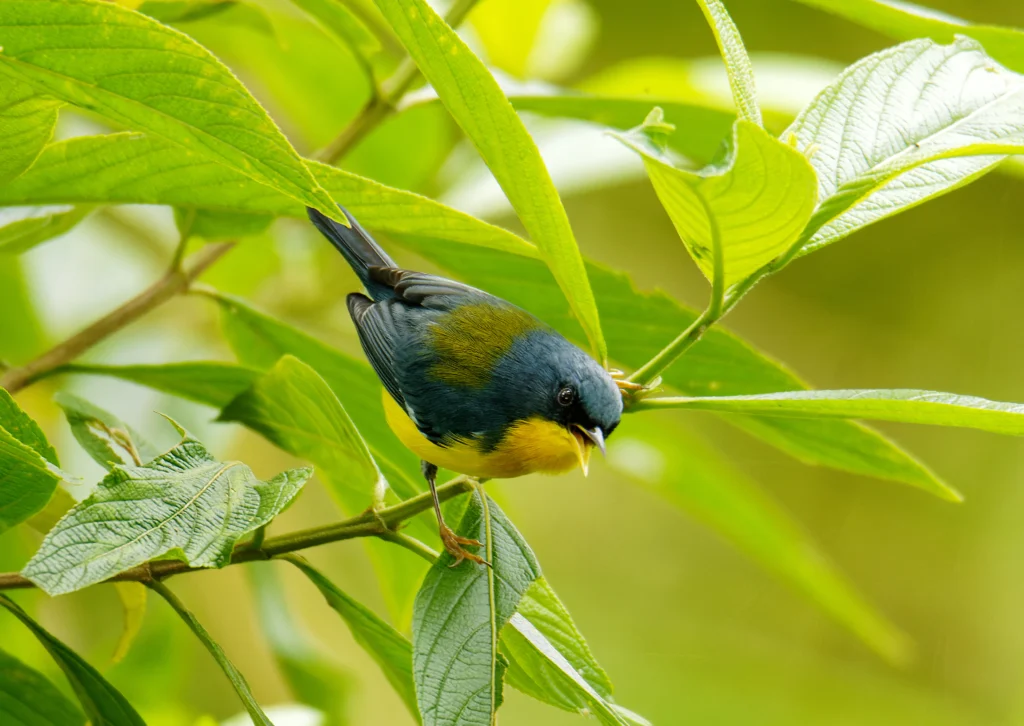
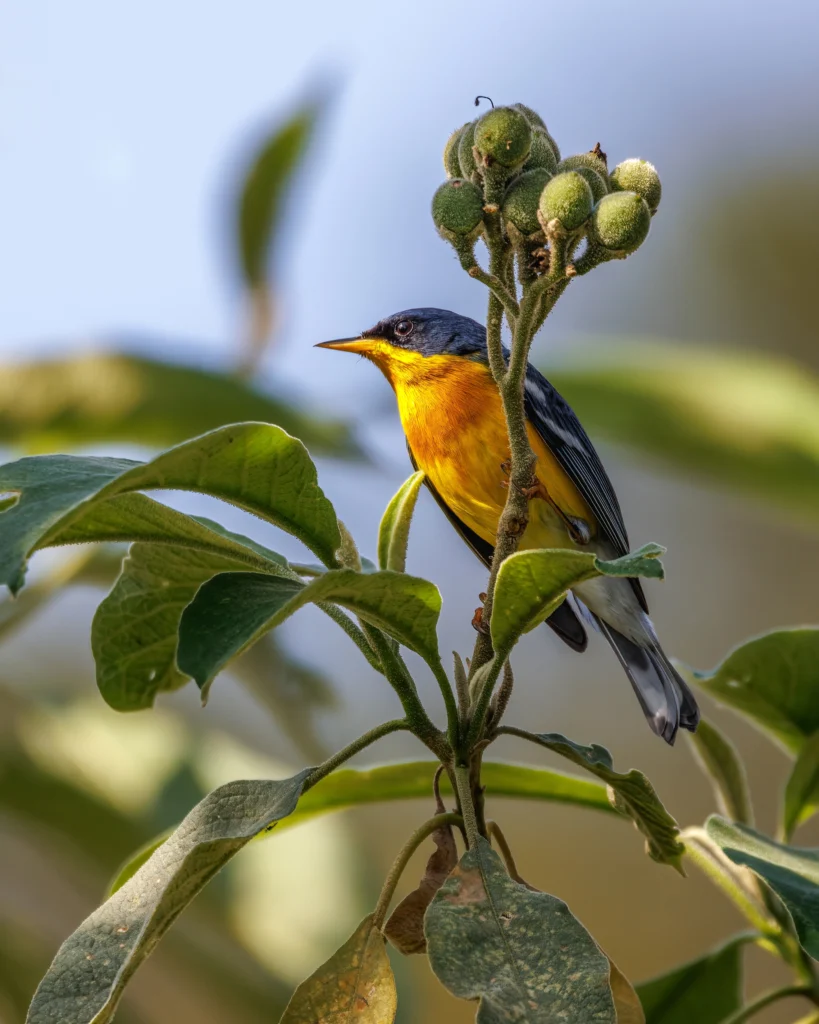
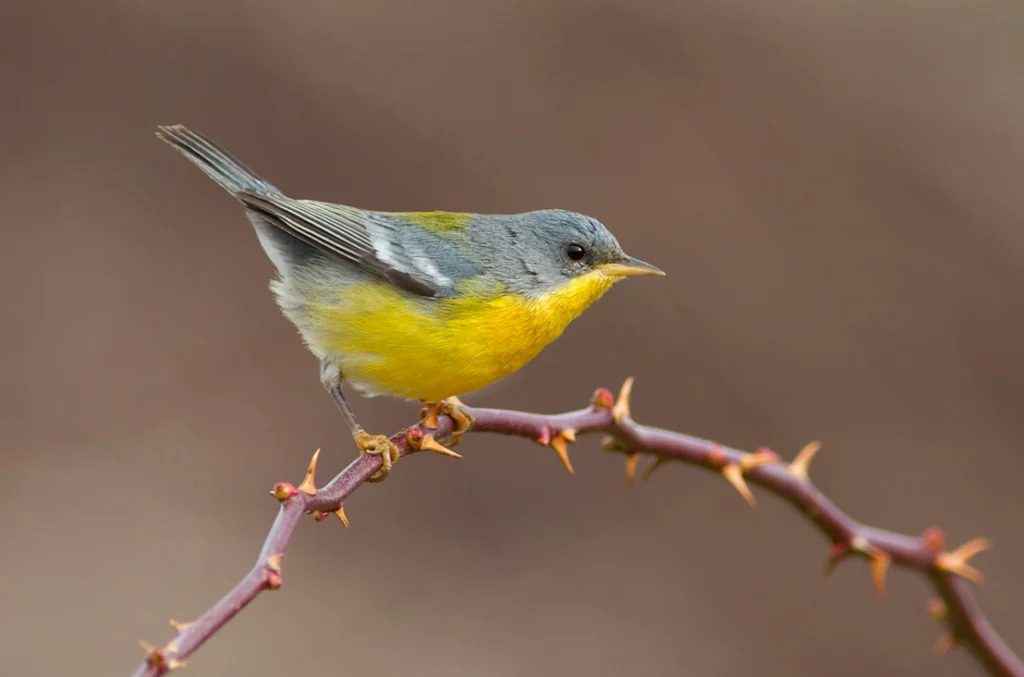
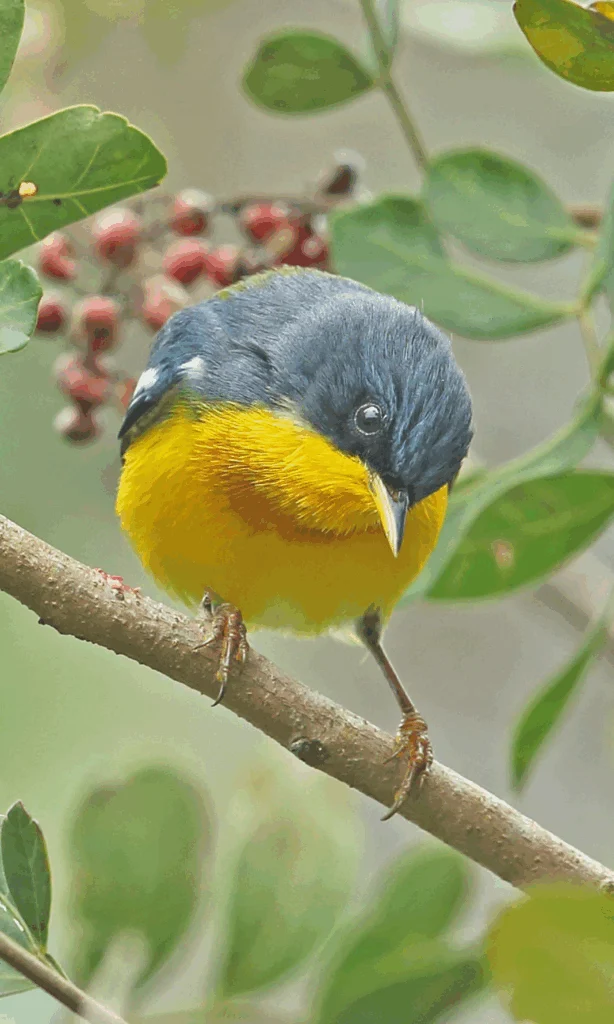
At first glance, the Tropical Parula looks very similar to the Northern Parula, with blue-gray upperparts and head, a greenish patch on the upper back, a yellow chest with white undertail coverts, and two white wing-bars.

However, a longer look shows several important differences that distinguish the Tropical Parula from its near relative. The Tropical Parula’s yellow underparts are more extensive, with an orange wash on the throat and upper breast instead of the black-and-chestnut chest band of the Northern Parula. The male Tropical Parula has a black mask instead of the Northern Parula’s white eye-arcs. Another notable difference is the Tropical Parula’s bicolored bill, which has a black upper and yellow lower mandible.

The female Tropical Parula is duller in color, with a gray, rather than black, face and only traces of orange on her throat and upper breast.
Sounds

The male Tropical Parula sings two types of song: the first is an accelerating buzzy trill with a downslurred end note. The second song is more variable and complex, sounding almost wren-like. Each song likely has a different function, as seen in the Northern Parula.

Song, Type 1

Mauricio Cuellar Ramirez (@Birding.travel), XC571676. Accessible at www.xeno-canto.org/571676.

Song, Type 2

Johan Chaves, XC494827. Accessible at www.xeno-canto.org/494827.

Habitat

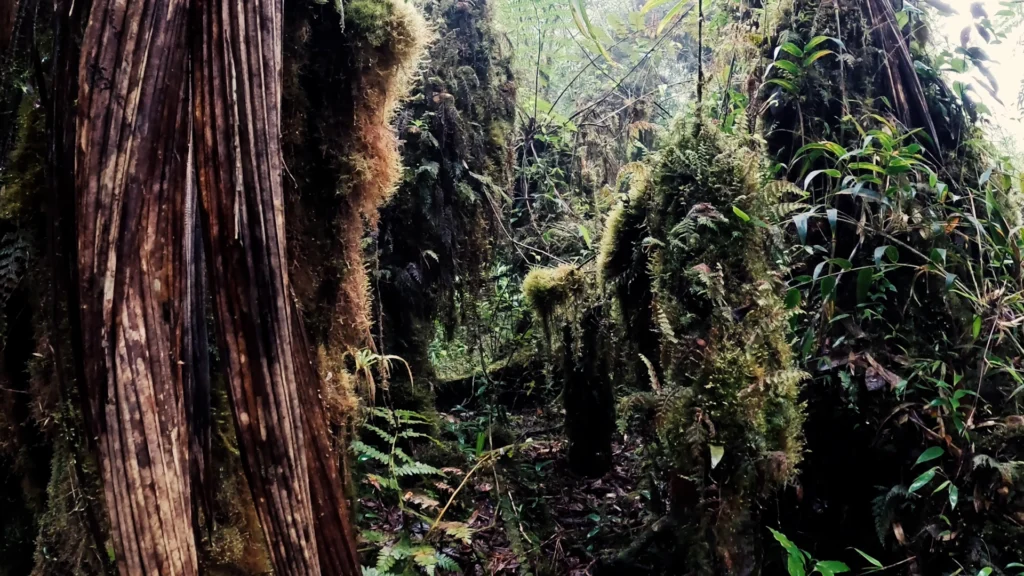
The Tropical Parula is a forest bird, found in a variety of woodland habitats throughout their range.

  • Requires epiphytes for nesting and inhabits live-oak woodlands with abundant epiphytes such as Spanish moss in the U.S.
  •  Found in mixed deciduous riparian forest
  • Uses many forest types throughout Mexico, Central America, and South America
  • Sometimes found in thorn scrub during migration (a small percentage of the species’ southern Texas population migrates a short distance to Mexico) and in the nonbreeding season

Range & Region

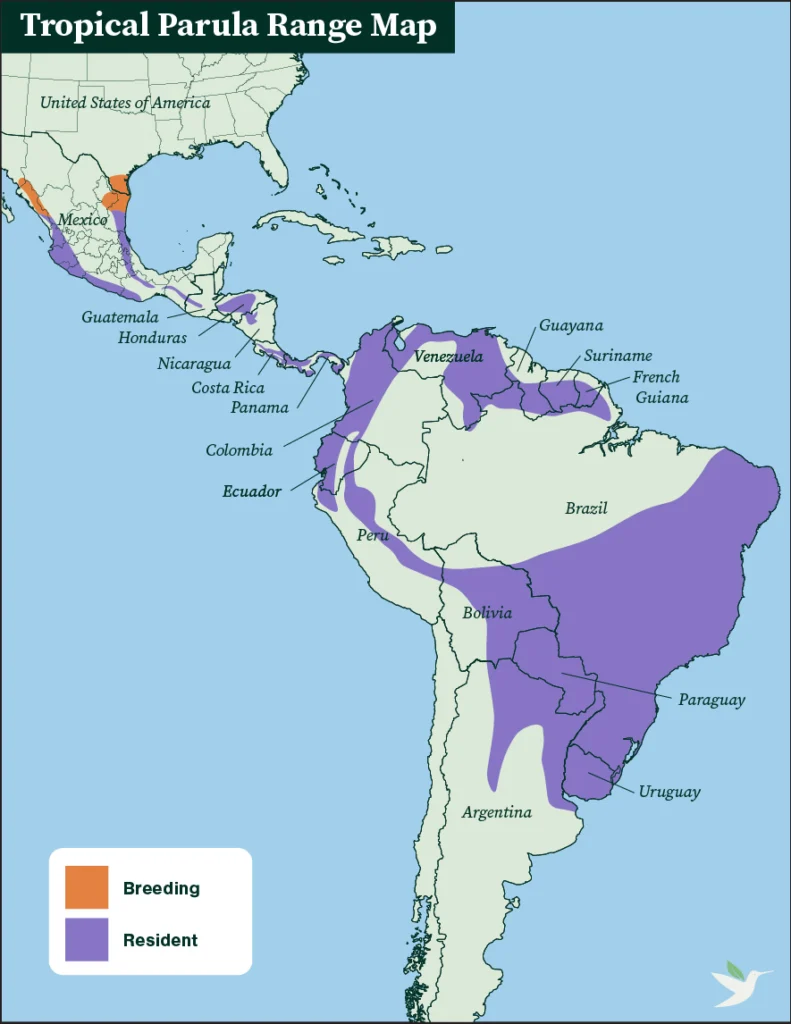
Tropical Parula range map.

Specific Area
Mexico south to northern Argentina, southern Texas

Range Detail
In the U.S., this species is found only in southern Texas. This population migrates over short distances into Mexico, although some show post-breeding dispersal north and east along the Texas coast.

The Tropical Parula is widespread and resident in the rest of its range, from Mexico through Central America to northern Argentina. Nine subspecies of Tropical Parula are recognized, differing in body size, plumage color, and size of mantle patch.

Did you know?
Most Tropical Parulas nesting in the U.S. are short-distance migrants, migrating to Mexico. Some may remain in Mexico. Some populations in Mexico are altitudinal migrants.

Range
North America
South America
Migration Pattern
Nonmigratory
Migration Distance
Nonmigratory

Life History

The flashy and energetic Tropical Parula moves quickly, weaving in and out of the foliage of trees as it forages. During the winter, the Tropical Parula joins mixed-species feeding flocks. In Texas, these flocks may include Ruby- and Golden-crowned Kinglets, Black-crested Titmouse, and Orange-crowned, Black-and-white, and Yellow-rumped Warblers. In the tropics, these mixed flocks may contain tanagers, euphonias, woodpeckers, and cotingas.

Diet

The Tropical Parula forages by gleaning along the undersides of leaves in the outer branches of the tree canopy, often hanging upside down to reach prey, including bees, wasps, caterpillars, flies, and spiders. It may also hover-glean to pick insects from leaves, and will sally out to hawk flying insects. The species also eats small berries.

Courtship

Little information about the Tropical Parula’s courtship is available, but the short-distance migratory populations of this species may be seasonally monogamous, forming pairs for the duration of the breeding season. In resident populations, pairs stay together throughout the year.

Nesting

The female Tropical Parula chooses a nest site in an epiphyte-laden tree, usually 6 to 40 feet above the ground and towards the end of a branch. She hollows out a domed nest within a clump of epiphytes, lining it with plant fibers and animal hair. The nest has a side entrance.

Eggs & Young

The female lays a clutch of two to four brown-speckled white eggs, which she incubates herself for about two weeks. The male may bring her food while she incubates. Both parents feed the young, which fledge 10 to 12 days after hatching.