More to Come
Stay tuned in early spring for ABC’s 2025 Impact Report, which will share even more progress for bird conservation.
Have a look at our conservation results from prior years here.

Despite uncertainties with federal funding and ongoing environmental rollbacks in 2025, American Bird Conservancy (ABC) stayed focused on our mission, steadfast in our principles, and achieved heartening progress for birds and their habitats across the Americas — helping endangered birds avoid extinction, conserving thousands of acres for declining migratory birds, advancing bird-friendly policies, and much more. Progress is possible — and we’re making a difference for birds in all sorts of ways. Please join us in celebrating a few highlights of our successful year below. And if you haven’t already, please join us! We can achieve even more for birds, together.
Stay tuned in early spring for ABC’s 2025 Impact Report, which will share even more progress for bird conservation.
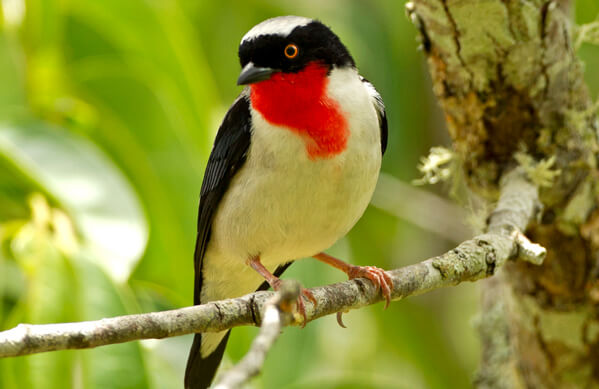
For the most endangered birds, every acre we protect makes a difference. In 2025, ABC supported the protection of nearly 171,000 acres of habitat in new and expanded protected areas, working with partners across the Western Hemisphere. Cumulatively, we’ve protected more than 1.3 million acres and planted more than 8.1 million trees and shrubs to restore vital habitats.
– In Brazil, ABC supported the establishment of a new state park to benefit the Critically Endangered Cherry-throated Tanager, which numbers at most 20 individuals. The Cherry-throated Tanager State Park protects a vital fragment of remaining Atlantic Forest and connects multiple protected areas in the Mata de Caetés Corridor into a landscape of nearly 2,000 acres. Instituto Marcos Daniel, an ABC partner, will work with local authorities to manage the roughly 580-acre property.
– Peru’s San Pedro de Chonta Regional Conservation Area was designated in 2025, protecting 128,220 acres of habitat for the Endangered Golden-backed Mountain Tanager and many other animals and plants. ABC partner Nature & Culture International and the regional government of Huánuco led the effort, supported by Rainforest Trust and the Andes Amazon Fund. ABC took part through the Conserva Aves initiative, which also includes the National Audubon Society, BirdLife International, Birds Canada, and RedLAC.
– ABC researchers completed a study of threatened bird species and their habitats in Latin America; it identified the 64 species most in need of protected habitat and mapped where conserving lands in new or expanded reserves could conserve these species. The results will guide ABC’s work with partners going forward.
– The Search for Lost Birds, a partnership of ABC, Re:wild, and BirdLife International, had several successes this year. For example, the Rufous-breasted Blue Flycatcher of the Philippines and Bismarck Kingfisher of Papua New Guinea were rediscovered in March and May, respectively. And more recently, the Biak Myzomela of Indonesia and Broad-billed Fairywren of northern New Guinea have been found. Finding these rare birds means that conservation plans can be put in place to prevent them from becoming “lost” once again.
– In Hawai‘i, ABC and our partner, the Moloka‘i Land Trust, celebrated a record-setting 222 active nests of ‘Ua‘u kani (Wedge-tailed Shearwater) on the island of Moloka‘i at the Mokio Preserve. The birds are nesting within the 5,600-foot-long conservation fence completed in 2024. Previously, the preserve hosted 54 active shearwater nests in 2024 and only 35 in 2023.

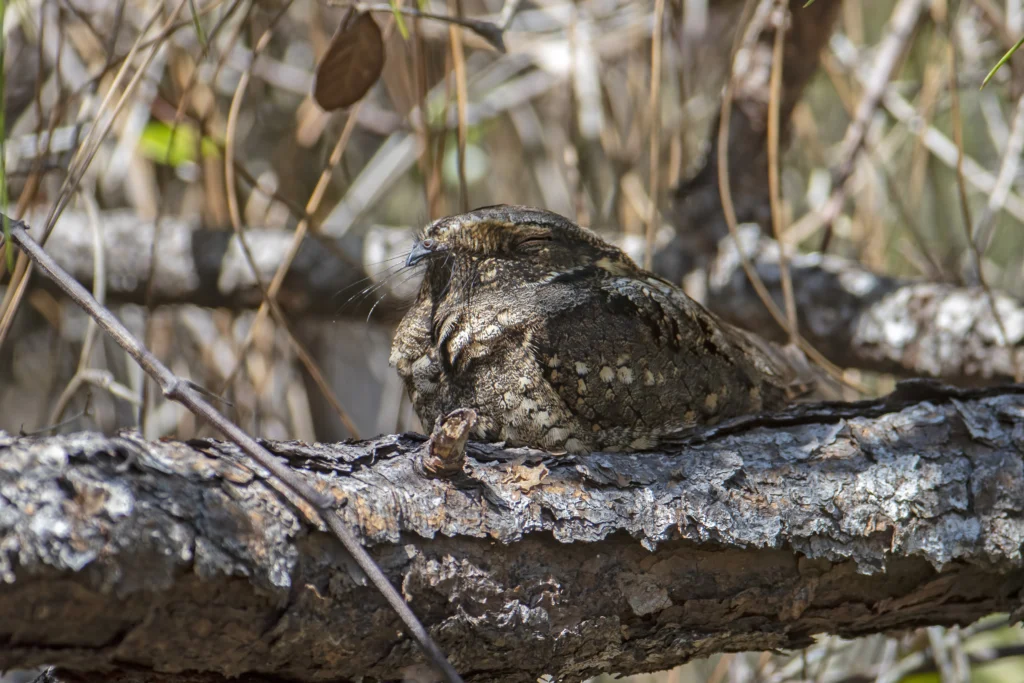
Migratory birds range over vast landscapes, and ABC’s approach to conservation is scaled to match those incredible journeys. Our BirdScapes framework helps to prioritize the conservation of the habitats birds need at every stage of their annual life cycles. Working with an expansive network of partners that includes Migratory Bird Joint Ventures (JVs), we’ve conserved more than 9.9 million acres of priority habitat in dozens of states and countries since 2007; in 2025, these efforts conserved no fewer than 208,000 acres.
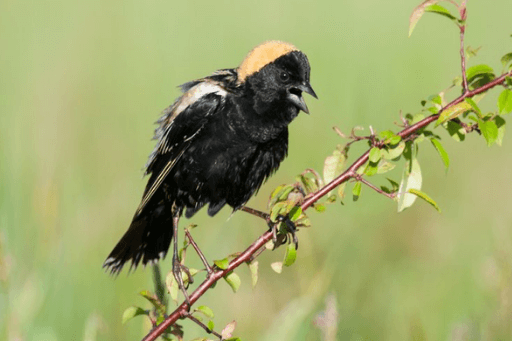
– ABC and partners across the Northern Great Plains improved nearly 100,000 acres of vitally important grassland habitat in 2025, bringing our all-time total in the region to 600,000 acres. The work benefits the Long-billed Curlew, Chestnut-collared Longspur, Western Meadowlark, and other declining grassland birds, and was conducted in partnership with the U.S. Department of Agriculture’s Natural Resources Conservation Service (NRCS).
– Golden-winged Warblers, American Woodcocks, and other early successional specialists in the Great Lakes region have more room to roam: ABC and partners created or enhanced more than 6,000 acres in 2025, thanks to support from the Minnesota Outdoor Heritage Fund and the NRCS. We are encouraged by evidence that our habitat interventions are working: Comprehensive monitoring of 141 sites enrolled in NRCS programs revealed that 78% were occupied by American Woodcock and 87% by Golden-winged Warblers.
– In Pennsylvania, ABC and partners are stewarding more than 23,500 acres within 40 dynamic forest restoration blocks (DFRBs) to improve forest health and structural complexity — creating the mosaic of habitats needed to support diverse forest bird communities that include Golden-winged and Cerulean Warblers, Wood Thrush, Canada Warbler, and Eastern Whip-poor-will. (For more on the effectiveness of this approach, see our recent paper in Forest Ecology and Management.) The program aims to improve the health and diversity of more than 379,000 acres for birds across all 40 restoration blocks. Our DFRB partners include the Pennsylvania Game Commission, the Pennsylvania Department of Conservation and Natural Resources, as well as private landowners.
– With the support of a $2.9 million award from the California Wildlife Conservation Board, ABC is leading a new three-year project that will restore 975 acres of riparian and wetland habitat for threatened migratory birds in the Amargosa Basin, a vast watershed in the Mojave Desert. The landscape is essential for the survival of many birds, among them California’s Endangered Bell’s Vireo, the federally Endangered Southwestern Willow Flycatcher, and the federally Threatened Western Yellow-billed Cuckoo. Partners include the University of California-Davis, River Partners, the Amargosa Conservancy, and Roux, Inc.
– Across more than 10 million acres, ABC is providing technical assistance to ranchers and private landowners throughout the eastern Sierra Nevada, western Mojave Desert, southern Central Valley, and the California Central Coast. Since June, ABC staff have worked with nearly 20 landowners to enhance their lands for declining riparian, grassland, and desert birds. This work is progressing thanks to a partnership with the NRCS California State Office.
– The Lower Mississippi Valley Joint Venture, which ABC supports and staffs, secured five years of funding with a budget of more than $21 million for its Open Pine Regional Conservation Partnership Program (RCPP) — through which we’ll work with landowners on at least 70,000 acres in Arkansas and Louisiana to benefit species from the Northern Bobwhite to the federally Threatened Red-cockaded Woodpecker.

– To conserve migratory birds where they spend the nonbreeding season, ABC’s BirdsPlus program continues to expand its reach and its returns. For example, in Honduras, our partner Cacao Moskito used a recoverable ABC grant to purchase and process 5 metric tons of cacao from nearly 100 farmers and then sold the product on the market. The grant, which was paid back to ABC to reinvest in more conservation work, made it possible for bird-friendly habitat (shade cacao) to remain in the Lost City BirdScape and avoid conversion to cattle pasture.
– ABC researchers are advancing the BirdsPlus Index, an innovative tool that uses bird sounds as an indicator of biodiversity. We produced two seminal papers: The first paper sets BirdsPlus species scores for all the world’s bird species based on species-specific attributes. The second paper demonstrates how acoustic data from six states in the northeast United States can be used to produce checklists of bird species; when overlaid with BirdsPlus species scores, this data can be used to estimate BirdsPlus site scores — which in turn can be compared to determine sites with the most conservation value. These papers are currently under peer review.
– ABC made strides to expand the Motus Wildlife Tracking System in the U.S. this year, with 41 new stations installed, 37 upgraded, and assistance provided on an additional 12. Collecting signals from digitally coded tags attached to birds, the network is providing a better understanding of birds’ travels and their conservation needs. Motus stations supported by ABC have provided data on more than 1,500 animals of more than 100 species since 2024.

Threats to birds can be as widespread as the invasion of non-native species, or as localized as habitat loss on a 1-square-mile atoll in the Pacific Ocean. Throughout 2025, ABC built on its strong record of taking on some of the biggest threats to birds, working with a range of partners and supporters to minimize the impacts of glass collisions, outdoor domestic cats, harmful pesticides, and habitat loss, to name just a few.
– In November, ABC celebrated a victory for the federally Threatened Red Knot when the federal government advanced plans to replace medical testing on horseshoe crabs with synthetic methods. The move — a long-term priority for ABC’s advocacy efforts — will help spare the ancient creatures from harvesting, leaving more crabs to lay eggs that fuel epic shorebird migrations.
– ABC worked hard in 2025 to ensure federal agencies and programs continued to support bird conservation, opposing a proposal to weaken the Endangered Species Act and joining a lawsuit to protect the Endangered Florida Scrub-Jay, the outcome of which will have implications for the Act. We also advocated for adequate funds for bird conservation in the 2026 federal budget; funding levels for bird conservation held steady and even increased for some programs.
– Our advocacy also helped achieve wins in states from Hawaiʻi to Vermont this year. For example, Lake County, Illinois, became the first municipality in the country to adopt rules for the use of collision deterrents on windows on new single-family homes. ABC continues to lead the movement to prevent glass collisions; to date, ABC has helped to establish bird-friendly building ordinances in nearly 30 municipalities.
– The Hawaiʻi County Council took a meaningful step toward reducing the threat birds face from cats and other non-native species when it passed an ordinance that prohibits the feeding of feral and stray animals on County-owned properties. Domestic cats have had a profound effect on the Hawaiian Islands, which are home to more endangered birds than any other U.S. state.
– In Texas, shorebirds continued to benefit from ABC’s efforts: Stopping Plastics and Litter Along Shorelines (SPLASh) — a partnership of ABC, Gulf Coast Bird Observatory, and Black Cat GIS — cleared more than 19,230 pounds of trash from 694 acres in the Houston-Galveston region’s bayous and coastlines. Since the project began in 2020, it has collected more than 70,000 pounds of trash in the region.
– ABC enrolled more than 5,600 acres of cropland in our Untreated Seed Pilot Program, an effort to support American growers and producers interested in using seeds free from neonicotinoid pesticides, which are commonly used as seed coatings and are deadly to birds. Participants are helping ABC to better understand and respond to the challenges producers face when trying to reduce and eliminate neonic seed coatings in their farming operations.
– Regional fishery managers voted in favor of 20 percent reduction in the catch quota for menhaden, a preferred food source for Osprey. While more progress is urgently needed, ABC and partners have been successful at growing awareness that unsustainable menhaden harvests are driving Osprey declines in the Chesapeake Bay region.
Register for our free policy webinar for a preview of ABC’s advocacy work in 2026.
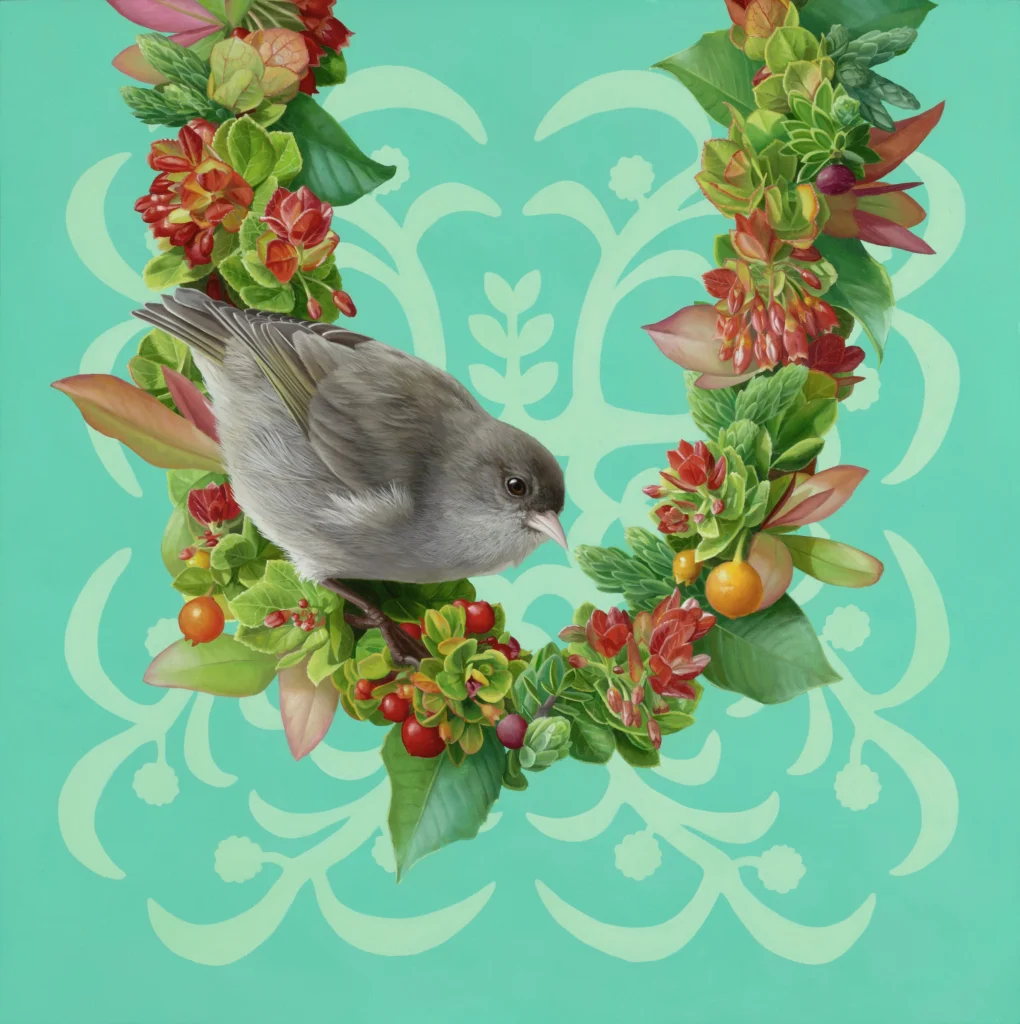
Partnership has been the cornerstone of ABC’s work from the start — we know that our mission to conserve birds and their habitats relies on relationships built on trust and a shared vision of an expansive, inclusive bird conservation movement. The ever-growing flock of people who care about birds is foundational to all that we do, and building that movement is essential as we take on the toughest challenges facing birds, together.
– The Bird City Network, an initiative of ABC and Environment for the Americas, guided the design and 2025 launch of new programs in Georgia, Michigan, Missouri, and Oregon — boosting the number of Bird City programs to 16 and the number of Bird City communities to 277. This year alone, Bird City communities have taken over 3,000 conservation actions, such as a nature-themed window painting contest in Galveston, Texas, to reduce bird collisions with glass.
– The Latin American Reserve Stewardship Initiative (LARSI), an ABC collaboration with March Conservation Fund, celebrated its 10th anniversary with a partner summit in Bogotá, Colombia. LARSI has provided 29 of ABC’s Latin American and Caribbean partners with more than $3.8 million in grants for organizational and reserve management, financial sustainability, and more, supporting their ability to prevent bird extinctions in over 70 reserves across 13 countries. This year, 14 LARSI partners received a total of $425,000 for projects that benefited endangered birds, including the Blue-billed Curassow, Antioquia Brushfinch, Black-breasted Puffleg, Gray-breasted Parakeet, and Indigo (Lear’s) Macaw.

– Along with NatureServe and the authors of Habitats of North America, ABC developed the Habitats WatchList, a new way to categorize, map, and assess risk for bird habitats. The Habitats WatchList is the first of its kind, pairing bird communities with vegetation-based habitat maps to identify conservation needs and challenges in birds’ terrestrial, freshwater, and coastal environments.
– Our Together for Birds Program enables us to expand how we care for birds and to better articulate why it matters, using art, education, research, and community engagement to highlight essential components of effective conservation. Our biannual cohort of Together for Birds Conservation and Justice Fellows advocated for more ethical and expansive approaches to conservation. For example, one of the fellows improved connections across borders by helping the Partners in Flight Network create bilingual stories and technical materials, while another boosted Kirtland’s Warbler conservation through community engagement in The Bahamas.
– In Hawai‘i, ABC is working with teachers to develop a native bird-focused curriculum to help raise the next generation of conservationists. Project successes include a youth advocacy cohort called Nā Leo Nahele, which brought energy and enthusiasm about Hawaiian honeycreepers to five major outreach events in 2025 while developing participants’ capacity as conservation leaders.
– ABC reached several milestones in our efforts to inspire conservation and support this year. Through our Action Alert system, more than 25,000 people sent nearly 200,000 messages to legislators aimed at improving regulations for birds. Circulation of ABC’s redesigned Bird Conservation magazine reached 30,000, and on social media, our channels surpassed 1 million in combined followers. ABC’s website (abcbirds.org) saw well more than 2 million page views; we expect the newly designed site to attract still more. And, ABC earned more than 4,300 mentions by media outlets, ranging from The New York Times to National Public Radio to regional and local outlets.
Stay tuned in early spring for ABC’s 2025 Impact Report, which will share even more progress for bird conservation.
Have a look at our conservation results from prior years here.
Related News & Stories