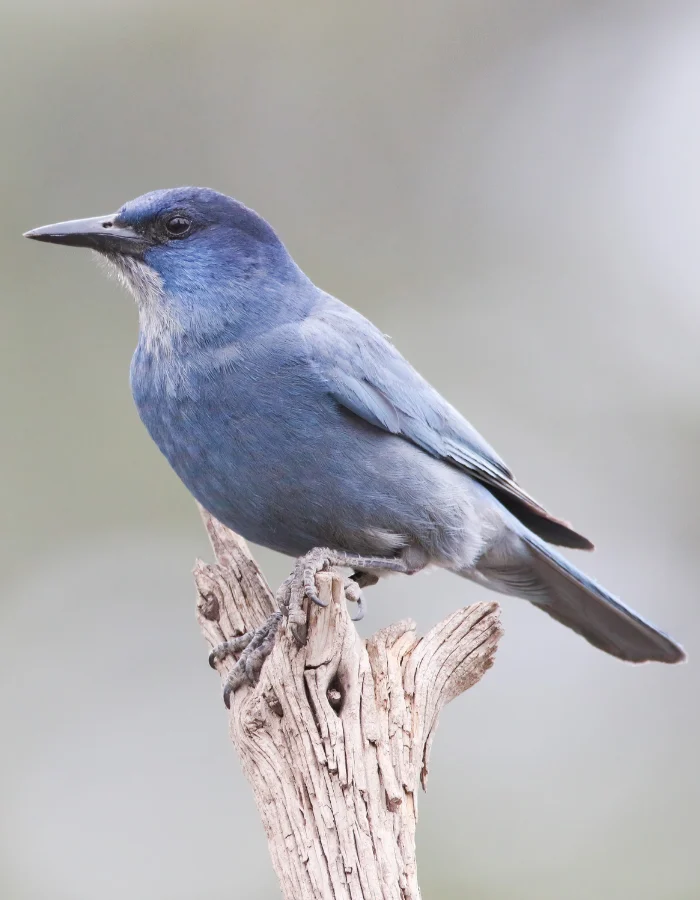
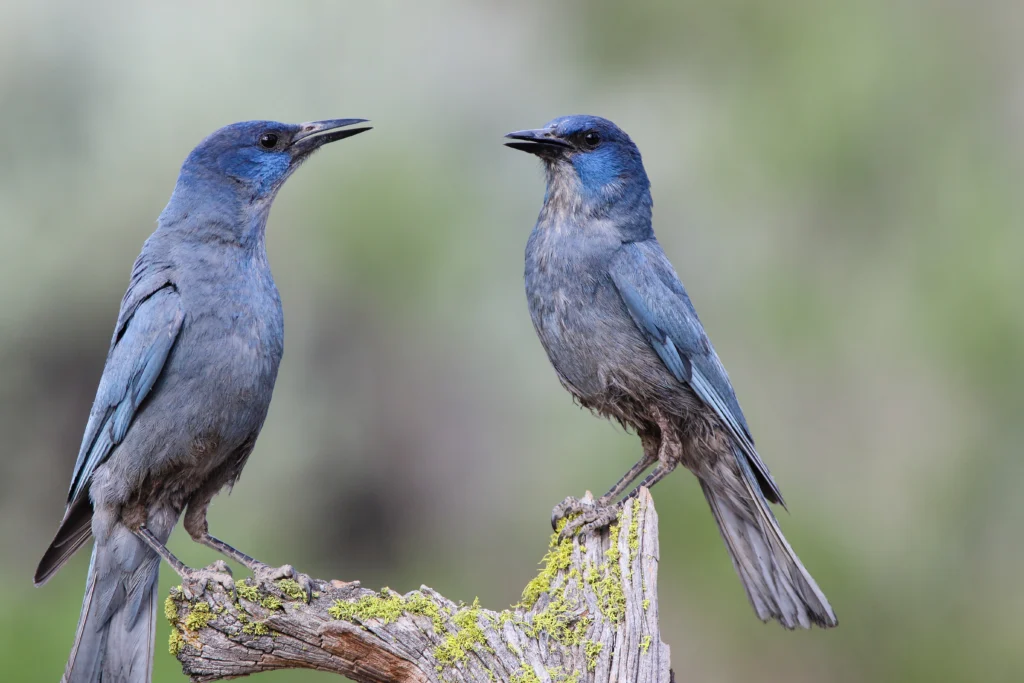
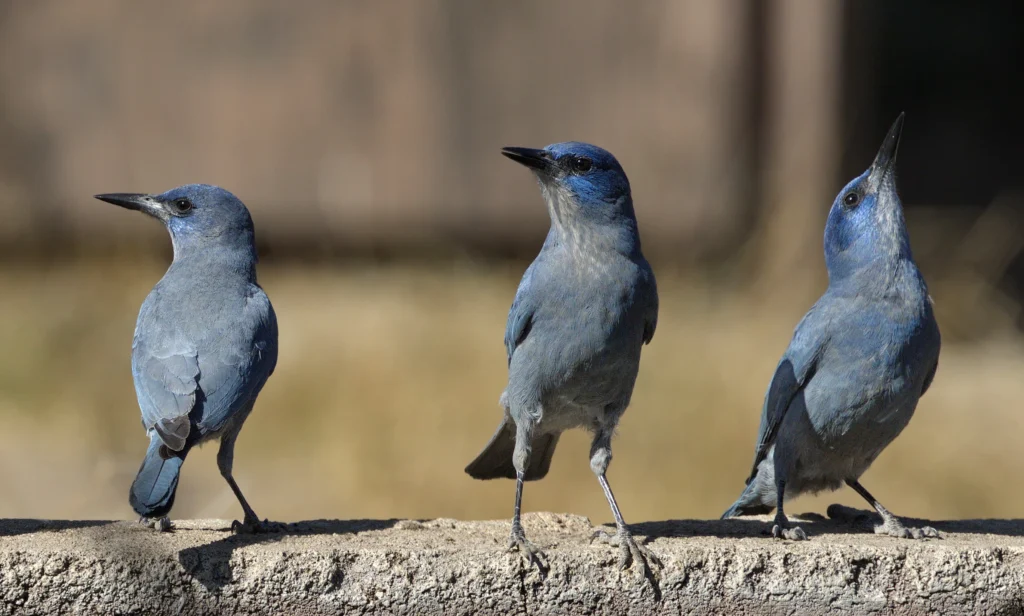
Pinyon Jays – an iconic bird of the American West known colloquially as piñonero or blue crow – are showing up in spots far outside of their normal range this year. Bird irruptions like this are always exciting, but also worrisome. What’s behind the birds straying so far from their regular territory – in this case, the foothills and lower mountainsides of the western U.S. and northern Mexico?
We asked Scott Somershoe, an expert on the species based in Denver, Colorado and biologist with the U.S. Fish and Wildlife Service, to weigh in. He remarked that although jays are known to wander outside of their year-round home ranges, this year’s Pinyon Jay irruption is “unprecedented … we have not seen the species in southern California and islands offshore (San Clemente Island, Channel Islands, and Santa Catalina Island).”
Irruptions take place “typically when food resources (in the case of Pinyon Jay, pine nuts from various species of pinyon pine) are inadequate to meet their needs. We had so little snow across the entire west last winter that I think it’s likely cones that were developing were largely aborted. Broadly speaking, there was probably a west-wide nut crop failure, not just for multiple pinyon pine species but ponderosa and Jeffrey’s pines as well.
“Cone production is cyclical (a good mast crop on average every couple years) and that varies by pinyon pine species. Some years of reduced production are more extreme than others. Persistent drought and increased temperatures, especially at key stages of cone development, can cause trees to abort cone development or produce cones with nonviable seeds. Cone development is a two-year process, so temperatures and precipitation need to be appropriate at the right times to facilitate cone and seed production. Trees can be loaded with cones, but the nuts may be nonviable, thus not available as a food resource.”
Somershoe continued, “It’s apparent that there was likely a large-scale crop failure in at least the southwestern portion of the range of the Pinyon Jay. There is generally some pine nut production every year, even if it is small-scale and local, which jays likely find and utilize, caching nuts for consumption through winter. It seems possible that even some of the more reliable producing stands did not produce adequate pine nuts this season.”