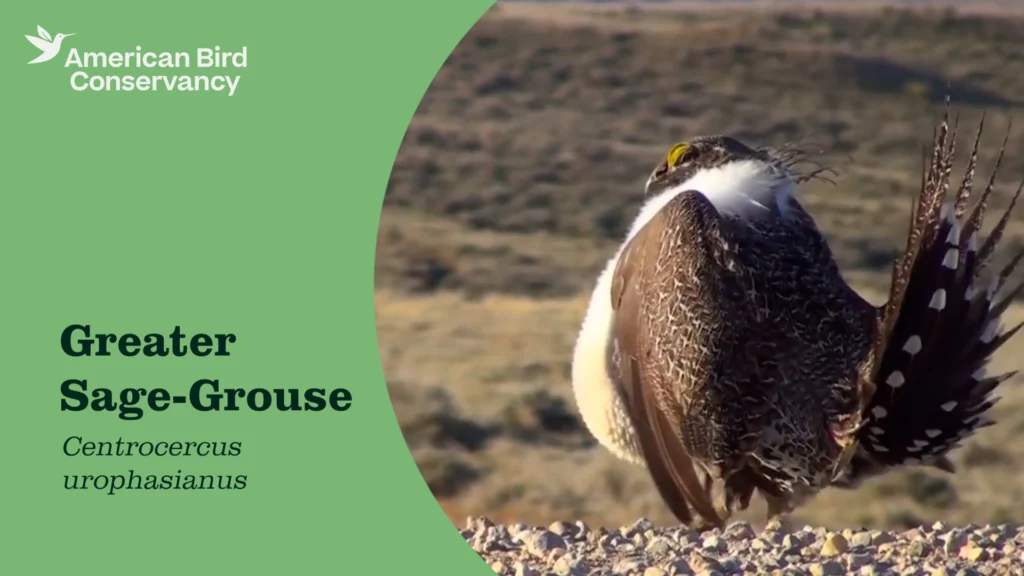
Federal agencies are required to evaluate how their actions — permitting oil and gas drilling near Greater Sage-Grouse habitat, developing an airport close to a marsh where Black Rails nest, or greenlighting highway construction near a holdout for the Florida Scrub-Jay, for example — will impact wildlife, the environment, and human wellbeing. That’s thanks to the National Environmental Policy Act (NEPA), passed in 1970.
On January 8, 2026, a finalized rule went into effect that removes all of NEPA’s implementing regulations. These regulations have guided agencies through the process of conducting environmental reviews for decades, ensuring careful consideration of the environmental impacts of agency actions. Now that all of the rules have been rescinded, it will be up to individual agencies to issue their own guidance.
In addition to regulations, NEPA is being threatened by legislative reform. The House of Representatives has passed the Standardizing Permitting and Expediting Economic Development (SPEED) Act, H.R. 4776. The SPEED Act creates sweeping new exceptions from environmental reviews and limitations on judicial review. These changes would effectively dismantle the law, leaving birds and their habitats far more vulnerable to the negative impacts of development, and cut out the public from the review process.
The SPEED Act will leave threatened birds like the Greater Sage-Grouse, Golden Eagle, and Marbled Murrelet with fewer protections and the people who care about them with fewer options to voice their concerns.
Fortunately, there is still an opportunity to stop the Senate version of the SPEED Act.