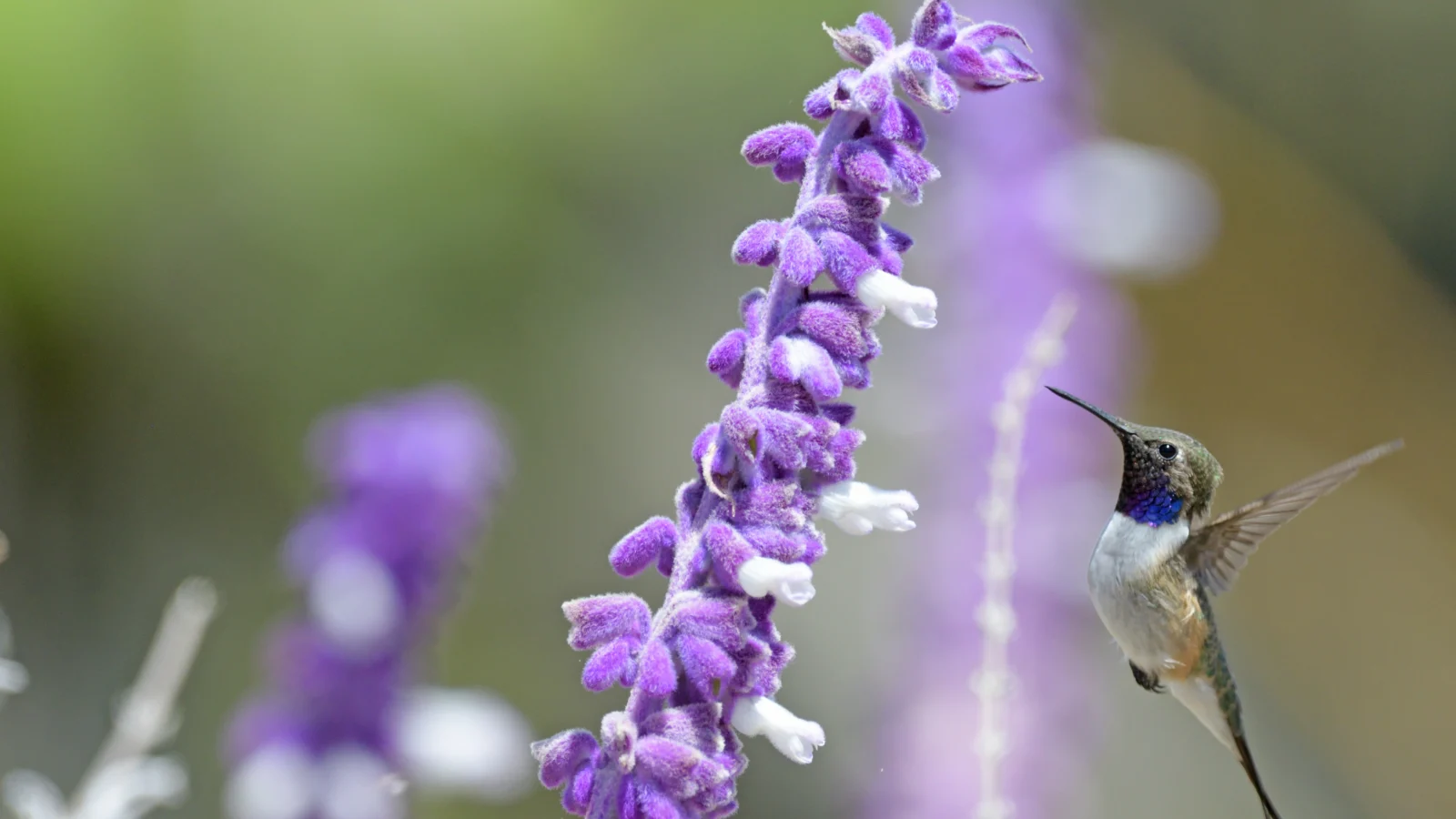
The Critically Endangered Chilean Woodstar is Chile’s smallest bird, and its population is among the smallest of the country’s birdlife. Censuses conducted from 2023 onward by AvesChile indicated the species has declined from approximately 1,500 individuals to 434 as of 2024. The Azapa Valley was the historical stronghold for the Chilean Woodstar, but habitat loss has resulted in the local extinction of the tiny hummingbird. Conserving the woodstar’s only two remaining sites in the Vítor and Camarones valleys is necessary to prevent its population from declining further.
A small network of micro-reserves protects portions of the birds’ habitat. Red de Observadores de Aves y Vida Silvestre de Chile (ROC), with the support of American Bird Conservancy, has recently initiated the process for expanding the network by 15 hectares (37 acres). ROC is also working to conserve and restore habitat within the Vítor micro-reserve, collaborating with the local community to plant approximately 2,000 native plants, as it moves towards coordinated management of the site.
As part of the effort to support the expansion of the micro-reserve network, two Key Biodiversity Areas (KBAs) have been updated to reflect the Chilean Woodstar’s habitat use based on several years of monitoring data. KBAs are sites of global significance for conservation, home to important populations of unique species and ecosystems. ABC is a partner in the global KBA Partnership, which has mapped more than 16,000 sites to date.
Updating the KBAs brings the entire network of Chilean Woodstar micro-reserves within the KBAs’ boundaries, clarifying the protection needs of the species that has relied on a shrinking and increasingly fragmented territory.
Read the original article on the Key Biodiversity Areas website.