Working the Land to Work for Birds
In the most recent iteration of the Farm Bill, about $20 billion was dedicated to conservation efforts. That makes the Farm Bill the single biggest piece of conservation legislation in the world.
How the World’s Largest Source of Conservation Funding Comes Together
When the average person thinks about the Farm Bill, they likely think about, well … farms. The Farm Bill, one of the largest spending bills in the United States, covers everything from subsidies to farmers, crop insurance, and agricultural research to rural broadband infrastructure and food and nutrition programs. But the Farm Bill does much more than that: It happens to be the single largest source of conservation funding in the world.
The U.S. spends about $8 billion directly each year on Farm Bill conservation projects, making possible win-win outcomes for biodiversity and people. Landowners can receive incentives, financial assistance, and technical assistance under the Farm Bill to steward portions of their lands for bird habitat. This clearly benefits birds — especially grassland species, one of the fastest-declining bird groups in the U.S. — but it also works to the advantage of farmers and ranchers. Conservation practices prescribed by Farm Bill programs can improve soil and water quality and prevent erosion, and ultimately make land more productive for the long term.
One factor that makes the Farm Bill so vital for bird conservation is the sheer scale of its potential impact: Roughly 40 percent of the land in the United States is privately owned farmland and ranchland, and another 20 percent is forestland — and birds need these habitats. American Bird Conservancy (ABC) and partners, including the Migratory Bird Joint Ventures (JVs), aim to maximize the opportunities to enhance bird habitat by providing hands-on technical assistance, expertise, and guidance in habitats from Wyoming to Louisiana.
In the nearly 100 years since the first Farm Bill was signed, this landmark legislation has evolved into a powerhouse for conservation. The Farm Bill was created to address acute economic and ecological crises in the 1930s. Today, the Farm Bill impacts conservation actions across millions of acres, and is a vital resource in the effort to address the crisis facing North American birds.
Conservation and land stewardship have always been woven into the fabric of the Farm Bill, going back to its origins in 1933. The 1930s were a time of great upheaval, when two crises — the crash of the U.S. stock market in 1929 and the ecological disaster known as the Dust Bowl — converged. The Farm Bill was part of the New Deal, President Franklin Delano Roosevelt’s wide-ranging package of legislative and social reforms aimed at stabilizing the country and providing relief and jobs to out-of-work Americans, including farmers who lost their farms or had an excess of unsellable crops as economic conditions worsened.
As industries collapsed and millions lost work in the wake of the stock market crash, overworked agricultural lands that had been stripped of their natural erosion controls were simultaneously struck by a series of droughts that desiccated the landscape. The massive dust storms that followed and poor soil conditions made much of the farmland in the Great Plains not just unfarmable, but also unlivable, prompting a mass migration of desperate farm families to the West.
The Farm Bill evolved out of three key pieces of legislation passed in the 1930s that sought to keep farmers afloat amid this economic crisis and ecological catastrophe. The Commodity Credit Corporation made 12-month loans to farmers and purchased crops farmers were unable to sell to a public with no resources to buy. The Farm Credit Administration allowed farmers to refinance their mortgages at lower interest rates. The Agricultural Adjustment Administration gave incentives to farmers to leave some parts of the land unfarmed in order to drive agricultural surpluses down and prices up, and to plant wind breaks of trees and soil-conserving grasses in place of their usual crops. This third bill is considered the first Farm Bill.
These early bills were mostly focused on ensuring farmers could receive fair market value for their crops while also addressing the need for soil conservation and the long-term resilience of farmland. The Farm Bill has evolved in the nearly 100 years it has been in place in order to meet the changing landscape of agriculture and conservation in the U.S. As its impact has grown, so has the complexity surrounding it.
The 1938 Farm Bill stipulated that a revised Farm Bill should be passed by Congress every five years. And, for the most part, Congress has produced a new Farm Bill on that schedule.
The modern Farm Bill is an omnibus bill: a single, massive package of policy proposals that receives one vote. Within the Farm Bill are multiple “titles,” or chapters, an approach that allows legislators to break up this enormous piece of legislation into smaller components. The number of titles has changed over time, but the most recently passed Farm Bill (from 2018) had 12 titles.
The process begins when both the House and Senate Agriculture Committees propose their own versions of the bill. Drafting the Farm Bill is an iterative process that builds on and adjusts the provisions of the existing Farm Bill currently being implemented. The Congressional Budget Office, a nonpartisan agency of the federal government, evaluates and provides a cost estimate for both bills — a process called “scoring.”
The House and Senate then take up their respective bills for a full vote, and once both bills are passed, they are moved into “reconciliation,” when lawmakers from both chambers hash out differences in their bills. They produce one final bill, which is sent to the President to be signed into law. While rare, policy disputes led to vetoes of Farm Bills in 2008 and 1956.
Once enacted, many elements of a Farm Bill are subject to annual budgets. Budget bills have an expiration date, and when lawmakers are unable to pass appropriations or a bill is vetoed, there can be consequences, including partial or full government shutdowns. Spending bills can be controversial and contentious, and lawmakers can find themselves at loggerheads.
The 2018 Farm Bill expired on September 30, 2023, but the expiration didn’t mean an automatic halt to all of its programs. Instead, Congress passed a series of extensions to keep the 2018 Farm Bill operating. And sometimes, matters normally handled under the Farm Bill, such as nutrition assistance, are instead taken up in separate budget bills. Lawmakers may also choose to address only certain provisions and titles of the Farm Bill in separate legislation, rather than tackle the Farm Bill in its entirety. That leaves less for a new Farm Bill to address, resulting in a “skinny Farm Bill.”
In the case of a true lapse, when no extension or stopgap measure is passed, the Farm Bill reverts to the 1949 version, the first Farm Bill to be made permanent legislation. Because of a 1949 stipulation, allowing this to happen would be catastrophic for many who depend on more modern standards.
The earliest Farm Bills addressed issues of soil conservation and conservation of agricultural lands, but the role of conservation grew tremendously in the decades that followed. Since 1985, conservation has had its own title in the Farm Bill — Title II — but prior to that, conservation issues had been rolled into other funding priorities.
The Farm Bill provides billions in incentives, making it financially feasible for landowners to bring conservation practices home. ABC and a wide range of partners help them do it. ABC works hard to make sure that technical guidance and those bird-friendly practices are well designed and readily available to farmers and ranchers.
One of the Farm Bill’s most successful conservation initiatives is the Conservation Reserve Program (CRP), administered by the Farm Service Agency of the U.S. Department of Agriculture (USDA). The CRP was added to the 1985 Farm Bill to address serious financial concerns and soil erosion in the Great Plains. Farmers enrolled in 10-year CRP contracts in order to receive financial incentives in exchange for not farming on ecologically sensitive areas of their property. Farmers further enhance this habitat by planting native grasses and agree to let the land “rest” for at least a decade. The program expanded to other areas of the country, and grassland birds such as the Henslow’s Sparrow and Lesser Prairie-Chicken began to rebound. Unfortunately, the enrollment acreage cap for the CRP has dropped in the last few Farm Bills, meaning that fewer landowners are able to participate.
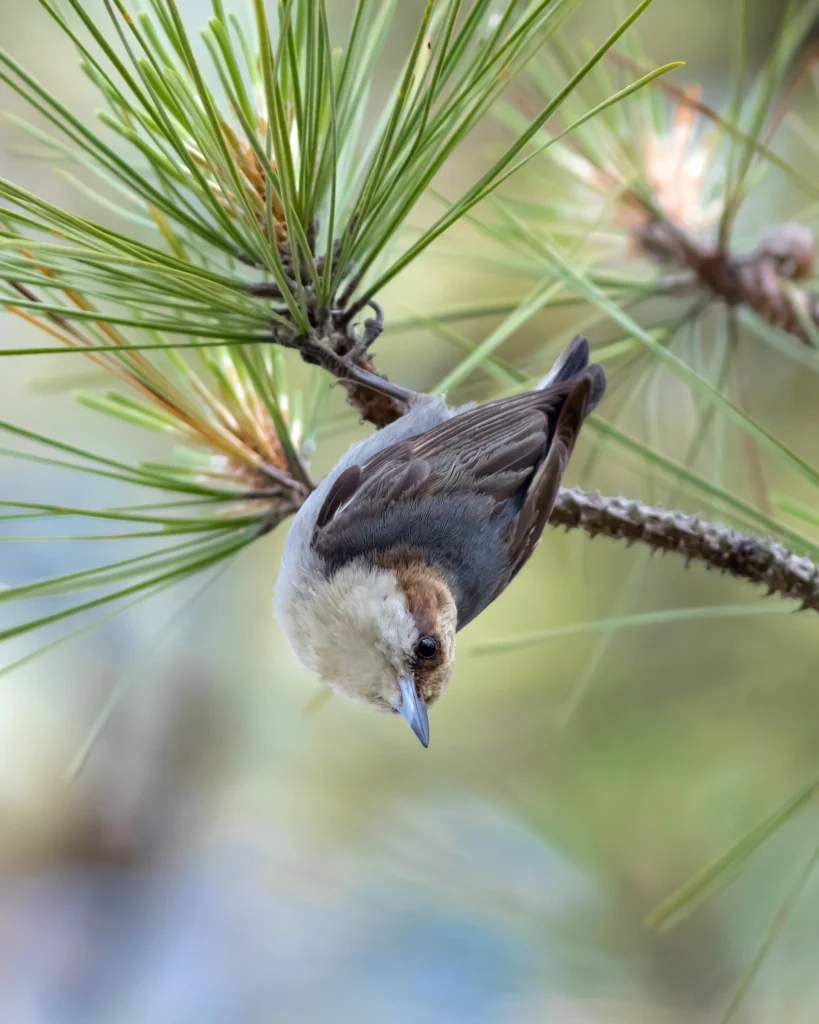
The Regional Conservation Partnership Program (RCPP), a program of the Natural Resources Conservation Service (NRCS), relies on partnerships to leverage conservation investments to address regional conservation goals. In one example, ABC and the Lower Mississippi Valley Joint Venture began working with landowners on 53,000 acres in Alabama and Louisiana in 2022 under an RCPP focused on improving open pine habitat for species like the Northern Bobwhite and Brown-headed Nuthatch.
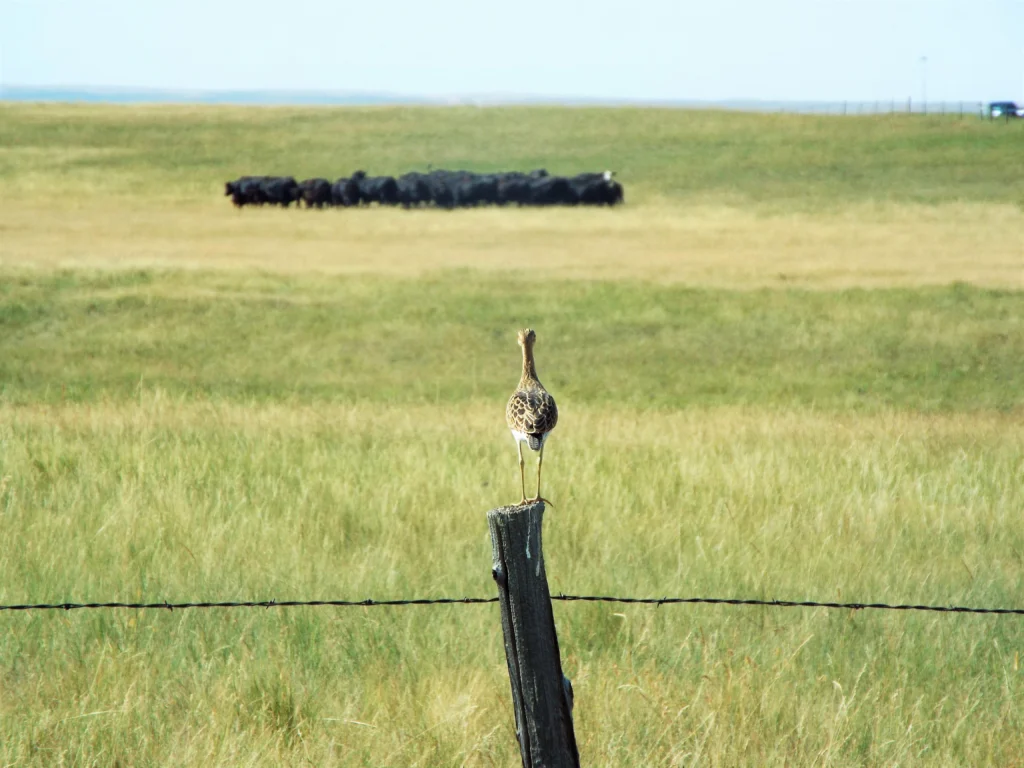
Another RCPP initiative, ABC’s Grassland Breeding Bird Habitat Management program, works across the Northern Great Plains, partnering with landowners to implement bird-friendly conservation practices on their working lands. Most of the grasslands that remain are on cattle ranches and other privately owned lands. This makes them eligible for financial and technical assistance funded by the Farm Bill via the NRCS.
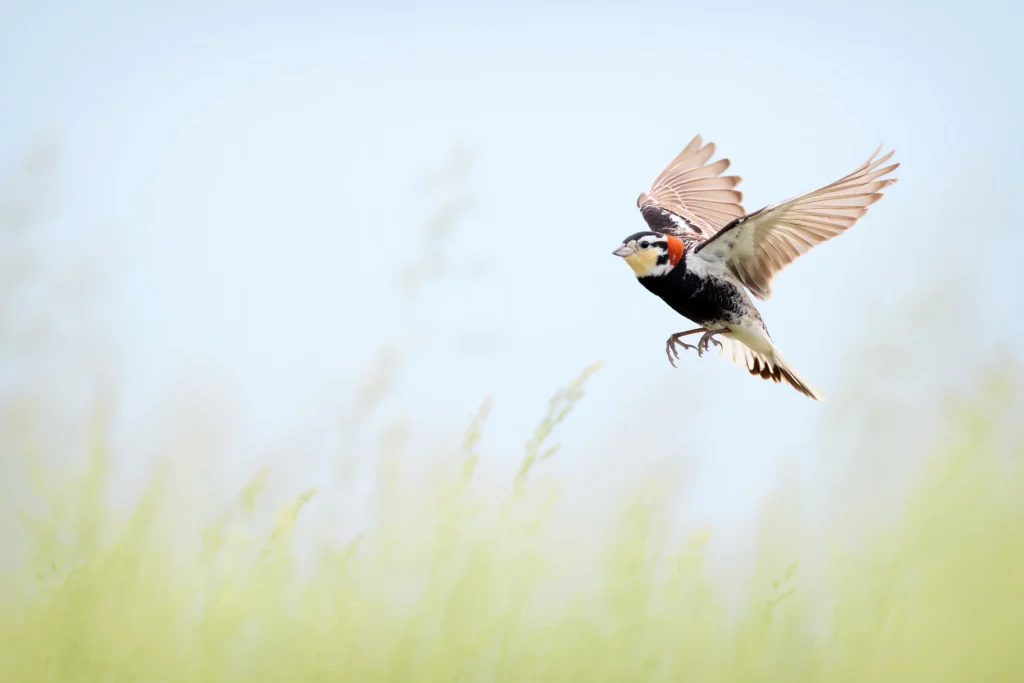
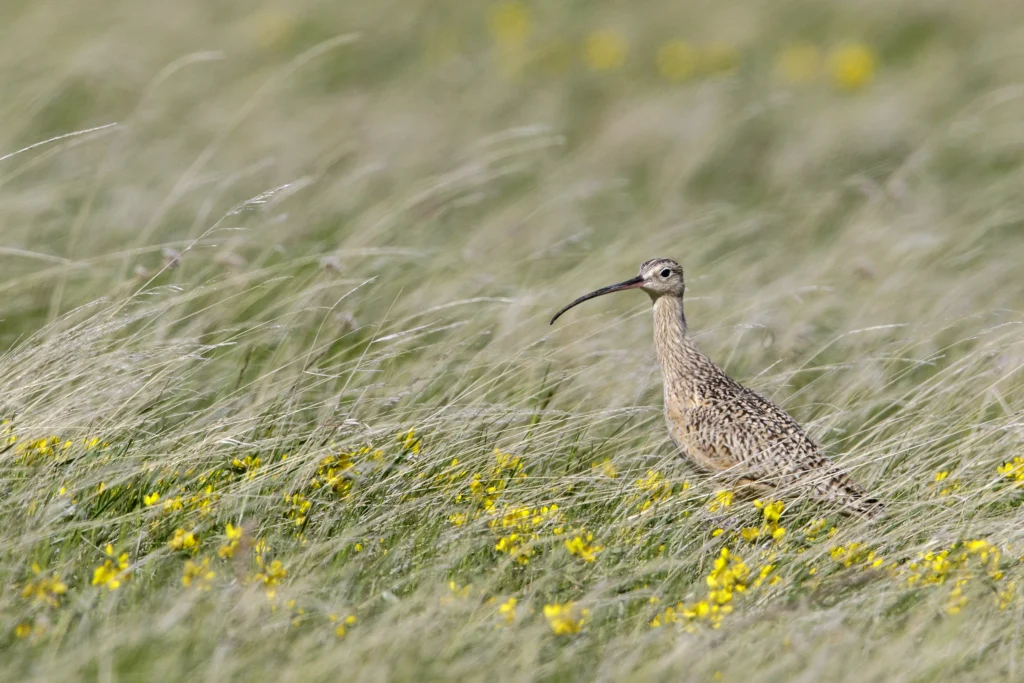
ABC’s Grassland Breeding Bird Habitat Management Program carries out restoration projects that meet the needs of landowners and enhance habitat for birds, like replacing introduced grass species with native grasses that can help prevent soil erosion and improving infrastructure. ABC also supports ranchers in adopting conservation practices, including regenerative grazing, where cattle graze on smaller parcels of land in a rotation that often includes rested parcels, adding resilience to the prairie. Using this technique, ranchers can graze cattle more profitably and sustainably, cattle have greater access to high-quality forage, and birds like the Long-billed Curlew and Chestnut-collared Longspur have high-quality habitat.
The Oaks and Prairies Joint Venture, hosted by ABC, has improved more than 140,000 acres of grassland habitat in Oklahoma and Texas under its Grassland Restoration Incentive Program (GRIP). Created in 2013, GRIP has received much of its funding through multiple NRCS RCPPs to provide financial and technical assistance to private landowners to carry out conservation actions on their properties to benefit Northern Bobwhites, Eastern Meadowlarks, and other declining grassland species.
Landowners enrolled in GRIP work with a local partner biologist to craft a restoration plan for their acreage, focused on addressing limiting factors for grassland species: invasive native woody plants, non-native plant species, and improperly grazed rangeland, for example. Together, landowners and biologists identify solutions, such as prescribed fire and rotational grazing, to bring back the features birds need in grassland ecosystems. They remove non-native plants, restore native plant species to provide the shelter and food sources quail and other birds require, and install fencing to encourage rotational grazing that lets the land rest. Landowners have support and training to sustain and adapt these actions for the long term.
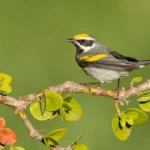
The Farm Bill is also important for forests. It provides landowners essential conservation opportunities to manage and restore their lands, and helps to prevent loss of forests to other uses. Across the country in Michigan’s Upper Peninsula, Farm Bill funds make it possible for landowners with forested acreage to manage their land for birds with ABC’s support and guidance. These areas have the potential to be great habitat for declining species such as the Golden-winged Warbler, which relies on early successional forests — where tracts of younger saplings and shrubs, and open spaces are fostered within the broader, older forest, creating spatial diversity.
The Farm Bill, in its nearly 100 years of existence, has grown to become the world’s largest pool of funding for conservation, and it will take advocacy from groups like ABC, many partners, and the public to ensure the Farm Bill is strengthened. As the threats to birds are mounting, the work the Farm Bill makes possible is more important than ever. Like other spending bills, the Farm Bill can be a political lightning rod, and the programs it funds have faced cuts.
ABC advocates for a strong Farm Bill that takes bold action for birds by increasing funding for programs proven to produce results and investing in innovative, science-backed conservation approaches that meet the challenges birds are facing today.
Join ABC in calling for a strong Farm Bill that prioritizes birds.
Related News & Stories