Six States Joining Bird City Network
In 2025, more than 275 communities participated in BCN within its 16 programs. They completed more than 3,500 actions to improve habitat, reduce threats, engage people, and promote sustainability.
Making Nature Accessible for Neurodiverse People
For many, birding and the outdoors offer a welcome respite. But for others, just getting into nature can be surprisingly challenging, especially for the estimated one in five Americans who are neurodiverse and navigate a world rarely designed with them in mind. The term “neurodiverse” refers to people who have different ways of processing information, communicating, learning, and experiencing the world, including people with autism, attention-deficit/hyperactivity disorder, obsessive-compulsive disorder, and other developmental or intellectual disabilities.
For some individuals, but certainly not all, just going outside can be overwhelming and even anxiety-provoking, full of new sensory experiences and unexpected challenges that can prevent them from walking a trail or exploring a beach.
Given the wide range of conditions categorized under “neurodiversity,” as well as variability between individuals, barriers to exploring nature can manifest in many ways. The mantra “get outside — it’s good for you” is quite common. But for some people, not knowing where to go, what to expect, or what to do in a natural area can create enough anxiety that they avoid going outside altogether. Others may be put off by unfamiliar sounds, smells, or textures. And then, cultural etiquette “rules” about talking and moving quietly in nature may alienate people who have a hard time regulating their volume and bodily movement. All of this and more can keep a neurodiverse person from getting outside.
Every U.S. state and Canadian province has programs focused on public wildlife education, yet few programs dedicate specific resources to make parks more accessible to the neurodiverse population. This misses a huge opportunity to teach and share the joy of nature with millions of people.
The good news is, administrators of parks, reserves, and other greenspaces can do many things to respect a range of sensory needs, be flexible, and be inclusive. And there are many good reasons to do so. Spending time outdoors reduces anxiety, lowers blood pressure, and can help lessen eyestrain at a time when most people look at screens for hours each day. Outdoor time also has been found to be critical for children’s physical and mental well-being.
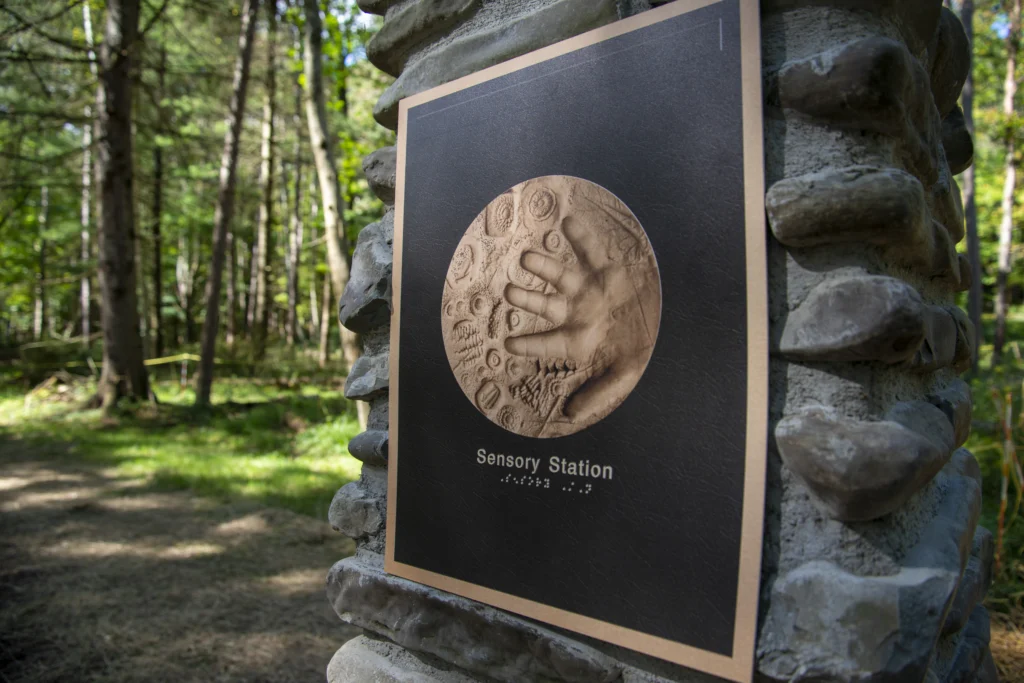
In 2021, the first-of-its-kind Autism Nature Trail in upstate New York’s Letchworth State Park opened for visitors. This one-mile loop trail, designed in consultation with educators, therapists, and members of the autism community including world-renowned autism advocate Temple Grandin, is a model for what accommodating neurodiverse people can look like, including features such as a sensory station where visitors can touch various natural objects, designated areas for running and jumping, and “alone zones” where people can rest and reset.
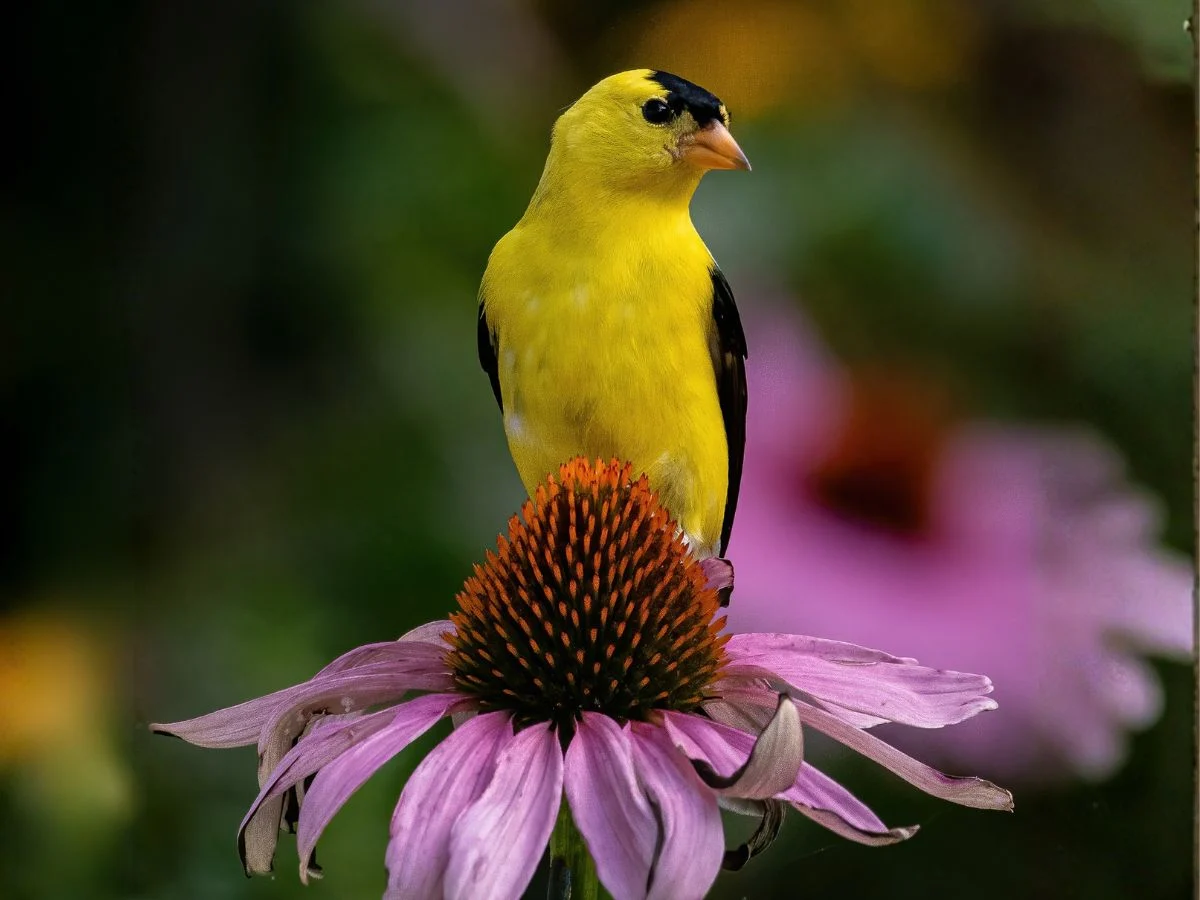
While this trail is a huge milestone for inclusive outdoor spaces, its $3.7 million price tag (for planning, design, construction, maintenance, an endowment, and other costs) is out of reach for many communities. This is where the Charm of Cognition project comes in. Part of ABC’s Together for Birds initiative, its goal is to build a “pop-up” system where wildlife education groups, nature centers, bird clubs, and other outdoor organizations can put together a trailer full of supplies to host neurodiverse-friendly bird outings. The project takes its name from a “charm” of goldfinches — a traditional collective noun for these bright, social birds — and from the idea of charm as something that captures attention, creates connection, and changes how we experience the world.
Birds can be an excellent gateway for anyone looking to spend more time outdoors. Birds are everywhere, you don’t need a lot of equipment to go birding, and with apps like eBird and Merlin, it’s easier than ever to teach yourself. And as you start observing birds, you may begin noticing other parts of nature — butterflies, plants, or rocks — that could spark a new passion.
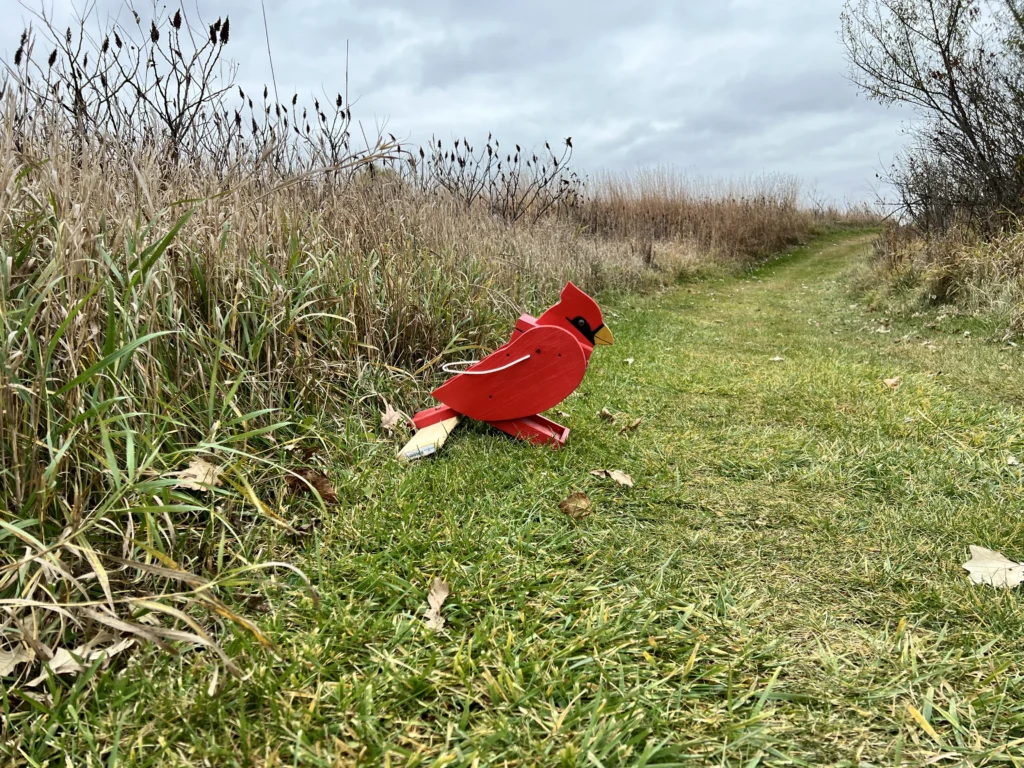
Many organizations already use trailers to haul equipment between parks for habitat management and other activities, so the “pop-up” concept leverages an existing transportation system. A Charm of Cognition trailer would include equipment that could be set up and taken down within a day without permanently altering trails, including bird-shaped trail markers with QR codes for more information about particular species; headphones to reduce auditory overstimulation; hammocks or tents to allow safe places for visitors to take a break; and various adaptations for optics, from binocular harnesses for those who don’t like the feeling of straps around their neck to monoculars designed for people who aren’t comfortable covering both eyes at once.
ABC has presented the pop-up nature trail concept to several state wildlife agencies and hosted test-run birding experiences in northern Illinois. These early experiments are helping explore a simple question: Can relatively low-cost, flexible approaches make nature experiences more welcoming to neurodiverse visitors?
In addition, state agencies, parks, nature centers, and local conservation organizations are experimenting with more accessible experiences using the trails and resources they already have. In Iowa, for example, the Greater Des Moines Botanical Garden allows visitors to borrow “sensory backpacks” containing fidget toys, headphones, and other tools to help them navigate and enjoy the garden.
There is no single recipe for a neurodiversity-friendly nature experience. Wildlife educators and, most importantly, neurodiverse people themselves should help shape what is offered and how it works. Organizations can start small, try different approaches, listen to participants, and adapt based on what they learn.
For those interested in creating their own pop-up neurodiversity nature experience, we can offer some practical considerations. Temple Grandin’s advice to the designers of New York’s Autism Nature Trail included:
Charm of Cognition is providing a few states with ways to begin this kind of experimentation, while ABC continues to test and refine approaches in northern Illinois. The goal is not to create a one-size-fits-all model but to make it easier for communities to start experimenting — and to learn from the people who experience these trails about what makes being in nature more comfortable, engaging, and rewarding.
It’s important to remember that any amount of effort is a step forward for getting more neurodiverse people, and people with disabilities, comfortable outdoors. We already know a lot of things that can help, and by trying out new ideas we can learn a lot more. No matter what your budget is, you can start somewhere and make the outdoors a little more accessible for all.
The most important lesson from these efforts may be that there is no single recipe for a neurodiversity-friendly nature experience. Wildlife educators and, most importantly, neurodiverse people themselves should help shape what is offered and how it works. Organizations can start small, try different approaches, listen to participants, and adapt based on what they learn. At ABC, we’re happy to be part of the conversation.
Molly Bergen is a freelance writer and editor who covers climate, wildlife, and community-based conservation. Jim Giocomo is the Director of ABC’s Central Region.
A version of this article was first published in the Fall 2026 issue of Bird Conservation, the member magazine of American Bird Conservancy. If you find this project worthwhile, please share this page with your favorite park or other outdoor space!
Featured News & Stories