Collaboration with More than 30 Countries
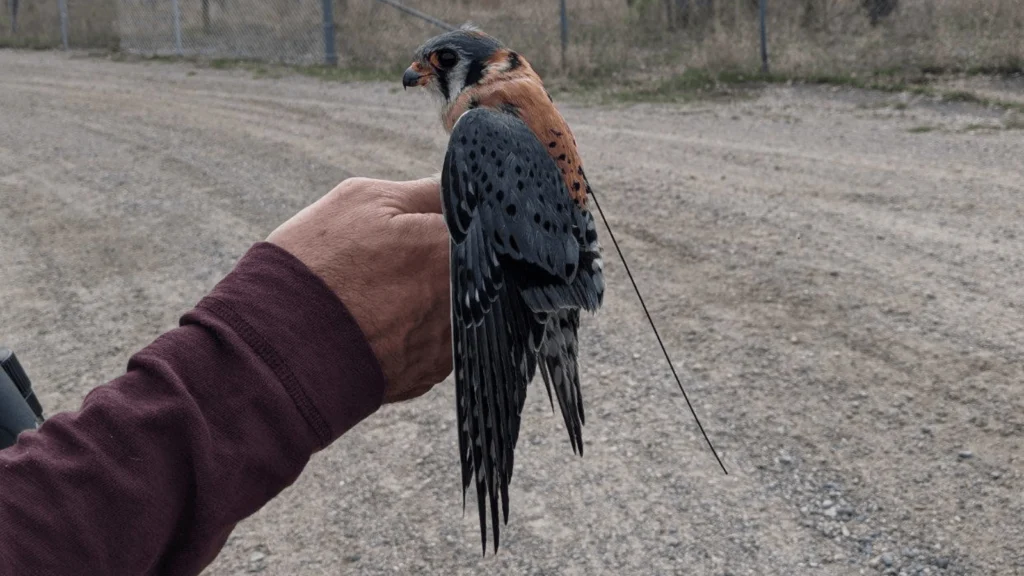
Radio telemetry technology has been around for decades and has been used to track everything from California Condors to Atlantic salmon, but only recently have the transmitters become small enough that even diminutive birds like the Golden-winged Warbler — weighing about 9 grams, or the equivalent of 9 small paper clips — can be safely outfitted with them.
The Motus Wildlife Tracking System (motus is the Latin word for “movement”) is an international, collaborative research network that makes it possible to chart the movements of wildlife in near-real time, using more than 2,000 receiver stations that pick up the “pings” from an animal tagged with a transmitter when it’s nearby. The data is readily available to researchers around the world, and the network is only growing. Technological advancements have made it possible for the entire Motus network to “listen” for all tagged animals on the same few radio frequencies, the tag identification encoded in each individual tag transmitting to the whole network. Each data point represents only a fraction of a journey spanning hundreds or thousands of miles. But, cumulatively, those data points help us identify where birds are going and what habitats they are using across the full annual cycle.
Motus is a program of Birds Canada and has spread to more than 30 countries, with hundreds of participating partners, including ABC. With nearly 2,000 stations across the hemisphere and 45,000 tagged birds representing more than 350 species, ABC is now coordinating the Motus expansion throughout the U.S. and supporting partners throughout the Americas.
We are leading the U.S. implementation of Motus strategic plan priorities to maximize science and conservation outcomes for migratory birds and other animals. We work closely with and support the core Motus team at Birds Canada. We focus on priority bird populations in the Americas, advancing research on declining species like the Red Knot and Wood Thrush to improve conservation outcomes.
Visit the Motus Website to Learn More