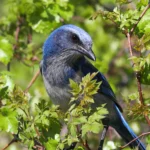
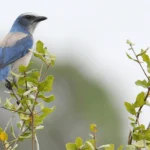
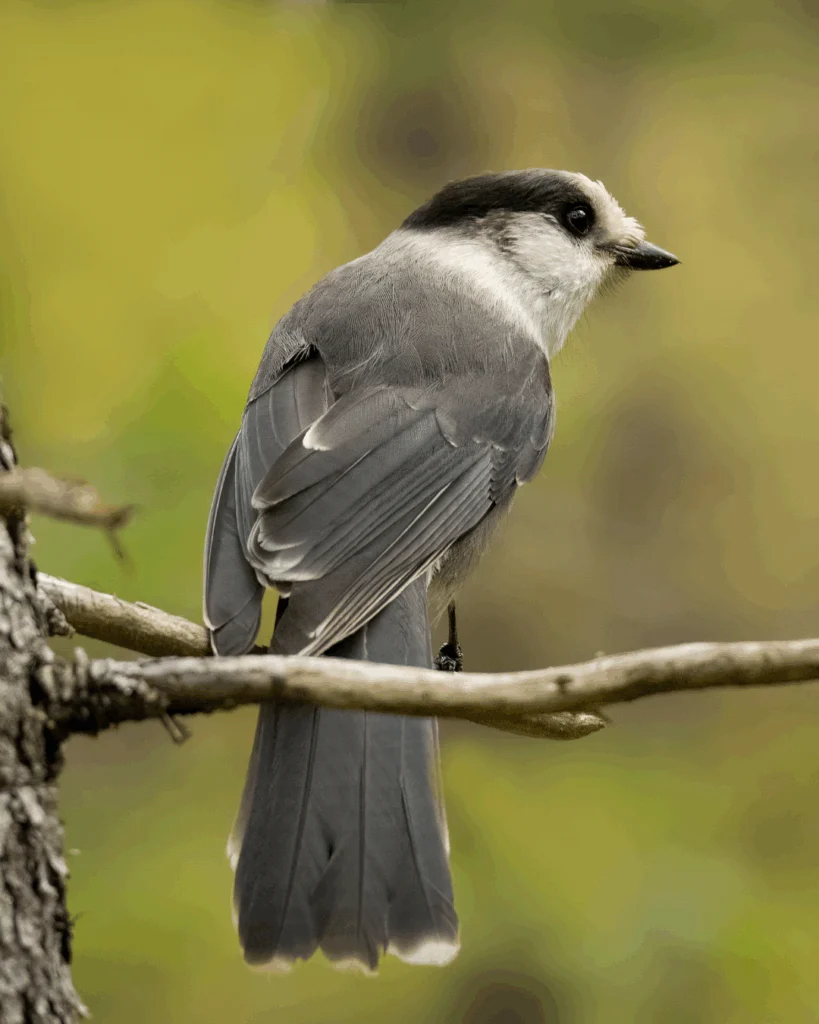
Florida Scrub-Jay in habitat. Photo by Ray Hennessy, Shutterstock.

Florida Scrub-Jay

Aphelocoma coerulescens

Florida Scrub-Jay in brush. Photo by SteveByland, Shutterstock.

Florida Scrub-Jay

Florida Scrub-Jay in brush. Photo by SteveByland, Shutterstock.

Aphelocoma coerulescens

Overview

Conservation Status
Population Trends
Decreasing
Population Size
4,000
Family
Jays
Location
U.S. & Canada
Migration Pattern
Nonmigratory
Migration Distance
Nonmigratory
Also Known As
  • Chara Floridana (Spanish)

About

The Florida Scrub-Jay is an uncommon member of the wide-ranging Corvid family, found only along the ancient, shrubby sand ridges and dunes running through the central part of the U.S. state of Florida. This jay is more subtle in appearance than flashier family members such as the Blue Jay and Green Jay, with understated plumage of soft blue, silvery gray, and touches of white.

As intelligent and curious as other members of its family, the Florida Scrub-Jay is quite tame and will readily approach people to investigate shiny objects and the possibility of potential handouts, a sometimes-fatal habit in this increasingly populated state.

The Florida Scrub-Jay stands out for several reasons. It’s the only member of its genus, Aphelocoma, in the eastern U.S. (It was previously grouped with two western counterparts, the Woodhouse’s Scrub-Jay and California Scrub-Jay.) The Florida Scrub-Jay illustrates evolution in action: It belongs to a “superspecies” complex, a group of closely related, similar-looking bird species that evolved in isolation from one another and remain separated by geographic barriers. Such superspecies can be taxonomically nebulous. The Florida Scrub-Jay has an equally complex social system.

It is also the only bird species in the U.S. that lives exclusively in Florida, in a very specific — and rapidly disappearing — habitat.

Threats

Birds like the Florida Scrub-Jay that have small populations, specialized habitats, and occupy a limited range often face urgent, acute threats. Habitat loss is a primary danger for the Florida Scrub-Jay, but climate change, outdoor cats, and collisions are additional challenges.

Habitat Loss

A habitat specialist, the Florida Scrub-Jay is found only in scrubby, sandy oak woodlands and ancient dunes in coastal and central areas of Florida. Much like the Kirtland Warbler’s jack pine forest habitat, these forests depend on and are maintained by frequent, low-intensity fires caused by lightning strikes. Fire suppression has disrupted these natural occurrences, and habitat is also lost to development as Florida’s population grows.

Habitat Loss

Climate Change

A changing climate can have a range of effects on birds. For the Florida Scrub-Jay, warmer temperatures are leading to earlier nesting and the earlier emergence of predators like snakes, reducing the jay’s nesting success. This means the birds are renesting more often and for longer stretches of time as the warmer temperatures extend the breeding season.

Cats & Invasive Species

As people push further into the scrub-jay’s habitat, outdoor cats are not far behind. Florida Scrub-Jays can sometimes occupy edge habitats, like vacant lots in suburban developments. Juvenile scrub-jays fledge before their feathers are grown and thus can’t yet fly, making them especially vulnerable to predation by cats.

Cats & Invasive Species

Conservation Strategies & Projects

Birds need our help to overcome the threats they face. At ABC, we’re inspired by the wonder of birds and driven by our responsibility to find solutions to meet their greatest challenges. With science as our foundation, and with inclusion and partnership at the heart of all we do, we take bold action for birds across the Americas.

Support Petitions & Advocacy

ABC advocates for policies that ensure a future for imperiled species like the Florida Scrub-Jay, including key legislation like the Migratory Bird Treaty Act and the Endangered Species Act. And when birds are threatened, we take bold action, including joining with our partners to defend critical protections in court.

Take Action

Keep Cats Indoors

Cats can be great companions, but when they’re outside roaming freely, they become a major threat to birds. ABC encourages millions of people to keep their cats indoors and champions responsible pet ownership.

Keep Cats Indoors

Bird Gallery

Large, leggy, and long-tailed, the Florida Scrub-Jay in profile resembles its relative, the Blue Jay. The Florida Scrub-Jay lacks the bold markings of the Blue Jay, but it shares its blue hues, albeit a little less bright. Its head, neck, wings, and tail are a dull blue, and its mostly white throat is offset by necklace-like blue-gray markings. The bird’s back is gray, as is its belly. That same whitish wash appears on its eyebrows and forehead. Unlike the other jays in its genus, the Florida Scrub-Jay lacks a crest. Juveniles are more gray than blue, and the head is gray.

Bird Sounds

The Florida Scrub-Jay has a wide “vocabulary,” uttering loud weep! notes, screeches, growls, chatters, and bill-clicks.

Calls

Credit: Sue Riffe, XC316286. Accessible at www.xeno-canto.org/316286.

Habitat

The Florida Scrub-Jay is a habitat specialist through and through, and is so linked to its habitat that it’s mentioned in the species’ name.

  • Found only in scrubby, sandy oak woodlands of myrtle oak, Archbold oak, and sand live oak, among others, and ancient dunes in coastal and central areas of Florida
  • Requires relatively open areas dotted with bare sandy spots, and will leave an area if scrub grows too dense

Range & Region

Specific Area
Florida

Range Detail
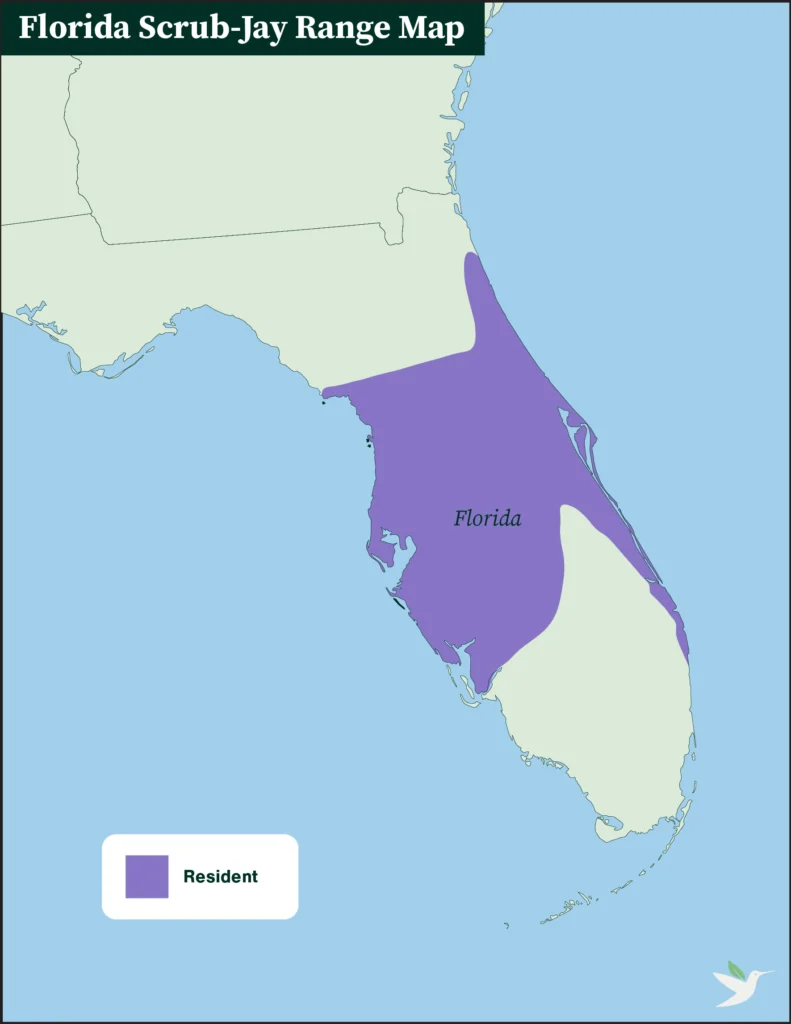
This jay is only found in Florida, and is the state’s only endemic species. It is not found outside of the peninsular region of the state, south of Jacksonville to Steinhatchee.

Did you know?
This jay is non-migratory and remains in the same territory all year, and many individuals stay within the same few square miles for their entire lives.

Range
U.S. & Canada
Migration Pattern
Nonmigratory
Migration Distance
Nonmigratory

Life History

Florida Scrub-Jays are highly intelligent, bold, social, and charismatic, and that high degree of sociality extends beyond cooperative breeding: They are known to quickly grow accustomed to humans, even landing on people. They don’t stray far from home, usually staying within a few miles of where they hatched. Young jays remain in their parents’ territory for the first year of their lives, joining a group of up to five other offspring.

This little collective works together to help raise the next generation, defend the territory, and, importantly, keep an eye out for predators. One bird always acts as a sentinel, sounding the alarm to alert the rest of the family when they spot danger.

Diet

The Florida Scrub-Jay is as omnivorous as all members of its family, from the Steller’s Jay to the Common Raven. Acorns are a major part of its diet, and the jays also cache them for future use, burying the nuts beneath the sand or stashing them within clumps of vegetation or moss. Interestingly, the Florida Scrub-Jay often places a leaf or twig “marker” over its cache sites in the sand. They also eat small fruits, insects, snails, bird eggs, and small vertebrates such as tree frogs, anoles, and mice. It will pick ticks off larger mammals such as deer, cows, and horses.

Courtship

Males and females are monogamous, staying close to each other year-round. Mate feeding and collectively defending their territory reinforces this bond. To court his mate, a male will hop in a circle, fanning his tail in her direction as he goes. Giving a soft warbling song, he may also raise the feathers around the eyebrow and ears, and even gently peck at the feet of the female.

Nesting

The pair works together to gather the materials for their nest: saw palmetto and cabbage palm fibers, as well as oak twigs of varying sizes. They also build the nest together, with the female shaping the cup. Their nest is placed in low shrubs under dense vines or clumps of leaves.

Eggs & Young

The female spends approximately two weeks on the nest, brooding a clutch of two to four eggs. The young jays fledge after 18 days and stay close by for their first year. Throughout all of this, the breeding pair is assisted by helper birds, often offspring from the previous year’s brood. They bring food, chase away predators, and defend the group’s territory.