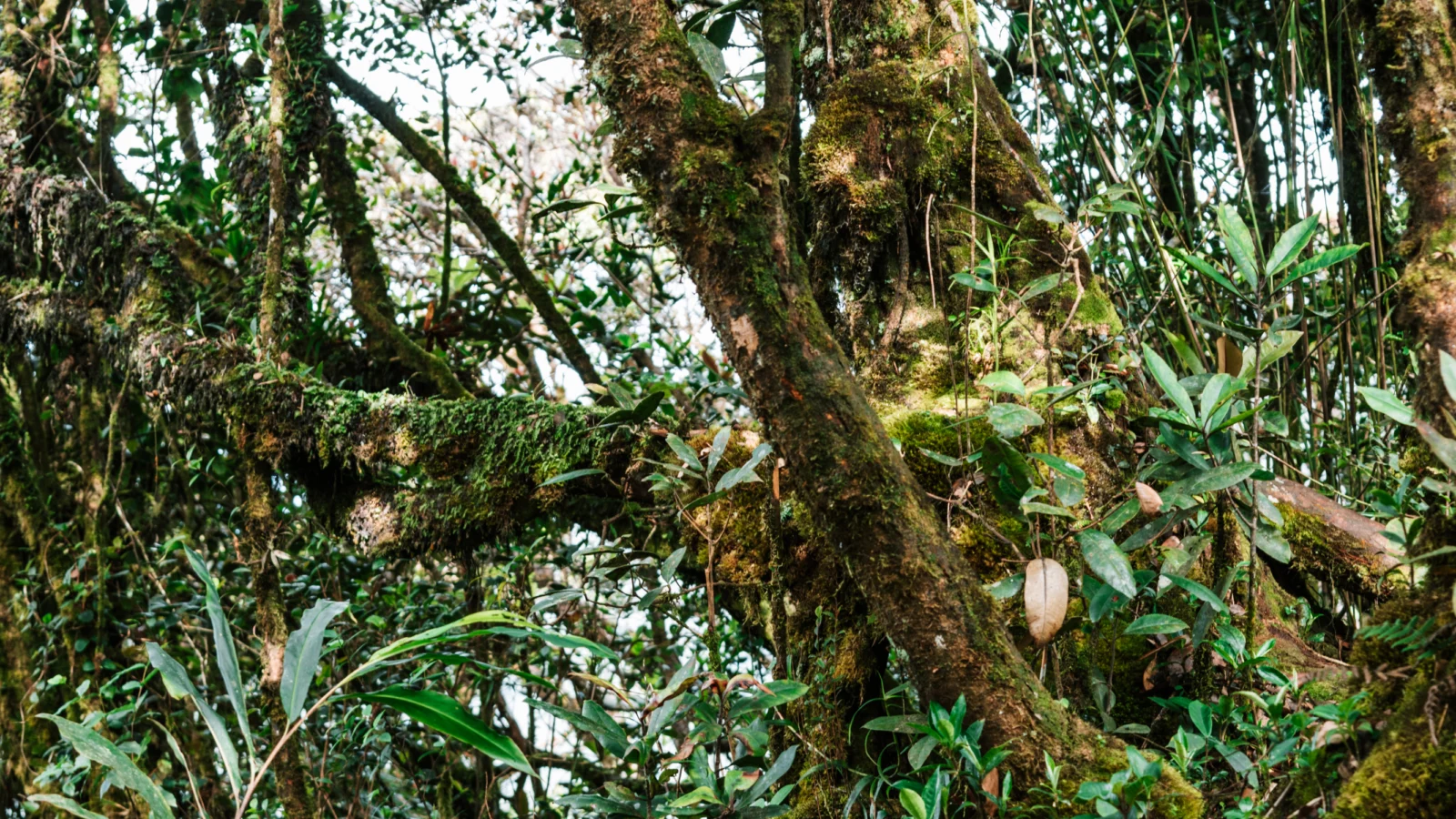
Montane Rainforest. Photo by Nirian, Getty Images Signature.

Andean Cock-of-the-rock

Rupicola peruvianus

Tunki (Quechua)

Andean Cock-of-the-rock. Photo by PhotocechCZ, Shutterstock.

Andean Cock-of-the-rock

Andean Cock-of-the-rock. Photo by PhotocechCZ, Shutterstock.

Rupicola peruvianus

Overview

Conservation Status
Population Trends
Decreasing
Population Size
Unknown
Family
Cotingas
Location
South America
Migration Pattern
Nonmigratory
Migration Distance
Nonmigratory
Also Known As
  • Súgka (Aguaruna)
  • Gallito-de-las-Rocas Andino (Spanish)
  • Gallo de la Peña Andino (Spanish)

About

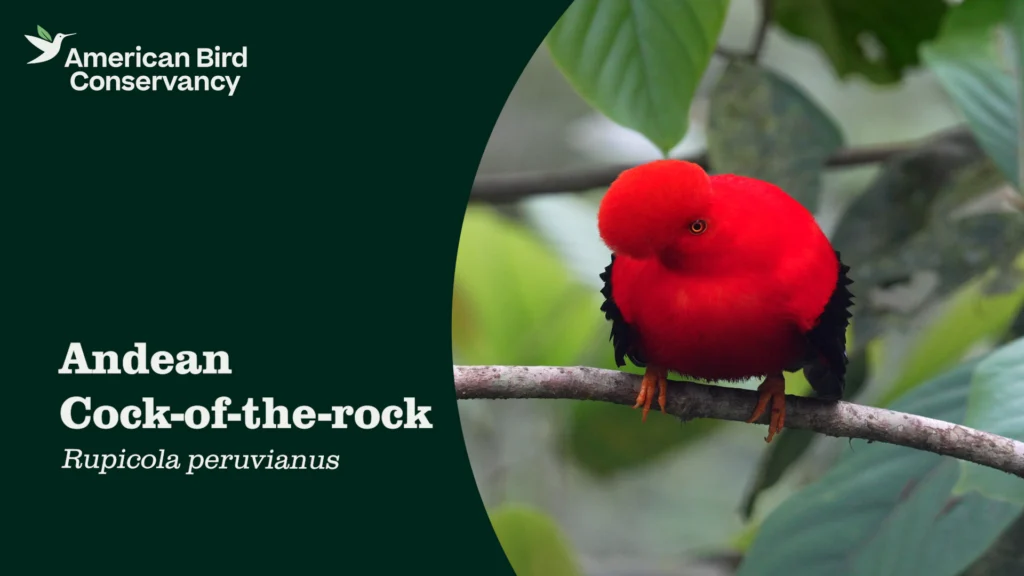
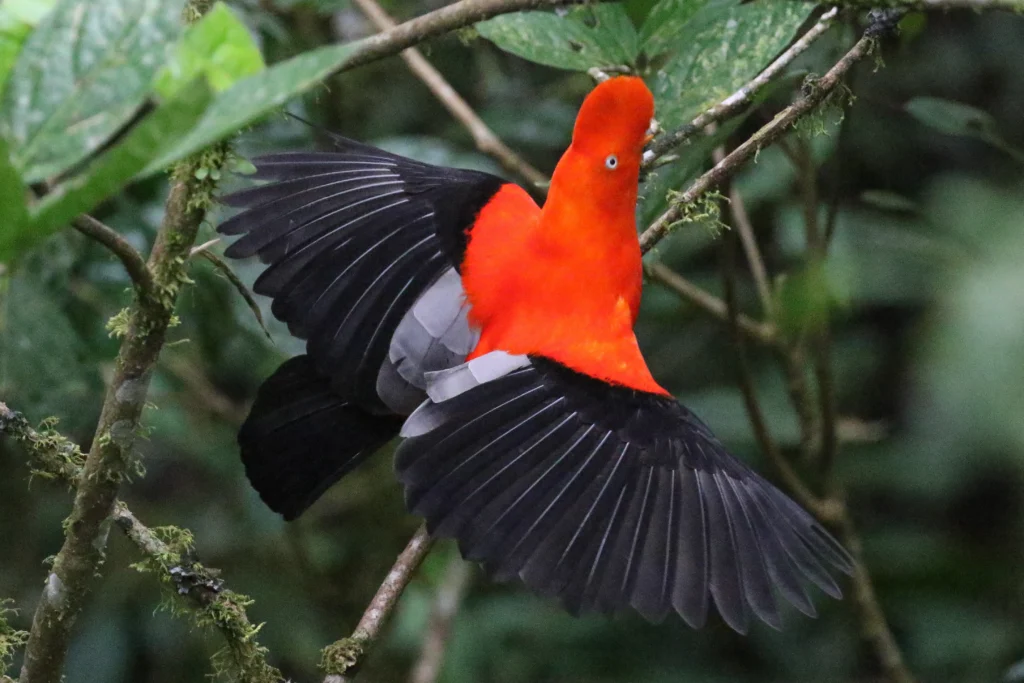
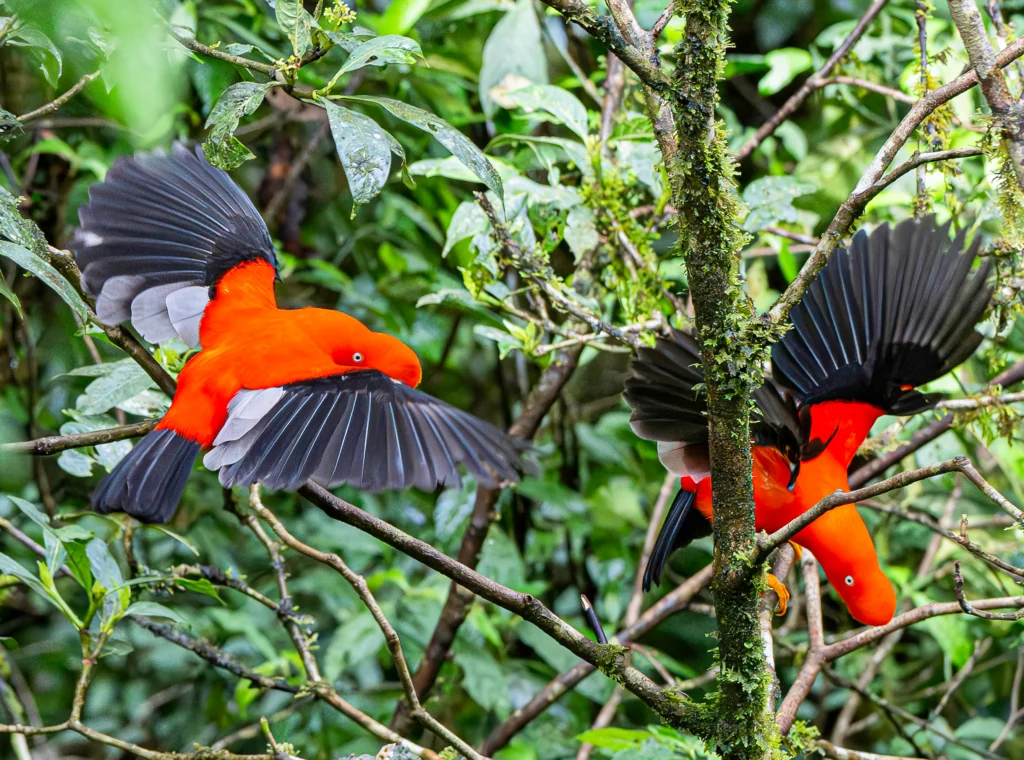
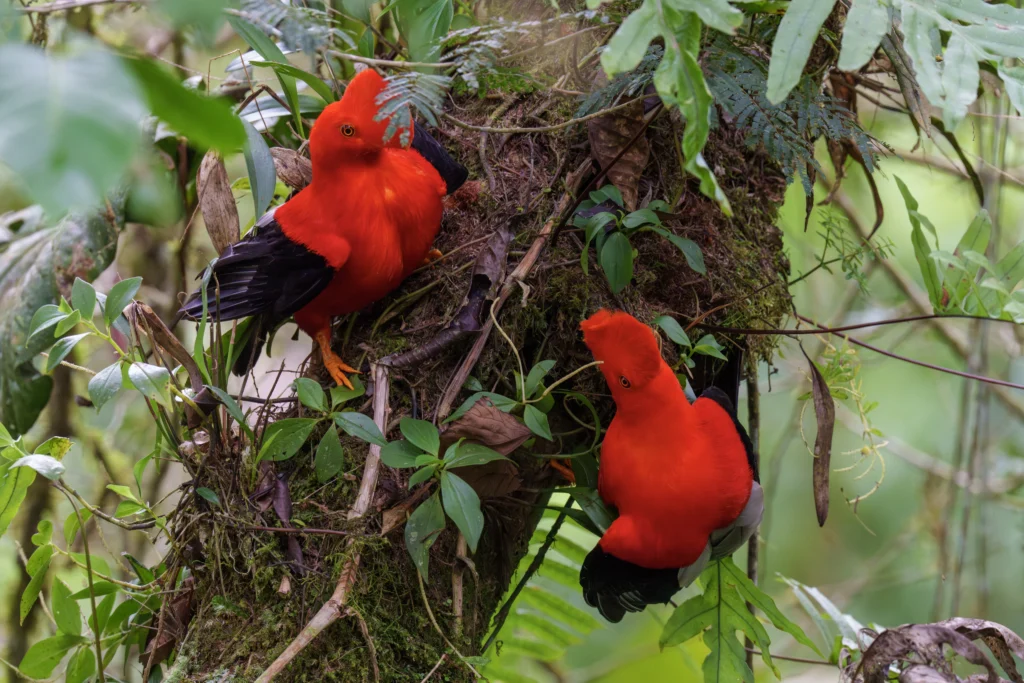
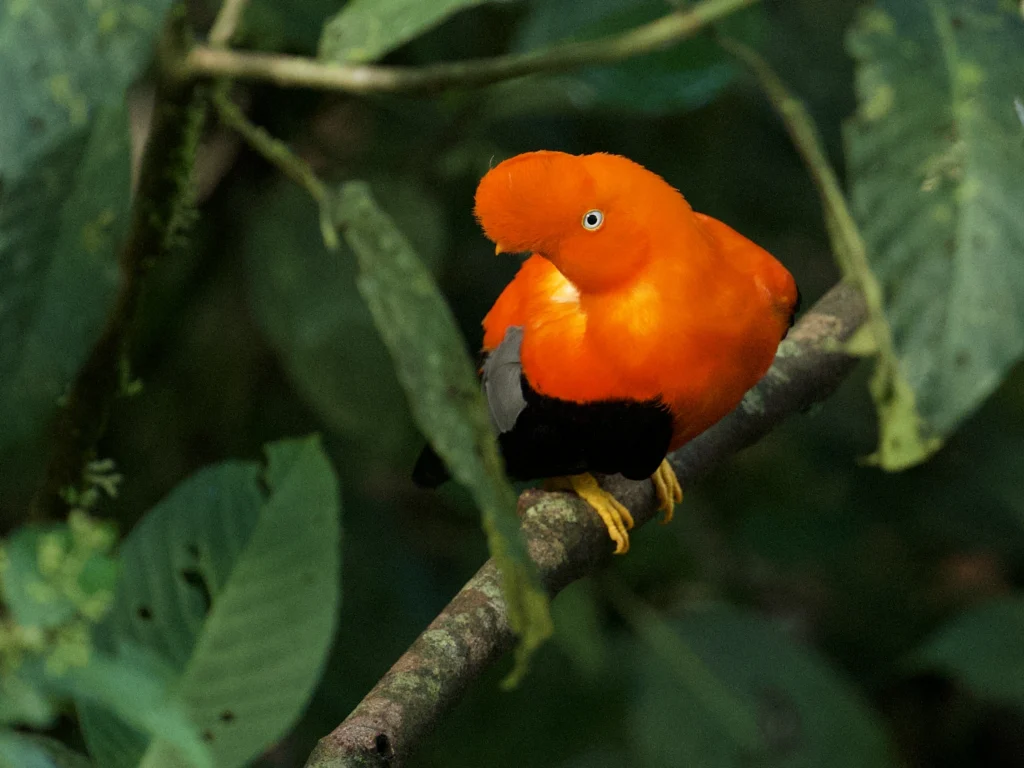
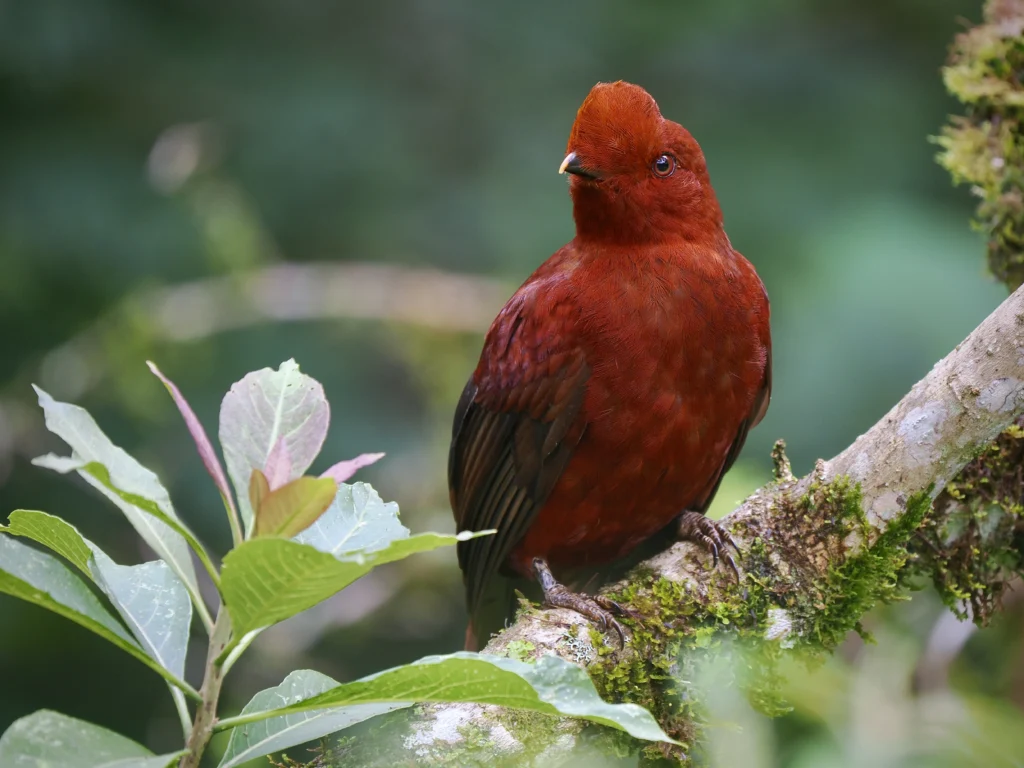
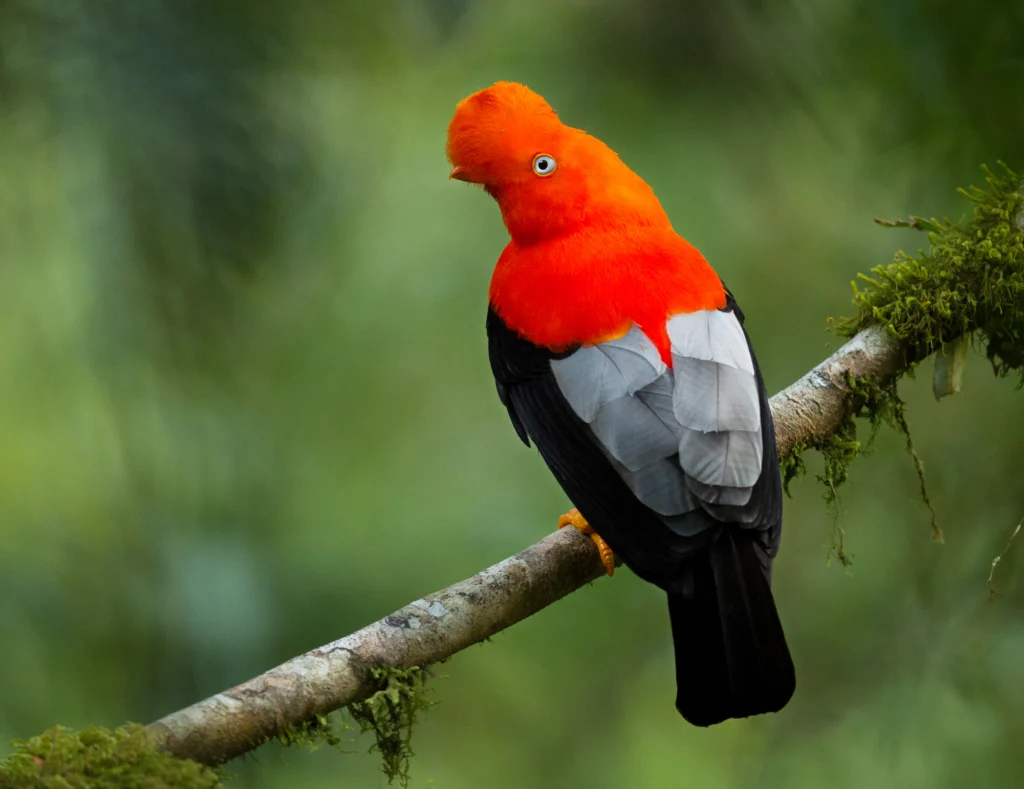
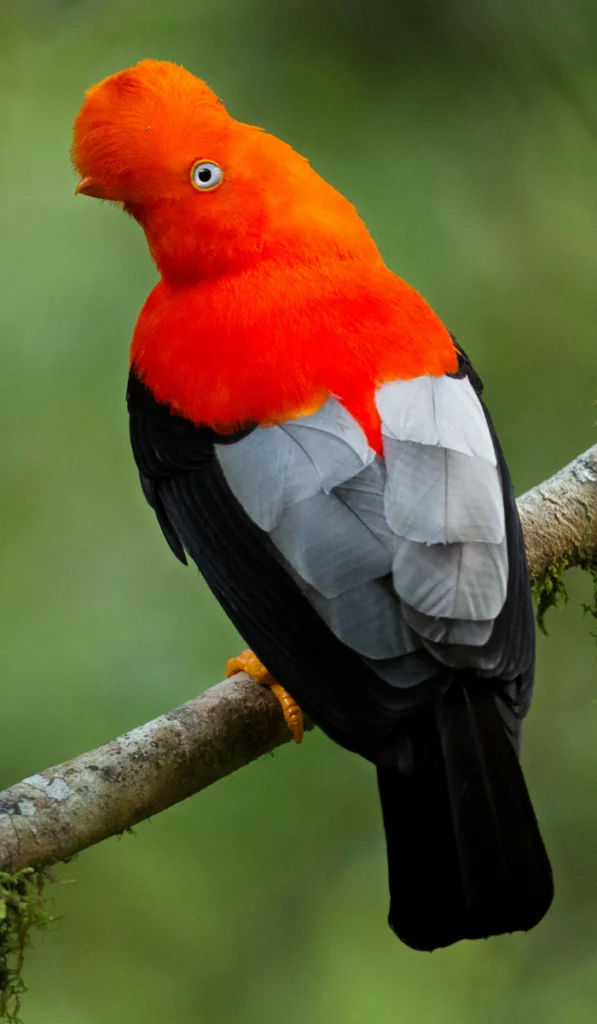
The male Andean Cock-of-the-rock is an unmistakable sight. His black tail and black-and-white wings set off the brilliant red-orange plumage that covers most of his body, peaking in a large fan-like crest that almost completely obscures his bill. Known as tunki in Quechua, this colorful cotinga is the national bird of Peru and is related to other distinctive tropical fruit-eaters, including the Banded Cotinga, Long-wattled Umbrellabird, and Three-wattled Bellbird.

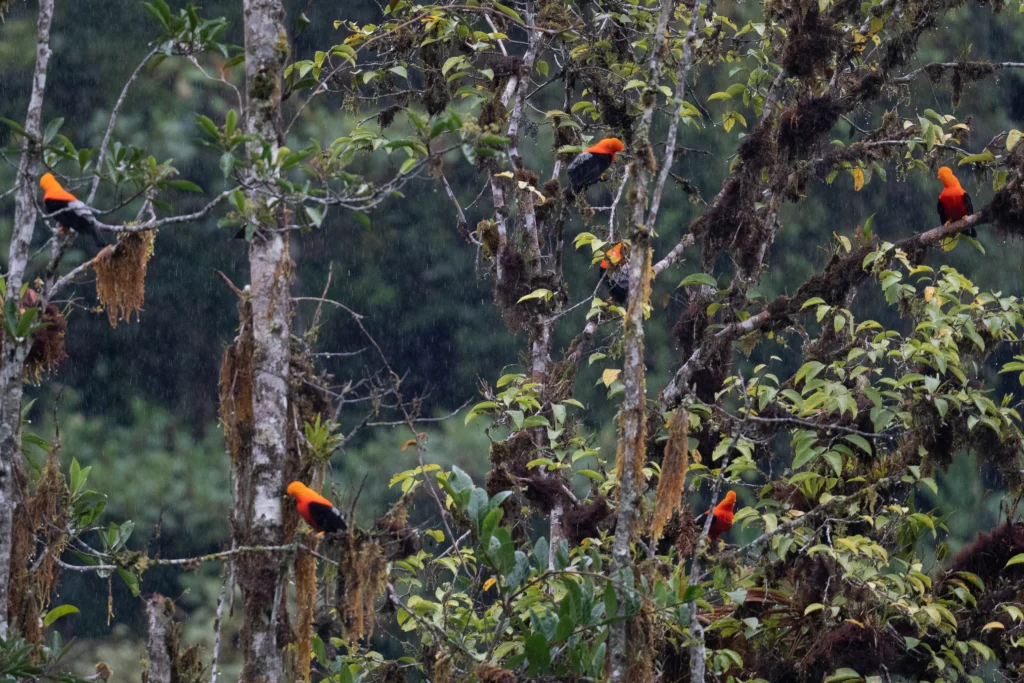
Aside from its distinctive appearance, the Andean Cock-of-the-rock is also known for its elaborate breeding display. Like the Greater Sage-Grouse and Marvelous Spatuletail, males gather at communal performance areas called leks, where they show off their bright plumage and smooth moves. Once a group of males gathers, competitors perch in pairs, performing mock confrontational displays featuring bowing, wing flapping, head bobbing, bill snapping, and bizarre squeaking and grunting calls. They frantically redouble their display efforts when the cinnamon-colored females approach to assess their performances.
Threats

Although its populations are declining, the Andean Cock-of-the-rock remains widespread, and its global population is not considered to be in immediate danger. Regionally, Colombia and Peru have both recognized this species as being at risk. As with so many tropical species, the Andean Cock-of-the-rock faces ongoing deforestation across much of its range.

Diminishing Rainforest

The Andean Cock-of-the-rock’s habitat is being fragmented, degraded, and destroyed. The threats are many: Unsustainable logging, pollution, and the expansion of agriculture, including cattle ranching, each take their toll on the habitat that this marvelous species needs to survive.

Habitat Loss

Conservation Strategies & Projects

Birds like the Andean Cock-of-the-rock need our help to overcome the threats they face. At ABC, we’re inspired by the wonder of birds and driven by our responsibility to find solutions to meet their greatest challenges. With science as our foundation, and with inclusion and partnership at the heart of all we do, we take bold action for birds across the Americas. With reliable sites that can persist for many years and spectacular courtship displays, Andean Cock-of-the-rock leks provide an excellent foundation for ecotourism and forest conservation efforts. Many reserves allow visitors to observe these leks, and through this unforgettable viewing experience, visitors gain a greater appreciation for the species and the forests it inhabits. Ecotourism also provides a sustainable economic alternative to agriculture and other activities that degrade forests.

Create & Maintain Reserves

Habitat is the foundation for birds’ survival. Working with dozens of partners and local communities throughout Latin America and the Caribbean, ABC supports a growing network of protected areas in more than a dozen countries. Totaling more than 1.3 million acres, nearly one-third of the world’s birdlife (more than 3,000 species) is protected by an ABC-supported reserve. The Andean Cock-of-the-rock is protected by 10 ABC-supported reserves. These include the Cerulean Warbler Reserve in Colombia, the Tapichalaca and Narupa Reserves in Ecuador, and the Abra Patricia and Huembo Reserves in Peru. Each of these reserves protects vital habitat for this bird and many others.

Creating and Maintaining Reserves

Bird Gallery

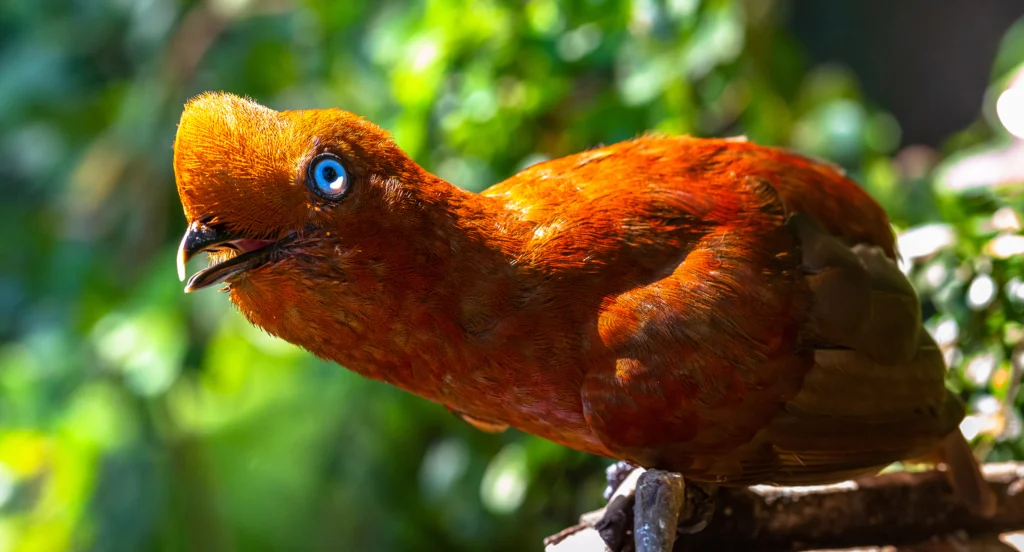
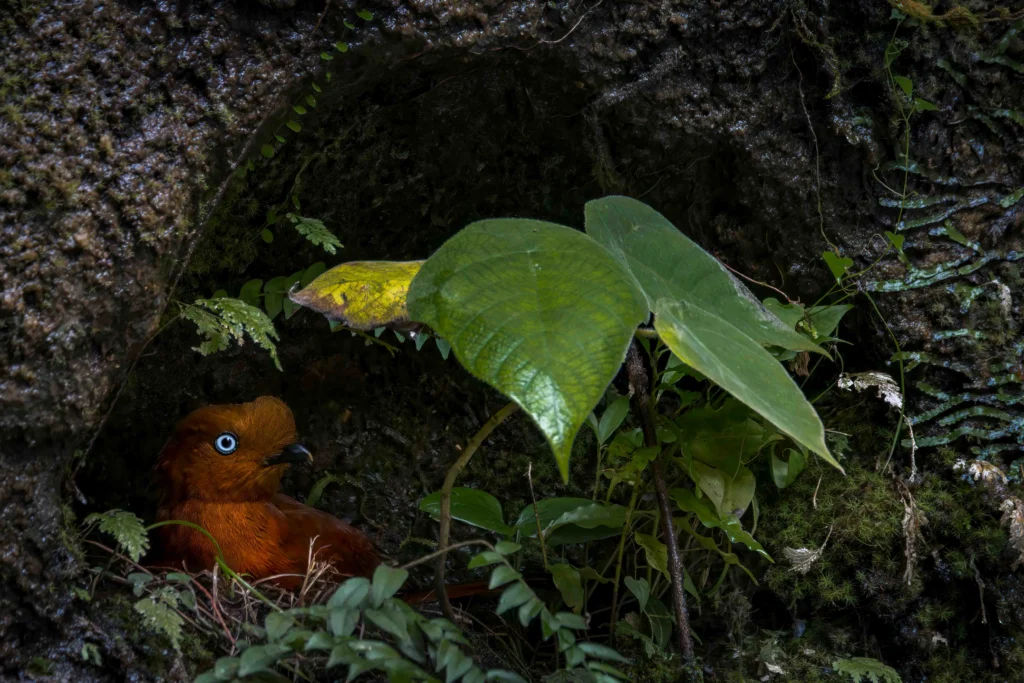
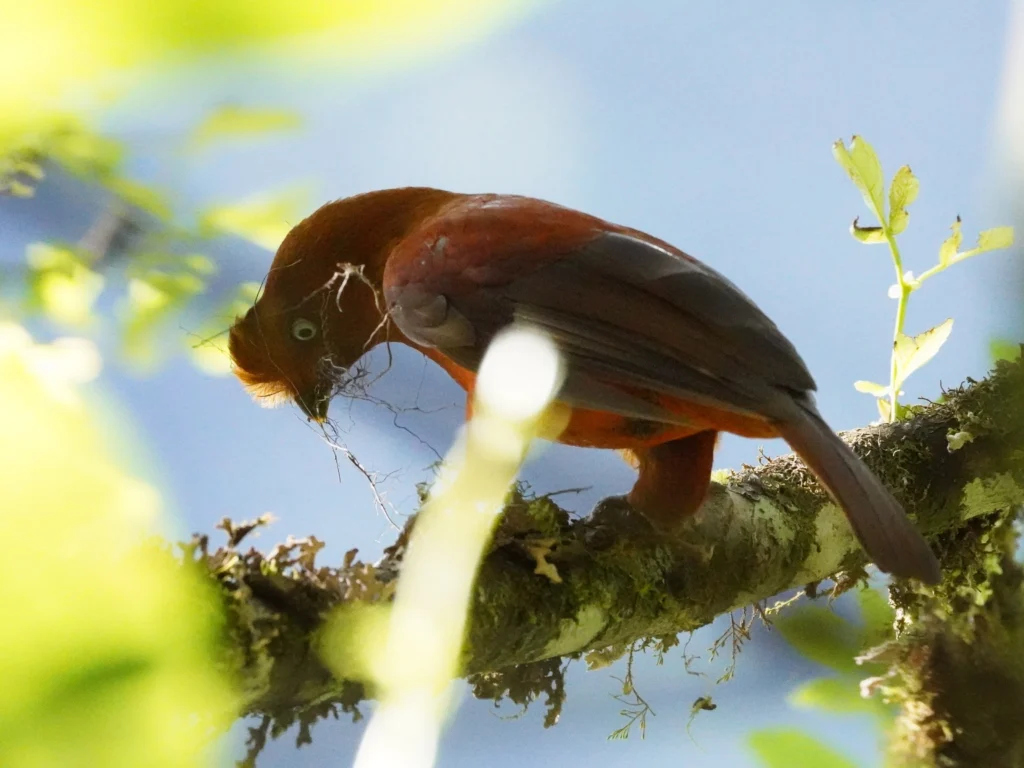
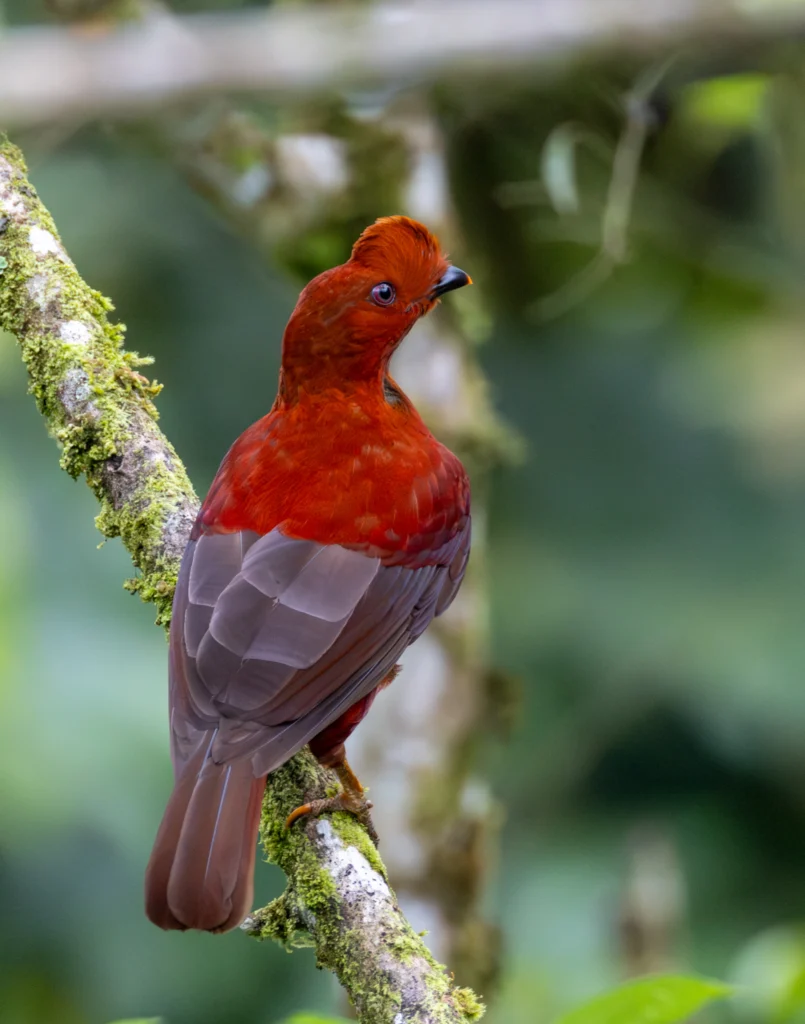
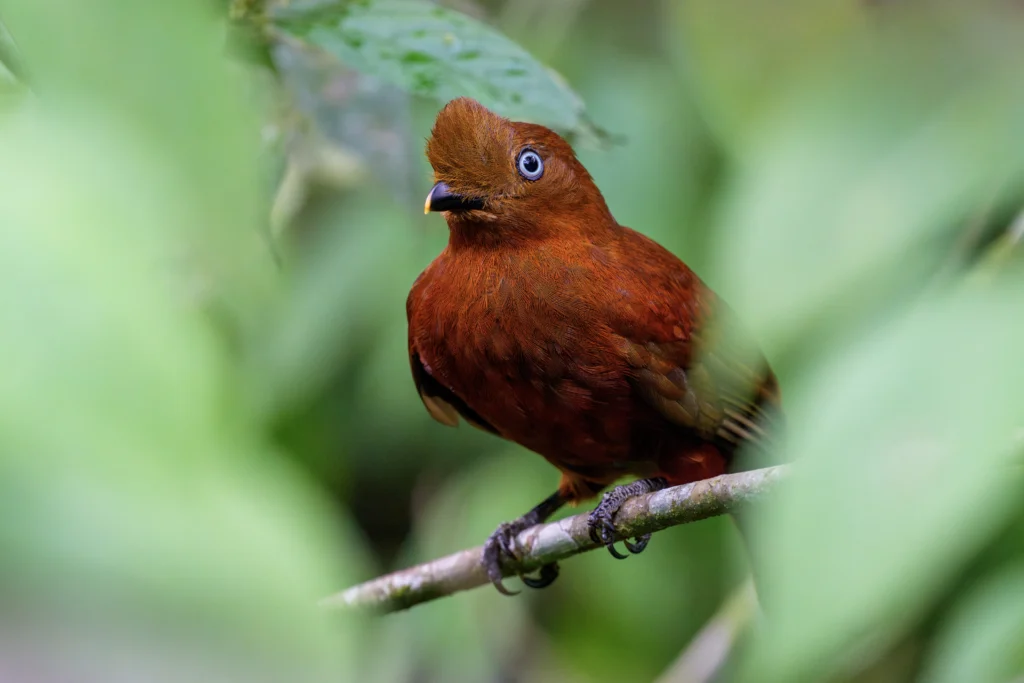
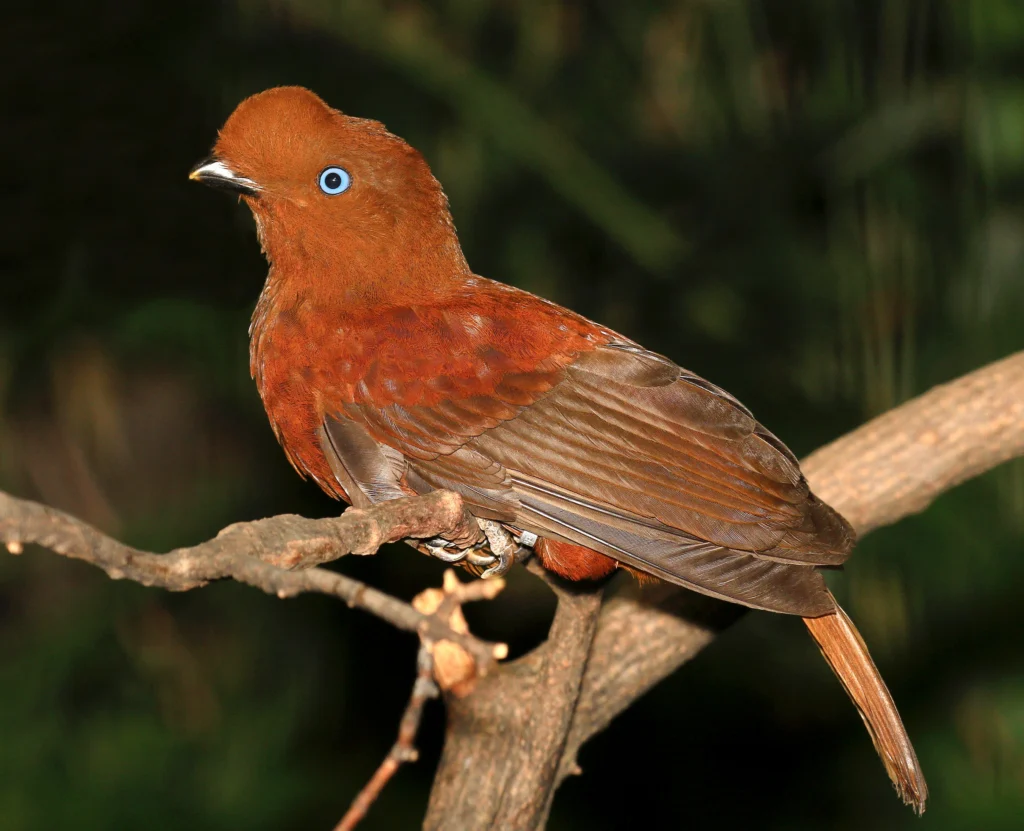
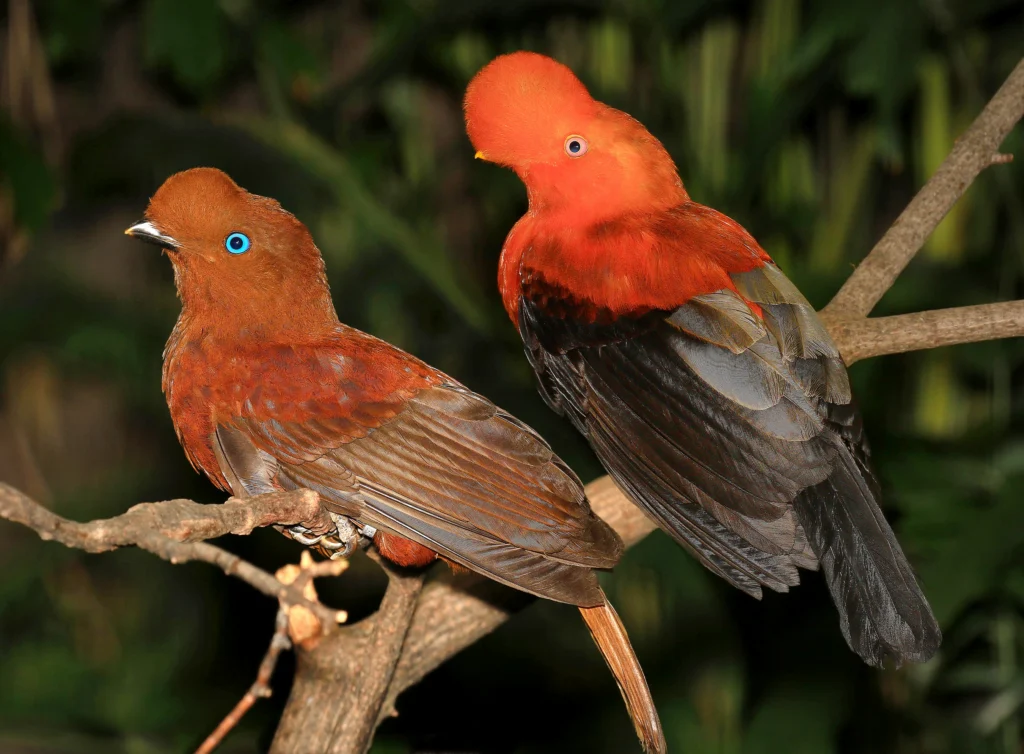
The male Andean Cock-of-the-rock is unmistakable and utterly unique within its range. His plumage is primarily a bright cherry- or orange-red, offset by his contrasting black tail and wings, and the silvery-gray inner wing feathers. A tall, hemispherical crest extends from the top of his head like a mohawk, nearly reaching the end of his bill. Set on the extreme sides of the head, males exhibit brilliant pale yellow to reddish-hued eyes, while females have duller, pale-colored eyes. Females range from a rich, vibrant cinnamon to a deep chestnut brown, with dark chocolate-brown feathers on the wing and tail. Her crest is smaller, extending from above the eye to the start of the bill.

Sounds

Despite the male’s vivid color, the Andean Cock-of-the-rock is rather shy when not displaying, more often heard than seen away from the lek. On the lek, however, they give a range of weird, raspy croaks, strained whines, nasal cackling, and bill snaps. Otherwise, they are fairly quiet, but may call when they are foraging, in flight, or interacting with their young.

Various Calls at Lek

Credit: John V. Moore, XC259087. Accessible at www.xeno-canto.org/259087.

Various Calls at Lek

Credit: Barry Edmonston, XC1001539. Accessible at www.xeno-canto.org/1001539.

Habitat

The Andean Cock-of-the-rock lives in cool, montane subtropical rainforest and cloud forest in the Andes Mountains.

  • Usually associated with streams and waterfalls with steep rock walls, especially for nesting
  • Lek sites tend to have larger trees and denser vegetation and are typically close to water sources like creeks and rivers
  • Typically found at elevations between 2,000 and 5,000 feet, but recorded up to 8,000 feet

Range & Region

Range & Region


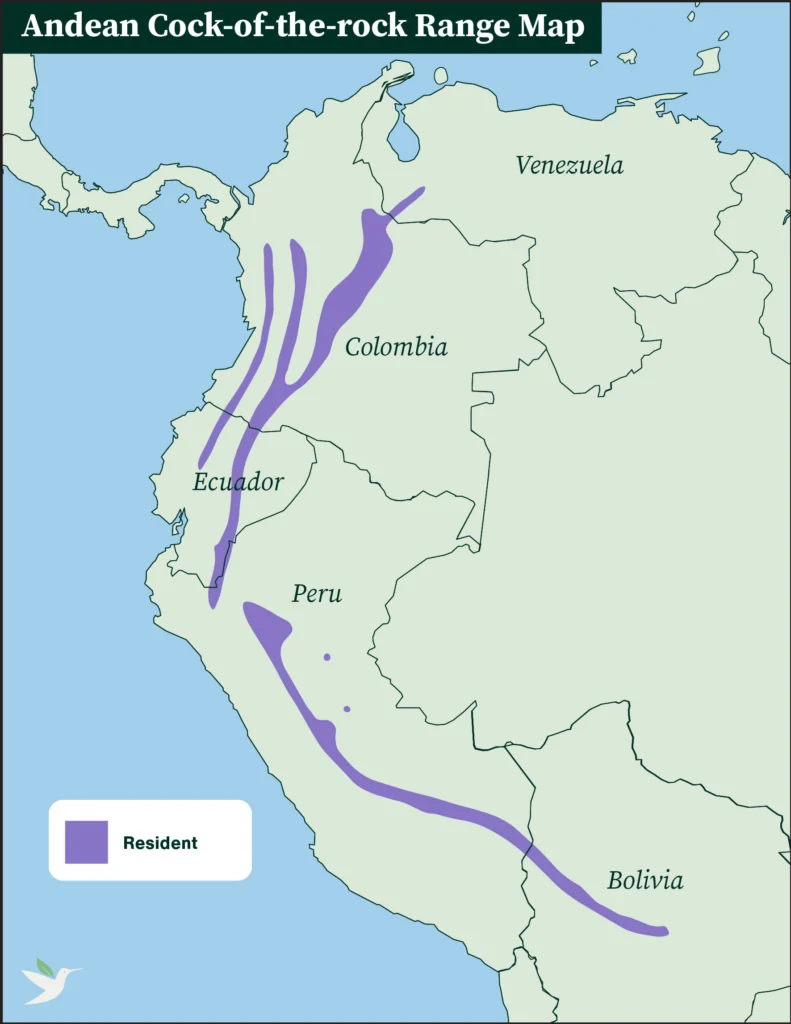
Andean Cock-of-the-rock range map.

Specific Area
Northern Andes of Venezuela, Colombia, Ecuador, Peru, and Bolivia

Range Detail
True to its name, the Andean Cock-of-the-rock is widespread in the northern Andes Mountains, from northwestern Venezuela to northwestern Bolivia.

Did you know?
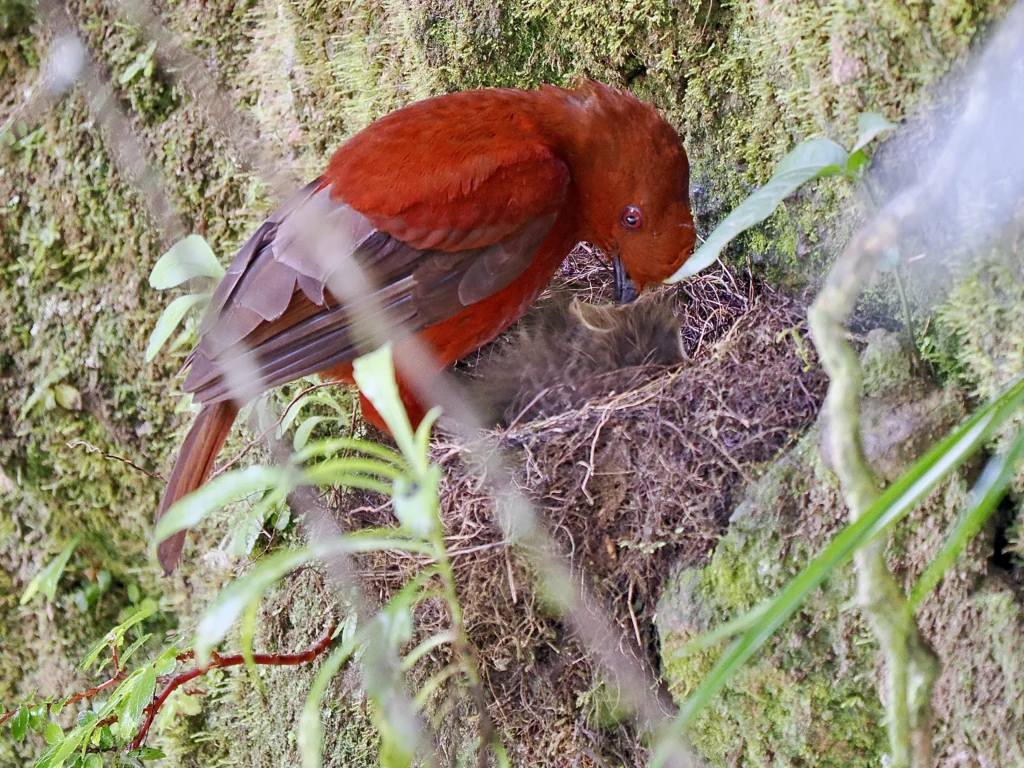
The female Andean Cock-of-the-rock is quite an engineer, and her sturdy nest may last many years. This allows her to use her nest through the nonbreeding season as a nighttime roost, and abandoned nests are used by other species as well, with reports of both the Glossy-black Thrush and Torrent Duck pairs using cock-of-the-rock nests.

Range
South America
Migration Pattern
Nonmigratory
Migration Distance
Nonmigratory

Life History

Despite their boisterous behavior on the lek, male Andean Cocks-of-the-rock are mostly silent and solitary. However, the next performance is never far away, as males display on the lek year-round, primarily, though not exclusively, during morning and evening. Females tend to be solitary as well, but they will often nest in small clusters, perhaps due to a scarcity of the rocky, sheltered nest sites they prefer.

Diet

Like many other tropical birds, including the Northern Emerald-Toucanet and Speckled Tanager, the Andean Cock-of-the-rock feeds mostly on fruit, supplemented with insects and small vertebrates. Inedible seeds and pits pass through these birds’ digestive tracts, making cocks-of-the-rock important seed dispersers that help maintain the health and diversity of tropical forests.

Courtship

Courtship for the Andean Cock-of-the-rock revolves entirely around the lek. Males display vigorously throughout the breeding season (and beyond), and their proximity to each other on the lek allows females to compare potential mates. Researchers have documented birds using the same lek for as long as 20 years (and possibly longer). Leks support multiple generations of cocks-of-the-rock, particularly when suitable conditions for displaying remain intact. Juveniles can be found at leks, with juvenile males, which resemble adult females, congregating at the edges to observe performances.

Nesting

Once a female cock-of-the-rock has made her choice among displaying males and has mated, she leaves the lek to build her nest and raise young alone. True to her name, the female builds her nest of mud and plant material 10 to 40 feet above the ground on exposed rock — a cliff, large boulder, or even in a cave, usually next to a creek or river.

Eggs & Young

The female usually lays two eggs, and, as is typical of lekking species, she raises them on her own. She incubates the eggs for four weeks and broods the young for an extended period of time, even after they have grown to nearly her size and are fully feathered. Young cocks-of-the-rock spend a long time in the nest, more than 40 days, while their mother feeds them fruit and small animals.