Advocating for a Rare Petrel
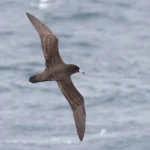
Much of Proaño’s job involves the Critically Endangered Galápagos Petrel, which nests only in the highlands of five Galápagos islands, including Proaño and Cruz’s home island of Santa Cruz.
Over thousands of years, humans and seabirds have forged a bond, bound by wind and waves, salt and sand. Seabirds were our stewards as humans ventured out into the vast unknowns of the ocean. Keen sailors caught fish by following the birds in flight to currents teeming with aquatic life. Those same sailors were shepherded back to shore by seabirds, guided home by birds returning to land, and maritime cultures were built around the bounty that seabirds brought.
Today, unfortunately, seabirds are the most endangered group of birds, and as populations have dropped, our connection to seabirds has frayed. But unlike fish, dolphins, and other animals that live in the ocean, humans and seabirds share the perspective of observing the ocean from above. Just as communities throughout history understood seabird nests (or their absence) as signs of resource abundance or scarcity, scientists today monitor seabird breeding productivity as an indicator of ocean health, and so we’re keenly aware of threats the birds and the waters they inhabit face.
Our kinship with seabirds has long fascinated Sea McKeon, our Marine Program Director. In early 2024, he envisioned a project within ABC’s Conservation and Justice Fellowship Program to expand how we approach and communicate these relationships.
After a competitive application process, McKeon and Naamal De Silva, who leads the fellowship program, ultimately selected Veronica Padula as ABCʼs Seabirds and Stories of Multi-Species Kinship Fellow. A biologist drawn to Alaska by its seabirds more than 15 years ago, Padula is the Chief Science Officer of the Bering Sea Research Center, led by the Aleut Community of St. Paul Island Tribal Government. In her role as a Fellow, she has stewarded the work of a cohort of five Together for Birds Storytellers, all recipients of grants from ABC, to strengthen connections among seabird conservationists, engage a broader audience in supporting seabird conservation, and create spaces to continue sharing stories of seabird kinship from communities across the Western Hemisphere. Here’s a brief introduction to their work.
aliana ho, a predator-control technologist working to steward ʻAʻo (Newell’s Shearwater) and ʻUaʻa (Hawaiian Petrel) colonies, was born and raised on the island of Kauaʻi. Through a series of community workshops featuring cultural practitioners, ho and her mother, Kathleen, are creating an 80-foot-long mosaic mural to be installed at the Kīlauea National Wildlife Refuge. Called Ka Pae ‘Āina o Hawai’i Nei, the mural maps the submarine topography of the entire Hawaiian island chain. The mosaic includes constellations used in traditional navigation and native seabirds, celebrating interconnectedness and community across all of Hawaiʻi’s islands.
Seabirds and humans have been intimately connected for as long as they’ve both explored the waters of the Gulf of Maine, where Alice Hotopp sets her Atlas of Kinship, a reimagining of traditional scientific atlases. Through short essays, Hotopp weaves a tale of seabird-human connections, from the time of the Indigenous Wabanaki, to the arrival of European colonists, to contemporary efforts toward collaborative stewardship. For example, the return of Atlantic Puffins to once-abandoned colonies is one of the conservation movement’s modern-day triumphs. The essays in the atlas are connected to Hotopp’s recently completed doctoral research on the evolutionary ecology of tidal marsh sparrow plumage. Each vignette is brought to life by seabird field biologist and artist Coco Faber’s artwork.
When a summer of surfing was waylaid by a devastating oil spill, the girls in Emi Koch’s surfing summer camp had no choice but to take a cue from the pelicans they watched from the shore: Rather than fight the changing winds, they chose to make the most of them and change direction. Koch leads Coast 2 Coast, a nonprofit in Lobitos, Peru. She guided the girls in creating a stop-motion animation about their experience and the resilience of an imaginary squadron of pelicans that use their “built-in swim goggles” (the nictitating membrane, or third eyelid) to dive underwater and locate the source of the oil spill. The girls were able to grapple with an environmental crisis in real time and draw on the power of play to spark their learning and advocacy.
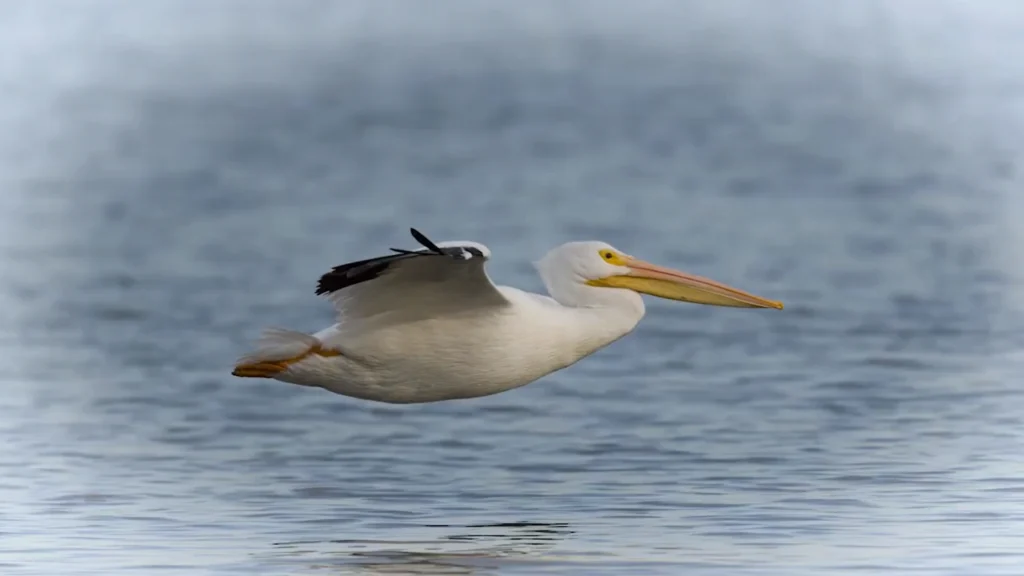
Inspired by the stories of her abuela’s (grandmother’s) homeland of Ecuador, María Isabel Dabrowski focused her master’s research on the artisanal fishers along the country’s coast. Throughout 120 interviews, Dabrowski and her team gathered not only data on fishers’ experiences of conservation initiatives, but also the evolution of fishing culture, their ideas for reducing seabird bycatch, and how they relate to marine wildlife, including seabirds. And they collected stories of the deep connections these artisanal fishers have to their community, including the seabirds that fish among them and share the waters off Ecuador’s coast. Now, Dabrowski is weaving these stories together, producing an account of the fishers’ lives and relationships to the marine environment. Her ultimate hope is that the fishers’ stories help inform future conservation decisions, thus elevating their voices.
Quite often, seabirds act as environmental sentinels for humans. Sick birds can help alert people to emerging challenges, and that has been true during the recent wave of avian influenza around the world. The illness has upended farming practices, raised prices, and caused uncertainty and fear. And in some communities, the challenges of avian flu are felt more acutely and differently. April Richards recognized a need for resources specific to Tribal communities and, working with the Native American Fish and Wildlife Society, developed the Tribal Avian Influenza Resource Hub. The hub offers resources to support Tribal communities in responding to avian influenza, focusing on wildlife management, community health and education, hunting and harvesting, poultry and livestock care, and cultural practices, with resources specifically created for Alaska Native communities.
ABC is grateful to Padula for guiding such an inspiring group of women in sharing stories of kinship with seabirds from coastal communities throughout the Western Hemisphere.
This essay first appeared in the Summer 2025 issue of Bird Conservation, ABC’s member magazine.
Featured News & Stories