Yellow-crowned Night Heron

Nyctanassa violacea

Sawaku (Wayampi)

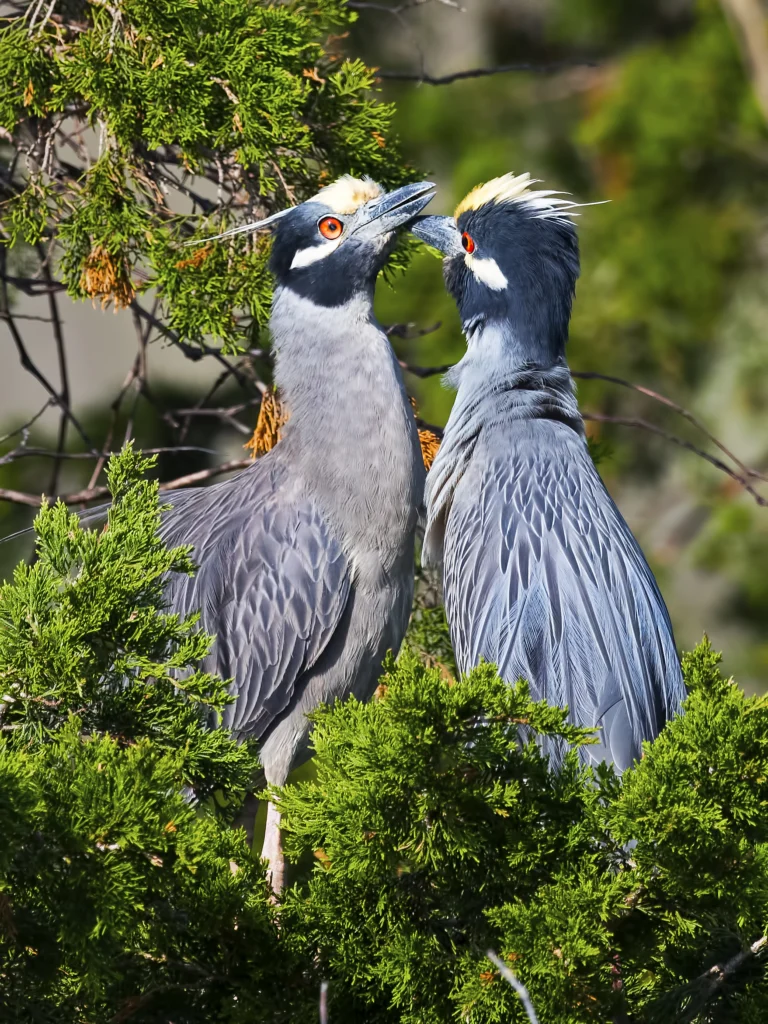
Yellow-crowned Night Heron pair. Photo by Brian E Kushner, Shutterstock.

Yellow-crowned Night Heron

Yellow-crowned Night Heron pair. Photo by Brian E Kushner, Shutterstock.

Nyctanassa violacea

Overview

Conservation Status
Population Trends
Stable
Population Size
Unknown
Family
Herons
Location
Caribbean
Islands
North America
South America
Migration Pattern
Latitudinal
Migration Distance
Medium Distance
Also Known As
  • Palanasau (Kalina / Carib)
  • Savacu-de-coroa (Portuguese)
  • Guaco Manglero (Spanish)
  • Huaque (Spanish)
  • Martinete Cangrejero (Spanish)
  • Yaboa Común (Spanish)

About

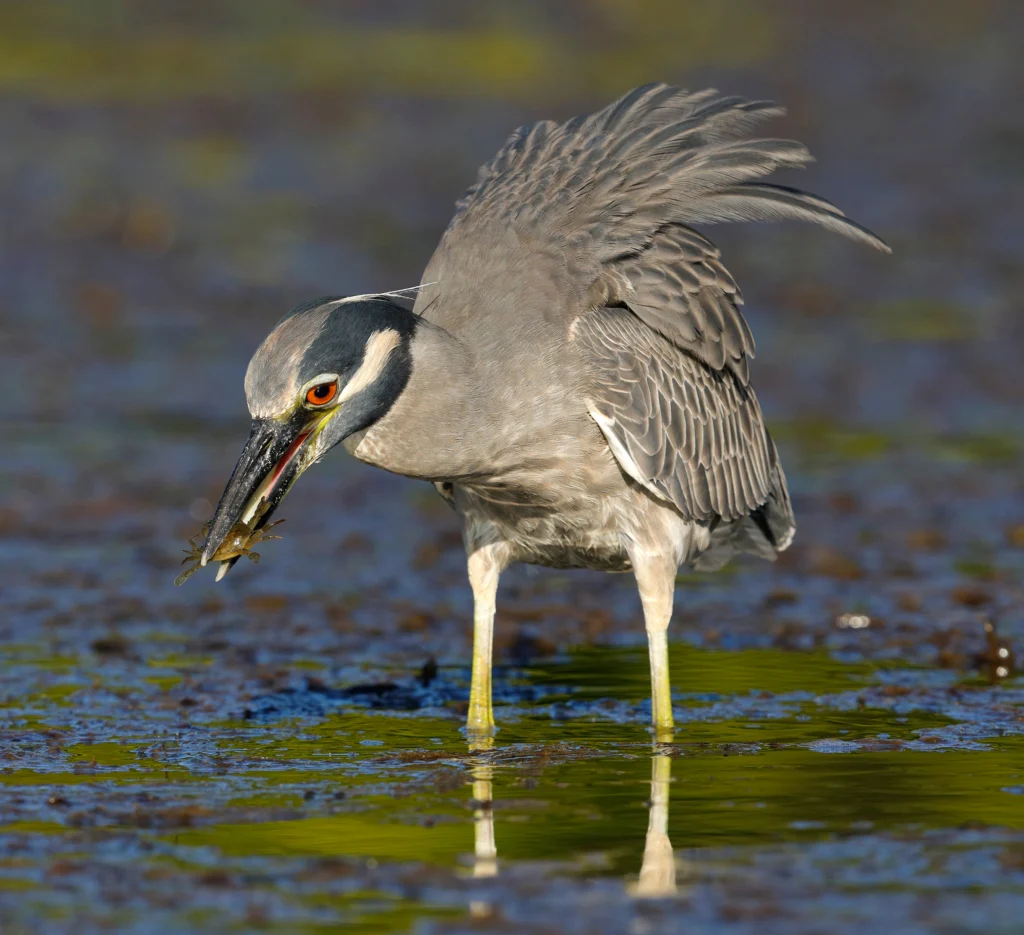
The Yellow-crowned Night Heron is a stately species of wetlands and coastlines, where it makes its living mostly as a predator of crustaceans. In fact, some Spanish names for this bird refer to it as the “cangrejero,” or “crab-eater.” Migratory populations will even time their arrival to coincide with the emergence of crabs in the northern spring.

True to their name, night herons may be out and about at essentially any time of day or night. For birds along the coast, however, “tide heron” might be a more accurate name; these crab hunters are most active in the six-or-so hours around the high tide, no matter what time that period falls. Inland, however, they are predominantly crepuscular, hunting around dusk and dawn. When startled, Yellow-crowned Night Herons are liable to take flight with a hoarse, throaty cry — an eerie and startling occurrence for anyone passing by a swamp or lagoon at night.

Threats

Although Yellow-crowned Night Heron populations currently seem to be stable, the birds still face a suite of threats, especially in areas where they come into contact with humans. In particular, the draining and development of wetlands eliminates habitat for this and a wide range of other species. This has led to the birds being listed as Threatened or Endangered in several states, particularly those at the northern limit of its range. In addition, where Yellow-crowned Night Herons nest in neighborhoods or other busy areas, they may be disturbed by human activity or intentionally harassed and dispersed.

Disappearing Wetlands

Wetlands provide crucial habitat to many species, including the Yellow-crowned Night Heron. However, wetlands are disappearing at an alarming rate. The contiguous United States, for example, has lost more than half of its wetlands. Not only have these losses continued, but the rate at which wetlands are being drained and filled has actually accelerated in recent years.

Habitat Loss

Pesticides in Rice Fields

In areas where wetlands have been developed and destroyed, rice fields can play an important role in supporting Yellow-crowned Night Herons and other water birds. However, when pesticides are applied to rice fields or even to adjacent crops, toxic chemicals accumulate in the water, poisoning the crustaceans on which these birds subsist and potentially accumulating in the birds’ tissues. Simply wading in the water can expose birds to toxins as well. As a result, rice fields can act as  ecological traps, in that they may attract herons because they look like good foraging habitat, but actually offer little food and expose them to harmful chemicals.

Pesticides & Toxins

Conservation Strategies & Projects

The Yellow-crowned Night Heron needs our help to overcome the threats it faces. At ABC, we’re inspired by the wonder of birds and driven by our responsibility to find solutions to meet their greatest challenges. With science as our foundation, and with inclusion and partnership at the heart of all we do, we take bold action for birds across the Americas.

Improve Habitat

ABC and other conservation groups are working across North America to protect and restore the continent’s marshes and swamps for the wetland birds that call these places home. This includes working with landowners to create wetlands and nature preserves on private land.

Where We Work

Avoid Pesticides & Toxins

ABC works with partners at the state and federal levels in the U.S. to call for the regulation or cancellation of the pesticides and toxins most harmful to birds. We develop innovative programs, like working directly with farmers to use neonicotinoid coating-free seeds, advancing research into pesticides’ toll on birds, and encouraging millions to pass on using harmful pesticides.

Avoid Pesticides & Toxins

Bird Gallery

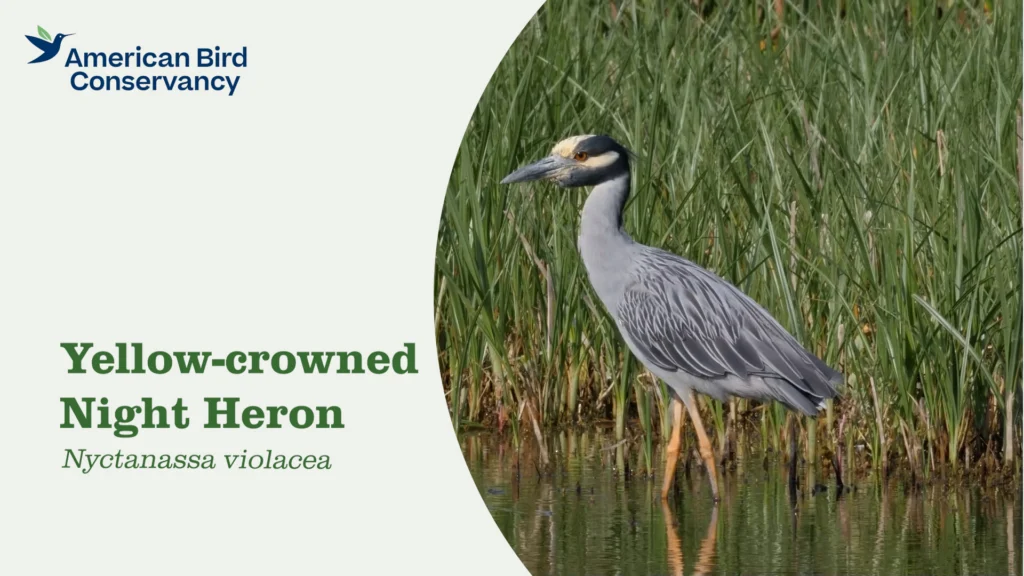
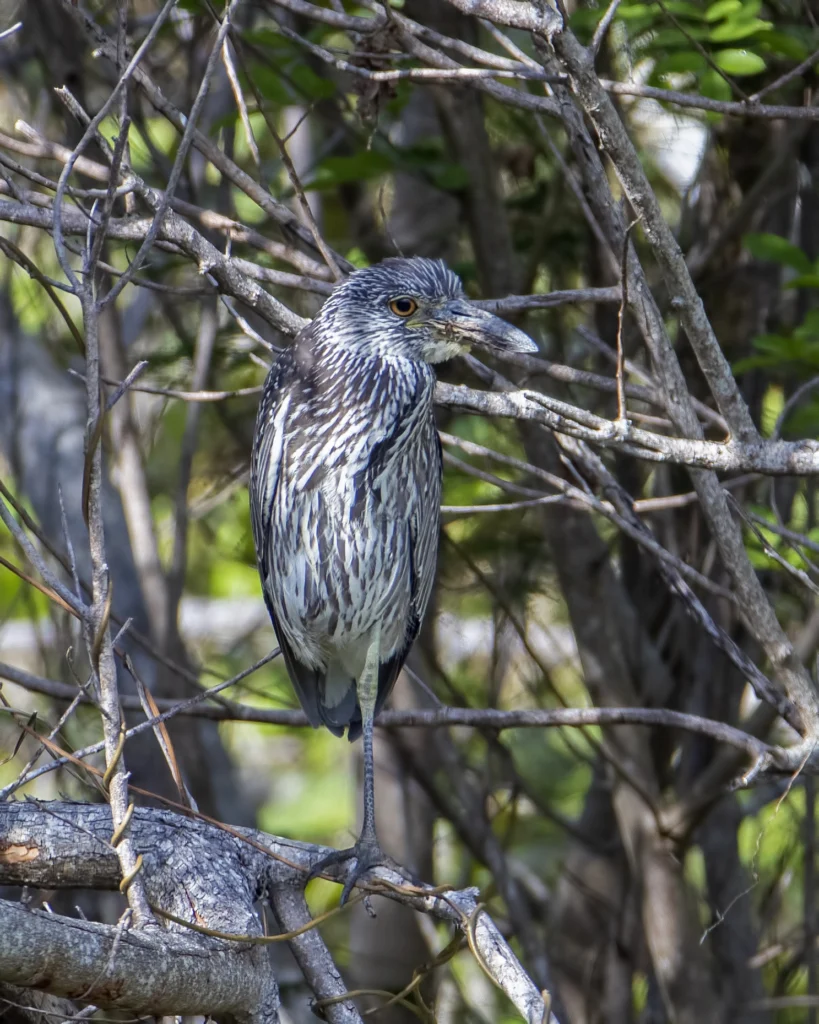
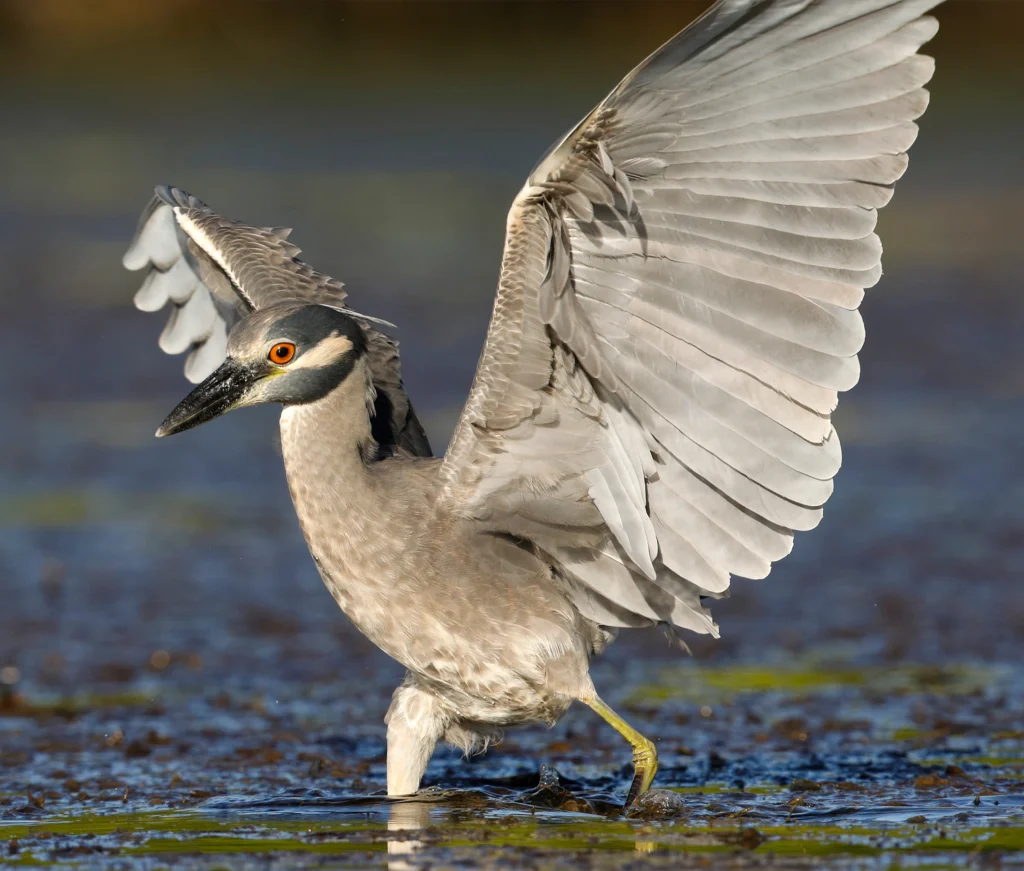
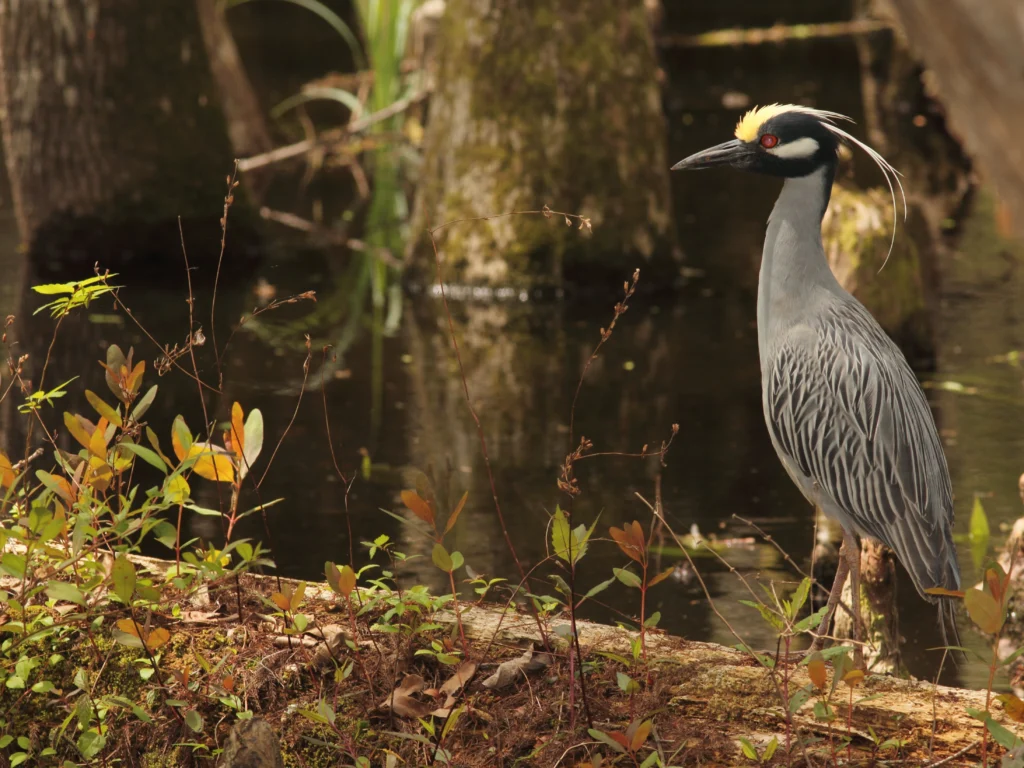
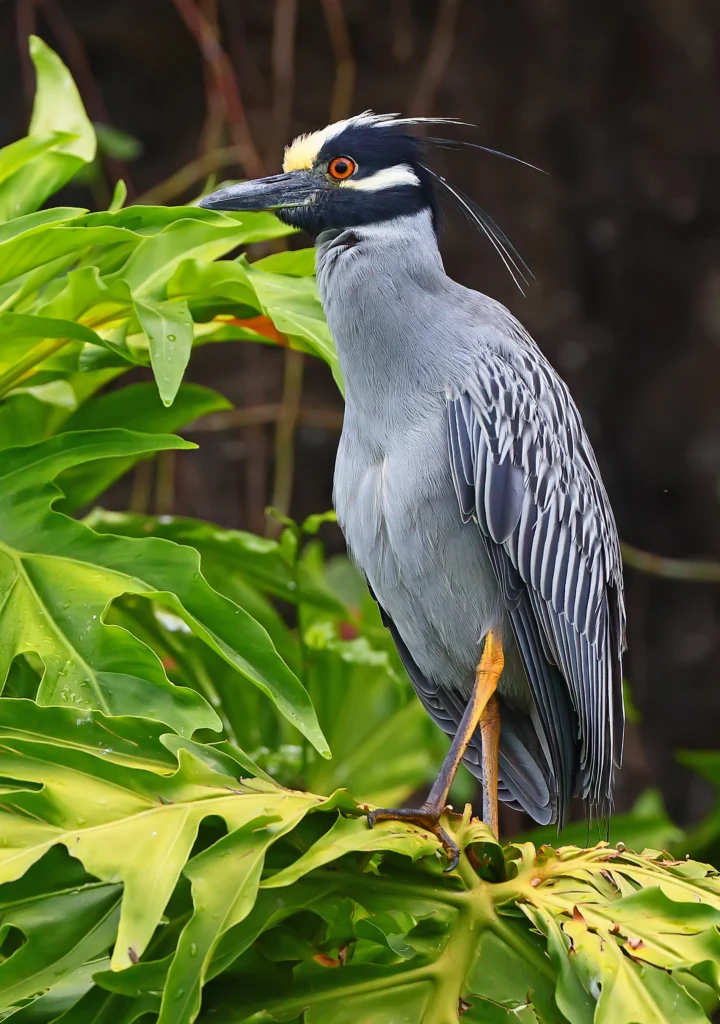
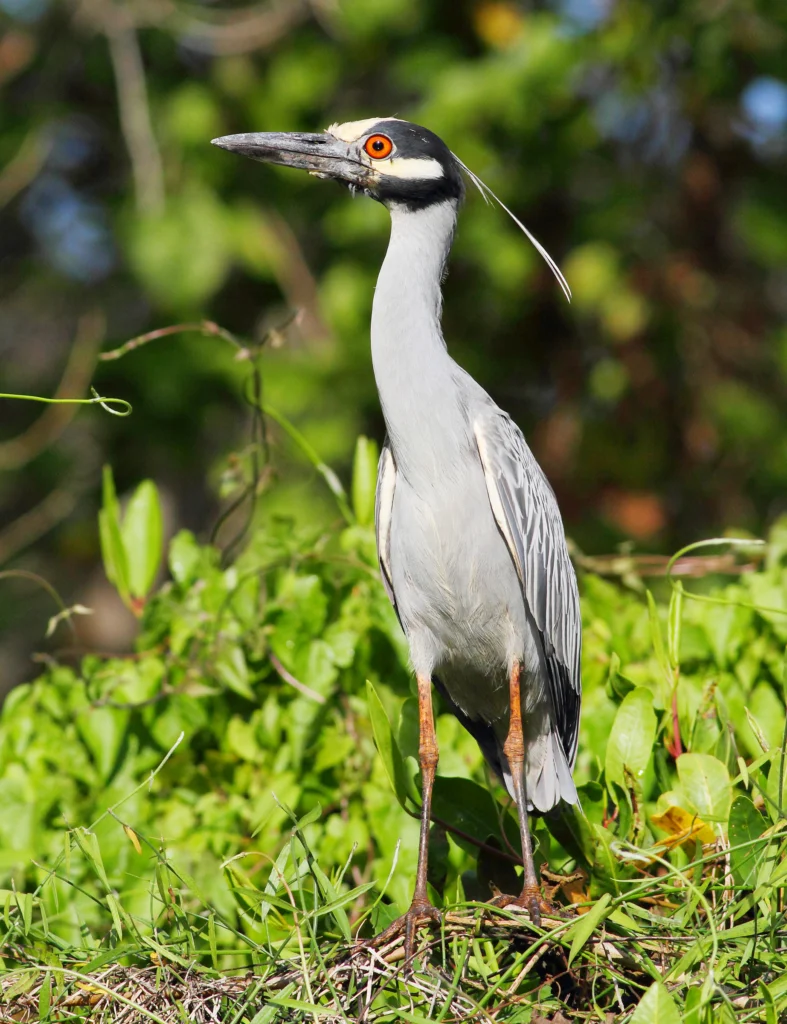
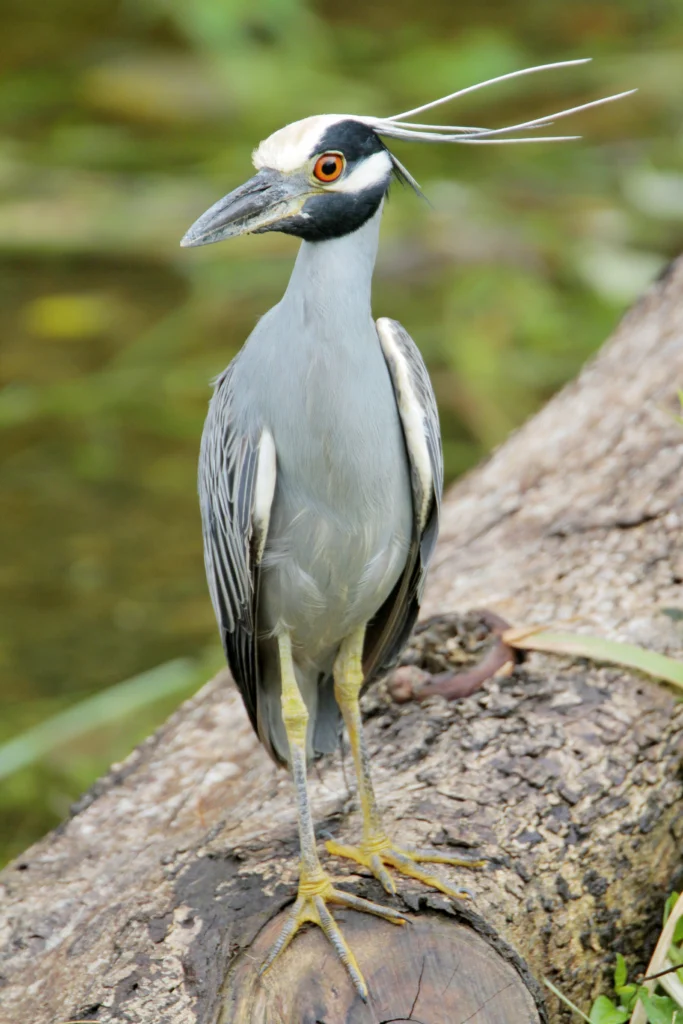
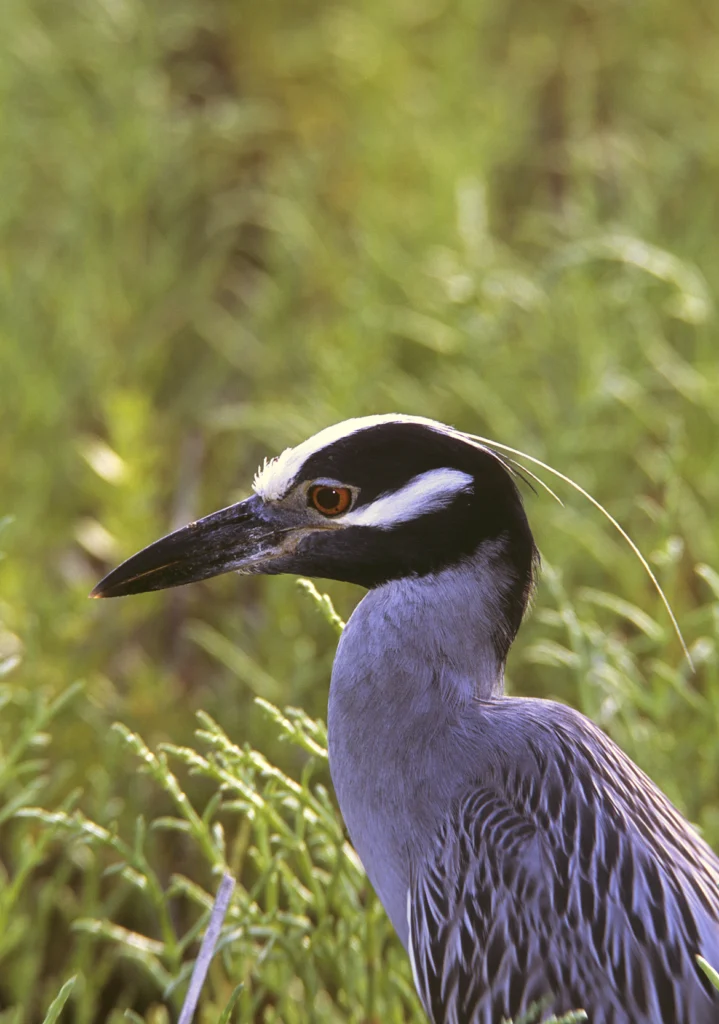
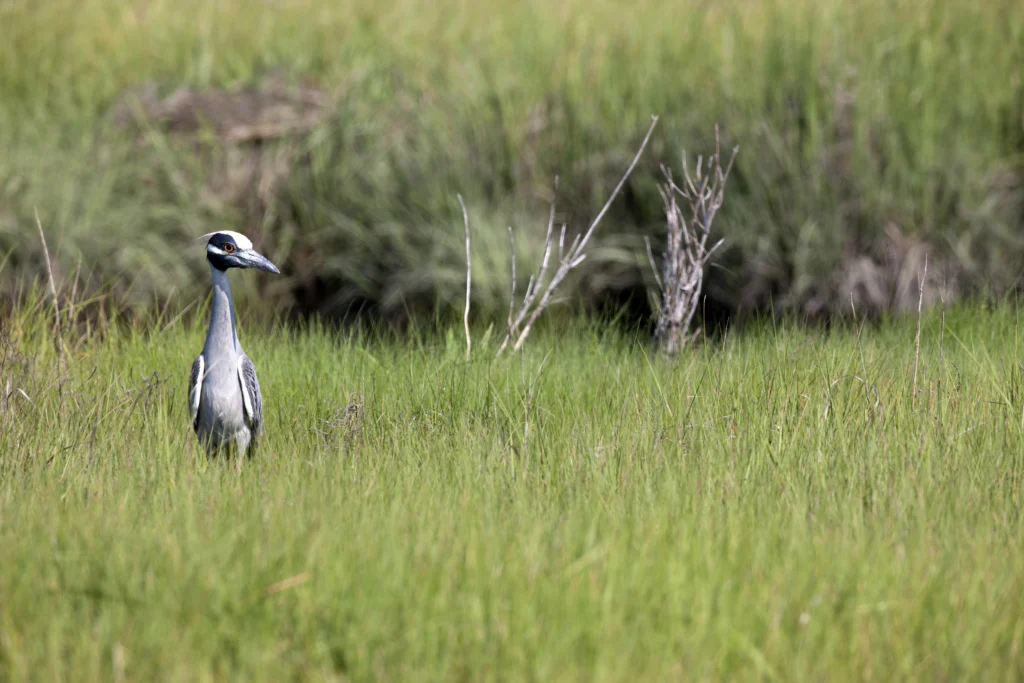
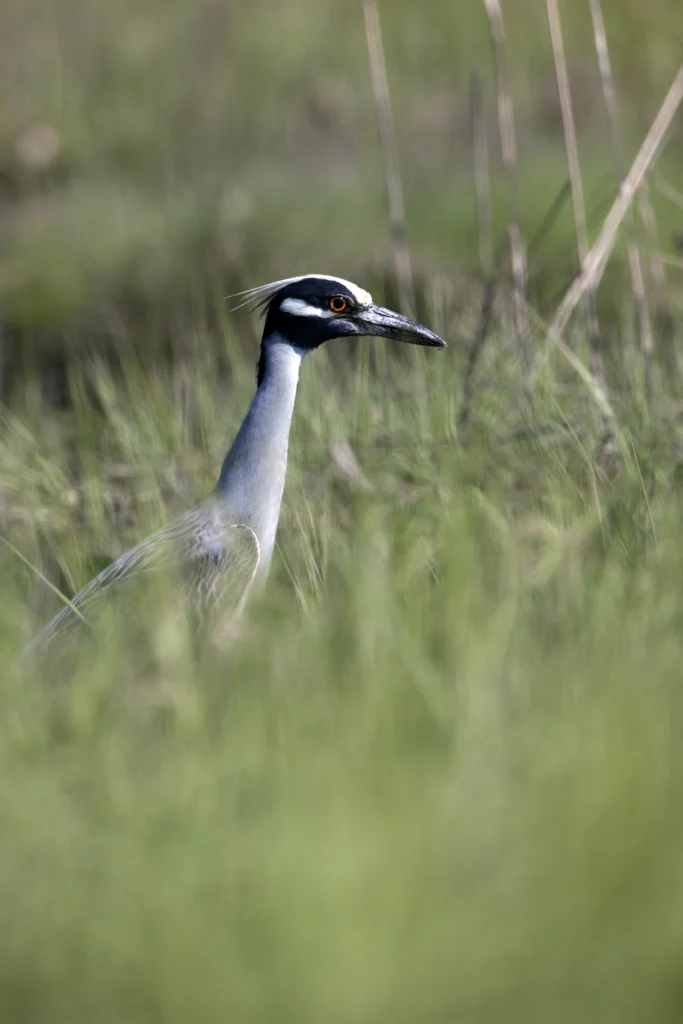
Though stouter than some of its relatives, the Yellow-crowned Night Heron is nonetheless elegant and stately, with an almost bluish gray body, striped blackish on the back, and a bold, black head with a prominent white stripe extending backwards from below each large, red eye. The eyes are noticeably larger than most herons’, adapted to aid the night heron’s nocturnal activities. The namesake yellow crown extends from the beak to the back of the head, ending in several long, thin yellow and black feathers. Though mostly obscure against its back, the Yellow-crowned Night Heron also has an array of long, narrow feathers extending from its shoulders, some stretching all the way to the tip of the tail. The color of these feathers matches the gray and black pattern of the wings and back, so they easily go unnoticed most of the time. However, these extraordinary feathers are erected when the night heron performs its dramatic Stretch Display, leaning forward and raising them behind its head, something like a gothic peacock’s tail.

Sounds

The Yellow-crowned Night Heron has a repertoire of about six hoarse, throaty croak-like calls and squawks, each given in its own particular set of contexts. Birds give the low, throaty Scaup Call in alarm and when taking flight. Other calls are only given at the nest between members of a pair, such as in greeting displays or when one bird comes to relieve the other from incubating or brooding.

Scaup Calls

Credit: Paul Marvin, XC538163. Accessible at www.xeno-canto.org/538163.

Habitat

The Yellow-crowned Night Heron uses a variety of habitats across its range, but is generally associated with water.

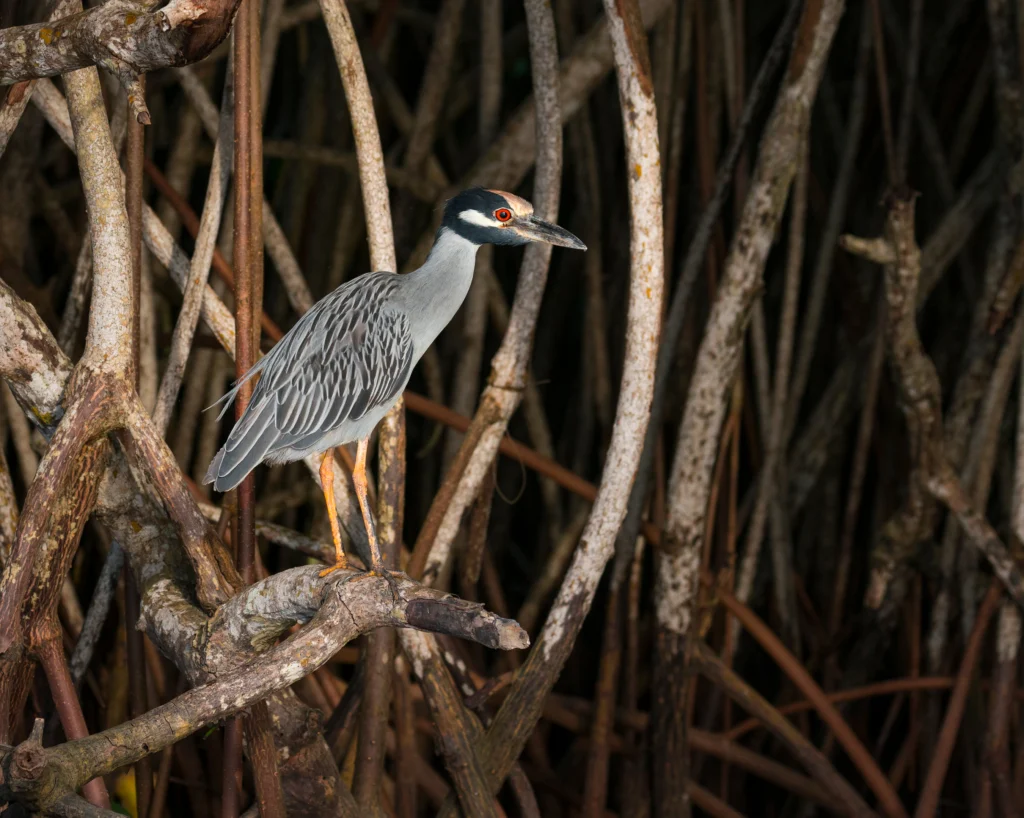
  • Near the coast, uses lagoons, beaches, mudflats, and mangroves
  • Inland, most often found in swamps, wetlands, lakes, riparian areas, or flooded rice fields
  • Sometimes nests in neighborhoods with substantial tree cover

Range & Region

Range & Region


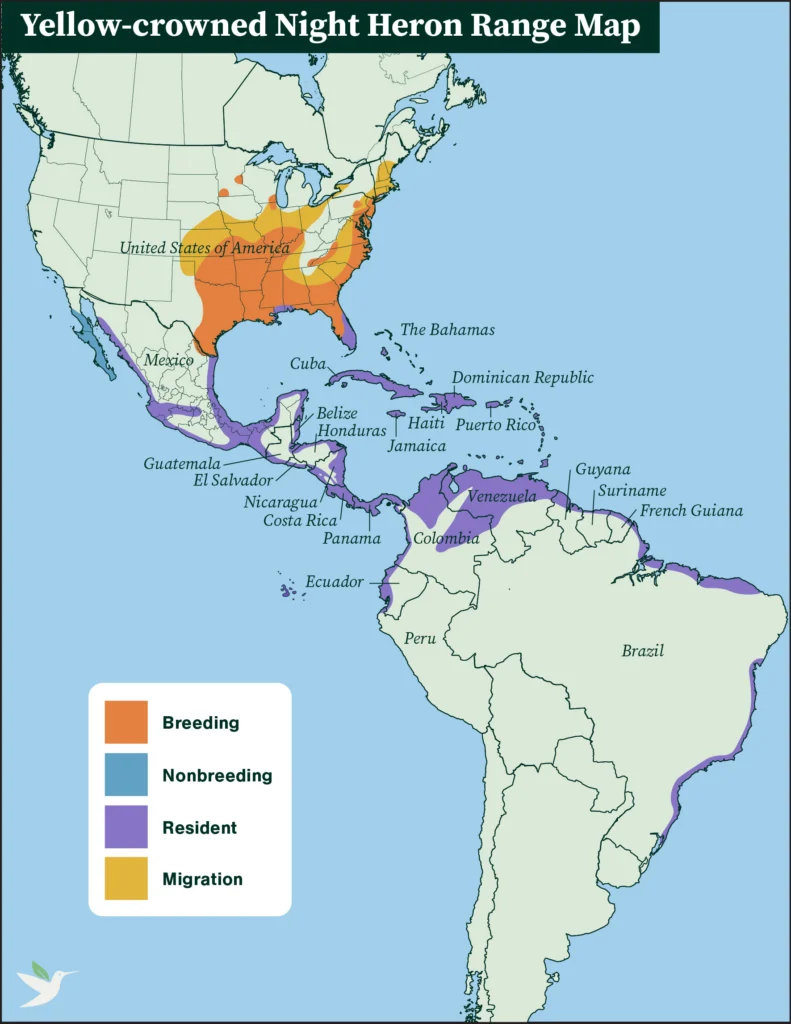
Yellow-crowned Night Heron range map

Specific Area
Eastern and southern United States; coastal Mexico south to northern South America; Caribbean Islands; Galápagos Islands

Range Detail
The Yellow-crowned Night Heron is a year-round resident of the Galápagos and Caribbean Islands, and along the coasts of much of the Americas, from northernmost Peru to the Sea of Cortez on the Pacific Coast, and from southern Brazil to northernmost Mexico on the Atlantic Coast, with year-round pockets in the Deep South and in southern Florida. Migratory populations breed throughout the eastern and southern states, ranging as far north as a few small populations in Minnesota and Wisconsin. There is also a wintering population in Baja California.

Did you know?
The northern range limit of the Yellow-crowned Night Heron has fluctuated widely over the last 150 years, with a substantial retreat southward early in the 1900s, a subsequent advance northward in the 1920s through the 1960s, and another retreat southward after. The reasons for these changes are as yet unknown.

Range
Caribbean
Islands
North America
South America
Migration Pattern
Latitudinal
Migration Distance
Medium Distance

Life History

Yellow-crowned Night Herons are active day and night, standing motionless in shallow water until they see their prey, then slowly stalking up and attacking with a rapid, precise strike of their powerful bill.

Diet

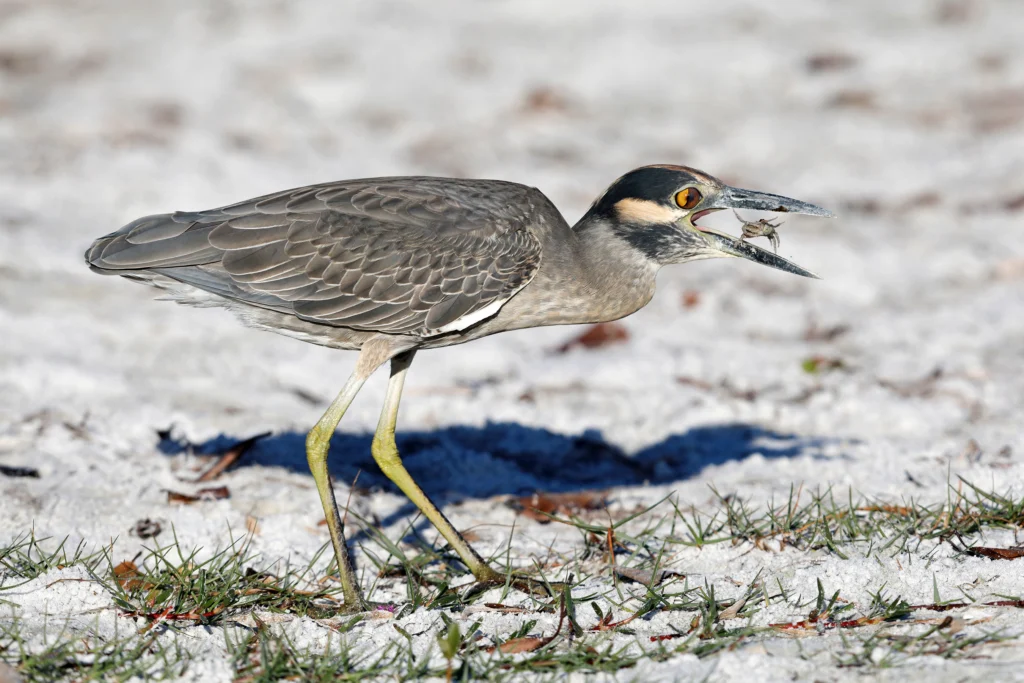
The Yellow-crowned Night Heron specializes in crustaceans, eating mostly crabs on islands and coastlines and mostly crayfish further inland, which they often dismember before swallowing. These birds will eat a broad range of other animals as well, including insects, worms, molluscs, fish, amphibians, reptiles, small birds, and small mammals such as mice and even young rabbits.

Courtship

Most Yellow-crowned Night Herons nest in colonies, but colonies may be fairly small or sparse. Courtship begins with simple flight displays, where males circle over the colony and sometimes form small groups that chase each other around. Males also perform a dramatic Stretch Display, where they first stand erect and stretch their neck upwards, then retract the neck and bend down so that the body is almost completely inverted, while at the same time raising a frill of long, narrow feathers on the shoulders and partly extending the wings. The overall effect is something like a beautiful, elaborate curtsy. Females will sometimes reciprocate with a Stretch Display of their own.

Nesting

The male and female of a pair work together to build their nest, with the female initially standing at a promising site — usually in the outer branches of a large tree — while the male delivers large sticks, with which she builds a large concave platform. Eventually both parents begin adding sticks to the nest, which they then line with softer material, such as live plants and mosses. Yellow-crowned Night Herons always nest near or directly above water, and may reuse nests from previous years. Nesting colonies can be quite long-lived as well, some lasting more than 20 years!

Eggs & Young

Yellow-crowned Night Herons lay two to five bluish-green eggs, which both parents help to incubate for three to four weeks. Pairs will often preen each other’s feathers when switching off incubation duties. When the young hatch, both parents continue to brood them, with the off-duty parent hunting for and feeding the young. Nestlings finally leave the nest after four to six weeks, but will still return to be fed.