Overview
About
The enigmatic Blue-billed Curassow, locally known as Paujil, is a member of the family Cracidae, which includes a number of large, ground-dwelling tropical birds such as the guans and the chachalacas, as well as the other curassows. The turkey-sized Blue-billed Curassow is one of the most endangered birds in the Americas, a victim of overhunting and habitat loss.
In addition to their largely black plumage, colorful patches of facial skin, and gamebird-like build, the curassows are noteworthy for the tufts of curled feathers topping their heads. Local folklore explains that curassows got their curly crests when they stole fire from the Jaguar and gave it to humanity. As the curassows carried a burning log on their backs, the flames burned their crest feathers into crisp curls. Much like Prometheus in Greece and tricksters such as Coyote, Raven, and Crow in North America, the curassow’s sacrifice provided one of the foundations of human civilization.
Threats
Deforestation and hunting are the main threats to the Blue-billed Curassow. In Colombia’s Magdalena Valley, where most of the species’ population remains, lowland forests have been razed to create clearings for agriculture, livestock, oil extraction, and mining. Although the Blue-billed Curassow is sometimes seen at other sites in Colombia, the Alliance for Zero Extinction recognizes the Serranía de las Quinchas area in the Magdalena Valley as the most critical for the continued survival of this species. This area appears to be home to the bird’s last viable population.
Vanishing Forests
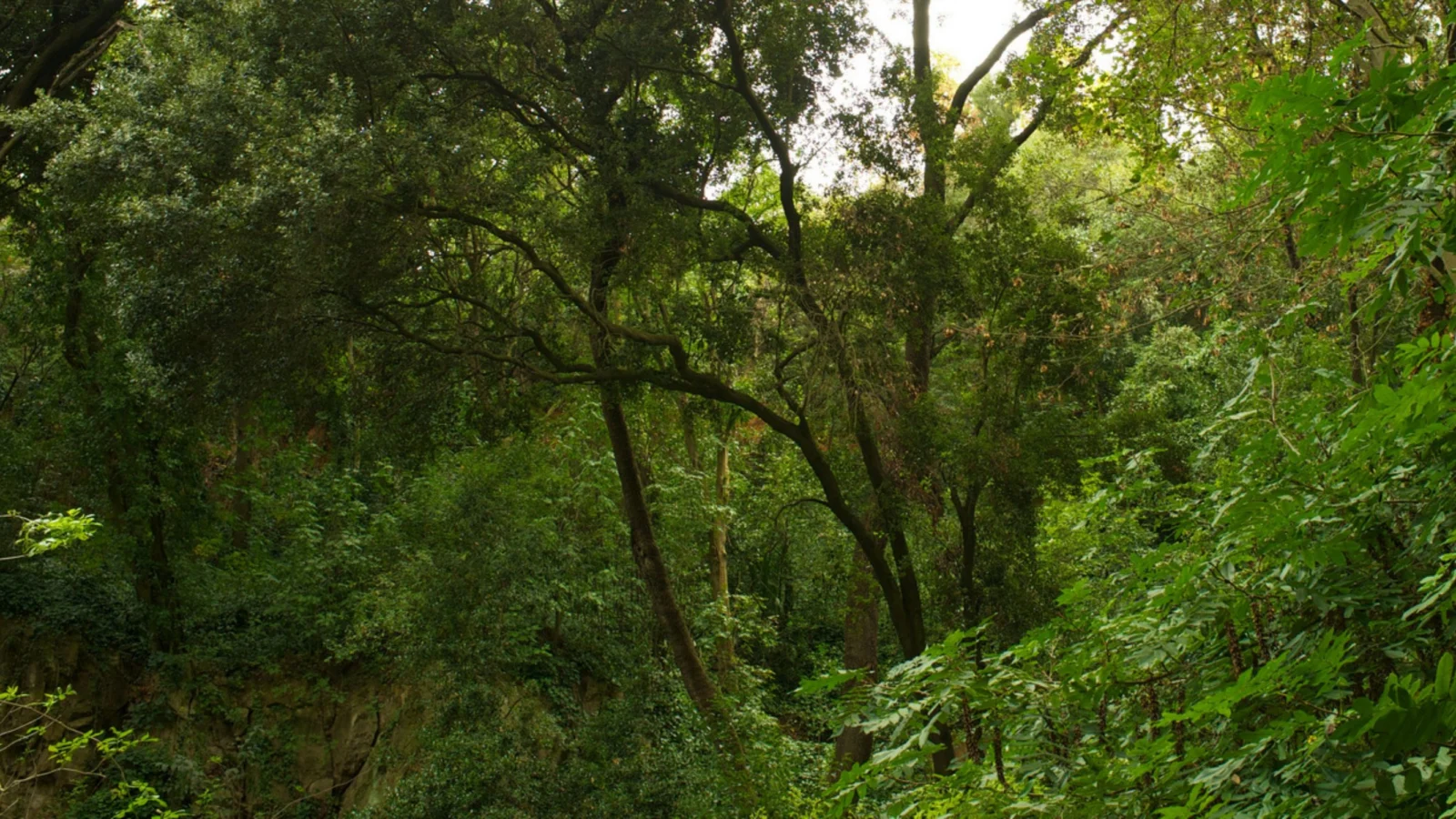
The greatest threat to the Blue-billed Curassow is the ongoing destruction of the forests where it lives. Land is rapidly being cleared for logging, mining, oil extraction, and agriculture, particularly coffee, cocoa, cotton, and illegal drugs. As a result of the widespread loss of habitat, this bird is now regionally extinct in much of its former range.
Unsustainable Hunting
The other great threat to this species comes from subsistence hunting and egg-collecting in local communities. In areas far from villages, hunting is not a great concern, but where villages have been established in the wake of agriculture and industrial operations, subsistence hunting is an unignorable threat to the Blue-billed Curassow, due in large part to poor economic conditions.
Conservation Strategies & Projects
The Critically Endangered Blue-billed Curassow needs our help to overcome the threats it faces. At ABC, we’re inspired by the wonder of birds and driven by our responsibility to find solutions to meet their greatest challenges. With science as our foundation, and with inclusion and partnership at the heart of all we do, we take bold action for birds across the Americas.
Establishing El Paujil Reserve
In 2004, ABC teamed up with partner Fundación ProAves in an effort to protect habitat for this species, establishing the El Paujil Reserve in the Magdalena Valley. In 2010, the reserve was expanded to almost 15,000 acres, further protecting this bird and other endangered residents such as the White-mantled Barbet and Antioquia Bristle-Tyrant, along with wintering species including the vulnerable Cerulean Warbler. Thanks to this protection, Blue-billed Curassows now frequent the area around the reserve’s lodge, thrilling visiting birders and photographers.
Expanding El Silencio Reserve
ABC collaborates with conservation organization Fundación Biodiversa Colombia and other partners to expand El Silencio Natural Reserve, which connects two important forest remnants in the Magdalena Valley. After several thousand acres of additions, the reserve currently stands at over 8,000 acres. El Silencio provides another important stronghold for the Blue-billed Curassow and a number of other endangered and endemic animals, as well as important winter habitat for the Prothonotary Warbler.
Partnering for Conservation
As part of the Conserva Aves initiative, ABC also supported Sociedad Ornitológica de Córdoba in creating La Cristalina Reserve in Colombia’s Alto Sinú region on the Caribbean coast. This 656-acre reserve supports the Blue-billed Curassow as well as other at-risk species, including the Near Threatened Crested Eagle and the Critically Endangered Green Macaw.
Bird Gallery
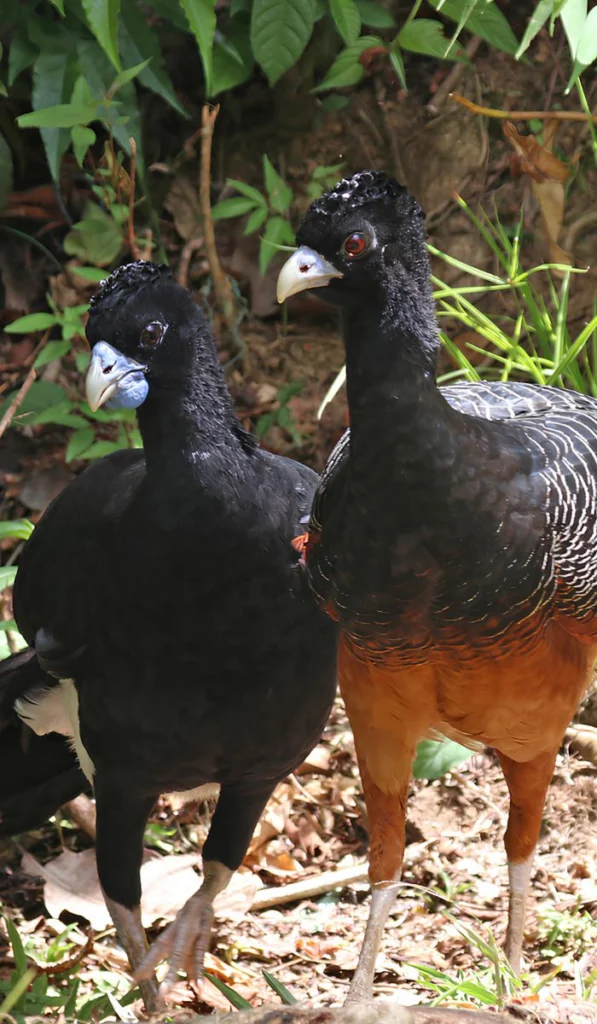
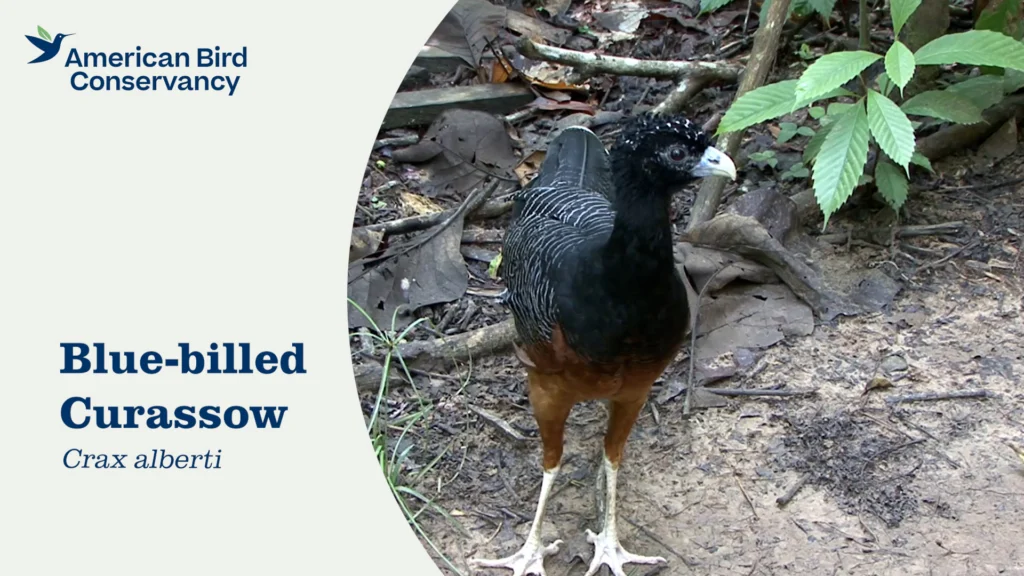
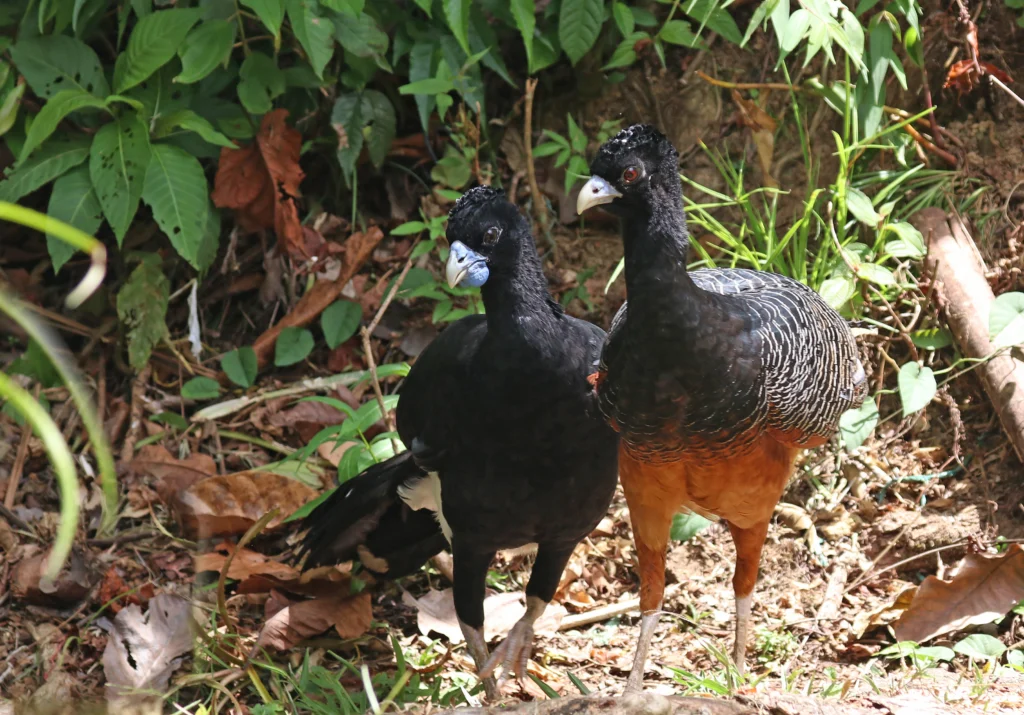
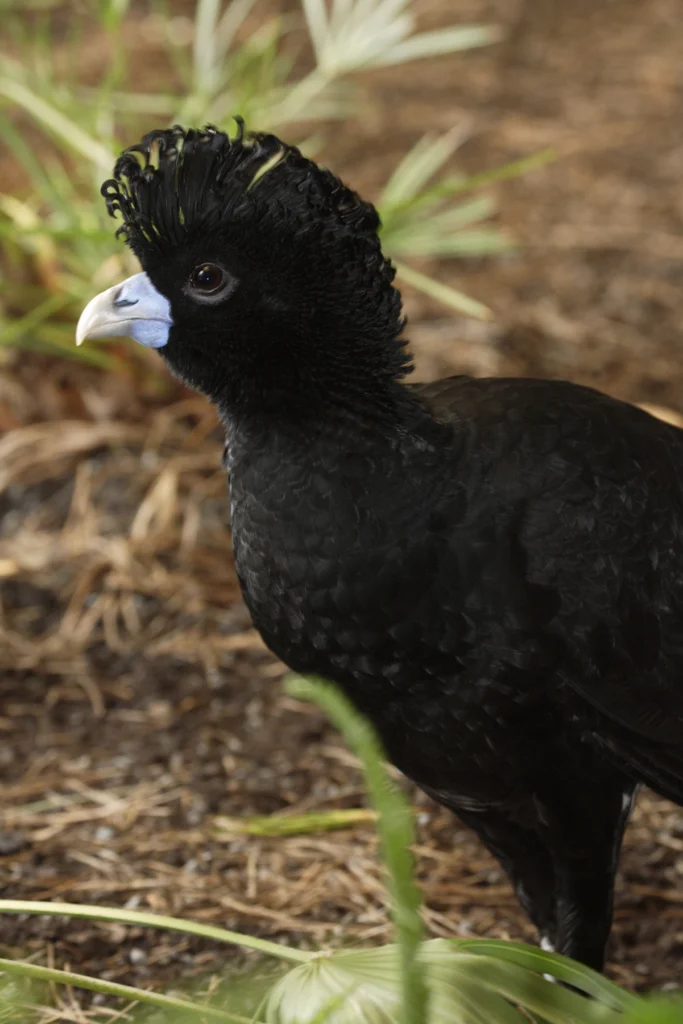
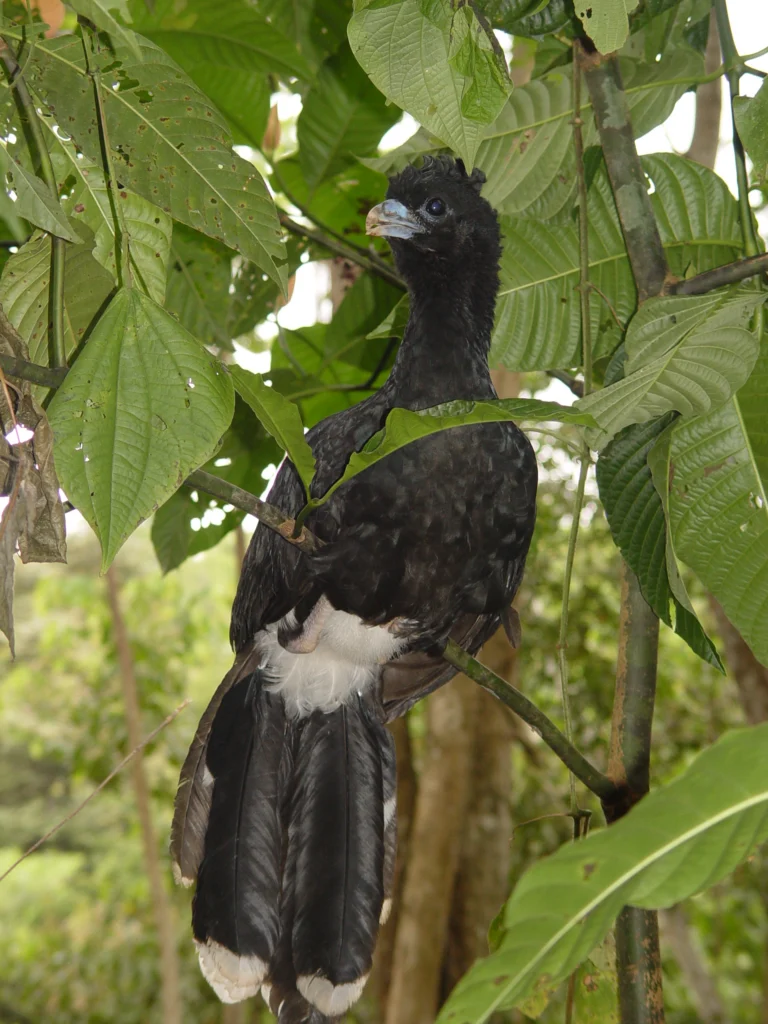
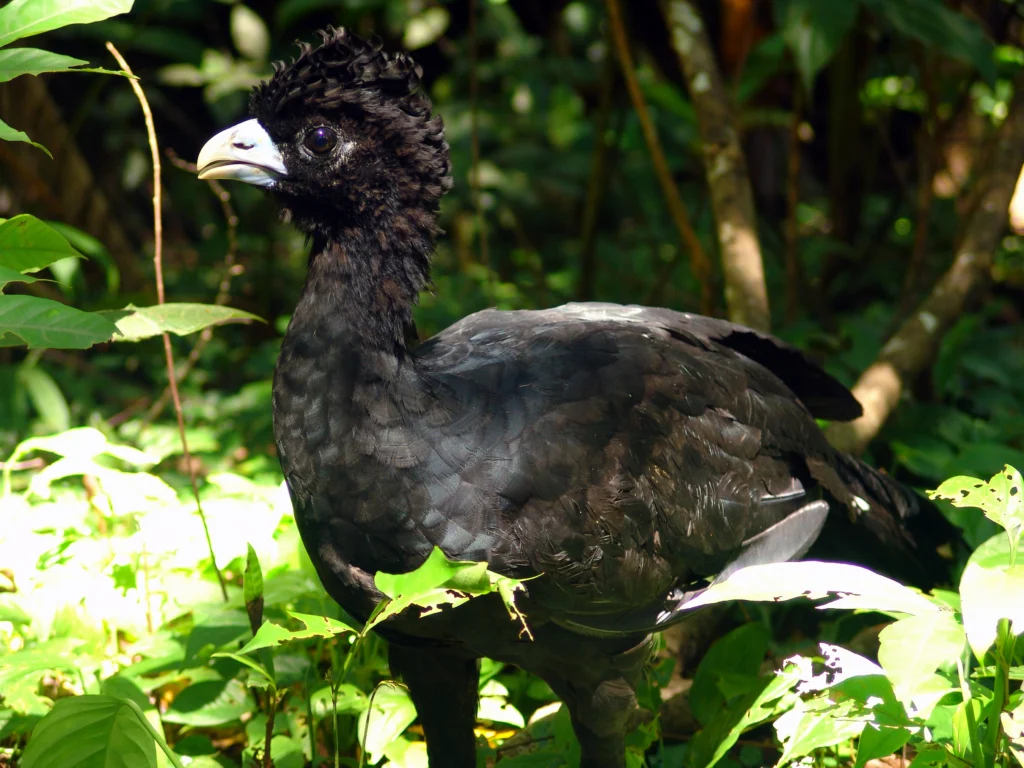
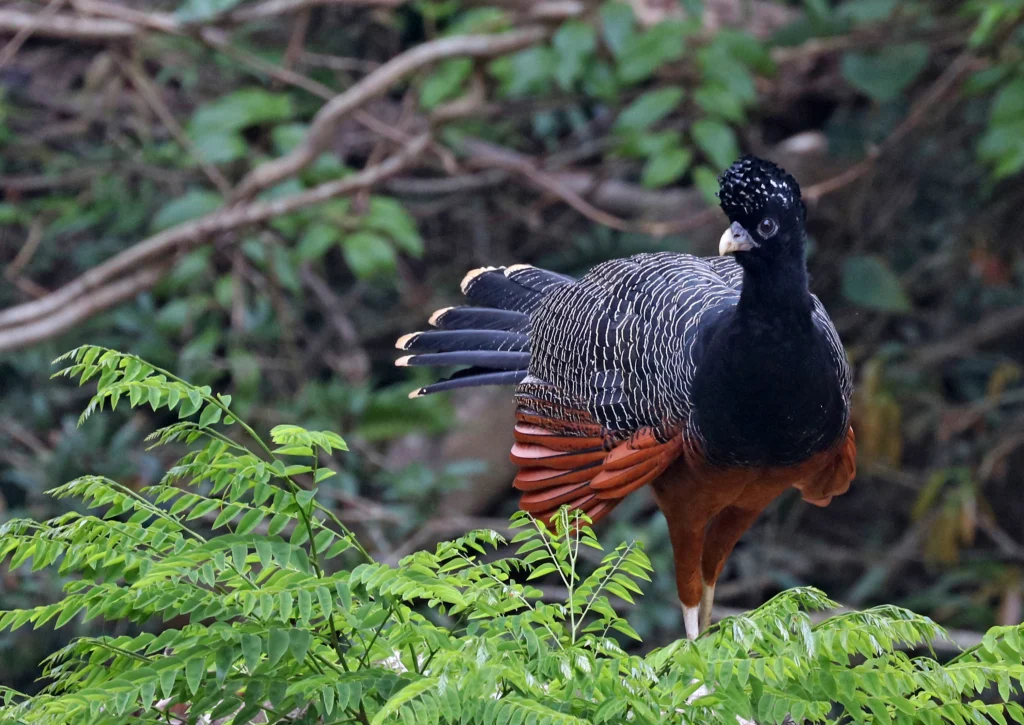
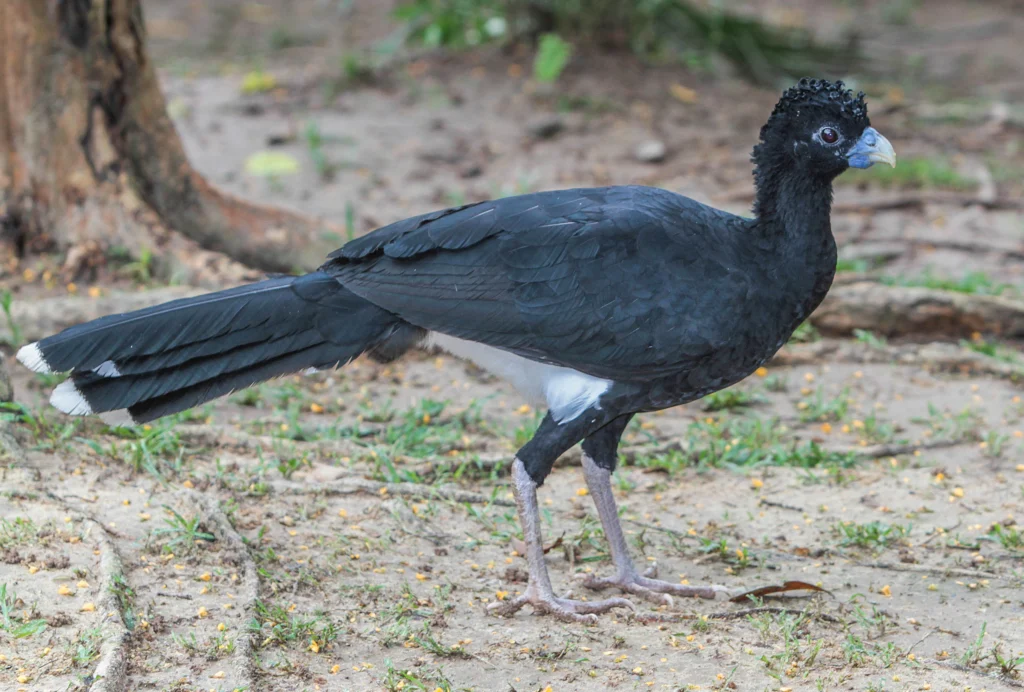
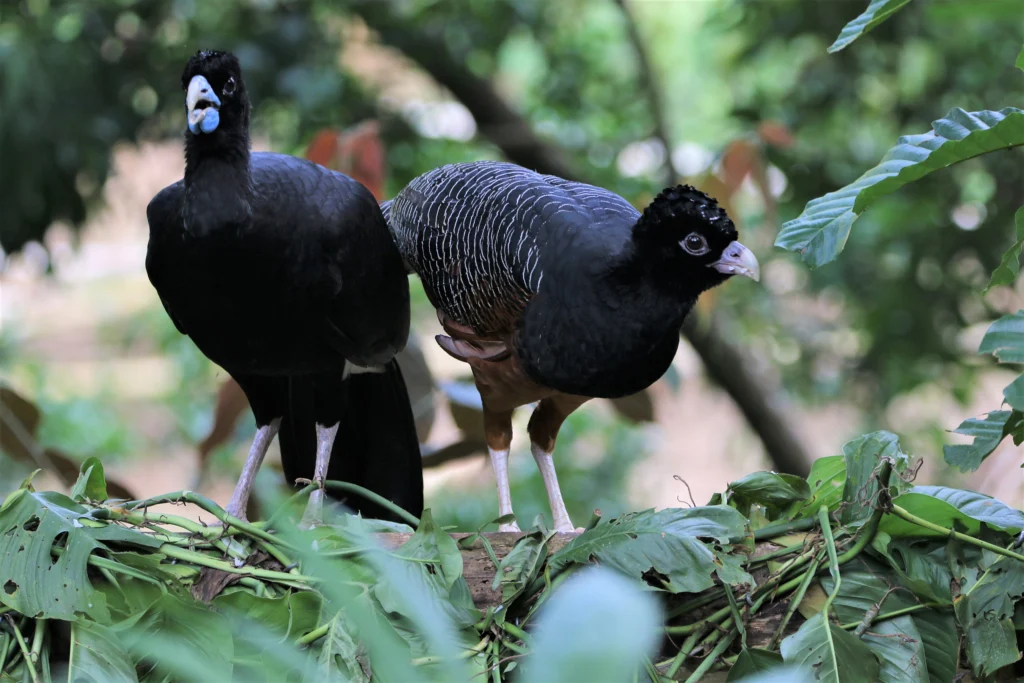
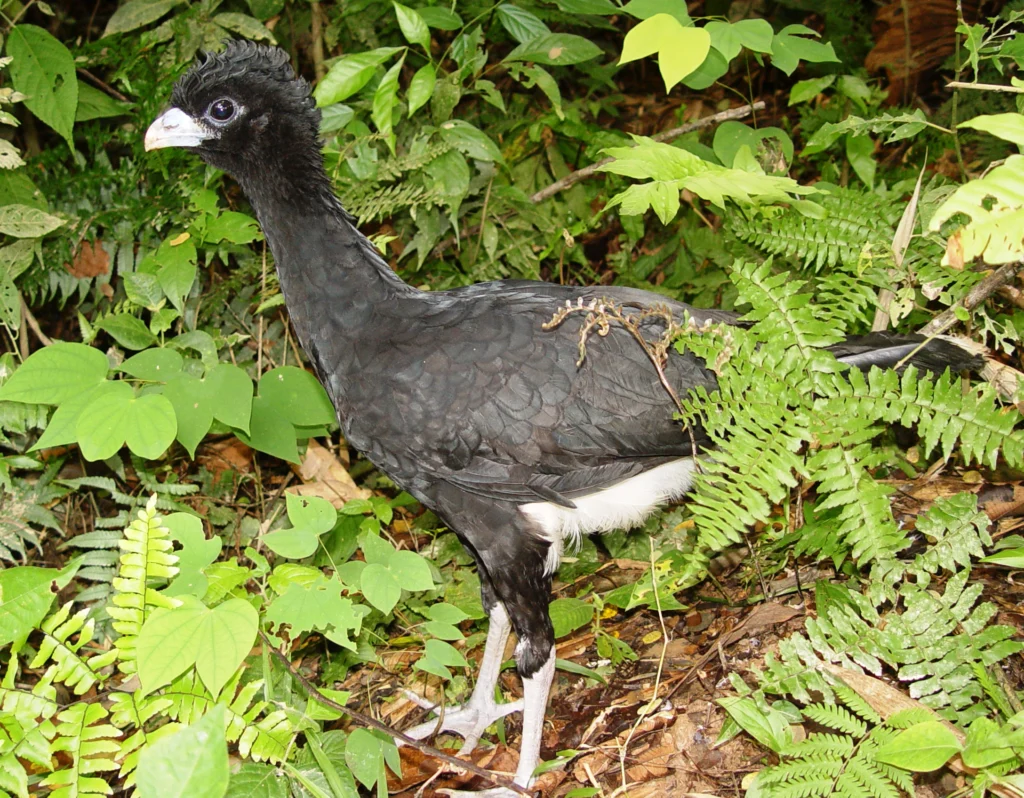
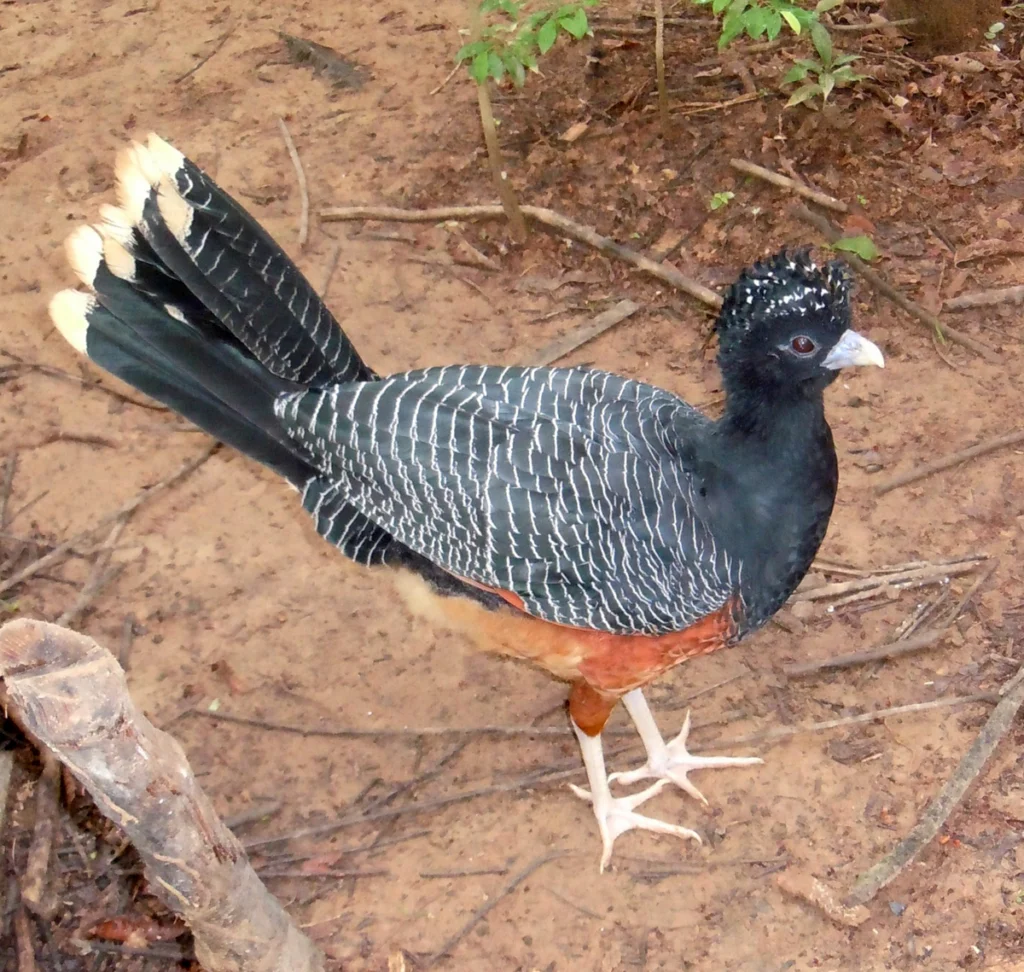
The male Blue-billed Curassow is mostly black, with white feathers under the tail and between the legs, and a blue cere (the fleshy covering on the upper bill) and wattles hanging from the base of the beak. The tip of his tail is white, matching his underparts and contrasting sharply with the rest of his plumage. The female is black above with elegant white barring and white speckles in her crown. Her underside is a warm chestnut, and her tail ends in a pale chestnut band. Both sexes sport the characteristic crest of curly black feathers, which they raise and lower expressively.
Sounds
Male Blue-billed Curassows make a low hoot-like Booming Call, which may serve to ward off rival males, attract a mate, or help maintain the bond between him and his mate. Both sexes also give a high-pitched whistle that first rises in pitch before slowly falling.
Credit: Bernabe Lopez-Lanus, XC45331. Accessible at www.xeno-canto.org/45331.
Credit: Iván Lau, XC543900. Accessible at www.xeno-canto.org/543900.
Habitat
The Blue-billed Curassow lives in humid tropical forest, from the lowlands to the lower mountain slopes.
- Most common below 2,000 feet, but documented up to about 4,000 feet
- Will use moderately disturbed areas when forced out of preferred forests by hunting
Range & Region
Range & Region
Specific Area
Colombia
Range Detail
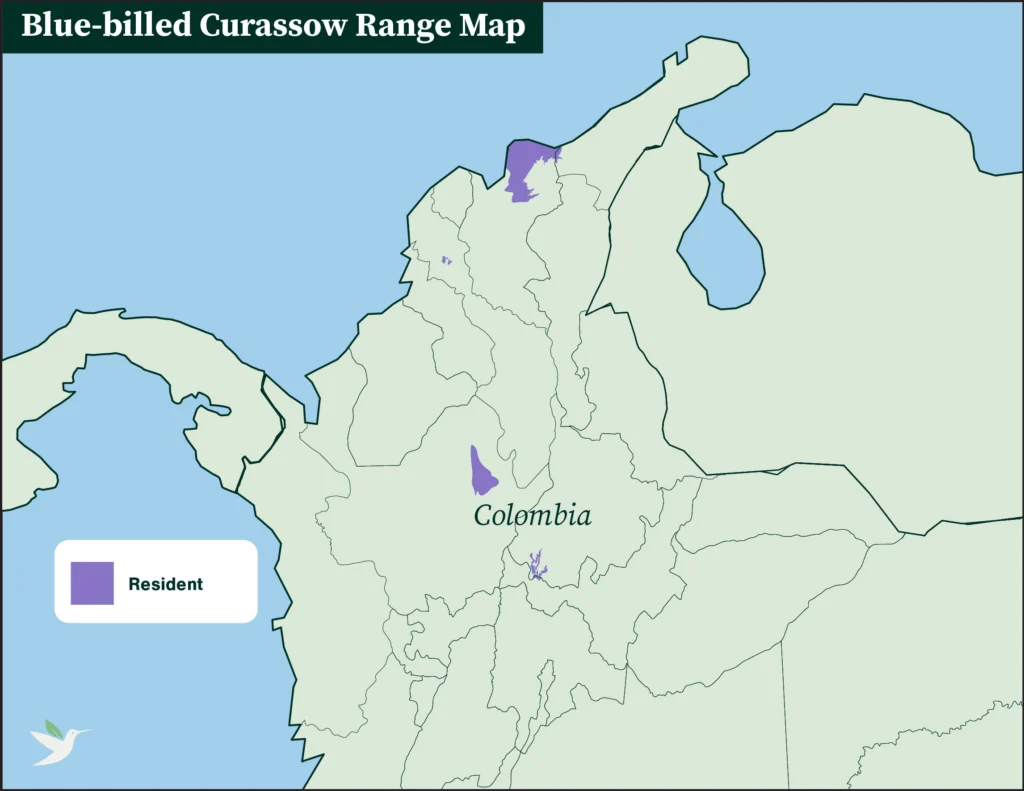
The Blue-billed Curassow is endemic to northern Colombia, where it is restricted to a few remnant patches of forest within its former range.
Did you know?
The word “curassow” is actually something of a misnomer. Curassows were once imported to Europe as cage birds, which they reached by way of the Caribbean island of Curaçao. The island itself was given its name by European colonists, who are thought to have derived it from the native Arawakans’ word for themselves as a people.
Life History
The Blue-billed Curassow breeds once a year during Colombia’s dry season, which generally runs from mid-December to early March. These birds don’t typically breed until they are three years old. Curassows spend most of the daylight hours on or near the ground, but roost up in the trees at night, usually near feeding areas. They typically use the same nocturnal roost for several days before finding a new tree to spend the night in. Much of the natural history of this rare species is undocumented, particularly its breeding behavior, but comparisons with other curassows in the genus Crax may be informative.
Diet
The Blue-billed Curassow spends most of its time foraging on the forest floor for fruit, seeds, small invertebrates, and occasionally carrion. Like the Northern Emerald-Toucanet and Three-wattled Bellbird, it provides a valuable ecological service as an important disperser of seeds within its lowland forest habitat.
Courtship
The Blue-billed Curassow’s courtship has not been described, but males are known to give the Booming Call, which presumably functions as this species’ song, for up to two hours on end. This likely plays a role in mate attraction. The strong sexual dimorphism apparent in the male’s bright blue cere and wattles also suggests that these features may play a role in courtship. In the related Great Curassow, the fleshy yellow knob on the bill swells during the breeding season, indicating a role in courtship or mate selection in this species as well.
Nesting
Blue-billed Curassows build a large platform of sticks and dead leaves, which they conceal from predators within dense tangles of brush and vines. Typically, they build their nests 2 to 15 feet above the ground.
Eggs & Young
The female lays two to three eggs, which she incubates for a little over a month. Typically, one or two young hatch successfully. Like the Ocellated Turkey, Blue-billed Curassow chicks are precocial, hatching fully feathered and with eyes open. They leave the nest quickly but remain close to their parents for several months.