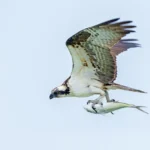
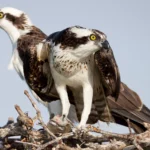
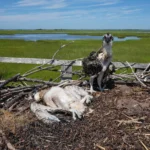
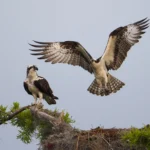
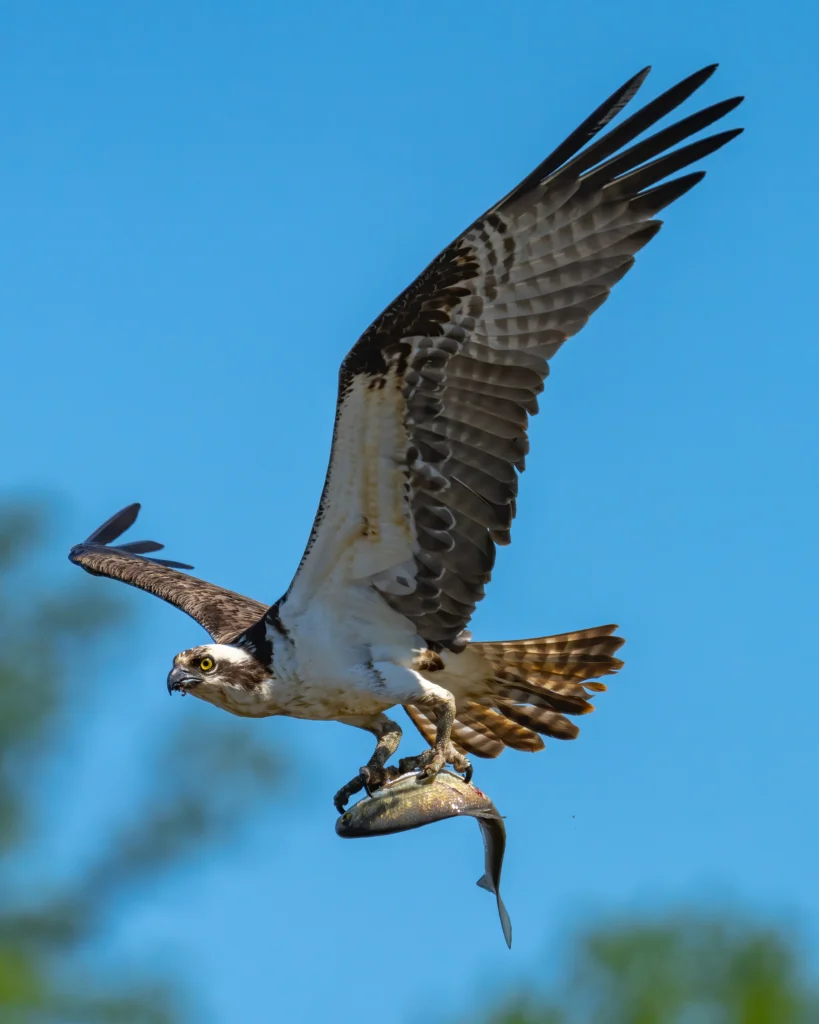
Scientific evidence shows that 5,000 Osprey chicks starved to death in the Chesapeake Bay alone in 2026, and 80 percent of monitored nests failed due to a lack of menhaden.
Also this week, the ASMFC voted down proposed quota periods for the Bay, which would have distributed industrial harvest across the year and reduced pressure on menhaden during the Osprey nesting period. The Commission additionally agreed to only small annual reductions in the total catch allowed along the entire Atlantic Coast, with a 9 percent reduction in 2027 and another 9 percent in 2028. ASMFC’s own scientific models (available at p. 41, Table 3, of this document) show a 40 percent reduction is needed for a 50 percent chance of meeting ecological targets. The 9 percent reduction for 2027 allows 50 million pounds more than what was actually harvested for 2025.
“Unfortunately, the ASMFC has agreed to a decision on total coast-wide catch (Total Allowable Catch, or TAC) that ignores their own math and ecosystem reference points,” said Brian Brooks, Vice President for ABC’s Advocacy and Threats Programs. “At a minimum, we need to see that 40 percent TAC reduction coast-wide, and a further reduction on the Bay cap. ABC will continue pushing for industrial menhaden management that follows the science, which shows that without this, Ospreys and other predators like striped bass still face a bleak future.
“In the end, what we saw this week came down to politics over science,” said Brooks. “It’s time to consider the needs of the Bay’s ecosystem over those of a single industrial fishery. And it’s time that ASMFC included a broader range of stakeholders in its voting process.”
For two decades, Ospreys relying on menhaden in the saltwater regions of the Bay have struggled to raise chicks successfully. A pattern of widespread breeding failures, starving chicks, and declining reproductive success has become evident from Massachusetts to South Carolina, and especially across the Chesapeake Bay — once one of the Osprey’s global strongholds. Scientific findings point to reduced menhaden availability as the primary factor in declines. That conclusion is supported by the fact that Osprey populations using freshwater habitats, with available freshwater forage fish unimpacted by industrial fishing, are stable.
“Growing up in the United Kingdom, I remember fishing for mackerel in the Irish Sea as a boy,” said Parr. “We used up to six feathered jigs and would often catch four or more large mackerel on each drop. Then industrial fishing entered the scene. Now you have to fish much longer and might get one small mackerel on each drop. It’s the same everywhere. We need strong limits on industrial fisheries if we want other stakeholders to have their share — whether those stakeholders are Ospreys, rockfish, recreational fishers, or bird conservationists.”