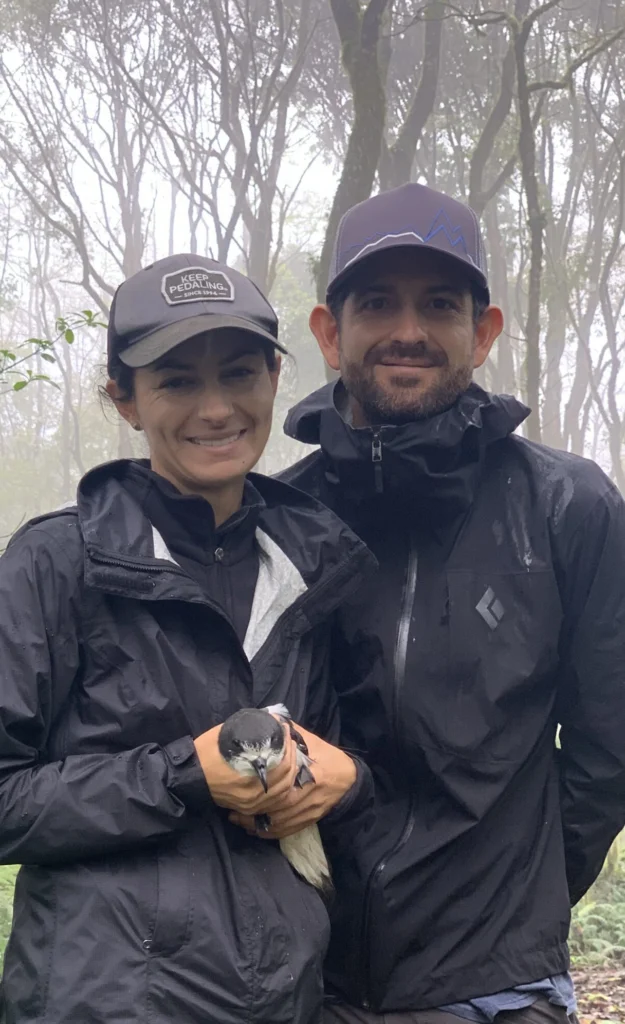
Even as they endeavor to protect the seabirds of mainland South America, Sebastián Cruz and his wife, fellow biologist Carolina Proaño, likewise labor on behalf of the seabirds of the Galápagos, where they live with their two children. “We love being part of conservation,” Proaño said. “We have been a team since early days” in this “amazing, vulnerable place,” and we “work hand-in-hand always.”
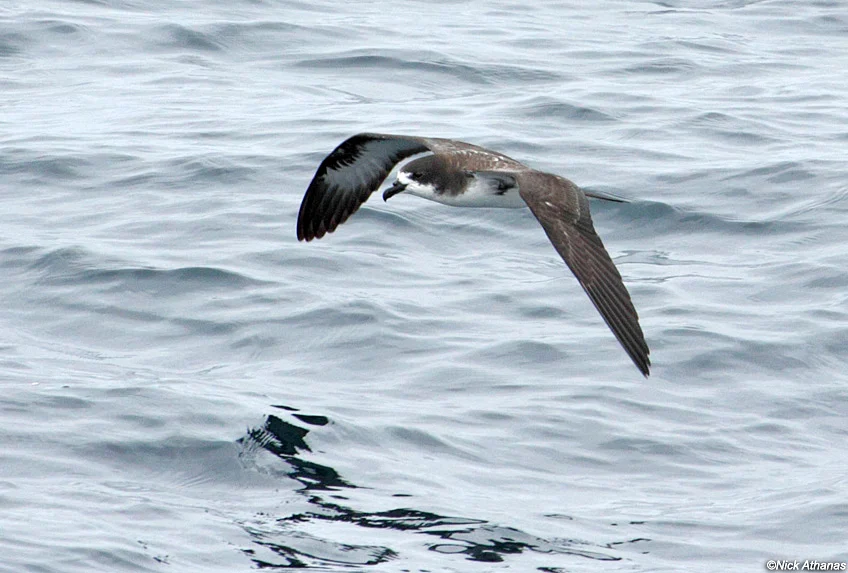
Much of Proaño’s job involves the Critically Endangered Galápagos Petrel, which nests only in the highlands of five Galápagos islands, including Proaño and Cruz’s home island of Santa Cruz. Proaño noted that Galápagos Petrels are nocturnal burrow nesters so cryptic that she sometimes feels she’s “working with an invisible entity.” Most remaining petrels nest within Galápagos National Park. But a select few — the toughest of the tough, as she called them — nest on private farmland. “The birds that have survived on these farms, they have survived it all,” Proaño said. “The genetics of these resilient birds, for me, it’s gold.”
Proaño engages with local farmers to let them know how special these birds are, much as Giovanny Suárez engages with the fishers of Santa Elena Peninsula. In workshops, she compares the farmers to the petrels, saying both are underappreciated, in the farmers’ case for bringing coffee, cocoa, and other products to market without tourists realizing where these tasty items come from, and in the petrels’ case for bringing marine nutrients to the farmers’ land and increasing yields.
When landowners are willing, Proaño installs artificial burrows, camera traps, rodent controls, and fences to keep out stray dogs and cats (which have been known to kill adult and baby petrels alike). She and Cruz also run a plastic reduction program, complete with a plastic recycling machine in their yard. (Proaño jokingly referred to herself as a “plastic trafficker.”) They educate students and tourists on how to help seabirds. And they rescue young petrels that crash land after becoming disoriented by artificial lights.
It’s still unclear whether the Galápagos Petrel’s population is currently increasing, decreasing, or stable. As a result, Proaño said among her next goals is to get a better handle on the overall health of the species, which will require more effective nest monitoring. She would also like to see greater cooperation among the various Galápagos entities engaged in petrel conservation.
This article first appeared in the Summer 2026 issue of Bird Conservation, the member magazine of American Bird Conservancy, as a companion piece to our feature “Going the Distance for Seabirds.”