Advocating for a Rare Petrel
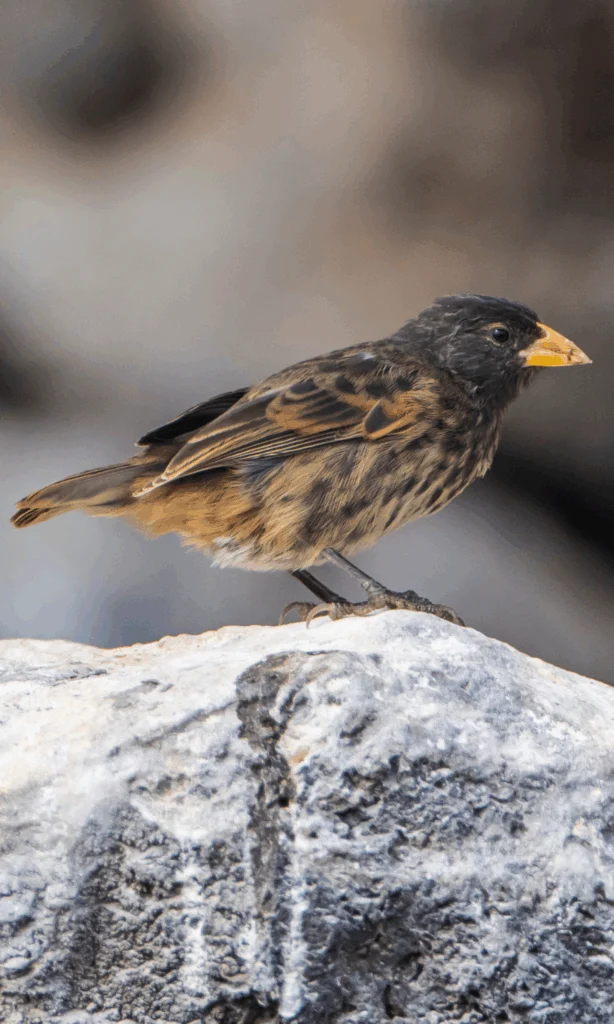
Much of Proaño’s job involves the Critically Endangered Galápagos Petrel, which nests only in the highlands of five Galápagos islands, including Proaño and Cruz’s home island of Santa Cruz.
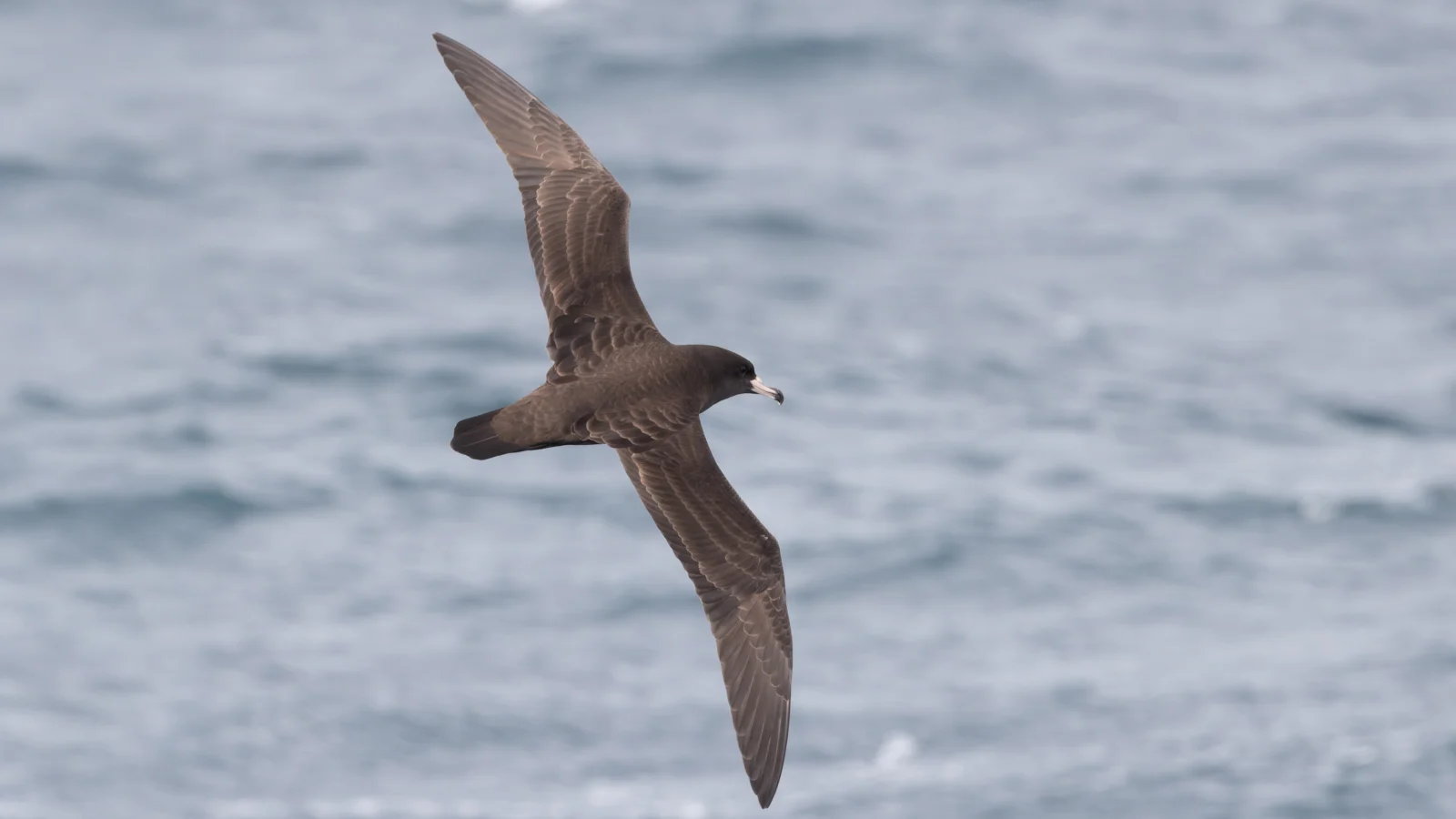
At first glance, Ecuador and New Zealand (Aotearoa) don’t seem to have much in common. Located in opposite hemispheres, with more than 7,000 miles of open ocean between them, the two countries share little in the way of language, food, history, or culture. Yet they do share a surprising number of birds, particularly albatrosses, petrels, and other seabirds that breed on New Zealand islands prior to crossing the Pacific Ocean to feast in Ecuador’s rich waters.
In fact, up to 70 percent of New Zealand’s large seabird species fly to South America after nesting, said Johannes Fischer, Senior Science Advisor at the New Zealand Department of Conservation, or DOC (pronounced dock). (A few, including Buller’s, Flesh-footed, and Sooty Shearwaters, similarly reach the U.S. West Coast.) New Zealand, which has the most endemic seabirds of any country and some of Earth’s largest remaining seabird colonies, has long been considered a leader in seabird conservation. New Zealanders pioneered the removal of rats and other invasive predators from the islands where seabirds nest, enacted strict fishing regulations to reduce the accidental bycatch of seabirds, and recently implemented the world’s largest seabird tracking program.
New Zealand’s wildlife guardians realized, however, that they couldn’t do it alone. To protect seabirds over the course of their entire life cycles, they needed to engage with other countries and organizations. American Bird Conservancy has likewise habitually fostered cross-border conservation. It was therefore a natural fit when two ABC scientists from Ecuador, Sebastián Cruz and Giovanny “Gio” Suárez Espín, were invited to New Zealand this January and February on a nearly monthlong “secondment.”
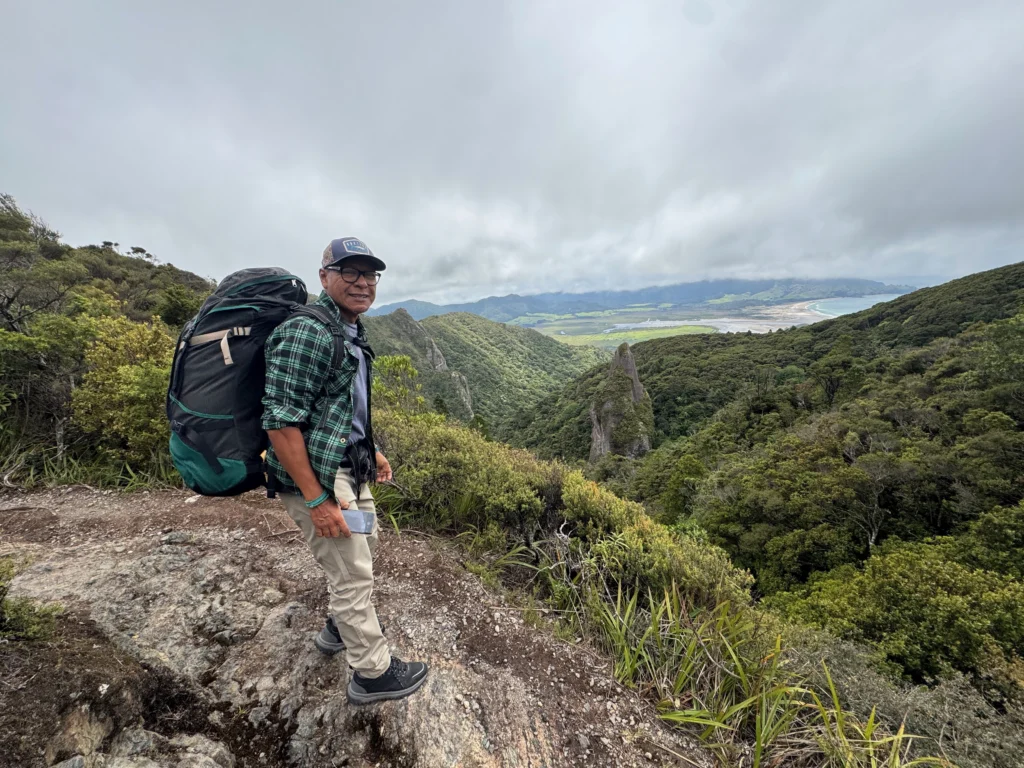
Working alongside scientists at DOC, the ecological consultancy Wildlife Management International Ltd., the nonprofit Seabird Trust, the New Zealand fishing industry, and others, Cruz and Suárez gained valuable knowledge for how to protect seabirds back in Ecuador, where, despite some notable successes, they are still snagged by fishing lines and hooks at an alarmingly high rate. At the same time, Cruz and Suárez shared their own hard-earned know-how that could help New Zealand with its future conservation plans.
“We want to make fishers into conservation champions for seabirds,” said Sea McKeon, ABC’s Marine Program Director. “Finding a way to do that is the trick. That’s really where Gio and Sebastián and their new Kiwi friends are making it all happen.” He added that “winning solutions” are needed for both people and birds and that seabirds can serve as winged “ambassadors” to bring people and countries closer together.
Already, the governments of New Zealand and Ecuador have signed a cooperation arrangement to address threats to the Black Petrel (also known as the Parkinson’s Petrel) and other seabirds that travel back and forth between the two nations. Moreover, New Zealand and Ecuador are both parties to the Agreement on the Conservation of Albatrosses and Petrels (ACAP), which coordinates international actions to mitigate harm to 31 listed seabird species.
“Seabirds don’t recognize international borders, and to conserve them effectively, you can’t just protect them in your country,” said Brad Keitt, ABC’s Oceans and Islands Director. “You have to work together. Seabirds are the great connector across oceans and places.” And when residents of different countries bond over seabirds, they may join forces in other ways as well.
Of the world’s roughly 350 seabird species, albatrosses, shearwaters, petrels, and storm-petrels — collectively known as the “tubenoses” for the shape of their nostrils — are the undisputed masters of the open ocean. Their appearance can vary greatly, from Wandering Albatrosses with 12-foot wingspans to sparrow-sized Least Storm-Petrels. Yet they all tend to breed on remote islands, lay only one egg per year (or less!), live long lives, and forage far out at sea.
The flying feats of tubenoses are legendary. Gray-headed Albatross circumnavigate the entire Southern Ocean in just a few weeks. Streaked Shearwaters in Japan fly straight into hurricanes — on purpose. And Sooty Shearwaters cover some 40,000 miles annually as they trace a figure-eight-shaped path across the Pacific.
Such epic flights are taxing. When Black Petrels, for example, depart from New Zealand, they’re “nice and chubby,” Suárez of ABC said in Spanish. But by the time he sees them in Ecuador, “they’ve lost a lot of weight.” By flying so far, however, they can access the best breeding grounds in New Zealand and the best fishing grounds off the western coast of South America, which is often described as the most productive marine ecosystem on Earth. “It’s like a safe bet for seabirds [coming] from all over the place,” Cruz said. “There should be food there thanks to the upwelling of cool waters of the Humboldt Current.”
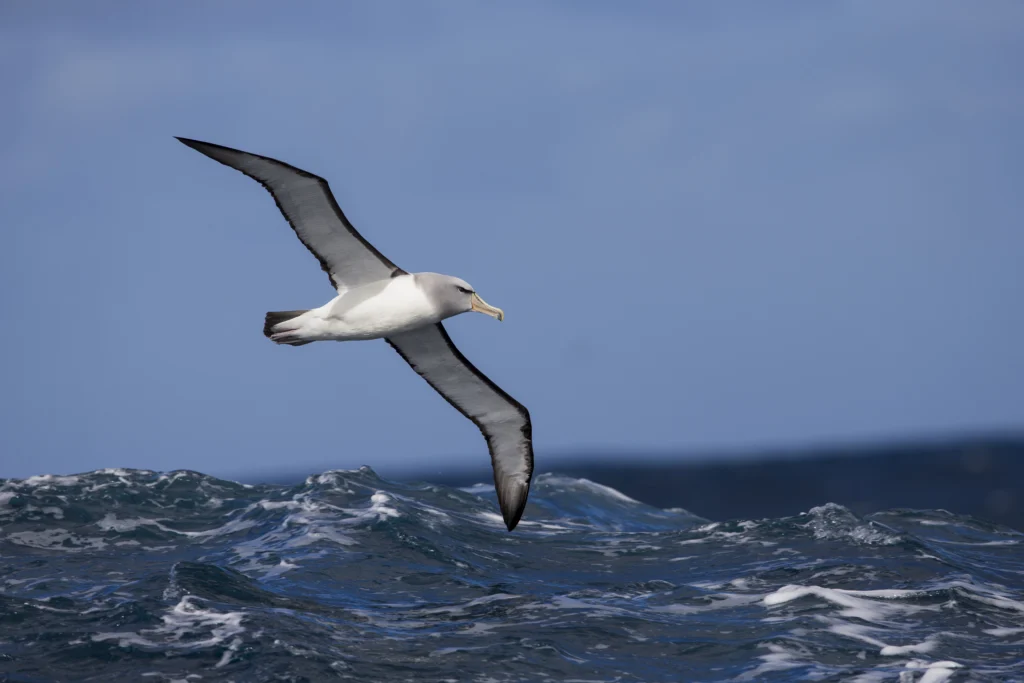
In addition to Black Petrels, Buller’s Shearwaters and Salvin’s and Buller’s Albatrosses are among the seabirds that head over from New Zealand to forage off Ecuador’s coast. The International Union for Conservation of Nature’s Red List classifies the petrel, shearwater, and Salvin’s Albatross as Vulnerable and Buller’s Albatross as Near Threatened.
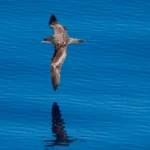
Among these species, the Black Petrel has the smallest population, an estimated 5,500 breeding pairs. Great and Little Barrier Islands (Aotea and Hauturu-o-toi, respectively, in te reo Māori), off the coast of New Zealand’s North Island, are the petrel’s only breeding sites.
Unfortunately, seabirds face more threats than just about any other group of birds, threats that are compounded because these long-distance fliers reside out of sight and out of mind for most people, even most birders. “They’re invisible to most people, [which] makes for a rough conservation situation,” McKeon said. “We’re trying to establish the human connections that put these birds back into people’s field of view.”
The seabird crash first began when early seafarers brought invasive predators to the islands where the birds nest. In Hawai‘i, for instance, Polynesians released rats, pigs, and dogs, unwittingly driving dozens of seabird and forest bird species extinct. Europeans then unleashed cats, mongooses, and more rats, as well as malaria-infected mosquitoes that have decimated certain songbird species, turning the Aloha State into the bird extinction capital of the world. Non-native cats and rats also took a major toll on New Zealand’s seabirds, including the Black Petrel.
Along with releasing predators, until the early 20th century people directly exploited seabirds without limit, be it the hunting of Great Auks and Short-tailed Albatross for meat and feathers or the mass collection of Common Murre eggs on the Farallon Islands of California.
More recently, bycatch from commercial fishing has proved to be a significant factor in the worldwide decline of seabirds. These days, millions of fishing boats scour the world’s oceans, some with massive nets the length of several football fields or with roughly 30- to 60-mile-long fishing lines containing thousands of hooks apiece.
To a passing albatross or petrel, a baited hook looks like a free meal. “They are opportunistic predators,” Cruz said. “If they see a fish or squid, or pieces of fish or squid, on the water’s surface, they’re not going to let that opportunity go by.” When the birds bite down, however, they can get snagged and dragged underwater to their death. Studies estimate that tens of thousands of seabirds are killed annually by the longline fishing industry, and that the gillnet and trawl fisheries kill at least 400,000 and 44,000 additional seabirds, respectively, per year. Moreover, commercial fishing depletes seabirds’ prey. In addition to invasive species and fishing, modern threats to seabirds include avian flu, sea level rise, warming waters that reduce available prey, oil spills, light pollution, plastic waste, and human recreation.
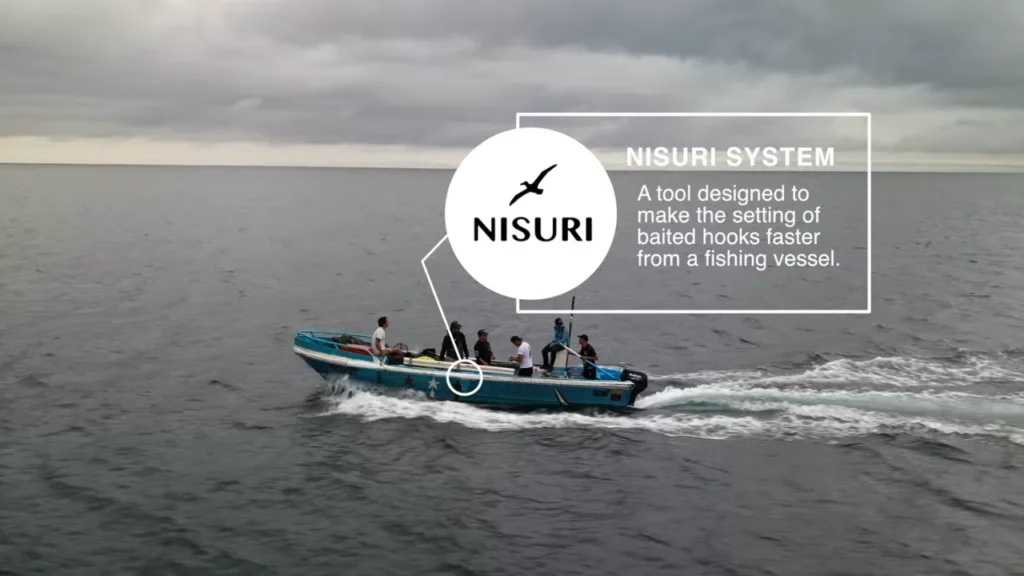
The good news is that solutions exist. Brightly colored streamers can keep seabirds away from hooks and nets, while weights sink lines and hooks before birds can get to them. Another option is fishing at night, when seabirds aren’t typically foraging. The best thing to do, though, is to combine these different methods as each has their own shortcomings. ACAP produces the global “best practice advice” on seabird bycatch mitigation, which gets reviewed almost annually to make sure it’s based on the best possible science. Unlike New Zealand and Ecuador, the United States has so far refused to join ACAP. But the U.S. did mandate certain mitigation measures in federal waters around the turn of the millennium that succeeded in vastly reducing the incidental bycatch of albatrosses, Keitt said.
Like the U.S., Ecuador has its own troubles with seabird bycatch. Suárez grew up on the Santa Elena Peninsula of southwestern Ecuador, a hub for small-scale artisanal fishers. By around age 8, Suárez had become a fisher. But he soon found himself more interested in the seabirds that he watched overhead, and it bothered him to witness them get hooked or entangled. “I didn’t want to do the same thing as everyone else around me,” Suárez said. “I wanted to be different.” So he went to university and studied marine biology.
In 2012, ABC hired Suárez to coordinate seabird bycatch reduction efforts in southwestern Ecuador. Along with Australian biologist Nigel Brothers and the late Ecuadorian biologist and Suárez’s father-in-law Andrés Rivera, he developed the NISURI system (named for the first letters of each of their names), which reduces seabird bycatch to almost zero by quickly sinking hooks and lines out of the reach of foraging seabirds. Suárez has since distributed the NISURI to anyone who expresses interest. He also conducts workshops in which he hands out raingear, rubber boots, rashguards, hats, crates, and other swag to more than 1,700 fishers in return for letting him teach them about seabirds, including how to safely remove hooks from their beaks. (Tip No. 1: Never just cut the line and let them fly off.) For another project, Suárez systematically patrols a Santa Elena beach with a metal detector to document the washed-up seabirds killed by hooks.
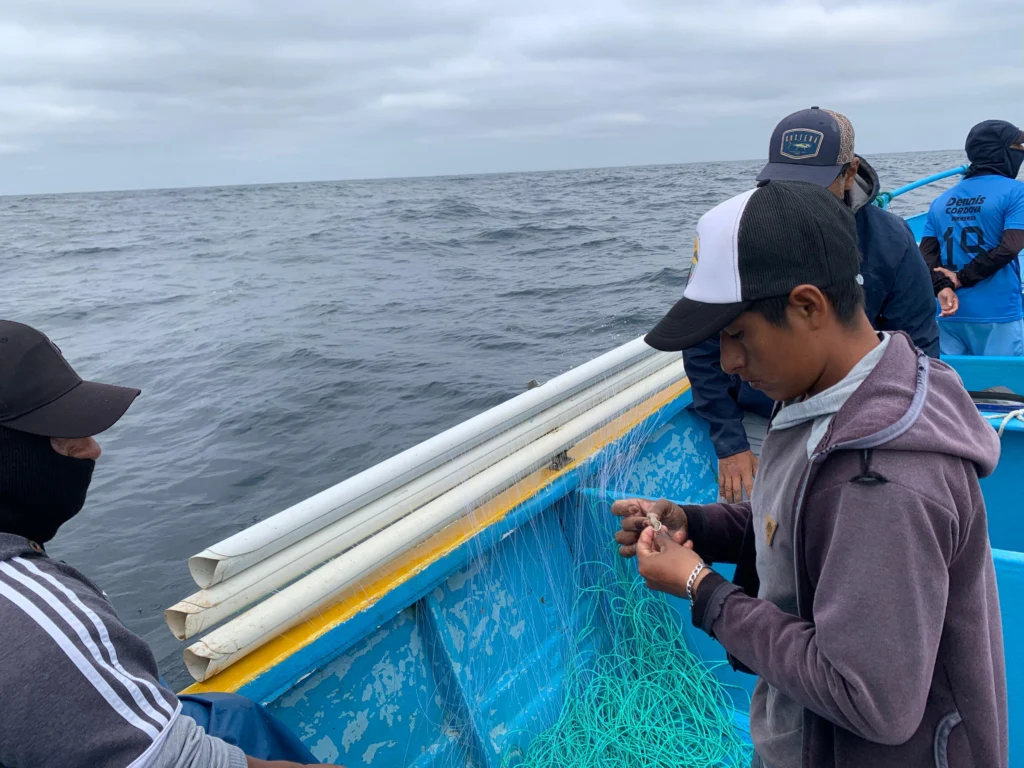
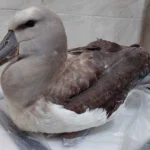
When Suárez started at ABC, knowledge of seabirds among local fishers was low. Many referred to the Critically Endangered Waved Albatross, the world’s only tropical albatross, as “pato grande,” or “big duck,” for its superficial resemblance to Donald Duck. The species breeds almost exclusively in the Galápagos and comes offshore of the Santa Elena Peninsula to feed. But Suárez’s enthusiasm was contagious. Fishers started reporting their seabird sightings to him. Last year, for example, an Ecuadorian fisher found a juvenile Salvin’s Albatross that looked unwell. Recognizing it as a rare bird, the fisher contacted the proper authorities. After undergoing surgery to remove four hooks and a tangle of fishing line from its stomach, the albatross was released back into the wild. Other fishers have agreed to carry tracking devices on board so that Suárez and his team can gather data on exactly where people are casting lines. Suárez noted that his network of collaborating fishers reports fewer dead Waved Albatross than they did several years ago.
As of spring 2026, about 90 Ecuadorian fishers are using the NISURI system, still a tiny percentage of all artisanal fishers in the country. ABC has recently expanded its Ecuador operations, once restricted to Suárez’s home province of Santa Elena, to two neighboring provinces as well, and the goal now is to get at least 30 new fishers a year using the NISURI system, Cruz said.
Cruz, a third-generation Galapagueño who joined ABC in 2024 as its Marine Program Coordinator for South America, said the NISURI system is more efficient and safer than what artisanal fishers typically employ. “It’s a win-win system that relies on trust,” Cruz said. “We need the fishermen to trust us, and we trust them… We know that they’re not catching seabirds trying to be mean or bad.” He recognized that artisanal fishers are just working to make a living and support their families, which has gotten harder of late. Industrial overfishing during the last several decades has reduced the amount of catch available. And more recently, drug traffickers have been charging extortion fees to Ecuadorian fishers, putting their lives and property in danger.
Over the course of his time at ABC, Suárez’s efforts caught the attention of the New Zealand DOC. “We’ve been engaging with Ecuador for a while, and that ultimately led us to Gio,” said Fischer, the senior science advisor at DOC. “To our knowledge, he was the only person in Ecuador working to develop methods that fishers can use on the water to catch fish, not birds.” (No longer a one-man show, Suárez now has over a half-dozen ABC colleagues in Ecuador.)
DOC subsequently invited Suárez and Cruz to participate in one of its seabird secondments, in which scientists from abroad — mostly from various South American countries — work in New Zealand on a temporary basis. Through these secondments, experts from New Zealand and elsewhere “share knowledge, stories, and skills” to the benefit of everyone involved, said Olivia “Libby” Rowley, a seabird ecologist at DOC.
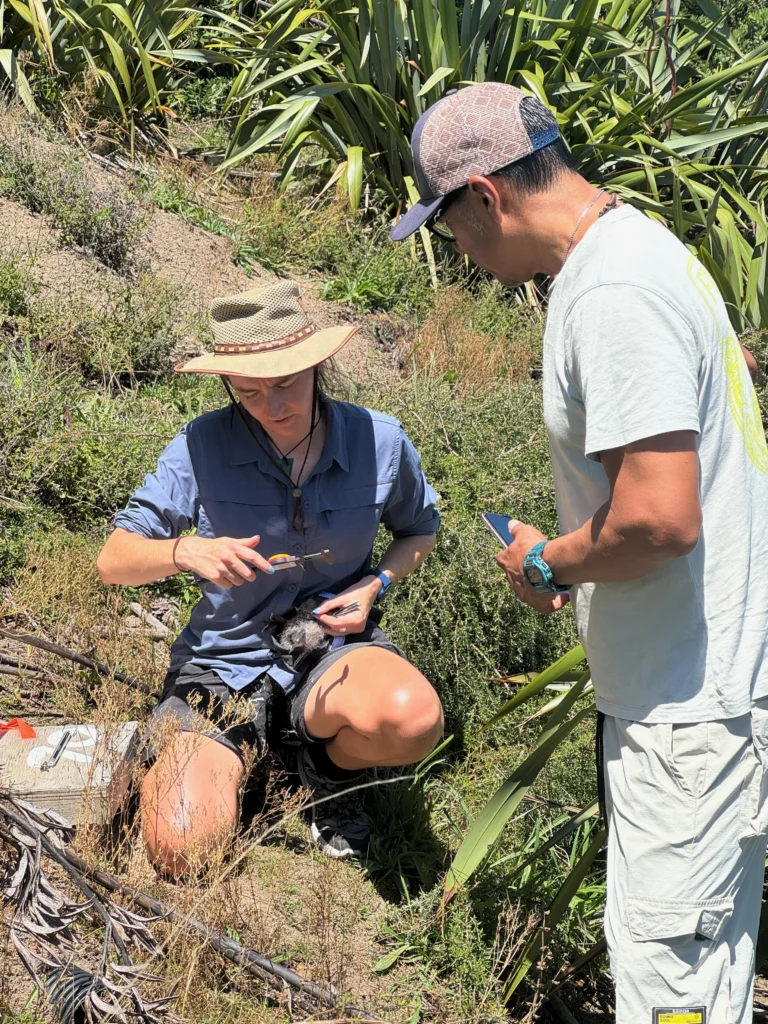
After obtaining the necessary paperwork, Suárez and Cruz flew to New Zealand in January, essentially following the flight path of a Black Petrel returning to its nesting grounds. Almost immediately, they headed out on the water, where they learned how to use a compressed-air net gun to capture Black Petrels and to weigh and band them. In Auckland, New Zealand’s largest city, they gave a presentation on their conservation work. Through this and other information exchanges, they and their New Zealand colleagues shared how fisheries operate in their respective countries and the best techniques for mitigating bycatch. Later, Suárez and Cruz visited a nearby wildlife sanctuary, where Suárez saw fluffy tubenose chicks for the first time. (He’d previously only seen tubenoses flying at sea or dead.) They walked a beach looking for washed-up seabirds, much as Suárez does in Ecuador. They learned how to conduct seabird necropsies to determine the cause of death and how to affix seabirds with GPS transmitters and other tracking devices. And they caught such seabirds as Salvin’s Albatross and White-chinned Petrel with hand-thrown cast nets.
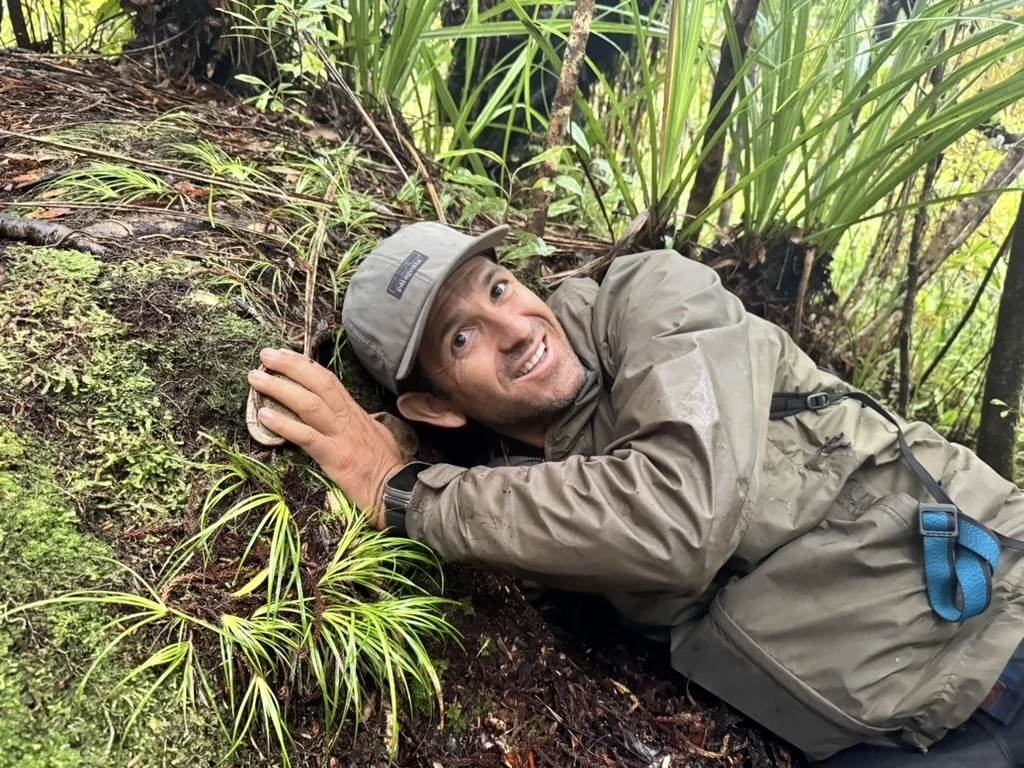
Perhaps most exciting, Cruz and Suárez spent four days at a Black Petrel colony on Great Barrier Island. “I never thought I would experience that,” said Suárez, who helped remove the baby petrels from their burrows to band them (and then carefully placed them back underground). “It was incredible, very beautiful.”
The pair also split up for a few days. While Suárez met with fishing captains and government officials in the port of Tauranga, Cruz joined Rowley for what she described as “coding boot camp.” Their work resulted in a paper that was presented this May at an ACAP meeting in Namibia. It showed the “hotspots of overlap” between where Ecuador’s artisanal longline fishers set hooks — only known because of the relationships Suárez has cultivated — and where Waved Albatross and Black Petrels forage.
Using his newfound skills, Suárez hopes to capture Black Petrels this fall off the Ecuadorian coast and affix them with GPS trackers, thereby filling in some of the gaps in knowledge of where the birds go when not in New Zealand. Both Suárez and Fischer suspect that at least some of the petrels stay in South American waters year-round. “The dream is to get tracking devices on birds over there when the breeders are here in New Zealand,” Fischer said. “Then we’d know for sure.”
No matter what the tracking study finds, the point of the cooperation between Ecuadorians and New Zealanders is to improve knowledge about seabirds to assist their recovery to healthier populations. Though the fates of multiple threatened species hang in the balance, the countries’ conservationists are undaunted. “It’s going to be a long and beautiful relationship,” said Rowley, who added that with “shared birds comes shared responsibility.”
Jesse Greenspan is a freelance journalist based in the San Francisco Bay Area who writes about history, science, and the environment. In our Spring 2026 issue, he wrote about landowners who enhance their properties for birds.
This article first appeared in the Summer 2026 issue of Bird Conservation, the member magazine of American Bird Conservancy. Read more about Sebastián Cruz and his wife, fellow biologist Carolina Proaño, and their work to conserve petrels in a companion to this feature, “Advocating for a Rare Petrel.”
Featured News & Stories