An island slated for construction in 2027 is intended to become the home of Virginia’s largest seabird colony. The island, to be located in the bay between the cities of Hampton and Norfolk and west of the Hampton Roads Bridge-Tunnel, would provide a permanent breeding area for the seabird colony relocated in 2020 due to expansion of the Hampton Roads tunnel.
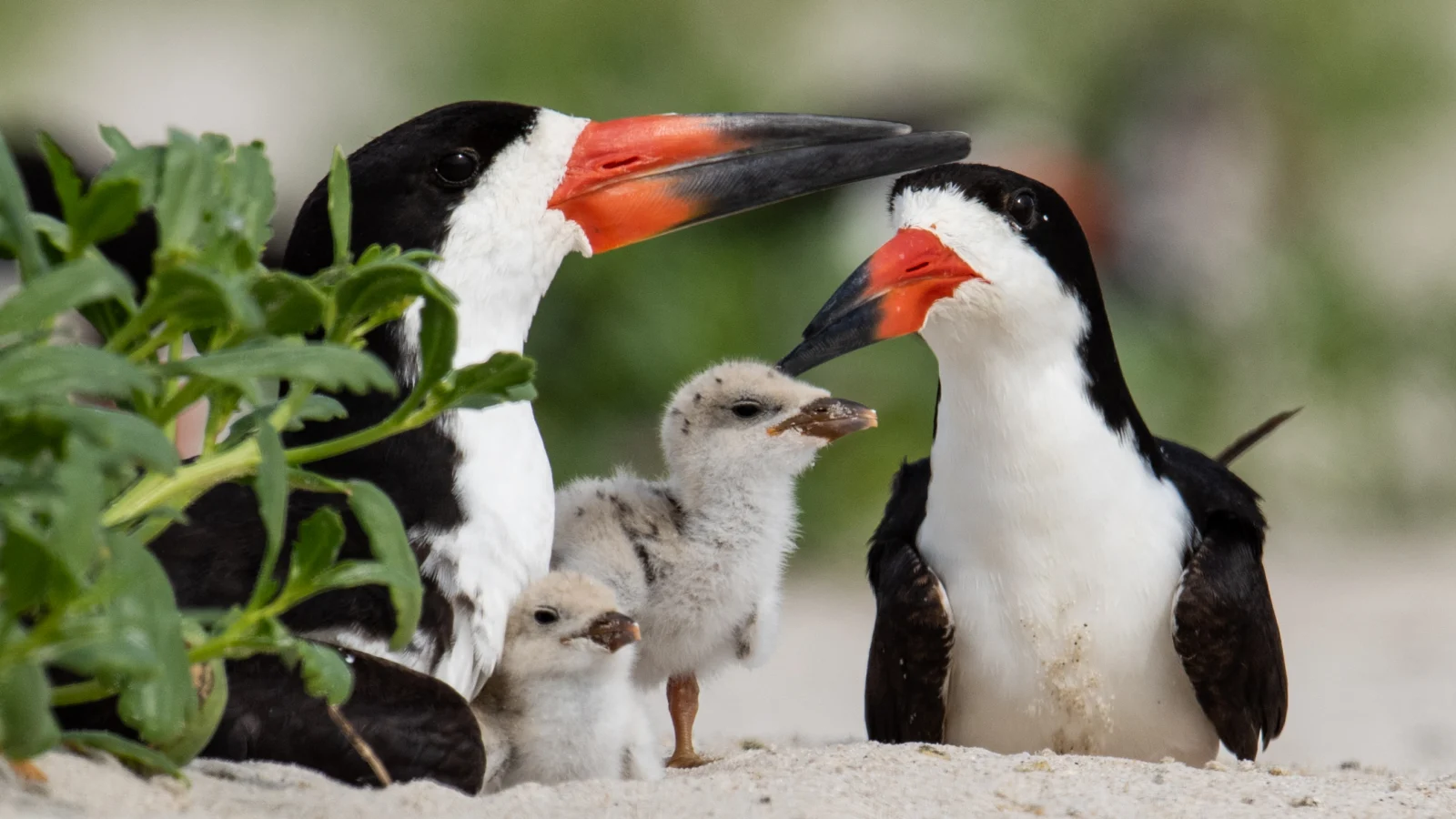
When the 2020 construction threatened their survival, ABC and other groups advocated for alternative breeding habitat for the birds, including Royal, Gull-billed, and Common Terns, Black Skimmers, and Laughing Gulls. State officials agreed to lure the colony to nearby Rip Raps Island (also known as Fort Wool) and adjacent floating barges. The effort worked, and more than 6,000 pairs of birds nested at the new site that year.
The birds have returned annually, but the move wasn’t intended to be permanent. In the time since, the state’s Department of Wildlife Resources and the Army Corps of Engineers worked on finding an alternative site. In 2024, they released a proposal to create a new 9.7-acre horseshoe-shaped island with 5 acres of seabird nesting habitat in the bay.
If the plan is approved, the island will be built next year with more than 518,000 cubic yards of dredged materials, as well as geotubes and various stones for constructing shorelines. Biologists would then attract birds using decoys and broadcast calls to the new site in 2028 and would monitor the colony for up to 10 years. Officials say they’re also planning to establish rules keeping boats away from the island and preventing trespassers from reaching the colony.
A constructed island in South Carolina serves as a template of sorts for the work in Virginia. The 7-acre Tomkins Island, completed in 2005 as mitigation for the loss of nesting areas to development, is now a sanctuary for terns, gulls, skimmers, and other seabirds.
This article first appeared in the spring 2026 issue of Bird Conservation, the member magazine of American Bird Conservancy.